Yoga for athletes recovery works best as an easy, unheated session of 10 to 20 minutes the day after hard training. Keep the effort at about half, so you can still breathe through your nose. It is slow movement and calm breathing, not another workout. Save the hot class for a day when your legs already feel fresh.

This guide is written for UK club athletes: the Sunday rugby player, the lifter who trained legs on Friday, the runner who raced a 10K and cannot get down the stairs on Monday. You don’t need a studio for any of it. A mat, a towel and a quiet corner of the lounge are enough.
It follows how Mr. Ian Terry and the YogaFX team teach recovery days, and it sticks to what we could check. Where the research is thin, we say so.
Yoga for Athletes Recovery: The Short Answer for the Morning After
The short answer is simple. If a session leaves you sweating hard or out of breath, it was training, not recovery. That is the most common mistake we see in athletes who are new to yoga. They bring match-day effort to a day that is meant to be quiet.
So match the session to what you did yesterday. Here is a plain version for common UK weeks:
- After an easy jog, a swim or a light gym day: a 5-minute breathing routine before bed is plenty.
- After a hard Sunday match or a heavy leg day: a 15 to 20-minute floor routine the next day, at about half effort.
- After a race, intervals or a tournament weekend: two easy days, with a short session on day one and a slightly longer one on day two.
- Once the soreness has gone: that is the time to think about a full heated class, if you enjoy one.
Home is the best place for yoga for athletes recovery. Nobody next to you is bending deeper, so you won’t feel tempted to follow. If you want a longer daily habit, build up slowly and keep the first few weeks boring on purpose.
How Long Recovery Takes After a Match, a Lift or a 10K
Good yoga for athletes recovery starts with timing. Sore muscles are only the part you can feel. Underneath, your nervous system also needs time to settle after hard work.
One useful marker is how fast the calm, “rest and digest” side of your nervous system takes back control of your heart after exercise. A 2013 review by Stanley, Peake and Buchheit in Sports Medicine looked at exactly this. Their abstract puts complete cardiac autonomic recovery at up to 24 hours after low-intensity exercise, 24 to 48 hours after threshold-intensity exercise and at least 48 hours after high-intensity exercise. It also notes that fitter people recover this marker faster.
There is a catch. The same abstract says this heart-based recovery does not necessarily match the recovery of every other system, such as energy stores or the nerves and muscles. So treat those windows as a guide to how hard to push, not a clock for muscle repair.
How long does muscle soreness last?
Muscle soreness runs on its own schedule. Cleveland Clinic describes delayed onset muscle soreness, or DOMS, as pain that starts one to three days after intense exercise. It says DOMS usually lasts a few days and rarely lasts more than five. It also says moving sore muscles can help loosen them up, as long as you do not work them out hard.
That fits what we teach. Gentle, unheated movement the day after is fine. A second hard session on sore legs is not.
| Your last session | What you may feel | Easy yoga plan | Heat? |
|---|---|---|---|
| Sunday league or club rugby match | Stiff hips and hamstrings, with soreness often arriving a day or two later | Monday: 15 minutes of floor work. Tuesday: 20 minutes if the stiffness is easing | No, keep it unheated until Wednesday or later |
| Heavy leg day in the gym | Heavy thighs, sore glutes, a sore lower back on stairs | 15 to 20 minutes the next day, skipping anything that feels bruised | No, until the soreness has gone |
| 10K race or hard parkrun | Tight calves, tired feet, a flat mood | 10 minutes of breathing and floor postures that evening or next morning | No, wait two or three days |
| Long club ride | Tight hip flexors and an achy upper back | 15 minutes with Cobra and a gentle twist, then rest | Only if you feel fresh by day three |
| Easy session or rest-day walk | Mostly fine, maybe a little stiff | 5 minutes of breathing before bed | Fine if you feel fresh |
Yoga for Athletes Recovery in Four Numbers
Three Floor Routines for Yoga for Athletes Recovery
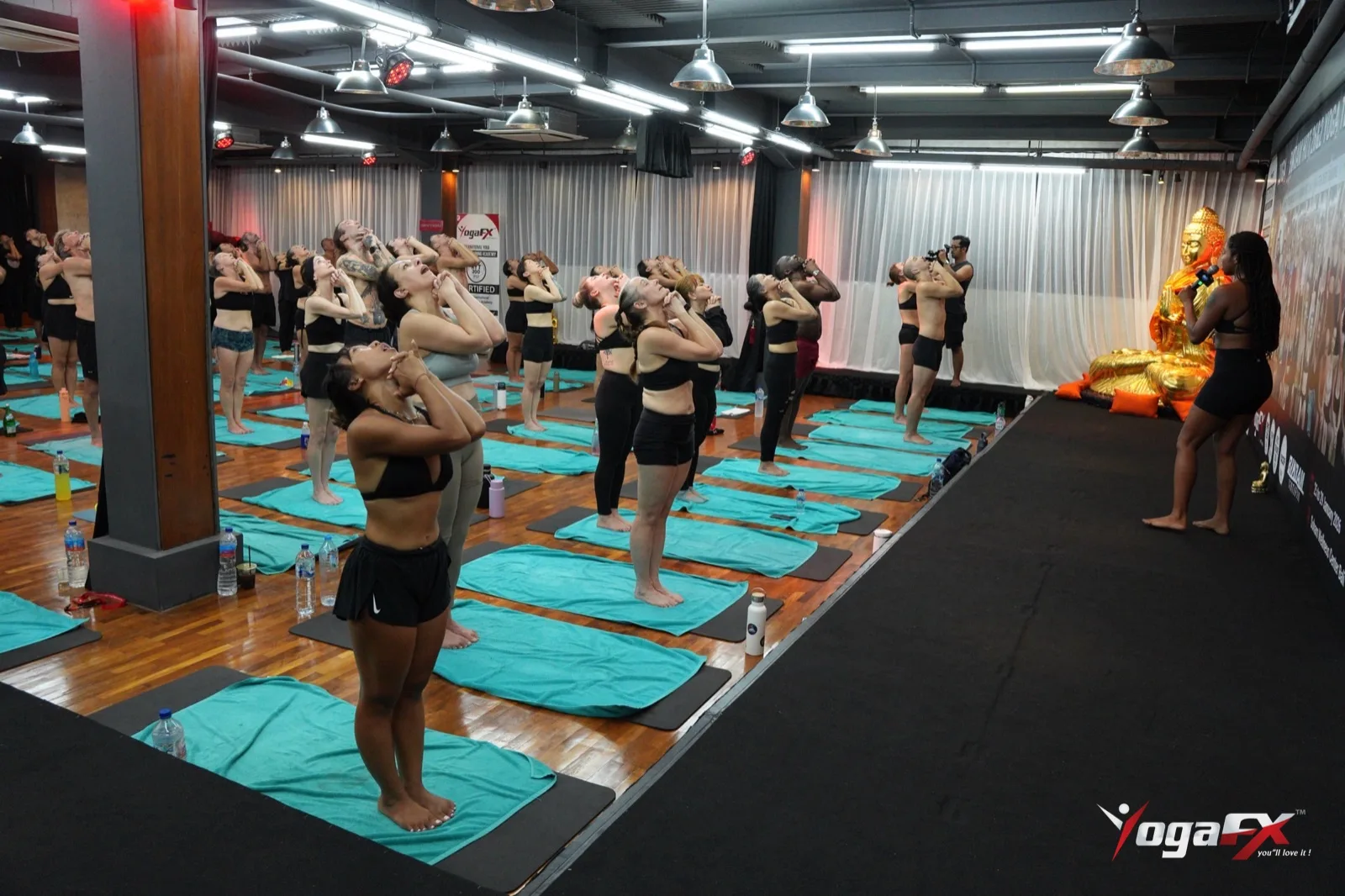
These routines use postures from the Original Hot 26&2 sequence, the fixed set of 26 postures and 2 breathing exercises we teach. Because the order never changes, you do not have to think about what comes next. Practise every routine unheated, in a normal room.
Routine 1: The 5-minute wind-down (after any hard day)
- Standing Deep Breathing, 2 rounds. Breathe in through the nose as your elbows rise, out as they lower.
- Dead Body Pose, 2 minutes. Flat on your back, arms loose, and let the breath settle without steering it.
- Blowing in Firm, 1 gentle round. From kneeling, push the air out in short, soft puffs. Gentle, never forced.
Do this one in the evening, ideally before bed. It is the easiest way to begin yoga for athletes recovery if you have never practised before.
Routine 2: The 15 to 20-minute floor recovery (the day after)
- Wind Removing Pose, 2 sets. Pull a knee towards your chest, then both. Useful when the lower back has stiffened after a match.
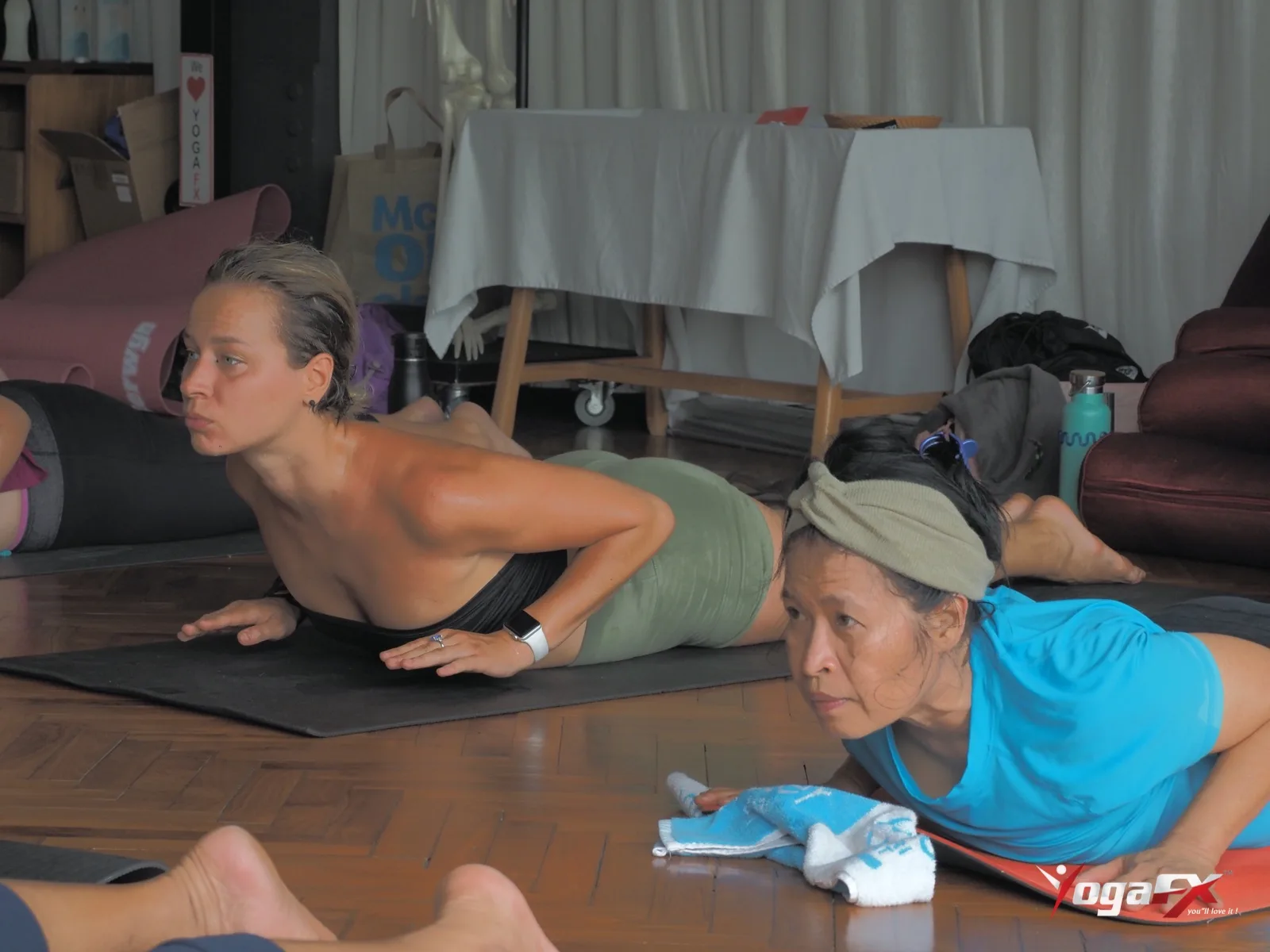
- Cobra, 2 short sets. A low backbend: the spine moves while your tired legs stay out of the work.
- Half Tortoise, 1 set. Sit back on your heels and fold over your thighs. The upper back opens and the breath slows.
- Head to Knee with Stretching, 1 set each leg. Bend the knee as far as you need. You are after a mild pull behind the leg, never a sharp one.
- Spine Twisting, 1 set each side. A slow seated twist to close the floor work.
Rest in Dead Body Pose for two to three minutes between the main postures and at the end. Work at about 50 percent of your usual range. If a muscle feels bruised or sharp, skip it. The aim of yoga for athletes recovery is blood flow and calm breathing, not a new flexibility record.
Routine 3: The day-two standing reset (20 minutes)
Use this after a race, a match or an interval session, once the worst soreness has passed. It adds a few standing postures. They stay unheated and easy.
- Half Moon with Hands to Feet. Lean side to side, then fold forward with soft knees.
- Awkward Pose, first part only. A shallow, chair-like squat. Use it as a quick check on how your thighs feel today.
- Triangle, 1 set each side. A wide stance that gives hips and groin some room.
- Tree, 30 seconds each side. A basic one-leg balance that wakes up feet and ankles.
Then finish with Routine 2 on the floor. If any standing posture makes your legs shake, sit down and go straight to the floor work. That’s a sign you need one more easy day.
Is Hot Yoga Good for DOMS? Heat on Recovery Days
Many athletes ask whether a heated room helps sore legs. The honest answer is that the warm feeling is real, but we found no verified study showing that heat speeds up muscle repair. So we treat hot yoga for recovery as a choice for fresh days, not sore ones.
Hot yoga after a workout: same day or next day?
Hot yoga after a workout on the same day stacks two loads together. A 2025 systematic review by Willmott and colleagues in Sports Medicine – Open pulled together 43 hot yoga studies. Its abstract reports that a single hot yoga session raised body temperature and heart rate. That’s the opposite of an easy day for your heart.
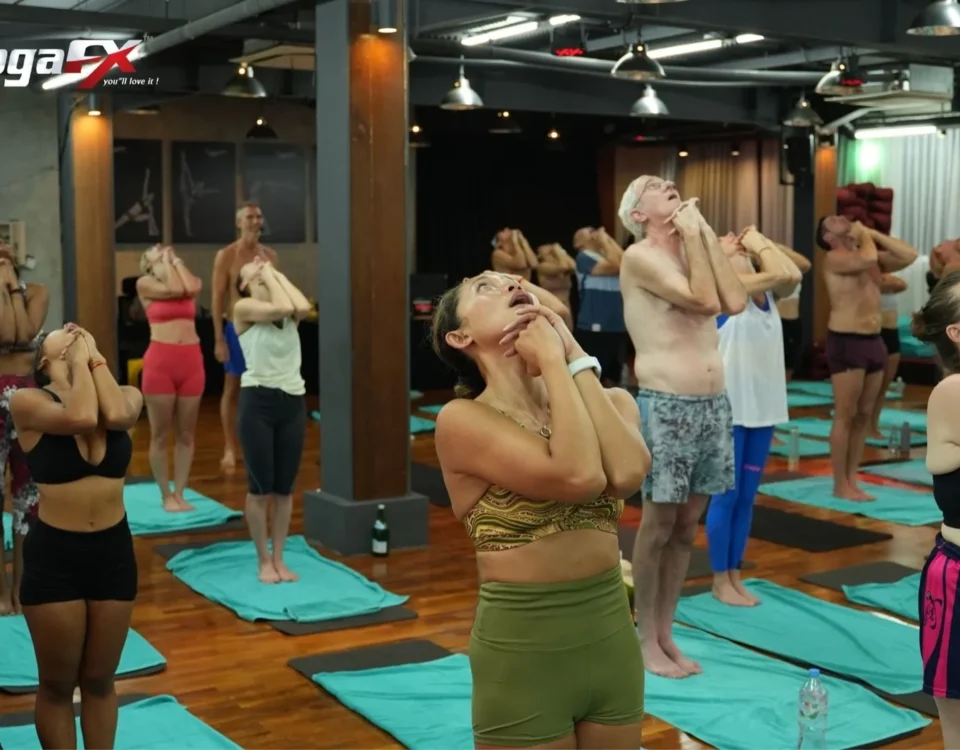
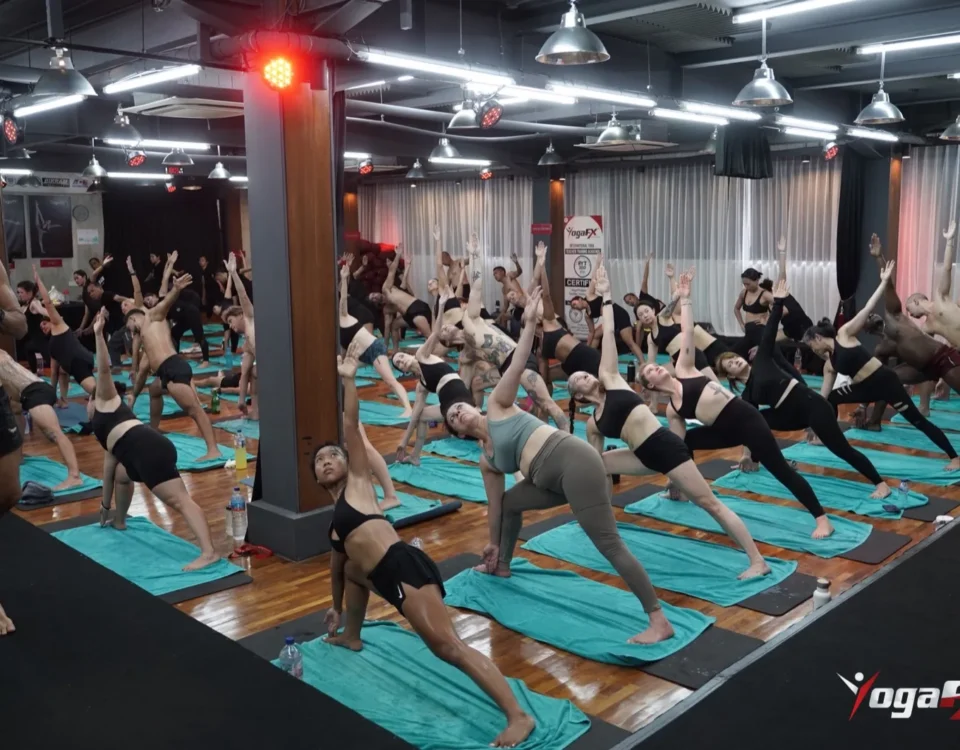
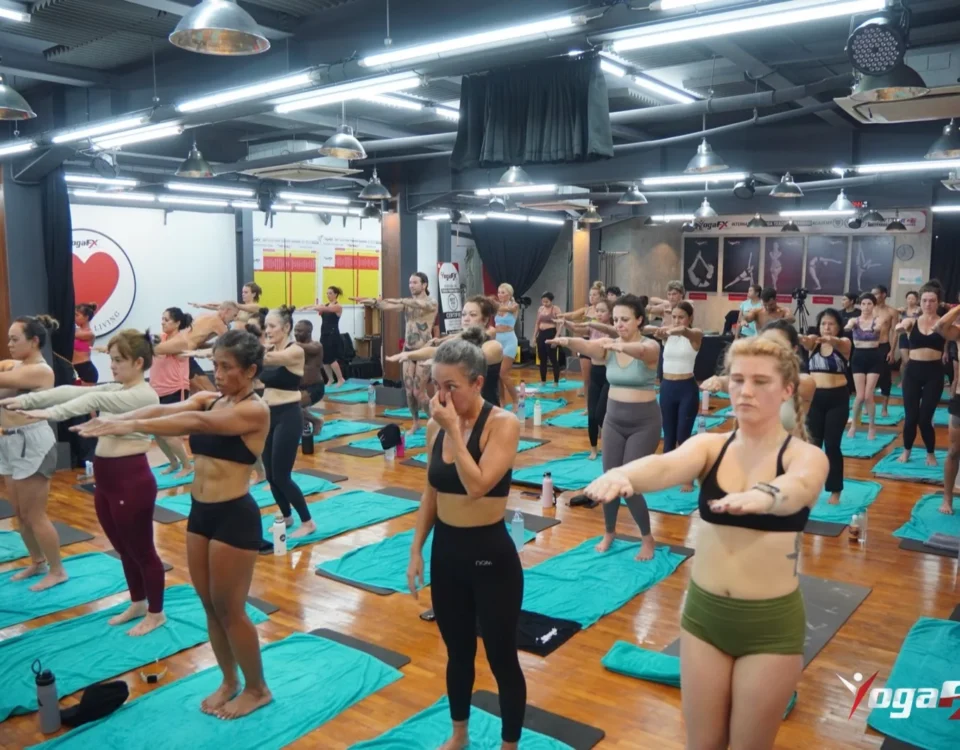
A full Original Hot 26&2 class runs 90 minutes at about 40 degrees Celsius and 40 percent humidity. The heat adds strain on top of the postures. So on the day after a hard match, the same postures unheated at home give you the movement without the extra load.
If you want to know how a heated class fits into a normal playing week, read our guide to hot yoga for athletes at UK club level. It covers weekly plans and safety rules for the room itself.
When a hot class does make sense
- Your legs feel normal and the stiffness has gone.
- You slept well and have no fixture in the next two days.
- You have started drinking water the day before, not just in the last hour.
- You have no heart condition, low blood pressure or history of heat illness, or your doctor has cleared you.
If a class leaves you flat for two days, it was too much. Here’s the rule: cut the yoga first. Cut it before you cut sleep or food.
What the Research Says About Yoga for Athletes Recovery
It’s worth being straight here. Very few trials test yoga for athletes recovery directly, so most of the evidence comes from nearby questions. Still, the picture is useful.
- Recovery timing. Stanley and colleagues (2013) link the time cardiac recovery takes mainly to how hard the session was, which is why gentle work suits the day after.
- Soreness. Cleveland Clinic says DOMS usually fades within a few days and that light movement is fine while hard use of sore muscles is not.
- Hot yoga. The 2025 Willmott review found acute hot yoga raises heart rate and body temperature, which supports keeping heat for fresh days.
What does that mean for you? Research suggests that gentle yoga can keep you moving and calm your breathing after hard training. It has not been shown to replace sleep, food or sensible training loads, so treat it as one tool among several.
A note on health: if you have a heart condition, high blood pressure, a current injury, or you take medication that affects your heart rate or sweating, check with your doctor before any heated practice. If soreness lasts a week or more, or the pain is sharp and constant, see a healthcare professional or your physio. This article is general information, not medical advice.
Yoga vs Foam Rolling, Stretching and Complete Rest
Club athletes often have 15 minutes, not an hour. Each tool does a slightly different job:
- Gentle yoga packs easy movement, a little range and slow breathing into one short slot.
- Foam rolling hits a sore spot fast, though it does nothing for your breathing.
- Static stretching on its own adds range but leaves out the calming breath work.
- Complete rest is the better call when you are injured, ill or running on little sleep.
For most people the best answer is a mix. Roll the tightest spot for two minutes, then run one of the routines above. That way yoga for athletes recovery covers the breathing and posture work that the roller misses.
Different sports load the body differently, so adjust the postures. Footballers can lean on the hamstring and groin work in our yoga for footballers guide, while distance runners will like hot yoga for runners. Golfers can use the same easy mobility ideas with the swing routine in yoga for golfers.
Recovery Mistakes UK Club Athletes Make on the Mat
Competitive people bring the same drive to recovery that they bring to training. That works in the gym and fails on the mat. These are the yoga for athletes recovery mistakes we see most often:
- Turning recovery into a workout. Dripping with sweat means you have passed easy effort.
- Booking a hot class the morning after a match. Wait until day three or later for heat.
- Locking the knees in forward folds. Soften them so the hamstrings take the stretch, not the lower back.
- Stretching an injured muscle. A new strain calls for a physio, not a deeper stretch.
- Skipping it on busy weeks. Even five minutes of breathing keeps the habit going.
If you carry a few old knocks, build up slowly. Add one posture a week, and drop anything that has you holding your breath.
What YogaFX Students Say About Hard Training and Healing
Many of our students come to the mat tired, sore or carrying old injuries. These reviews are about the YogaFX teacher training, not a recovery trial. Read them as students describing a hard week, not as a promise of results.
Ian is a good yoga instructor. He gave a clear instructions and make sure that we do the pose correctly.
Tuti, Google review, 2020
Dee, a trainee in our 2019 YouTube review, called the experience “a rejuvenating transformational experience” and said it was a beautiful, amazing surprise. In our 2026 YouTube review, Britt said: “This was one of the hardest things I’ve ever done physically”. She thanked everyone at the end. Watch her review below.

In total, YogaFX students have left 150 Google reviews, 50 Yoga Alliance reviews and 357 YouTube video testimonials. For a home-based companion to this guide, aimed at busy men who study online, see this step-by-step recovery routine for sore, busy men.
From Your Mat to Bali: How Mr. Ian Terry Teaches Recovery
Mr. Ian Terry is an E-RYT 500 teacher with more than 12,000 teaching hours. He trained for five years, from 2014 to 2019, with the founder of the Bikram Hot 26&2 method, and he is a Master Trainer for the Republic of Indonesia Yogasana Sports Federation. Since founding YogaFX in 2017, he has guided more than 1,500 graduates from over 80 countries.
His advice on yoga for athletes recovery is short. Keep the effort low, save the heat for fresh days, and take each second set only slightly deeper than the first. Trainees learn how to scale every posture, from a gentle recovery day to a full heated class.
Some athletes enjoy these routines so much that they want to teach them to a club or team. The YogaFX Bikram Hot 26&2 Yoga Teacher Training MasterClass is a six-day hybrid: you study the pre-course online around work and training, then join the intensive in Bali. The next intensive runs from Sunday 24 January to Friday 29 January 2027 at Soham Wellness Center in Seminyak, about five days off work.
Graduates earn the Yoga Alliance RYT 200-Hour and the Bikram Hot 26&2 200-Hour International Yoga Certification. The Early Bird price is US$1,899 against a normal US$1,999, with payment plans from US$250 a month and no interest.
If you are weighing the trip from Britain, our guide to original hot yoga teacher training for UK students covers costs, travel and time off.
FAQ: Yoga for Athletes Recovery, Answered
Can yoga help with DOMS?
Gentle yoga can help you move while you are sore, but it will not make soreness vanish. Cleveland Clinic says DOMS usually fades within a few days. Keep your yoga for athletes recovery sessions short, unheated and at about half effort, and skip any posture that feels sharp or bruised.
Is yoga good for football recovery?
Easy yoga for athletes recovery suits the day after a match because it loosens hips, hamstrings and the lower back without adding load. Keep it to 15 to 20 minutes of floor postures at half effort. If your legs are heavy or a muscle feels strained, rest and see a physio.
Is hot yoga good for running recovery?
Not the day after a hard run. A heated class raises heart rate and body temperature, so it works as another session. After a race or long run, choose unheated floor postures first, and return to hot yoga once your legs feel fresh again.
What to do after hot yoga?
Cool down for a few minutes before heading outside, drink water slowly and eat something light. Put on dry layers straight away, especially on a cold UK evening. Rest if you feel dizzy or faint, and leave a gap before your next hard session.
How to recover from hot yoga?
Treat the class as a real workout. Rehydrate steadily, eat a normal meal and sleep well. Keep the next day easy with a short walk or gentle unheated stretching. If a headache or dizziness lasts, speak to a healthcare professional.
Still have questions about yoga for athletes recovery? Message Mr. Ian and the YogaFX team on WhatsApp and we will answer them personally. Always consult a healthcare professional before starting a new heated exercise routine.