Hot yoga for athletes works best as one planned class on an easy day, never as an extra hard session. For UK club players that means one 90-minute heated class a week, well away from match day, with water started the day before. Begin there and see how your next training session feels.

Most club players ask the same thing before a first class: will a 40°C room cost me a session on Thursday night or a game on Saturday? This guide answers that for amateur sport in Britain, from five-a-side football to club rugby, netball and cycling. It follows how Mr. Ian Terry and the YogaFX team explain the room to athletes who walk in for the first time.
We have kept the advice practical. You will find a weekly plan, five safe rules, the heat warning signs to know, the research we could verify, and a plain comparison between a UK studio and a trip to Bali for teacher training.
Hot Yoga for Athletes: What UK Club Players Should Know First
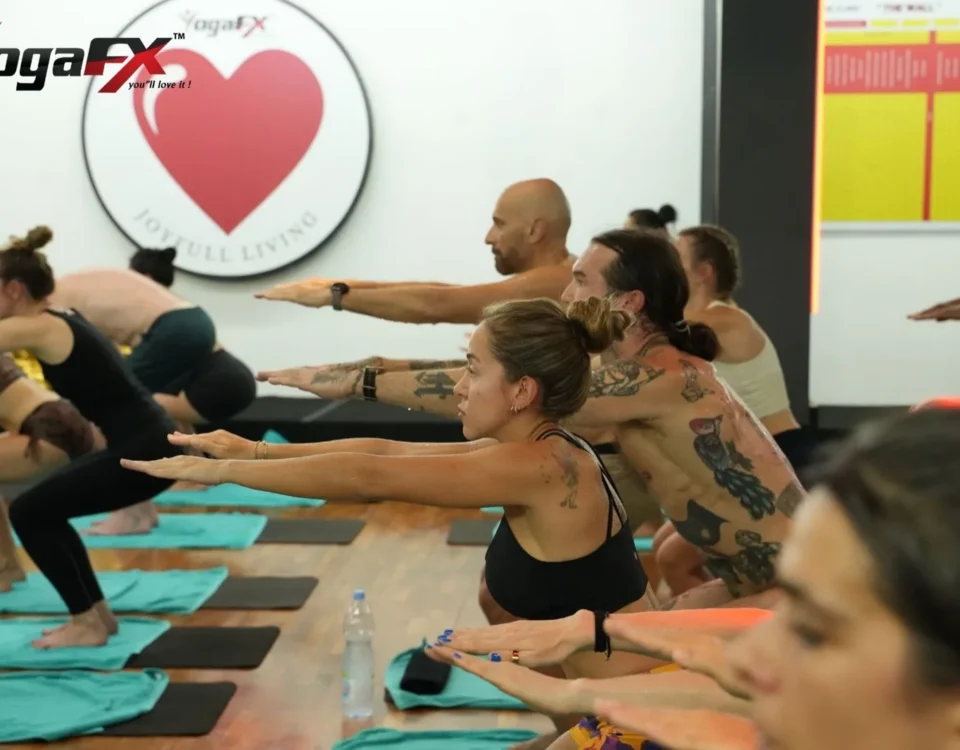
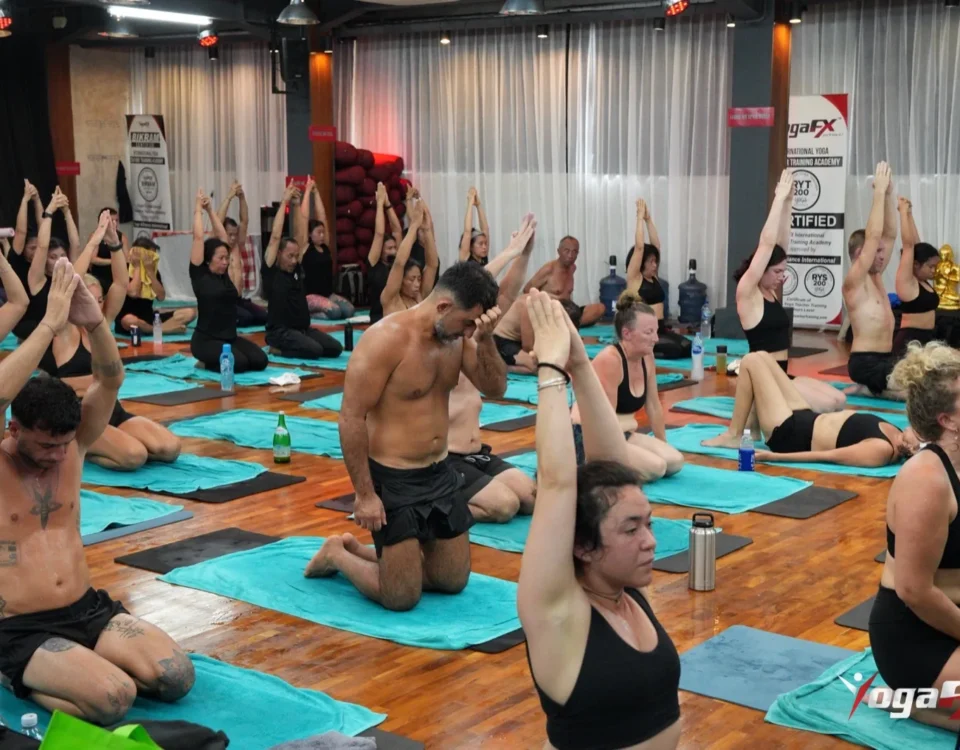
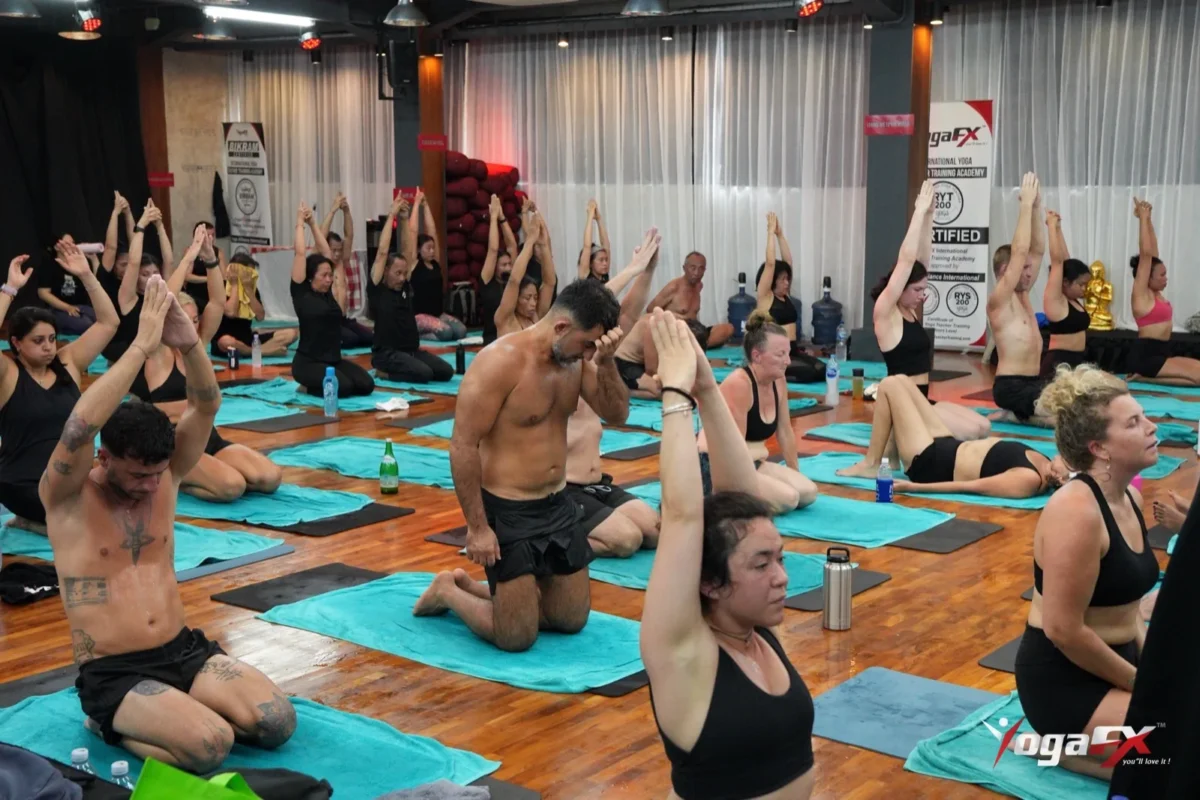
A heated class is not a stretch break. In an Original Hot 26&2 class you stand, balance and bend for 90 minutes at 40°C and 40% humidity. Your heart works, you sweat a lot, and you leave tired in a different way from a pitch session. So hot yoga for athletes has to be planned like any other load, with the same care you give a hard training block.
With hot yoga for athletes, think of a third kind of day. It is not a hard session, and it is not a full rest day. It sits in the middle, and it pays off when you protect the days around it. Here is the short version we give amateur players:
- One class a week first. Give your body three or four weeks before you think about a second one.
- Easy days only. Never put a heated class the day before a match, a race or a heavy lifting day.
- Start drinking the day before. Do not try to catch up with a litre in the last hour.
- Leave when the room stops helping. Dizziness, a pounding headache or feeling faint means you step out.
Club players have a different problem from elite athletes. You fit training around work, the commute and family. A missed night of sleep costs you more than it costs a full-time professional. That’s why hot yoga for athletes at club level should join your week only if it replaces something, such as an extra gym visit or a second easy run.
A Weekly Plan for Hot Yoga for Athletes in UK Club Sport
Every sport has a rhythm, and the class should fit it. The table below shows five common UK club patterns. Treat it as a starting point, then move the days to suit your own fixtures and your coach’s advice.
| Club sport | Typical week | Best slot for one class | Skip it when |
|---|---|---|---|
| Sunday league or five-a-side football | One midweek session, match at the weekend | Monday or Friday daytime, a day clear of the game | You have a cup tie or a double-header |
| Club rugby union | Tuesday and Thursday training, Saturday match | Monday, the day after the game | You are carrying a knock or a heavy collision week |
| Netball or hockey | Two evening sessions, Saturday fixture | Wednesday lunchtime or Friday morning | You are dehydrated or run down from travel |
| Cycling or triathlon club | Hard midweek ride, long weekend session | The day after the long session | A sportive or race is inside five days |
| Gym lifter or CrossFit-style member | Four lifting days, one rest day | The rest day between lifting blocks | You trained legs hard the day before |
Notice that hot yoga for athletes appears once a week at most. If your legs feel looser the next day and your next session feels normal, that is useful information. If you feel flat for two days, the plan is too much. Cut the yoga before you cut sleep or food.
If your week is built around miles rather than fixtures, our guide to hot yoga for runners across the UK racing calendar lays out the same idea for road and half-marathon training.
Pre-season: the easiest time to learn the room
In pre-season you have space to try hot yoga for athletes without a fixture hanging over it. Book one class, write down how you slept and how the next session felt, and repeat the following week. If the data looks good, add a second class on another easy day.
In-season: one class, on the quiet day
During the season, keep hot yoga for athletes to one class and put it on your quietest day. Treat it as maintenance for hips, hamstrings and breathing. If results, sleep or mood slip, drop it without guilt. Nobody’s won a league on yoga attendance.
Off-season: room to build
In the off-season you can afford a flat day while your body gets used to heat. Many players use these weeks to try two classes of hot yoga for athletes a week, then trim back to one when fixtures return. Our piece on whether hot yoga builds muscle is worth reading here if you lift as part of your base work.
5 Safe Rules for Hot Yoga for Athletes
Athletes are used to sweating, which is exactly why heat can catch them off guard in hot yoga for athletes. A 40°C room asks more of you than a cool pitch or a damp British evening, and a fit body can hide the early warning signs. These five rules for hot yoga for athletes keep a good session from turning into a bad week.
Rule 1: Drink early, then sip
The NHS says adults should aim for 6 to 8 cups or glasses of fluid a day, and it adds that you may need more if you are in a hot environment or physically active for long periods. It also advises drinking extra fluids if you have been sweating from physical activity. So start the day before, sip between postures and keep a bottle beside your mat.
Rule 2: Put the class on an easy day
A 90-minute class keeps your heart rate busy for a long time. That is why we treat it as a moderate session. Place it where a gentle gym visit would sit, and keep it away from the day before a match. If you only remember one rule, remember this one. It is the heart of hot yoga for athletes.
Rule 3: Know the stop signs
Team players are trained to play through discomfort. A hot room isn’t the place for it. The NHS lists feeling thirsty, headache, dizziness, tiredness and dark yellow, strong-smelling pee among the symptoms of dehydration. Mayo Clinic lists heavy sweating, faintness, dizziness, muscle cramps and nausea as heat exhaustion symptoms. Tell the teacher and leave the room if you feel any of them.
Rule 4: Cool down on the way out
Mayo Clinic’s advice for suspected heat exhaustion is to stop all activity, rest, move to a cooler place and drink cool water or sports drinks. It also says to contact a healthcare professional if symptoms get worse or do not improve within one hour. After class, give yourself a few minutes to cool before you step into a British November evening, and put dry layers on straight away.
Rule 5: Keep heat out of match week
This one is our own advice, not a study result. In the final days before a fixture you want no new stresses. After a hard game, wait until your legs feel normal, start with an unheated home session, then go back to the room. If in doubt, rest.
Medical note: speak with your doctor or a sports medicine professional before starting heated exercise if you have a heart condition, low blood pressure, or any history of heat illness. This article is general information, not medical advice.
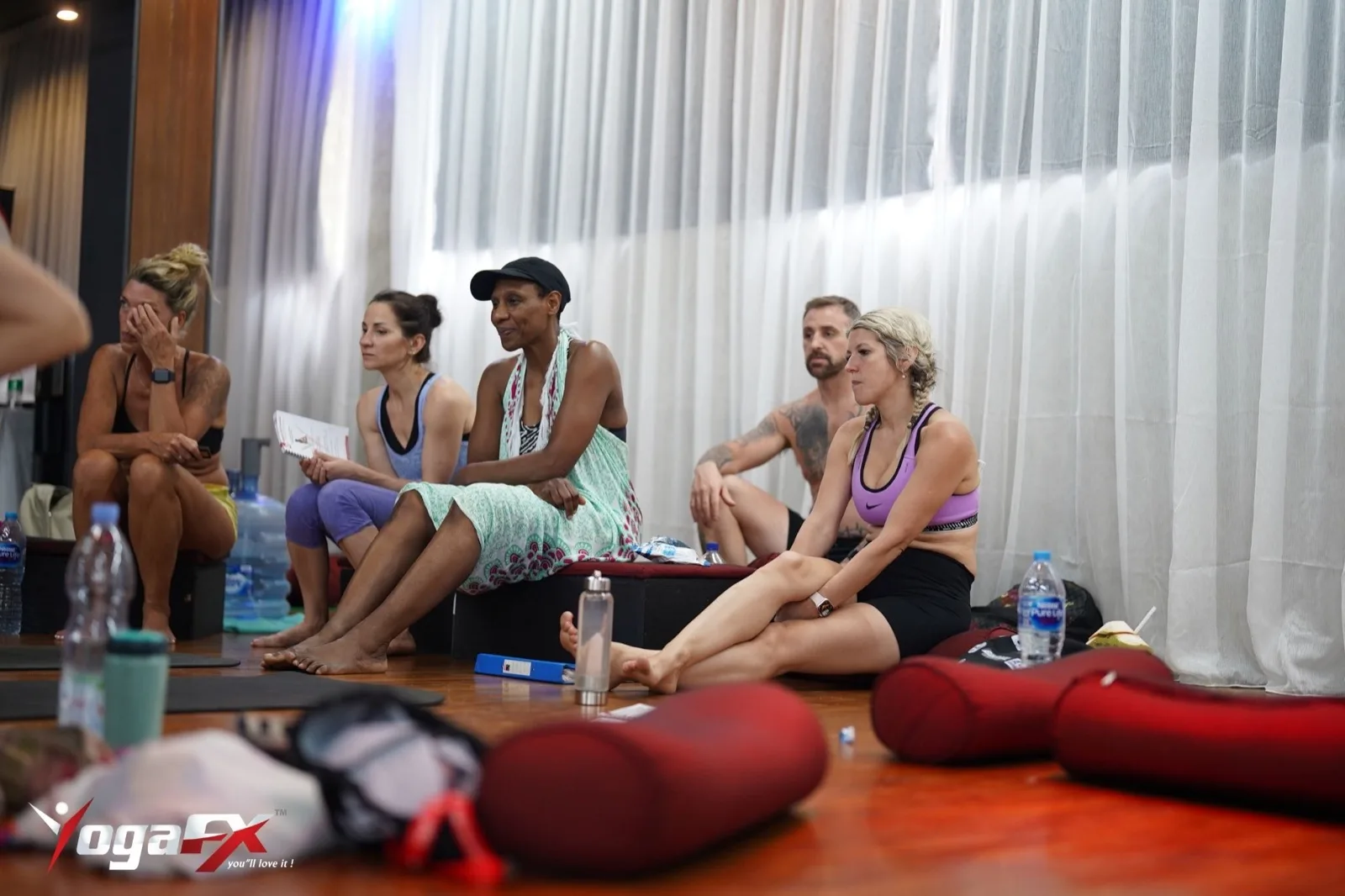
Hot Yoga for Athletes at a Glance: Five Numbers to Remember
What the Research Says About Yoga for Athletes
Evidence on hot yoga for athletes specifically is thin, so it pays to be straight about what we can and can’t say. We could verify one useful trial on yoga and sport, and it did not use a heated room.
In a 2024 study, 20 elite adult female fencers were split into a Pilates group and a yoga group, with 10 in each. Both groups trained for 50 minutes, twice a week, for eight weeks. Reaching distance on a lower-quarter Y-Balance Test increased significantly for both groups, and so did their Functional Movement Screen scores. The authors concluded that Pilates and yoga might be likely effective for improving performance and preventing injury in adult female fencers.
- What it suggests: a regular yoga practice may help balance and movement quality in trained athletes.
- What it does not show: the sample was 20 fencers, the room was not heated, and the authors’ wording is cautious (“might be likely effective”).
- What to do with it: treat yoga as a possible aid for balance and body control, not as a guaranteed performance upgrade.
The heat is a separate question. We found no verified trial showing that a heated class improves club sport results, so we do not claim it. What the NHS and Mayo Clinic pages do tell us is how to stay safe when you sweat a lot. As ever, research suggests rather than proves.
Postures Club Players Notice First in a Hot 26&2 Class
The Original Hot 26&2 sequence repeats the same postures in the same order every class. That repetition is handy for athletes, because you can compare how a posture feels in week two and week eight. These are the ones players mention most when they take up hot yoga for athletes.
- Standing Deep Breathing. It opens the class and trains slow, full breaths while the room warms. It is a skill you can carry into the last ten minutes of a game.
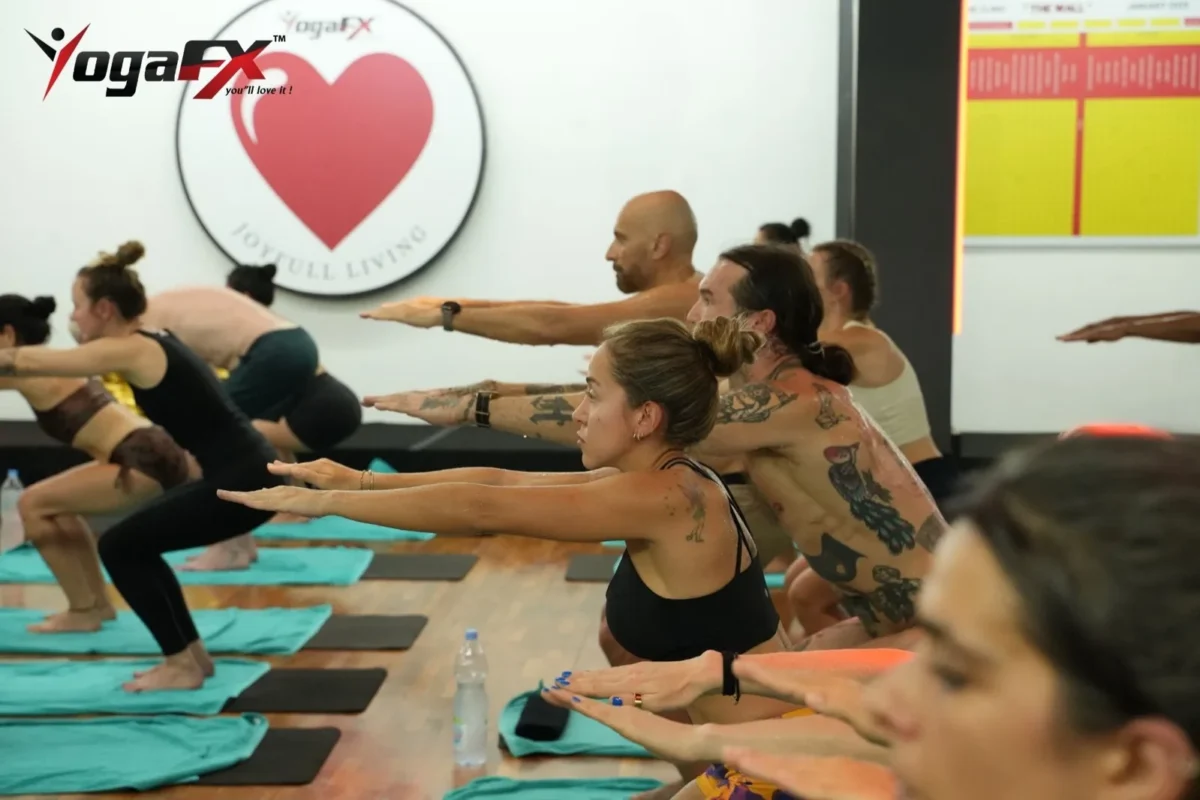
- Awkward Pose. A held chair-style squat that asks a lot of the thighs. Keep the knees comfortable and come up early if they complain.
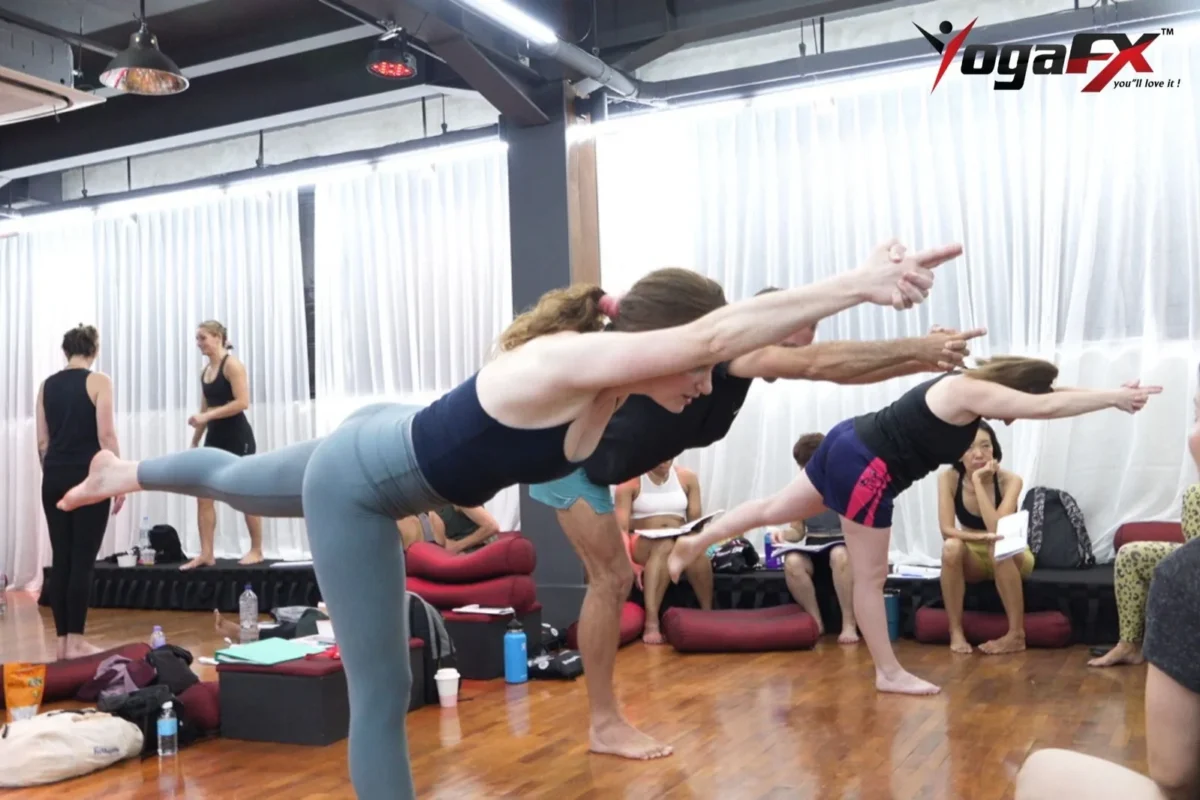
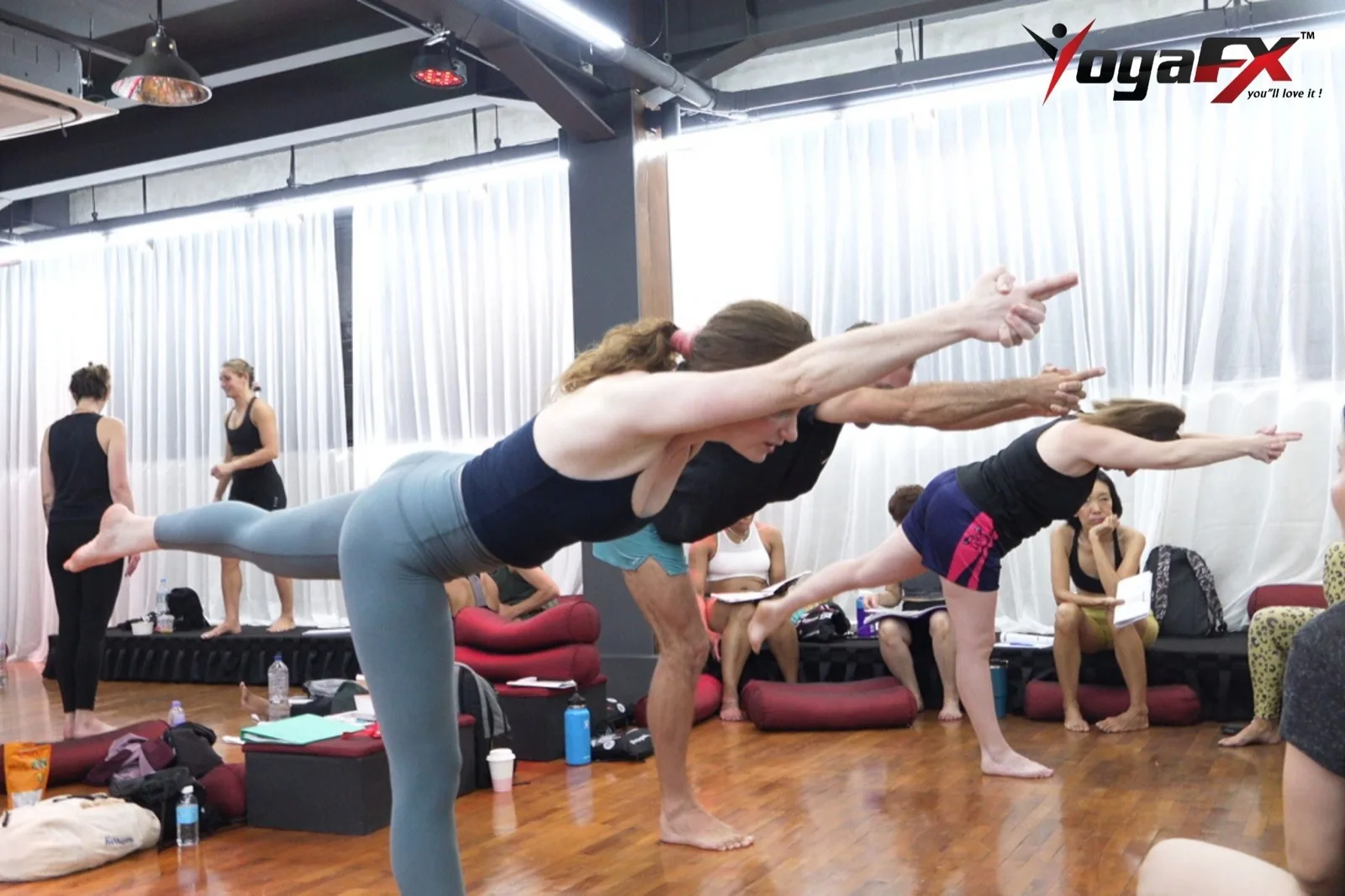
- Eagle Pose. A one-leg balance that wraps the legs and shows left and right differences quickly.
- Standing Head to Knee Pose. A balance and hamstring posture that rewards patience. Nobody holds it well in week one.
- Triangle Pose. A wide-legged stretch for hips and sides that feels very different after a long week of sitting at a desk.
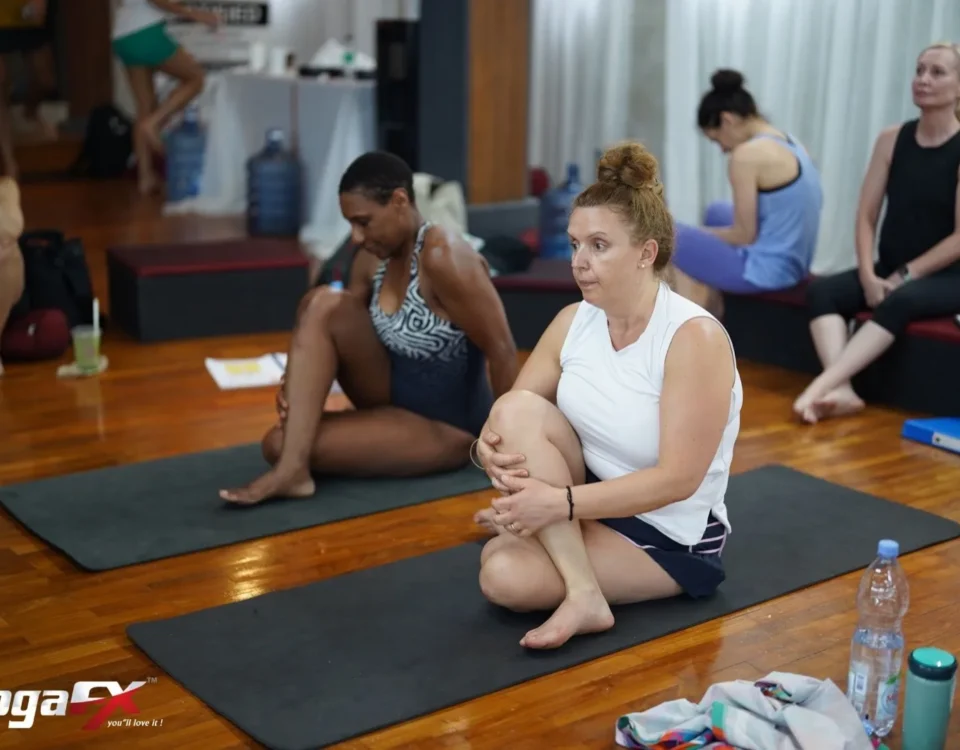
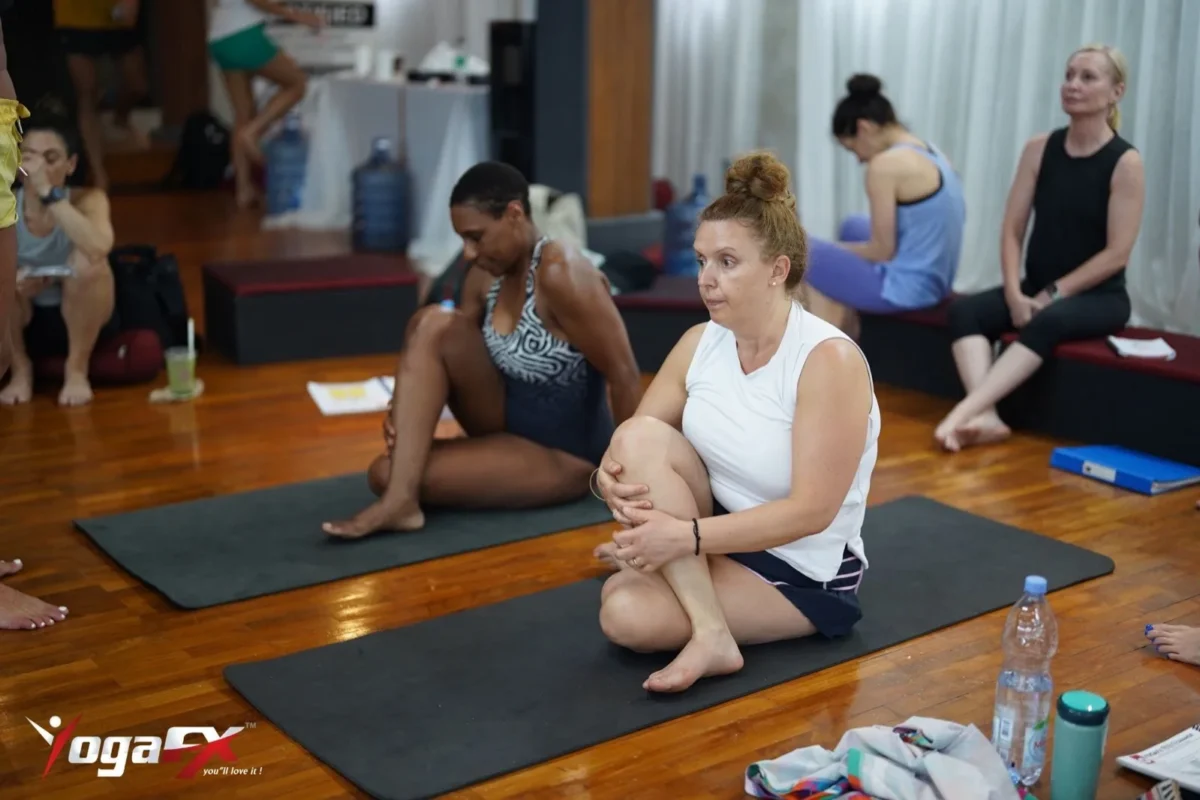
- Spine Twisting. A seated twist that moves the hips and back together, a change from straight-line running and cycling.
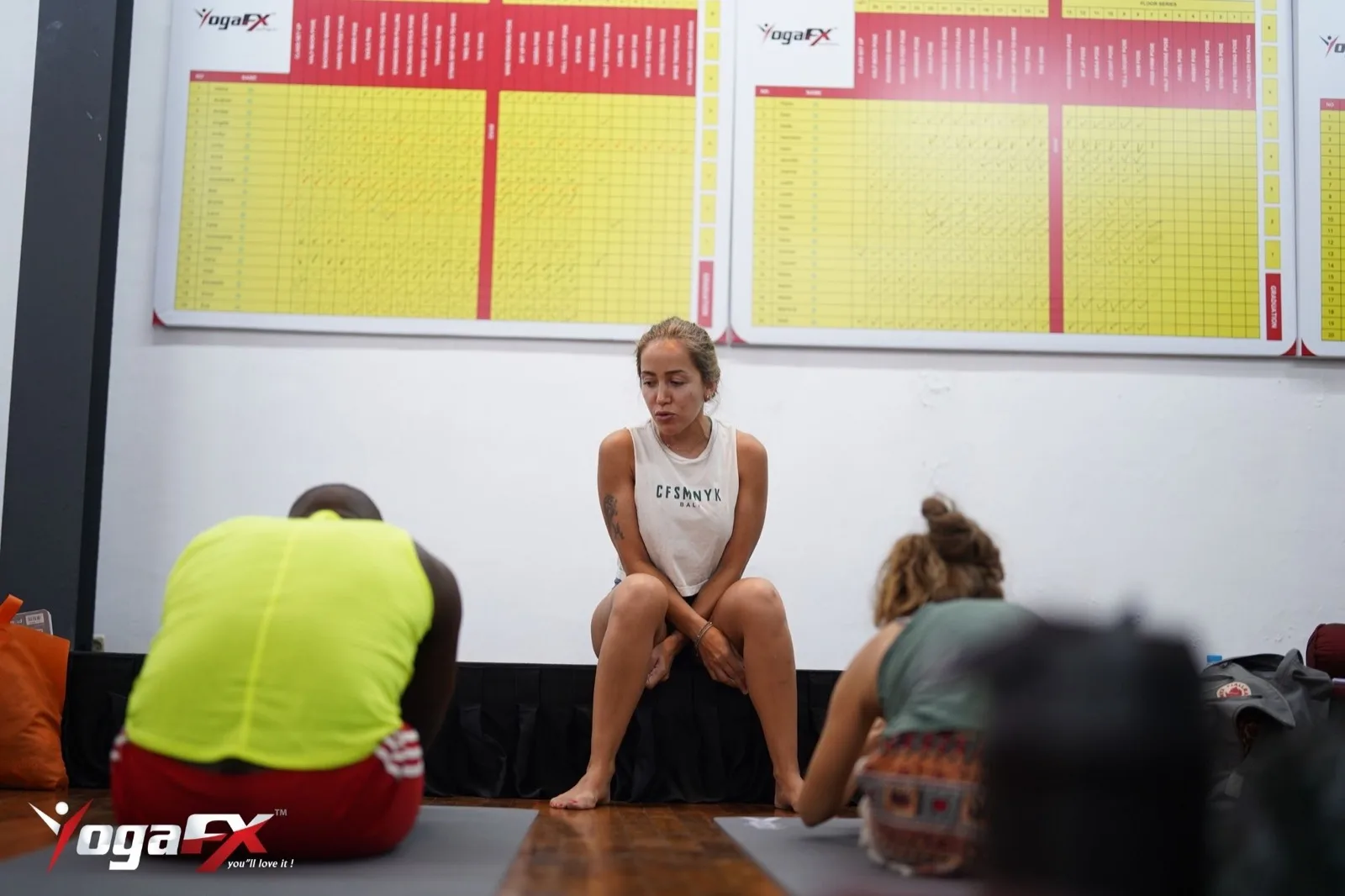
None of these postures fixes an injury. If a posture aggravates an old niggle, skip it or ask the teacher for a modification. Our guide on whether hot yoga is safe for men in the UK covers health checks and who should take extra care before the first class.
UK Rooms, Cold Exits and Costs: Hot Yoga for Athletes at Home or in Bali
Hot yoga for athletes in Britain comes with a problem that a player in a warm country doesn’t face. You train in cold, wet air for months, then walk into a hot room, then walk back out again. Both ends of that swing matter.
Before you book a UK class
- Ask for the real room temperature. Not every UK hot class runs at 40°C, and the sequence differs between studios.
- Check the class length and pace. A 60-minute flow and a 90-minute scripted class are very different loads.
- Eat lightly two to three hours earlier. A heavy lunch and forward folds do not mix.
- Pack a towel, a large bottle of water and dry kit for the walk or drive home.
Some players want to teach the room
A few club players fall for the class and want to teach it. The usual obstacle is time, because a month away does not fit a season, a job and a family. For a wider look at the athlete route, see our guide to yoga teacher training for athletes. The table below compares a UK studio habit with the Bali route, using only what we can state firmly.
| UK studio class | YogaFX Bali MasterClass | |
|---|---|---|
| Purpose | Regular practice around your fixtures | Learn to teach the Original Hot 26&2 sequence |
| Format | One class at a time, set by the studio | 6 days, hybrid: online pre-course, then an intensive in Bali |
| Time off work | A lunch break or an evening | About five working days, Sunday check-in to Friday check-out |
| Price basis | Set by your studio, per class or membership | US$1,899 Early Bird, or US$1,999 at the normal rate |
| Outcome | Better knowledge of your own body | Yoga Alliance RYT 200-Hour plus Bikram Hot 26&2 200-Hour International Yoga Certification |
The next MasterClass checks in on Sunday 24 January 2027 and checks out on Friday 29 January 2027 at Soham Wellness Center in Seminyak. Twin share is US$1,999, a single room is US$2,199, and instalments start from US$250 a month with no interest. Our guide to original hot yoga teacher training from the UK covers travel, leave and costs in detail.
If you want a second view on planning classes around a weekly schedule, our companion guide on building heated classes around a training week takes the same question from the angle of a busy athlete studying online.
What Athletes Say After Training With Mr. Ian
These reviews come from students of the YogaFX teacher training, not from a hot yoga for athletes study. Read them as athletes describing what the training did for them, and as a reminder that the heat and the discipline are hard and worth it.
As someone who lives in the world of fitness and athletic training, I found this program incredibly valuable. It taught me how to control energy, breath, and focus in extreme conditions.
Kadek, Google review, 2026
the great professionalism and human skills of our instructor Mr Ian made everything so simple and fun.
Mario, Google review, 2022
Ani, who describes the body-building background in a video review, said in the video (paraphrased) that they now see themselves as a yoga practitioner as well as an athlete, and that they felt fitter and stronger after the training. Ani, YouTube review, 2026

How Mr. Ian Terry Teaches the Hot 26&2 Class
Mr. Ian Terry is an E-RYT 500 teacher with more than 12,000 teaching hours and over 1,500 graduates from 80+ countries. He trained for five years, from 2014 to 2019, with the founder of the Bikram Hot 26&2 method. His classes run 90 minutes, follow a scripted dialogue, and use no music and no demonstration.
That style suits athletes who like data, and it is why hot yoga for athletes works well in this room. The voice repeats the same cues every class, so you set your own effort and nobody shows you a deeper version to chase. You learn to listen to your breathing and your legs, which is the habit a good coach asks of you anyway. For UK applicants, YogaFX offers the Bali MasterClass as a short, practical route when you are ready to go beyond the mat.
FAQ: Hot Yoga for Athletes in the UK
Is hot yoga good for athletes?
It can be, if you treat it as a planned moderate session. One class a week gives hips, hamstrings and breathing some work, but no study we found proves it improves sport results. Put it on an easy day, drink early and stop if you feel unwell.
How often should an athlete do hot yoga?
Start with one class a week for three or four weeks and watch your next sessions. If training still feels normal, you can try a second class in the off-season. In season, most club players do better keeping it to one class on the easiest day.
Will hot yoga help with sore muscles after training?
We found no verified study showing that hot yoga reduces muscle soreness. Some players like the gentle movement the day after hard work, but a heated class is itself a workload. If your legs are very sore, an unheated home session is the safer choice.
Can I do hot yoga the day before a match?
We advise against it. The room adds fluid loss and effort, and you want to arrive at kick-off fresh and well hydrated. Keep your class for an easy day earlier in the week, and keep match eve for food, water, sleep and a short walk.
Is Bikram yoga for athletes different from other hot yoga?
Heat and sequence vary between studios. Original Hot 26&2 follows the same 26 postures in the same order, for 90 minutes at 40°C and 40% humidity, with a scripted dialogue. That repetition lets an athlete compare how each posture feels from week to week.
Still have questions? Message Mr. Ian and the YogaFX team on WhatsApp and we will answer them personally. Start with one class, notice how your next session feels, and build from there. Always consult a healthcare professional before starting a new heated exercise routine.