Does hot yoga build muscle? A little, yes, mostly in the legs, hips and back. An 8-week trial of Bikram-style classes found stronger deadlift pulls and better flexibility, but no muscle size gain that we can verify. For a UK lifter, hot yoga is a useful partner to the barbell, not a replacement for it.

That short answer matters if you train in a British gym. You probably lift three or four days a week, and you want your size and strength to keep climbing. So if you are asking does hot yoga build muscle for someone like you, here is what the evidence supports, what it doesn’t, and how to fit a class into your week without losing progress.
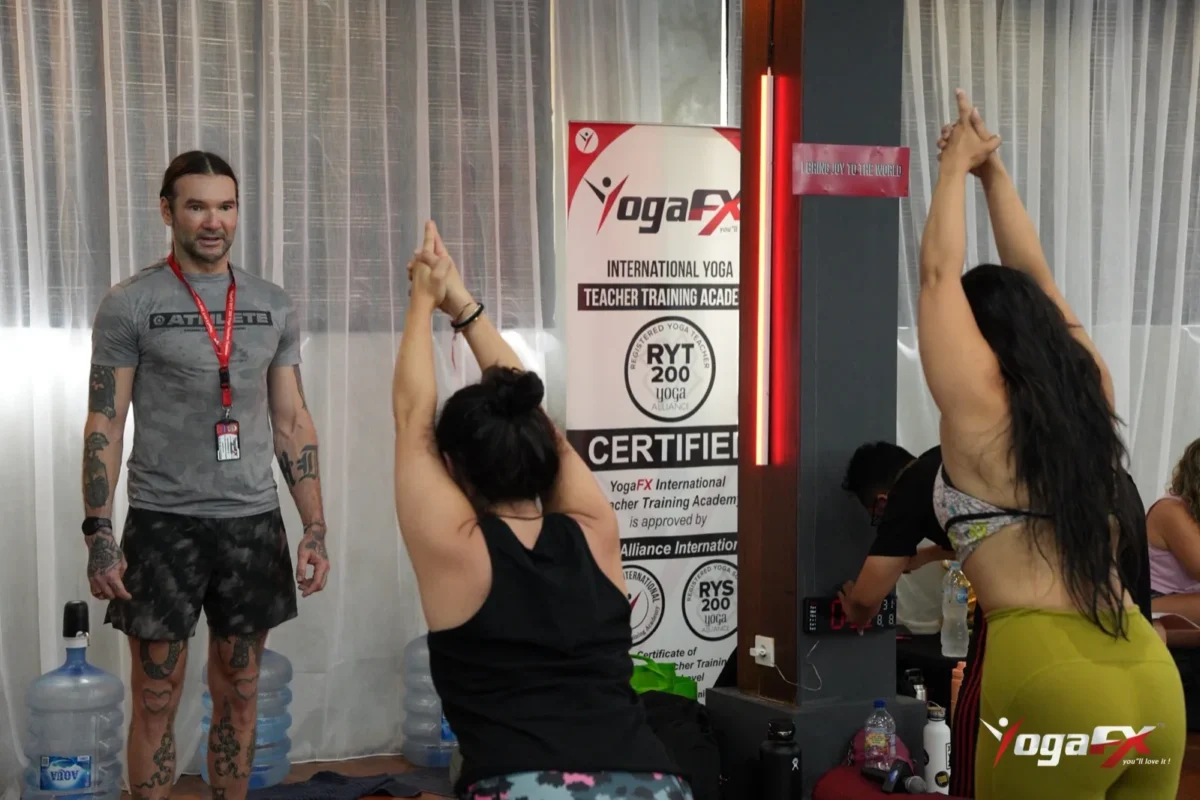
This guide comes from the teaching side. Mr. Ian Terry, E-RYT 500, has more than 12,000 teaching hours behind the room at YogaFX. The teaching view is simple: the heat gives you strength you can feel before it gives you a shape you can see.
Does Hot Yoga Build Muscle? What the 8-Week Trial Found
Only a handful of trials have tested hot yoga against a control group. The best known is by Tracy and Hart, published in the Journal of Strength and Conditioning Research in 2013. It was a small, exploratory randomised trial, so treat it as a strong hint, not a final ruling.
Ten healthy adults did 24 Bikram yoga classes over 8 weeks. Each class lasted 90 minutes in a heated, humid studio. Eleven adults in a control group carried on as normal. The researchers measured strength, flexibility, heart and lung fitness, and body composition with a DXA scan.
The yoga group improved their isometric deadlift strength. Lower back, hamstring and shoulder flexibility also rose. Body fat fell modestly compared with the control group. Handgrip strength, blood pressure, resting heart rate and maximal aerobic fitness did not change.
Notice what is missing. The abstract reports strength, flexibility and body fat. It does not report a muscle size gain. We read the published abstract, but the full paper sits behind a paywall, so we only quote the direction of the results. If you need exact percentages, read the paper itself.
So does hot yoga build muscle in the way a gym does? Not on this evidence. It can raise strength in a way that carries over to a deadlift-style pull. That is a different claim from growing bigger muscles, and the two are easy to mix up.
Our online teacher-training team asks the same question from a trainer’s side. You can see how our sister site grades the evidence for the muscle question if you want a second angle.
The Numbers Behind the Answer
Does hot yoga build muscle? If you scan only one part of this page, scan the five cards below. Together they show how small the evidence base is, and what UK and US guidance expects from a lifter.
How long the Tracy and Hart trial ran.
Each one lasted 90 minutes, about 3 a week.
10 in the yoga group and 11 in the control group.
The weekly minimum for strengthening work in NHS and CDC guidance.
Mayo Clinic’s guide for a load that tires the muscle.
Does Hot Yoga Build Muscle Before It Builds Size?
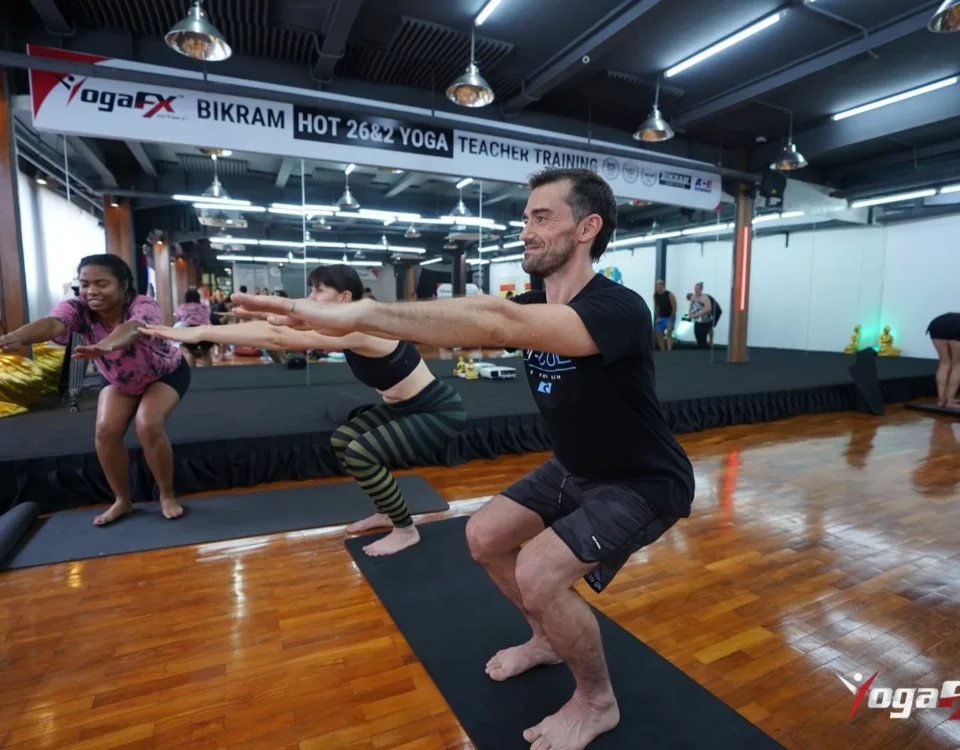
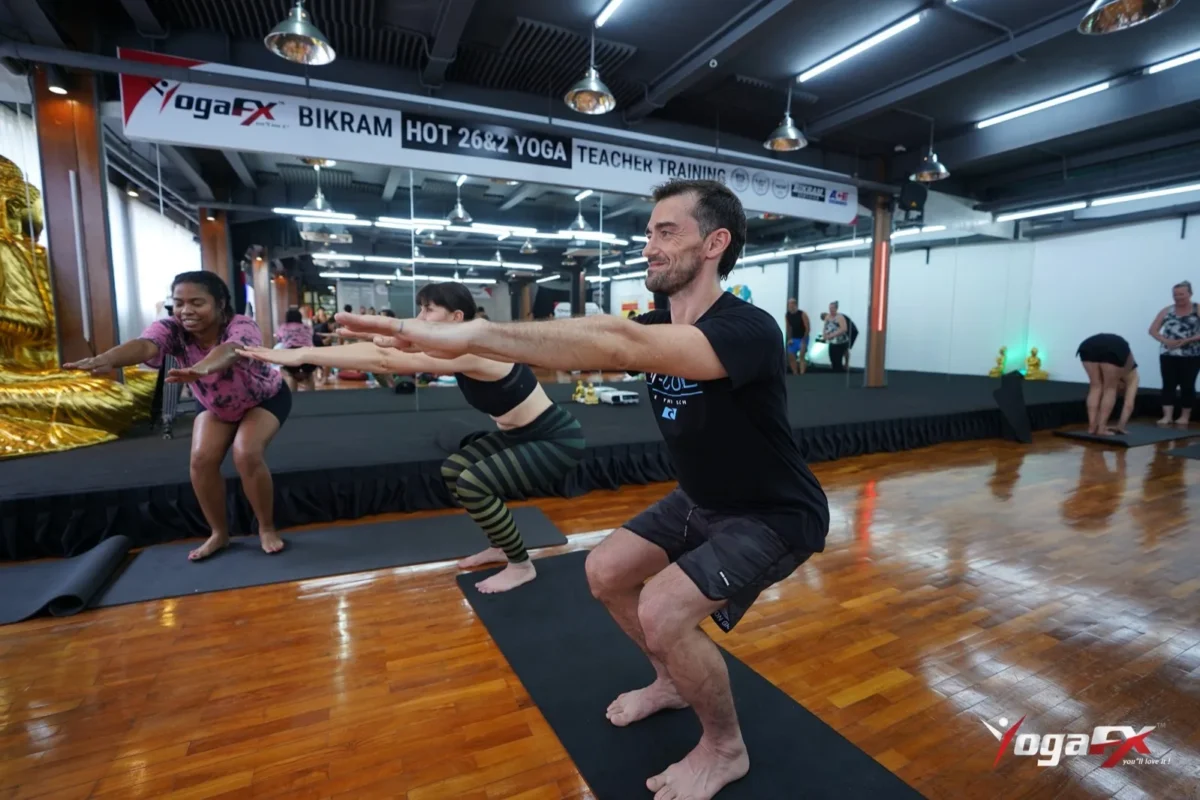
Most hot yoga postures are isometric holds. The muscle stays under tension while the joint barely moves. Awkward pose, the chair-style posture, is the clearest case. You sit back, bend the knees and hold. The thighs burn because they carry your weight for a long time.
That is a real training stimulus, especially in the first weeks. A likely reason is that the nervous system learns to use the muscle better. Balance improves and shaky postures steady. As a result, many students feel stronger by week four, long before the mirror changes.
Then progress slows. Mayo Clinic advises that “when you can easily do more repetitions of a certain exercise, gradually increase the weight or resistance.” In class, your own body is the only load, and it does not grow. So a hold that was hard in week one gets easier, and the muscle has less reason to adapt.
A lifter has the opposite habit. You add plates, so the stimulus keeps climbing. That is why Mayo Clinic’s strength training guide still puts resistance work first for building muscle. Hot yoga sits beside it, not above it.
Where Does Hot Yoga Build Muscle, and Where Does It Miss?
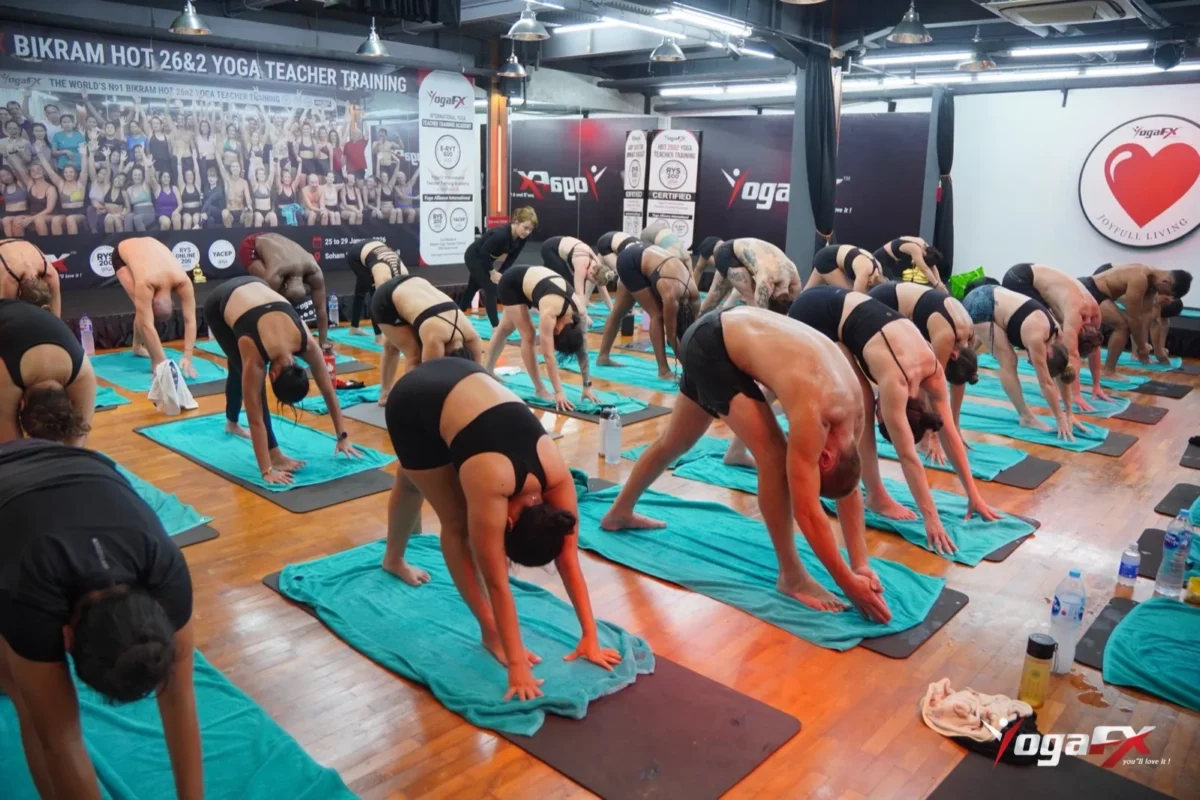
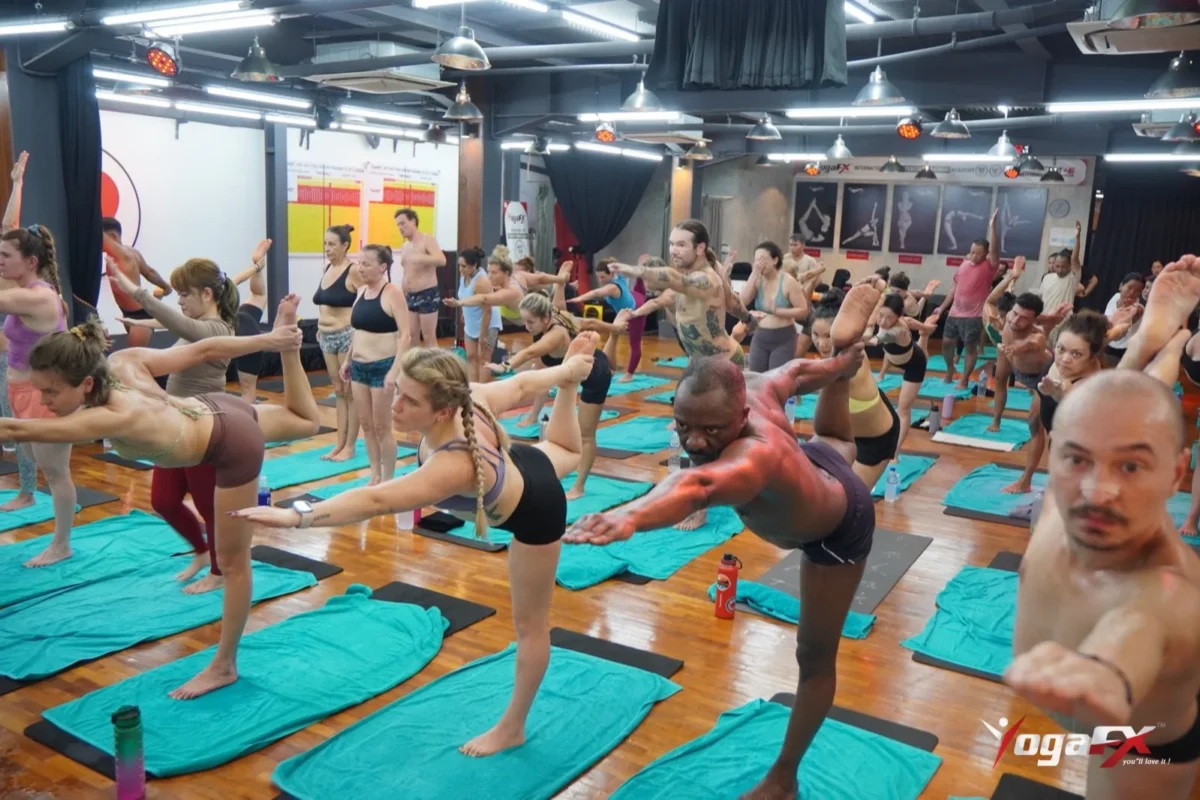
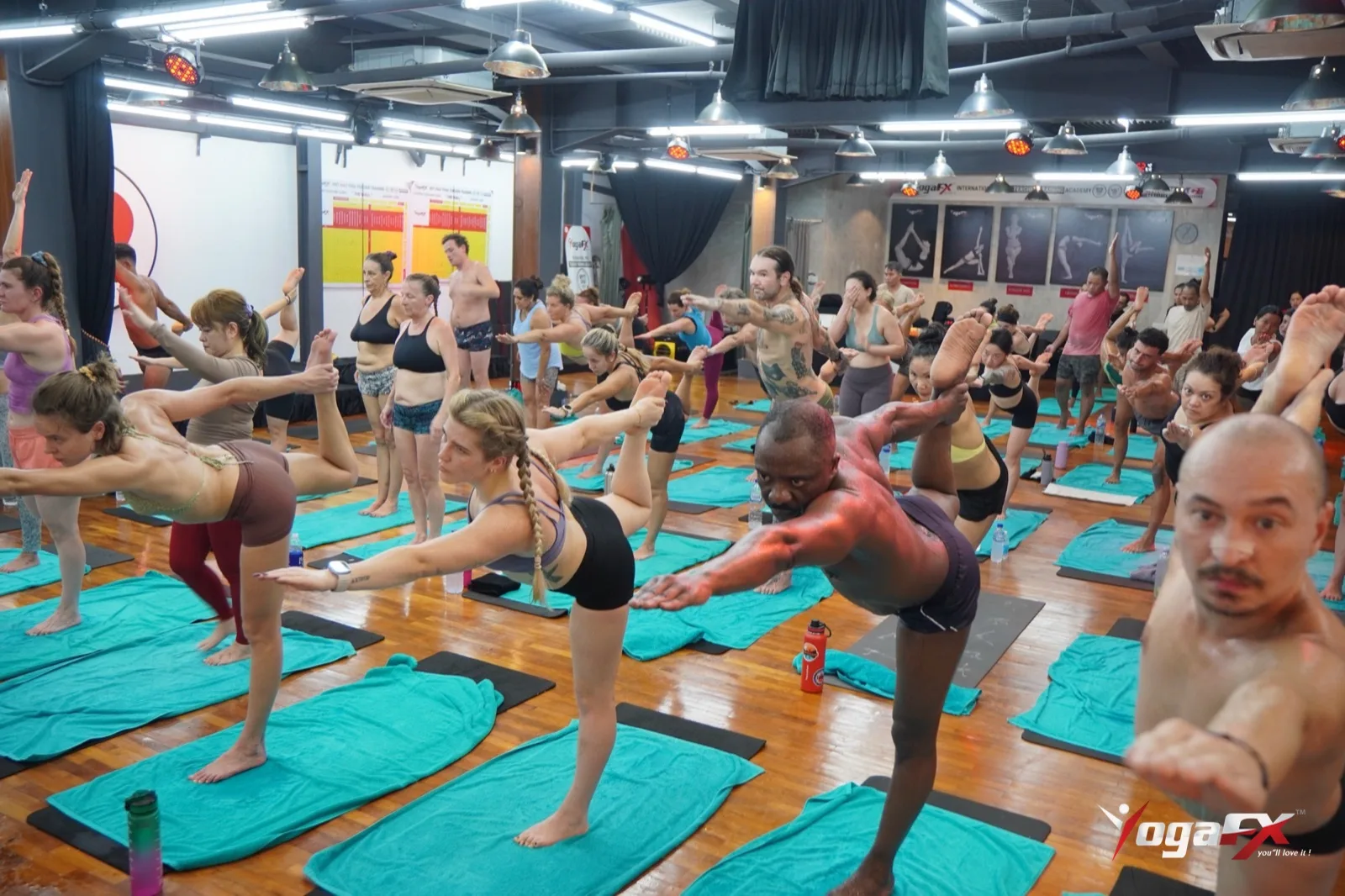
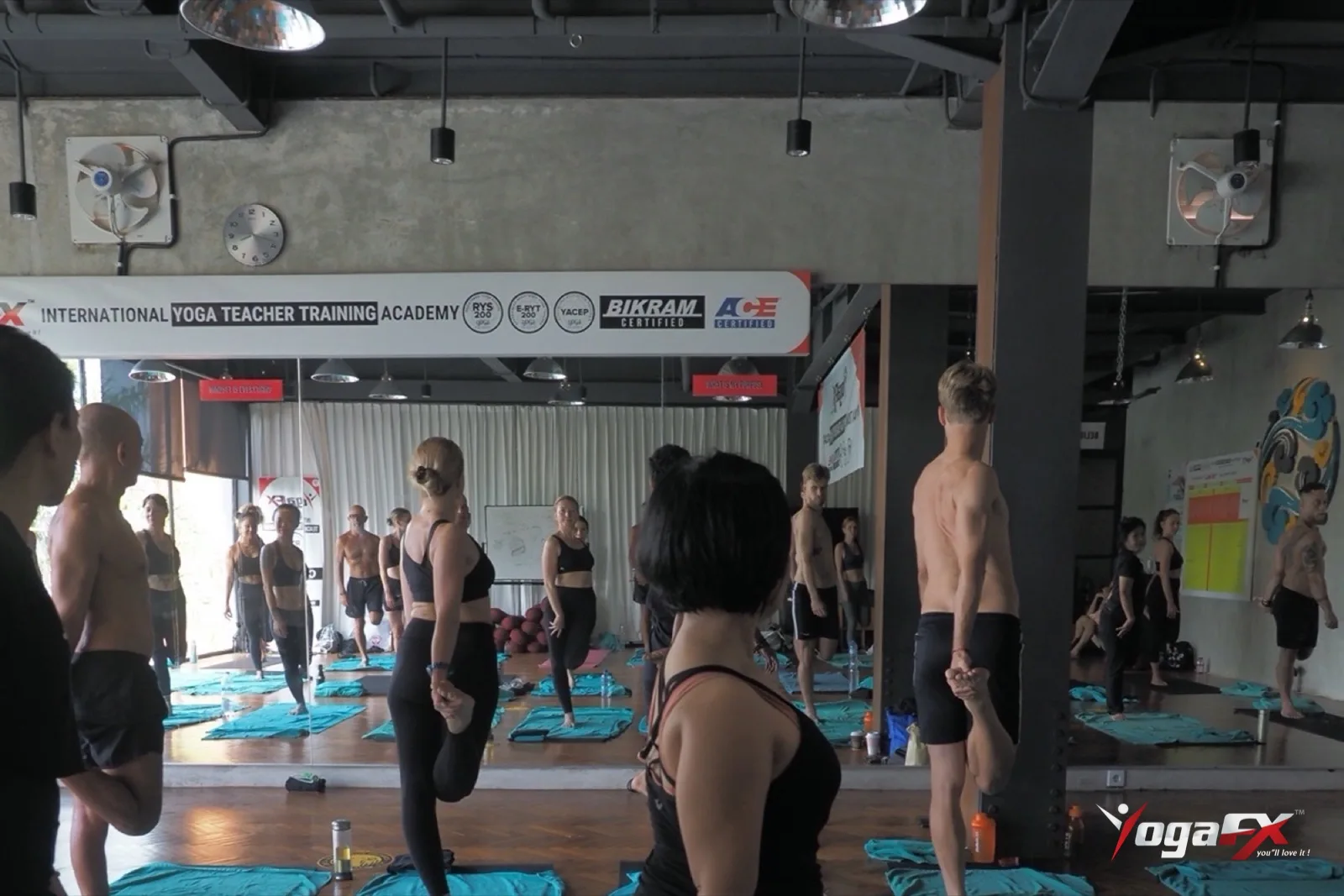
Where does hot yoga build muscle? The 26-posture class moves through standing, balancing, floor and backbending work, so most large muscle groups get some load. The legs, hips and back carry the most. Pushing and pulling with the arms barely appears.
Here is how that plays out, based on our teaching observation, not on a trial:
- Quadriceps and glutes. Awkward pose and the standing balances hold them under tension for long counts.
- Hamstrings and hips. Standing head to knee and the forward folds load them while the heat helps you reach new range.
- Back extensors. Locust and camel poses ask the spine muscles to lift and hold.
- Chest, lats and biceps. Barely trained. Nothing in the class matches a row, a press or a pull-up.
- Calves and core. Quietly busy in every balance, but rarely pushed to fatigue.
That pattern explains why a lifter can leave a class feeling strong in the legs and untouched in the upper body. Neither feeling is wrong. Both just describe a session with a fixed bodyweight load and no pulling.
It also matches what the national guidance asks for. The NHS physical activity guidelines for adults say to work all the major muscle groups on at least 2 days a week. They list legs, hips, back, abdomen, chest, shoulders and arms, and they name yoga among the activities that can count.
Does Hot Yoga Build Muscle Faster Than Lifting? A UK Training Week
So does hot yoga build muscle faster than lifting? No. Nobody has run a head-to-head trial against weight training, but the logic is clear. You can keep adding load in the gym. You can’t add load to a hold. For size, the barbell wins.
That does not make hot yoga pointless for a lifter. It trains range of motion, balance, breathing and calm under effort. Those are the qualities that heavy training often neglects. The table below shows one way to share the week. It is a teaching suggestion, not a study result.
| Day | Session | What it adds for muscle |
|---|---|---|
| Monday | Lower body lifting | Heavy squats or deadlifts drive leg size and strength. |
| Tuesday | Upper body lifting | Presses and rows cover the chest and back that class misses. |
| Wednesday | 90-minute hot yoga | Isometric leg holds, hip range and a calm, loose lower back. |
| Thursday | Rest or walk | Recovery, so the next session starts fresh. |
| Friday | Full body lifting | Another round of load for all major muscle groups. |
| Saturday | 90-minute hot yoga | Balance, breathing and focus, with easy legs the day after. |
| Sunday | Rest | Sleep and food do the real repair work. |
The pattern is simple. Lift the legs hard, then give them a day or two before a heated class. Keep hot yoga away from your heaviest leg session if the class leaves you shaky. And note that two classes a week is plenty to start.
If you want the wider workout picture, our guide on how hot yoga stacks up against a UK gym session compares the two directly. For the first month, our week-by-week results guide shows what to expect.
What the Heat Does and Does Not Do
Heat makes muscles feel loose and effort feel bigger. It also raises your heart rate and your sweat rate. None of that is the same as muscle growth. So does hot yoga build muscle because of the heat? We found no trial that tested it, so we don’t claim it.
Treat the heat as a comfort and range-of-motion tool. It lets many students move deeper into a posture than they could in a cold room. But deeper is not heavier. Your muscles still carry the same bodyweight.
Does hot yoga make you lose muscle? Nothing in the trial we read suggests it does. The yoga group gained strength, and body fat dropped modestly. Even so, a lifter who cuts food, loses sleep and sweats through two classes a week can stall. Eat enough, drink water before and after class, and recover well.
If you take medication that affects fluid balance, have a heart condition or high blood pressure, or are pregnant, please consult a healthcare professional before starting. The heat adds strain. For fat loss specifics, see our UK plan for belly fat and calories.
What the NHS, CDC and Mayo Clinic Say About Strength Work
Three trusted health bodies give a clear baseline. We opened each page and checked the wording before using it.
- NHS: adults should do strengthening activities that work all the major muscle groups on at least 2 days a week. The NHS advises doing them to the point where you need a short rest before repeating.
- CDC: adults need 2 or more days of muscle-strengthening activity each week, covering legs, hips, back, abdomen, chest, shoulders and arms.
- Mayo Clinic: choose a resistance heavy enough to tire the muscles after about 12 to 15 repetitions, and do strength work for all major muscle groups at least twice a week.
Does hot yoga build muscle enough to meet these guides? For the legs, hips and back, partly. It won’t tick every box on its own. That is why lifters get the most out of it as one part of a mixed week, not as the whole plan.
What Our Trainees Say About Strength
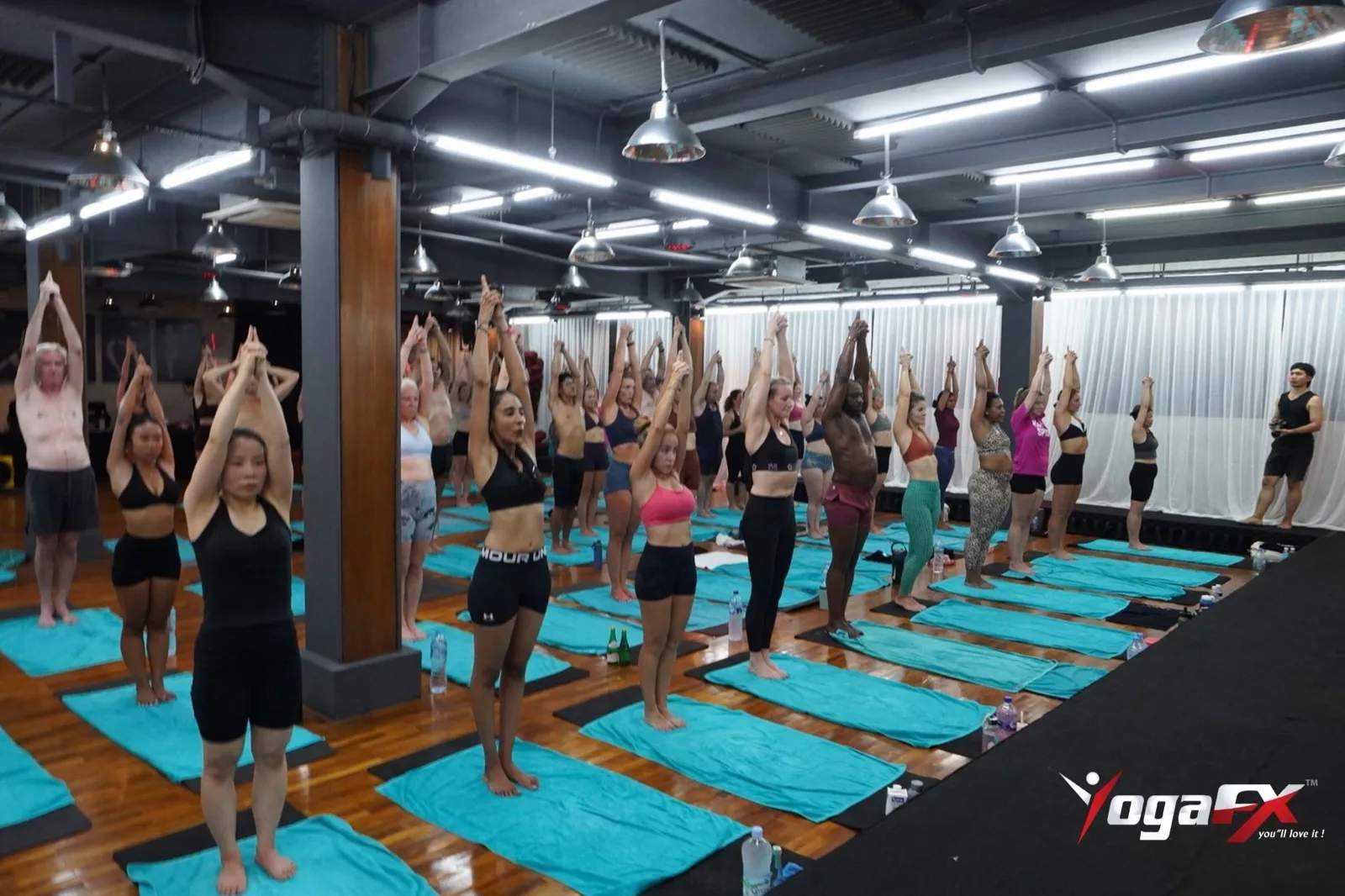
Research gives averages, while trainees give stories. Ask a room of them does hot yoga build muscle and you’ll hear about strength, focus and balance first. These comments come from real students at YogaFX teacher trainings.
“Highly knowledgeable and competent teachers will change yourself for the better. Strongly recommend this place for everyone’s willing to bring their flexibility, strength, focus, breathing or even balance to the next level.”
Thibaut, Google review, 2018
“Thank you very much. Thank you for all of you who always support me.”
Kartika, YouTube review, 2024 (translated)
Both comments point the same way. The room is demanding, and the teachers and the group carry you through it. Strength, focus and balance come up again and again. You can watch Kartika’s own video review below.

Who Gets the Most From Adding Hot Yoga?
Not every lifter needs it. Some will love it, others will find it a poor use of a training day. It helps to know which group you are in before you book a block of classes.
- Desk workers who lift. Tight hips and a stiff lower back often limit squat depth, so the range work pays off quickly.
- Lifters who feel stuck in one position. Shoulder and hamstring range improved in the trial, and that can make form easier.
- People who want a mental reset. The class demands attention for 90 minutes, which many students find calming.
- Anyone chasing maximum size. You may be better off spending that hour on a third or fourth lifting session.
If you sit in the first three groups, a weekly class is a fair experiment. Because the evidence base is small, run it for 8 weeks and judge for yourself. Track your lifts, your sleep and how your back feels, then keep what works.
Five Rules for Lifters Who Add Hot Yoga
- Start with two classes a week. The trial used about three a week, but a lifter already has a full diary.
- Keep your lifting. Hot yoga does not replace load, so keep the barbell sessions that build size.
- Hold with effort. Keep the thighs engaged in awkward pose and stay for the full count.
- Give it 8 weeks. The one trial we cite ran for 8 weeks, not 8 days.
- Eat, drink and sleep. Muscle repairs between sessions, and the heat raises the cost of skipping recovery.
Follow those five and you get the best of both worlds. Does hot yoga build muscle on its own? Only modestly. But the gym adds the load, and the room adds range, balance and a calmer head. For a wider look at men and the 90-minute class, read our UK guide to hot yoga for men.
Teach the Honest Answer: YogaFX Teacher Training in Bali
Students ask teachers “does hot yoga build muscle?” all the time. A good teacher answers with the studies and not with sales lines. That is part of what you learn on the 6-day Bikram Hot 26&2 Yoga Teacher Training MasterClass in Bali, led by Mr. Ian Terry.
Mr. Ian is an E-RYT 500 with more than 12,000 teaching hours. He trained for 5 years, from 2014 to 2019, with the founder of the method. Since 2017, YogaFX has trained more than 1,500 graduates from 80+ countries.
The MasterClass is a hybrid course. You study online first, then spend six days in person. The next batch checks in on Sunday 24 January 2027 and checks out on Friday 29 January, at Soham Wellness Center in Seminyak. Most UK students need about five working days off.
The Early Bird price is US$1,899, down from US$1,999. Payment plans start from US$250 a month. See the full costs, travel and time off for UK students in our guide to original hot yoga teacher training from the UK.
FAQ
Does hot yoga build muscle in beginners?
Early on, yes, mostly in the legs, hips and back. An 8-week trial found better isometric deadlift strength after regular Bikram classes. No result we could verify shows a large muscle size gain, so you’ll want to add resistance training if size is your goal.
Does Bikram yoga build strength?
It can. In the 2013 Tracy and Hart trial, adults who did 24 Bikram classes over 8 weeks improved deadlift strength and flexibility compared with a control group. Handgrip and aerobic fitness did not change, so the strength gains were specific to the postures trained, which is why it helps to pair it with other training.
Is hot yoga strength training?
Partly. The NHS lists yoga among activities that can strengthen muscles, and many postures are isometric holds. But your bodyweight is the only load, so progress levels off. It does not train chest or pulling muscles well, so it rarely covers every guideline on its own.
Does hot yoga make you lose muscle?
Nothing in the trial we read suggests that. The yoga group gained strength and lost a little body fat. Still, heavy sweating, low food intake and poor sleep can hurt any training plan. So eat enough, drink water, recover well and keep lifting.
Do bodybuilders do yoga?
Many lifters add yoga for flexibility, balance and recovery rather than for size. Hot yoga trains range of motion and control that heavy lifting can neglect. A mixed week works well: resistance training for size, and one or two classes for mobility and focus.
Still have questions? Message Mr. Ian and the YogaFX team on WhatsApp and we will answer them personally. This article is general information, so consult a healthcare professional before you start if you have a medical condition.