Competitive yoga is a judged sport where athletes perform yoga postures for scores, and in Britain it is still tiny. A hot yoga class is different. It is a practice, not a sport, because nobody scores or ranks you. So hot yoga is not a sport yet, though it can train one.

This guide looks at sport status through a UK lens. It draws on Mr. Ian Terry, E-RYT 500, Master Trainer of the Republic of Indonesia Yogasana Sports Federation, and on the YogaFX team that teaches Original Hot 26&2 every day. If you want the Ahmedabad results first, read what happened at the 2026 world championship. Here we ask a different question: does any of this count as sport, and where do UK students fit?
Competitive Yoga vs Hot Yoga: The Short Answer
Most searches for competitive yoga come from people who watched a clip and wondered whether their weekly class counts. It doesn’t, and that is fine. Here is the plain version:
- Competitive yoga (also called yogasana sport) has judges, scores, posture lists and medals. It is a sport by any normal test.
- A hot yoga class has a teacher, a script and a heated room. It has no opponents, no ranking and no prize.
- The link between them is the postures. Balance, strength, flexibility and control matter in both, so one can train the other.
That distinction matters for UK students because the two live in different worlds. One sits with sport governing bodies and event organisers. The other sits in studios from Brighton to Glasgow, where the goal is health and calm rather than a podium.
Five Honest Tests: Is It a Sport?
There is no single legal definition that settles the argument, so we use a simple working test. Ask five questions of any activity. The more yeses, the more it looks like a sport. This is our own checklist, not an official rulebook, and it keeps the debate practical.
| Test | Competitive yoga | Hot yoga class | What it means in the UK |
|---|---|---|---|
| 1. Judges and scores | Yes, a panel scores form, balance and control | No, nobody marks you | Scoring is the clearest dividing line |
| 2. Written rules | Yes, each federation sets posture lists and hold times | A fixed script, but not competition rules | Rules differ between federations, so check which one runs an event |
| 3. Opponents or ranking | Yes, by age group and category | No, you compete with yesterday’s version of you | Age groups let adults compete against peers |
| 4. A governing body | Yes, several international bodies | Not for a single class style | Yoga as a whole has a UK governing body, the British Wheel of Yoga |
| 5. Physical demand | High, built on strength and balance | High, about 80% of maximum heart rate on average in one study | Both are real exercise, which is why the confusion exists |
Notice that the physical test is the only one hot yoga clearly passes. Everything else needs a scoreboard. That is why we say hot yoga is a practice that can feed a sport, and not a sport in itself.
One more point. Sport and spirituality aren’t opposites, but they aren’t the same thing either.
Some teachers argue that a scoreboard misses the point of yoga. Others reply that posture is a real limb of the tradition and deserves testing. Both views are fair, and you can hold them together.
Sport Status in Numbers: A UK Snapshot
The figures below put UK reality next to the sport question. Every card comes from a named source, and the caption lists them.
Read the cards together. Yoga already has a place in UK sport governance and in NHS exercise advice. What it lacks is a large, organised competition scene at home.
Where Competitive Yoga Stands in Britain Today
Yoga is on Sport England’s published list of recognised sports, with the British Wheel of Yoga named as its governing body, according to the Sport England governing bodies page. The Wheel’s own history says it was awarded National Governing Body status in 1995. So on paper, yoga is a recognised sport in England.
Recognition is not a competition circuit
However, recognition for yoga as an activity is not the same as a national competition circuit. We found no large, regular UK league for yogasana. As a result, UK athletes who want to compete usually enter international events through national member bodies, and rules differ from one body to the next.
How fast the sport is growing abroad
The 2026 world championship shows how fast the field is moving. According to ANI’s report in The Tribune, 522 athletes from 79 countries took part, and the hosts won 114 medals. India’s own sports minister described 78 countries and over 500 athletes coming together in the first edition. The two reports differ by one country, which is normal for a brand new event.
For a UK reader, the useful lesson is scale. The sport is growing quickly abroad while the home scene is small. If you want a deeper explanation of events, age groups and judging, this detailed guide to how competitive yoga works from our sister site covers them.
What the Science Says About a Hot Class as Training
Nobody has studied competitive yoga athletes in a hot room, so no study proves that a heated class makes a champion. What research does measure are the qualities judges reward, such as strength, flexibility and stress control. Here is what the main studies found.
- Intensity. A 2014 University of Wisconsin study led by Porcari measured a 90-minute Bikram class at about 80% of maximum heart rate. It reported about 333 calories burned for women and 460 for men.
- Strength and flexibility. A 2013 study by Tracy and Hart reported roughly 20% more strength along the back of the body after regular Bikram practice, with better flexibility and body composition.
- Overall evidence. A 2025 systematic review by Willmott and colleagues pooled 43 studies and 942 participants. It reported benefits for flexibility, bone density and well-being.
- Anxiety. A 2022 paper by Hui and colleagues found that hot yoga reduced state anxiety, which matters for any athlete who freezes under pressure.
PubMed and PMC blocked our automated link checks, so we name these papers instead of linking them. We stuck to what the abstracts are known to report. You can find each one by searching the author names and year.
A useful UK benchmark
There is also a useful UK benchmark. The NHS tells adults aged 19 to 64 to do at least 150 minutes of moderate activity a week, plus strengthening work on at least two days. Yoga appears in its list of muscle-strengthening examples. So a weekly class helps you meet UK guidance even if you never see a scoreboard. For a closer look at the cardio side, read our guide on whether hot yoga counts as cardio.
These results show benefits from regular practice. They don’t show that any class will make you a competitor. Heat is not suitable for everyone, so please consult a healthcare professional first, especially with a heart condition, pregnancy, low blood pressure or regular medication.
How Hot Yoga Trains You for Competitive Yoga
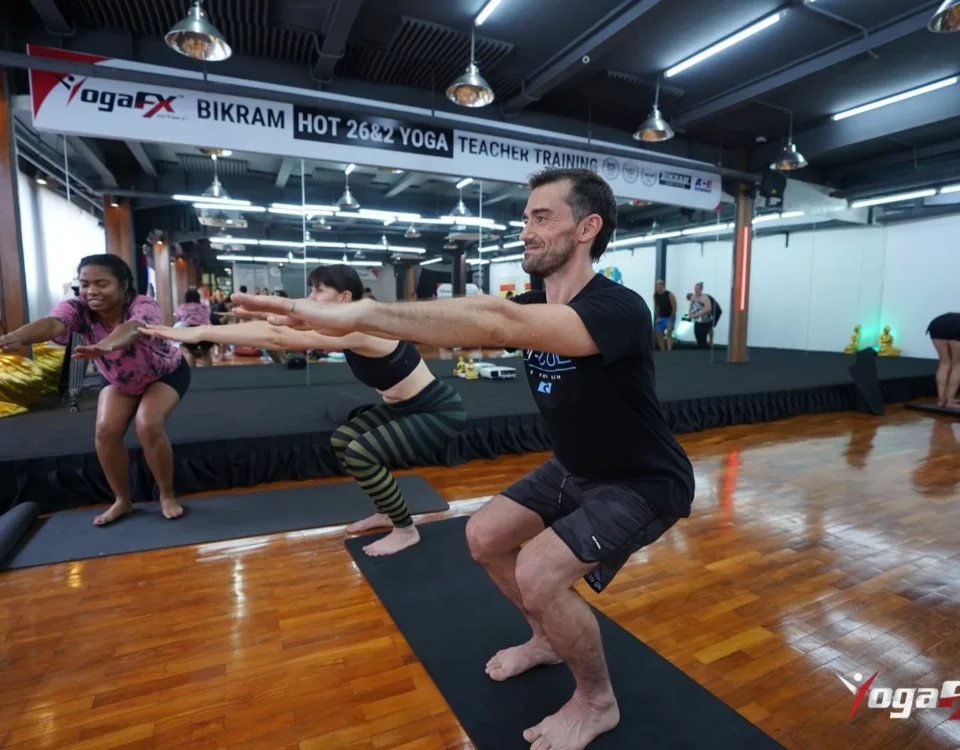
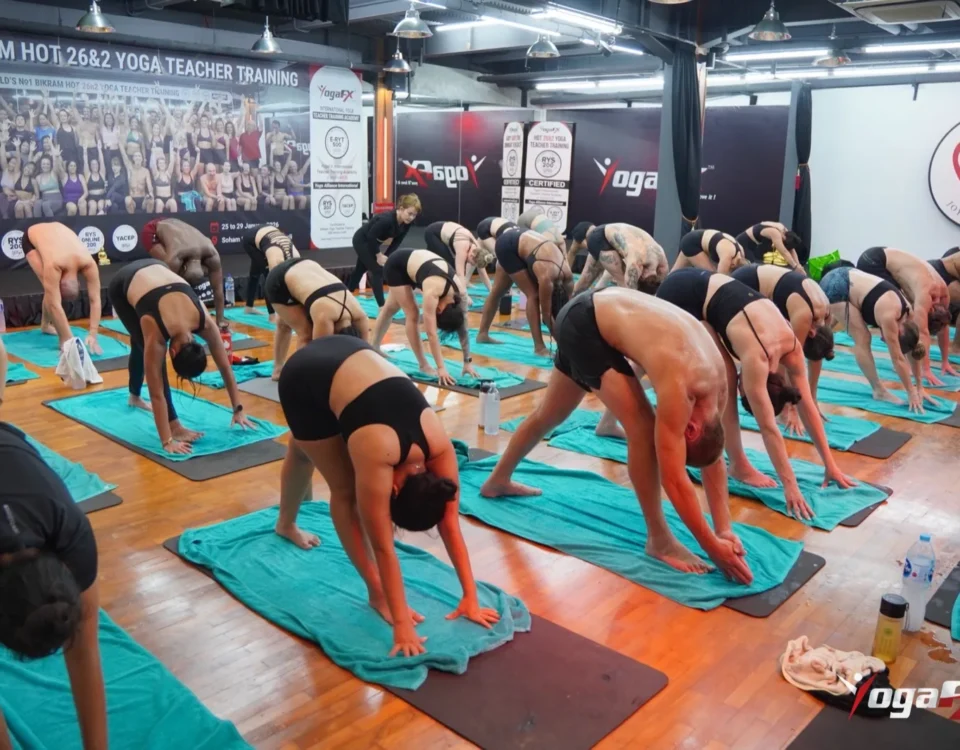
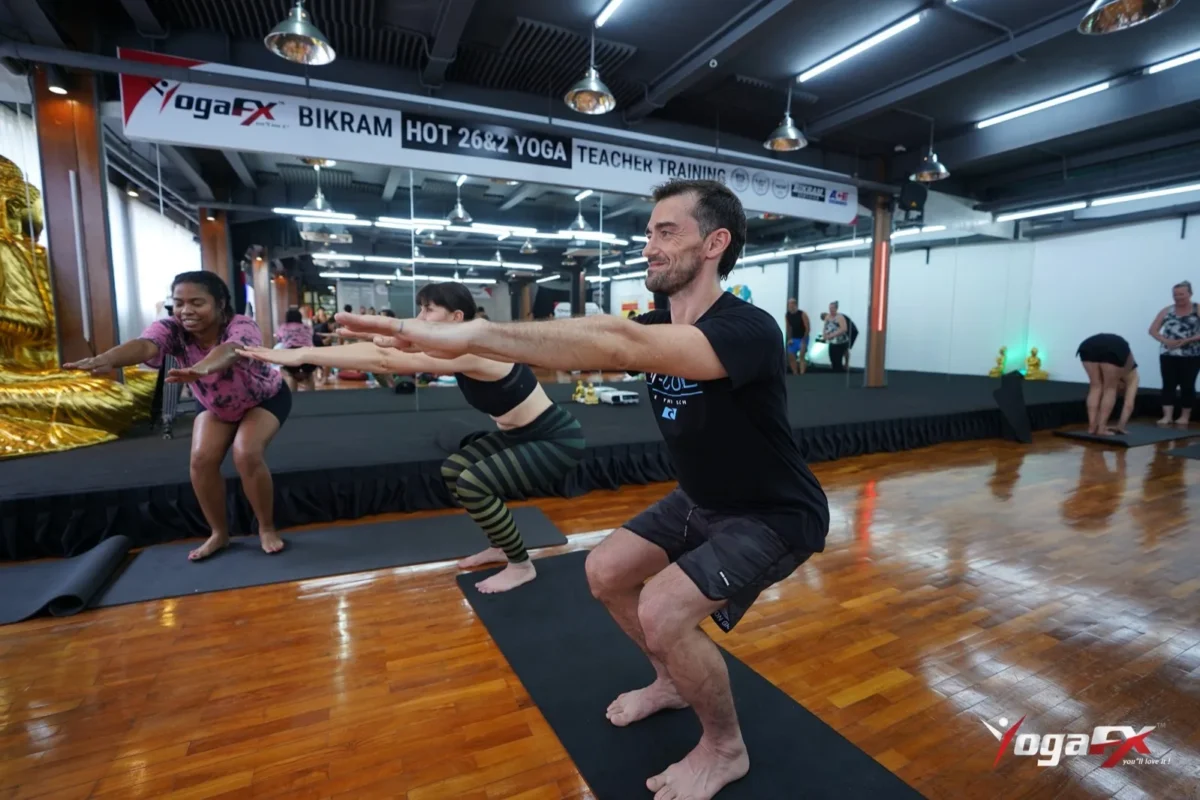
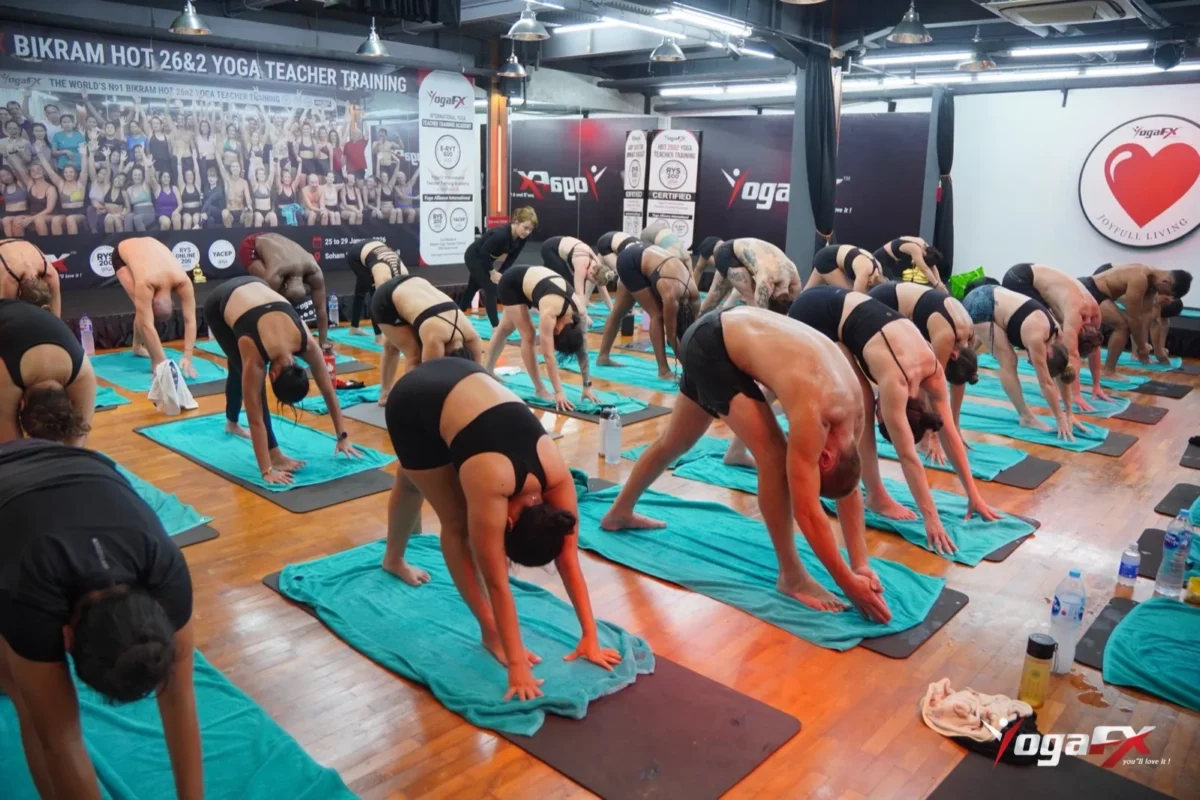
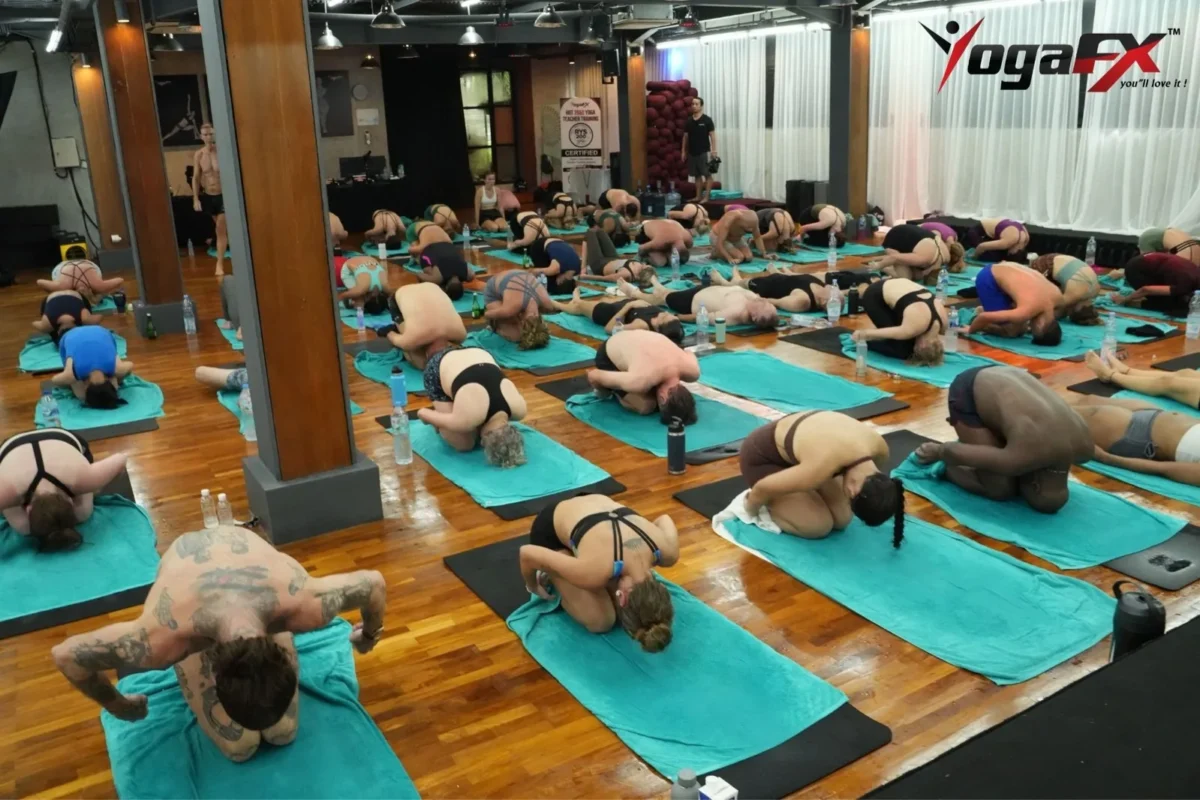
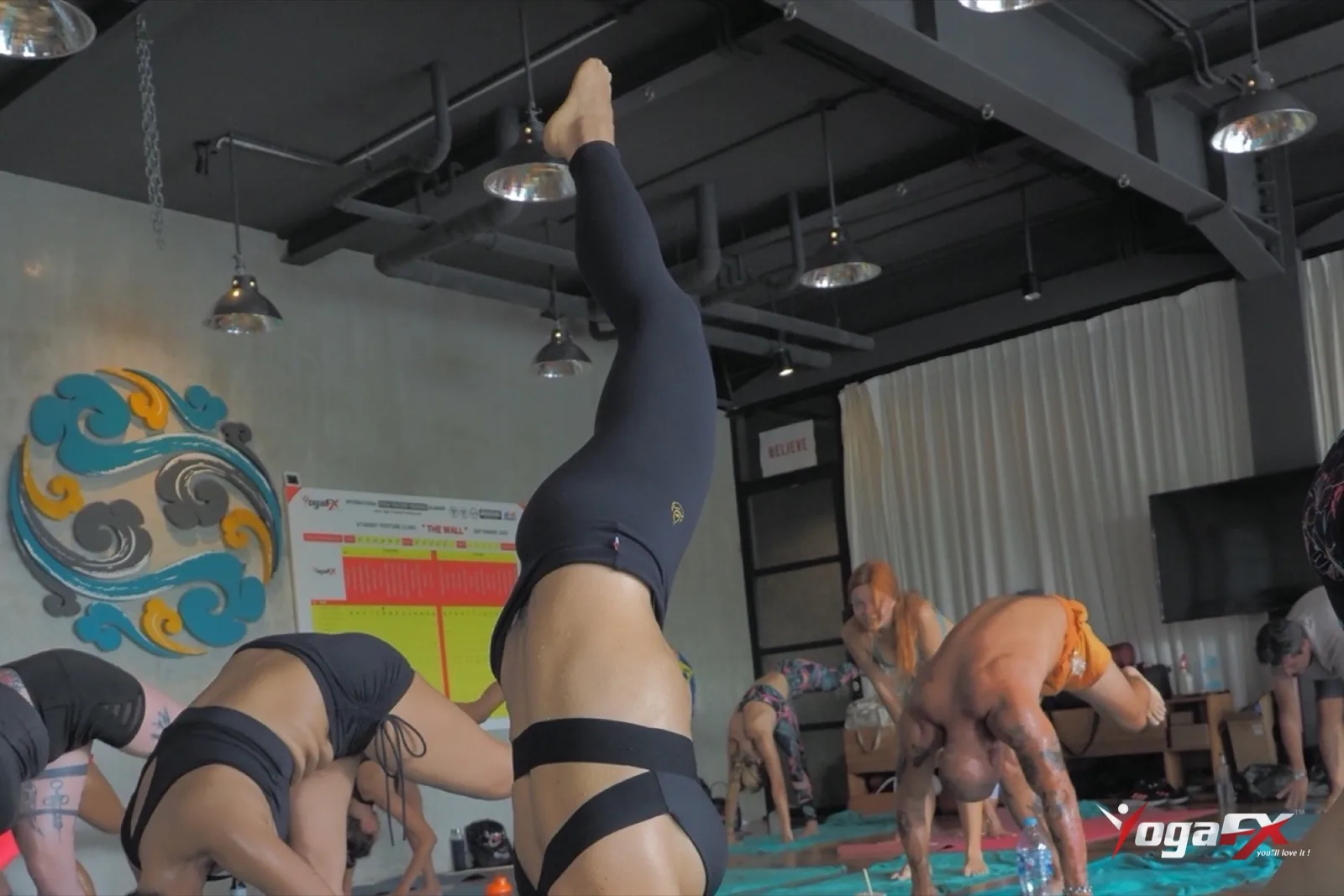
Even though hot yoga isn’t a sport, some competitive athletes use the Original Hot 26&2 sequence as conditioning. The reason is simple. The sequence asks for one-leg balance, deep backbends, forward folds and spinal twists in a fixed order, with exact cues, in about 40 degrees Celsius.
Here is what carries over, and what doesn’t:
- Balance and stillness. Postures such as Dandayamana Dhanurasana (Standing Bow Pulling Pose) train the steady hold that judges notice first.
- Precision under stress. A posture that collapses when you’re tired will collapse on stage. A 90-minute class teaches you to keep form while your legs shake.
- Spinal control. Backbends and twists build the even curves and square hips that scoring sheets reward.
- The gap. The 26&2 sequence includes few hand balances, so athletes who need arm strength must train it separately.
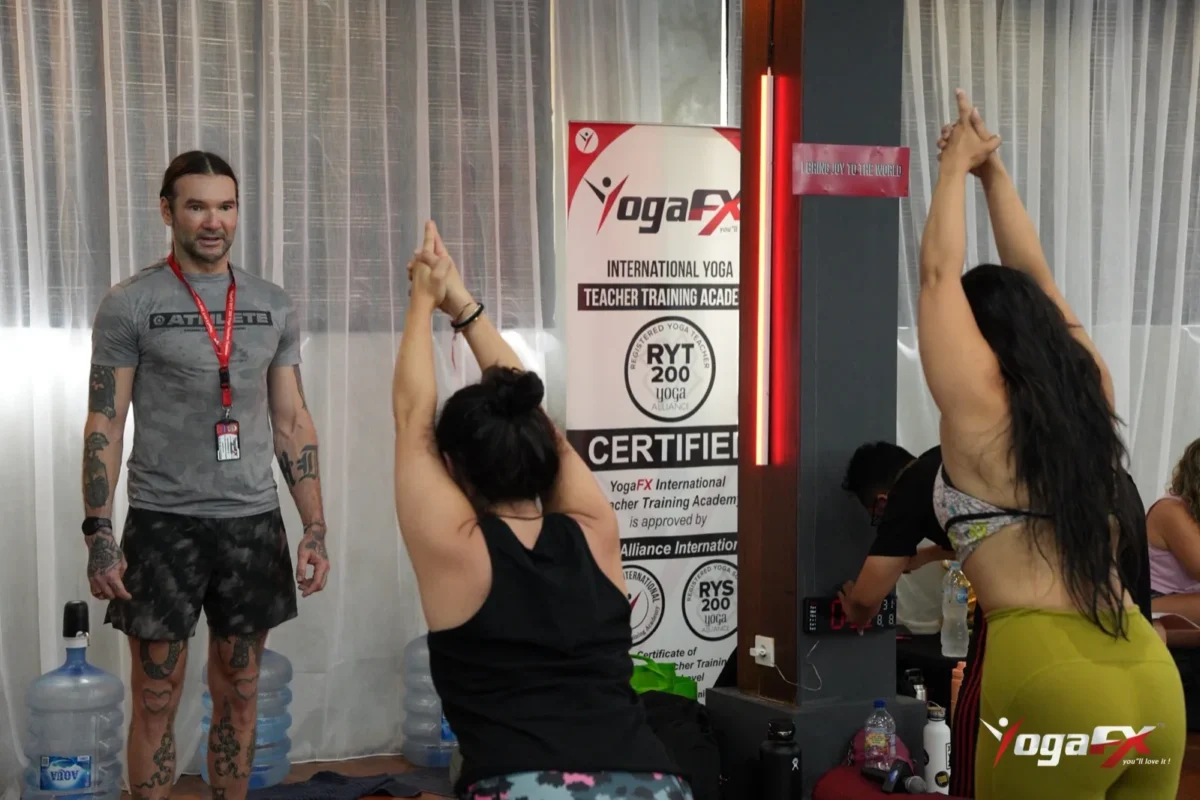
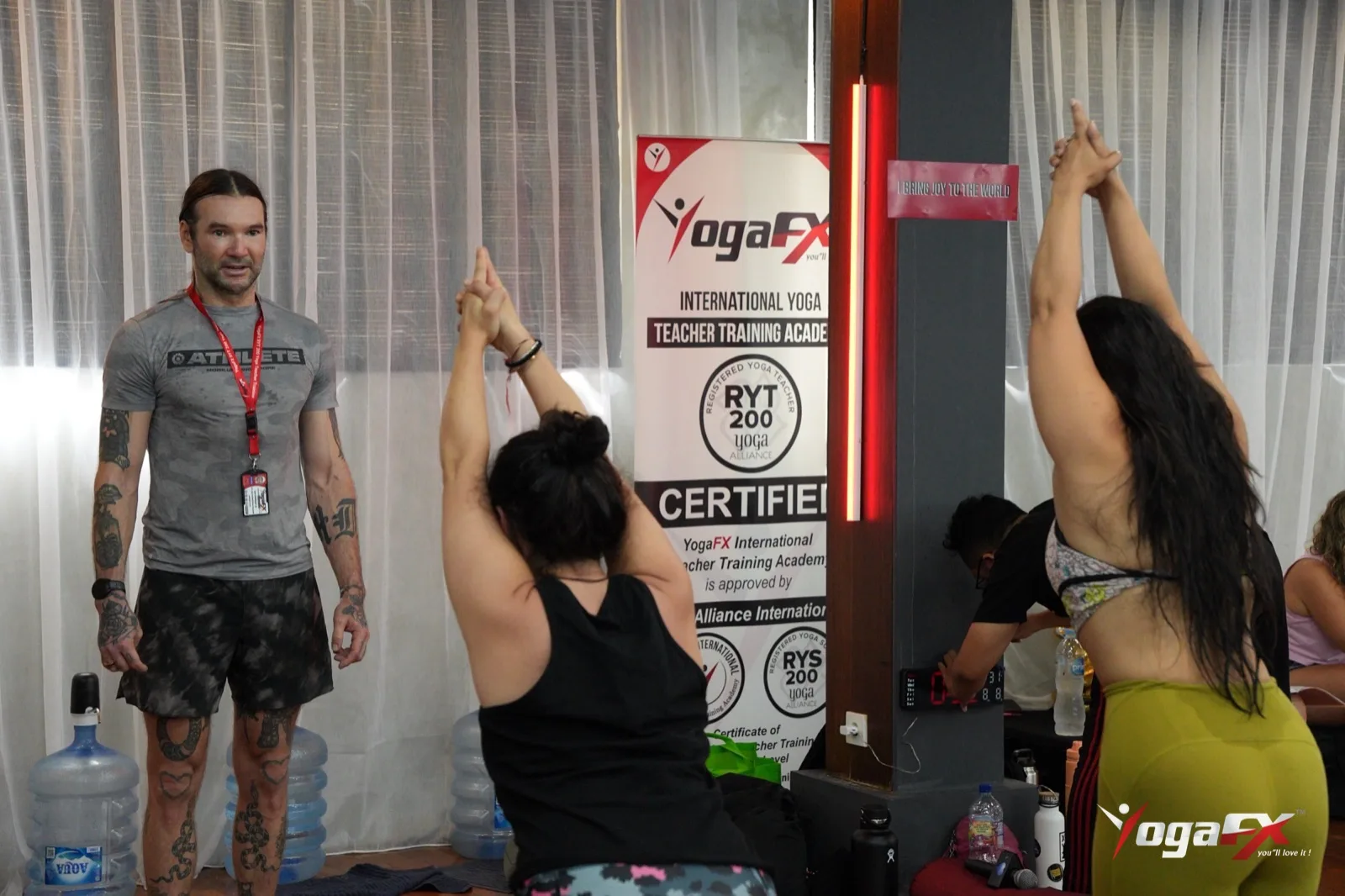
Mr. Ian sees this gap often. He has taught more than 12,000 hours and trained for five years, from 2014 to 2019, with the founder of the Bikram Hot 26&2 method. His advice to UK students is blunt: build a base first, then decide whether a scoreboard suits you. Our page on yoga teacher training for athletes explains how that base carries into other sports.
Health Checks for UK Students Before Heat or Competition
UK students often ask whether it is safe to jump from a cool studio to a heated room, or to a competition routine. The honest answer starts with a short checklist. None of this replaces advice from your GP or another healthcare professional.
- Heart and blood pressure. Ask your doctor first if you have a heart condition or low or high blood pressure.
- Pregnancy. Heated practice needs medical advice before you start.
- Medication. Some medicines change how you handle heat, so check with a pharmacist or GP.
- Old injuries. Deep backbends and splits for a score can push joints. Warm up, build range slowly and stop at pain.
- Hydration and food. Eat lightly beforehand and drink water across the day, not only in class.
If you tick any of those boxes, that does not mean you can’t practise. It means you should plan the first month with a professional and a teacher who knows your history.
Three Myths About Competitive Yoga in the UK
Myth 1: You need a gymnastics background
Not true. Many competitors began as ordinary students who practised consistently. Age groups also let adults compete against people at a similar stage of life, so starting late is not a barrier. Patience matters more than a flexible past.
Myth 2: A hot class makes you competition-ready
A hot class builds a base, but it doesn’t prepare you for a scoring sheet. Competitive yoga asks for specific postures, hold times and routines. You still need the federation’s rulebook and a coach who knows how judges mark small errors.
Myth 3: Competing makes you less of a yogi
That depends on you. Some students find that competitive yoga sharpens focus and discipline. Others feel stressed by the scoreboard and prefer the studio. Neither choice is more spiritual, and many people step off at any point on the ladder from class to daily practice to competition.
What Students Say About Training With Us
Not every YogaFX student wants a medal. Many come for a stronger practice or to teach. Here is how three of them describe the experience, in their own words.
The experience in Bali with YogaFX far exceeded my expectations! The training was tough but so rewarding.
Samantha, Google review, 2025
Mr IAN TERRY is really A GOOD TEACHER and MOTIVATOR! he is so passionate in what he does.
Ana, Google review, 2022
Slamet, in a YouTube video review from 2024, thanked the team and said the training brought many challenges every day, but he and his friends from around the world finished it together (paraphrased from the spoken review).
From a UK Studio to Teacher Training in Bali
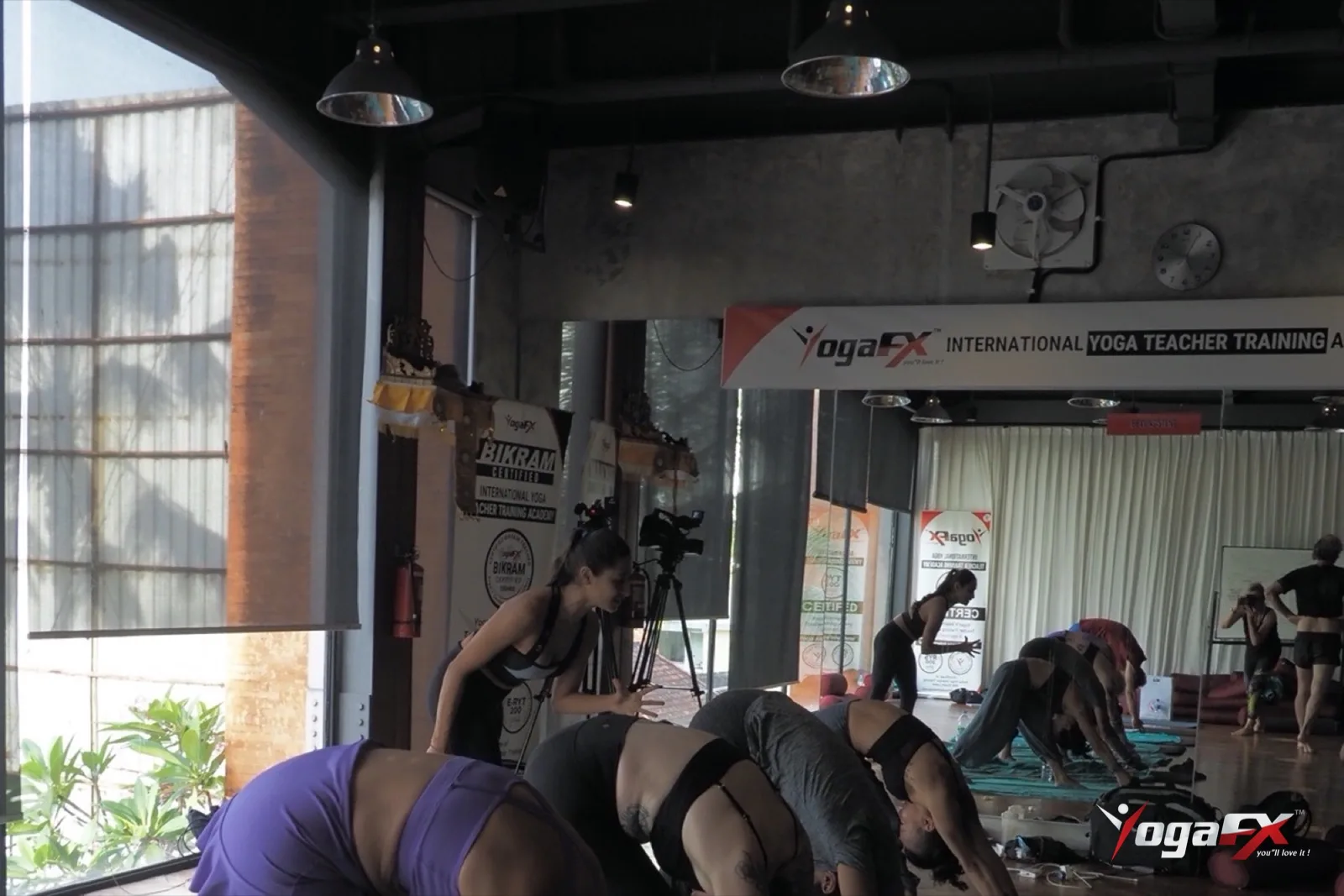
If your interest goes beyond one class, a teaching qualification is the usual next step. UK students join the same hybrid Bikram Hot 26&2 Yoga Teacher Training MasterClass as everyone else. You study online first, then spend six days in Bali.
- Certification: Yoga Alliance RYT 200 plus a Bikram Hot 26&2 200-hour certificate.
- Next intake: check-in Sunday 24 January 2027, check-out Friday 29 January 2027.
- Price: US$1,899 Early Bird, US$1,999 Twin Share or US$2,199 Single Room Premium.
- Payment plan: from US$250 per month, interest-free.
- Track record: 1,500+ graduates from 80+ countries since 2017.
Across national, Asian and world events, YogaFX graduates have won 12 medals: 5 gold, 3 silver and 4 bronze. You don’t need that ambition to join, but it shows what steady, exact practice can build. For a full cost and format breakdown, read our comparison of yoga teacher training in Bali vs the UK and the complete UK guide to Bikram yoga teacher training.

FAQ
Is competitive yoga a thing?
Yes. Competitive yoga, also called yogasana sport, is a judged sport where athletes perform yoga postures and a panel scores form, balance and control. The first World Yogasana Championship took place in Ahmedabad in June 2026 with more than 500 athletes. It remains small in Britain compared with India.
Is hot yoga a sport?
No, not by itself. A hot yoga class is a practice with no judges, scores or opponents. Competitive yoga is the sport, and it uses many similar postures. A 90-minute hot class is still demanding, averaging about 80 percent of maximum heart rate in one study, but it has no medals.
Is yoga a sport in the UK?
Sport England lists yoga as a recognised sport, with the British Wheel of Yoga as its governing body. That recognition covers yoga as an activity, though, not a large national competition circuit. UK athletes who want to compete usually enter international events through national member bodies.
How does competitive yoga work?
Athletes enter an event for their age group and perform set or chosen postures. A judging panel scores alignment, balance, stability and control. Rules, posture lists and hold times differ between federations, so check the organiser before you train. Most athletes start at regional events and work up.
Can I compete if I only practise hot yoga?
You can start, but you will need extra training. Hot 26&2 builds balance, backbends and control, yet it includes few hand balances. Learn your federation’s posture list, train with a coach who knows the scoring, and see a healthcare professional first if you have heart, pregnancy or medication concerns.
Still have questions? Message Mr. Ian and the YogaFX team on WhatsApp and we’ll answer them personally. Ask about competing, about training in Bali from the UK, or about whether the next intake suits your goals.