If you’ve been comparing yoga teacher training options and keep landing on programmes in Bali alongside the London and UK-based courses, you’re not imagining a real difference. Format, cost, immersion, and what you walk away with all diverge more than most comparison articles admit. Here’s what’s actually worth weighing, not the polished version each school’s own marketing gives you.

In This GuideCost, format, heat and what transfers back home
Why So Many UK Candidates End Up Looking at Bali
Bali became one of the world’s most established yoga teacher training destinations for reasons that have nothing to do with marketing. The island has genuine tropical heat and humidity that suits hot yoga styles specifically, a dense concentration of schools competing on quality rather than just price, and a cost of living low enough that a multi-day residential intensive, accommodation included, can come in cheaper than a part-time evening course spread over months in London. For candidates weighing a 200-hour certification, the practical question usually isn’t “why Bali” so much as “why not,” once the actual costs and time commitments are compared side by side.
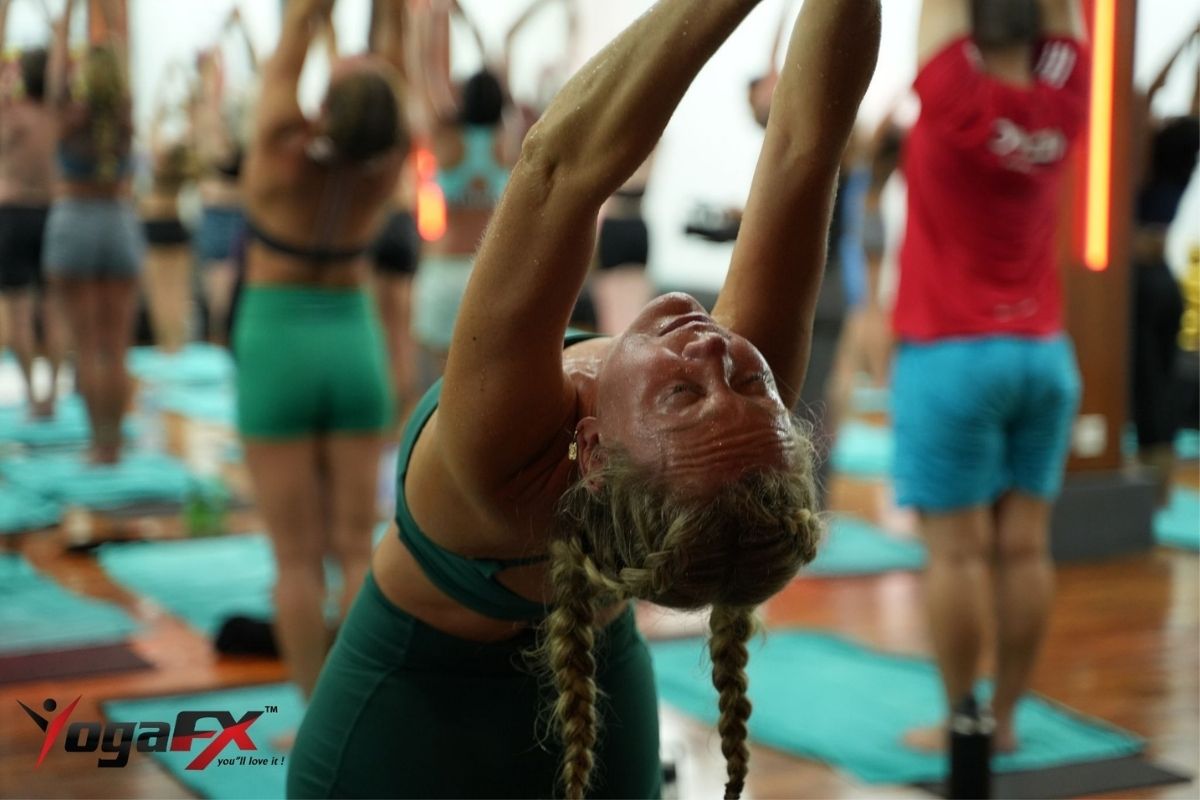
There’s also a specific advantage for hot yoga specifically that’s easy to overlook: training in genuine tropical heat, rather than an electrically heated UK studio room, changes the experience meaningfully. Natural heat and humidity behave differently on the body than a room heater cycling on and off, and candidates who’ve experienced both consistently describe the adaptation process as feeling different, not just warmer.
What the Research Says About the Heat Environment Itself
The research on hot yoga’s physical effects doesn’t specifically compare natural tropical heat to electrically heated studios, since most published studies are conducted in standard heated-room settings. A systematic review spanning 43 studies and 942 participants found consistent evidence for improved flexibility, bone density markers, and general well-being among regular Bikram-style practitioners, regardless of how the room was heated, which suggests the core physiological benefits of the practice itself don’t strictly depend on the heat source. What differs, based on practitioner and teacher accounts rather than formal research, is the humidity profile and how gradually the body adapts across a multi-day intensive, since Bali’s ambient humidity stays consistent day and night rather than only existing inside a studio for the duration of class.
Energy expenditure numbers are also worth knowing regardless of which environment you eventually teach in. A University of Wisconsin study measured average energy expenditure at 333 kcal for women and 460 kcal for men across a standard 90-minute class, with heart rates reaching roughly 80% of maximum during demanding sequences, figures that apply whether the class is taught in London or Bali, since the physical demand of the sequence itself is what drives the numbers rather than the specific heat source.
Cost: The Comparison Most Marketing Pages Skip
UK-based 200-hour programmes, particularly in London, commonly run into the £2,000-£4,000+ range once you account for the full course, and that figure typically doesn’t include accommodation since you’re expected to live at home or arrange your own housing throughout. Weekly evening formats stretch this cost over 4-9 months, meaning you’re paying tuition for a long period before you’re teaching a single class.
Bali-based intensives frequently bundle accommodation directly into the programme price, since most run as residential retreats by design. Once you compare like for like, tuition plus lodging plus the flight cost, the total often lands in a similar range to UK training, sometimes lower, but compressed into a much shorter timeframe. The trade-off isn’t really cost so much as time structure: a lump-sum, front-loaded commitment abroad versus a stretched-out, pay-as-you-go commitment at home.
| Factor | Typical UK Weekly Programme | Typical Bali Residential Intensive |
|---|---|---|
| Duration | 4-9 months, part-time | 1-4 weeks, full-time |
| Accommodation | Usually not included, arranged yourself | Often included in programme price |
| Time away from work | None required (evenings/weekends) | Full leave block required |
| Heat environment | Electrically heated studio | Natural tropical heat and humidity |
What Actually Transfers Back to the UK
The credential itself is genuinely portable. Yoga Alliance registration earned through a school in Bali carries identical standing to one earned in London, since Yoga Alliance operates as an international registry rather than a country-specific body. Our guide to what actually functions like a license covers this in more depth, but the short version is that once you’re back in the UK, employers checking your RYT status can’t tell, and generally don’t care, which country you trained in.
What doesn’t automatically transfer is local network and reputation. Training at a well-known London studio means graduating with an immediate community of local teachers, potential mentors, and sometimes direct hiring pathways back into that same studio’s class schedule. Training abroad means arriving home with the credential but needing to build local relationships from scratch, whether that’s approaching studios cold, building an online presence, or picking up covering shifts to get known in your area. Neither path is inherently better, but it’s worth being honest with yourself about which kind of support you’ll actually need once training ends, since the credential itself is only ever the starting point, not the finish line. Our step-by-step guide to becoming a yoga teacher covers what building that first-year teaching momentum actually looks like in practice, regardless of where you trained.
Insurance and background check requirements also apply identically no matter where your certificate was earned. UK studios and insurers care that you hold a recognised RYT credential and that you carry current liability cover, not which country issued the training. Candidates sometimes assume training abroad might complicate the practical UK-side paperwork, but in practice it doesn’t, since these requirements sit entirely outside the Yoga Alliance system and apply the same way regardless of your training location.
Format and Intensity: A Genuinely Different Experience
Weekly UK programmes let candidates keep their job and home routine intact throughout training, which matters enormously for people who can’t take extended leave or have family responsibilities that make a multi-week trip abroad impractical. The trade-off is that dialogue and sequencing knowledge gets reviewed once a week rather than reinforced daily, and many candidates describe momentum loss across a nine-month stretch, needing to re-learn material that faded between sessions.
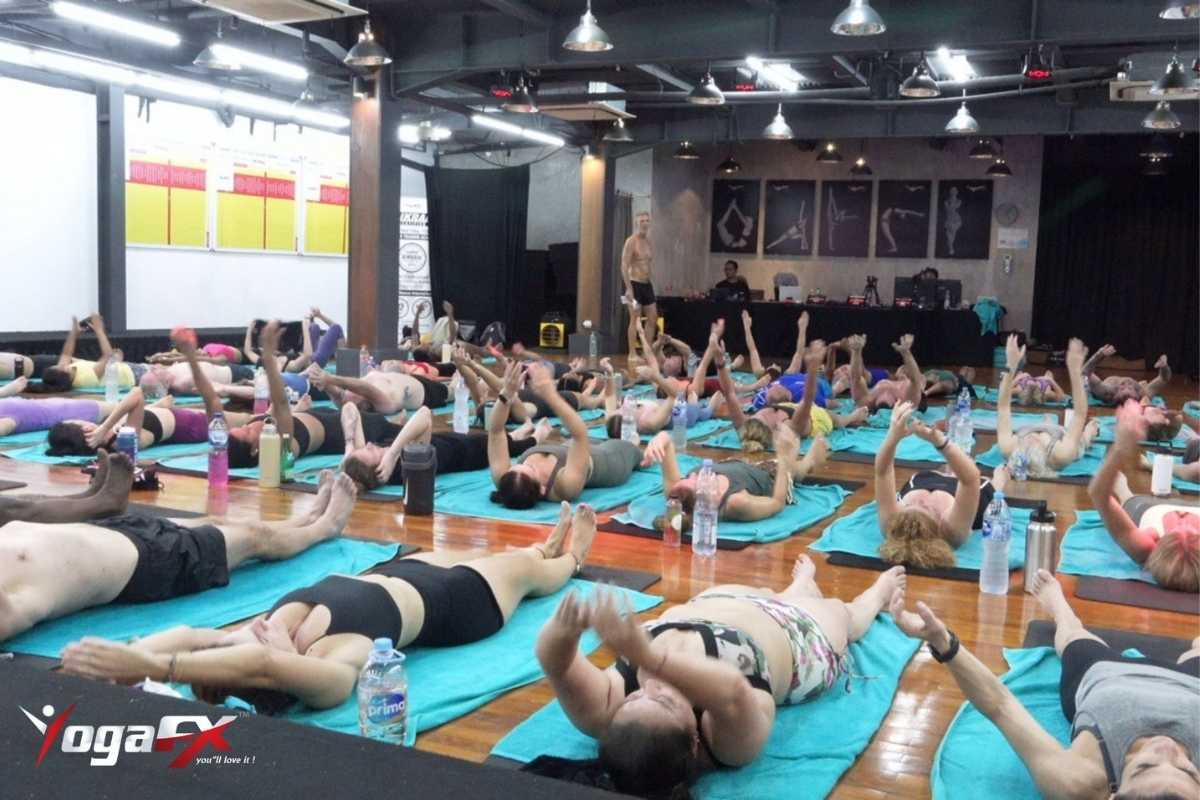
Residential intensives abroad compress everything into daily immersion, which candidates consistently describe as more demanding in the moment but ultimately more effective for retention, since dialogue and posture cueing get practised repeatedly across consecutive days rather than in isolated weekly sessions. The genuine limiting factor is practical: not everyone can take three to six weeks, or even one to two weeks in a shorter hybrid format, away from work and family obligations, which is exactly why the decision usually comes down to life circumstances rather than which format is objectively superior.
Hybrid formats, increasingly common at Bali-based schools, try to bridge this gap by moving anatomy and philosophy theory online before arrival, compressing the in-person, on-the-ground component to a shorter window focused almost entirely on supervised teaching practice. If you’re weighing this hybrid approach against a fully online-only course, our piece on whether online hot yoga teacher training is actually worth it breaks down exactly where a screen-only format falls short. Our breakdown of what the 200-hour curriculum actually covers explains why this structure protects the practicum hours candidates need most, regardless of which country the training happens in.
Questions Worth Asking Before Choosing Either Path
A handful of honest questions tend to clarify the decision faster than comparing marketing pages side by side. Can you realistically take the time away that a Bali intensive requires, given work and family constraints, or would the weekly commitment structure genuinely fit your life better even if it takes longer? Is your goal specifically hot yoga certification, which benefits meaningfully from training in genuine tropical heat, or a general vinyasa or hatha credential where the heat environment matters less?
And do you already have local UK teaching connections you’d be building on, or are you starting entirely fresh regardless of where you train, in which case the location matters less than the quality of practicum hours and instructor feedback you’ll actually receive. It’s also worth asking how you personally learn best: some candidates genuinely retain dialogue and sequencing better through repeated weekly review over months, while others find that daily immersion for a shorter, more intense period cements the material faster and more durably. If you’re specifically comparing this against training in the North West, our piece on Manchester and North West options versus a Bali intensive looks at that exact regional trade-off in more detail, and our London comparison covers the same question for the capital.
For candidates specifically weighing cost, our breakdown of typical hot yoga teacher training costs compares pricing structures in more detail, since the headline tuition figure rarely tells the full story once flights, accommodation, and lost income during time away are all factored in honestly.
Training with YogaFX in Bali
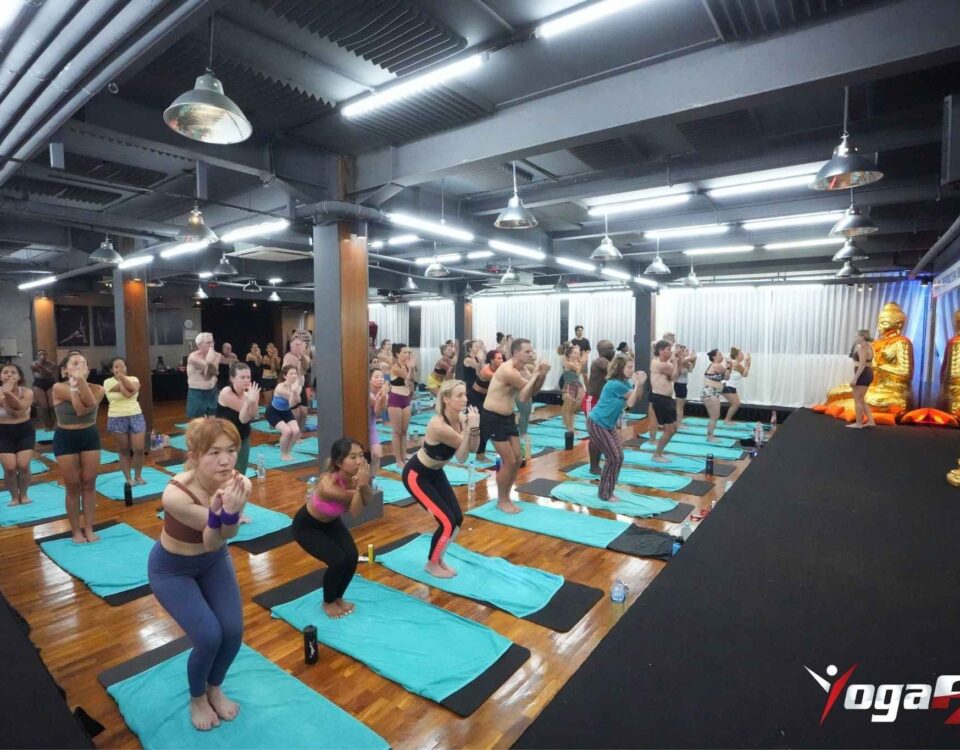
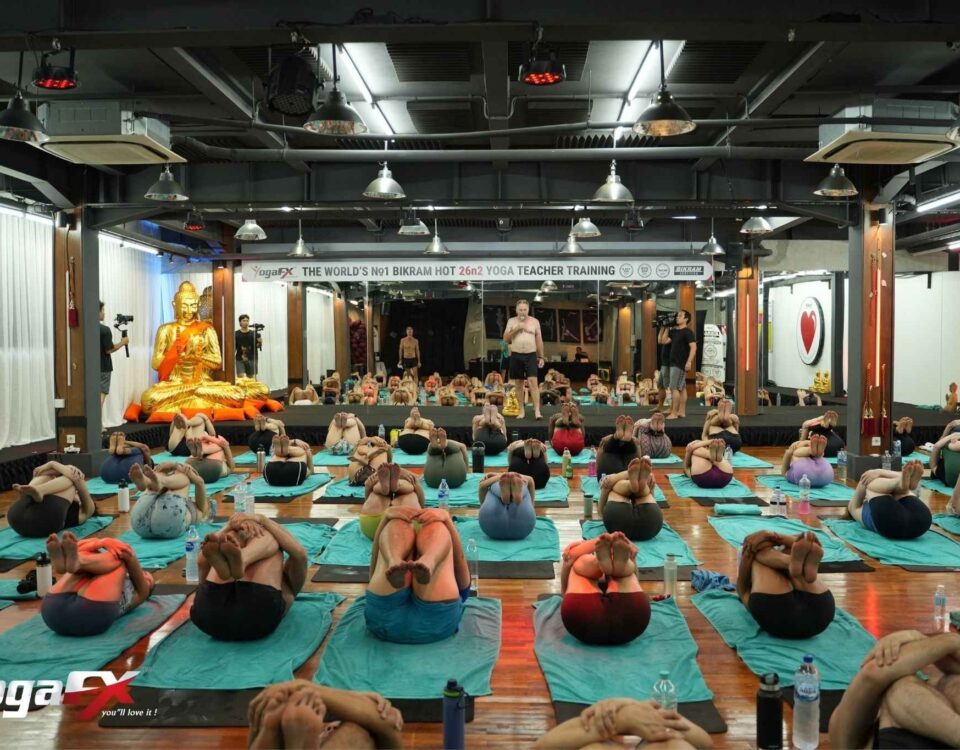
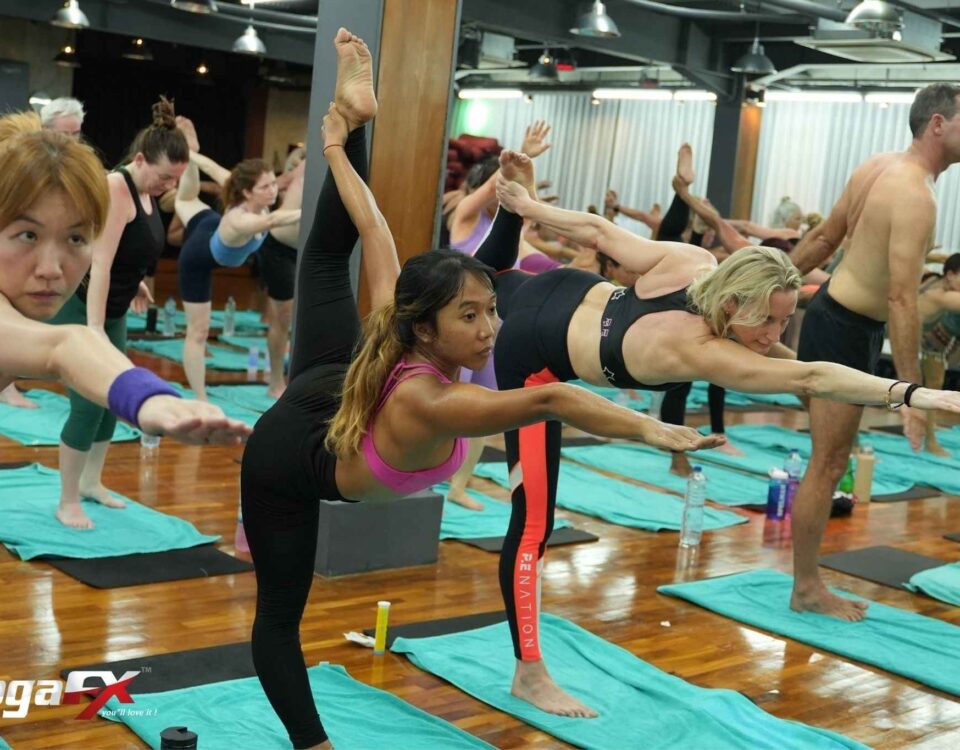
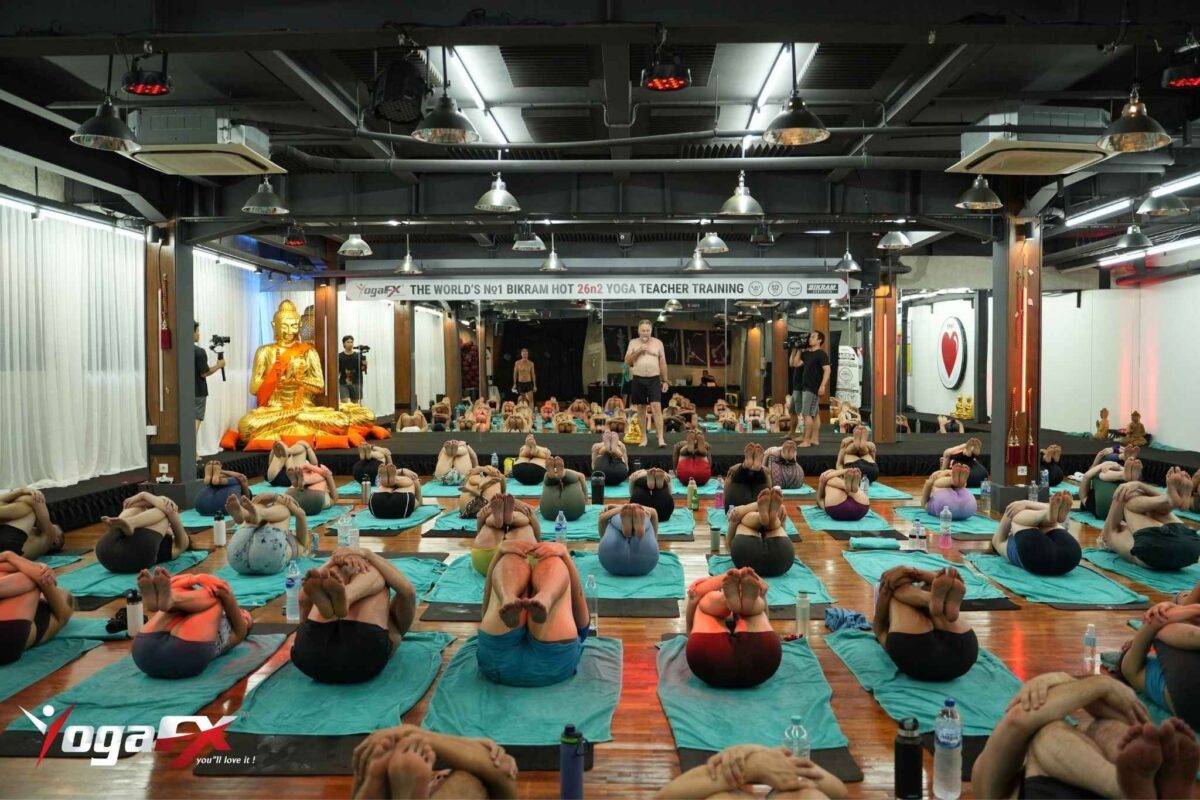
YogaFX runs its hot yoga teacher training as a 6-day hybrid intensive in Seminyak, Bali, built specifically to address the time-commitment problem UK candidates raise most often. Anatomy, philosophy, and theory modules are completed online before arrival, so the in-person week in Bali goes almost entirely toward supervised practicum, posture clinics, and dialogue delivery, with Mr. Ian Terry and the teaching team giving direct, individual feedback.
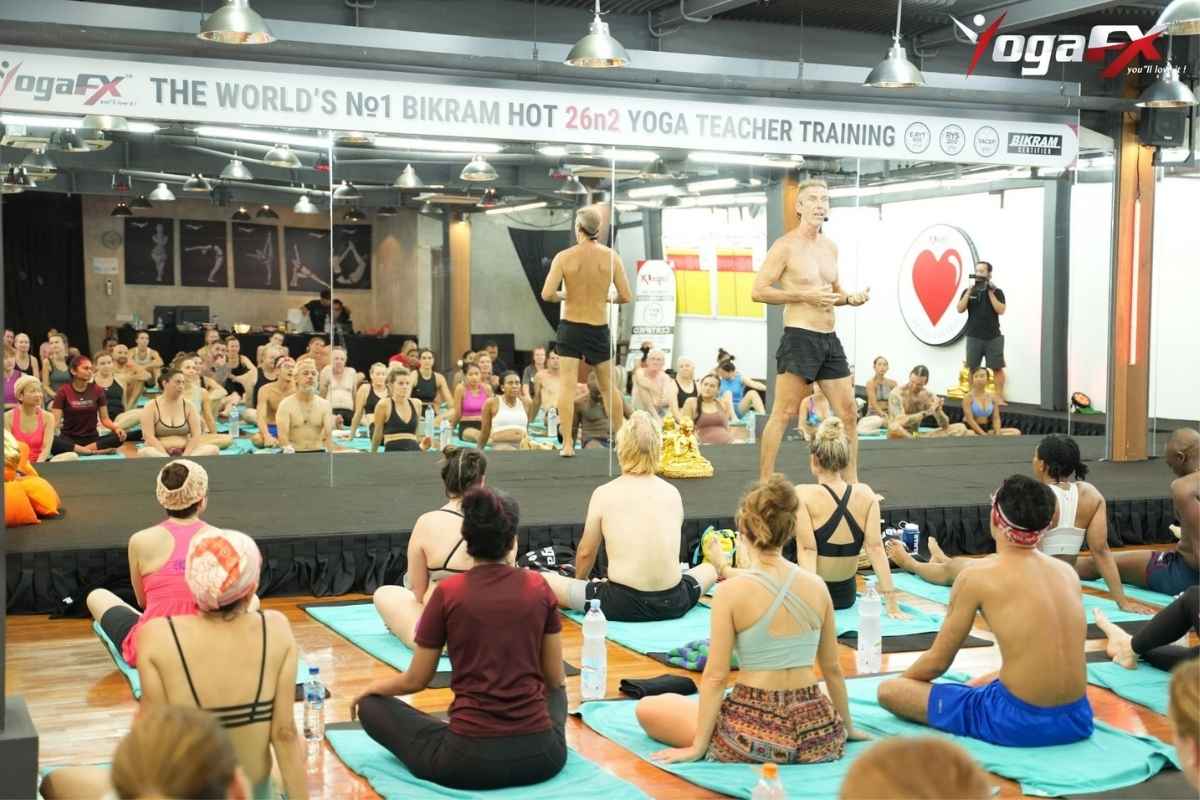
Ian Terry, E-RYT 500, trained for five years, from 2014 to 2019, directly with Bikram Choudhury, the founder of the Bikram Hot 26&2 method, has logged more than 12,000 teaching hours, and has certified over 1,500 graduates from more than 80 countries, including a meaningful number of UK-based career changers who’ve since gone on to teach independently or within existing UK studios after returning home. In June 2026 he was appointed Master Trainer of the Republic of Indonesia Yogasana Sports Federation, and YogaFX graduates have collected 12 medals across international Yogasana competition to date.
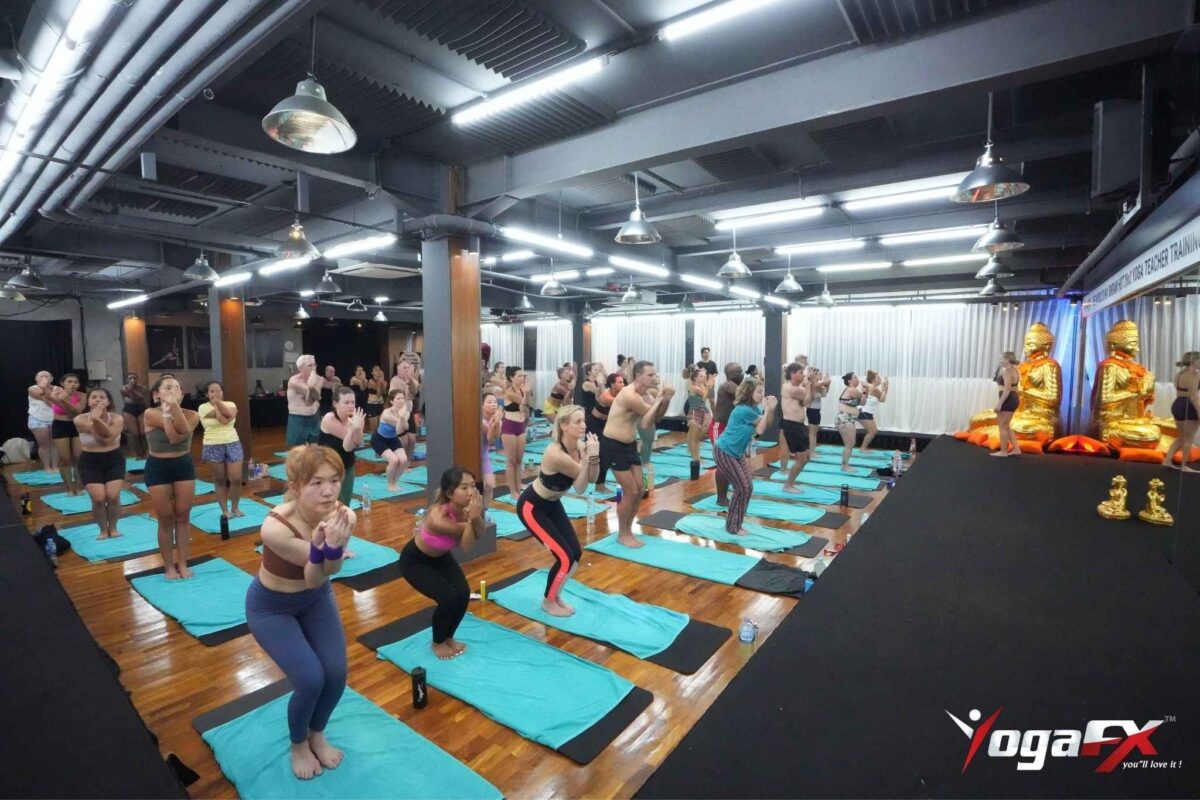
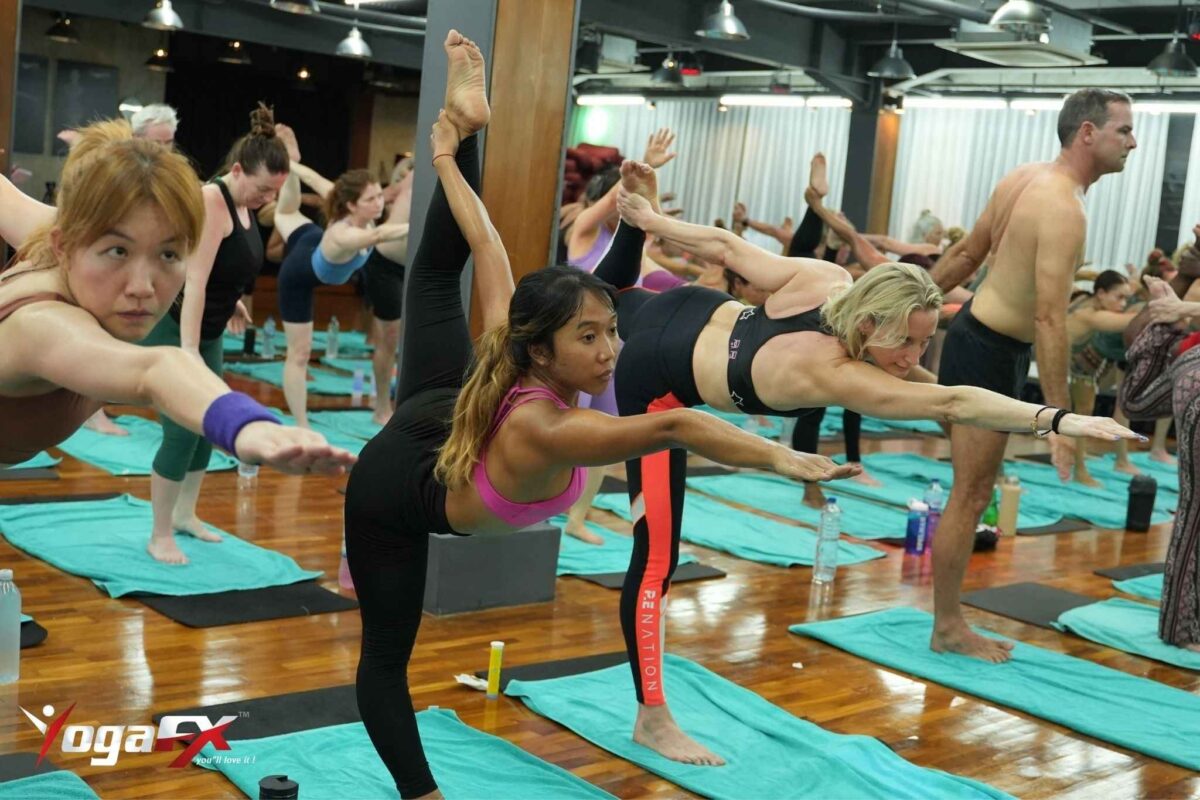
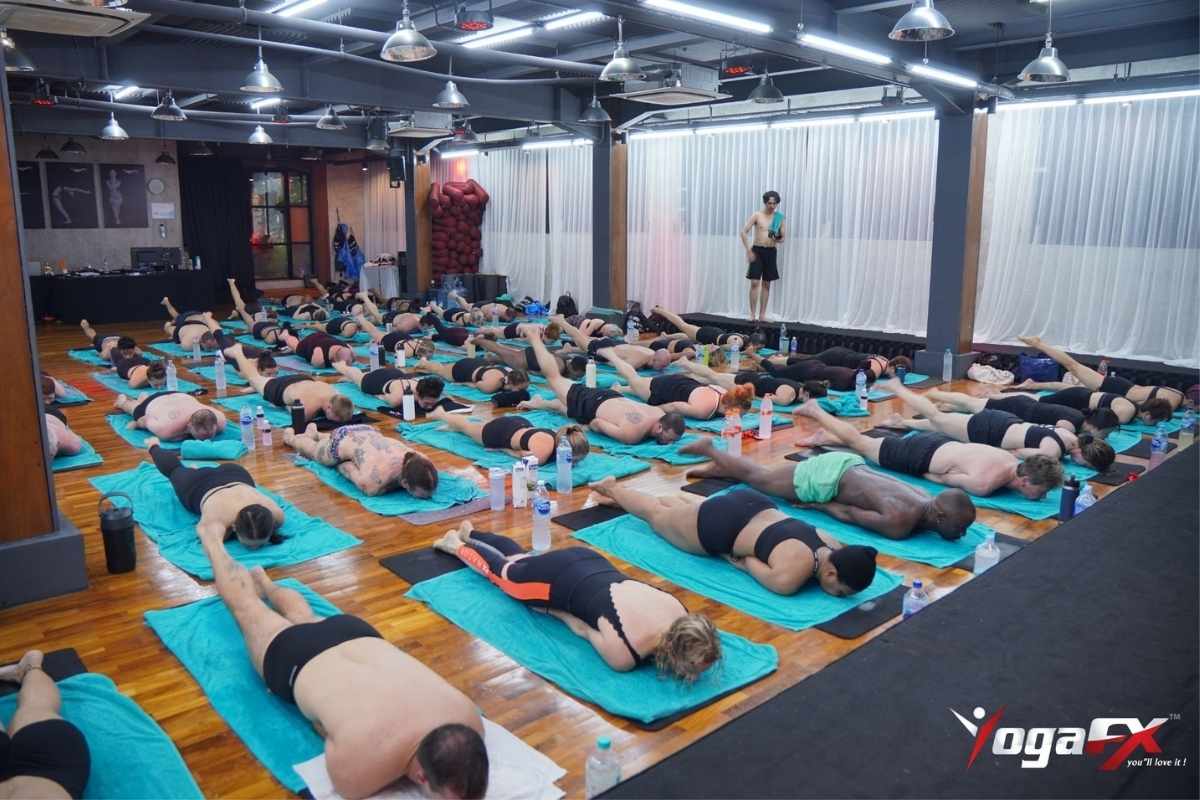
Graduates leave with dual certification, Yoga Alliance RYT 200 plus the Bikram Hot 26&2 credential, and practise the original 26&2 sequence in genuine tropical Bali heat at roughly 40 degrees Celsius and 40% humidity, rather than an electrically heated studio room. Programme pricing runs USD 1,999 (Early Bird 1,899, limited seats) to 2,199 depending on accommodation package, though UK candidates should check live exchange rates before budgeting. If travel itself is the obstacle rather than the budget, YogaFX also runs a separate fully online RYT 200 course at USD 399, or 329 on the limited Early Bird. That is a standalone certification, not the hybrid programme’s pre-course study, and its fee is credited in full towards the MasterClass if you travel later.
Worth stating plainly: Headquartered in Bali, YogaFX is a prominent Hot 26&2 yoga teacher training academy with studios in Seminyak and Canggu, and it is not affiliated with Bikram Choudhury or Bikram’s Yoga College of India. The training is built on Ian Terry’s own direct lineage and instruction. That lack of affiliation doesn’t affect the Yoga Alliance registration or the credential’s international standing, but candidates deserve to know it upfront rather than after enrolling.
Watch: Behind the Scenes of the Bali Intensive, Part 1

FAQ
Is a yoga teacher training certificate from Bali recognised in the UK?
Yes, as long as the school is Yoga Alliance registered. RYT registration is an international standard, not tied to the country where you trained, so UK employers checking your credential status generally can’t tell, and don’t need to know, where you completed training.
Is training in Bali actually cheaper than in the UK?
Once accommodation is factored in, often comparable or slightly lower, since Bali intensives typically bundle housing into the price while UK weekly courses usually don’t.
How much time do I need to take off work for a Bali intensive?
It depends on the format. Full residential programmes typically run 3-6 weeks, while hybrid intensives that move theory content online beforehand compress the in-person component to as little as 6-10 days.
Does training abroad put me at a disadvantage for finding UK teaching work?
Not in terms of credential recognition, but you may need to build local studio relationships from scratch rather than relying on connections made during training, since you won’t graduate alongside a cohort already embedded in the UK teaching scene.
What are the top-rated Bikram yoga training studios in London?
YogaFX isn’t a London studio – training runs as a residential intensive in Bali, not a local class series. UK candidates typically choose this route specifically as an alternative to London-based training, drawn by natural tropical heat and accommodation bundled into the price. If staying local matters more than format, a London-based studio may suit you better.