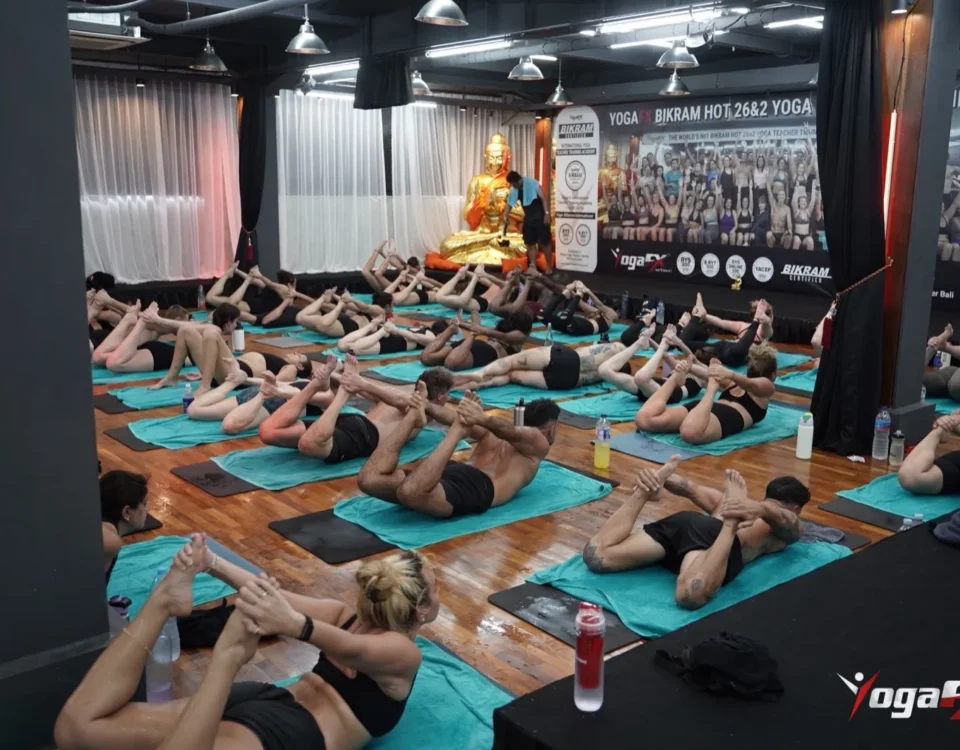
Is hot yoga safe? For most healthy adults, yes, if they warm up slowly, drink water before class and leave the room when something feels wrong. The main risk in a heated studio is the heat itself, not the poses. Below is what the research shows so far, who should check with a doctor first and how to recognise heat trouble before it gets serious.

I’m Mr Ian Terry, E-RYT 500, and I have taught more than 12,000 hours in heated rooms. The question I hear most from UK readers is the same one: they want to try a 90-minute class in a room near 40°C, but they are not sure their body will cope. That is a fair worry. The honest answer depends on your health, your experience with heat and how the class is run.
What the research says about hot yoga safety
Is hot yoga safe? The research on that question is still small. The largest clinical trial I can point to looked at mood rather than heat tolerance. A 2023 study led at Massachusetts General Hospital found that 59% of people in the yoga group had their depressive symptoms fall by half or more, compared with 6% in the waitlist group. Participants also rated the sessions positively and reported no serious adverse effects linked to the intervention, according to the Harvard Gazette report on the trial.
The 2021 heat trial
A second study looked at what the heat does to the body. In a 2021 trial published in the International Journal of Yoga, 22 adults aged 19 to 39 practised for four weeks, three sessions a week. One group practised in heat of 37 to 40°C and the other in 18 to 22°C.
The study stopped any test if a participant’s core temperature reached 40°C, and it excluded people with a history of heat illness. The authors also reported that 12 hot sessions did not produce the classic heat adaptations, such as a smaller rise in core temperature. That matters for anyone who hopes the body will simply get used to the heat in a few weeks. It may not.
The table below puts the two studies side by side, so you can see what each one can and cannot tell you about hot yoga safety.
| Study | Who took part | Heat used | Safety finding |
|---|---|---|---|
| Massachusetts General Hospital trial (2023), reported by Harvard Gazette | Adults with moderate to severe depression | Heated yoga sessions (temperature not stated in the report used here) | 59% had a 50% or greater fall in symptoms, against 6% on the waitlist; no serious adverse effects |
| International Journal of Yoga trial (2021), PMC8191229 | 22 adults aged 19 to 39 | 37 to 40°C hot yoga, against 18 to 22°C normal yoga | Test stopped at 40°C core temperature; people with a history of heat illness were excluded |
A small trial cannot promise that hot yoga is safe for everyone. What it can do is show where the real limits sit, and those limits are where most of the practical advice in this guide comes from.
The heat warning signs every student should know
The NHS separates heat exhaustion from heatstroke, and the difference matters in a studio. Heat exhaustion is uncomfortable and fairly common. Heatstroke is an emergency. The NHS 111 Wales guidance on heat exhaustion and heatstroke lists the signs below, and it is worth knowing them before your first hot class.
- Heat exhaustion: tiredness, dizziness, headache, feeling sick, heavy sweating with pale and clammy skin, cramps in the arms, legs or stomach, fast breathing or heartbeat, and being very thirsty.
- Heatstroke: a very high temperature, hot skin that is not sweating and may look red, a fast heartbeat, confusion, lack of coordination, a seizure or fit, or loss of consciousness.
The NHS guidance gives a clear timeline. Heat exhaustion usually does not need emergency help if you can cool down within 30 minutes. If you are still unwell after resting in a cool place, cooling down and drinking fluids, or if you see any sign of heatstroke, call 999. Do not drive yourself to A&E.
30 min
Time to cool down and rest. Heat exhaustion usually does not need emergency help if you recover within this window.
40°C
The core temperature at which the 2021 trial stopped the test.
59%
Share of the yoga group with a 50% or greater fall in depressive symptoms, in the 2023 trial.
3 groups
Children, older people and people with long-term conditions such as diabetes or heart problems are more at risk.
Who should check with a doctor first
Is hot yoga safe for you personally? Heat puts extra strain on the body, so some people should talk to their GP before they book. The NHS says children, older people and people with long-term health conditions, such as diabetes or heart problems, are more at risk of heat exhaustion and heatstroke. If you fall into one of those groups, you are not banned from a hot room. You simply need a clear view of your health first.
The 2021 trial also excluded anyone with a history of heat illness. So if you have had heatstroke or heat exhaustion before, tell your doctor and your teacher before your first class. Teachers can only watch for problems they know about, and a short conversation at the start of class is often enough.
A doctor cannot make a hot class risk-free. They can tell you whether your current health and any medicines suit a heated room. Bring a list of everything you take, because some treatments affect how you sweat and how you handle fluids. This is general information rather than a diagnosis, and it does not replace advice from your own clinician.
5 checks before your first hot class
If you remember nothing else from this guide, use these five checks. Is hot yoga safe for you? These checks answer that for most readers. They cover most of the hot yoga risks that come up in practice, and they apply whether you are a beginner or someone who has trained for years.
- Check your health first. If you have a heart condition, diabetes, a history of heat illness or you take regular medicines, speak to your GP before booking.
- Ask about the room. Find out the temperature and whether the teacher will watch the whole room, not only the front row.
- Arrive hydrated. Drink water through the day, not only in the studio, and bring a bottle you can sip from in the room.
- Eat light. Have a small meal a few hours before class, so you are not training on an empty or very full stomach.
- Know your exit. Learn the signs of heat exhaustion, agree with the teacher that you can leave at any point, and sit down the moment something feels wrong. Is hot yoga safe on a bad day? Not when you feel unwell, so skip the class.
The same logic applies to the risk factors people often ask about. Is hot yoga safe for someone who already has a health condition? Only after a doctor has looked at it. Is it safe for someone who has never trained in heat? Start slowly, with one class a week, and build up only if your body copes well.
How to make a hot class safer
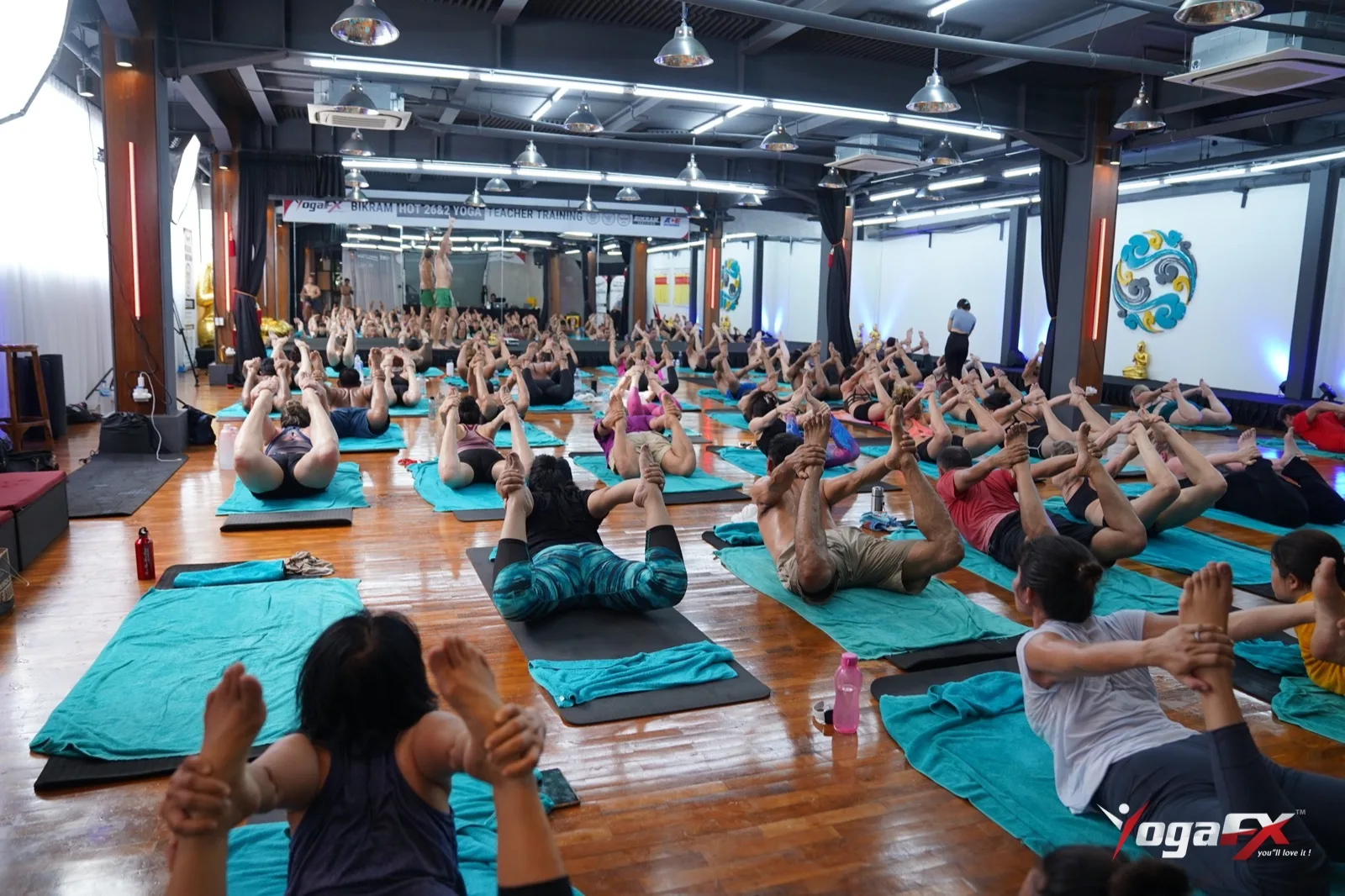
Is hot yoga safe once you are in the room? It depends on preparation. Most heat problems in a studio come from doing too much too soon, or from arriving already dehydrated. Start with a steady pace rather than your hardest session of the week. Drink water across the day before class, because catching up in the room is much harder. Eat something light a few hours before, and keep the first class short if you can.
In the room, the rule is simple: if something feels wrong, stop and tell the teacher. Treat these as signals, not a test of willpower:
- Dizziness or a sense that the room is spinning.
- Nausea, or a headache that gets worse rather than better.
- A racing heart that does not settle when you rest.
Lie down, move to the coolest spot you can find and drink water. Do not push through the next posture to prove a point. A good teacher expects this and will check on you without fuss.
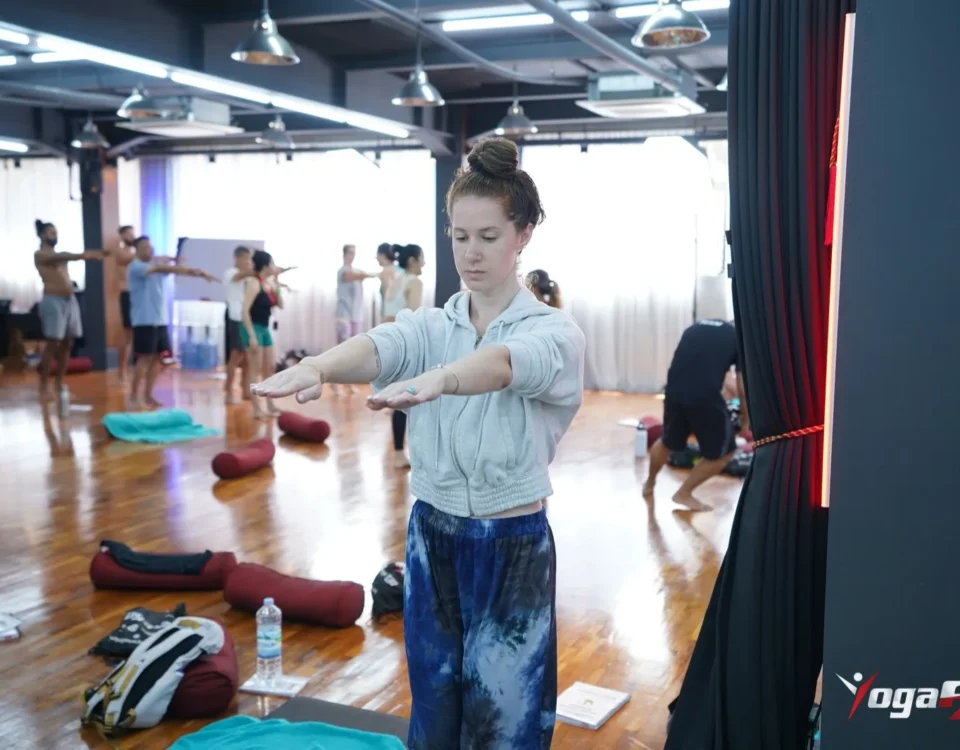
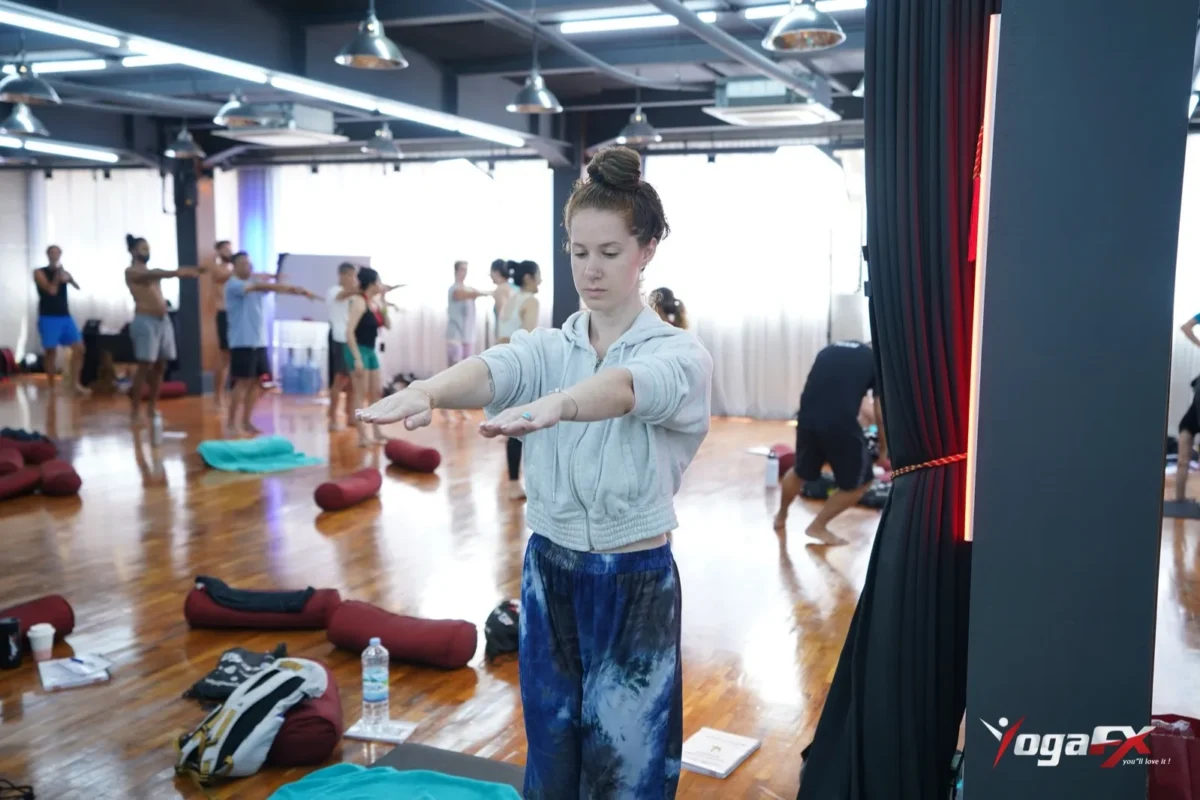
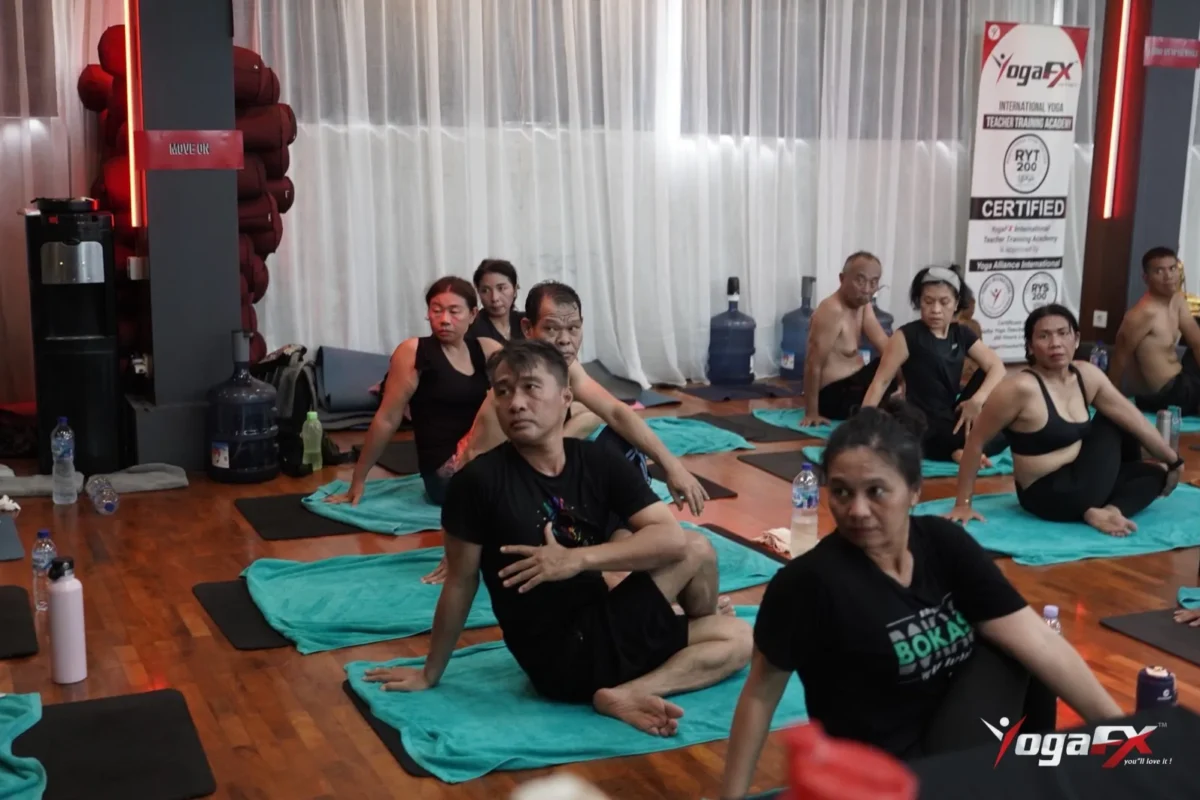
Watch the teacher, too. In a hot room a teacher needs to see the whole class, not just the front row. At YogaFX we train teachers to scan the room, read faces and notice when a student has gone quiet. Students notice that care. One trainee on YouTube put it this way:
“my priority now is like my health. Because it’s true, health is wealth. But without health, you don’t really have much else.”
Soraya, YouTube review, 2023 (watch the review)

Another reviewer, Justin, described the teacher’s focus on the students rather than on himself. He said Mr Ian “is always about us and not necessarily him” (Justin’s YouTube review, 2025). That attitude matters in a hot room, because a teacher who looks after people notices problems early.

Is hot yoga safer than a sauna or a gym session?
People often ask whether hot yoga is safer than a sauna, because they already use a sauna or a steam room. The two are different. A sauna asks your body to absorb heat while you sit still. A hot yoga class asks you to move for 90 minutes in a warm room, so your heart rate and core temperature rise from the work as well as from the air. That is why the same person can feel fine in a sauna and struggle in a class.
If you want that comparison in more detail, our hot yoga vs sauna guide covers it for UK readers. For a gym comparison, read our hot yoga vs steam room comparison.
Hot yoga is not medicine, and it should not replace treatment from a doctor. Is hot yoga safe as a treatment for anything? That is a question for your clinician, not for a studio. It also does not clear waste from the body through sweat. Your kidneys and liver do that job. If you want the full picture of benefits and downsides, start with our main guide, is hot yoga good for you, and our myth-buster on sweating out toxins.
FAQ: hot yoga safety questions
Is hot yoga safe for healthy adults?
For most healthy adults, hot yoga is generally safe when you warm up slowly, drink water before class and leave if you feel dizzy, sick or unusually weak. A 2023 Massachusetts General Hospital trial reported no serious adverse effects from heated yoga sessions. Trials are small, though, so the research does not prove safety for everyone.
What are the first signs of heat exhaustion?
The NHS lists tiredness, dizziness, headache, feeling sick, heavy sweating with pale clammy skin, muscle cramps, fast breathing or heartbeat, thirst and weakness. Heat exhaustion usually settles if you cool down and rest within 30 minutes. If it turns into heatstroke, with confusion, a fit or hot skin that is not sweating, call 999.
Who should avoid hot yoga, or see a doctor first?
Is hot yoga safe with diabetes or a heart problem? Check with your GP first. The same applies if you are an older adult or if you have had heat illness before. The NHS says these groups are more at risk of heat exhaustion and heatstroke. A doctor can tell you whether a heated class fits your health and the medicines you take. If you are unsure, a short appointment before the first class is the simplest way to find out.
How hot is a hot yoga room?
In the 2021 trial, hot yoga sessions ran at 37 to 40°C, compared with 18 to 22°C for normal-temperature yoga. The test was stopped if a participant’s core temperature reached 40°C. Ask a studio for its room temperature before you book, and treat any class that cannot give you a clear answer with caution.
Is hot yoga the same as a sauna?
No. A sauna is passive heat, while a hot yoga class asks you to move for 90 minutes in a warm room. Your heart rate and core temperature rise from the work as well as the heat, so a class needs more care than a sit in the sauna. That is why the same person can feel fine in a sauna and still struggle in a class. Our hot yoga vs sauna guide compares the two in more detail for UK readers.
Medical disclaimer: this article is general information, not medical advice. If you have a heart condition, diabetes, a history of heat illness or any concern about your health, consult a healthcare professional before starting hot yoga.
So, is hot yoga safe for you? The safest next step is a short conversation with your GP, then a first class with a teacher who watches the whole room. If you want to teach hot yoga, or learn to run a heated room safely, message Mr Ian Terry on WhatsApp to ask about the next teacher training intake.