
Hot yoga vs steam room comes down to work versus rest. In one lab study, a 90-minute Bikram class lifted heart rates to roughly 72% to 86% of predicted maximum. A steam room asks nothing of your muscles, and its wet air lets sweat evaporate far less, so the two feel similar but do very different jobs.

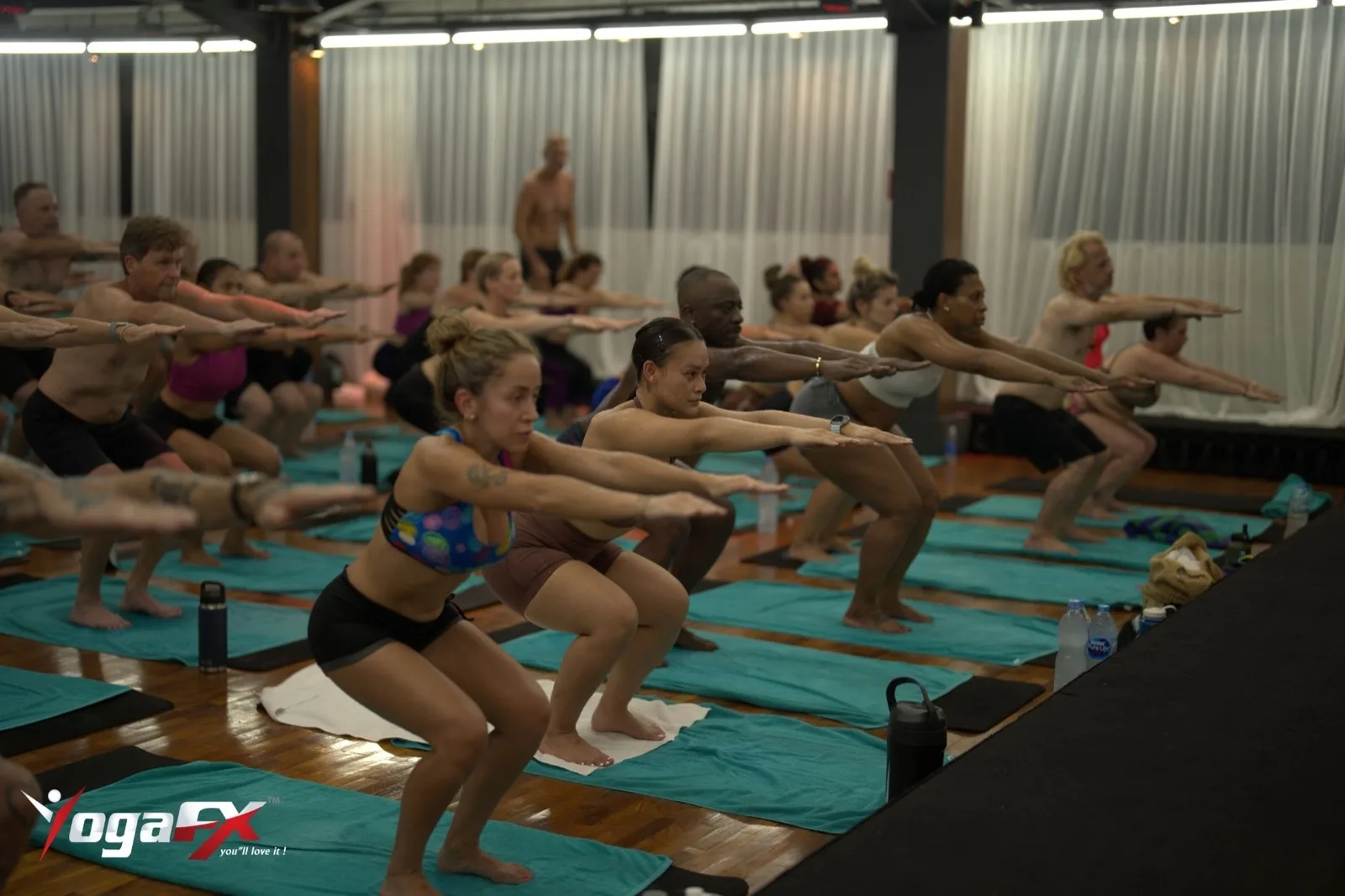
Hot Yoga vs Steam Room: The Quick Verdict for a UK Gym Member
If your gym has a spa area, you have probably wondered whether a steam room visit counts as a lighter version of a hot class. It doesn’t. The hot yoga vs steam room question is really a question about what you want from the next hour.
Want strength, balance and a steady, sustained effort? A hot class delivers that. Want ten quiet minutes after a long shift or a heavy leg session? A steam room fits better. Many UK members use both, just not at the same moment.
- Choose the hot room when you want to move, sweat with purpose and finish a structured 90-minute class.
- Choose the steam room when you want short, passive warmth and you are otherwise well.
- Skip both on the day you feel unwell, dehydrated or light-headed.
Mr. Ian Terry, E-RYT 500, has taught more than 12,000 hours of hot classes. His rule for students is simple: the room is never the exercise, you are. That idea shapes everything below.
Hot Yoga vs Steam Room Humidity Levels: Why Wet Air Changes Sweat
In the hot yoga vs steam room debate, temperature gets all the attention, but relative humidity decides how the heat feels. It is the share of water the air already holds compared with the most it could hold. The more water in the air, the less room your sweat has to evaporate into.
That matters because evaporation is how your skin cools you. Mayo Clinic explains that when humidity is high, your sweat cannot evaporate as easily, and your body has more trouble cooling itself. A gym steam room is built to hold the air close to saturated, so that cooling route is mostly shut. Humidity in hot yoga is far lower, which is why a class can run for 90 minutes.
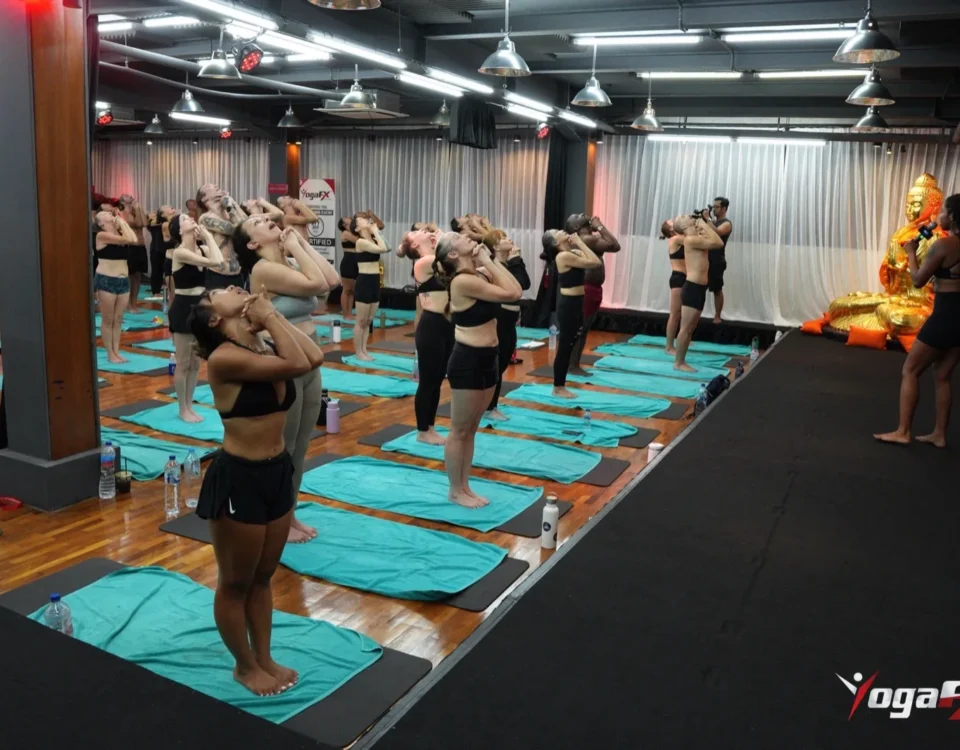
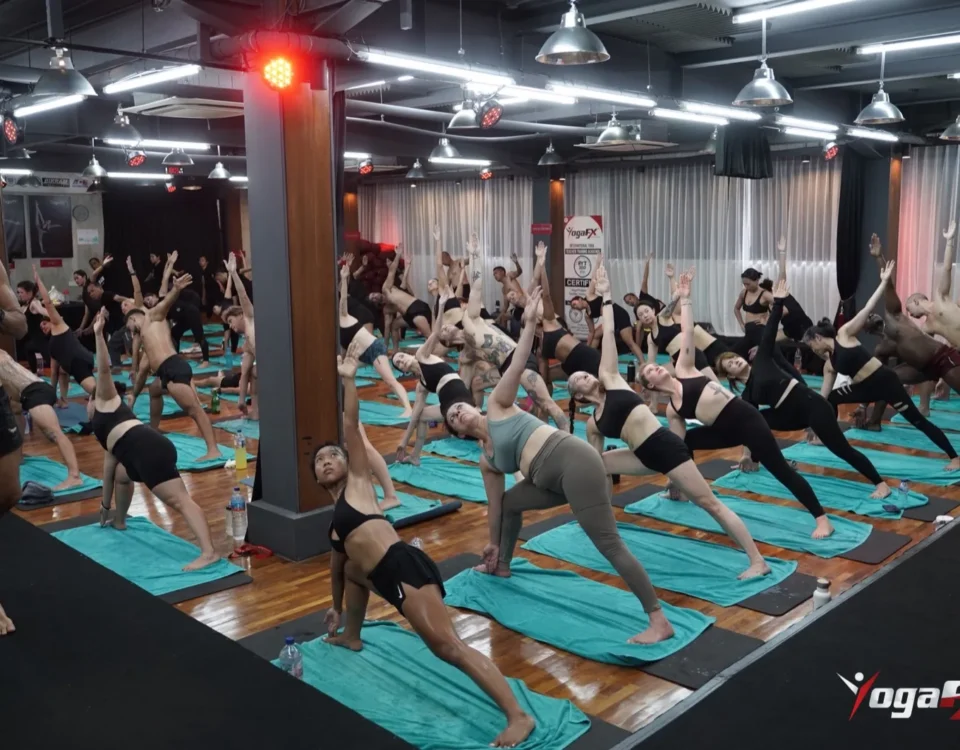
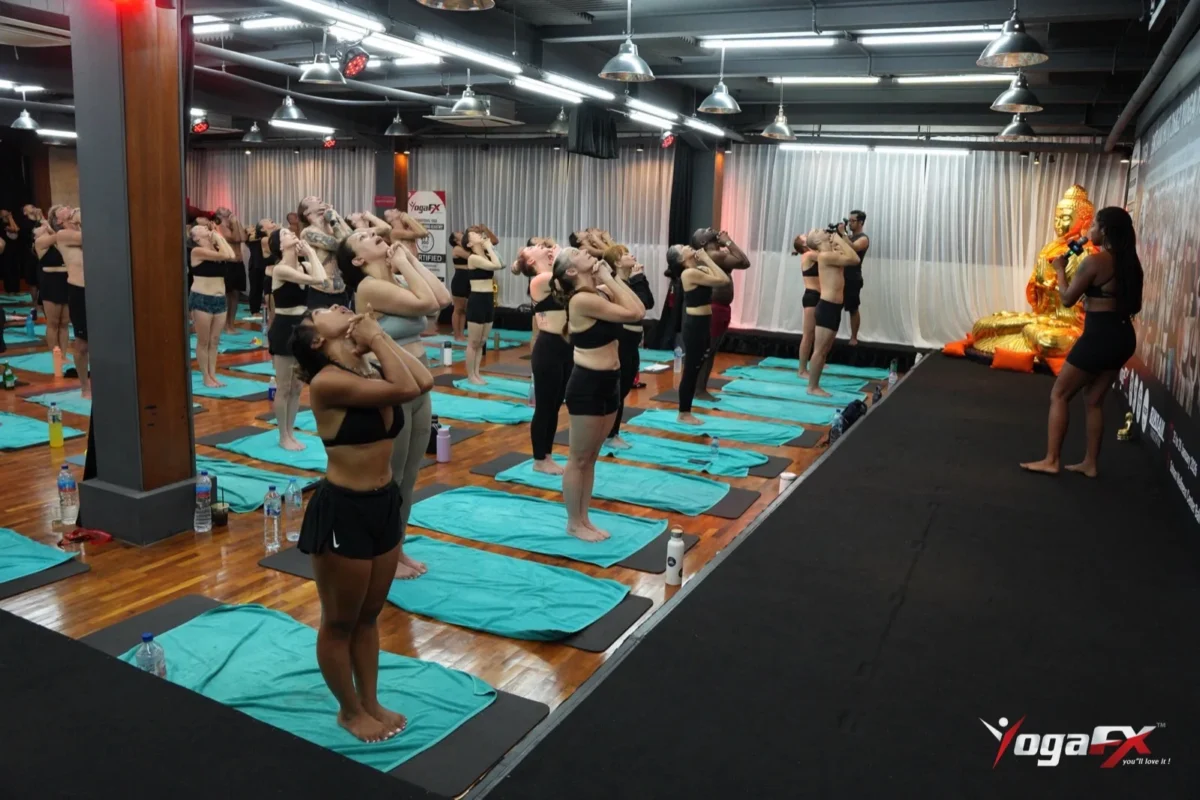
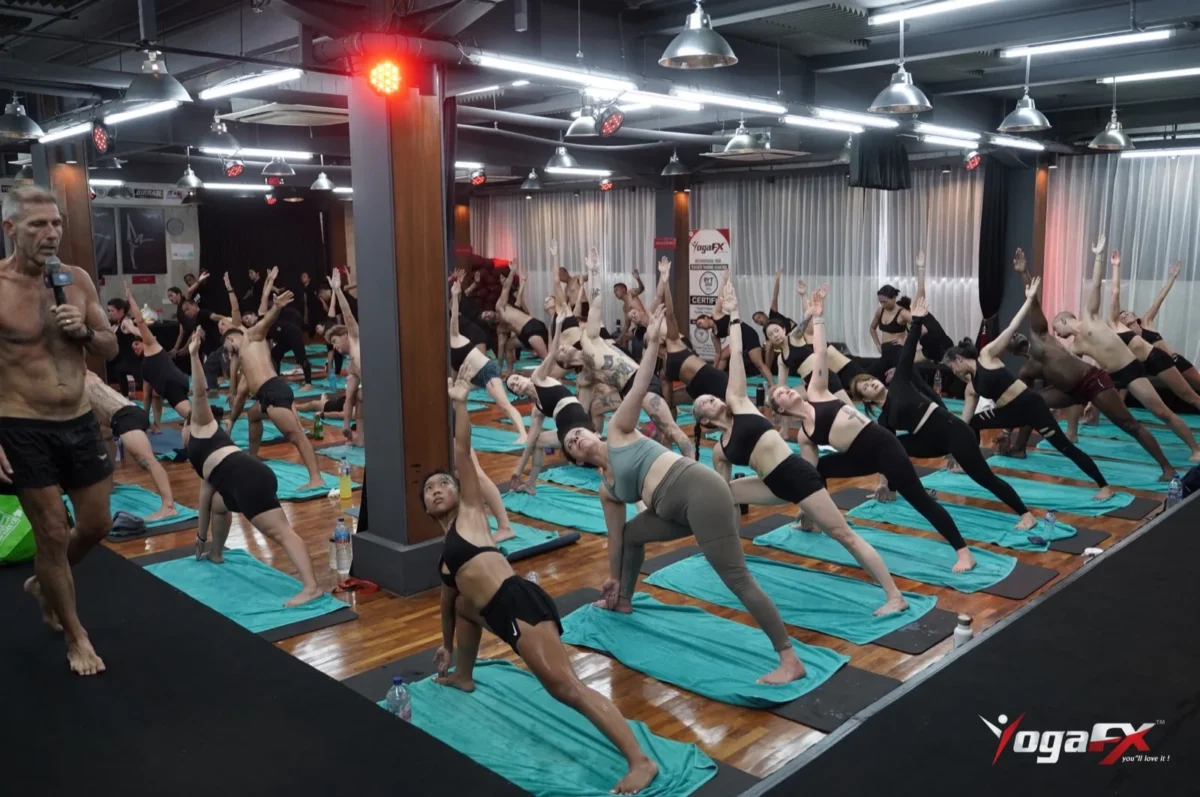
A YogaFX class works differently. The studio standard is 40 degrees Celsius and about 40% humidity, which feels like a warm tropical afternoon. Sweat still evaporates a little, so your body keeps one more way to shed heat while you move for 90 minutes.
What the same wet-air problem looks like in a lab
Pilch and colleagues compared dry and steam heat saunas in 2014. Ten healthy men sat through three 15-minute bouts in each kind of sauna, with a cold shower between bouts.
The paper appeared in Biology of Sport. The authors reported larger increases in rectal temperature and heart rate during the wet bath (38.8% and 21.2%, as they present them). Body mass fell by 0.72 kg in the dry sauna and 0.36 kg in the wet one.
In plain terms, the wet room loaded the body more while less sweat left it. The authors concluded that, because of high humidity and reduced thermoregulation, the wet sauna was more stressful than the dry one. This was a sauna study with ten men, not a yoga trial, so treat it as a clue about humidity and not a verdict on your local spa.
Hot Yoga vs Steam Room Heart Rate: What Researchers Measured
Here the hot yoga vs steam room comparison splits most clearly. In a hot class you generate heat by moving, and your heart has to keep up. In a steam room you add outside heat to a resting body.
The San Diego State University study of Bikram yoga, published in Alternative Therapies in Health and Medicine, followed 24 volunteers (5 men and 19 women, aged 18 to 57) through a standard 90-minute class in an environmental chamber. Novices had done fewer than 20 sessions and experienced students 20 or more.
- Heart rate: about 72.3% of predicted maximum for novices and 86.4% for experienced students.
- Energy used: an average of 286 kilocalories across the class (range 179 to 478).
- Sweat rate: 0.6 kg an hour for novices and 1.1 kg an hour for experienced students.
- Intensity label: the authors rated the postures light to moderate by American College of Sports Medicine standards.
That last point is worth a pause. Hot yoga isn’t a sprint session, and it isn’t meant to be. The heat adds load to a moderate effort, which is why pacing matters so much. The same study found that experienced students finished with a different core temperature from novices, a reminder that practice changes how your body copes.
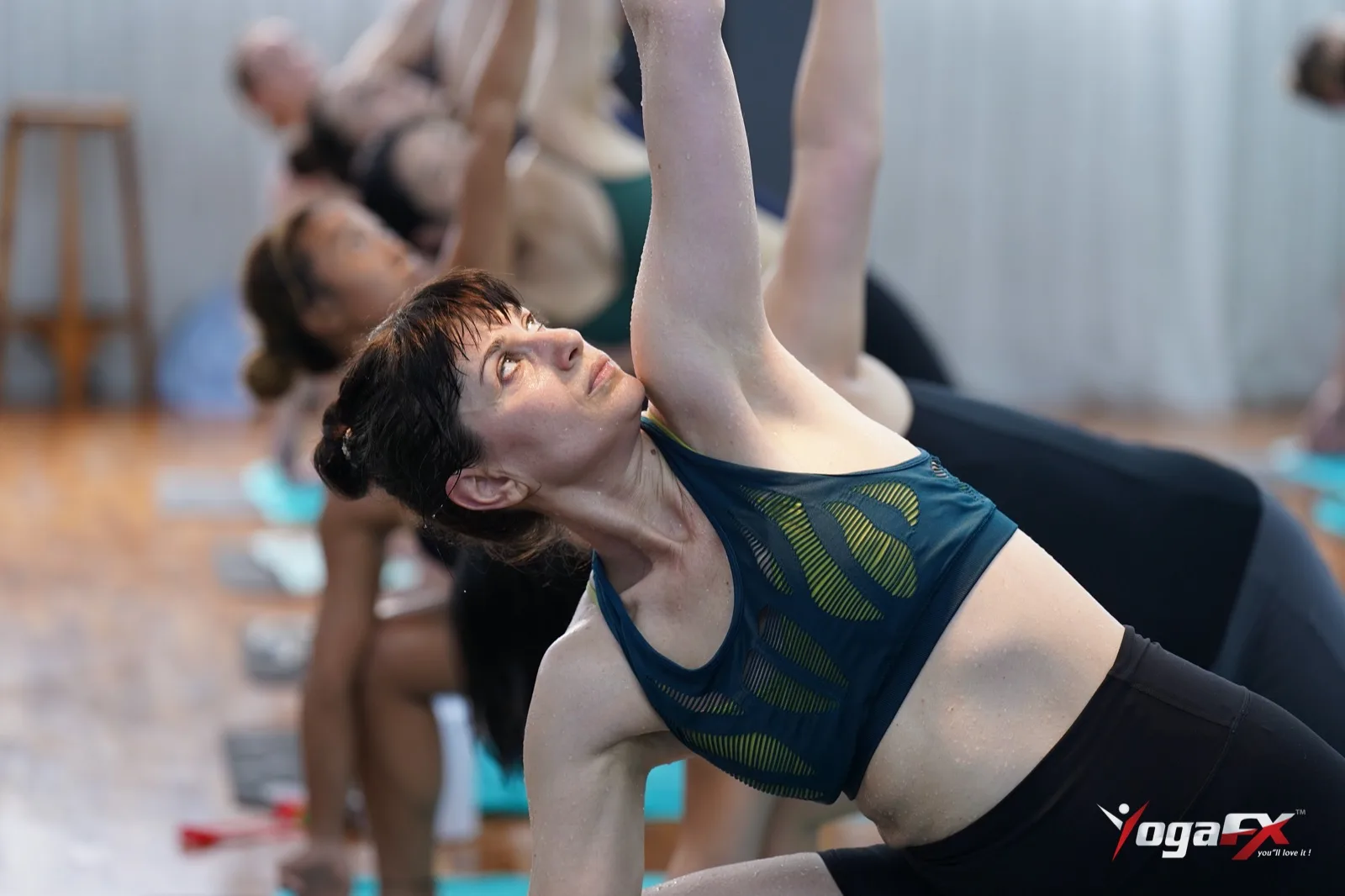
Side by side: hot yoga class and wet sauna bout
This table lines up the two studies above. They used different people and different setups, so read it as a guide to patterns, not as a head-to-head test.
| Measure | Hot yoga class (Bikram study) | Wet sauna bouts (Pilch study) | What it tells you |
|---|---|---|---|
| Who took part | 24 volunteers, men and women, 18 to 57 | 10 healthy men, 25 to 28 | Results are not interchangeable |
| Session design | One 90-minute guided class | Three 15-minute bouts with cold showers | Class is continuous; sauna bouts are short |
| Heart rate | 72.3% (novice) to 86.4% (experienced) of predicted maximum | Larger rise than in the dry sauna (21.2%) | Both raise it, for different reasons |
| Fluid loss | Sweat rate 0.6 to 1.1 kg an hour | Body mass down 0.36 kg (dry sauna: 0.72 kg) | Wet air lets less sweat leave the skin |
| Energy used | 286 kcal average per class | Not reported | Only the class is a workout |
Your Gym Spa Versus a Hot Studio: Five Questions to Ask Before You Go
UK gyms and leisure centres run their spa areas in very different ways, and few post exact settings on the door. A little checking before you commit makes any heat session safer.
- What are the posted rules? Many venues cap session length or ask you to shower first. Follow them.
- Is there a visible thermometer or timer? Without one, you are guessing how long you have been in.
- Is cool water close by? A water fountain or your own bottle should be within reach before you step in.
- Can you leave quickly? Sit near the door the first time so a wobble is easy to handle.
- What does the studio class run at? For a hot class, ask for the temperature and humidity settings. YogaFX publishes 40 degrees Celsius and about 40%.
Studio settings vary, and so does how you feel on the day. That is why a scripted, steady room helps beginners. A companion guide from our Bali training team, which looks at the same two rooms through a teacher’s eyes, covers how humidity affects the way instructors read a class.
Can You Use a Steam Room After Hot Yoga? A Sensible Order of Play
Plenty of members weighing hot yoga vs steam room finish a class, walk to the spa and hop straight in. It is understandable, because the warmth feels like a reward. It is also the moment your body has the least spare capacity.
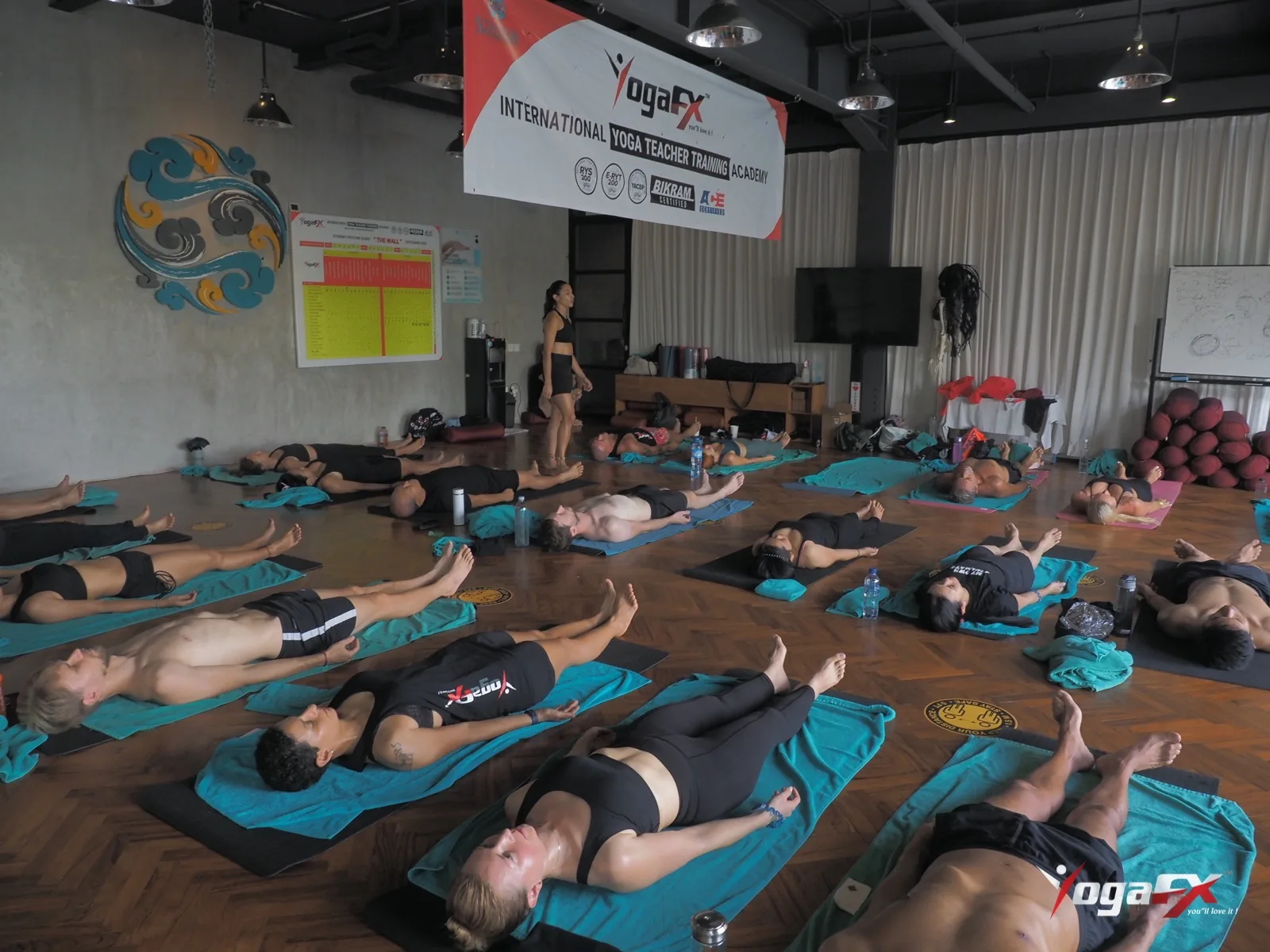
A safer order looks like this:
- Cool down first. Sit somewhere cooler for several minutes until your breathing and skin feel settled.
- Drink water. You have already sweated for 90 minutes, so rehydrate before adding more heat.
- Keep it short. A few minutes is plenty the first time, and you can leave whenever you like.
- Stop at warning signs. Dizziness, nausea, a pounding headache or cramps mean it is time to step out.
The NHS guidance on heat exhaustion lists heavy sweating, pale and clammy skin, headache, dizziness, nausea and cramps as signs of heat exhaustion. Its advice is to move somewhere cool, drink water and cool the skin. If you are still unwell after 30 minutes of resting in a cool place, call 999.
Our guide to how a dry sauna compares with hot yoga covers the dry-heat version of this decision, and it is a useful read if your gym offers both.
Hot Yoga vs Steam Room for Recovery After Lifting or Running
Plenty of UK members train hard on the gym floor and then look for something gentle. For that goal, the steam room has an obvious appeal: it asks nothing of tired legs. A hot class asks a lot more, even though the postures are light to moderate by the study’s own rating.
So the sensible answer depends on how heavy the session was. After a punishing leg day or a long run, many people want quiet, not another 90 minutes of work. On a lighter day, a class can stretch out the hips, hamstrings and shoulders that training tightens.
Whichever you choose, treat the hot yoga vs steam room choice as part of your week, not a one-off fix. Space heat sessions out, drink well and keep a rest day.
Common Mistakes in the Hot Yoga vs Steam Room Decision
Most problems come from a handful of habits. Here are the ones we see when new students tell us how they have been using their gym spa:
- Treating sweat as a score. A heavy sweat shows your body cooling itself, not how much work you did.
- Stacking heat too soon. Going from class to steam room with no cool-down leaves little margin.
- Skipping water until afterwards. Start drinking before you go in, and keep going once you leave.
- Ignoring the early signals. A mild headache or wobble is your cue to step out, not to push through.
- Assuming the steam room replaces practice. It gives warmth and quiet, while a class gives training.
Fix those five and most of the risk drops away. After that, the hot yoga vs steam room question becomes a simple matter of taste and timing.
Who Should Pause Before Trying Either Room
Hot yoga vs steam room is not a risk-free choice for everyone. Mayo Clinic lists certain medicines, such as beta blockers and diuretics, among the things that raise heat-illness risk, along with a history of earlier heat illness. It also notes that hot, humid conditions plus strenuous activity are a classic trigger.
So speak to your GP before you start if you:
- have a heart condition or blood pressure that runs high or low
- take regular medication, including tablets that affect fluid balance
- are pregnant or think you might be
- have had heat exhaustion or heatstroke before
For a fuller list, read the risks and side effects of hot yoga. This is general information, not medical advice, so please consult a healthcare professional about your own situation.
Hot Yoga vs Steam Room as Training: How It Compares With the Gym Floor
Members who already lift or run often ask whether hot yoga counts. The class study above labels it light to moderate effort, yet the heart rates reached the upper range for experienced students. Our piece on whether hot yoga is a cardio workout goes deeper into heart rate zones.
A steam room never enters that conversation. It can feel intense, and some people sweat heavily in it, but nothing about sitting still turns heat into training. That’s the plain truth of it. If your goal is fitness, the class is the tool. If your goal is a short pause, the steam room is a fair choice.
Neither room is a shortcut to anything. Sweat is the body’s cooling system, not a score, and we make no claim that either room cleanses the body. What the class gives you is practice, and what the steam room gives you is quiet.
What Students Say About the Hot Room
Our trainees come from many countries, and most arrive nervous about the heat. These are short extracts from their own reviews.
We began the day with an intense yoga class that left you with the most amazingly satisfying feeling of achievement once it concluded.
Adam, Google review, 2024
It was more than just a certification. This was a true quest to find a little bit about myself and I loved every bit.
Angela, YouTube review, 2024
This is the best learning that I’ve ever learned.
A trainee in our YouTube review, 2024

Adam also mentioned that his group had access to a steam room and sauna at the teaching venue after training. Notice the order he describes: the class came first, and the spa was an extra, not the point. In the steam room vs hot yoga question, that order is what many students settle on.
Hot Yoga vs Steam Room for Future Teachers: Reading the Room
If you plan to teach, the hot yoga vs steam room difference becomes part of your job. You watch faces, check the doors, notice who has gone quiet and decide when to cue a rest. Instructors who understand humidity make safer calls.
That is why we teach it directly. The YogaFX Bikram Hot 26&2 Yoga Teacher Training MasterClass runs 6 days, with online study before you arrive and an intensive in Bali. It leads to Yoga Alliance RYT 200-Hour certification and a Bikram Hot 26&2 200-Hour International Yoga Certification. Mr. Ian has taught 1,500+ graduates from 80+ countries since 2017.
UK applicants often weigh up travel and time off. Our guide to original hot yoga teacher training for UK students covers costs and leave, and training in Bali versus the UK compares the options side by side.
FAQ: Hot Yoga vs Steam Room
Is hot yoga better than a steam room?
They do different jobs. A hot yoga class is a 90-minute workout that raises your heart rate and builds strength and flexibility. A steam room is passive and suits winding down. Pick the class for exercise and the steam room for rest, and check with your GP if you have a health condition.
Can I use a gym steam room straight after hot yoga?
Some people do, but your body has already worked hard in the heat. Cool down first, drink water, and keep the steam room visit short. Leave at once if you feel dizzy, sick or faint. If you have heart or blood pressure concerns, ask a healthcare professional before combining them.
Is a steam room hotter than a hot yoga room?
Not necessarily, but it can feel harder to bear. A steam room holds the air close to saturated, so sweat barely evaporates and you cool down slowly. A YogaFX class runs at 40 degrees Celsius and about 40% humidity, so sweat can still evaporate while you move.
Does hot yoga burn more than a steam room?
Yes, because you move. A San Diego State University study measured an average of 286 kilocalories across a 90-minute Bikram class. Sitting in a steam room involves no matching exercise workload, so any extra sweat there reflects heat, not effort. Calories burned also depend on body size and experience.
How long should you stay in a steam room?
There is no single limit that suits everyone, so start with a few minutes and build only if you feel fine. Step out at the first sign of dizziness, nausea or a pounding headache, then cool down and sip water. Ask your GP first if you take regular medication.
Still have questions? Message Mr. Ian and the YogaFX team on WhatsApp and we will answer them personally.