
Is hot yoga good for you? For most healthy adults, yes. A 2025 systematic review of 43 studies found real improvements in flexibility, strength, cholesterol, mood and stress after regular hot yoga. It is not risk-free, though. Dehydration and heat illness are genuine dangers. People with heart conditions, blood pressure problems or a pregnancy should also get medical advice first.

That’s the short answer to “is hot yoga good for you?” The longer version is more interesting. The research says something most studio marketing leaves out: the heat itself may not be what makes hot yoga work. Below is what the evidence shows, the honest pros and cons, the dangers worth taking seriously, and a clear list of who should skip it. It draws on the published research. It also draws on what Mr. Ian Terry, E-RYT 500 and founder of YogaFX, has seen in more than 12,000 hours of teaching the 26&2 sequence in a 40°C room.
In This GuideBenefits, risks, who should skip it and how to practise safely
Is Hot Yoga Good for You? What the Research Actually Says
The best single source is a 2025 systematic review led by Dr Ash Willmott of Anglia Ruskin University, published in Sports Medicine – Open. The team pulled together 43 studies covering 942 participants, most of them testing the classic 90-minute, 26-posture format at around 40°C. It’s the most complete evidence on the question “is hot yoga good for you?” The verdict is broadly positive.
Physical benefits with numbers behind them
- Flexibility. After 8 weeks of three sessions a week, sit-and-reach scores improved by about 33%, and lower-back range of motion rose 33% against almost no change in the control group.
- Strength. Isometric deadlift strength went up roughly 13% in the hot yoga group while the controls lost 4%. That surprises people who think of yoga purely as stretching.
- Heart and blood markers. Individual studies recorded lower total and LDL cholesterol, reduced arterial stiffness in overweight adults, better insulin sensitivity in older adults and a 7% rise in VO2max after 4 weeks.
- Bone density. Long-term practitioners (around five years) showed higher bone mineral density at the hip, which is a meaningful finding for women heading towards menopause.
Mental health benefits
Is hot yoga good for you mentally? This is where the evidence is arguably strongest. A 2023 randomised trial from Massachusetts General Hospital (Nyer et al.) gave adults with moderate-to-severe depression 8 weeks of heated yoga. Around 59% saw their symptoms fall by at least half. Part of why the format may do this is attentional rather than thermal. Holding a posture at 40°C while following a script leaves very little room for rumination. Learning to stay composed in a deliberately uncomfortable room also rehearses the same distress-tolerance skill that mindfulness training targets.
A July 2026 dose-response analysis from the same Massachusetts General Hospital programme, led by Daniel Copeland and published in the Journal of Affective Disorders, put numbers on the pattern. Every additional class predicted roughly a further one-point drop in depression severity. No plateau appeared up to 30 classes across eight weeks (Copeland et al., 2026). The authors point to heat-driven parasympathetic activation, lower cortisol, serotonin pathways responsive to core body heat, and interrupted rumination as the likely routes. So is hot yoga good for you if you struggle with low mood? This data suggests it can be.
Metabolic and anxiety findings
Is hot yoga good for you metabolically? A pilot study found that eight weeks of three weekly Bikram classes significantly improved glucose tolerance in older obese adults. The effect did not appear in young lean participants, though (Hunter et al.).
A separate study (Hui et al., 2022) found hot yoga reduced state anxiety. In the Willmott review, perceived stress also dropped from 20.7 to 12.9 on the scale used after 16 weeks of regular practice. Is hot yoga good for you when stress is high? These results suggest so.
The finding most studios won’t mention
The same review concluded that claims of hot yoga being better for your health than other forms of yoga are “at present unsubstantiated.” When researchers compared heated and non-heated yoga directly, energy expenditure was similar, and in one study only the non-heated group improved blood vessel function. So is hot yoga good for you because of the heat? Mostly not. The postures, the breathing and the consistency are doing most of the work. The heat changes how the class feels, and it adds a real training stress, but it isn’t a magic ingredient.
That matters when you ask the personal version of the question: is hot yoga good for you, specifically? If you love the heat, it will keep you coming back, and showing up three times a week beats a “better” workout you quit after a fortnight. If you hate the heat, you’re not missing some unique benefit by choosing a regular class instead. We cover that trade-off in more detail in our honest comparison of hot yoga, regular yoga and Pilates.

Hot Yoga Pros and Cons at a Glance
Here’s the balance sheet behind the question “is hot yoga good for you?” Every pro below is backed by at least one published study, and every con is something regular students actually run into.
| Pros | Cons |
|---|---|
| Measurable gains in flexibility, balance and lower-back mobility within 8 weeks | A standard class is 90 minutes, plus travel and a shower, so it’s a big time commitment |
| Strength gains in the posterior chain, not just stretching | You’ll sweat heavily, often 1.5 litres or more a session, and most people only replace about a quarter of it during class |
| Strong evidence for lower depression and anxiety scores | Warm muscles can let you push past your safe range, which raises the risk of strains |
| Improvements in cholesterol, insulin sensitivity and arterial stiffness in some groups | Not proven to be healthier than non-heated yoga |
| A fixed sequence makes progress easy to track week to week | Unsuitable for some medical conditions and during pregnancy without clearance |
| The heat forces focus, which many people find mentally calming | First classes can bring dizziness, nausea or a headache while your body adapts |
Want a deeper look at the upside? The studies answer “is hot yoga good for you?” differently for each condition. See our guide to the benefits of hot yoga and what the research actually shows.
The Real Dangers of Hot Yoga

Is hot yoga good for you if safety is your main worry? Most people who try it have nothing worse than a sweaty towel and tired legs. But “mostly safe” isn’t the same as safe, and the risks come from a predictable place: exercising hard for 90 minutes while your core temperature climbs. In the Willmott review, peak core temperatures during a Bikram-style class reached 38.2°C to 40.1°C. That’s the range where the body starts working hard to cool itself.
Dehydration
Studies measured an average sweat loss of 1.5 litres in a 90-minute class, while participants drank only around 0.4 litres. Researchers at Anglia Ruskin University flag dehydration and dizziness as the most common problems, especially in a first class. The good news is that fluid levels recovered within about 24 hours in the research. So this is a manageable risk rather than a hidden one, and it doesn’t change the answer to “is hot yoga good for you?”
Drinking too much water
This one catches people out. The review includes a case of exercise-associated hyponatraemia, where sodium in the blood drops dangerously low. It happened to a woman who drank 3.5 litres of plain water around a class and had a seizure. The lesson isn’t to stop drinking. It’s to hydrate steadily through the day and add electrolytes on heavy sweat days, rather than downing litres of water in one go.
Heat exhaustion and heatstroke
Heat exhaustion is the realistic risk. Heatstroke is rare but serious. The NHS guidance on heat exhaustion and heatstroke is worth reading before your first class. The table below translates it into what to do in the room.
| What you notice | What it may mean | What to do |
|---|---|---|
| Headache, mild dizziness, feeling “off” in the first few classes | Normal heat adaptation, often with mild dehydration | Sit or lie down on your mat, breathe through the nose, rejoin when it passes |
| Nausea, cramps, pale clammy skin, fast pulse, heavy sweating | Possible heat exhaustion | Tell the teacher, leave the room, cool down, sip fluids with electrolytes |
| Confusion, hot dry skin, no longer sweating, fainting | Possible heatstroke, a medical emergency | Call 999 and cool the person immediately |
| Chest pain, palpitations or breathlessness out of proportion to effort | Possible cardiac problem | Stop at once and seek emergency help |
Overstretching
Heat makes muscles feel looser than they are, so it’s easy to force a posture past where your joints are happy. Ligaments and hamstring attachments are the usual casualties. Is hot yoga good for you if you are already flexible? Only if you respect your limits. Good teaching helps here: in the 26&2 method the instruction is to go to your own edge and hold. Do not copy the person on the next mat.
The review also lists a small number of serious case reports, including cardiac events in people with underlying heart problems. They are rare against the millions of classes taught each year, but they’re the reason the next section exists. Our full guide to the risks and side effects of hot yoga goes through each one in detail.
Who Should Not Do Hot Yoga (or Should Check First)
So, is hot yoga good for you if you have a health condition? For most people it is, but not for everyone. The Mayo Clinic and the Anglia Ruskin researchers broadly agree on the groups who need to be careful. If you’re in one of them, it doesn’t automatically mean never. It means talk to your GP first.
| Situation | Why the heat matters | Our advice |
|---|---|---|
| Heart disease or a history of cardiac events | Heat and exercise together raise heart rate and cardiac workload | Get medical clearance before any heated class |
| High or low blood pressure | Heat widens blood vessels, which can cause dizziness and sudden drops in pressure | Check with your GP, especially if you take blood pressure medication |
| Pregnancy | Raised core temperature is a concern, particularly early on | Speak to your midwife or doctor first; see our guide to heated yoga during pregnancy |
| Previous heatstroke or known heat intolerance | You’re more likely to overheat again | Avoid heated classes unless a doctor says otherwise |
| Diabetes | Heat and sweating can affect blood sugar and hydration | Plan food and monitoring with your healthcare team |
| Currently ill, feverish or hungover | You’re already dehydrated or running hot | Rest and come back when you’re well |
If none of those apply, the answer to “is hot yoga good for you?” is very likely yes. It is a reasonable choice for beginners of any fitness level. Plenty of students arrive unable to touch their toes, or recovering from an old injury. Many end up saying it’s the most useful thing they do for their body.
How Often Is Hot Yoga Good for You?

The studies that found benefits mostly used two to five classes a week for 6 to 16 weeks. Three a week is the sweet spot that shows up again and again, and it’s also what most regular students settle into naturally. So is hot yoga good for you at that frequency? For most healthy adults, yes.
- Once a week. Still good for you, especially for stress and mobility, but progress is slower because the body partly “forgets” the heat between sessions.
- Two to three times a week. Enough for the flexibility, strength and mood changes seen in the research, with recovery days in between.
- Every day. Experienced practitioners do it, and 30-day challenges are common, but only once you’re well adapted and eating and drinking properly. Is hot yoga good for you every day as a beginner? No, it’s too much too soon.
Is hot yoga good for you on days you feel run down? Often not. A useful rule: if your resting heart rate is up, you’re sleeping badly or your first few postures feel harder than usual, take a day off. The review found sleep quality was unaffected by Bikram-style practice. So poor sleep is a sign of doing too much, not a normal side effect.
How to Make Hot Yoga Safer and More Beneficial
Is hot yoga good for you in the long run? That depends far more on preparation than on the practice itself. Almost every problem people run into comes down to how they prepare. These habits make the difference between a class you dread and one you look forward to.
- Hydrate the day before, not just the hour before. Steady drinking through the day works better than a litre at the door.
- Use electrolytes on heavy sweat days. Plain water alone won’t replace the salt you lose.
- Eat light, two to three hours before. A full stomach and forward bends are a bad mix.
- Give yourself two weeks to adapt. The body gets noticeably better at handling heat over the first 10 to 14 days of regular exposure. Headaches and dizziness usually fade in that window.
- Stay in the room, but rest when you need to. Lying down on your mat is always allowed and is a skill in itself. Walking out suddenly into cold air is what makes people feel faint.
- Breathe through your nose. Mouth breathing speeds up the panic response in the heat. Nose breathing keeps you calm and gives you honest feedback about your effort.
A note for UK winters
Is hot yoga good for you in a UK winter? It can be, but going from a 5°C January evening into a 40°C room is a bigger jump than most people expect. Arrive a few minutes early, sit on your mat and let your body catch up before the first breathing exercise. Our hot yoga for beginners guide covers what to bring and what to expect in more detail.
It’s also worth clearing up one myth while we’re here. Is hot yoga good for you because it “detoxes” your body through sweat? No. As the Anglia Ruskin researchers put it, that’s what your kidneys are for. Sweat is mostly water and salt, and its job is cooling you down.
The YogaFX View: What 12,000+ Teaching Hours Show

Mr. Ian Terry has taught the Original Hot 26&2 sequence for more than 12,000 hours. He trained for five years, from 2014 to 2019, directly with Bikram Choudhury, the founder of Bikram Hot 26&2. He has also certified more than 1,500 teachers from over 80 countries since founding YogaFX in 2017. He is also a Master Trainer for the Republic of Indonesia Yogasana Sports Federation. That’s a lot of first classes watched from the podium. When students ask “is hot yoga good for you?”, a few patterns stand out.
The heat is a tool, not a test
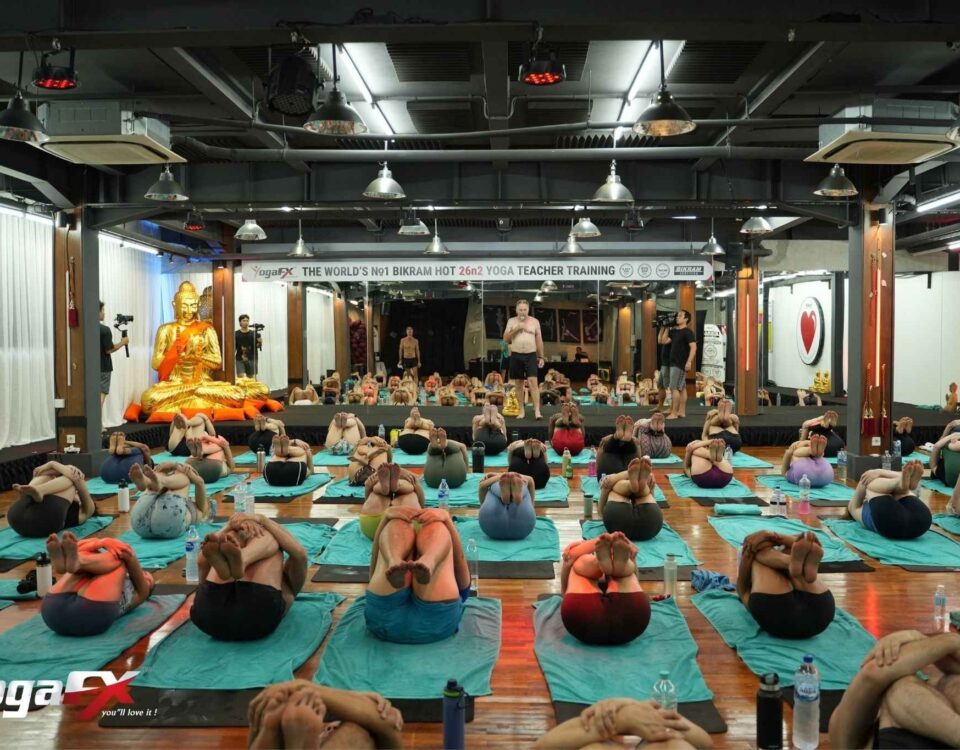
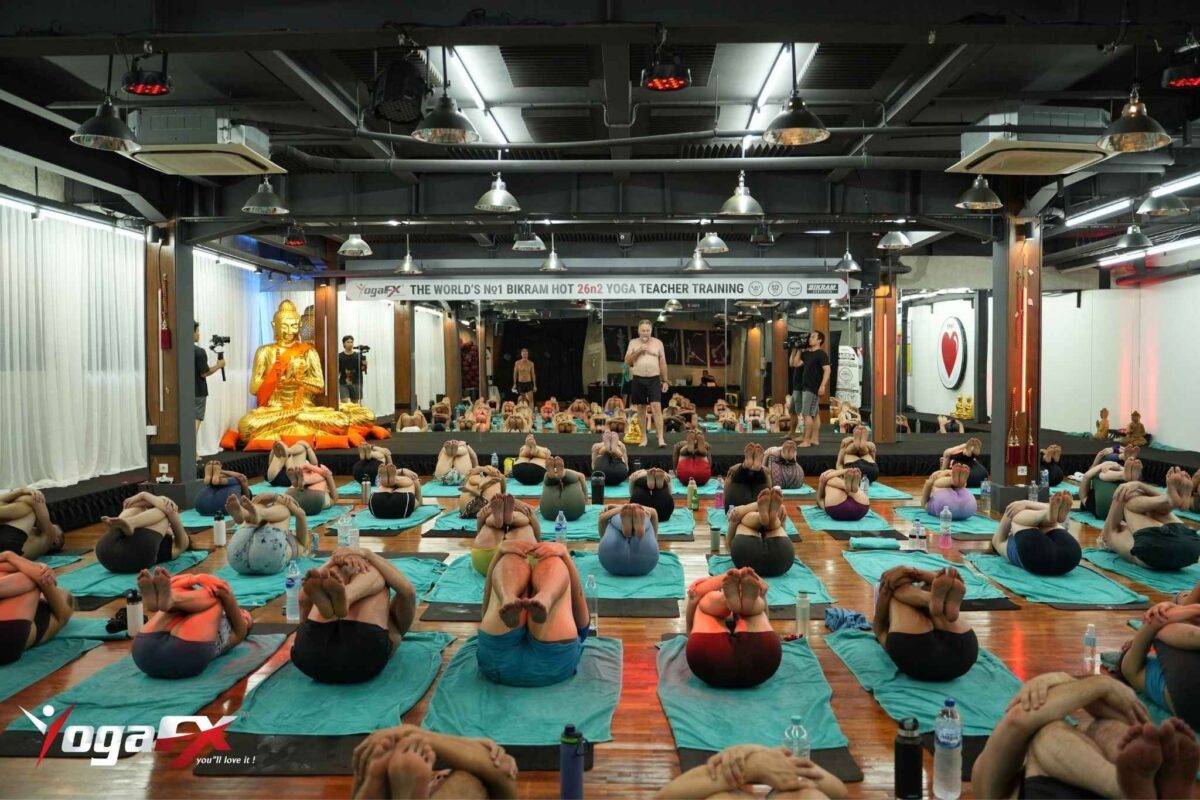
First, the heat is a tool, not a test. At the YogaFX studios in Seminyak and Canggu, Bali, the room sits at around 40°C and 40% humidity from natural tropical heat rather than electric heaters. Classes run for a fixed 90 minutes. They are taught with a spoken dialogue, no music and no demonstration. So students stay inside their own body instead of watching someone else. The goal is to make the heat work for the posture, not to see who can suffer longest.
Is hot yoga good for you if you’re not fit yet?
Second, the people who get the most out of hot yoga are rarely the fittest on day one. One student admitted in his review that he dreaded his first class and was sure he wouldn’t survive it, then walked out feeling incredible. Another came to the practice after a run of injuries and difficult life events and described it as a game changer. The common thread is consistency and patience, which is exactly what the research rewards. So is hot yoga good for you as a total beginner? Our students’ stories suggest it is.
The teacher is the biggest safety factor
Third, is hot yoga good for you without a good teacher? Less so, because a good teacher is the biggest safety factor in the room. Knowing when to tell a student to lie down is a learned skill. So is cueing a posture so nobody forces a hamstring, and spotting heat exhaustion early. That’s why so much of YogaFX teacher training is spent on reading students in the heat, not just memorising the dialogue.
If your answer to “is hot yoga good for you?” is yes and you’re wondering whether you could teach it, take the 2-minute teacher readiness quiz to see where you stand. Prefer to talk it through first? Get in touch with the YogaFX team and we will answer your questions personally.
FAQ
Is hot yoga bad for you?
For most healthy adults, hot yoga is not bad for you. Research links it to better flexibility, strength, mood and cholesterol. The main risks are dehydration, overstretching and heat exhaustion, which are largely preventable with good hydration, gradual adaptation and resting when needed. People with heart disease, blood pressure issues or a pregnancy should get medical advice first. Is hot yoga good for you overall? For most people, yes.
Who should not do hot yoga?
Several groups should avoid hot yoga unless a doctor approves it. That includes people with heart disease, high or low blood pressure, or a history of heatstroke or heat intolerance. It also includes anyone pregnant. People with diabetes should plan carefully with their healthcare team. Anyone who is ill, feverish or hungover should skip class until they have recovered. For everyone else, is hot yoga good for you? Usually, yes.
Is hot yoga good for you once a week?
Yes. Once a week still helps with stress, mobility and general wellbeing. Progress is slower than with more frequent practice, because the body partly loses its heat adaptation between sessions. Most studies showing clear physical changes used two to three classes a week for at least eight weeks. So aim for that if you can.
Is hot yoga better than regular yoga?
Not proven. A 2025 review of 43 studies found hot yoga has real benefits but concluded that claims of greater health benefits than non-heated yoga are unsubstantiated. The postures and consistency do most of the work. Choose hot yoga if the heat motivates you and helps you focus, not because it is automatically superior. So is hot yoga good for you? Yes, but so is regular yoga.
Is hot yoga good for you when you’re sick?
No. If you have a fever, a stomach bug or a heavy cold, your body is already under stress and often dehydrated. Adding 90 minutes in a 40°C room raises the risk of dizziness and heat exhaustion. Rest, rehydrate and return once you feel well. Mild sniffles may be fine, but go easy and rest often.
Disclaimer: This article is for general information only and is not medical advice. Hot yoga places real demands on the body. If you have a health condition, take medication, are pregnant or are unsure whether hot yoga is right for you, please consult a healthcare professional before starting.