Hot yoga vs regular yoga comes down to one variable: the room temperature. In a controlled trial, a 35°C room pushed heart rate higher and made the same class feel harder, yet oxygen use stayed level. The heat changes how a Hatha class feels more than what it does. Pick the room you will keep attending.

Mr. Ian Terry, E-RYT 500, has taught the Original Hot 26&2 method for more than 12,000 hours. He has trained 1,500+ graduates from 80+ countries, and many of them arrive asking this exact question. This guide pairs his teaching-floor view with published trials, so you can check every claim.
If you practise in the UK, you probably know Hatha as a class in a hall, a gym studio or a community room. A hot class feels like a different sport by comparison. Here is what the heat really changes, what it leaves alone, and how to choose.
In This GuideWhat the heat changes, and what it does not
Hot Yoga vs Regular Yoga: The Short Answer
Both classes share the same bones: standing, balancing, folding and resting. So the designed difference in hot yoga vs regular yoga is heat. A hot class runs warm and humid, while a regular class sits at ordinary room temperature. That single change alters four things you can feel and measure.
- Your heart rate runs higher. In a randomised crossover trial, students reached 67.0% of maximum heart rate in the hot room and 60.8% in the cool one.
- The class feels harder. Students rated their effort 12 in the heat against 11 in the cool room.
- Your cells show a heat response. After 12 hot classes, a protective heat-shock protein rose in the hot group only.
- Heat strain becomes a real risk. Dizziness, headache and nausea are the NHS warning signs of heat exhaustion.
Heat doesn’t change everything, though. Oxygen use matched across both rooms, and so did several stress and brain markers. As a result, the heat is a challenge you add, not a shortcut you earn. For a second opinion built on different trials, the Bali team’s full study round-up on the same question covers calories, flexibility and heart health.
What Counts as Regular Yoga in a UK Class
Before comparing hot yoga vs regular yoga, it helps to define both. “Regular yoga” is a loose label. In the UK it usually means Hatha, Vinyasa, Yin or a general stretch class, taught in a comfortably warm room rather than a heated one. “Hot yoga” is just as loose. It can mean a heated flow class or a fixed sequence, so decide which pair you are comparing before you decide anything else.
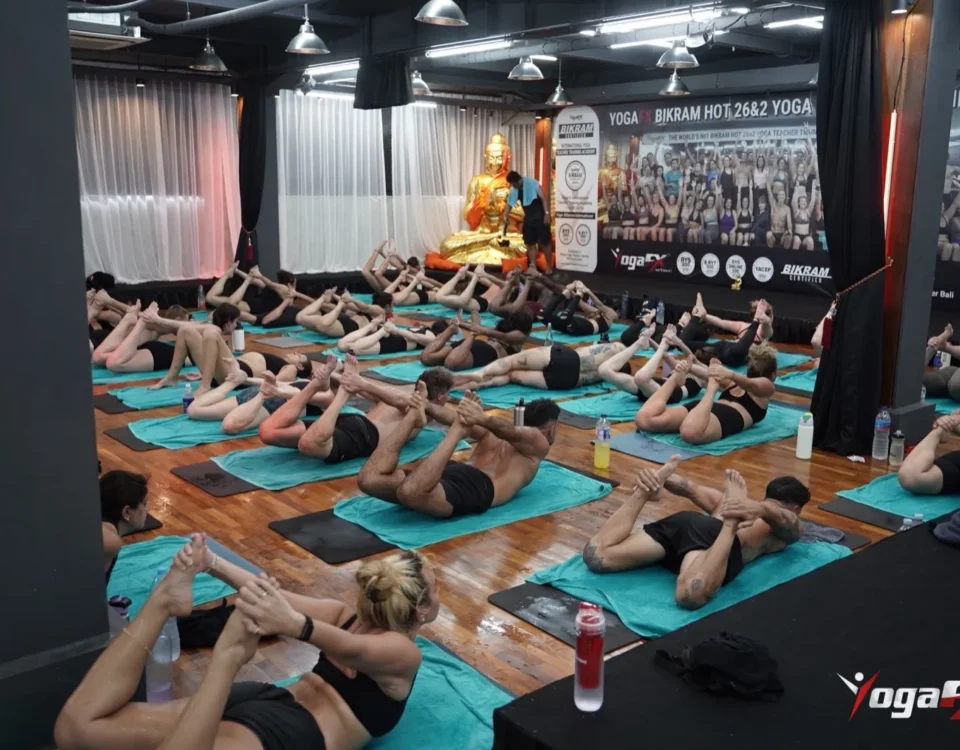
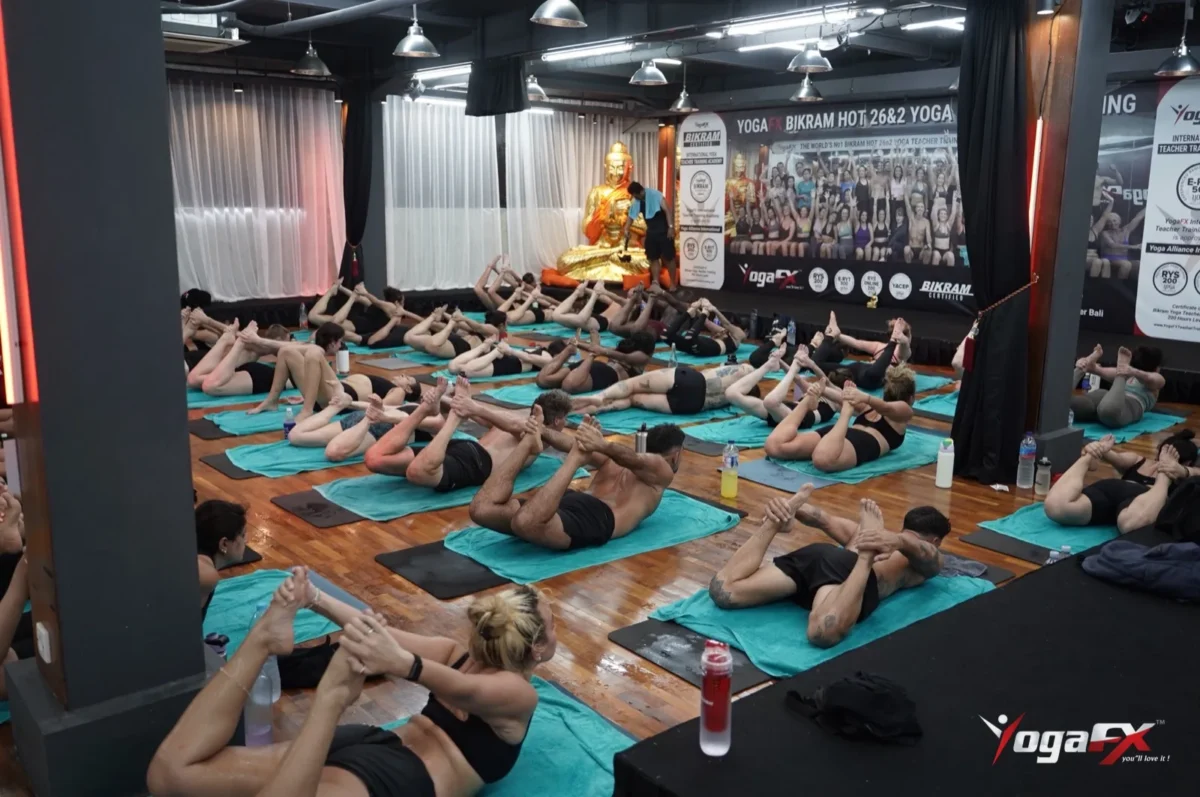
A Bikram-style class, also called Original Hot 26&2, is the fixed version. It runs 90 minutes and repeats the same 26 postures and 2 breathing exercises every time. The teacher follows a scripted dialogue, with no demonstration and no music. At YogaFX in Bali, the room sits near 40°C and 40% humidity from natural tropical heat, not electric heaters.
A regular class changes with the teacher, which gives you variety.
A fixed series gives you a ruler instead, because you can compare this week with last week. That is the practical difference between hot yoga vs regular yoga for anyone who likes to track progress. If you are torn between the two formats, ask a studio whether its heated class is a flow or a fixed series. That one answer tells you what you are signing up for. If the term is new, see how UK studios heat hot yoga rooms.
What the Heat Changes: Heart Rate and Effort
The cleanest test of hot yoga vs regular yoga puts the same people in both rooms. That way, differences come from the room, not from the person. A 2018 randomised crossover trial in Applied Physiology, Nutrition, and Metabolism did exactly that with 14 participants. Each person did two identical yoga sessions of about 20 minutes, one hot and one thermoneutral (abstract here).
| Measure | Hot room | Room temperature | What it shows |
|---|---|---|---|
| Room temperature | 35.3°C | 22.1°C | A 13-degree gap |
| Humidity | 20.5% | 27.8% | Slightly drier in the hot room |
| Heart rate, % of maximum | 67.0% | 60.8% | Higher in the heat (p = 0.01) |
| Perceived effort (RPE) | 12 | 11 | Felt harder in the heat (p = 0.04) |
| Oxygen use, % of maximum | 30.9% | 30.5% | No real difference (p = 0.68) |
Read the last row first. Oxygen use was almost identical, so the muscles did the same amount of work in both rooms.
The heart still ran harder in the heat, and so did the sense of effort. That means the heat adds stress to your circulation without adding work to your muscles. The authors classed both rooms as light exercise by oxygen use, but the hot room counted as moderate by heart rate and effort.
What the trial cannot tell you
Keep the limits in mind, because they matter. The sessions were short, and 14 people is a small group.
The trial is a clean look at the heat, not a verdict on a full 90-minute class.
Still, it explains a feeling many UK students report in their first hot class: the postures are familiar, yet everything seems to take more out of you. For example, a simple forward fold suddenly leaves you short of breath.
What that means for you
- Expect your heart rate to climb sooner than it does in a regular class.
- Treat the extra effort as heat strain, not as proof of a better workout.
- Rest on the mat whenever you need to, because the heat is already doing the pushing.
What 12 Hot Classes Did to the Body
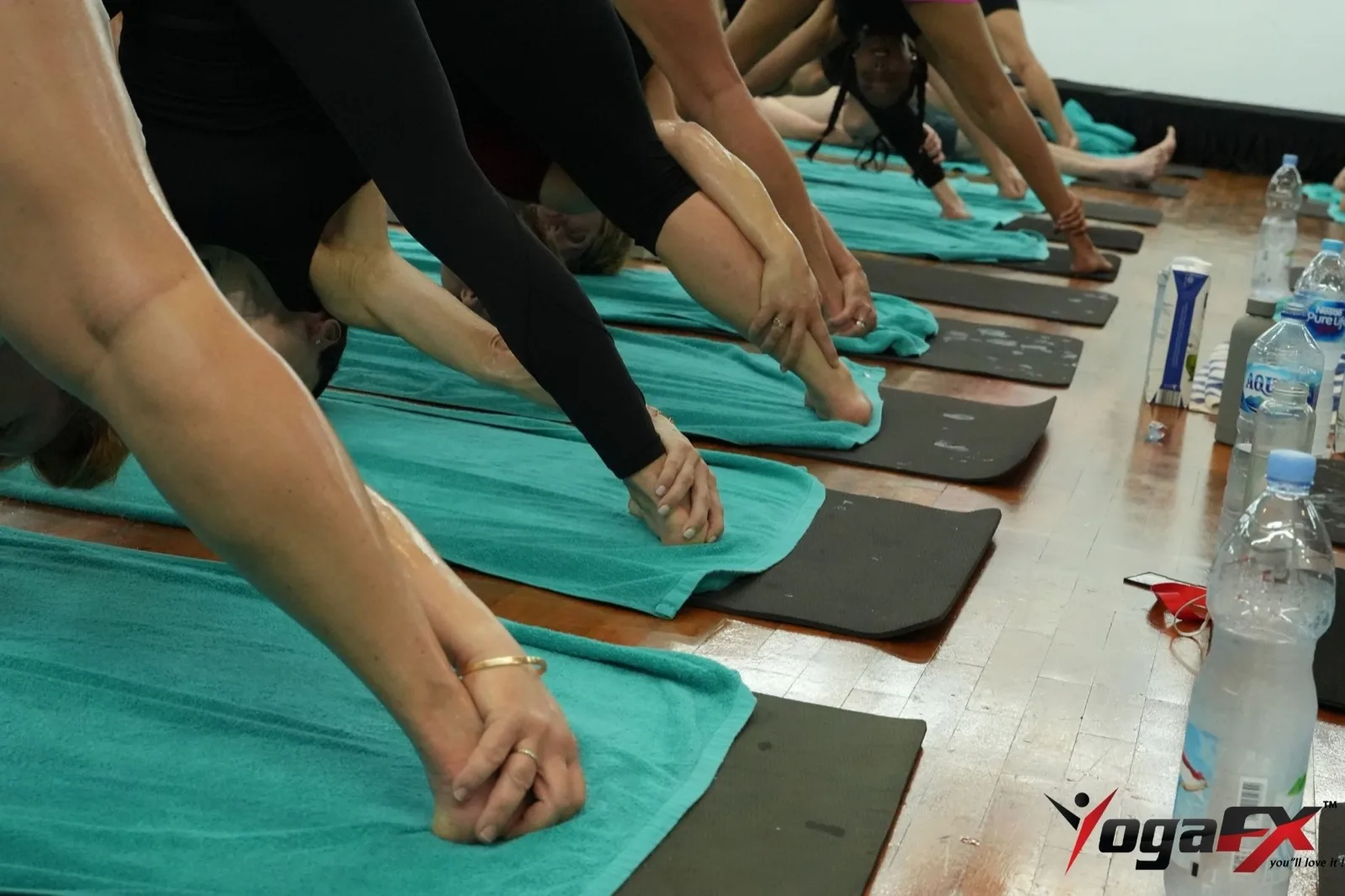
One class tells you little about adaptation. That is why Bourbeau and colleagues followed 22 healthy adults for four weeks in the International Journal of Yoga (2021). Each person took three classes a week, 12 in total, following a modified Bikram protocol. Half practised in a hot room and half in a normal-temperature room (full paper).
What changed in the hot group
In the hot yoga vs regular yoga comparison, the hot group showed two things the cool group did not. Their maximal aerobic fitness rose, and a protective heat-shock protein called HSP70 was higher. That protein is part of how cells cope with heat.
Even so, the paper found no significant gap between the groups for aerobic fitness, so treat that edge as a hint rather than a promise.
What did not depend on temperature
Several results stayed the same in both rooms:
- Brain-growth protein (BDNF) rose when both yoga groups were combined, and it did not appear to be temperature dependent.
- Perceived stress did not change in either group, hot or cool.
- Heat acclimation did not appear, even after 12 hot classes. The body did not learn to cope better with the heat.
That last point surprises people. Many students assume the heat gets easier with time because it feels easier. The study suggests the feeling improves faster than the physiology does. So build up slowly, and don’t judge yourself by how the room felt in week three.
The Heat Effect in Five Numbers
Here is the whole hot yoga vs regular yoga comparison at a glance. Each card comes from the trials above or from our own class facts.
Hot Yoga vs Regular Yoga: Calories and Sweat
Most people who weigh hot yoga vs regular yoga are really asking about calories. The sweat feels like proof. It isn’t, because sweat is your body cooling itself, and the weight you lose on the scale is water you’ll drink back.
A University of Wisconsin study (Porcari et al., 2014) measured real Bikram classes. It found about 333 kcal for women and 460 kcal for men across 90 minutes, at roughly 80% of maximum heart rate. That is a decent workout, comparable to a brisk walk or an easy jog. However, it doesn’t show that the heat caused the burn.
The 2018 trial points the other way. Oxygen use, which tracks energy cost, matched across the two rooms. For hot yoga vs regular yoga, that means the calories come from the 90 minutes of postures, not from the thermostat. Practise three or four times a week, eat normally, and the numbers add up over months in either room.
If you are weighing heat against a different kind of class altogether, we moved that comparison to its own guide: hot yoga vs Pilates for UK men between gym sessions sets the two side by side across a training week.
Heat Strain: The Real Cost of the Choice
The main downside of hot yoga vs regular yoga is not boredom or cost. It is heat strain. Your body has to cool itself while you balance, hold and stretch, so your heart works harder and you lose fluid faster. For most healthy adults that’s manageable. For some people it isn’t.
Signs of heat exhaustion
The NHS lists the signs of heat exhaustion: tiredness, dizziness, headache, nausea, heavy sweating with pale clammy skin, cramps, a high temperature and strong thirst. Its advice is to move somewhere cool, drink water and cool the skin. If you do not improve within 30 minutes, it says to get medical help (NHS guidance on heat exhaustion and heatstroke).
Sensible rules for a hot class
- Talk to your GP first if you have a heart or blood pressure condition, or if you are pregnant.
- Arrive hydrated, and keep sipping water through the day, not only before class.
- Eat a light meal two to three hours beforehand.
- Leave the room at once if you feel faint, sick or confused.
- Skip the class when you are unwell or have been drinking.
This article is for general information and does not replace advice from a healthcare professional. For a wider look at benefits and risks, see our guide on whether hot yoga is good for you, which draws on a 43-study review.
Which Room Fits Your Week
You don’t need to pick a side forever. Choose between hot yoga vs regular yoga by your goal, your health and your timetable. This table turns the research into a starting point.
| Your situation | Start in | Why |
|---|---|---|
| First ever yoga class | Regular class | You are learning balance and breath, and heat makes both harder to feel. |
| Stiff hips from a desk job | Either room | Warm muscles stretch with less resistance, but a cool room works if you stay regular. |
| Heart or blood pressure condition | Regular class | Heat adds strain to the circulation, so check with your GP before any hot class. |
| Pregnant | Regular class | Heat is a risk, so speak to your midwife or doctor first. |
| Likes structure and tracking progress | Fixed hot series | The same 26 postures every class give you a clear ruler. |
| Wants variety and flow | Regular class | Teachers change the sequence, so the class stays fresh. |
If you’re new to heat, treat the first month as a trial rather than a verdict. Our guide to hot yoga for beginners covers what to pack and how to pace your first class. A simple plan looks like this:
- Weeks 1 and 2: go to two classes a week, rest freely and sip water.
- Weeks 3 and 4: aim for steadier breathing and fewer rests.
- Week 5 onward: compare how you feel the next morning against a regular class, then decide.
A Teacher’s View of the Hot Room
Mr. Ian treats the heat as a teaching tool, not a health trick. Warm muscles let students go deeper into a stretch with less resistance.
Fixed room conditions also make each class comparable, which matters to a student and matters even more to a teacher in training.
His view of hot yoga vs regular yoga is simple: use heat when it helps you practise, and drop it when it doesn’t. Over 12,000 hours of teaching, he has trained for five years, from 2014 to 2019, with the founder of the Bikram Hot 26&2 method.
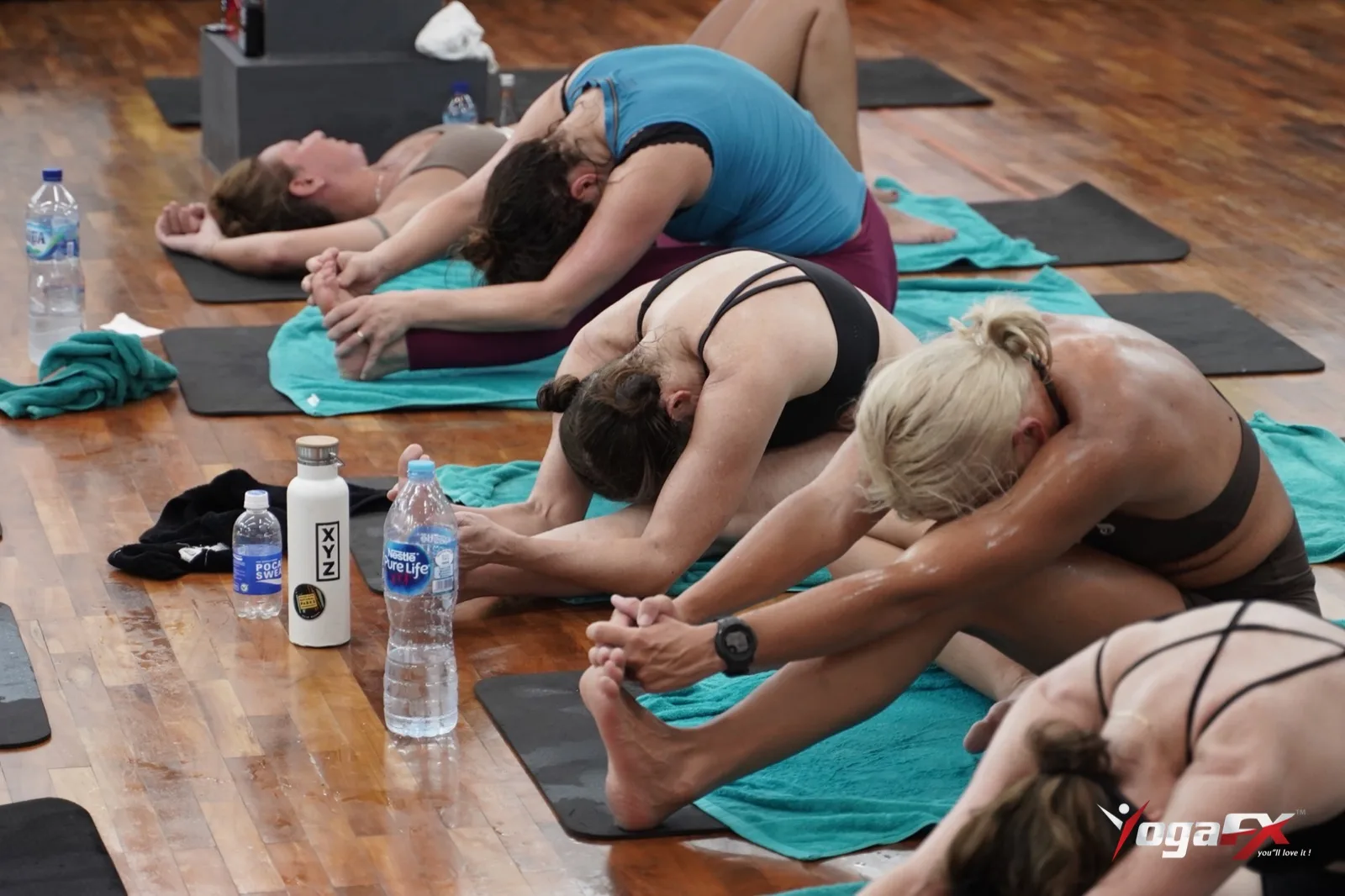
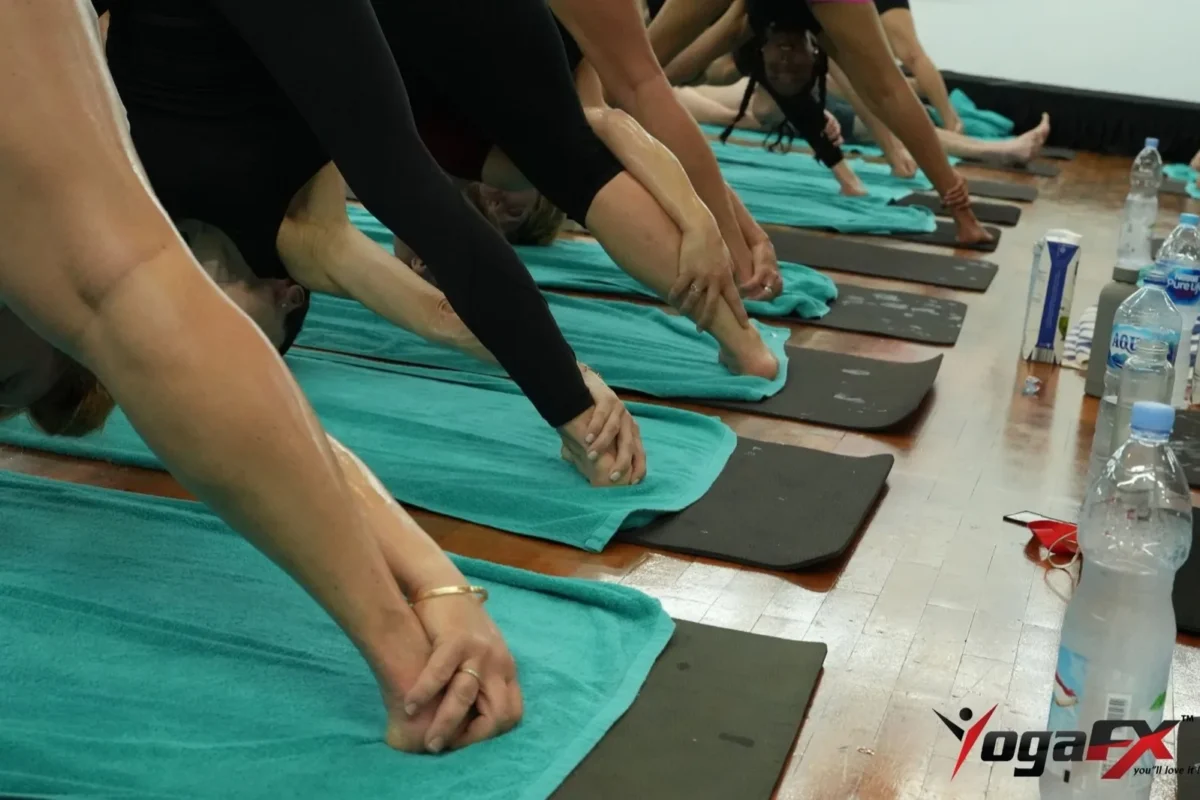
The trials back up what he sees on the floor. For instance, the first few classes feel hard because the heart is working to cool you, not because the postures are harder.
A good teacher tells you to rest, sip water and stay on the mat. The students who last are the ones who respect the room, whichever side of the hot yoga vs regular yoga choice they make.
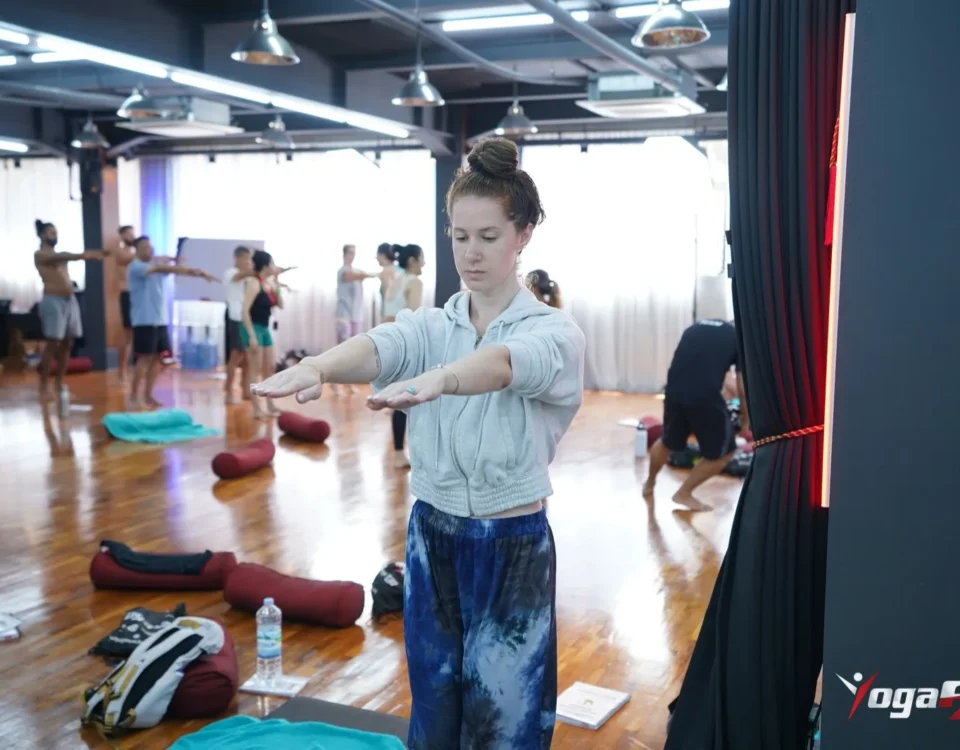
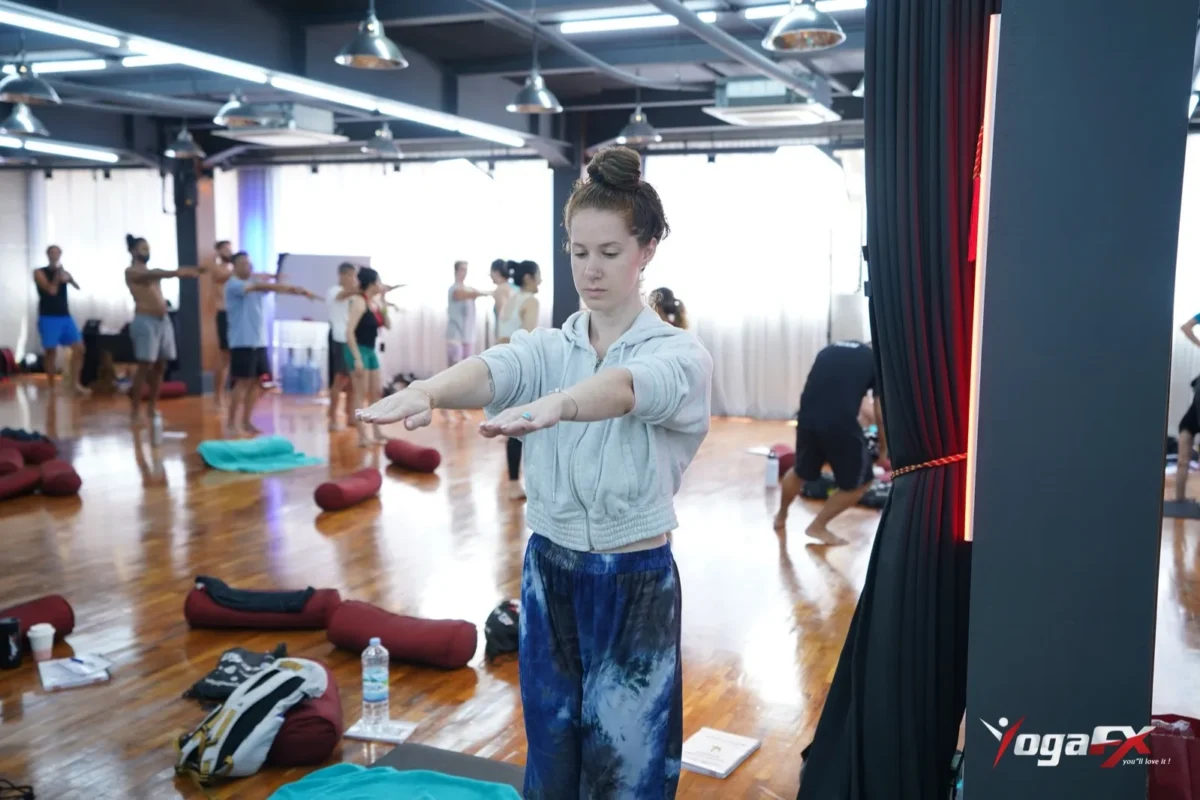
The standing breathing exercise that opens a class shows the effect clearly. Deep breathing is simple at room temperature. In a warm room it asks more of you, which is why teachers coach it so carefully.

What YogaFX Students Say
These are real reviews from people who trained with Mr. Ian. They talk about the teaching rather than the thermometer. Even so, they show what the hot room feels like from the inside.
“Highly professional Hot Yoga and Hatha training – you are dual certified on the classical 26+2 Bikram series and Hatha Yoga.”
Karen, Google review, 2025
“More focus inside myself, more positive mindset and motivated.”
Nur, Google review, 2018
Annalisa shared her own words on camera after a class. “This experience really exceeded my expectations,” she says in her YouTube review, 2025.

From Hot Class to Teaching: Training in Bali
If hot yoga becomes your daily practice after weighing hot yoga vs regular yoga, you may start to wonder about teaching it. Many UK practitioners look at part-time courses first, which run over many months and many weekends. A different route is one intensive week in the heat you have been reading about.
The YogaFX Bikram Hot 26&2 Yoga Teacher Training MasterClass is a six-day hybrid course. You study online first, then train in person in Bali. Graduates earn Yoga Alliance RYT 200 and the Bikram Hot 26&2 200-Hour International Yoga Certification. The next batch checks in on Sunday 24 January 2027 and checks out on Friday 29 January 2027.
The current Early Bird price is US$1,899, against a normal price of US$1,999. We compare the two routes in detail in our guide to yoga teacher training in Bali vs the UK. You can also see what the course includes on our course inclusions page.
FAQ
Is hot yoga better than normal yoga?
Not for most goals. In the studies above, hot and room-temperature classes gave similar oxygen use and stress scores. Heat raised heart rate and effort, and one cellular marker. The better class is the one you will attend regularly, so choose by comfort, health, timetable and teacher.
Is hot yoga suitable for beginners?
It can be, but a regular class is usually the gentler start. A beginner is learning balance and breath, and heat makes both harder to feel. If you want to try heat, see your GP if you have any condition, book a class you can repeat, and rest freely.
Can hot yoga make you ill?
It can cause heat strain. The NHS lists tiredness, dizziness, headache, nausea, cramps and heavy sweating as signs of heat exhaustion. Arrive hydrated, rest when you need to, and leave the room if you feel unwell. People with heart conditions or pregnancy should ask a doctor first.
Which type of yoga is best for you?
It depends on your goal and your health. Choose a regular Hatha or flow class for variety and a gentle start. Choose a fixed hot series if you like structure and a measurable routine. Whichever you pick, consistency matters more than the room temperature.
What is hot yoga in the UK?
It is yoga taught in a heated, humid room. In the UK that ranges from heated flow classes to the fixed Bikram-style series of 26 postures and 2 breathing exercises. Always ask a studio what style it teaches, how warm the room runs and how long the class lasts. If you are still choosing between styles, our guide to the types of hot yoga compares them side by side.
Still have questions? Message Mr. Ian and the YogaFX team on WhatsApp and we will answer them personally.