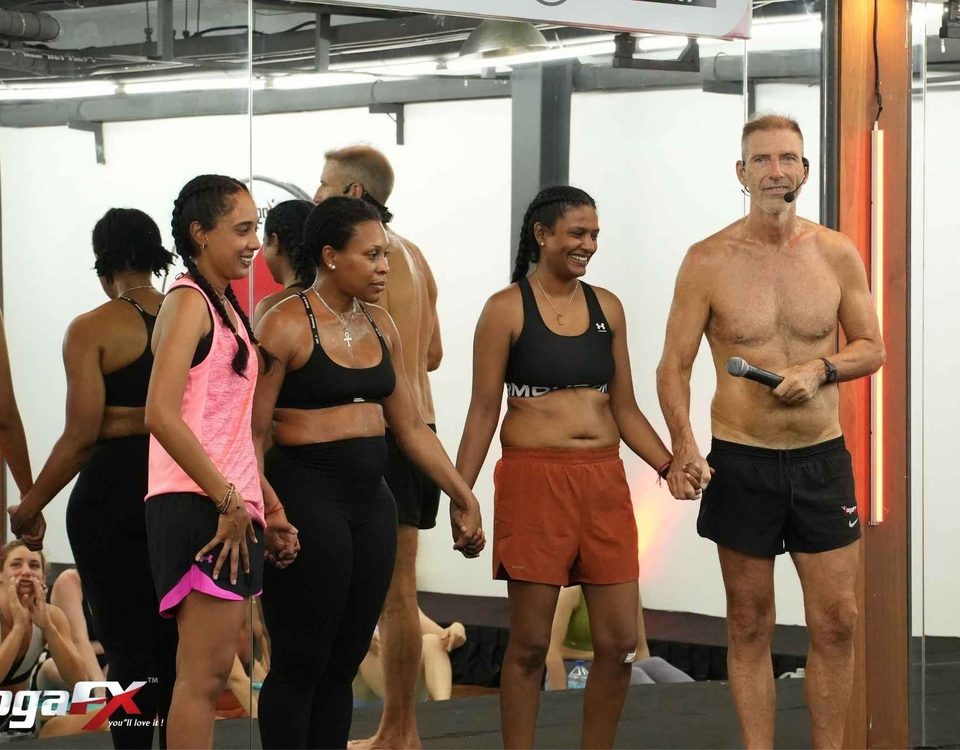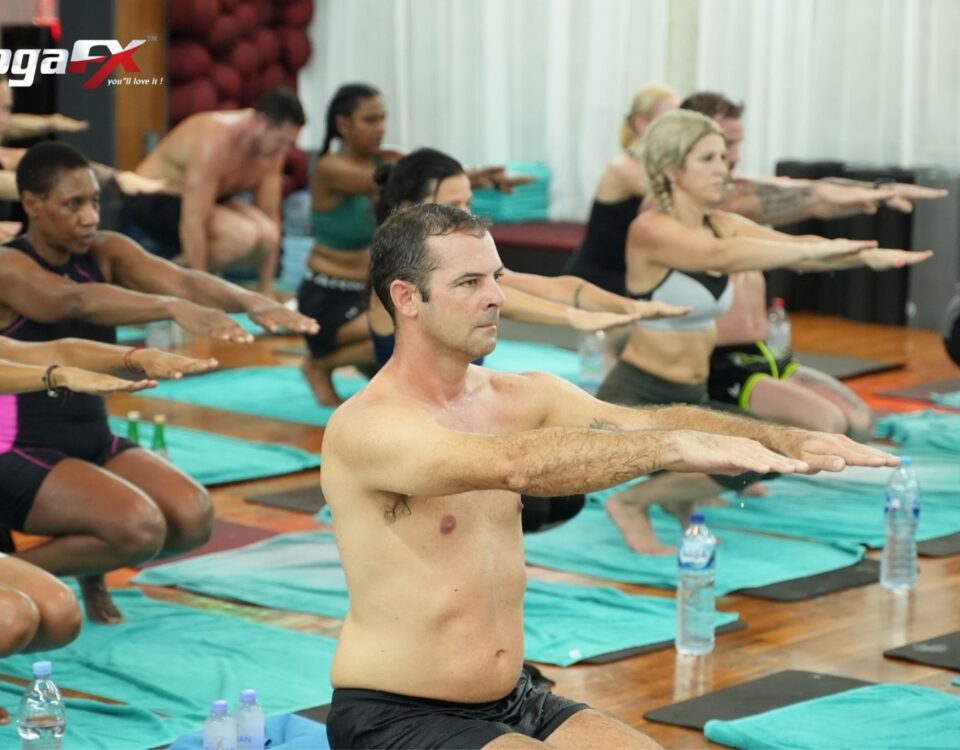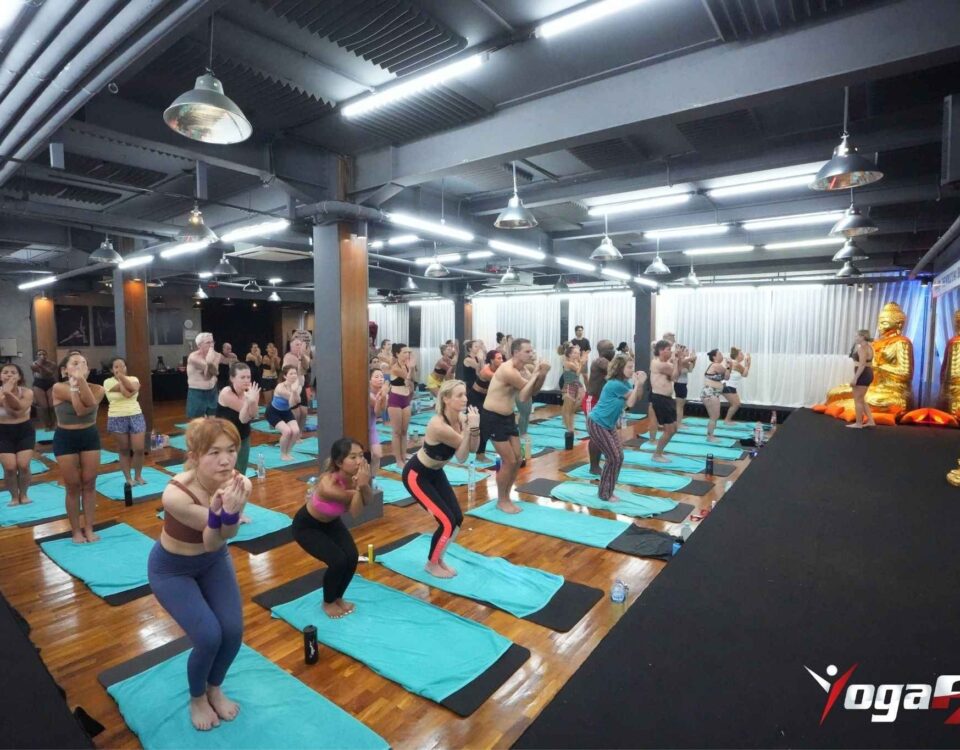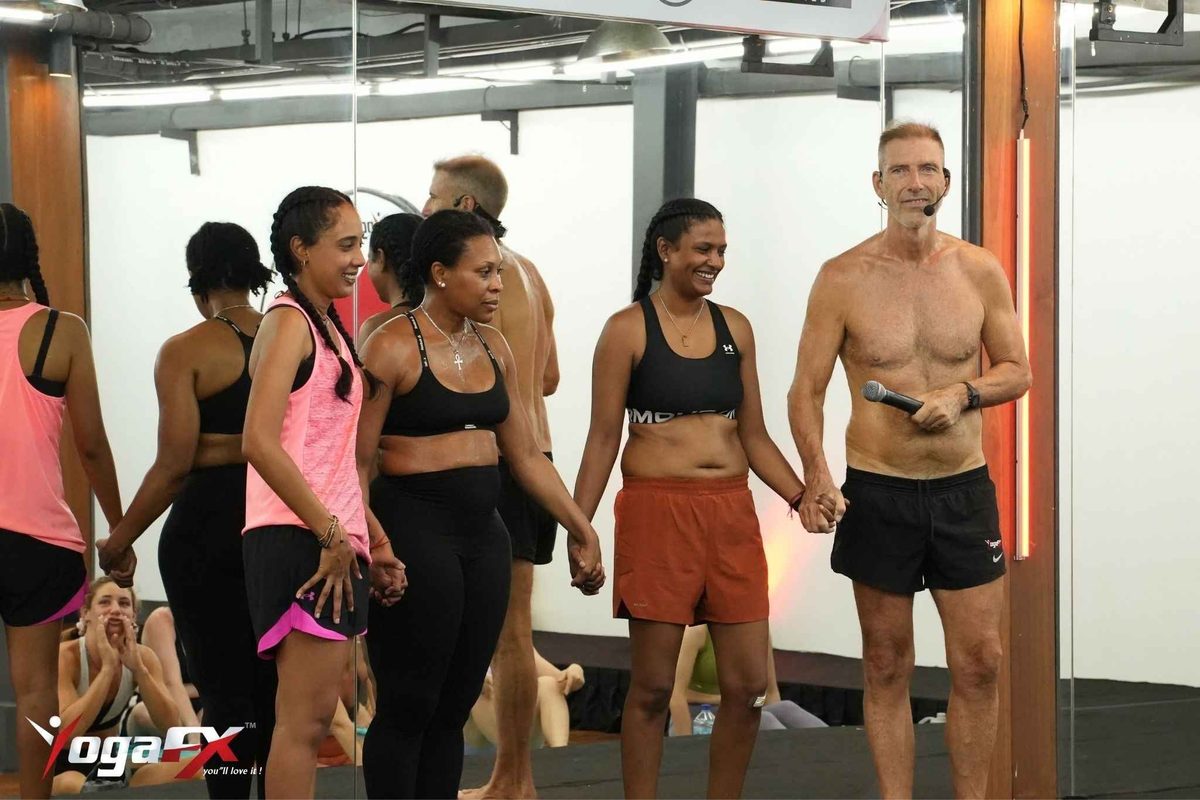
Hot yoga vs Pilates for a man who already lifts comes down to what your gym week is missing. If you’re stiff, short on cardio and stressed, hot yoga fills more gaps. If a weak trunk or sore lower back limits your deadlift, Pilates is sharper. Most UK gym-goers do best with hot yoga first, Pilates second.

This guide is for the man training three or four times a week in a British gym who keeps hearing both names. It’s not a general hot yoga vs Pilates overview.
Instead, we look at what each method does to a lifter’s body, where it fits around heavy days, what the research measured, and what to ask a UK studio before you pay. It is written by the YogaFX team, with teaching notes from Mr. Ian Terry, E-RYT 500.
Hot Yoga vs Pilates Between Gym Sessions: The Short Verdict
Think of your week as a budget. Lifting already covers load and muscle. So the real hot yoga vs Pilates question is which method buys back what the barbell takes away. For most men, that is range of motion, recovery and a calmer nervous system.
- Pick hot yoga first if your hamstrings, hips and upper back feel locked, if you skip cardio, or if work stress follows you into the gym.
- Pick Pilates first if your lower back flares after heavy pulls, if your bracing feels weak, or if a physio has asked you to rebuild trunk control.
- Do both if you train four days and have room for two extra sessions: two hot classes plus one Pilates class covers most of what lifting leaves out.
So is hot yoga better than Pilates? For a lifter, usually yes as the first add-on. And what is better for men, yoga or Pilates? The one that trains what your programme leaves out, which for most men is range and recovery.
Here’s the thing most comparisons miss. A man who lifts is not choosing his only exercise. He is choosing a complement. That changes the answer, because the best complement is the one that trains the qualities your programme ignores.
Our wider guide to hot yoga, regular yoga and Pilates side by side covers all three styles for any reader. This article stays with one person: the UK man who already trains and wants to know which class to add.
Where Each Class Fits in a UK Gym Week
The NHS asks adults for 150 minutes of moderate activity a week and strength work on two or more days. Its own physical activity guidelines for adults aged 19 to 64 list both yoga and Pilates as muscle-strengthening options. So either class counts. The real hot yoga vs Pilates question is where each one sits around your lifting.
Because a 90-minute heated class is hard on the heart and on fluid levels, it works best on a day without heavy legs. Pilates is gentler, so it can sit the day before a big pull and act as a trunk primer. The table below shows a week that many of our UK students use as a starting point.
| Day | Gym session | Add-on class | Why it sits there |
|---|---|---|---|
| Monday | Upper body push | Hot yoga (90 min) | Legs are fresh, so the standing series is safe to work hard |
| Tuesday | Lower body (squat focus) | None | Heavy legs need food and sleep, not more heat |
| Wednesday | Rest or easy walk | Pilates (45 to 60 min) | Low load trunk work primes bracing for the next pull day |
| Thursday | Lower body (deadlift focus) | None | Trunk control from Wednesday carries into the lift |
| Friday | Upper body pull | None | Keep one quiet evening before the weekend class |
| Saturday | Rest | Hot yoga (90 min) | Long holds open hips and hamstrings after two leg days |
| Sunday | Rest | None | Full recovery day |
Notice the pattern. Hot yoga lands on the days your legs are not cooked. Pilates lands where it can help the next heavy session. That is the practical answer to hot yoga vs Pilates for a lifter: they do different jobs on different days.
If you only have one extra slot
Then take the class that fixes your weakest link. A man who can’t touch his toes and gets breathless on stairs should book hot yoga. A man who is supple but tweaks his back on every second deadlift session should book Pilates.
If you can’t tell which camp you are in, start with hot yoga for a month, because it tests more qualities at once and shows you where you are short.
Hot Yoga vs Pilates: What Each Method Does to a Lifter’s Body
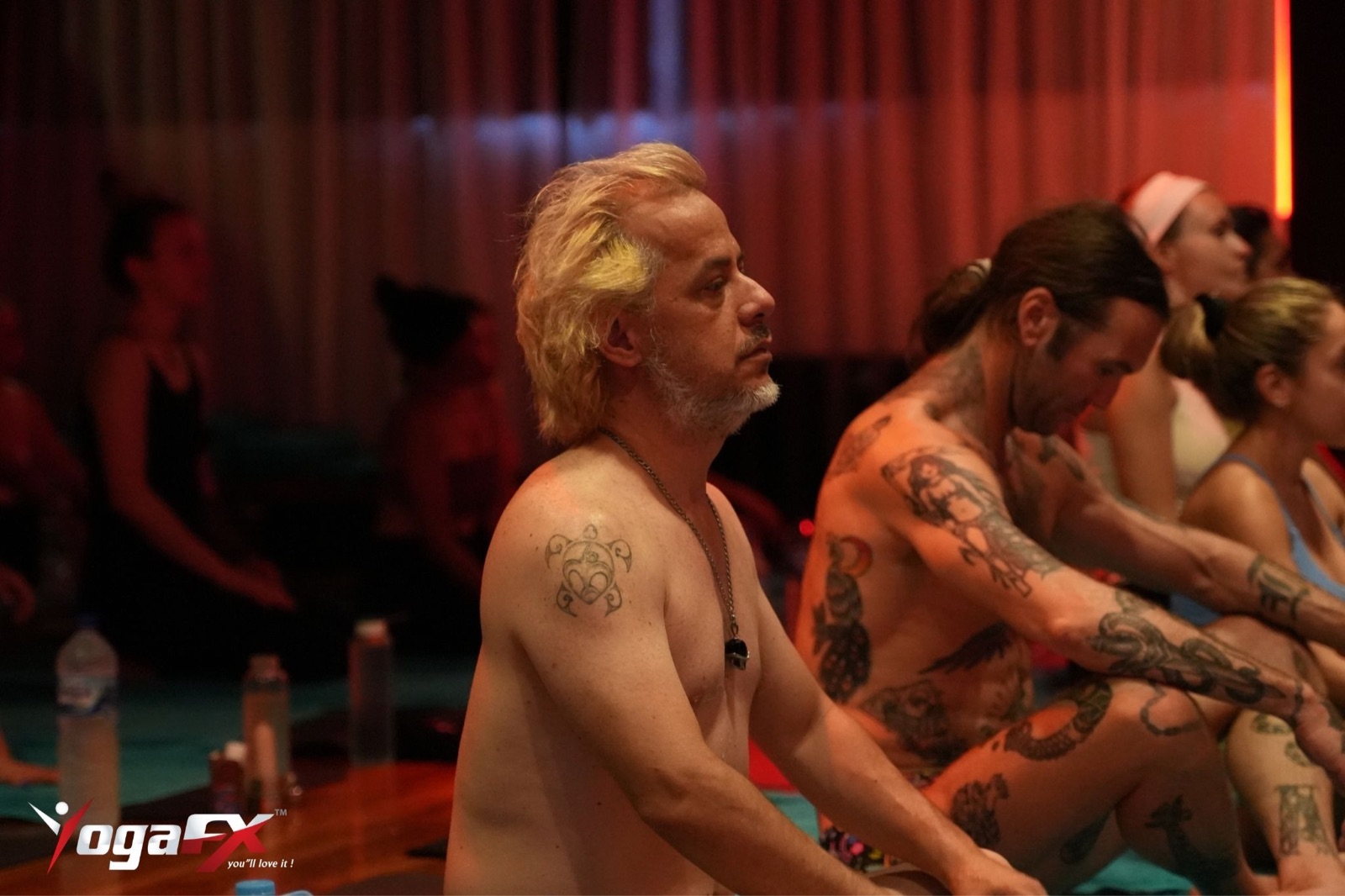
Lifting builds force in fairly short ranges, which is why hot yoga vs Pilates is really a question about range and control. Over months, many men lose length in the hamstrings, hip flexors and chest, and their thoracic spine stiffens. Both methods push back on that, but from opposite directions.
Hot yoga: range, heat and long holds
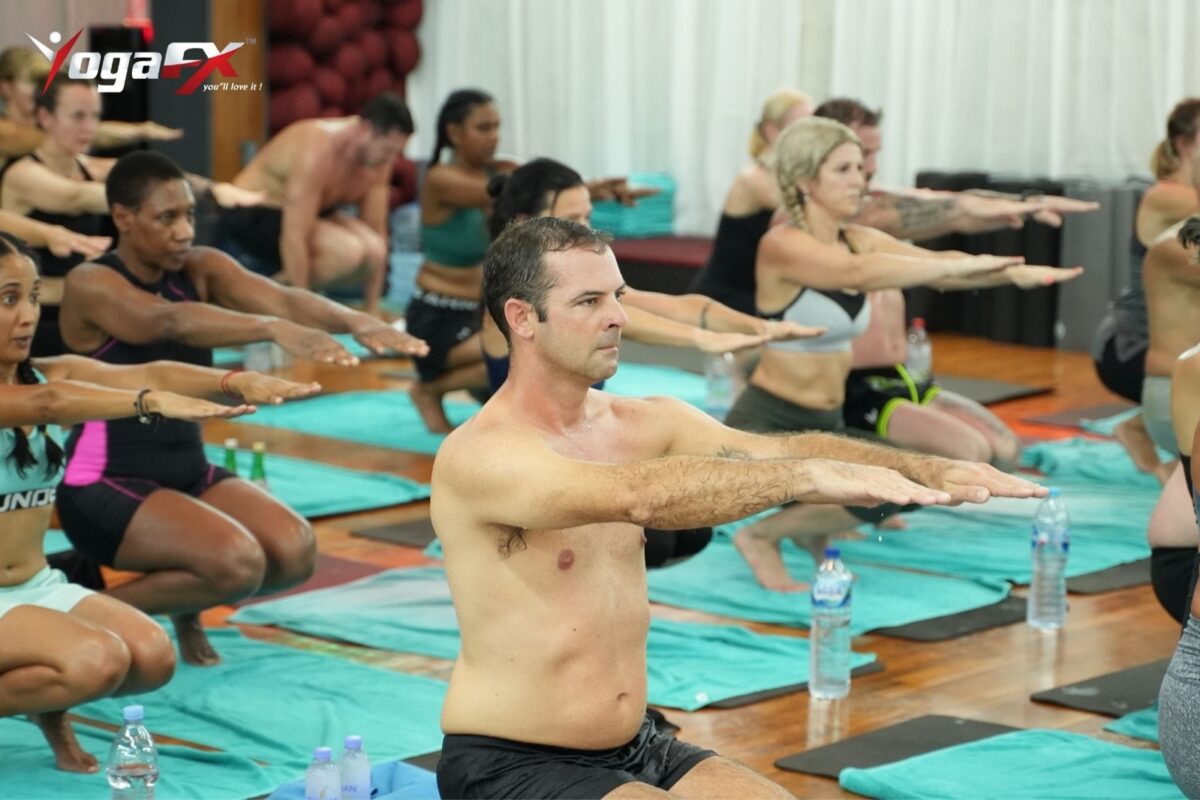
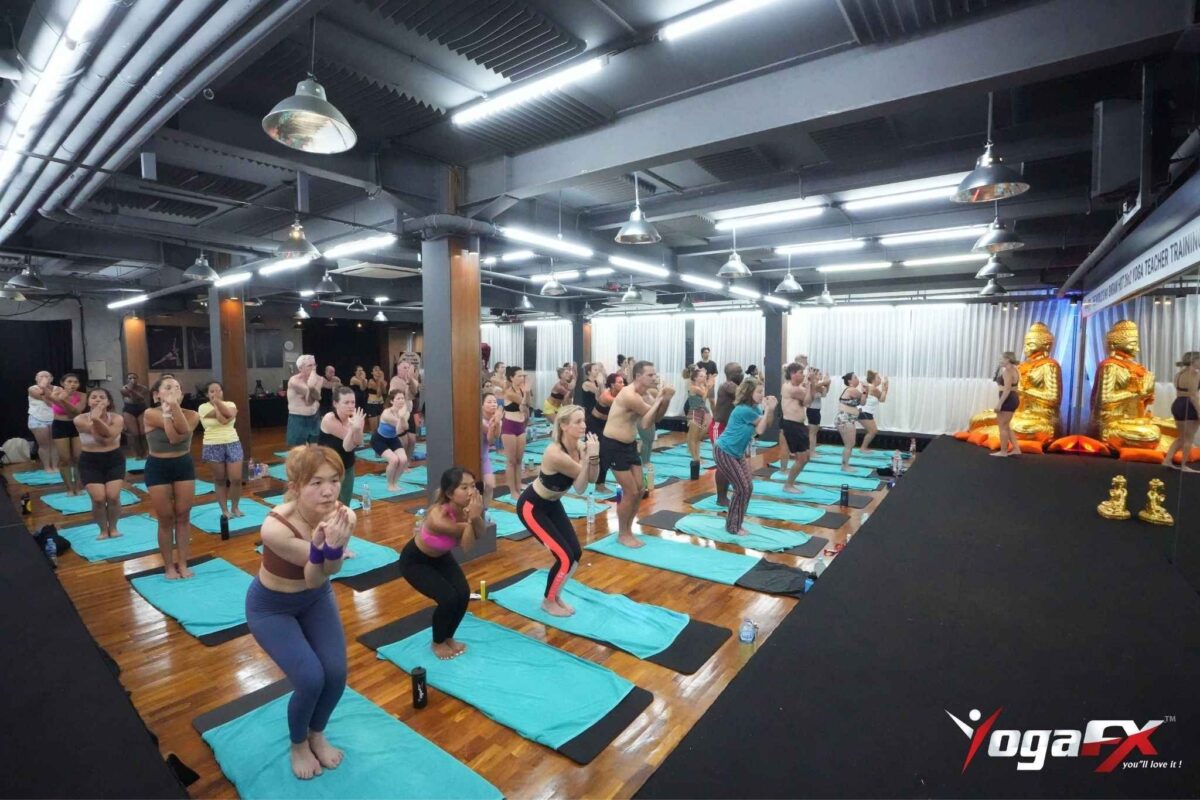
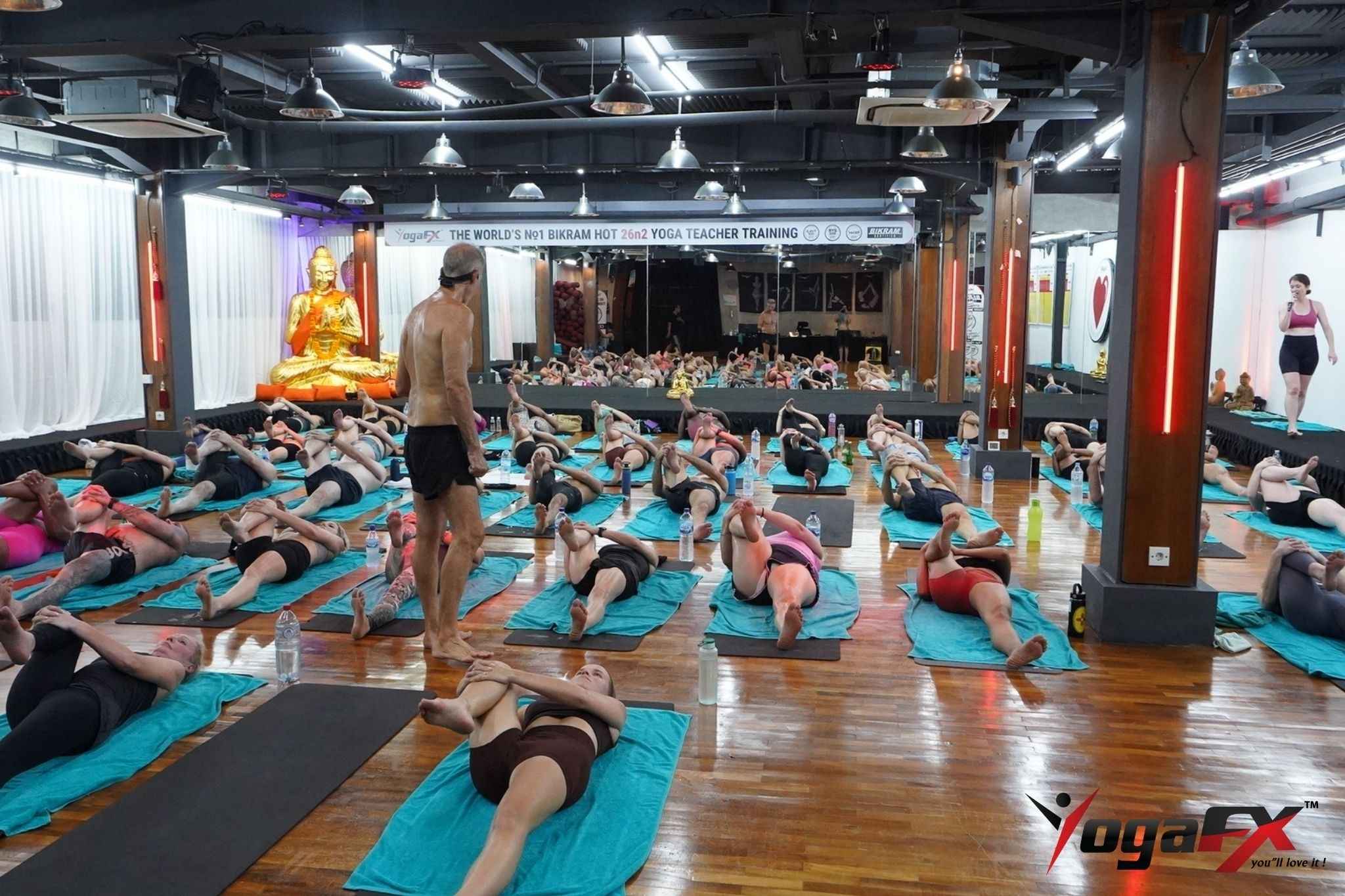
The Original Hot 26&2 class runs for 90 minutes at 40°C and 40% humidity. It is the same 26 postures and 2 breathing exercises every time. For a lifter, three postures matter most:
- Utkatasana (Awkward Pose) asks for a deep, slow squat with the heels lifted, which exposes ankle and knee control that barbell squats can hide.
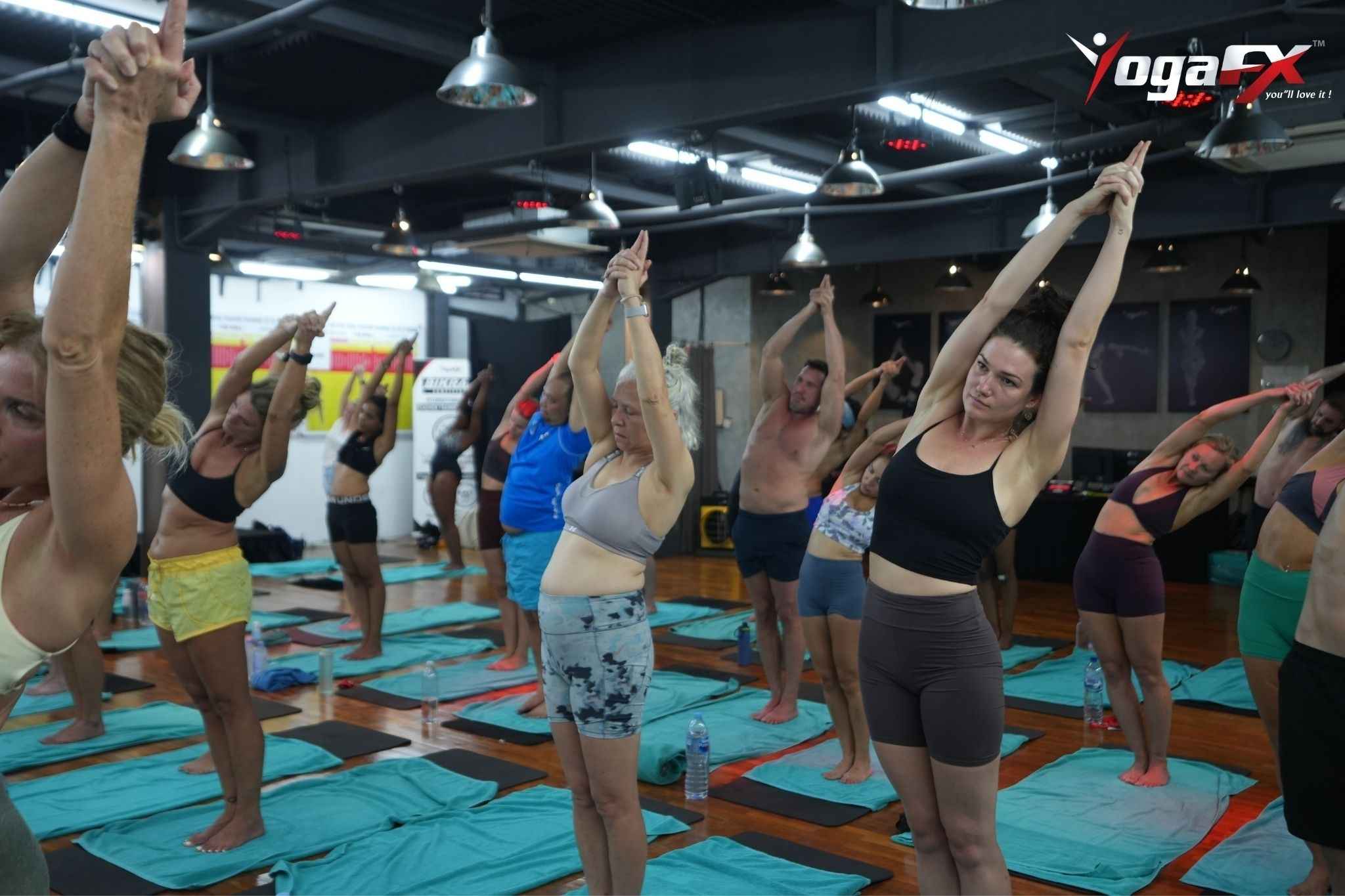
- Ardha Chandrasana (Half Moon) bends the spine sideways, a direction most gym programmes never train.
- Paschimottanasana (Stretching Pose) lengthens the whole back line, from calves to hamstrings to spine, after the floor series.
Because the tissue is warm, these holds tend to feel less like a fight. That is why stiff men often say the hot room is kinder than a cold stretching class. Our guide to hot yoga for men in the UK walks through the full 90 minutes from a man’s point of view.
Pilates: slow trunk control
Pilates trains the deep stabilisers with slow, exact movement. On a mat, you work against your own bodyweight. On a reformer, springs add resistance in a way that is easy on the joints. For a lifter, the payoff is better bracing: the ability to keep the pelvis and ribs stacked while the limbs move.
That skill carries straight into a deadlift lockout or an overhead press. However, Pilates does little for heat tolerance or long-range flexibility. So in a hot yoga vs Pilates match-up for mobility, the heated class usually moves a stiff man further in the same number of weeks.
| Gym problem | Better first choice | What to watch for |
|---|---|---|
| Squat depth limited by tight hips and ankles | Hot yoga | Awkward Pose and Standing Separate Leg Stretching show progress within weeks |
| Lower back aches after heavy deadlifts | Pilates | See a GP or physio first if pain runs down the leg |
| Rounded shoulders from desk work and bench pressing | Hot yoga | Backbends in the standing and floor series open the chest |
| Weak bracing under load | Pilates | Slow tempo work matters more than heavy springs |
| No cardio in the programme | Hot yoga | Heart rate stays high for most of the class |
| Returning from a joint injury | Pilates | Add heat later, once you are pain free |
Hot Yoga vs Pilates: What the Research Measured
Opinions are cheap in the hot yoga vs Pilates debate, so here is what studies measured. Where a research site blocked us from reading the page, we name the study rather than link to it.
Heart rate in a heated class
A University of Wisconsin-La Crosse team measured regular practitioners during a 90-minute heated class. As the American Council on Exercise study summary reports, men averaged about 80% of predicted maximum heart rate and peaked at about 92%. Women averaged about 72%. Men also ran hotter, with an average peak core temperature of 103.2°F.
For a lifter weighing hot yoga vs Pilates, that matters in two ways. First, the class gives real cardiovascular work that most strength plans lack. Second, it is not a recovery session in the gentle sense. So treat it as training, drink well beforehand, and rest in the room whenever you need to.
Calories and strength
An earlier study from the same Wisconsin group (Porcari et al., 2014) measured about 460 kcal for men and 333 kcal for women per 90-minute class.
Separately, an 8-week trial by Tracy and Hart (2013) reported a 20% increase in posterior chain strength, along with gains in flexibility and body composition. That is the chain lifters care about most: hamstrings, glutes and spinal erectors. On strength and calories, hot yoga vs Pilates leans clearly towards the heated class.
Pilates and the lower back
Pilates has its strongest evidence for back pain, and that’s where hot yoga vs Pilates tips the other way. A Cochrane review of Pilates for low back pain pooled 10 trials with 510 participants. Compared with minimal intervention, Pilates probably reduced pain. However, the review found no conclusive evidence that it beats other forms of exercise, and the evidence was low to moderate in quality.
Stress and mood
Heavy training plus a long commute can leave you wired, and this is where hot yoga vs Pilates has the widest evidence gap.
In a Massachusetts General Hospital trial reported by the Harvard Gazette, 59% of the heated yoga group cut their depression symptoms by half or more over 8 weeks, against 6% on the waitlist (Nyer et al., 2023). We know of no Pilates trial of that design.
If you are struggling with low mood, please consult a healthcare professional before relying on any exercise plan.
2 days
Strength work a week
NHS guidance lists yoga and Pilates as options.
92%
Peak heart rate, men
Share of predicted maximum in a 90-minute heated class.
20%
Posterior chain strength
Gain after 8 weeks of heated classes (Tracy and Hart, 2013).
510
Pilates back pain patients
Across 10 trials in a Cochrane review.
Hot Yoga vs Pilates for Back Pain and Old Gym Injuries
Most men who ask about hot yoga vs Pilates have a niggle somewhere, and it doesn’t have to stop them. Usually it is the lower back, a shoulder from pressing, or a knee from years of football. The right answer depends on the type of pain.
- Sharp, recent or radiating pain: see your GP or a physio first. Pilates is usually the safer place to restart, because it is easy to scale.
- Dull, stiff, desk-and-car back: hot yoga often suits this better, because every class moves the spine forward, back, sideways and in a twist.
- Shoulder from pressing: tell the teacher before class. Both methods can be adapted, but you should avoid loaded end range until it settles.
Our guide to what actually helps a sore back in the hot room goes into more detail. For a deeper, evidence-led breakdown of the two methods on core, strength and weight, read our sister site’s full research comparison of Bikram yoga and Pilates.
Hot Yoga vs Pilates in the UK: What to Ask a Studio Before You Pay
In the UK, the class label tells you less than you think. “Hot yoga” can mean a 60-minute flow at 30°C or the full 90-minute 26&2 sequence at 40°C. “Pilates” can mean a mat class in a gym studio or a small reformer group. So the hot yoga vs Pilates choice also depends on which version you can book near you.
- Ask the room settings. A good hot studio will tell you the temperature, humidity and class length up front.
- Ask whether the sequence is fixed. A fixed sequence lets you track one posture over months, just like a lift.
- Ask about mat or reformer. Reformer classes usually cost more and run in smaller groups, because of the equipment.
- Ask about intro offers. Many UK studios sell a first-week or first-month pass, which is the cheapest way to test both.
- Check your gym membership. Some chains include mat Pilates in the fee, which can tip the decision for a second session.
Before your first heated class, eat lightly, drink well across the day, and bring a large towel. Our first hot class preparation guide covers the details, from timing your last meal to what to wear.
Why the Two Methods Feel So Different
The methods grew up for different reasons. Pilates began in the early 1900s as Joseph Pilates’ system of controlled exercise, and it later became a favourite of dancers and physiotherapists. The hot 26&2 sequence came from India and spread worldwide in the 1970s and 1980s. Today many teachers call it Original Hot 26&2 Yoga.
That history explains why hot yoga vs Pilates feels like two different sports. Pilates teachers cue small, precise movements and often demonstrate them. In a 26&2 class, the teacher talks the whole room through a set dialogue without demonstrating, so you learn to listen and move at once. Many men say that focus is the part they did not expect to enjoy.
From the Gym Floor to the Hot Room: YogaFX Students
Plenty of our trainees arrive with a gym habit and once asked the same hot yoga vs Pilates question. Konrad is one of them. In his graduation video he said he used to head to the gym at 6am every morning, trying to become a better football player and a better person, and that Mr. Ian changed their lives. (Konrad, YouTube review, 2023, close paraphrase.)

The group matters too. “All of you are like family to me, and I think you all inspire me to do more and better,” said Stacey, in our YouTube review, 2024. For a man used to training alone with headphones in, that shared effort is often the surprise.
Learn the Method in Bali with Mr. Ian Terry
If hot yoga ends up as more than an add-on, you may want to teach it.
Mr. Ian Terry is an E-RYT 500 teacher with more than 12,000 teaching hours and 1,500+ graduates from over 80 countries. He trained for five years, from 2014 to 2019, with the founder of the Bikram Hot 26&2 method, and he is a Master Trainer for the Republic of Indonesia Yogasana Sports Federation.
Our advice to male trainees is simple: treat the heat like a training stimulus, not a test of pride. That mindset is what lets a lifter keep both habits for years, and it’s why we don’t frame hot yoga vs Pilates as a rivalry.
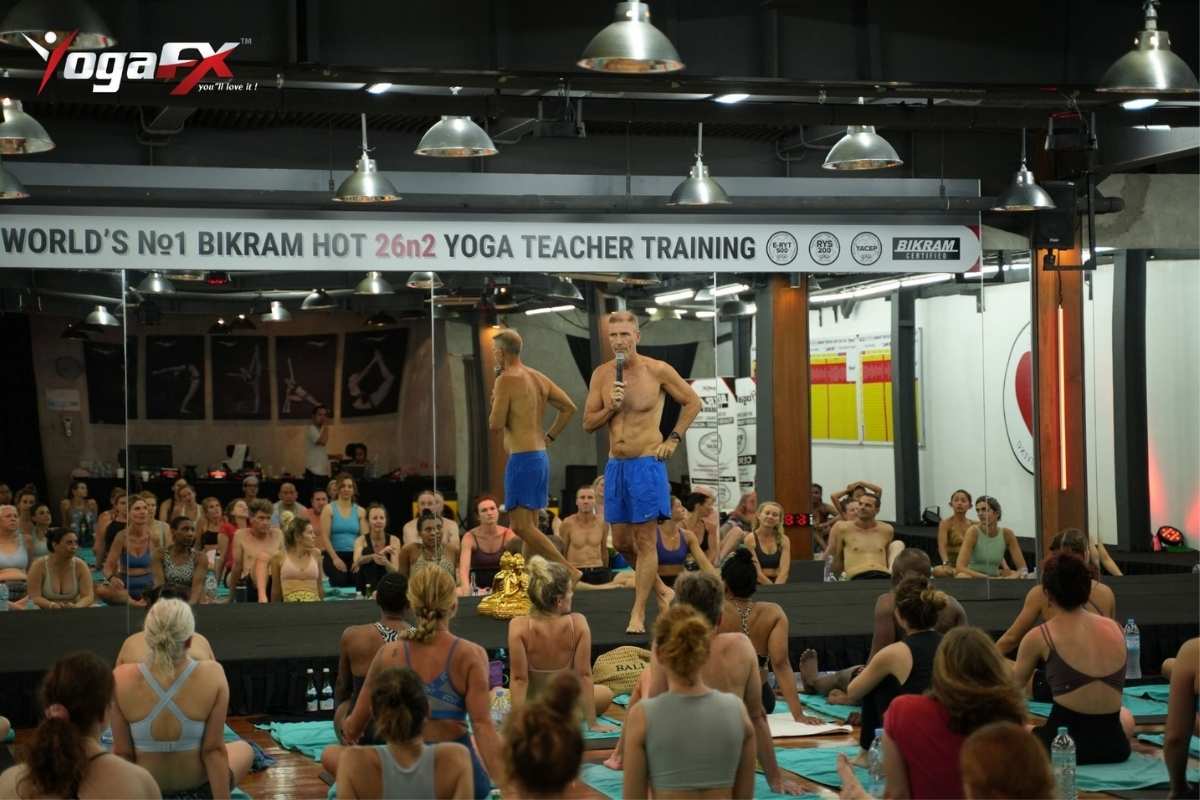
Compared with UK courses that run over many weekends, the YogaFX Bikram Hot 26&2 Yoga Teacher Training MasterClass is a 6-day hybrid. You study online first, then join an intensive in Bali.
- Next intake: check-in Sunday 24 January 2027, check-out Friday 29 January 2027, at Soham Wellness Center in Seminyak.
- Certification: Yoga Alliance RYT 200-Hour plus Bikram Hot 26&2 200-Hour International Yoga Certification.
- Price: US$1,899 Early Bird (normally US$1,999), with interest-free payment plans from US$250 per month.
See the full course details and what is included, or message Mr. Ian on WhatsApp to talk through your training week.
FAQ
Is hot yoga or reformer Pilates better for a gym-goer?
For most gym-goers, hot yoga fills more gaps, because it adds long-range flexibility and cardiovascular work that lifting skips. Reformer Pilates is better if your main problem is weak bracing or a sore lower back. Reformer classes are also usually smaller and more expensive, so budget can decide it.
Should you do hot yoga before or after Pilates?
Do them on different days if you can. If they must share a day, do Pilates first, while you are fresh enough for precise trunk work, and leave the 90-minute heated class for later. Doing the hot class first leaves you tired and dehydrated, which makes careful Pilates form harder.
Is yoga or Pilates better for men in their 40s?
Both help, but many men in their 40s lose flexibility and balance faster than strength. Hot yoga trains both in every class, with long one-leg holds and deep forward folds. Pilates suits men in their 40s who are rebuilding after a back injury. Check with your GP first if you have a heart condition.
Can you do yoga and Pilates every day?
You can do some form of either most days, but a man who also lifts should not do a 90-minute heated class every day. Two or three hot classes plus one Pilates session a week is enough for most. Keep at least one full rest day, and drink well before every heated class.
Is hot yoga or Pilates better for weight loss?
Hot yoga usually burns more per session. A University of Wisconsin study measured about 460 kcal for men in a 90-minute class. Pilates sessions tend to be shorter and lighter. Remember that most of the weight lost in a hot class is sweat, so fat loss still depends on diet and overall activity.
Still have questions? Message Mr. Ian and the YogaFX team on WhatsApp and we will answer them personally. Tell us your gym split and any injuries, and we will help you place hot yoga and Pilates in your week.