Yoga for footballers works best as two or three short sessions a week, built around the fixture list: gentle hamstring and groin work after matches, balance work before training, and no deep stretching on match eve. This guide fits the long British season, from pre-season in July to the final whistle in May.

Maybe you play in a Sunday league, or maybe you’re a semi-pro squeezing sessions around a job. Either way, your hamstrings and groins take a beating from August to May. So this plan tackles the problem one short session at a time, and it’s built for the British calendar.
Mr. Ian Terry, E-RYT 500 and founder of YogaFX, teaches the fixed Original Hot 26&2 sequence. Its fixed order and two-set rhythm suit this approach well: pick the right posture, on the right day, at about half effort. The rest of this article shows you how.
Why the UK Season Is So Hard on Hamstrings and Groins
Football in Britain runs from August to May. In that time you face frozen mornings, Christmas fixture pile-ups and midweek cup ties. Your legs rarely get a full week to settle. As a result, the back of the thigh and the inside of the hip carry most of the wear, which is why yoga for footballers starts there.
What the Professional Numbers Show
The professional game shows how big the issue is. Researchers behind the UEFA Elite Club Injury Study published in the British Journal of Sports Medicine tracked 54 teams from 20 European countries for 21 seasons. Across that period, hamstring problems accounted for 19% of everything reported. In the first season they were 12% of injuries, but by the latest season they were 24%.
Those players have physios, pitch-side medics and daily recovery slots. You probably have a mat at home and about twenty free minutes. So it makes sense to spend those minutes on the areas that football loads hardest, and that’s the job of yoga for footballers.
Yoga won’t replace the strength work your coach or physio gives you. Instead, it fills a different gap. It builds range of movement, balance and calm breathing, and it teaches you to notice a tight muscle before it becomes a sore one.
A Season-Long Plan for Yoga for Footballers
Most advice treats the season as one block. In practice, your needs change from July to May. Pre-season asks for range and tolerance, December asks for fast recovery, and the close season is your best chance to rebuild. The table below shows how to shift your yoga for footballers through the year, so you always practise what the fixture list allows.
| Phase | Typical UK dates | Yoga focus | Session length | Heat? |
|---|---|---|---|---|
| Pre-season | July to mid-August | Hip range, hamstrings, balance | 3 sessions, 25 to 45 minutes | One or two hot 26&2 classes a week are reasonable |
| Early season | August to October | Keep range, add breathing | 2 sessions, 10 to 20 minutes | Home practice, unheated |
| Winter and Christmas fixtures | December to January | Recovery between games | 10 to 15 minutes after each match | None within 48 hours of a match |
| Run-in and cup finals | March to May | Calm, sleep, light hamstring work | 2 sessions, 10 minutes | Unheated only |
| Close season | Late May to June | Rebuild range and strength balance | 3 sessions, 60 to 90 minutes | A weekly hot class suits most players |
The pattern matters more than the exact dates. If your season runs differently, keep the logic: the closer you are to kick-off, the shorter and gentler the session should be. That simple rule keeps yoga for footballers helpful instead of tiring.
Yoga for Footballers: The Postures That Earn Their Place
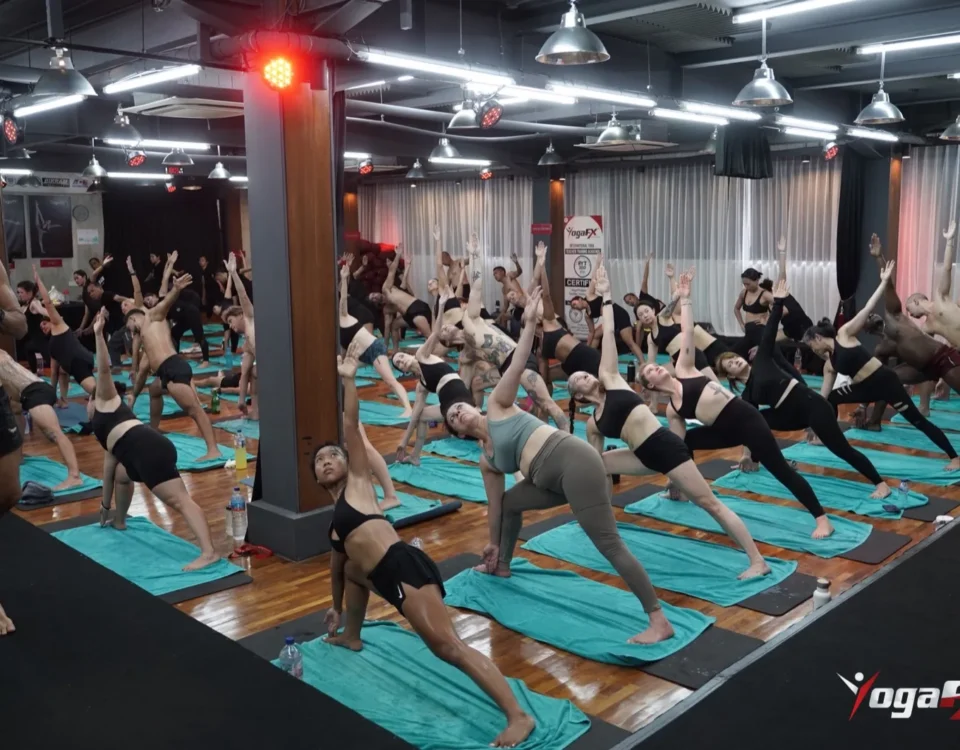
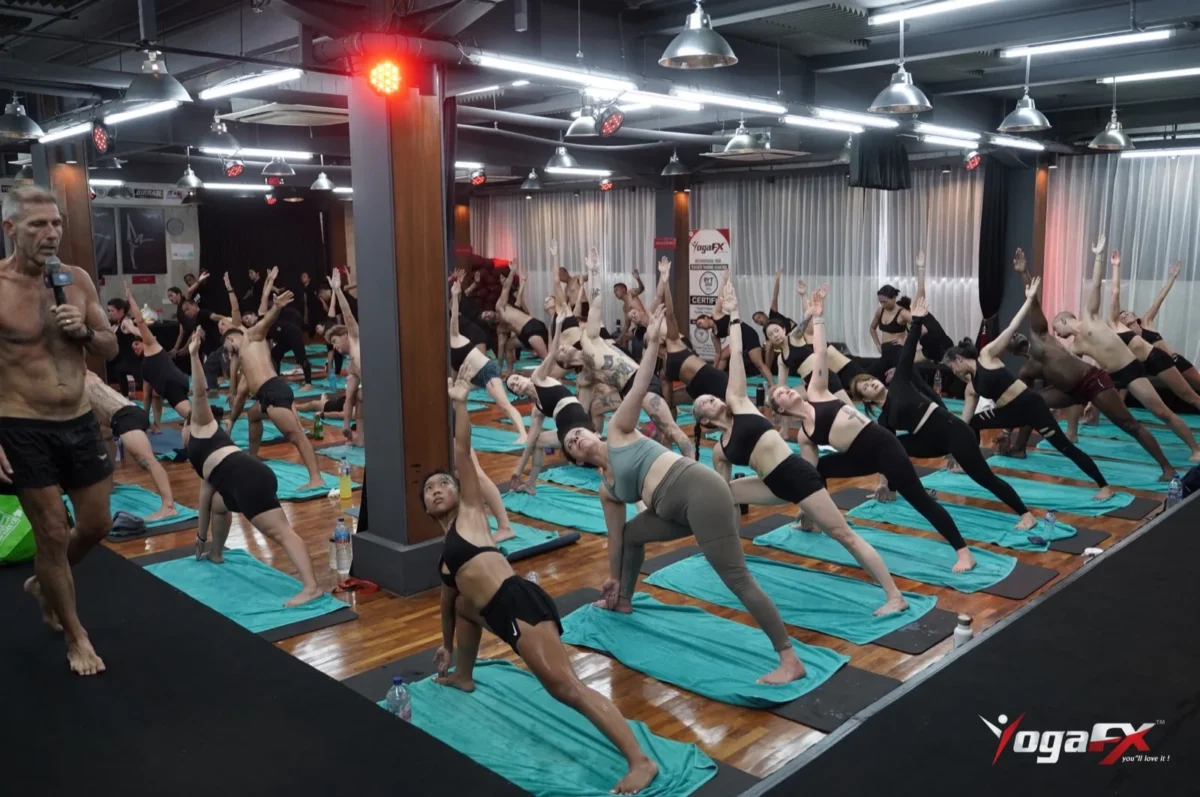
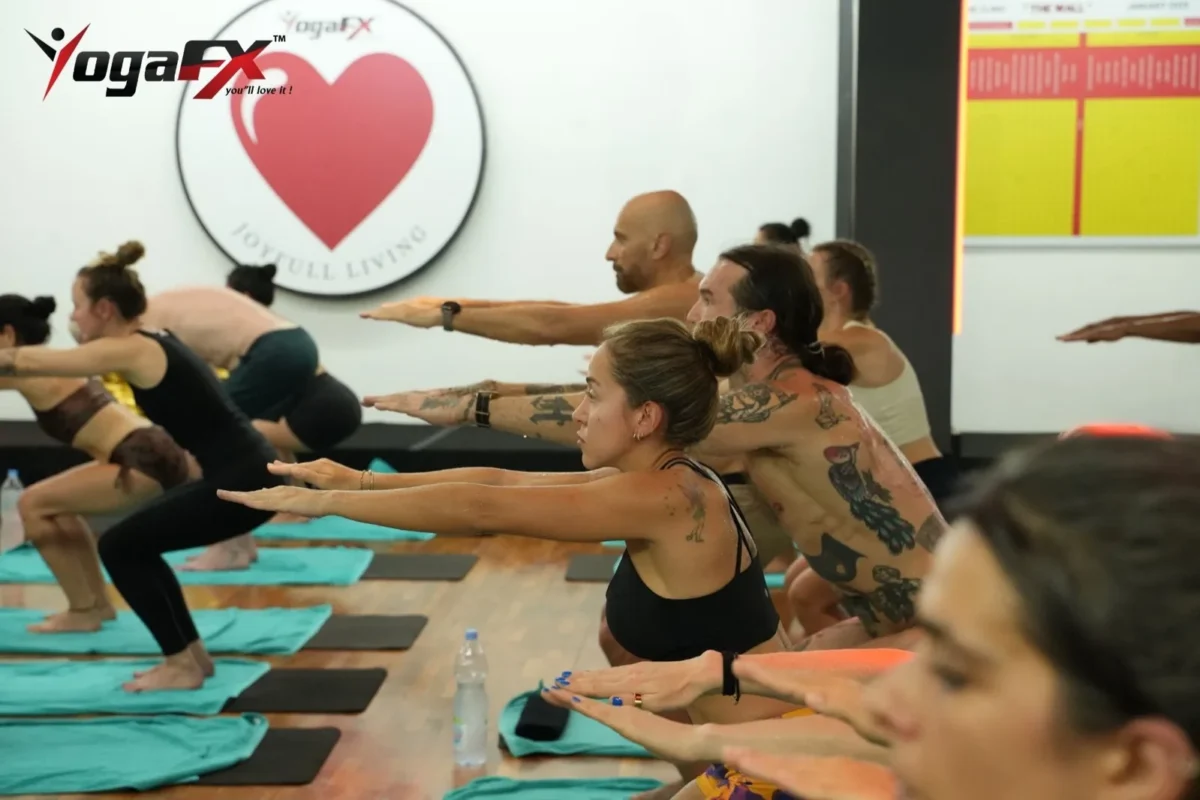
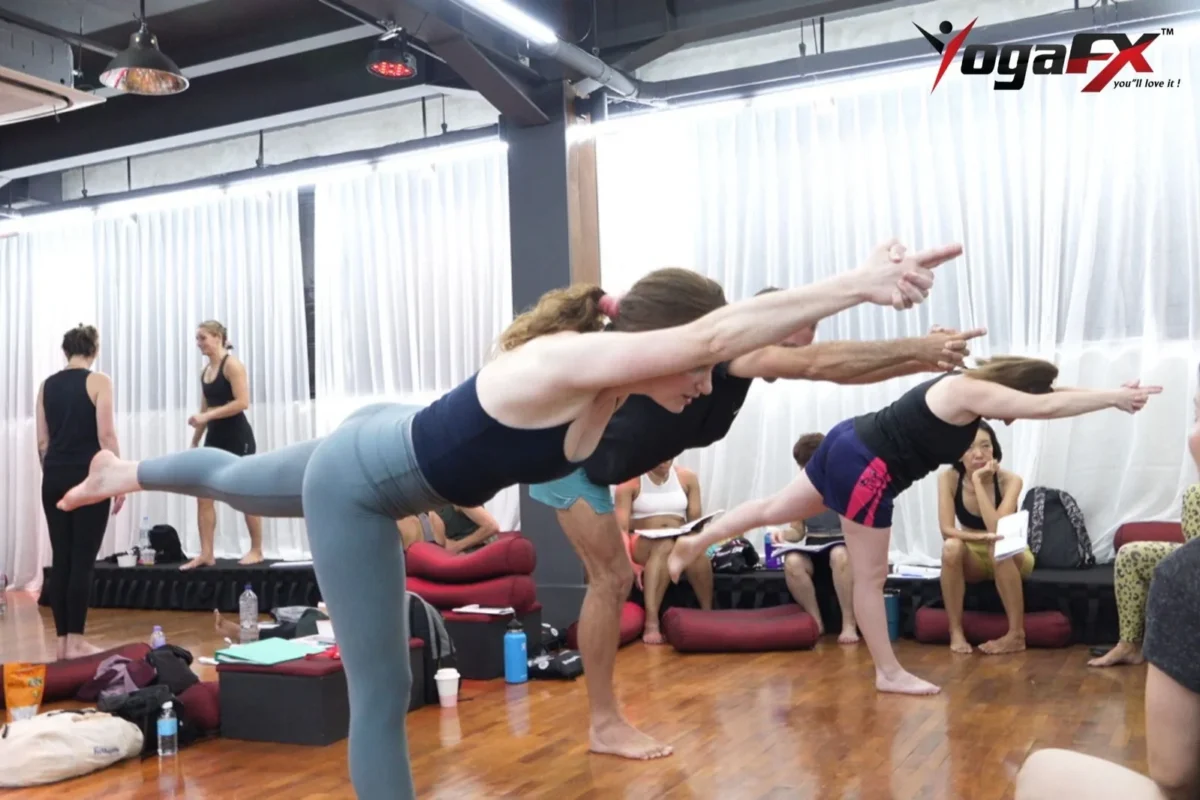
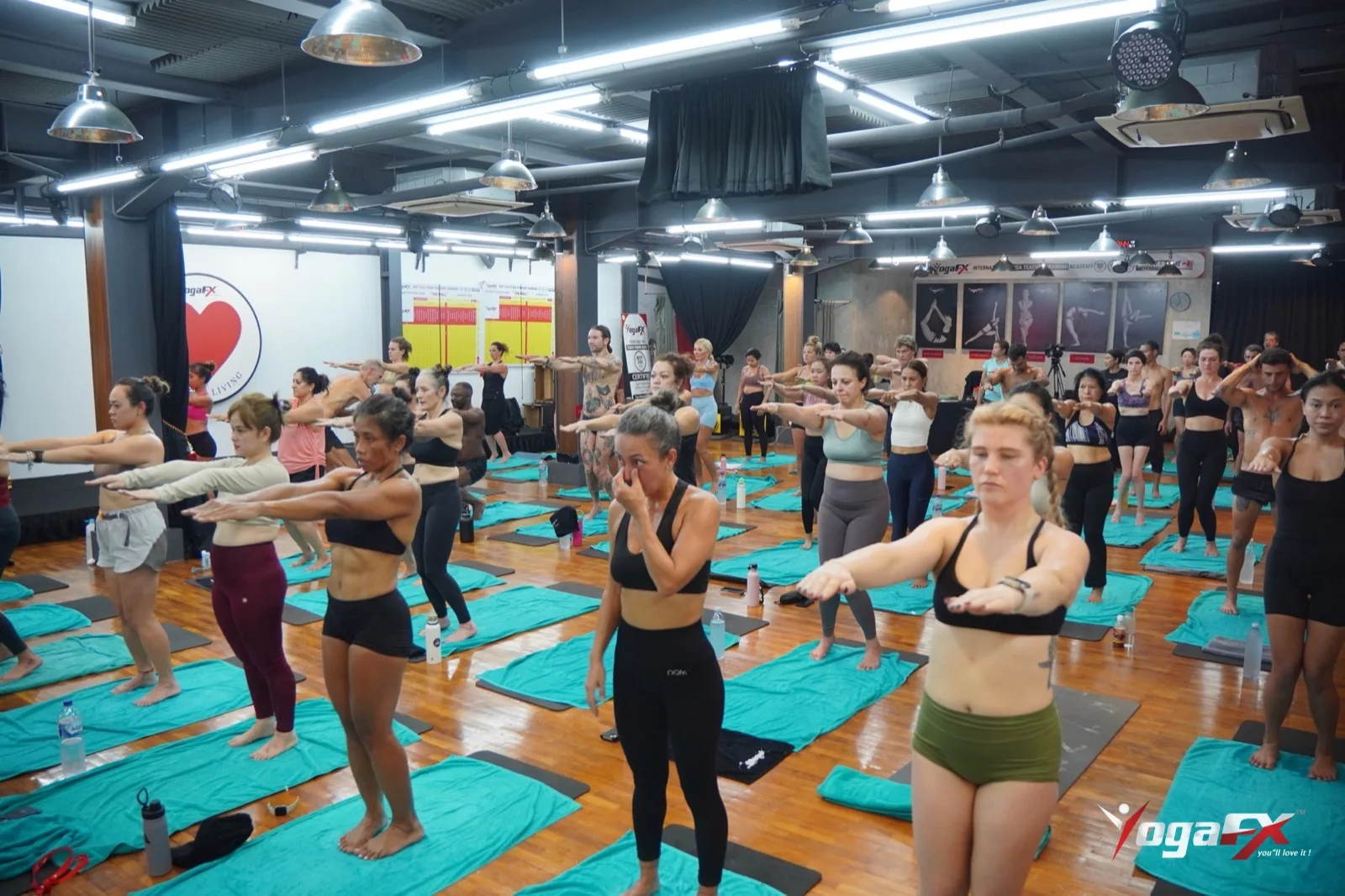
The Original Hot 26&2 sequence has 26 postures and two breathing exercises. It never changes, so you can learn the order once and stop thinking about it. For hamstrings, groins and hips, a handful of postures do most of the work. Practise them unheated at home first, because that’s the safest way to start.
| Posture | What it gives a footballer | How to do it | Hold |
|---|---|---|---|
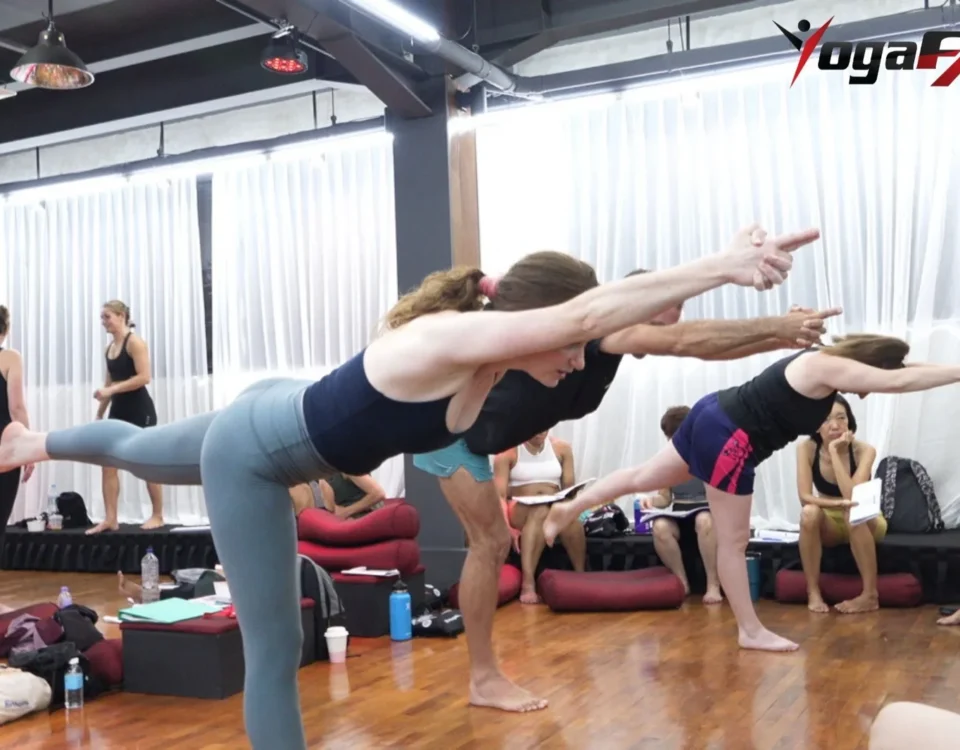
| Standing Head to Knee | Hamstring length and single-leg balance | Lock the standing knee gently, hold the other foot, keep the hips level | 20 to 30 seconds each side |
| Standing Separate Leg Stretching | Inner thigh, groin and hamstrings | Feet wide, fold forward with a long spine, bend the knees if needed | 20 to 30 seconds, twice |
| Triangle | Groin, hips and back leg | Deep stance, long back leg, reach through the front hand | 20 seconds each side |
| Awkward Pose | Thigh endurance and ankle strength | Sit back as if into a chair, heels together or hip-width | 20 seconds, twice |
| Tree | Ankle stability and foot control | Stand on one leg with the other foot on the thigh, eyes fixed | 30 seconds each side |
| Cobra and Locust | Lower back and glute strength | Lie face down, lift the chest, then the legs, with short holds | 10 seconds, 2 sets |
Start at sixty percent
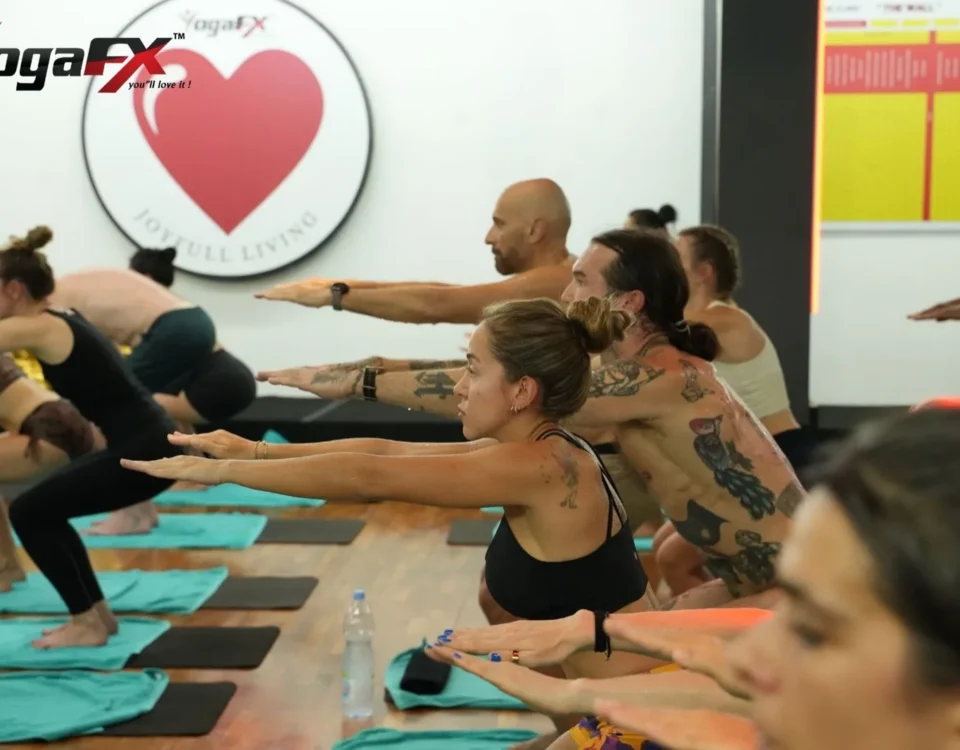
Players are competitive, and that’s a risk on the mat, even in gentle yoga for footballers. In 26&2, you do every posture twice. Use about 60 percent effort for the first set, then go slightly deeper in the second. This rhythm protects players who like to push too far, too soon.
Bend the knees to find the hamstring
Locked, straight knees move the stretch into the lower back. Soft knees put it back in the hamstring where you want it. If a muscle feels bruised or sharp, leave it alone and ask your physio. That’s good advice for any yoga for footballers routine.
- Hamstrings. Long, steady holds with a soft knee, never bouncing.
- Groin and inner thigh. Wide stances that open the inside of the hip.
- Ankles and calves. Single-leg balances that make the foot work.
- Lower back. Light backbends to undo hours in a car seat or a desk chair.
Yoga for Footballers and the Ryan Giggs Example
Ryan Giggs is the best-known British name here. A 2013 Fox Sports report on his 40th birthday noted that, since turning 30, he had taken part in regular yoga sessions. The same report said yoga had once earned funny looks in the macho world of football. At 40, he was still playing for Manchester United.
One famous player proves nothing about your own hamstrings. Still, his story shows a useful habit: he made the work regular, not heroic. A short session each week for ten years beats a burst of classes in the pre-season panic.
Players at every level can copy that. Put two short sessions in the diary and treat them like training. Then protect them when the fixture list gets busy, because that is when your body needs them most.
What the Research Says About Yoga for Footballers
Here’s the honest answer: football-specific trials are rare. The injury figures above describe the problem. They don’t show that yoga solves it. No study in this article proves that yoga prevents hamstring injuries, so treat yoga for footballers as one useful tool, not a guarantee.
There is general evidence on fitness. Harvard Health describes research in which sedentary adults practised yoga at least twice a week for a total of 180 minutes over eight weeks. They had greater muscle strength and endurance, flexibility and cardio-respiratory fitness afterwards. That was a small group of beginners, not elite athletes, so keep your expectations modest.
In short, two or three sessions a week is a sensible dose of yoga for footballers. It’s enough to practise range of movement and breathing without stealing energy from training. If you have an injury, a heart condition or high blood pressure, check with your doctor or club physio first.
Hot Yoga for Football Players: When the Heat Helps
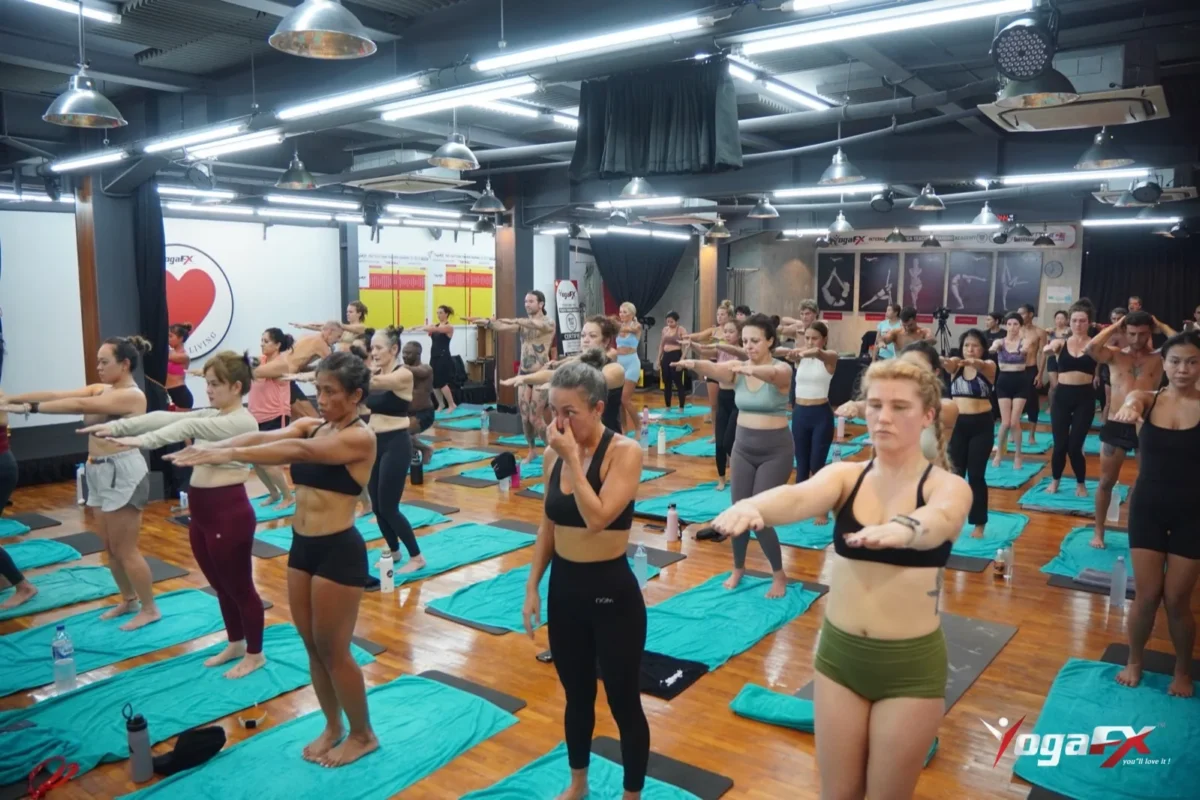
Hot yoga for football players is popular because the room warms muscles quickly. A 26&2 class lasts 90 minutes in a room of about 40 degrees Celsius and roughly 40 percent humidity. That’s a serious session in its own right, so it adds to your weekly load.
So treat hot yoga football work as a bonus for quiet weeks. The close season and the first weeks of pre-season are the best windows. During the season, keep heat well away from match days and use unheated home routines instead.
- Best times for a hot class: close season, early pre-season, and weeks with no match.
- Avoid: a full hot class within 48 hours of a match.
- Drink steadily through the day, not one bottle just before class.
- Know the signs of dehydration: thirst, headache, dizziness and dark yellow urine.
The NHS guidance on dehydration lists these signs and says to aim for pale urine. If dizziness persists or you feel unusually tired, stop and get advice. For a deeper look at the pros and cons of heat, read our comparison of hot yoga against a sauna, or find out why hot yoga can feel harder for men with big thighs and tight hamstrings.
Sunday League, Academy or Semi-Pro: Who Should Do What
Yoga for soccer players looks different at each level, even though the postures stay the same. For example, a Sunday-league player and an academy player have very different weeks. What changes is the time you have and how often you play, so adjust yoga for footballers to your own week.
- Sunday league and five-a-side players. Two home sessions of 15 minutes, plus a hot class in the close season. Because your main enemy is the desk, hips and lower back come first.
- Semi-pro and academy players. Use the plan in the table above and let your club staff approve it. Short balance work before training suits you best.
- Veterans. Longer, slower sessions with more breathing, which suits yoga for footballers over 35. Our guide on yoga for men over 40 explains how to build up safely.
If you play at a higher level and want to see how yoga fits an athlete’s week, read our guide to yoga teacher training for athletes and our article on hot yoga for athletes. And if your evenings are already full, here is a shorter plan for players who train on weeknight evenings.
Five Mistakes to Avoid With Yoga for Footballers
- Deep stretching on match eve. Long holds can leave your legs feeling flat at kick-off.
- Locked knees. They push the load into the lower back.
- Comparing yourself with the next mat. Your range is yours alone.
- Pulling on a fresh strain. A new injury needs a physio, not a deeper stretch.
- One long class, then nothing. Regular short sessions win every time.
What YogaFX Students Say
Our students aren’t footballers by default, so yoga for footballers is our adaptation, not their origin story. Many are desk workers with stiff hips, and some are athletes who want a calmer way to train. Here’s what a few of them said about the course and the teacher.
Was it challenging? – 100%. Would I take another course with Mr. Ian? – 1000%.
Alena, Google review, 2025
Thank you so much to YogaFX, Ian and the whole Team for helping me achieve my dreams.
Andrea, Google review, 2019
In his YouTube review from 2024, Saul thanks the team in Indonesian and calls Mr. Ian a “very good teacher”. You can watch it below.

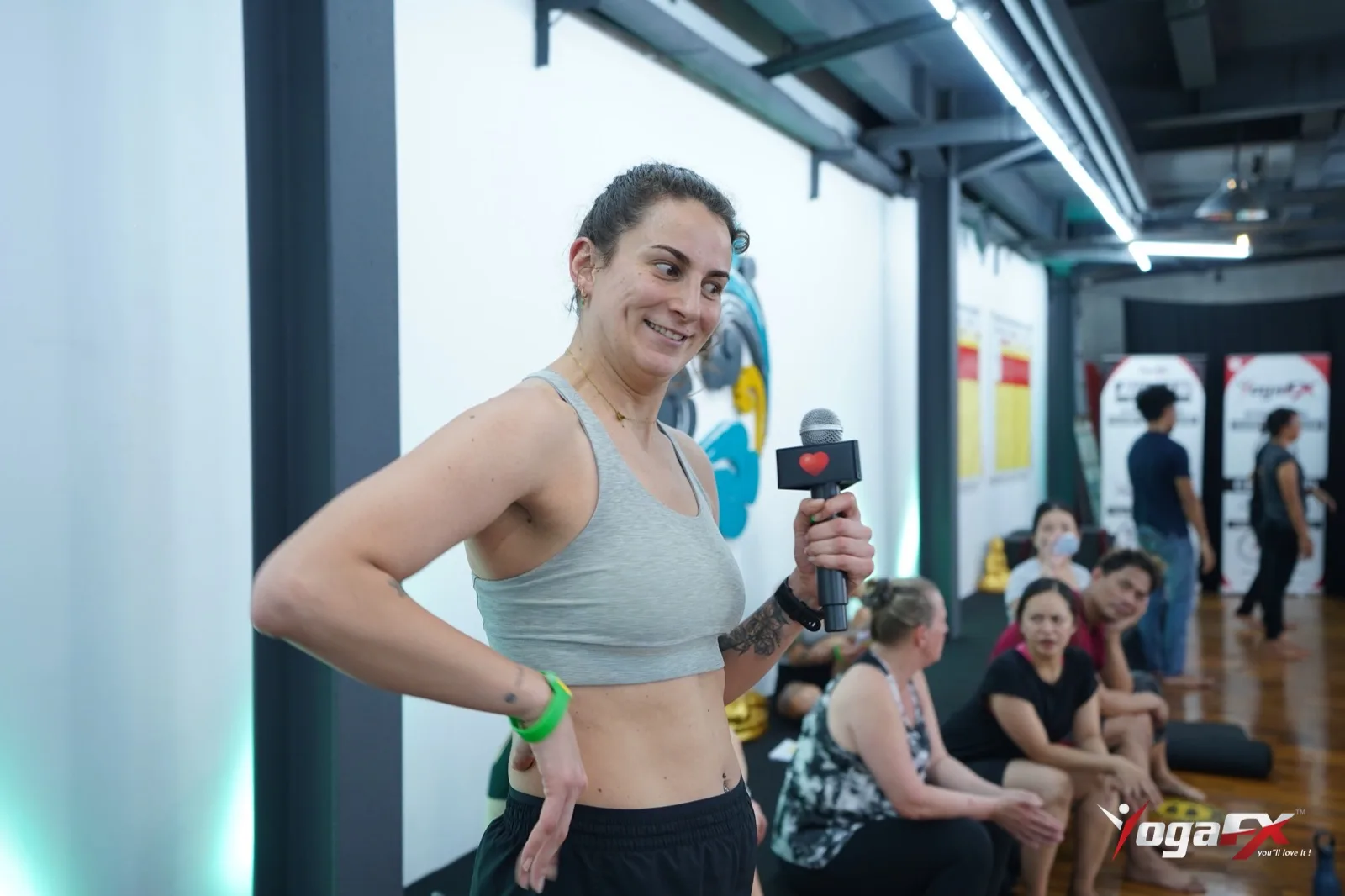
Across platforms, our students have posted 150 Google reviews and 50 Yoga Alliance reviews, plus 357 video testimonials on YouTube. These are personal stories, not promises of results.
From the Mat to the Teacher’s Chair: The Bali Route for UK Applicants
Some players enjoy yoga for footballers so much that they want to teach it. Maybe you want to run mobility sessions for your club, or build a second career after football. The Bikram Hot 26&2 Yoga Teacher Training MasterClass was designed for exactly that step.
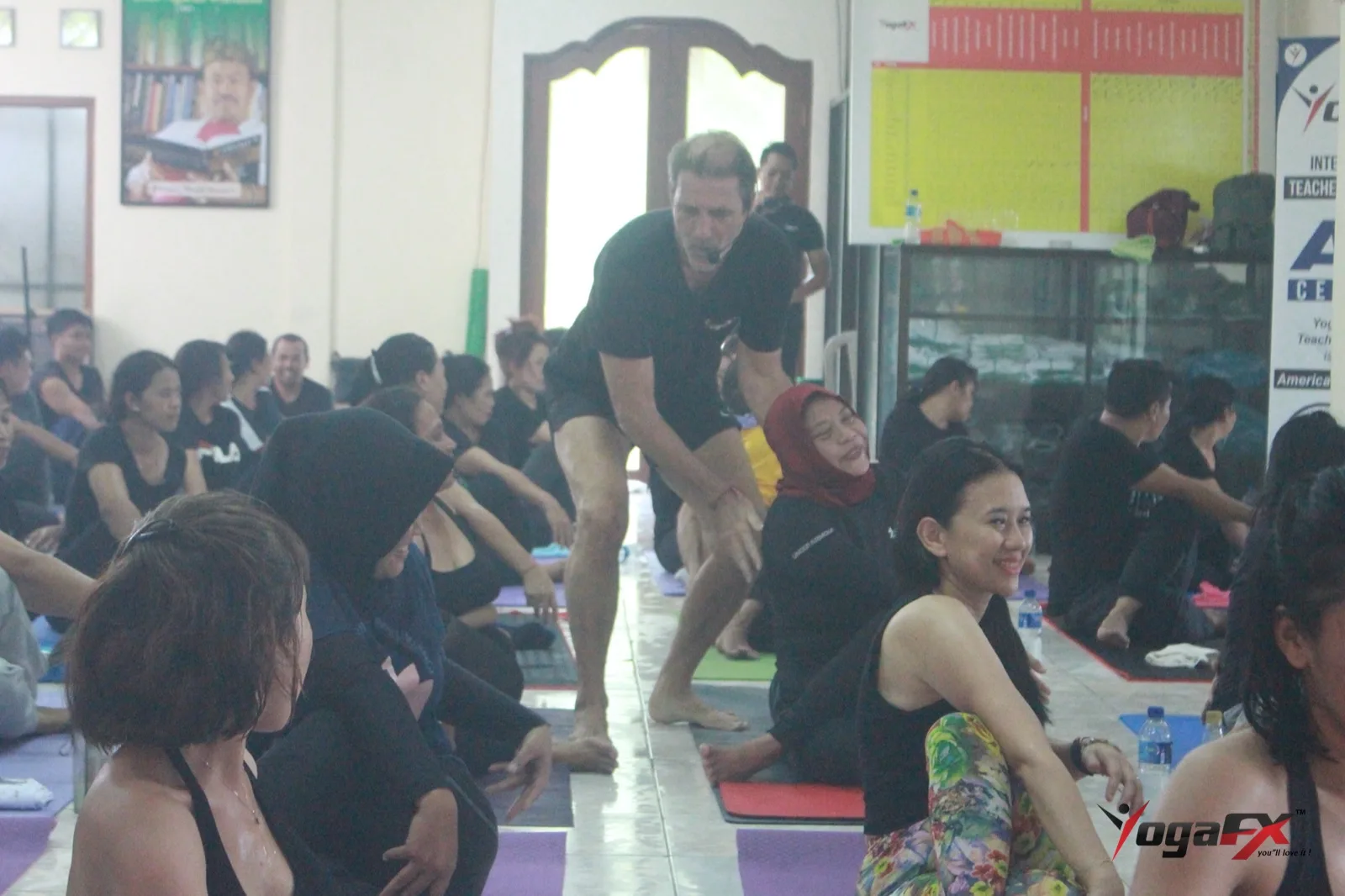
The format is a six-day hybrid. First you complete the pre-course online whenever suits you, then you fly out for the Bali intensive. The next one starts on Sunday 24 January 2027 and ends on Friday 29 January 2027, at Soham Wellness Center in Seminyak. In practice, that means about five days off work.
- Certification: Yoga Alliance RYT 200-Hour plus the Bikram Hot 26&2 200-Hour International Yoga Certification.
- Price: the Early Bird price is US$1,899, against a normal price of US$1,999.
- Payment plan: from US$250 a month with no interest.
- Lead teacher: Mr. Ian Terry, E-RYT 500, with more than 12,000 teaching hours.
Mr. Ian trained for five years, from 2014 to 2019, with the founder of the method. He is a Master Trainer for the Republic of Indonesia Yogasana Sports Federation. Since founding YogaFX in 2017, he has taught more than 1,500 graduates from over 80 countries.
For UK applicants, the practical questions are time off, travel and cost. Our team can walk you through all three, and the pre-course online study means you can start before you fly.
FAQ
Is yoga good for footballers?
Yes, if you fit it around fixtures. Two or three sessions a week of 10 to 25 minutes may improve hamstring and hip range, balance and breathing. Skip deep stretching on match day, and treat yoga as a partner to the strength work from your coach or physio, never a replacement.
Do footballers do yoga?
Many do. Ryan Giggs is the best-known British example, and a 2013 Fox Sports report said he had taken part in regular yoga sessions since turning 30. For most amateur players, a short home routine on rest days is the realistic way to start.
How often should a footballer do yoga?
Two or three short sessions a week suit most players. Use 10 to 15 minutes after a match and a longer 25 to 45 minute session in a free midweek slot. In the close season you can add a weekly hot class if your doctor agrees.
Is hot yoga safe the day before a match?
It is better to avoid it. A 90-minute class at about 40 degrees Celsius is a heavy session, and it can leave you dehydrated or flat. Keep hot classes for the close season or weeks without a match, and drink steadily through the day.
Is yoga or Pilates better for soccer players?
Neither wins outright, because they train different things. Yoga works on range, balance and breathing together, whereas Pilates puts more focus on core control. Many players use both. If time allows only one, pick whichever you will stick with, and schedule it away from match day.
Want to ask something we missed? Send Mr. Ian and the YogaFX team a message on WhatsApp and a real person will reply, whether you play in goal or up front.
This article is general information, not medical advice. Please consult a healthcare professional or your club physio about your own situation.