
Back pain affects most people at some point, often from poor posture, muscle imbalances, or long hours sitting. Hot yoga won’t fix a structural problem on its own, but the combination of heat-assisted flexibility, core strengthening, and stress reduction addresses several of the contributing factors at once, which is why it’s worth understanding what’s actually going on physically rather than treating it as a vague cure-all.

In This GuidePostures, research and safety for an aching back
What Actually Helps
Increased Flexibility
Heat allows muscles to stretch more deeply than at room temperature, reducing stiffness and improving range of motion, which helps ease tension patterns that often accompany chronic back pain.
Postures that target the spine and hips:
- Half Moon Pose (Ardha Chandrasana). Stretches the sides of the torso and lower spine, useful for easing tightness along the lower back.
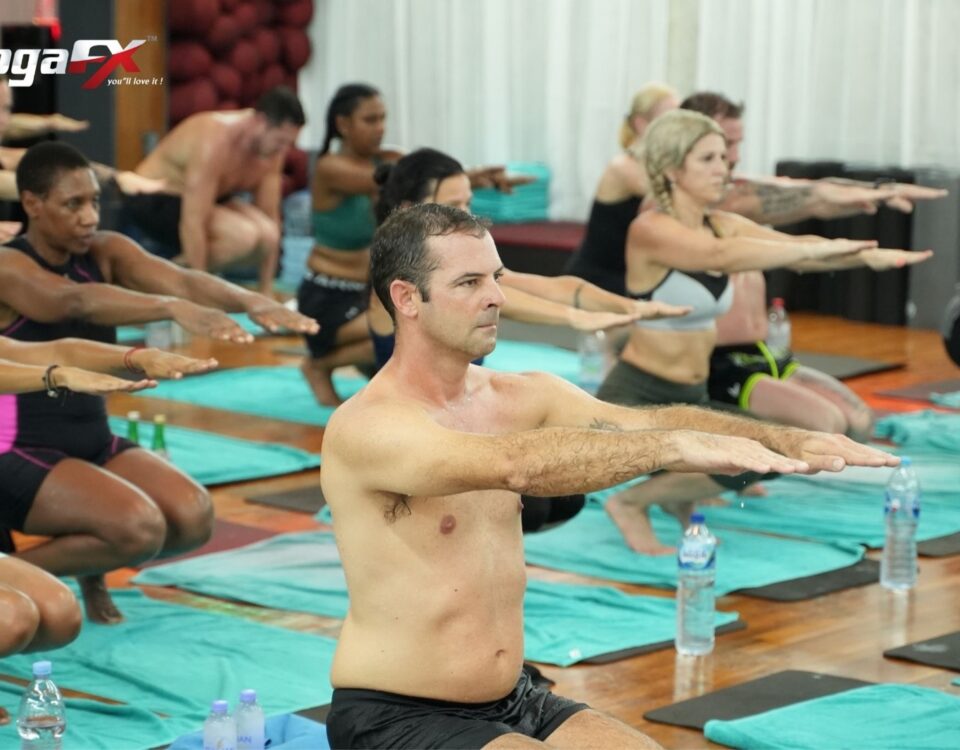
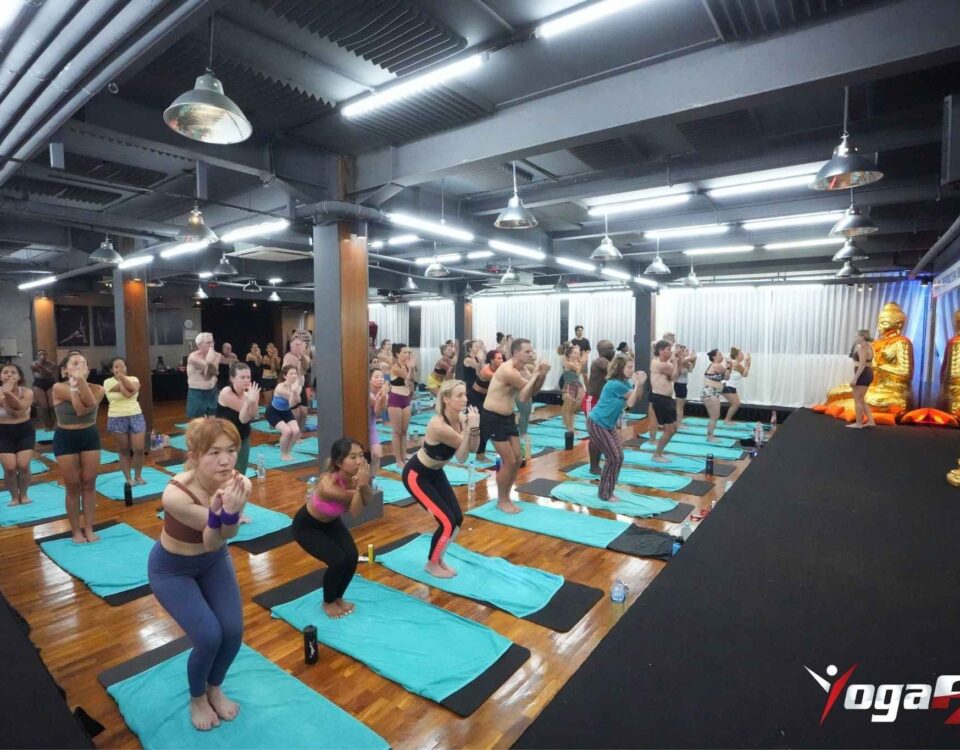
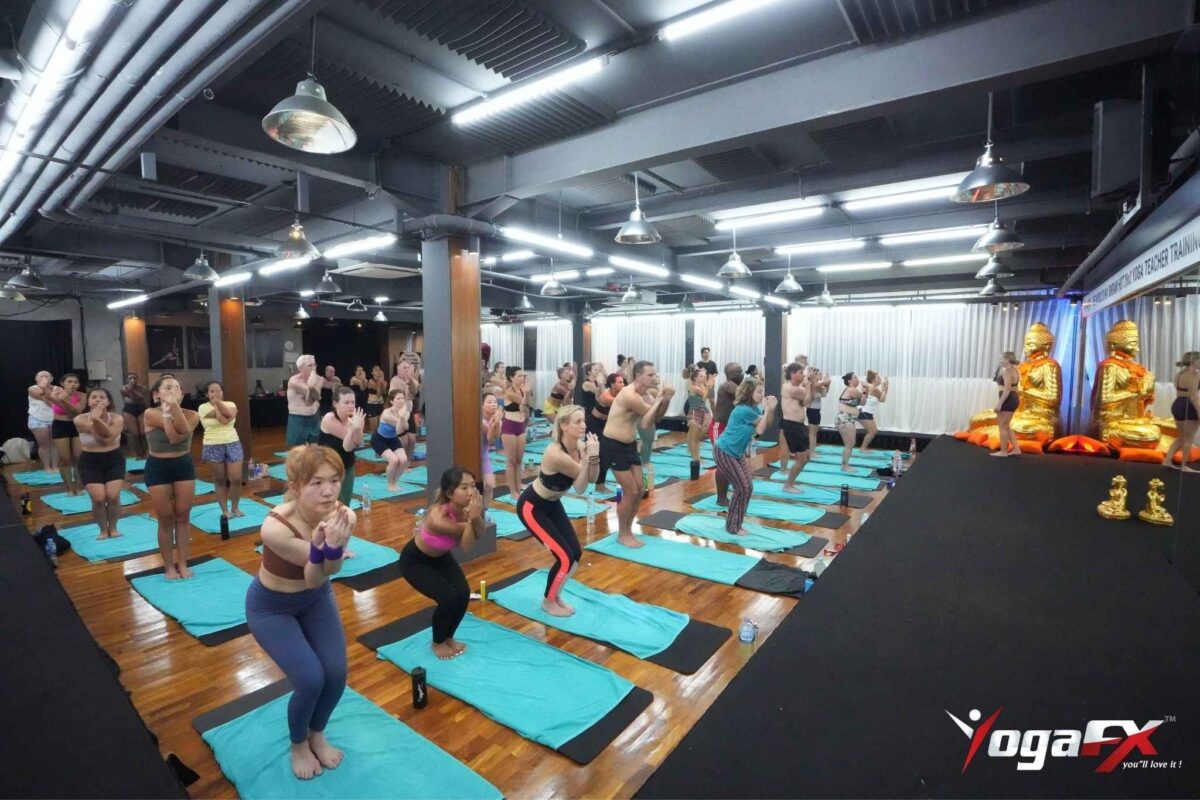
- Awkward Pose (Utkatasana). Strengthens the thighs, calves, and hips, which supports the muscles that stabilise the lower back.
- Standing Separate Leg Head to Knee Pose. Improves flexibility through the spine and hips, easing tension that can radiate along the sciatic nerve.
Enhanced Circulation
Improved blood flow delivers nutrients to muscles and tissues, supporting recovery from muscular tension.
- Triangle Pose (Trikonasana). Opens the hips and strengthens the thighs while improving cardiovascular demand across the whole class.
- Standing Bow Pulling Pose. Increases spinal and rib cage flexibility while raising heart rate.
Core and Back Strength
A stronger core takes pressure off the lower back directly, since the spine relies on surrounding muscles for support rather than working in isolation.
- Locust Pose (Salabhasana). Strengthens the lower back and supports better posture.
- Bow Pose (Dhanurasana). Increases spinal strength and flexibility through a full backbend.
- Spine Twisting Pose. Improves spinal rotation and elasticity, often tight in people with desk-based jobs.
Stress Reduction
Stress is a genuine contributor to muscular back tension. The mindfulness and breathing components of hot yoga help manage stress levels, which can ease the muscular guarding that often makes back pain worse.
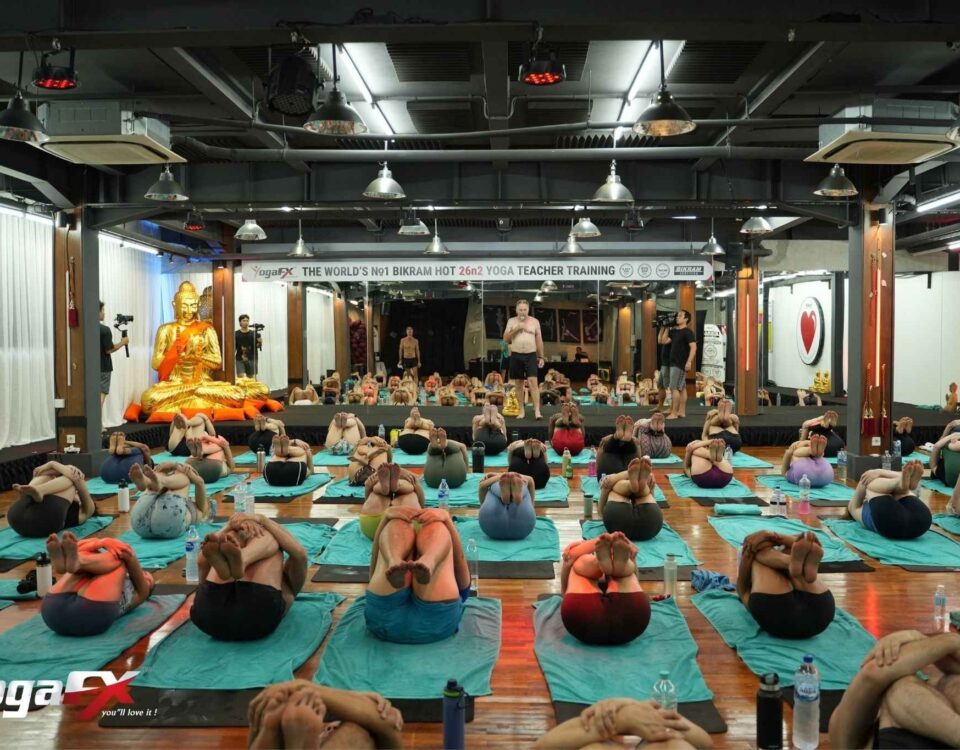
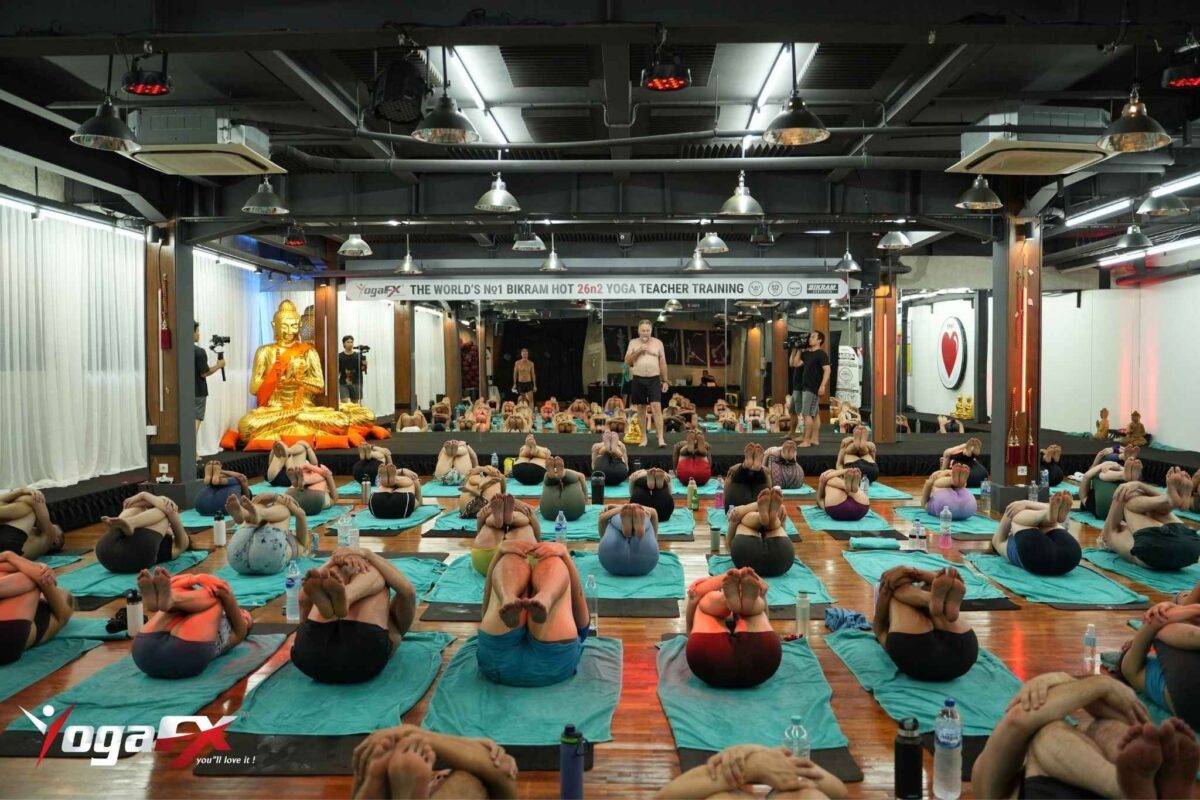
- Wind Removing Pose (Pavanamuktasana). Improves hip joint flexibility and can relieve lower back tension.
- Dead Body Pose (Savasana). Full relaxation at the end of class, allowing tension to release.
What The Research Shows
A 2025 systematic review spanning 43 studies and 942 participants found consistent evidence for improved flexibility and general well-being among regular hot yoga practitioners (Willmott et al., 2025), findings that are directly relevant to the flexibility and posture mechanisms described above. This isn’t a substitute for a proper diagnosis of chronic or severe back pain, which should always come from a qualified healthcare professional first.
Practising Safely
If you’re new to hot yoga, start slowly and attend beginner classes so an instructor can guide your alignment properly. Stay hydrated before, during, and after class, and modify or rest in Child’s Pose if a posture aggravates existing pain rather than pushing through it.
This article is for general information and doesn’t replace advice from a qualified healthcare professional. If you have chronic or severe back pain, consult your doctor before starting hot yoga, and tell your instructor about your condition so they can suggest modifications.
Practising with YogaFX in Bali
YogaFX teaches the Original Hot 26&2 sequence under Mr. Ian Terry, E-RYT 500, in Bali’s natural tropical heat rather than an electric room. If you’re new to the practice, our hot yoga for beginners guide covers what to expect from your first class.
FAQ
How often should I practise hot yoga for back pain relief?
2-3 times a week is a reasonable starting point, adjusted based on how your body responds. Consistency matters more than intensity for lasting improvement.
Can hot yoga help with chronic back pain?
It can help by improving flexibility and strengthening supporting muscles, but always consult a healthcare professional first, especially for chronic or severe pain, before starting any new exercise.
Are there risks if I already have back pain?
Yes, if postures aren’t modified appropriately. Tell your instructor about your condition before class so they can suggest safe modifications rather than having you attempt the full posture.