Do you need a license to teach yoga in the UK? No. No law requires a licence, or any qualification, to teach yoga to adults. What you may need instead depends on how you teach: insurance for most venues, a DBS check for children’s classes, HMRC registration for self-employed income, and a music licence if you play recorded music.

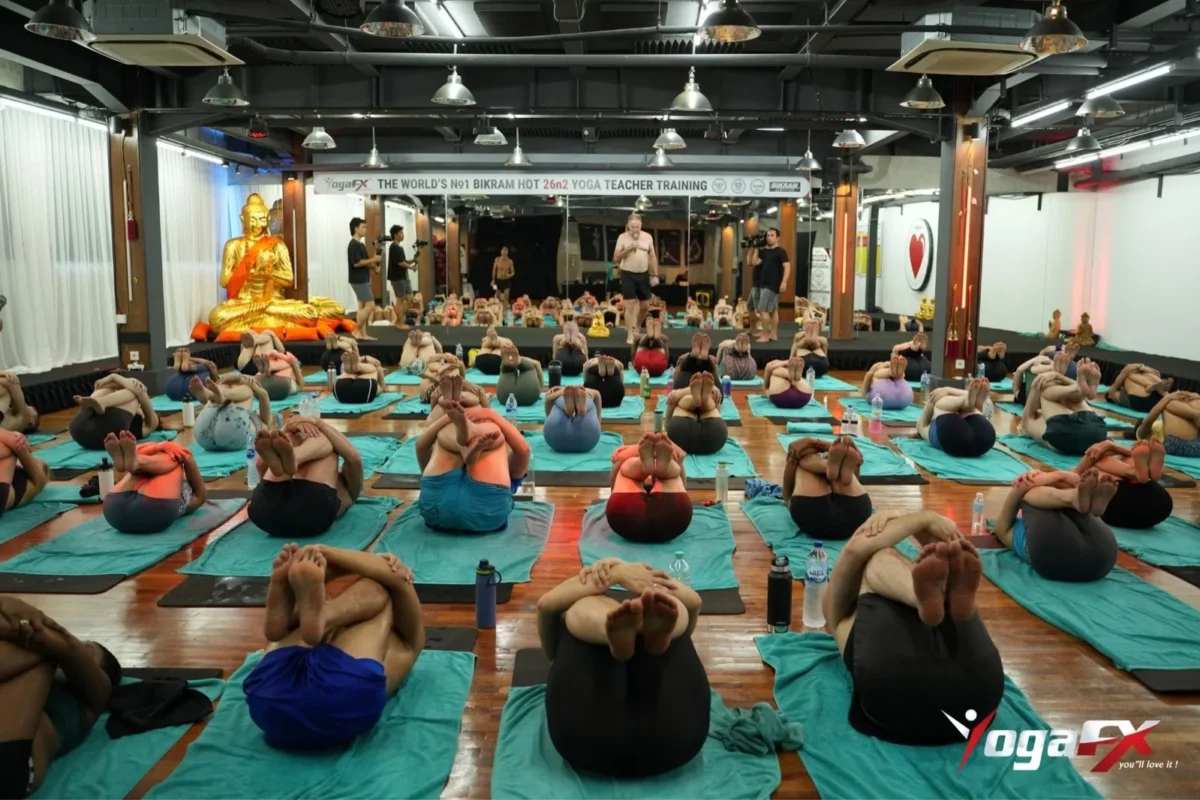
Mr. Ian Terry, E-RYT 500, has taught more than 12,000 hours and trained over 1,500 graduates from 80+ countries. The practical side of teaching is part of how YogaFX prepares trainees.
This guide uses official sources, checked in November 2026, and it is general information, not legal advice. For the worldwide view, read our sister guide on what graduates use in place of a teaching license.
In This GuideInsurance, DBS checks, HMRC and music rules for UK yoga teachers
Do You Need a License to Teach Yoga in the UK? The Short Answer
The short answer is no. UK law does not regulate yoga teachers the way it regulates nurses, solicitors or electricians. Nobody issues a yoga teaching licence, and no statute says you must hold a certificate before you lead a class. Spelling trips people up: the British word is licence, but most searchers type license, so this page covers both.
Even so, a venue can set its own rules. In practice, the venue, your insurer and your tax position decide what you need. So when people ask do you need a license to teach yoga, five separate things usually come up:
- A recognised training certificate. Studios and gyms almost always ask for one, although the law does not.
- Insurance. Most venues want proof of cover before you teach your first class.
- A DBS check. It matters when you teach children or vulnerable adults, and the organisation hiring you usually requests it.
- HMRC registration. Self-employed teachers must register once gross trading income passes £1,000 in a tax year.
- A music licence. It applies if you play recorded music in class.
Each rule has its own owner, and none of them is a licence to teach yoga. We take them in turn below. A table and a checklist then pull everything into one view.
Do Yoga Teachers Need to Be Certified? Law Versus Venue Rules
Do yoga teachers need to be certified? Not by law. So do you need a license to teach yoga before a studio will hire you? No, but you do need the certificate.
Almost every UK studio, gym and retreat asks to see a certificate before it books you. The reason is risk. A venue wants proof that someone taught you anatomy, sequencing and safe cueing before you lead a room.
A certificate also helps in two quieter ways. Insurers often ask what training you hold when you apply for cover. Students also treat it as a quick signal that you studied the job. If you are planning that training around work, see how long UK yoga teacher training takes.
Registration with a body such as Yoga Alliance is a separate, voluntary step. Our guide to Yoga Alliance certification for UK hot yoga teachers explains how it works. If you want the mechanics, read the yoga teacher registration process, step by step.
Insurance: Rarely a Law for Solo Teachers, Often a Condition of the Job
Insurance is where the word license causes the most confusion. The law singles out one kind of cover. GOV.UK says you must have employers’ liability insurance as soon as you become an employer. It requires at least £5 million of cover, and you can be fined £2,500 for every day you are not properly insured.
That duty follows employing people, so it usually does not reach a teacher who works alone. Do you need a license to teach yoga before an insurer will quote? No, but public liability cover works differently.
It protects you if a student or member of the public is hurt, and venues commonly ask for it as a condition of hire. A hall hirer or gym manager wants to know a claim will not land on them.
Before you buy a policy, put three questions to the insurer:
- Does the policy cover classes in a heated room, or does it treat 40°C as a different risk?
- Does it cover private clients and online classes as well as studio work?
- Does it ask for a named teaching qualification before it quotes?
Many insurers want proof of recognised training, so a certificate often does double duty. Standards vary between providers, so ask each one directly rather than assuming. Studios sometimes cover teachers on their own premises, but that cover may not extend to private classes you run elsewhere.
DBS Checks: When Teaching Children Changes the Rules
So do you need a license to teach yoga to children? Still no, but you may need a DBS check. You do not need one to teach adults in a general class.
The picture changes the moment children or vulnerable adults join your room. Schools, youth clubs and family studios will ask for a check, whatever style you teach. A DBS check has nothing to do with whether you teach hot yoga, vinyasa or hatha.
Who applies matters. GOV.UK says the organisation hiring you normally requests the check. A self-employed teacher can request a basic check for themselves, which costs £20. An enhanced check is available only if your role is eligible and you are paid, and the organisation hiring you applies on your behalf.
Frequency counts too. GOV.UK’s guidance for the child workforce uses a test of more than 3 days in a 30-day period. Teaching children less often than that can still qualify you for an enhanced check without the barred list check. The guidance explains this with a volunteer who teaches children to read.
Scotland and Northern Ireland run separate systems, and GOV.UK points readers to them. Our guide to hot yoga teacher training in Scotland covers the Scottish side. Whatever your location, start early, because a check can take time to arrive.
HMRC: When Teaching Income Becomes a Tax Matter
Do you need a license to teach yoga for tax reasons? No, yet tax is the second rule that behaves like a licence for self-employed teachers. The trading allowance is a tax exemption of up to £1,000 a year on trading income.
If your gross income for a tax year is more than £1,000, GOV.UK says you must register for Self Assessment by 5 October in the following tax year.
Picture a teacher paid per class by a studio that treats her as self-employed. Her first term of fees can pass £1,000 faster than she expects. So she checks her running total each month, not in September, and she avoids a late-registration penalty.
Employment status decides who handles your tax. Employed teachers usually have it taken through payroll. Some studios schedule teachers like staff but class them as contractors, which moves the paperwork onto you. Ask which applies before your first class. Our look at what yoga teachers earn in the UK shows common pay structures.
Three habits make the tax side easier:
- Keep every receipt for mats, insurance premiums and venue hire.
- Note each class fee on the day you are paid.
- Set aside part of every payment for your tax bill.
Music Licences: The Rule Most New Teachers Miss
Do you need a license to teach yoga with a playlist? You need a music licence, which is a different thing. It is the one real licence in this story, and it has nothing to do with teaching yoga itself. If you play recorded music in class, copyright law applies.
PPL PRS, the body behind TheMusicLicence, says that if you use music in your fitness, yoga, exercise and dance classes you will usually need a music licence. It also says instructors who host classes in venues such as church halls or community centres need one in place.
Original Hot 26&2 classes sidestep the issue. They run on a scripted dialogue with no music, so a class taught that way plays no recorded music and the rule does not come up. If you add playlists later, check the licence before you press play, and ask the venue whether its own licence covers your class.
Teaching Setting by Setting: What the Law and the Venue Ask
Rules shift with the room you teach in. The table below answers do you need a license to teach yoga in six common UK settings, so you can see where the law stops and the venue’s own demands begin.
| Where you teach | What the law says | What the venue often adds | Check this first |
|---|---|---|---|
| Employed by a studio | The studio handles payroll and tax. No yoga licence applies. | A certificate, and sometimes insurance or first aid | Whether your contract says employee or contractor |
| Self-employed in a rented room | Register with HMRC once gross trading income passes £1,000. | Public liability cover and signed hire terms | Whether the hire agreement names minimum cover |
| Children’s classes or schools | DBS rules apply, usually set by the hiring organisation. | An enhanced DBS check and safeguarding training | Who requests the check and how long it takes |
| Classes with recorded music | A music licence is usually needed. | The venue may hold its own licence | Whether that licence covers your class |
| Online classes | No licence to teach. Tax rules still apply. | Platform terms and insurance | Whether your policy covers online sessions |
| Teaching abroad | The visa and work rules of that country apply. | Local certificate preferences | The visa category, before you book travel |
Read the table as a pattern. The more public the venue and the more children involved, the more paperwork it asks for. A private lesson in a friend’s living room asks for very little, though insurance still makes sense.
The UK Yoga Teacher Checklist at a Glance
Why Training Still Matters When No Law Asks for It
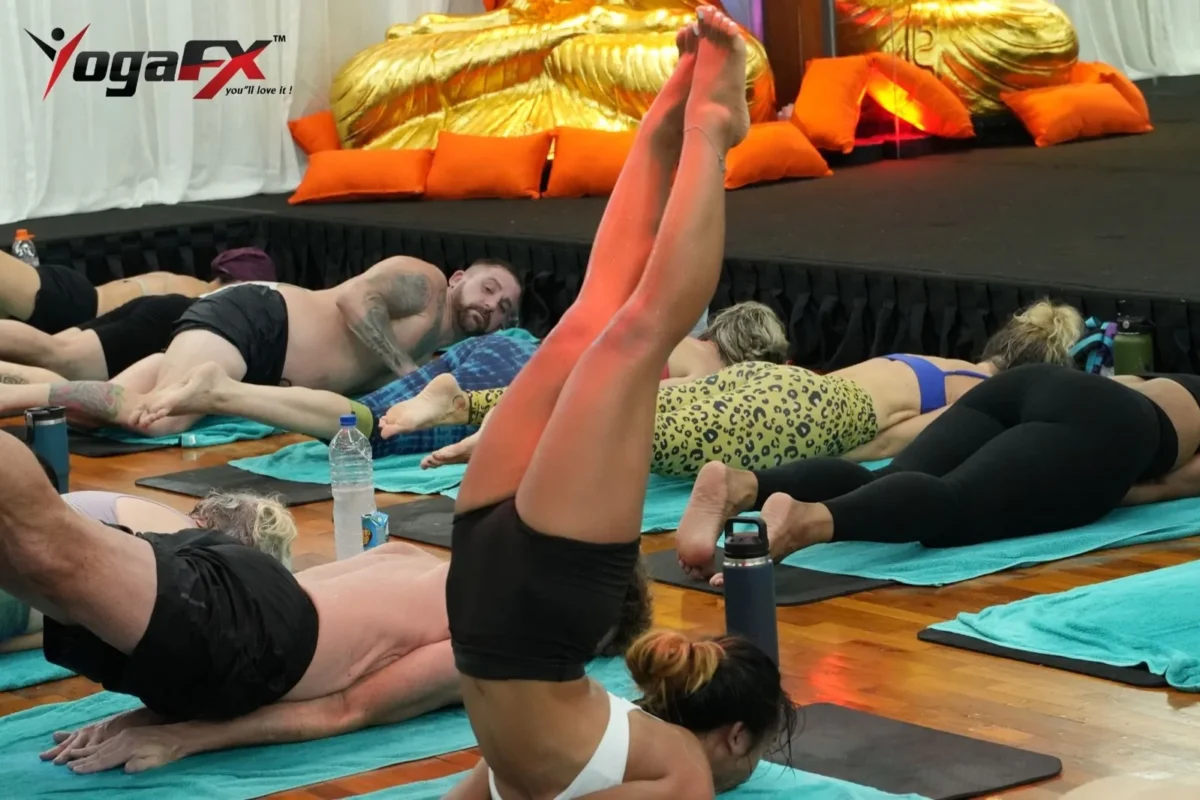
Do you need a license to teach yoga to teach it safely? No, but training matters. If no law asks for a licence, why train at all? Because the class is physical, and heat raises the stakes.
In a 2014 University of Wisconsin study (Porcari et al.), a 90-minute hot class kept students near 80% of maximum heart rate. The same study put the energy cost at about 333 kcal for women and 460 kcal for men.
A 2025 systematic review by Willmott and colleagues, covering 43 studies and 942 participants, reports that heated practice may improve flexibility and well-being. Those results explain why venues and students care who teaches. A teacher who can modify a posture, read fatigue and cue hydration keeps a hot room safer.
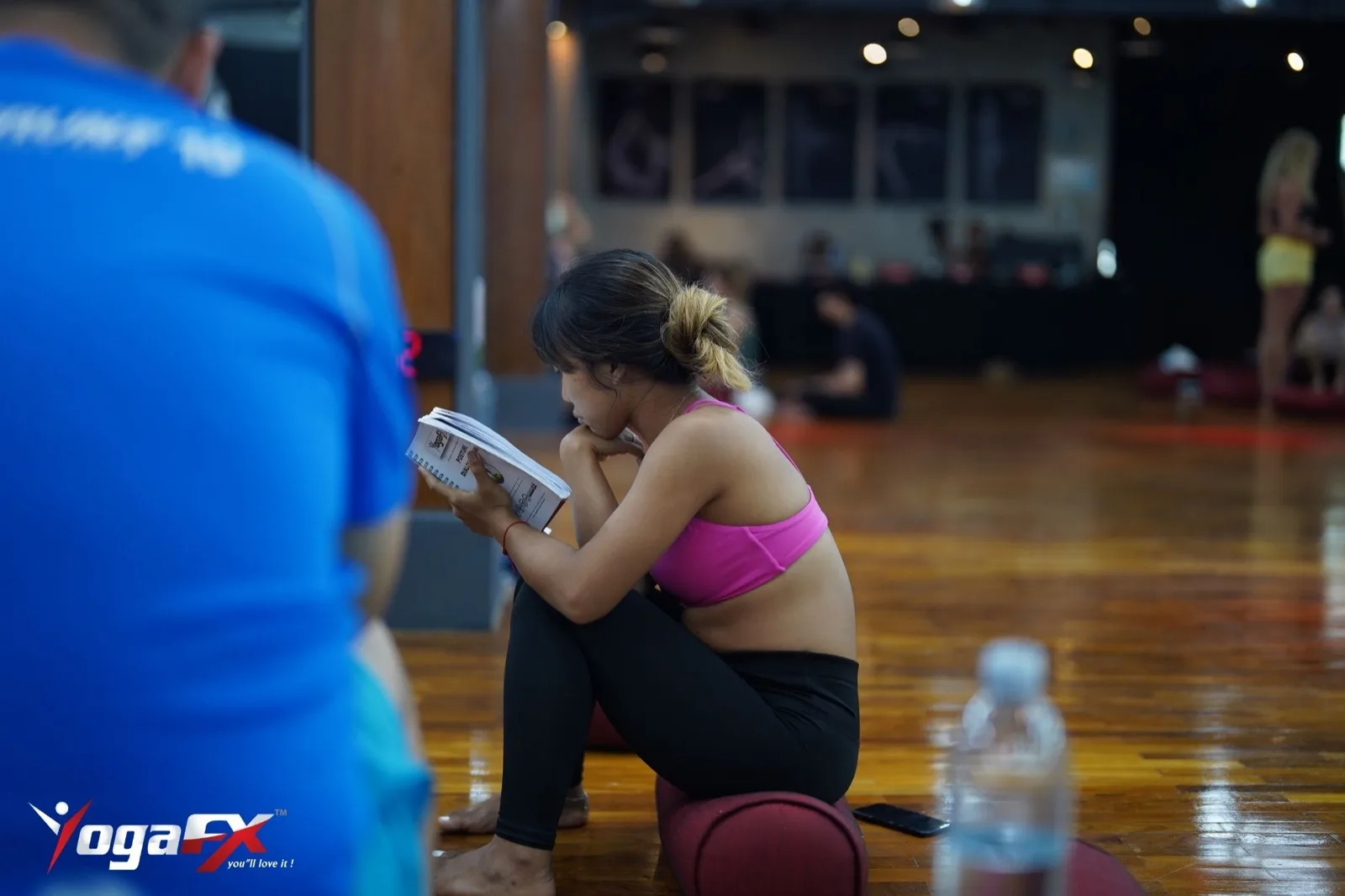
Anyone with a heart or blood pressure condition should check with a GP or another healthcare professional before starting hot yoga. That advice applies to students and to teachers in training. It is one more reason to learn from someone who has taught thousands of hours.
What Graduates Say About Learning to Teach
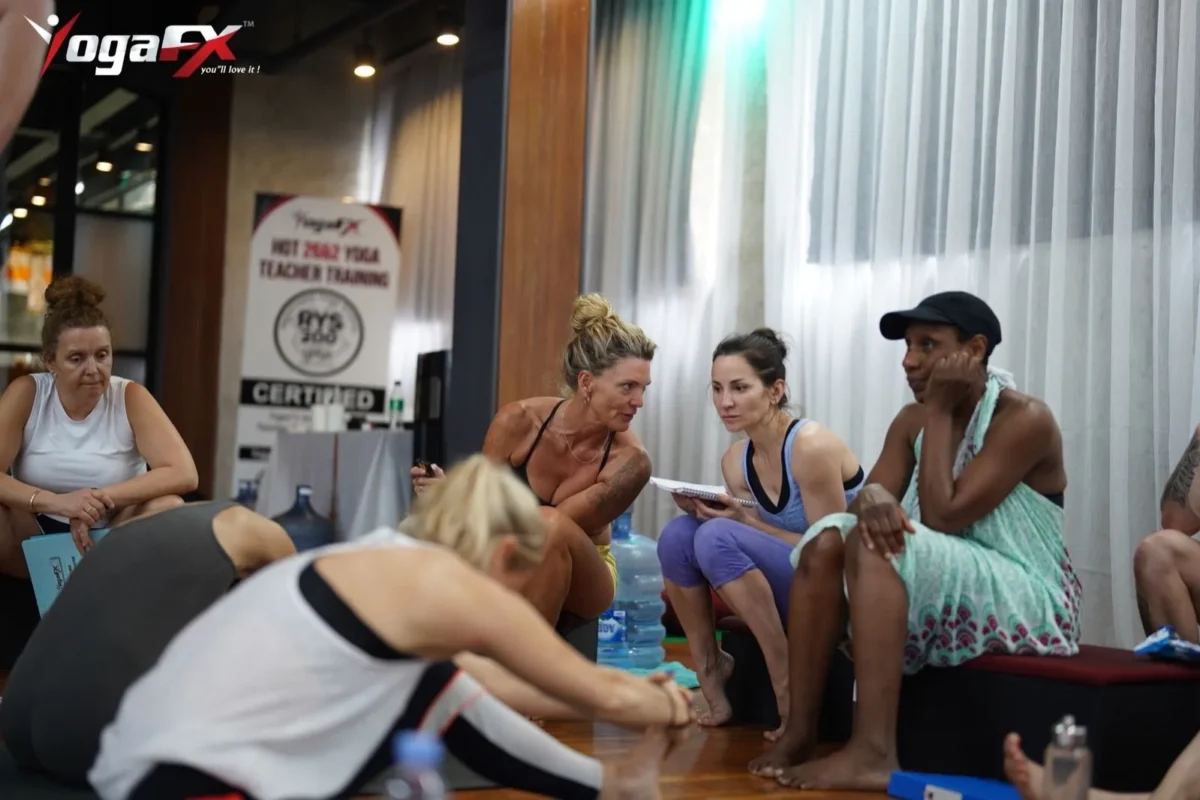
Do you need a license to teach yoga to feel ready? No, but confidence helps. A certificate is a document, but the training behind it is a lived week. Three graduates describe what it was like to learn the job.
“It was an amazing Life Changing Experience with YogaFX. It’s not just teacher training but creating the NEW You.”
Karen, Google review, 2018
Aditya, in our YouTube review from 2019, describes being pushed to teach early in the course. He says he learned to watch a student’s body instead of only reciting the dialogue.
“I got a lot of experience.”
Aditya, YouTube review, 2019
Atika, in her 2019 YouTube review, says teaching felt scary until she stepped into it. Once she did, she enjoyed it and felt she had found her passion.

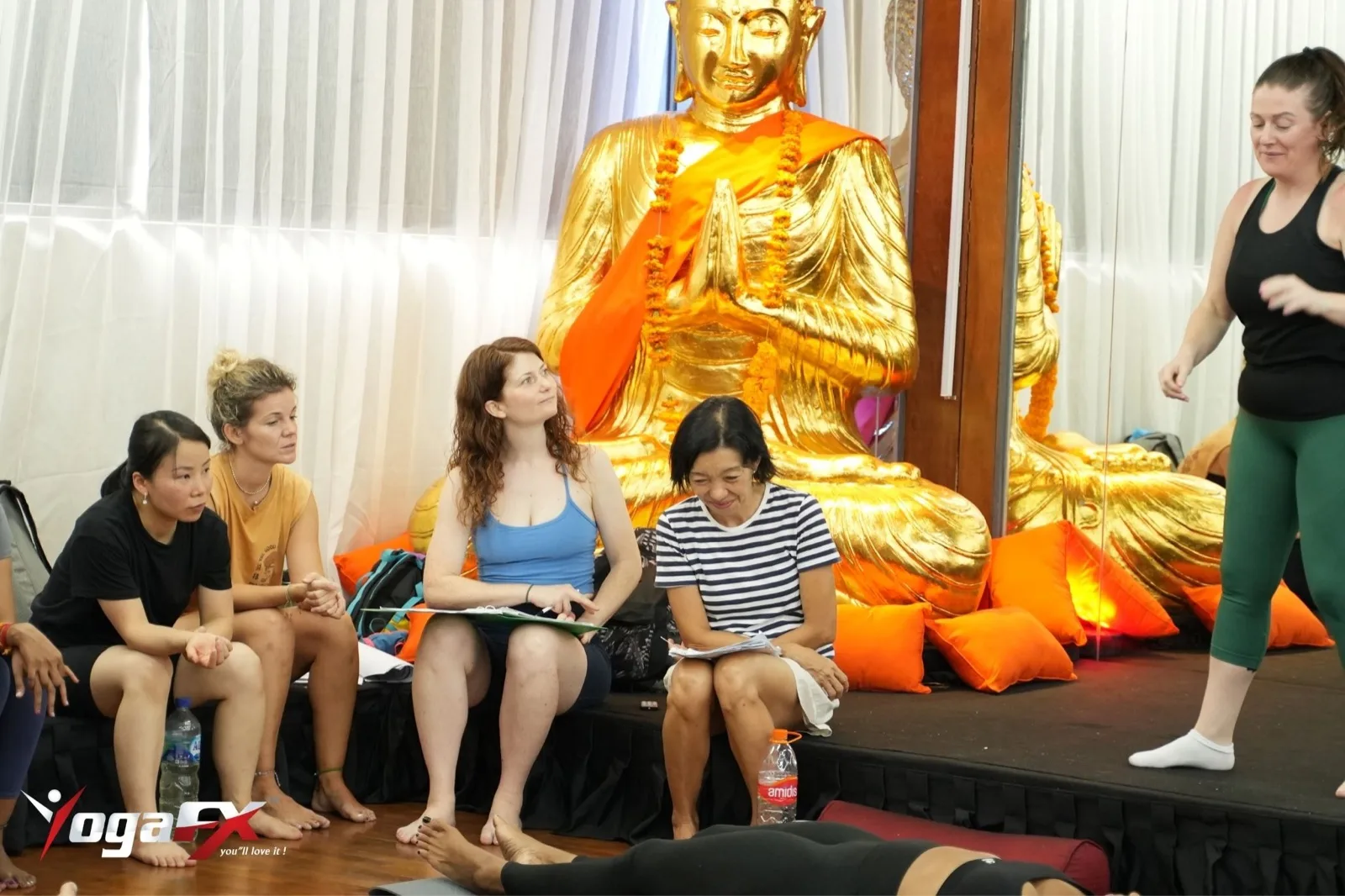
Training in Bali From the UK: Health Checks, Costs and Format
UK applicants often ask how a Bali course compares with a local one. Our comparison of yoga teacher training in Bali versus the UK covers format, cost and immersion in depth. Here is the short version for do you need a license to teach yoga: the certificate you earn is the document venues ask for, and it is not a licence either.
YogaFX teaches the Bikram Hot 26&2 Yoga Teacher Training MasterClass as a 6-day hybrid. You study online first, then train in person in Bali. Graduates leave with two certifications: Yoga Alliance RYT 200-Hour and the Bikram Hot 26&2 200-Hour International Yoga Certification.
Mr. Ian Terry, E-RYT 500, trained for five years, from 2014 to 2019, with the founder of the Bikram Hot 26&2 method. The next batch checks in on Sunday 24 January 2027 and checks out on Friday 29 January 2027 at the Soham Wellness Center in Seminyak. Before you book, work through this list:
- Health. See your GP first if you have heart, blood pressure or heat-sensitivity concerns.
- Cost. The Early Bird price is US$1,899, against a normal price of US$1,999, and a Single Room Premium costs US$2,199. Instalments start from US$250 a month with no interest. Check live exchange rates and budget flights separately.
- Paperwork. After you qualify, line up insurance and HMRC registration before your first paid class.
Questions about dates, rooms or the certificate? Message Mr. Ian on WhatsApp and the team will answer personally.
The Bottom Line: Do You Need a License to Teach Yoga?
So, do you need a license to teach yoga in the UK? No. You need a certificate that venues trust, insurance, and the right checks for the people you teach. Add HMRC registration once your income passes the threshold, and a music licence if you play music.
None of that is hard once you know it exists. Most teachers sort it in an afternoon, then teach with far more confidence.
Disclaimer: laws and venue rules change, and this article is general information, not legal advice. Check requirements with the venue, your insurer, HMRC and your local authority before you teach.
FAQ: Teaching Yoga in the UK
Do you need a license to teach yoga in the UK?
No. No UK law requires a licence or qualification to teach yoga to adults, so do you need a license to teach yoga is answered by venues and insurers instead. Most teachers hold a recognised certificate, insurance and, where needed, a DBS check. Always confirm the rules with each venue before your first class.
Can you teach yoga without insurance?
The law does not require solo yoga teachers to hold public liability insurance, but most venues do. Hall hirers and gyms usually ask for proof of cover before they let you teach. Employers’ liability insurance is a legal duty once you employ someone, with at least 5 million pounds of cover.
Is yoga teaching regulated in the UK?
Not by statute. There is no government regulator for yoga teachers, and registries such as Yoga Alliance are voluntary. Other rules still apply to you, including tax registration for self-employed income, DBS checks for work with children, and a music licence if you play recorded music in class.
Do yoga teachers need first aid?
No general UK law requires a first aid certificate for every yoga teacher. Some venues, schools and outdoor retreats ask for one, so check each job listing. Even when it is optional, a short first aid course helps you stay calm if a student feels faint in a hot room.
What qualifications do you need to teach yoga in the UK?
No qualification is legally required, but studios expect a recognised 200-hour certificate. YogaFX graduates earn Yoga Alliance RYT 200-Hour and the Bikram Hot 26 and 2 200-Hour certification. This training is independent, not official Bikram Choudhury Teacher Training, and it keeps its Yoga Alliance standing.
Still have questions? Message Mr. Ian and the YogaFX team on WhatsApp and we will answer them personally.