Hot yoga teacher training in Scotland is hard to find. Most yoga teacher training in Scotland is hatha or vinyasa, taught part-time over six to eighteen months in Glasgow, Edinburgh or the Highlands. There is currently no dedicated Original Hot 26&2 teacher training based in Scotland, so Scottish practitioners who want to teach the heated sequence usually train through a hybrid or intensive programme abroad.

If you practise 26&2 in Scotland, you already know the gap. You can take a class in a heated room in Glasgow or Edinburgh, but when you start looking for a course that teaches you to deliver that class, the options are almost all flow-based. This guide covers what is actually available in Scotland, what qualifications you need to teach here, and how a six-day Bali intensive compares with a part-time course at home.
In This GuideScottish courses, qualifications and the Bali intensive route
Yoga Teacher Training in Scotland: What’s Available
Scotland has a healthy yoga teacher training scene, but it is built around a particular format. Most courses follow one of three structures:
- Part-time 200-hour courses. Weekend modules spread across six to twelve months, usually hatha or vinyasa based and often registered with Yoga Alliance.
- Longer diploma routes. Multi-year programmes run through national yoga bodies, designed for teachers who want a deep grounding in philosophy and a broad range of styles.
- Specialist add-ons. Short courses in yin, pregnancy, restorative or children’s yoga for people who already teach.
All three are legitimate routes into teaching. None of them trains you to deliver the 26 postures and 2 breathing exercises in a heated room using a scripted dialogue, which is a different skill set from sequencing a vinyasa class.
Yoga Teacher Training in Glasgow
Glasgow has the largest cluster of studios running 200-hour courses in Scotland, mostly weekend-based so trainees can keep working. When you compare Glasgow courses, check four things: how many contact hours are in person rather than recorded, whether the course is registered with Yoga Alliance, how many times you will teach a full class before you qualify, and whether any part of the training takes place in a heated room. For a hot yoga teacher, that last point matters more than it first appears. Teaching in heat changes your pacing, your voice and how you watch students for signs of overheating.
Yoga Teacher Training in Edinburgh
Edinburgh follows a similar pattern, with part-time 200-hour courses and a few shorter intensives. Class sizes vary widely, from small groups of eight to cohorts of thirty or more. Ask how many trainees there will be per lead trainer, because feedback on your teaching is where most of your development happens, and it shrinks quickly in a large group.
Why There’s No 26&2 Teacher Training in Scotland
The demand is there. Search interest in Bikram and hot 26&2 classes shows up across Glasgow, Edinburgh, Inverness and Aberdeen, and many Scottish practitioners have years of heated practice behind them. What is missing is the training pathway, and there are practical reasons for that.
- It needs a trainer who teaches the dialogue. The 26&2 class is taught through a precise verbal script rather than demonstration. Training someone to deliver it well takes an experienced 26&2 trainer, and there are very few in the UK.
- It needs sustained heat. Trainees have to practise and teach in the conditions they will work in. Keeping a studio at around 40 degrees Celsius for long training days is expensive in a Scottish climate.
- It needs a specific certificate. Hot 26&2 studios generally look for a 26&2 qualification on top of, or instead of, a general 200-hour certificate. A vinyasa RYT 200 alone rarely gets you onto a 26&2 timetable.
That combination is why Scottish 26&2 teachers have historically trained abroad. The question is no longer whether you will need to travel, but which format keeps the time away from work, the cost and the disruption to a minimum.
How to Become a Yoga Teacher in Scotland
No law requires a specific licence to teach yoga in Scotland. In practice, the requirements come from the studios, gyms and insurers you work with. Most of them look for three things.
- A recognised 200-hour qualification. Yoga Alliance RYT 200 is the most widely recognised internationally. Yoga Scotland, a Scottish charity, is recognised by sportscotland as the governing body for yoga in Scotland and runs its own diploma route. The British Wheel of Yoga plays a similar role for England and Wales.
- Insurance. Public liability and professional indemnity insurance are standard for any teacher, employed or self-employed. Most insurers ask to see your certificate.
- PVG membership if your role requires it. In Scotland, background checks for people working with children or protected adults run through the Protecting Vulnerable Groups (PVG) scheme managed by Disclosure Scotland, not the DBS system used in England. If you plan to teach children or run classes for vulnerable adults, check whether your role needs PVG membership before you start.
For a full breakdown of licensing, insurance and self-employment registration across the UK, see our guide to whether you need a licence to teach yoga in the UK.

Part-Time in Scotland vs a 6-Day Bali Intensive
For a Scottish trainee who wants to teach hot 26&2, the realistic choice is between a general part-time course at home and a 26&2-specific intensive abroad. Here is how the two formats compare.
| Factor | Part-time course in Scotland | YogaFX 6-day hybrid in Bali |
|---|---|---|
| Style taught | Mostly hatha or vinyasa | Original Hot 26&2 with scripted dialogue |
| Length | Usually 6 to 18 months of weekends | Online pre-course study plus 6 days in Bali |
| Heat | Rarely trained in a heated room | Natural tropical heat, around 40°C and 40% humidity |
| Certification | General 200-hour certificate | Yoga Alliance RYT 200 plus Bikram Hot 26&2 200-hour |
| Time off work | Weekends over many months | About a week of annual leave plus travel |
| Course fee | Varies by provider | USD 1,999 standard, USD 1,899 Early Bird. Separate online-only RYT 200 course: USD 399, Early Bird 329 |
A part-time course suits someone who wants to teach a broad range of styles and is happy to spread training across a year of weekends. An intensive suits someone who already practises 26&2, wants to teach it specifically, and would rather use a block of annual leave than give up a year of Saturdays. The hybrid structure is what makes six days possible: anatomy, theory and dialogue memorisation happen online at home before you fly, so your time in Bali goes into practising, teaching and being corrected.
One trainee who completed the hybrid course while holding down a full-time job described the online preparation as the part that made it workable, because she could study the dialogue in the evenings rather than taking months off. Another graduate put it more bluntly: you get out exactly what you put in, so arrive with the dialogue prepared. For a wider comparison of training at home versus abroad, see our guide to yoga teacher training in Bali vs the UK, or our Manchester part-time vs Bali intensive comparison, which covers the same trade-off from a northern English perspective.
Training in January: Scottish Winter to Bali Heat
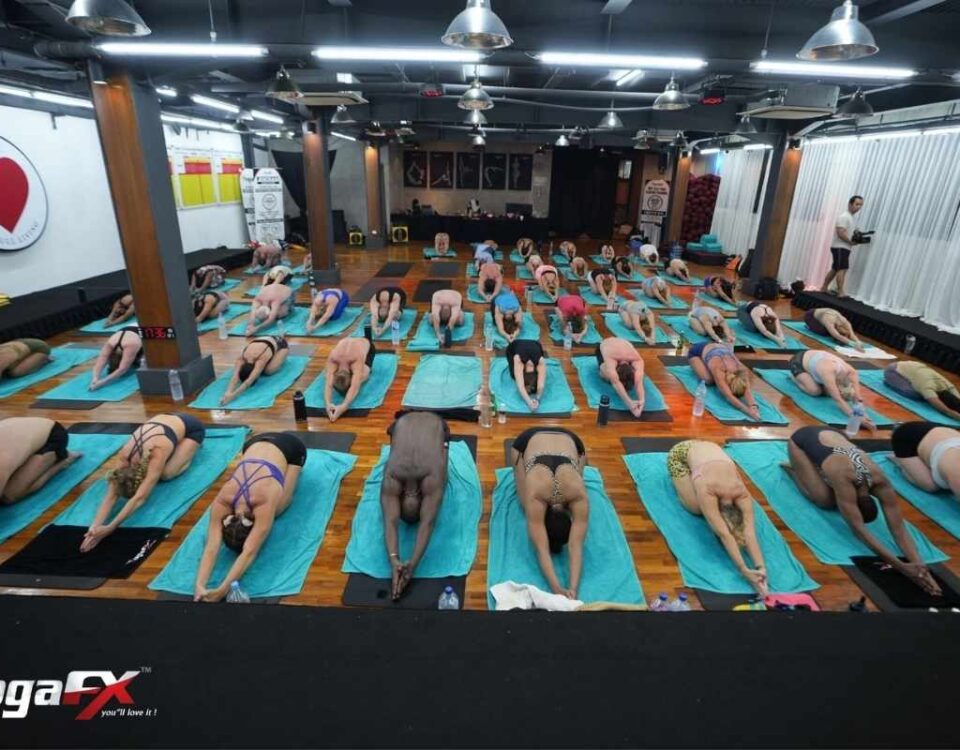
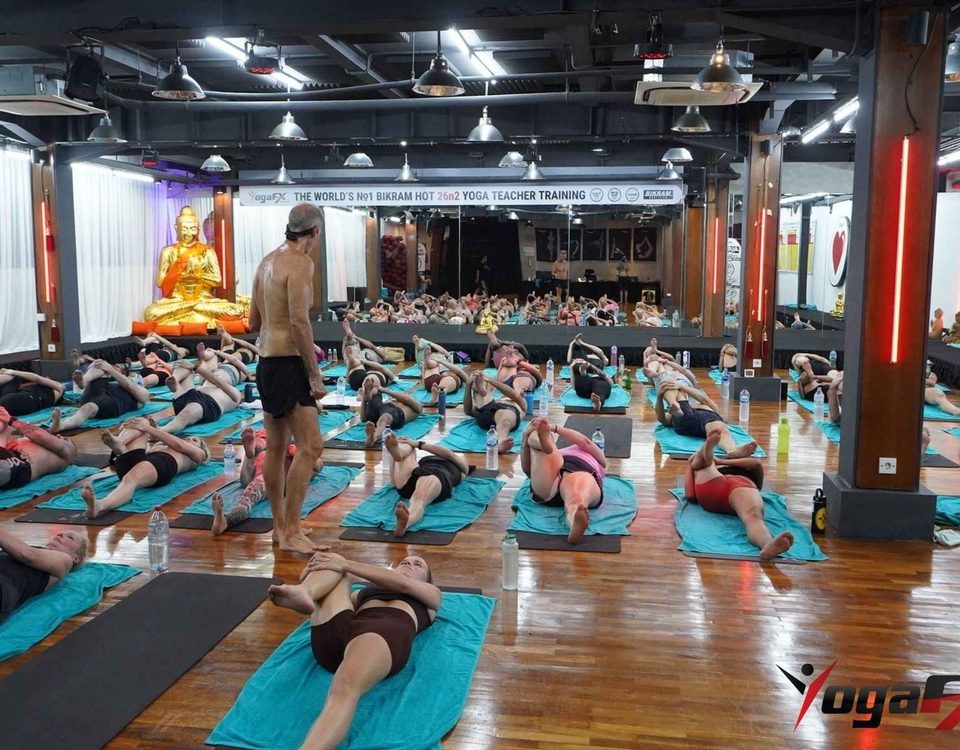
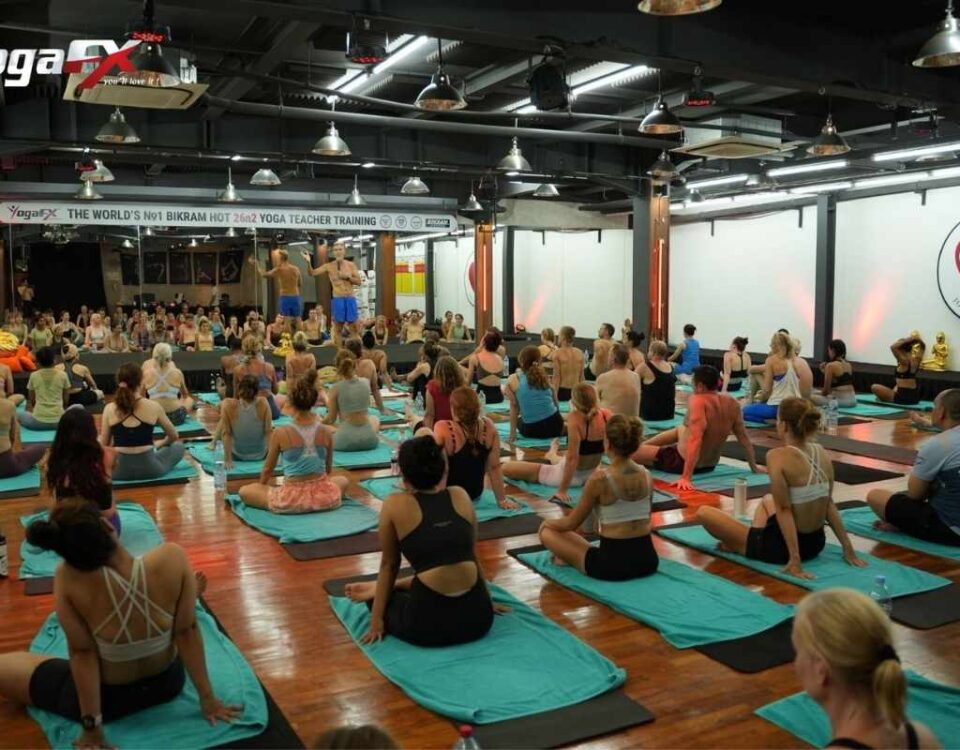
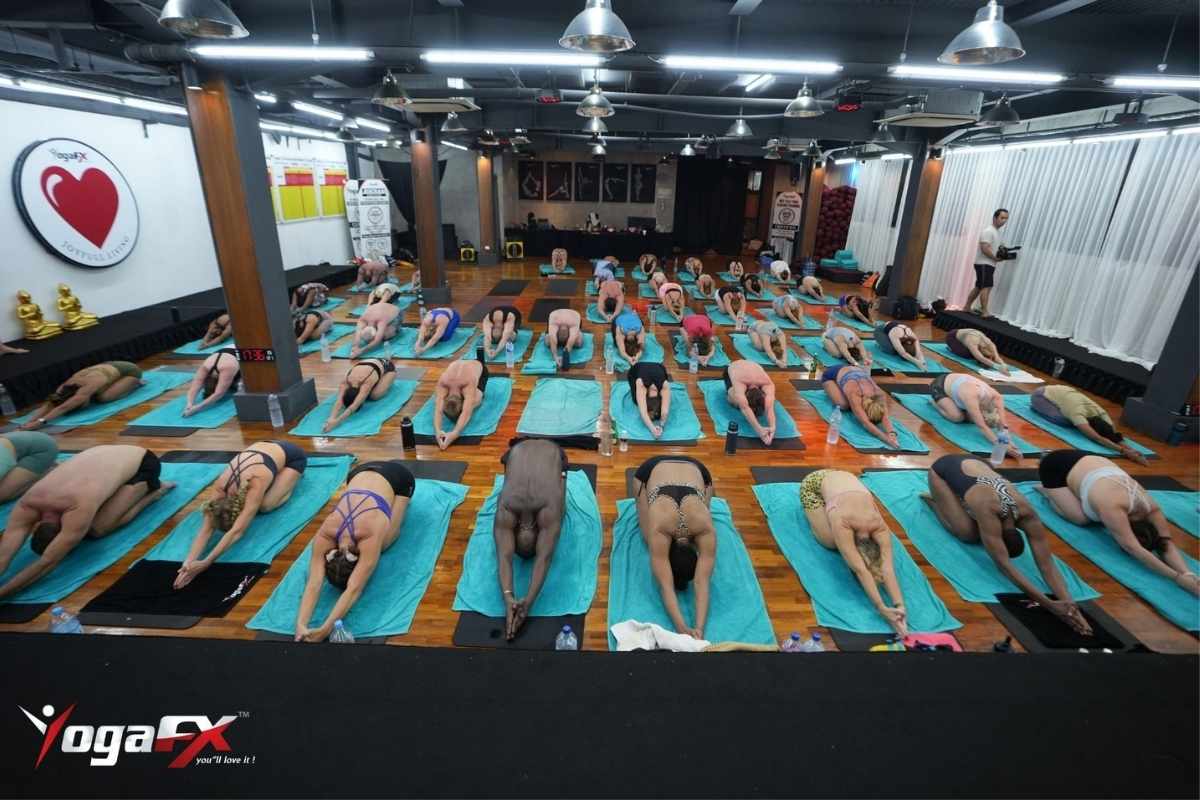
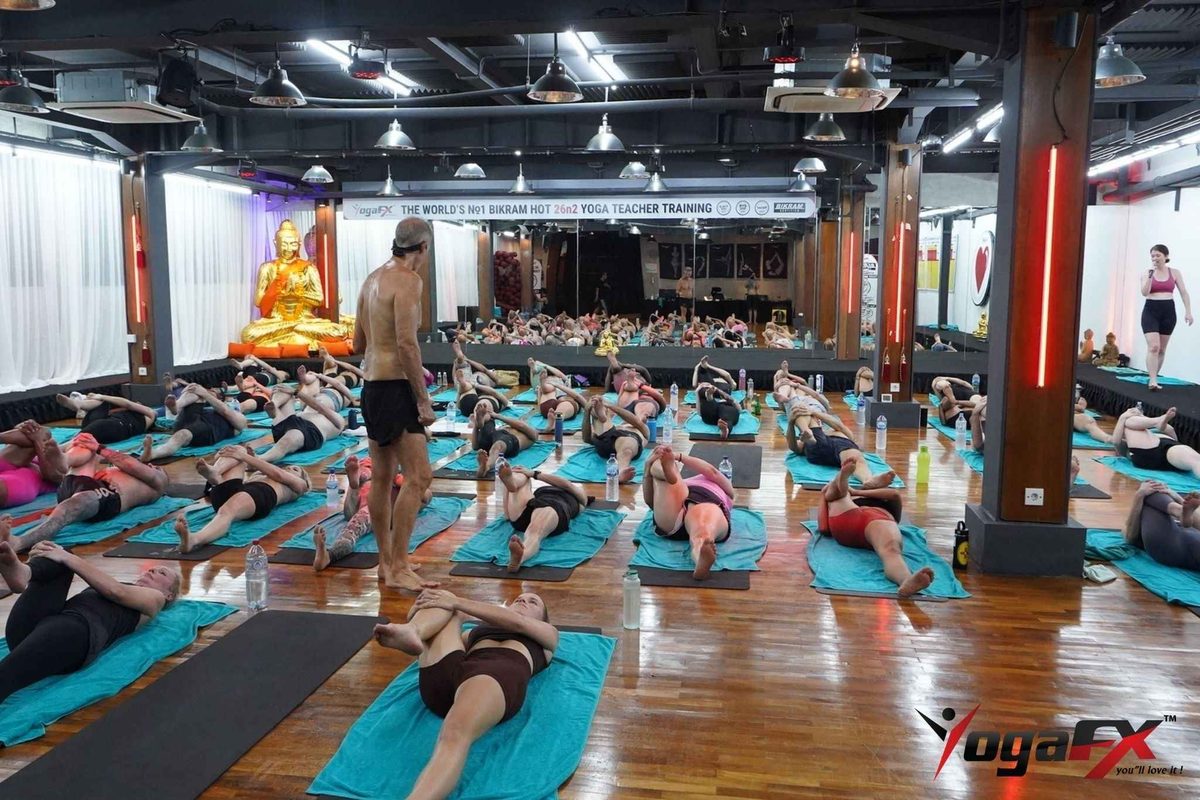
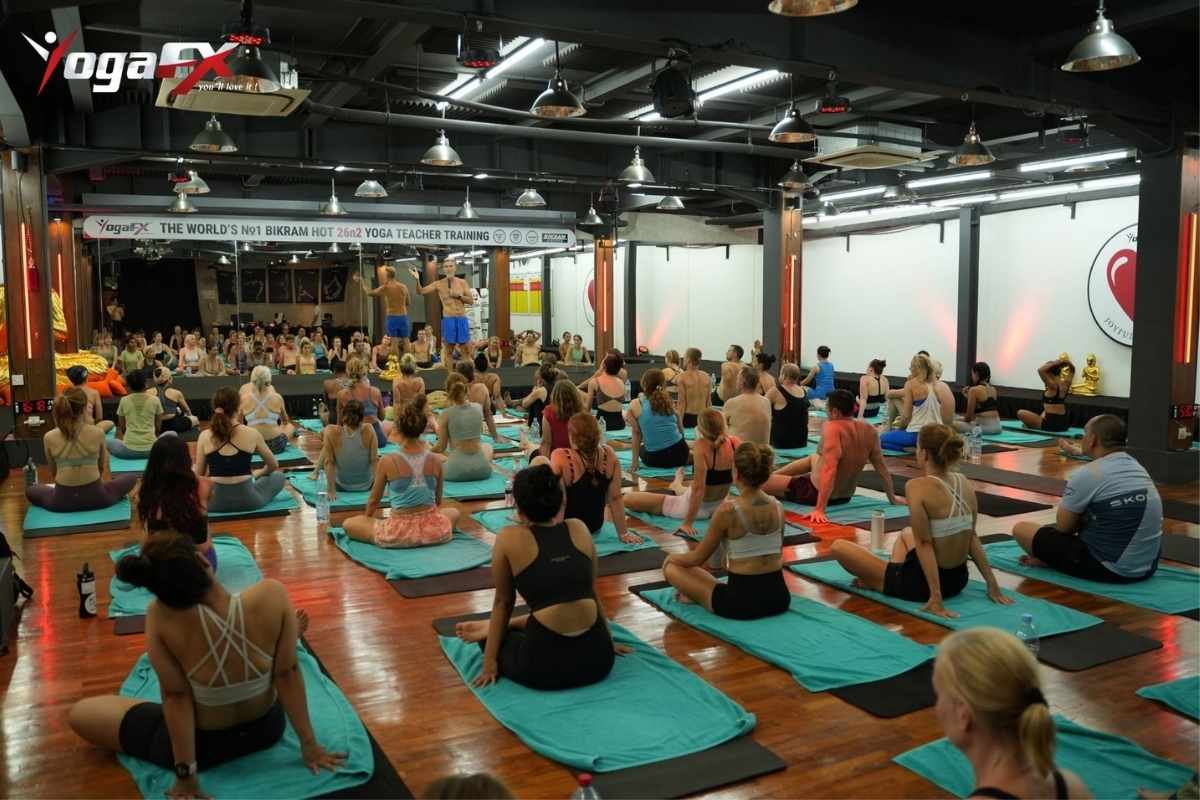
The next YogaFX intake runs from 24 to 29 January 2027. For a Scottish trainee, that timing has a practical upside beyond escaping the dark mornings. The studio in Bali uses natural tropical heat, not electric heaters, and the room sits at around 40 degrees Celsius and 40 percent humidity. You train in the same conditions you will later recreate in a heated studio back home, which makes the transition to teaching far smoother than learning the sequence in a cold room and adjusting afterwards.
There are no direct flights from Scotland to Bali, but Edinburgh and Glasgow both connect to Denpasar through major hubs in the Gulf and Asia. Trainees on long-haul flights are advised to arrive a couple of days early to recover from jet lag before the intensive begins, and airport pickup is included.
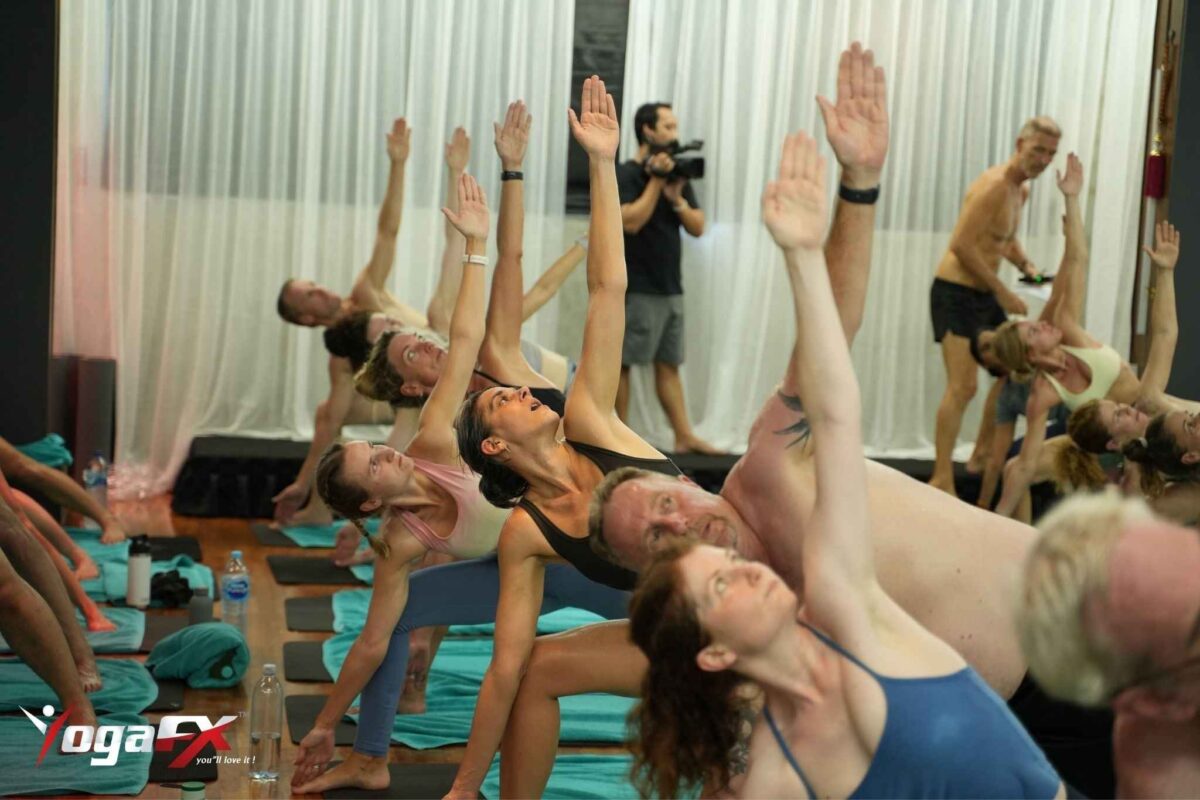
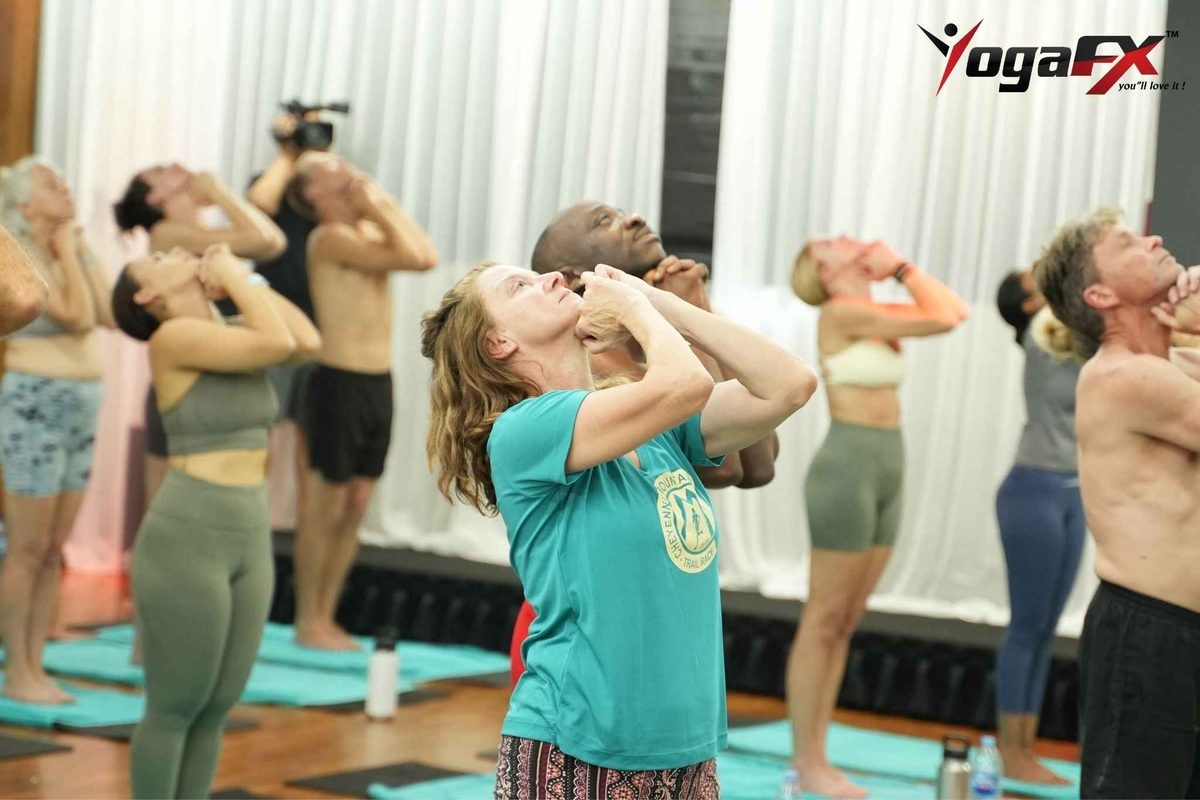
The practice itself is well supported by research. A 2025 systematic review of 43 studies and 942 participants found consistent physical and well-being benefits from hot yoga (Willmott et al., 2025). For many Scottish trainees, a week of that practice in January is its own reward, separate from the qualification.
The YogaFX Hybrid Format
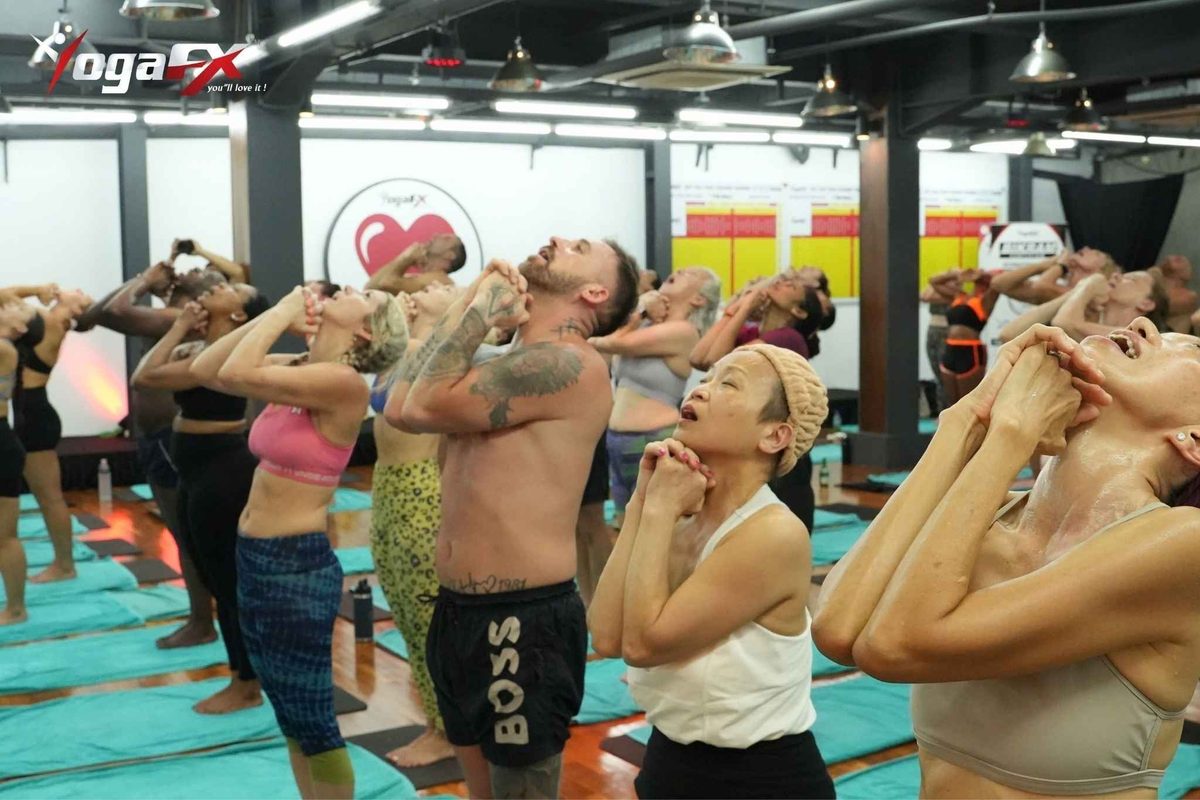
YogaFX runs a 6-day hybrid intensive in Seminyak, Bali, with online pre-course study beforehand. Graduates receive two certifications: the Yoga Alliance RYT 200 and a Bikram Hot 26&2 200-hour certificate. The RYT 200 means you are not limited to heated studios, while the 26&2 certificate is what hot yoga studio owners look for when hiring.
- Fee. USD 1,999 standard, with a limited number of Early Bird places at USD 1,899.
- Deposit. A very low deposit secures your place and is credited towards the total.
- Instalments. Interest-free monthly payments from USD 250 a month.
- Not included. Meals, because dietary needs vary so widely across each cohort. Budget roughly USD 10 to 20 a day for food in Seminyak.
We break down every cost, from flights to accommodation, in our guide to the real cost of hot yoga teacher training for UK students.
Teaching Hot Yoga Back in Scotland
Once you qualify, there are three common routes into teaching in Scotland.
- Heated studios. The most direct route. Hot 26&2 studios need teachers who can deliver the dialogue, and a small pool of qualified teachers in Scotland works in your favour.
- Gyms and leisure centres. Many run yoga on their group timetable. The RYT 200 is usually enough here, even if the room is not heated.
- Your own classes. Community halls, workplaces and private clients. This takes longer to build but gives you control over your schedule and rates.
Pay varies by city and setting, and rates in Scotland generally sit below London’s. Our guide to how much yoga teachers earn in the UK covers per-class rates by region and how long it typically takes a new teacher to recover their training costs.
Training With Mr. Ian Terry
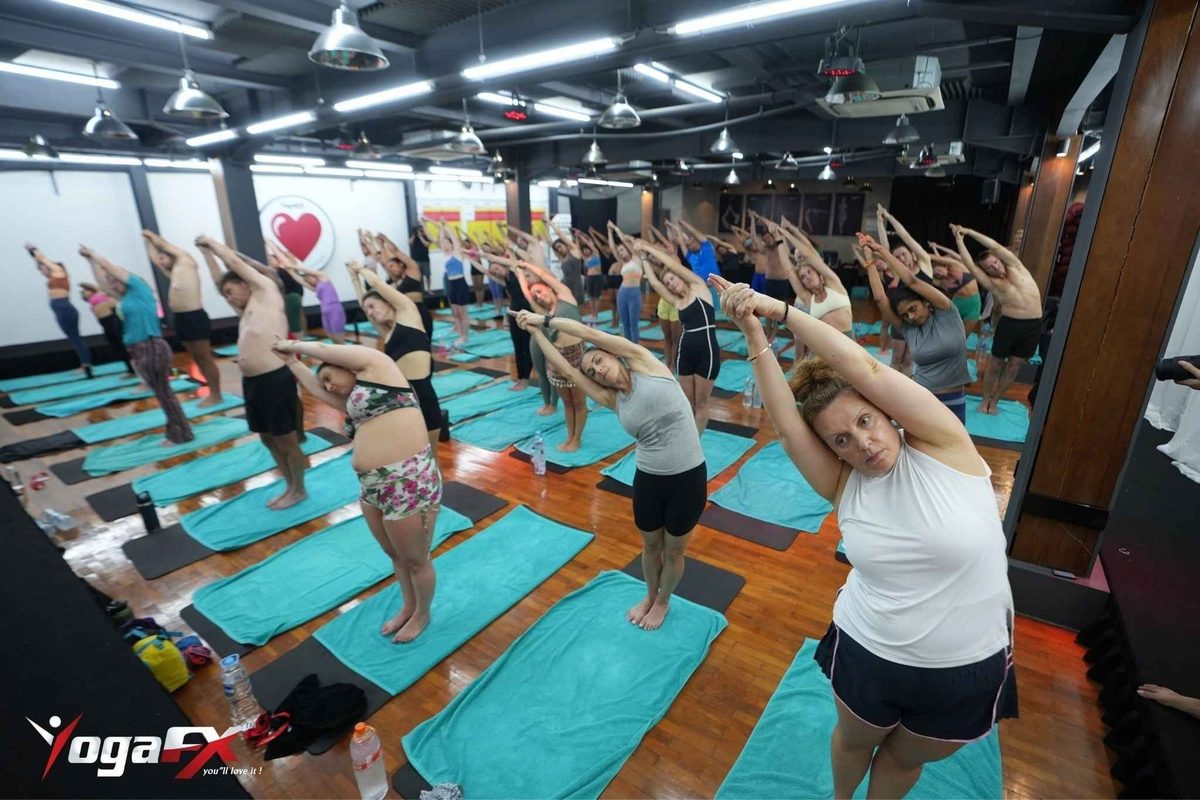
YogaFX was founded in 2017 by Mr. Ian Terry, E-RYT 500, who trained for five years, from 2014 to 2019, directly with Bikram Choudhury, the founder of the Bikram Hot 26&2 method, and has more than 12,000 hours of teaching experience. He is also a Master Trainer for the Republic of Indonesia Yogasana Sports Federation. More than 1,500 graduates from over 80 countries have completed the programme, including regular UK trainees in the Bali cohorts.
What trainees tend to remember most is how quickly the dialogue becomes their own. Mr. Ian spends much of the intensive on individual delivery: pacing, projection and the timing of each cue against the student’s movement. Graduates who arrived nervous about teaching a full 90-minute class often describe leaving certified and genuinely confident, which matters more than the certificate when you walk into your first Scottish studio and ask for a spot on the timetable.
If you are weighing up whether the January 2027 intake fits your plans, the quickest next step is to take the short readiness quiz. We will come back to you with the details and payment options, and you can book a call with Mr. Ian directly for any final questions.
Hot yoga involves sustained heat exposure and physical exertion. Consult a healthcare professional before starting an intensive practice, particularly if you are pregnant, have a cardiovascular condition, or are new to exercise in heat.
FAQ
How do I become a yoga teacher in Scotland?
Complete a recognised 200-hour teacher training, such as a Yoga Alliance RYT 200 course, then arrange public liability and professional indemnity insurance. No law requires a yoga licence in Scotland, but studios and insurers expect a certificate. If you will teach children or protected adults, check whether your role needs PVG scheme membership.
Is there hot yoga teacher training in Scotland?
There is currently no dedicated Original Hot 26&2 teacher training based in Scotland. Most Scottish courses teach hatha or vinyasa over several months of weekends. Practitioners who want to teach the heated 26&2 sequence usually train abroad, often through a hybrid format that combines online study with a short intensive.
How long does 200 hour yoga teacher training take?
Part-time 200-hour courses in Scotland usually run for six to eighteen months of weekend modules. Full-time residential courses take around three to four weeks. Hybrid formats, such as the YogaFX programme, split the hours between online pre-course study at home and a 6-day in-person intensive in Bali.
Can a beginner do yoga teacher training?
Yes, but some regular practice first makes training far easier. For a hot 26&2 course, several months of consistent heated classes helps you understand the sequence and cope with the heat. Many trainees join teacher training to deepen their own practice, not only to teach, and complete beginners are often advised to build a routine first.
How much does it cost to become a yoga instructor in the UK?
Costs vary widely by provider, format and location, so compare the total rather than the headline fee. The YogaFX 6-day hybrid intensive costs USD 1,999, with limited Early Bird places at USD 1,899, plus flights, accommodation and insurance. A very low deposit and interest-free instalments from USD 250 a month spread the cost.