Short answer: not really, not if you mean a genuine 200-hour certification squeezed entirely into Saturdays and Sundays. Yoga Alliance’s 200-hour minimum simply doesn’t fit into weekend-only sessions without stretching the calendar out for the better part of a year.

What most people actually mean when they ask this question is whether they can train without quitting their job or taking a long block of leave, and that’s a different, much more answerable question.
In This GuideWeekend, modular and hybrid formats for working candidates
Why the Weekend Question Comes Up So Often
Most candidates researching Bikram or hot yoga teacher training are already working full-time. Taking three to six consecutive weeks off for a residential intensive isn’t realistic for someone with a mortgage, a manager, or school-age kids.
Weekends look like the obvious workaround: no need to explain a leave request, no gap in the CV, just evenings and Saturdays carved out of an otherwise normal week.
The problem is what happens to teaching quality when training gets spread that thin. Our breakdown of what the 200-hour curriculum actually covers goes into this in more detail, but the short version is that practicum, the hours where you actually practise delivering dialogue in front of people, is the part most sensitive to gaps between sessions.
Dialogue memorised on a Saturday in week two has usually faded significantly by the Saturday in week twenty.
What “Weekend Training” Actually Looks Like Across Schools
Programmes marketed as weekend-friendly usually fall into one of two structures, and they produce very different outcomes.
- Weekly modular format. Training hours are spread across evenings and weekends over 4-9 months. You keep your job, but momentum is the constant challenge, and most schools running this format build in review sessions specifically to re-anchor dialogue that’s slipped between weekends.
- Single weekend intensive plus online pre-work. A smaller number of schools compress the in-person component into one long weekend, having moved anatomy and philosophy theory online beforehand. This only works if the in-person weekend is genuinely just the tip of a much larger training structure, not the whole thing, since a single weekend can’t contain the practicum hours a 200-hour credential requires on its own.
Neither of these is a true “weekends only, done in a month” format, because the maths doesn’t work. Ten hours of practicum alone, the Yoga Alliance minimum, can’t be meaningfully delivered and reviewed across two or three isolated weekends without the retention problems described above.
The Real Trade-off: Time Away vs Momentum
Every training format is a trade-off between two constraints: how much continuous time you can realistically take away from work or family, and how much your body and memory retain between sessions. Weekly modular formats optimise for the first constraint at the expense of the second.
Full residential intensives do the opposite, solving momentum entirely by removing the gaps, but demanding three to six consecutive weeks most working adults simply don’t have.
This is exactly the gap the hybrid short-intensive model was built to close, and it’s worth understanding before assuming weekends are your only option. Our step-by-step guide to becoming a yoga teacher walks through all three format types side by side if you want the fuller comparison.
How the Hybrid Format Solves the Same Problem Weekends Are Meant To
YogaFX takes a different route to the same goal candidates are usually chasing when they ask about weekends: minimal disruption to work and family life.
Anatomy, philosophy, and theory modules are completed online, at your own pace, in the weeks before arrival, the same content a weekend-modular programme would spread across months of Saturdays.
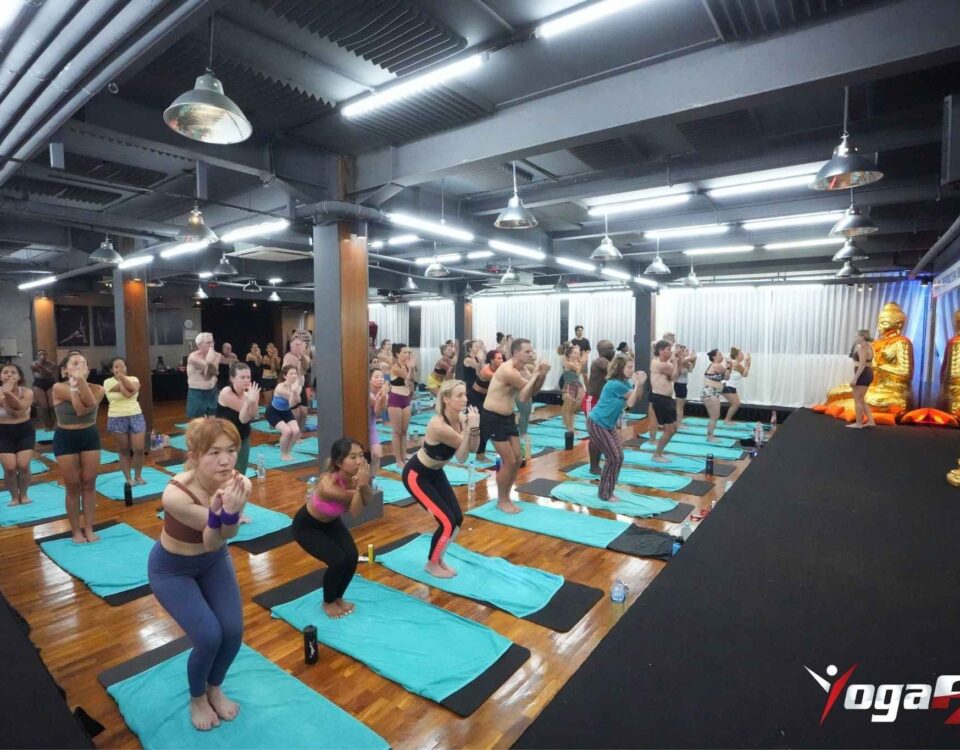
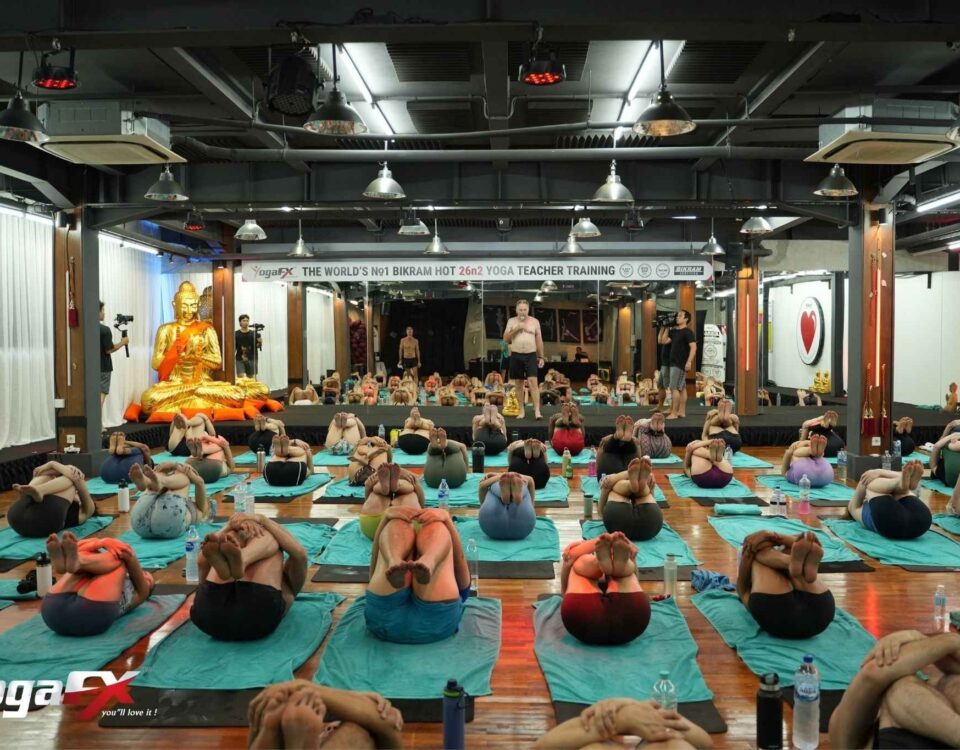
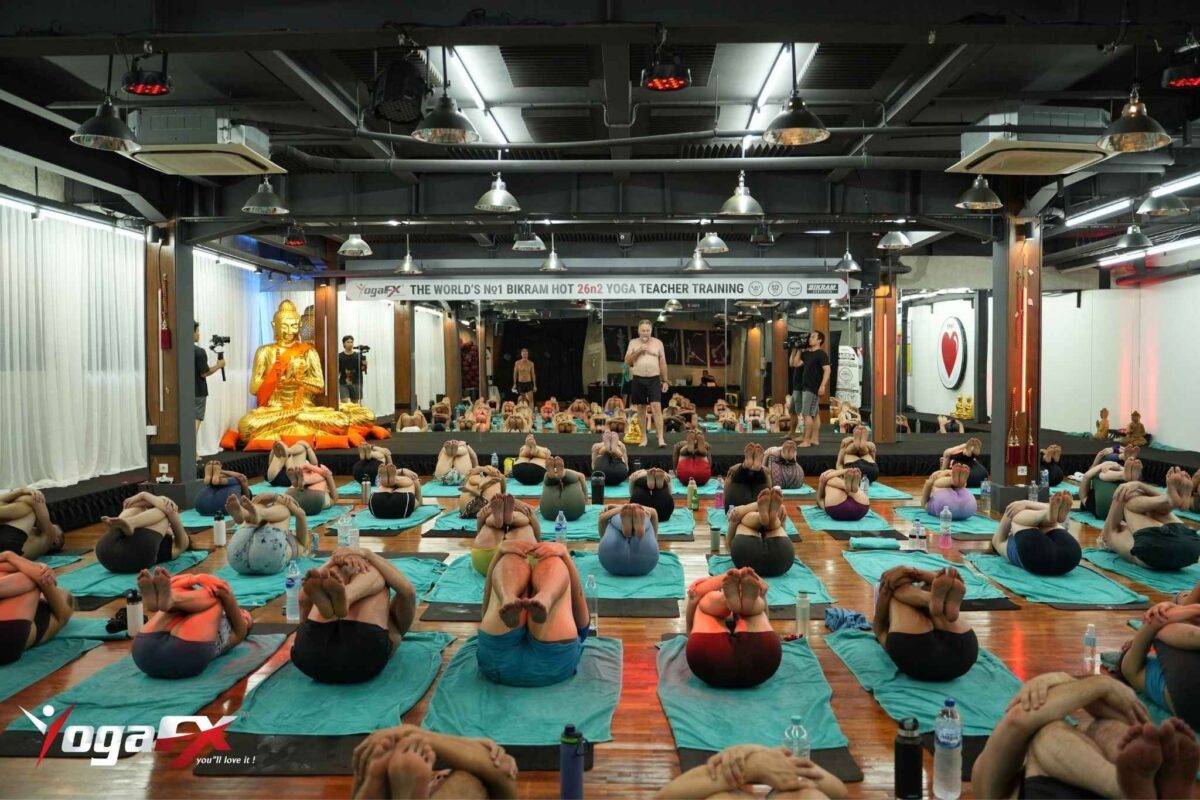
The in-person component then compresses into a single 6-day immersion in Seminyak, Bali.
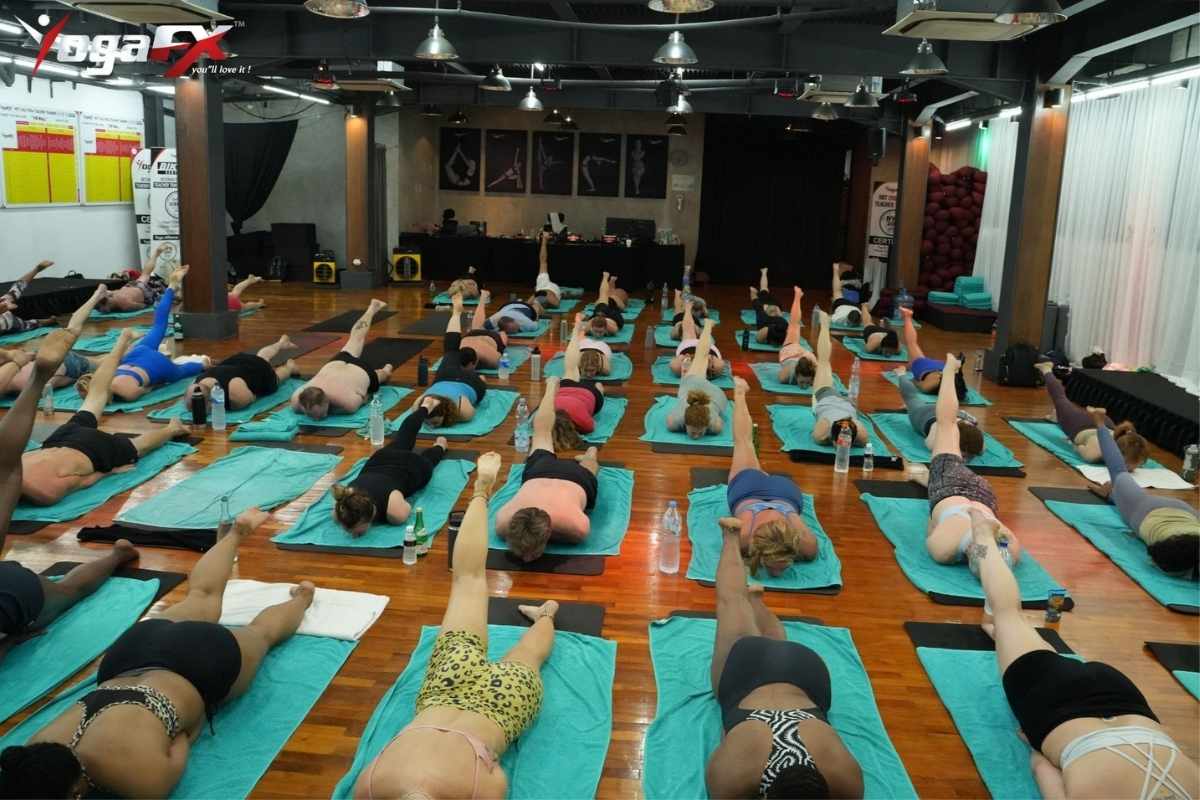
For a UK candidate, that’s one week of annual leave rather than nine months of surrendered weekends, and because the practicum hours all happen inside that continuous 6-day block rather than scattered across isolated sessions, the momentum problem that undermines weekly modular training doesn’t come up.
Mr. Ian Terry and the teaching team can watch every candidate deliver dialogue multiple times across those six consecutive days, which is a very different experience from three minutes of feedback once a fortnight.
Ian Terry, E-RYT 500, trained for five years, from 2014 to 2019, directly with Bikram Choudhury, the founder of the Bikram Hot 26&2 method, has logged more than 12,000 teaching hours, and has certified over 1,500 graduates from more than 80 countries. Graduates leave with dual certification, Yoga Alliance RYT 200 plus the Bikram Hot 26&2 credential.
Programme pricing runs USD 1,999 (Early Bird 1,899, limited seats) to 2,199 depending on accommodation package, though UK candidates should check live exchange rates before budgeting. If travel itself is the obstacle rather than the budget, YogaFX also runs a separate fully online RYT 200 course at USD 399, or 329 on the limited Early Bird. That is a standalone certification, not the hybrid programme’s pre-course study, and its fee is credited in full towards the MasterClass if you travel later.
Worth stating plainly: YogaFX is a prominent Hot 26&2 yoga teacher training academy headquartered in Bali, operating in Seminyak and Canggu, and it is not affiliated with Bikram Choudhury or Bikram’s Yoga College of India. The training is built on Ian Terry’s own direct lineage and instruction. That lack of affiliation doesn’t affect Yoga Alliance registration or the credential’s standing, but it’s worth knowing upfront.
Weekend Modular vs Hybrid Intensive, Side by Side
Laid out next to each other, the two paths that actually let you keep working while training look quite different once you get past the surface-level appeal of “no need to take time off.”
| Factor | Weekly Weekend Modular | Hybrid Short Intensive |
|---|---|---|
| Total calendar span | 4-9 months of scattered sessions | Weeks of self-paced online study + 6-10 consecutive in-person days |
| Time away from work | None per session, but recurring every few weeks for months | One continuous block, typically 6-10 days |
| Dialogue retention risk | Higher, since gaps between sessions can be 2-4 weeks | Lower, since practicum happens in one uninterrupted stretch |
| Feedback consistency | Depends on instructor continuity across sessions | Same instructor team throughout, watching daily progress |
| Best suited for | Candidates who cannot take any extended leave at all | Candidates who can free up roughly a week, even if not months of weekends |
Neither option is objectively better in the abstract. A candidate with a rigid job that genuinely never allows more than a few consecutive days off has a real reason to choose weekly modular training despite the retention trade-off.
But candidates who assume weekends are their only option, without realising a hybrid format could compress the same total commitment into a single week away, sometimes rule out the format that would have actually suited them better.
Questions to Ask Before Choosing a Weekend or Modular Programme
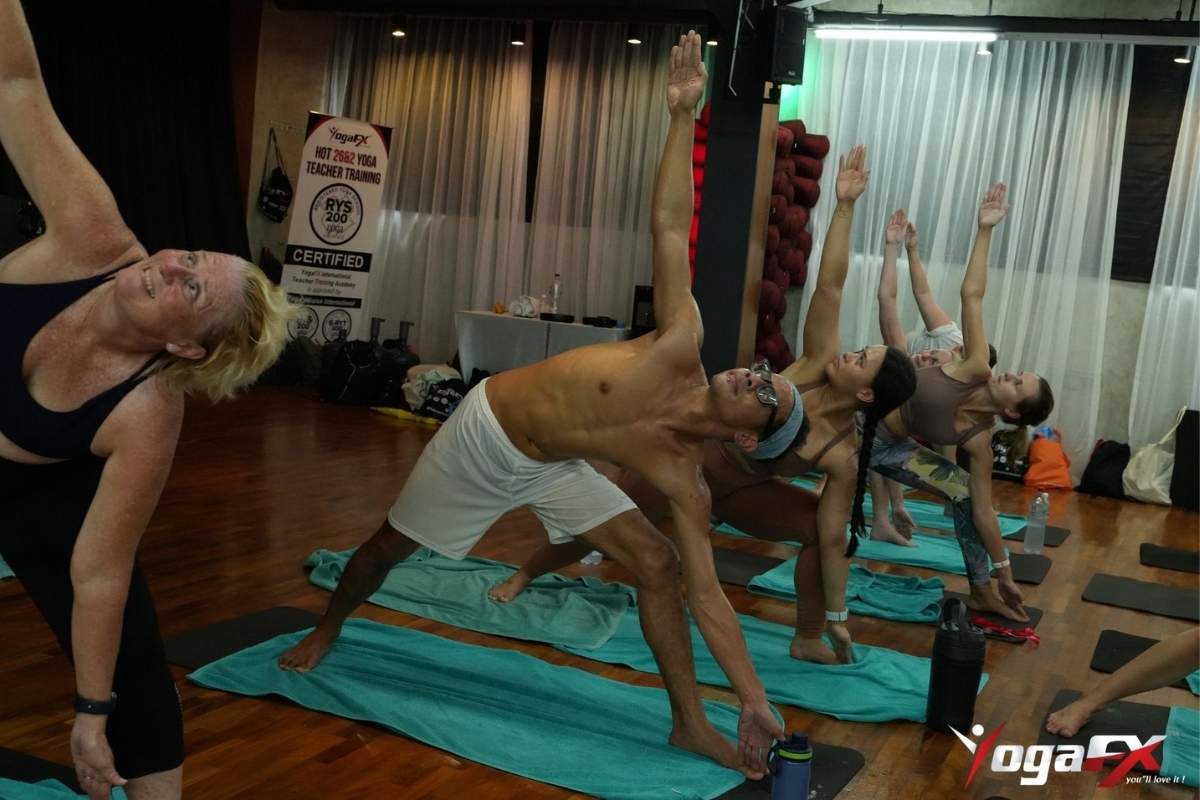
If a weekly or weekend format still fits your life better than a compressed intensive, a few direct questions separate a well-run programme from one that will leave you under-prepared:
- How many total weekends, and over how many months? A 9-month spread with monthly reviews behaves very differently from an 18-month spread with none.
- Is there a structured dialogue review built into each session? Without one, you’re relying entirely on your own revision between sessions.
- What happens if you miss a weekend? Illness and work conflicts happen. Ask directly what the make-up policy is rather than assuming.
- How many total practicum hours are built in beyond the Yoga Alliance minimum? This matters more in a stretched-out format than in a compressed one, since retention losses compound over months.
None of these questions have a universally right answer, but a school that can’t answer them clearly and specifically is worth treating with caution, the same way our breakdown of typical training costs recommends treating vague pricing.
FAQ
Can I complete a full 200-hour certification only on weekends?
Not in a short timeframe. Weekend-only formats typically spread the 200 hours across 4-9 months. It’s possible, but the trade-off is momentum loss between sessions, particularly with dialogue retention.
Is a hybrid intensive a good alternative to weekend training?
For most working professionals, yes. Hybrid formats move theory hours online, so you only need to take one continuous block of leave, often just 6-10 days, rather than sacrificing months of weekends.
Does weekend training cost more or less than an intensive?
It varies by school, but weekend programmes often carry a similar total tuition despite being spread over more months, since the cost reflects total instructor hours, not calendar length.
What happens if I miss a weekend session?
Policies vary significantly by school. Reputable programmes have a clear make-up policy for missed sessions. Ask directly before enrolling, since vague answers on this point are a warning sign.
Are there any Bikram yoga teacher training sessions available on weekends?
Some schools run weekly modular formats that include weekend sessions spread over several months. YogaFX takes a different approach for candidates who can’t spare that many separate weekends: a single 6-day hybrid intensive in Bali, with all theory work completed online beforehand.