Yoga continuing education for a UK teacher covers three things at once: the hours your registry asks for, the CPD your membership body expects, and the proof your insurer wants to see. Yoga Alliance asks registered teachers for 75 hours every three years. UK bodies give their own guidance, so you need to read both.

This guide to yoga continuing education sets out what we could verify on 12 November 2026, and it says plainly where a page was unclear. It’s written for working teachers in Britain, including graduates of hot 26&2 training who want a clear plan before the next renewal date.
How much yoga continuing education do you need?
Start with the registry. Yoga Alliance publishes a page that states the yoga continuing education rule for registered teachers. When we read it, the page said that RYTs and E-RYTs must complete 75 hours of continuing education within three years of their initial registration.
It showed a last-updated date of July 2023, so confirm the figure in your member account before you plan around it. You can read the wording on the Yoga Alliance continuing education page.
The two parts of the 75 hours
The 75 hours are not one pile. They split into two parts, and each part has its own rules.
- 45 hours of teaching yoga. These are classes or sessions you lead after your registration date.
- 30 hours of yoga training. This must relate to one of Yoga Alliance’s educational categories, and all 30 hours may be done through distance learning.
- No credit for earlier work. Teaching or training you finished before you registered does not count.
- No rollover. Hours above the 30 training hours in one three-year window do not carry into the next.
That last rule catches people out. If you take 50 hours of yoga continuing education in year one because the course was a bargain, only 30 of them count. The other 20 are still useful learning, but they won’t shorten your next cycle.
What 75 hours looks like on paper
| Part of the 75 hours | Hours in 3 years | What counts | What to keep as proof |
|---|---|---|---|
| Teaching yoga | 45 | Classes you lead after registering | Timetable, class log or studio letter |
| Yoga training | 30 | Learning linked to an educational category; distance learning allowed | Certificate, receipt and course outline |
| Total | 75 | Both parts of yoga continuing education together | One folder per three-year cycle |
| Extra training hours | 0 carried over | Hours beyond 30 do not roll into the next cycle | Note them for your own CV only |
Here is a quick sum that helps. A weekly one-hour class, taught for 45 weeks, covers the 45 teaching hours. So most working teachers finish that half in about a year. The 30 training hours are the part that needs planning, because that is where yoga continuing education costs real money.
The total Yoga Alliance asks of registered teachers.
Classes you lead after you register.
All 30 may be done by distance learning.
Hours beyond 30 do not carry forward.
A recommended minimum, counted in points, not hours.
Yoga continuing education: Yoga Alliance hours or UK CPD?
This is where UK teachers get confused. Yoga Alliance is a registry based in the United States. Yoga Alliance Professionals and the British Wheel of Yoga are separate UK membership bodies. Each has its own wording, so one hour of yoga continuing education can count in one place and be ignored in another.
We read the public pages of all three. The table shows only what we could confirm, and it leaves a cell plain where the page said nothing.
| Body | CPD wording we could verify | Insurance wording we could verify | Where we read it |
|---|---|---|---|
| Yoga Alliance (US registry) | 75 hours in three years: 45 teaching, 30 training | Not covered on the page we read | Continuing education page, last updated July 2023 |
| British Wheel of Yoga | Recommends a minimum of 15 CPD points a year; its Associate Teacher route expects 45 hours of relevant CPD in three years | Teacher and Student Teacher memberships include teaching insurance | Member benefits page, modified 11 November 2026 |
| Yoga Alliance Professionals | No CPD hour figure on the insurance page | £6,000,000 limit of indemnity for professional, public and products liability | UK insurance page, undated |
What the table tells you
Notice the pattern. Only one body gives a firm hour count, and the UK pages lean on guidance. So treat the strictest wording you fall under as your target.
For most teachers that is 75 hours with Yoga Alliance, or 45 hours of relevant CPD over three years if you aim for a UK Associate route. Both fit inside the same plan.
If you are still deciding which credentials studios accept, our guide to which UK credentials studios accept explains the difference between a school certificate and a registry listing. It also helps to read what Yoga Alliance certification means for a UK hot yoga teacher before you pay any renewal fee.
Insurance and yoga continuing education: what UK studios expect
Insurance is where yoga continuing education stops being a paperwork task and starts protecting you. The British Wheel of Yoga published a warning on 6 August 2026. Its small survey found that around one in three UK yoga teachers do not hold their own dedicated insurance.
The sample was small, so read it as a signal, not a census. You can see the full piece on the British Wheel of Yoga cover article.
The same article makes three practical points. Insurance is not always a legal requirement, but studios, councils, landlords and event organisers increasingly ask for proof of public liability and professional indemnity cover.
Without cover, a teacher is personally liable for compensation and legal costs. And insurers typically won’t pay a claim if no trained first aider was present, so a current first aid certificate keeps your cover valid.
Five things to check in your policy
- Which techniques are covered. The Yoga Alliance Professionals policy page says cover follows the techniques in your qualifications, and styles such as acro or aerial need an add-on.
- Whether your learning is current. That page ties online-content cover to having enough qualifications and keeping content up to date, which is exactly what yoga continuing education shows.
- Where you teach. The same page warns you to tell your home insurer if you run classes from your property.
- Where you travel. The British Wheel of Yoga says its insurance is not recognised in the USA and does not cover residents outside the UK, France, Jersey, Guernsey and Eire. If you plan to teach or assist abroad, ask first.
- Who the insurer is. Read the policy documents in full. Both bodies publish them to members, and a headline limit means little without the exclusions.
For a deeper look at the rules around teaching in Britain, read our page on whether you need a licence to teach yoga in the UK. It covers insurance and DBS checks in one place. Remember that none of this is insurance advice. Ask your broker or membership body to confirm what your policy covers.
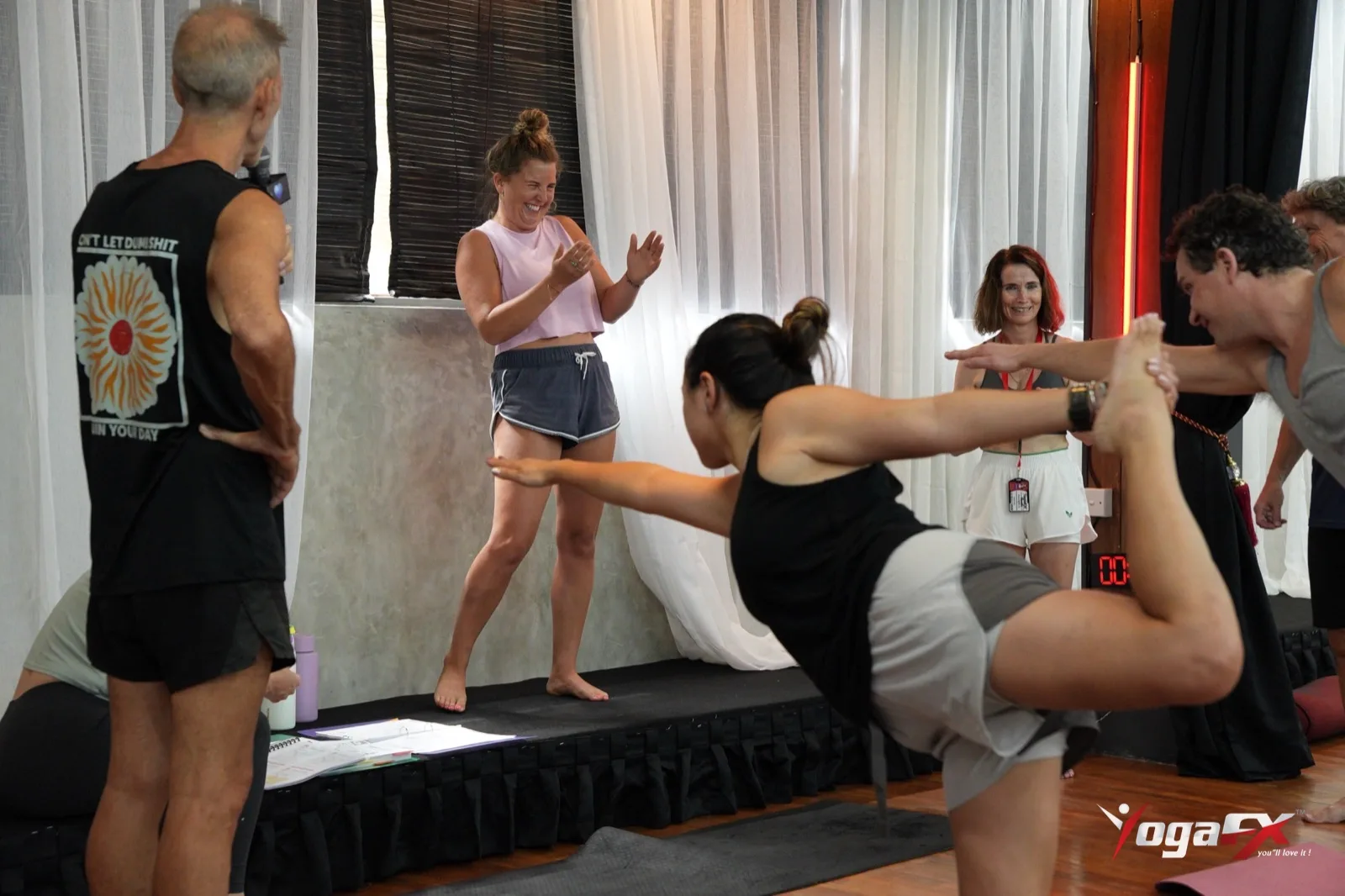
Which kinds of yoga continuing education count?
Not every course is built the same. The three formats below suit different stages, and each one maps onto a different part of the 75 hours.
Teaching hours: your own classes
These cost nothing extra. Your regular timetable already builds the 45 hours. The trick is to log them as you go, because a studio letter in month 34 is hard to get.
Training hours: workshops and distance courses
A short workshop on anatomy, sequencing or cueing is the usual choice for yoga continuing education. Because Yoga Alliance allows all 30 training hours at a distance, an evening course can do the job. That’s useful if you work full time.
Many people search for yoga continuing education credits, so here is the plain version. A credit is only worth what your registry says it is worth. Yoga continuing education workshops, online or in person, count when they fit an approved category and you can prove you attended.
Immersions: a week with one senior teacher
A week in the room is slower and costlier, but it changes how you teach. You get live correction, which an online video can’t give. For example, an immersion can fix a rushed cue in one afternoon, while a video only tells you the cue was rushed.
Five questions to ask before you pay
Put these to any provider of yoga continuing education, including us. They take two minutes.
- Who runs it? Look for their registry level and how long they have taught, rather than a flashy job title.
- What new skill will I leave with? Good answers name something concrete, like cueing a student with a sore shoulder.
- Will the credit be put in writing? Check the claim with your registry, because a brochure isn’t proof.
- How much time is hands-on? People pick up teaching by doing it and getting corrected, so lectures alone fall short.
- Who do I contact later? Support tends to fade once the final day is over.
Heat safety: the CPD topic hot yoga teachers should not skip
Hot yoga adds a risk that a standard anatomy workshop never covers. Heat plus effort can push a student, or a teacher, into trouble. So heat safety deserves a place in your yoga continuing education, and the evidence for that comes from public health sources, not from yoga marketing.
What the NHS says to look for
The NHS describes heat exhaustion as tiredness, dizziness, headache, nausea, heavy sweating with pale clammy skin, cramps, a high temperature and thirst. It says the person should move somewhere cool, take off unnecessary clothing, drink water and cool the skin. They should start to feel better within 30 minutes.
Heatstroke is different. The NHS calls it a medical emergency, with signs such as hot skin without sweating, confusion, fast breathing and seizures, and it tells you to call 999. See the full NHS guidance on heat exhaustion and heatstroke.
Who is more at risk
Mayo Clinic adds the context a teacher needs. It says heat exhaustion happens when the body overheats, and that heat combined with strenuous activity, especially in humid conditions, is a common cause.
Its risk factors include some medicines, such as beta blockers, diuretics and antihistamines, and not being used to the heat. It advises getting acclimated over several weeks. Read the details on the Mayo Clinic heat exhaustion page.
What to build into your classes
Fluids matter too. The NHS lists sweating a lot after exercise and hot environments among the causes of dehydration, and it advises drinking regularly and aiming for pale urine. Its dehydration page is a good handout for new students.
- Ask about medicines at intake. A student on a diuretic or a beta blocker needs a conversation before a 40 degree room.
- Build in acclimatisation. New students should start with shorter visits and more rests, not a full class on day one.
- Know your emergency steps. Cool the person, give fluids for heat exhaustion, and call 999 for suspected heatstroke.
- Hold a current first aid certificate. It protects students first, and as the British Wheel of Yoga notes, it also keeps cover valid.
This is general information, not medical advice. Anyone with a heart condition, who is pregnant or who takes regular medication should speak to a healthcare professional before a heated class.
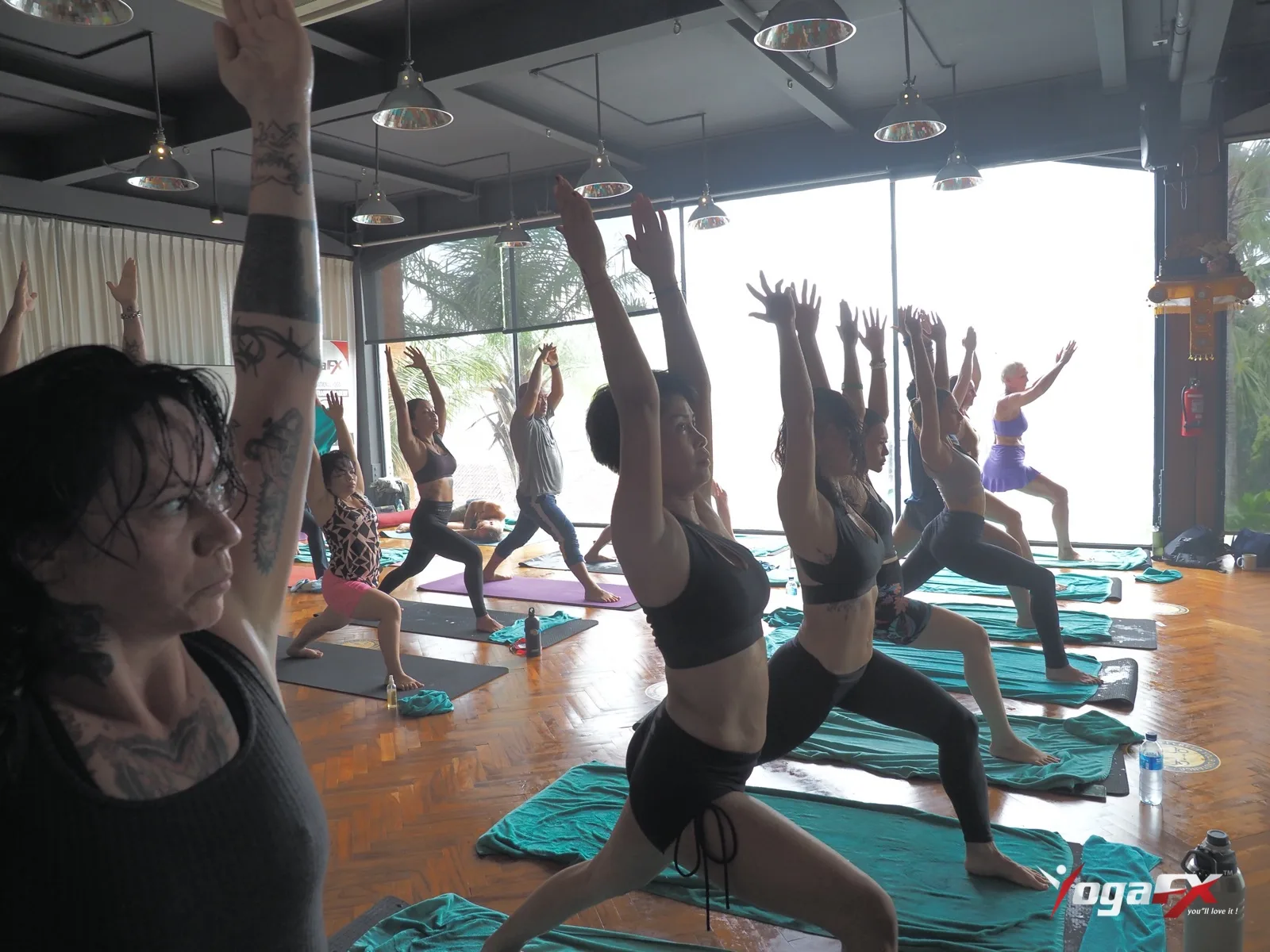
Yoga continuing education with Mr. Ian Terry in Bali
Who leads the week
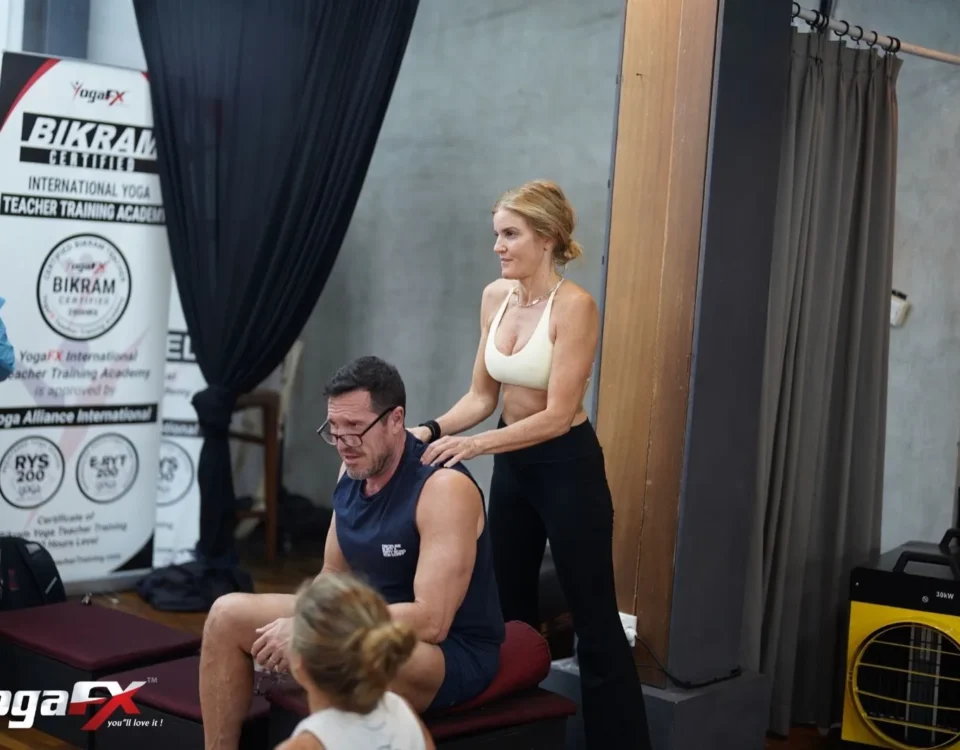
Teachers often ask who stands at the front of a yoga continuing education week, and that is a fair question. The lead trainer is Mr. Ian Terry, an E-RYT 500 with over 12,000 teaching hours behind him.
From 2014 to 2019 he spent five years training alongside the founder of the Bikram Hot 26&2 method. He also serves as a Master Trainer for the Republic of Indonesia Yogasana Sports Federation. YogaFX began in 2017 and has since graduated 1,500+ teachers from 80+ countries.
How the MasterClass week runs
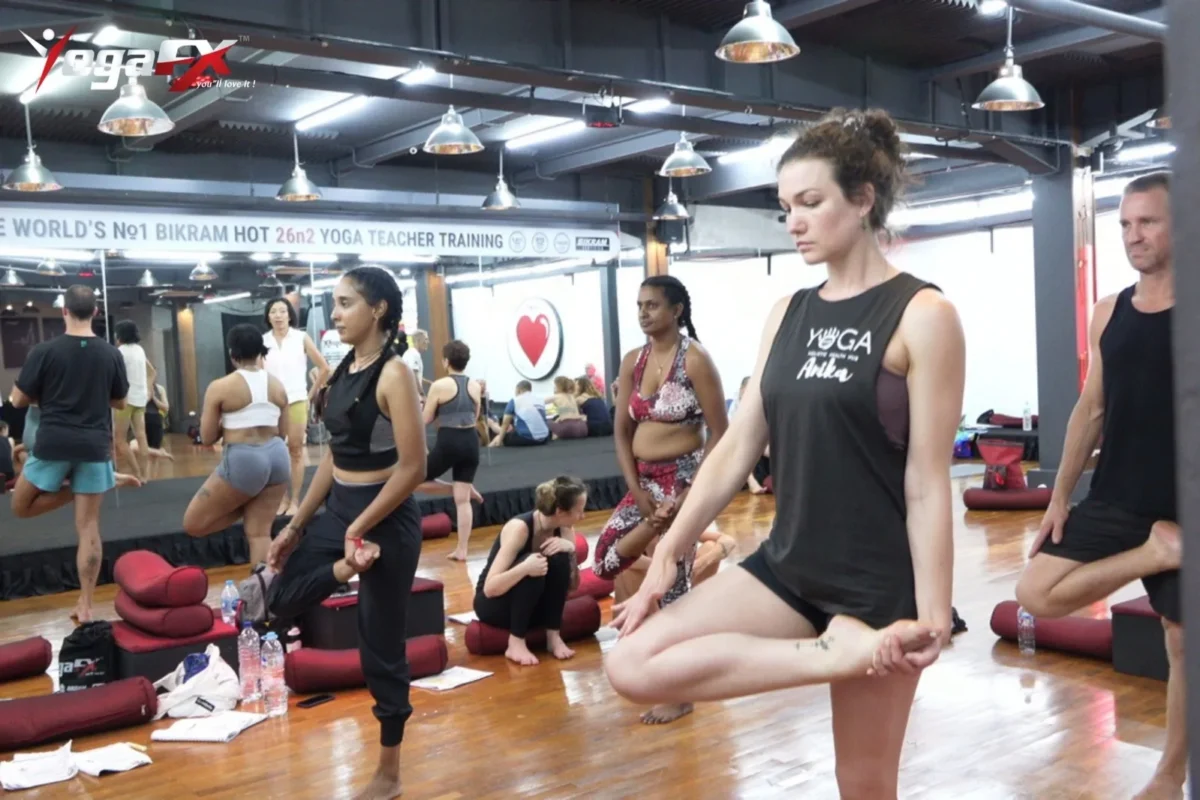
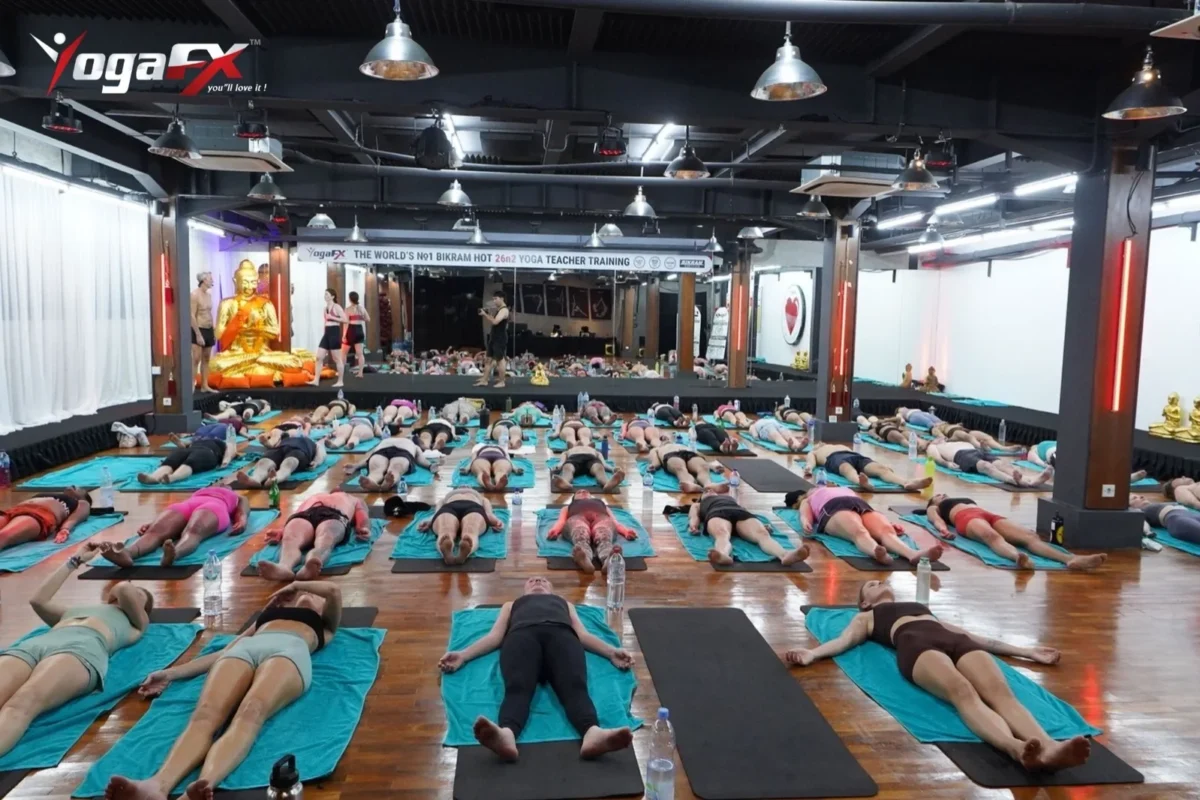
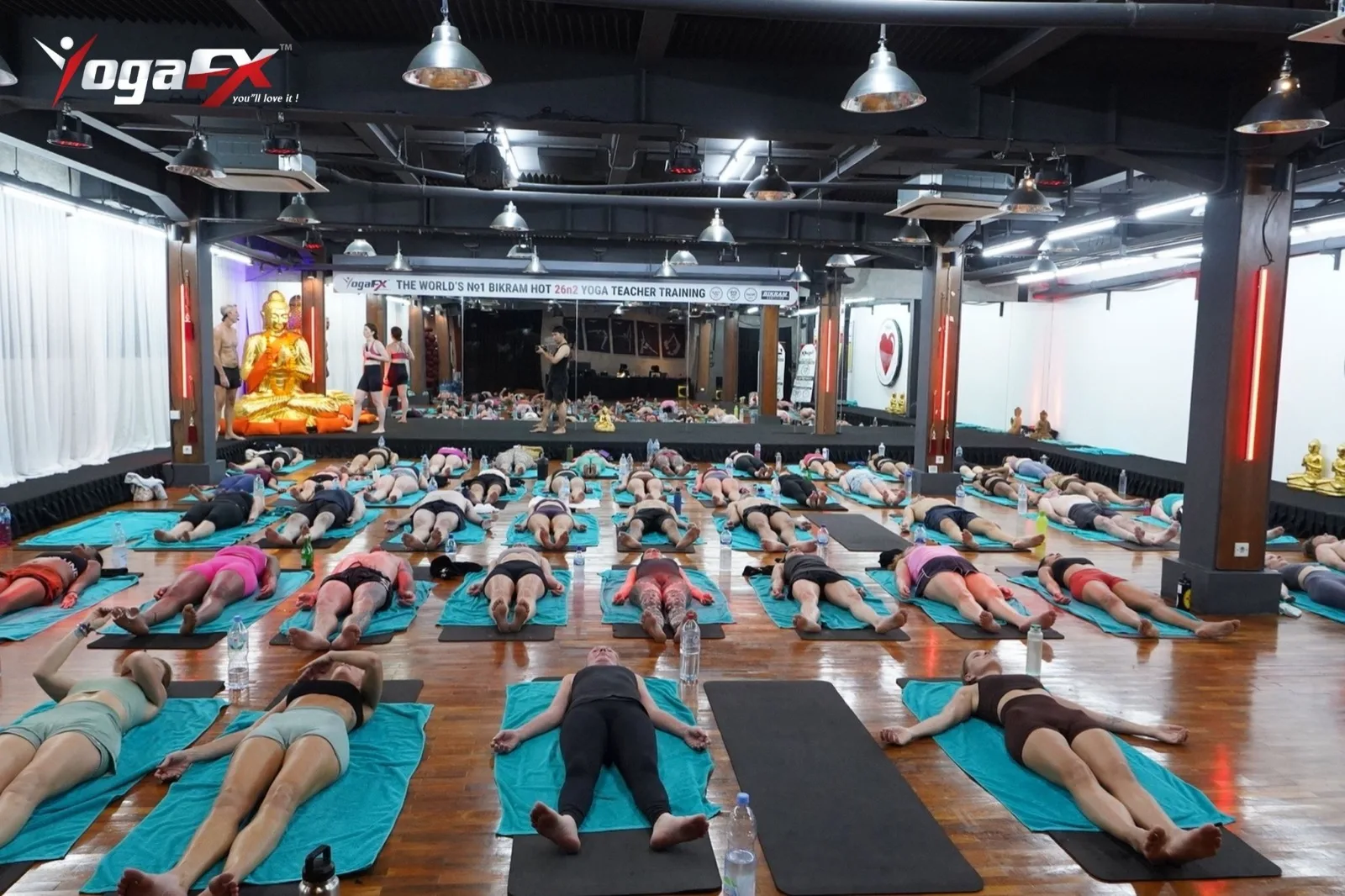
The YogaFX MasterClass is a 6-day hybrid programme. You study online first, then fly out for the Bali intensive. Arrival is on a Sunday and departure on a Friday, so a UK teacher needs just five days of leave.
The next batch runs from Sunday 24 January 2027 to Friday 29 January 2027 at the Soham Wellness Center in Seminyak.
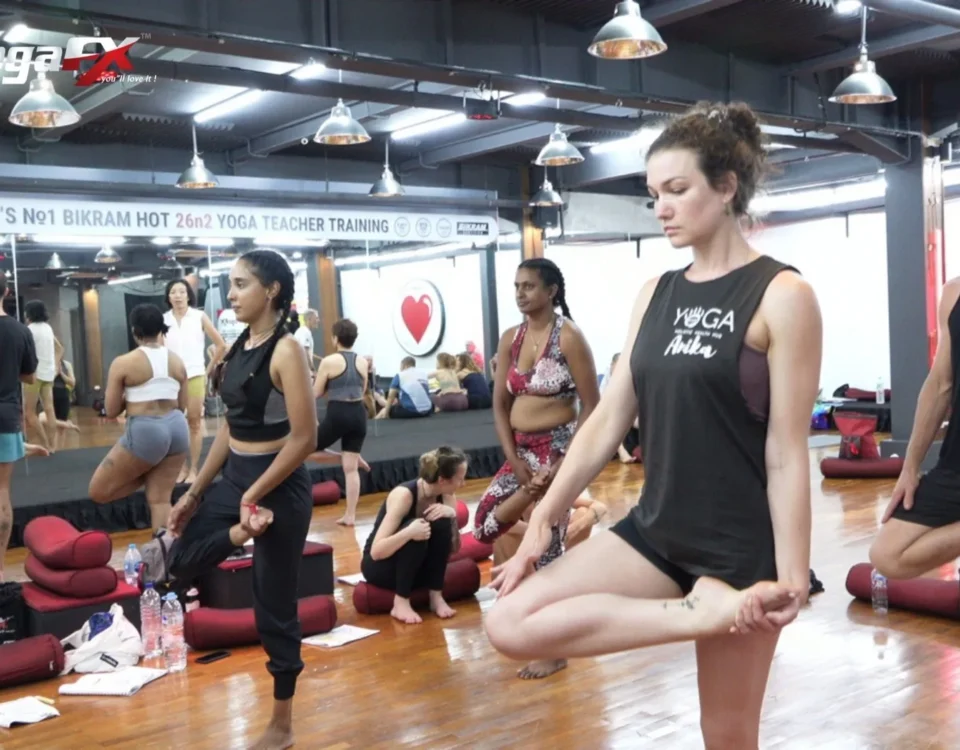
Each class runs 90 minutes at 40 degrees Celsius and 40% humidity, using natural tropical heat. A scripted dialogue guides the room, with no demonstration and no music. For a teacher, that is a rare chance to feel the dialogue as a student, then study how it is built.
What to check before you book
| Detail | MasterClass information | What UK teachers should check |
|---|---|---|
| Format | 6 days, online pre-course plus Bali intensive | Annual leave: Sunday check-in to Friday check-out |
| Next batch | 24 to 29 January 2027, Soham Wellness Center, Seminyak | Flights and travel insurance for your dates |
| Price | Early Bird US$1,899; normal price US$1,999 | Convert to pounds on the day you pay |
| Instalments | From US$250 per month, interest-free | Ask which room option the fee covers |
| Certification | Yoga Alliance RYT 200-Hour plus the Bikram Hot 26&2 200-Hour International Yoga Certification | Ask how the YACEP option applies to your registration |
Teachers who already hold a certificate can ask about the YACEP option. Whether it helps depends on where you stand with your registry, so send the team your level and teaching history first. Mr. Ian’s own page on the MasterClass and graduate support explains the rest.
If you are weighing a UK course against Bali, our comparison of yoga teacher training in Bali versus the UK sets out the costs and time off side by side. Teachers asking about the next step after a 200-hour course may also like our guide to 200-hour versus 500-hour training.
What trainees say about the room
We have no reviews written about yoga continuing education specifically, because most reviews come from first-time trainees. So read these as a window into the teaching style, not proof of a CPD result. They are condensed from the video transcripts.

I just want to say thank you for this opportunity. It was more than just a certification, this was a true quest to find a little bit about myself, and I loved every bit.
Angela, YouTube review, 2024
Thank you to you, Mr. Ian, for everything you did for me.
Barbara, YouTube review, 2024
I’m so happy to be in the Yoga Teacher Training 200 hours with Mr. Ian and all the friends in this class. The energy is so amazing. (translated)
Yanti, YouTube review, 2019
Reviews are not a promise about your result, and yours may differ.
A three-year plan for yoga continuing education
A plan turns 75 hours of yoga continuing education from a worry into a calendar. This is an example, not a rule, so adjust it to your own registration date.
- Year one: log every class you teach, and book one short anatomy or cueing course. That covers most of the 45 teaching hours and the first ten training hours.
- Year two: take a second course in an area you teach badly. Add a first aid refresher, because your insurer cares about it.
- Year three: book one yoga continuing education immersion week, or a longer course, to finish the last ten training hours. Then compile your proof folder before the deadline, not after.
- Every year: renew your insurance, read the policy documents again, and note any change to your membership body’s CPD wording.
Spreading yoga continuing education over three years has a second benefit. Studios notice teachers who can explain what they learned and what they changed in their classes. That is a fair signal of quality, although it is never a guarantee of work.
Disclaimer: the above is general information and shouldn’t replace medical, legal or insurance advice. Rules change often, so confirm hours, cover and fees with the organisation concerned. Please speak to a healthcare professional before you start any heated exercise.
FAQ
How many continuing education hours does a registered yoga teacher need?
Yoga Alliance asks registered teachers for 75 hours of continuing education within three years of initial registration. That splits into 45 hours of teaching yoga and 30 hours of yoga training in its educational categories. All 30 training hours can be done by distance learning. Check your member account for the current rule.
Do UK yoga teachers have to do CPD?
The UK pages we checked give guidance on yoga continuing education rather than one fixed number. The British Wheel of Yoga recommends a minimum of 15 CPD points a year, and its Associate Teacher route expects 45 hours of relevant CPD over three years. Always confirm the current wording with your own membership body.
Do I need insurance to teach yoga in the UK?
The British Wheel of Yoga says insurance is not always a legal requirement. However, studios, councils and landlords increasingly ask for proof of public liability and professional indemnity cover. Without cover, you may be personally liable for compensation and legal costs, so check your policy before you teach any class.
Can I do yoga continuing education online?
Partly. Yoga Alliance says all 30 hours of the training element can be completed by distance learning. The other 45 hours must come from teaching yoga, so classes you lead are what count there. Confirm the details with your registry before you pay for any online course.
Can I join a YogaFX MasterClass if I am already certified?
Yes. Certified teachers can ask about the YACEP option attached to the MasterClass. How it works for you depends on your registry status and goals, so message the team on WhatsApp with your level and teaching history. They will confirm the current terms, dates and inclusions.
What heat illness signs should a hot yoga teacher know?
The NHS lists tiredness, dizziness, headache, nausea, heavy sweating with pale clammy skin, cramps and a high temperature as heat exhaustion signs. Heatstroke is a medical emergency: hot skin without sweating, confusion or a seizure means call 999. Learn the steps through accredited first aid training.
Still have questions? Message Mr. Ian and the YogaFX team on WhatsApp and we will answer them personally.