Search “hot yoga teacher training UK” and the price range you find is wide enough to be almost useless on its own: anywhere from around £1,200 for a weekend-format course to over £4,000 for a full residential programme. Our guide to the hot yoga path most UK comparisons skip covers why this category is so hard to find in the first place. For region-specific breakdowns, see our comparisons for London and Manchester and the North West.

The number alone does not tell you what you are actually getting. Duration, format, accreditation, and whether the training includes a genuinely heated practice room vary just as much as the price tag, and those differences matter more to your outcome than the headline cost. If you’re weighing this specifically against training abroad, our traditional vs hybrid Bikram teacher training cost breakdown compares UK pricing directly against a Bali-based hybrid intensive.
In This GuideCosts, formats, hidden fees and how to choose
What UK Hot Yoga Teacher Training Actually Costs
UK-based 200-hour programmes typically fall into three price bands. Weekend or modular courses, spread across several months of weekend sessions, tend to run £1,200 to £2,000, since costs are kept down by not requiring accommodation.
Full-time intensive courses run over two to four consecutive weeks in a single UK location typically cost £2,000 to £3,000. Residential courses that include accommodation, often at a retreat centre, push toward £3,000 to £4,500 once room and board are factored in.
A detail that changes the maths for UK-based candidates is heat. Genuine hot yoga teacher training, meaning training that actually takes place in a heated room rather than covering heat theoretically, is uncommon in the UK.
Purpose-built heated studios cost significantly more to run than a standard yoga studio or village hall, which is why most UK-based 200-hour courses default to unheated Hatha or Vinyasa training even when marketed toward hot yoga interest, with heat covered as a module rather than the practice environment for the full course.
UK Training vs Bali Intensive: Cost Comparison
| Factor | UK Weekend/Modular | UK Residential Intensive | Bali Intensive (YogaFX) |
|---|---|---|---|
| Typical cost | £1,200-£2,000 | £3,000-£4,500 | USD 1,999-2,199 (Early Bird 1,899, limited seats). Separate online-only RYT 200 course: USD 399, Early Bird 329 |
| Duration | 3-6 months, weekends | 3-4 weeks residential | 6-day Bali intensive + online pre-course |
| Genuinely heated practice | Rarely | Sometimes | Always, natural tropical heat, no electric heaters |
| Time off work required | None, weekends only | 3-4 weeks | 1 week |
| Accreditation | Usually Yoga Alliance RYT 200 | Usually Yoga Alliance RYT 200 | Yoga Alliance RYT 200 + Bikram Hot 26&2 dual certification |
The duration-vs-time-off tradeoff is often the deciding factor for working candidates. A UK residential course requiring three to four consecutive weeks away from work is a harder ask for most employed people than a single week, even accounting for travel.
This is one reason the hybrid intensive model, online theory beforehand, one focused week of in-person practice teaching, has become a common comparison point against traditional UK-based formats, and it is covered in more depth in the direct Bali vs UK comparison if the format decision, rather than cost alone, is the main question. For a closer look specifically at how traditional in-person Bikram programmes compare to hybrid formats, see our Bikram teacher training cost breakdown, and if you’re weighing Bali against another popular training destination in the region, our Bali vs Thailand comparison covers heat authenticity and cost side by side.
What the Sticker Price Does and Does Not Include
A quoted course fee rarely reflects the total cost of getting certified, and this is where UK candidates most often get caught off guard mid-comparison. For UK-based weekend and residential courses, check specifically whether the fee includes course manuals and study materials, the Yoga Alliance registration fee itself (often a separate charge paid directly to Yoga Alliance, typically £70 to £100), and any required props or equipment.
For intensive formats abroad, the additional costs to budget for are flights, a tourist visa if applicable, and any meals not included in the programme fee.
Deposit structure is also worth comparing directly rather than assuming it works the same way everywhere. Some UK programmes require the full fee upfront, while others, along with most intensive-format programmes abroad, split payment into a deposit to secure a place followed by a balance due closer to the start date, which is easier to manage against a UK salary than a single large payment months in advance. If you have already paid a deposit through Tripaneer, the Tripaneer bankruptcy update for deposit payers sets out the latest position.
A very low deposit securing a place with the balance due nearer the intensive date is a common structure worth asking about directly if cash flow timing matters for the decision.
Why the Heat Question Matters More Than Marketing Suggests
A programme’s benefits genuinely differ when the training happens in a heated room versus a standard-temperature one, because teaching in heat is its own skill, not an add-on to standard sequencing knowledge. A 2025 systematic review covering 43 studies and 942 participants found consistent evidence for cardiovascular and flexibility benefits specific to heated practice, and a University of Wisconsin study measured calorie burn at roughly 333 kcal for women and 460 kcal for men per 90-minute heated session, at around 80 percent of maximum heart rate, figures that do not transfer to an unheated class covering the same postures.
A UK-based candidate training in an unheated room and only reading about heat theoretically will graduate without ever having taught, or been taught, how a room actually behaves at 40 degrees Celsius: how quickly students dehydrate, how cueing pace needs to slow, and how injury risk changes when muscles are more pliable but also more prone to overstretching.
This is a genuine gap for anyone planning to teach hot yoga specifically after certifying. A general RYT 200 qualifies a graduate to teach yoga broadly, but studios hiring specifically for hot yoga classes often want to see the credential earned in an actual heated environment, not a room-temperature course with a heat module bolted on. Our step-by-step guide to becoming a certified hot yoga instructor breaks down exactly which dialogue and heat-specific skills a genuine hot yoga course actually needs to teach.
What UK Studios Actually Check When Hiring
Most UK studios hiring for their general yoga timetable will accept any Yoga Alliance RYT 200, regardless of where or how it was earned. The distinction only sharpens when a studio is specifically hiring for a heated or hot yoga class slot. In that case, hiring managers commonly ask two follow-up questions that a standard-temperature-trained graduate cannot answer confidently: has the candidate actually taught in a heated room during training, and do they hold any heat-specific credential beyond the general RYT 200.
Neither question is asked maliciously. Insurance and liability considerations for heated classes are stricter than for room-temperature ones, since dehydration and overstretching risk is genuinely higher, so studios have a practical reason to want evidence of heat-specific training, not just a general certificate.
This creates a real strategic choice for a UK-based candidate who already knows they want to teach hot yoga specifically rather than general yoga. Training in an unheated UK course and hoping the hiring manager does not ask about heat experience is a weaker position than training somewhere the heat was real and being able to describe exactly how a room behaves at 40 degrees Celsius, forty minutes into class, with twenty sweating students in it.
How to Actually Choose Between Options
Four questions cut through most of the noise in this decision.
- Is the practice room actually heated during training? Ask directly and get a specific temperature, not “we cover heated practice.” If the answer is vague, the training is theoretical on this point.
- How much time off work does the format actually require? Weekend-modular protects your income but stretches the process over months. A single intensive week costs more upfront in travel but gets you certified and back to normal life faster.
- Is Yoga Alliance accreditation explicit and verifiable? Every legitimate option should state its RYT 200 status clearly, ideally with a registration number you can check against Yoga Alliance’s own directory.
- What is the actual total cost including travel, accommodation, and lost income? A cheaper headline price with three weeks of unpaid leave can cost more in real terms than a higher sticker price with a single week away.
For UK-based candidates specifically weighing genuine heat authenticity against convenience, the honest tradeoff is this: nothing in the UK currently replicates training in natural tropical heat, since that requires a climate the UK does not have.
A hybrid format that keeps the online theory portion doable from home in the UK, then flies candidates to a genuinely heated environment for the practical week, is currently the only way to get both the convenience of home-based prep and an authentically heated practical training without a month away.
A useful way to test which category fits is to picture the two most likely outcomes six months after certifying. If the goal is teaching general yoga classes at a local gym or studio, format matters less and the weekend-modular UK route, which fits around an existing job with no travel, is a perfectly reasonable choice.
If the goal is specifically teaching hot yoga, applying to hot yoga studios, or eventually opening a hot yoga class of your own, the heat-authenticity gap becomes the deciding factor, because that is the exact question a hiring manager or a room full of first-time hot yoga students will test on day one.
The YogaFX Route for UK Candidates
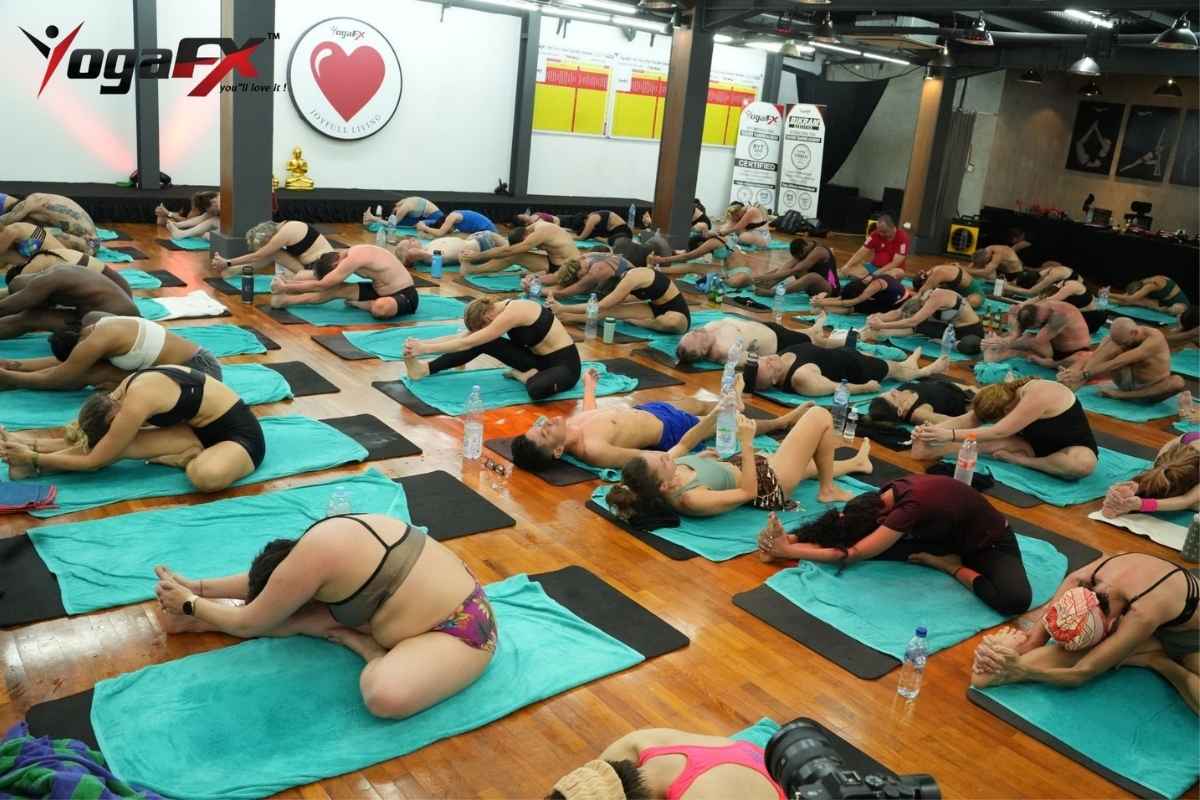
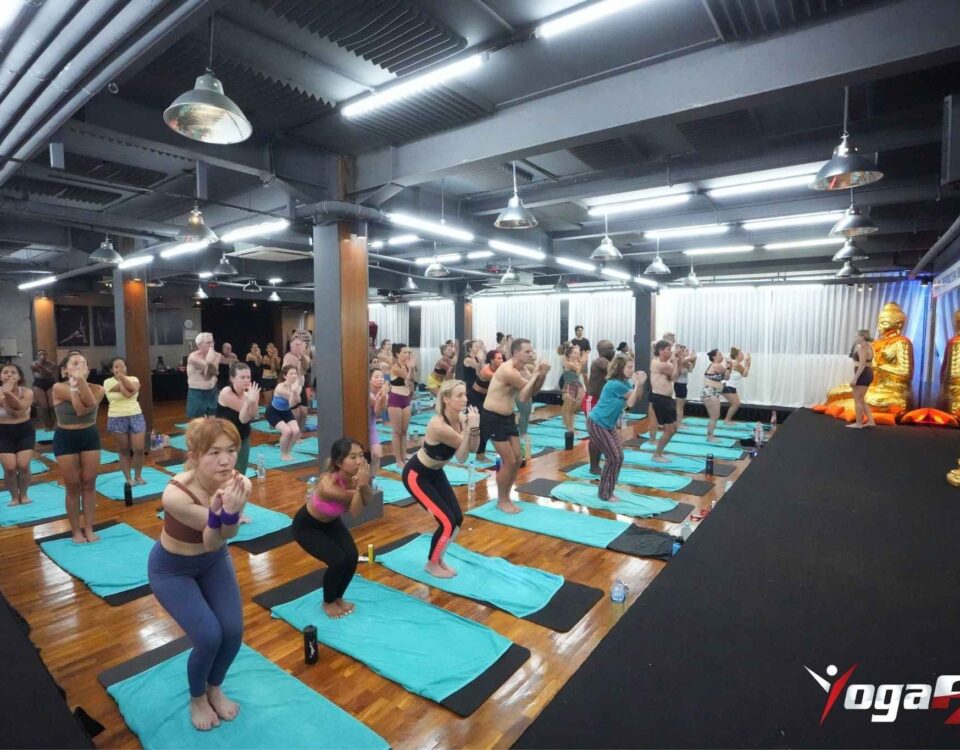
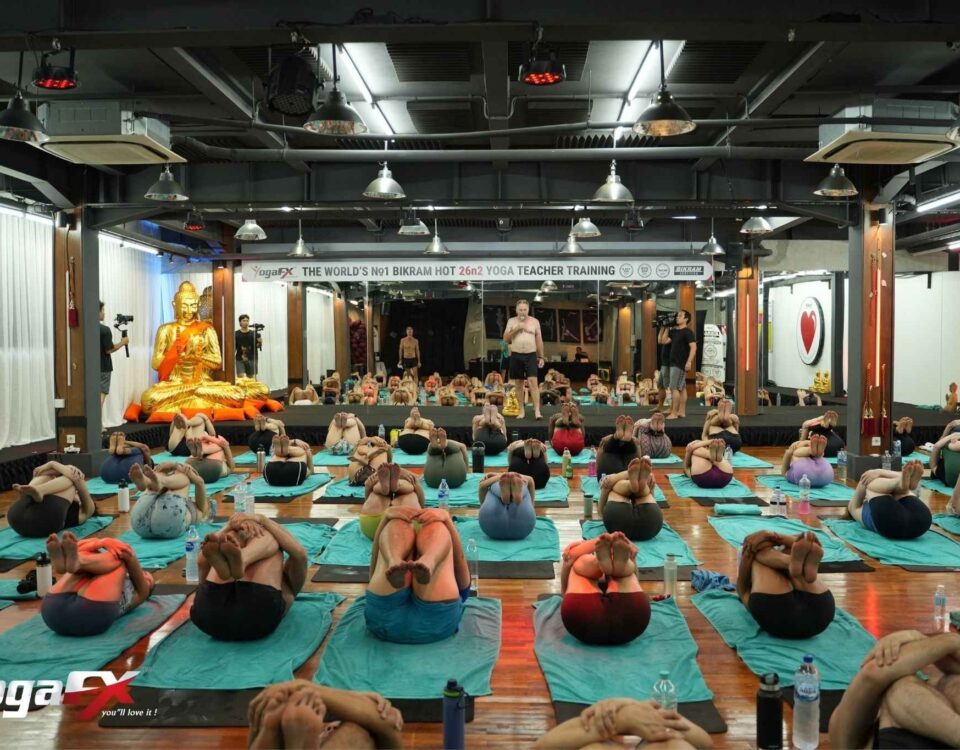
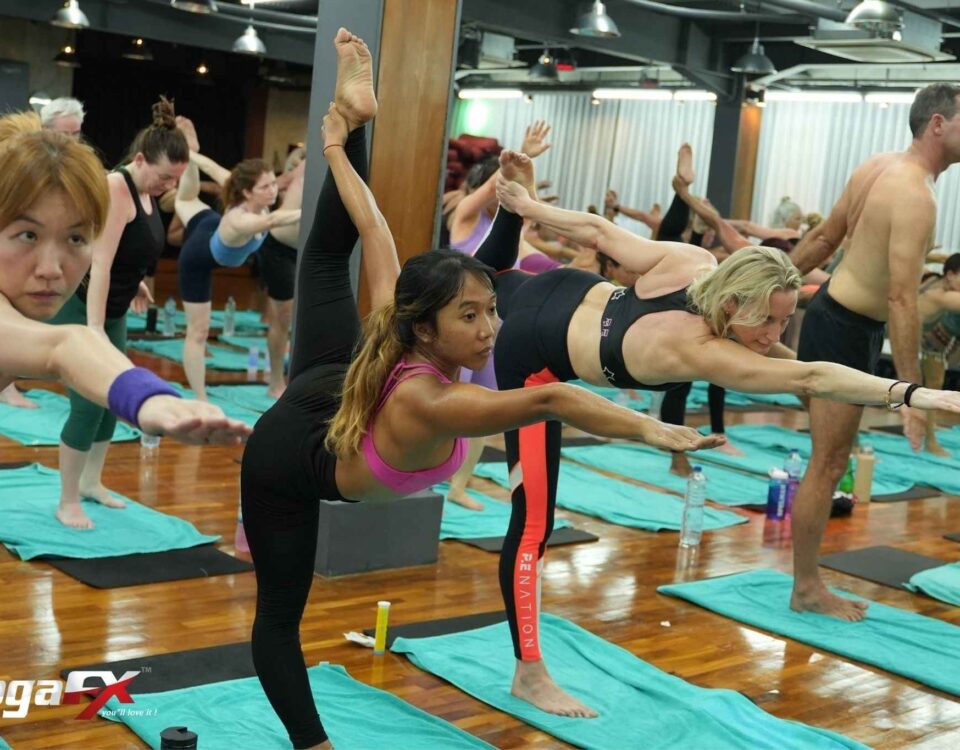
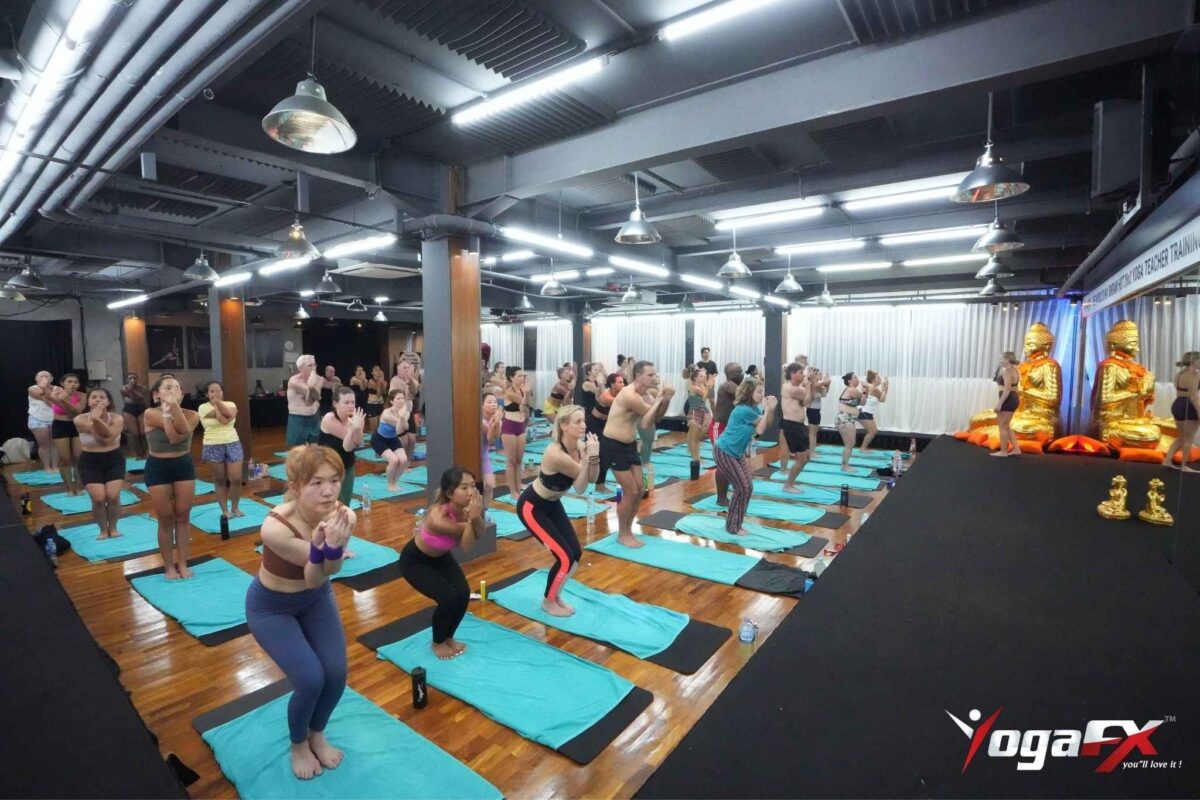
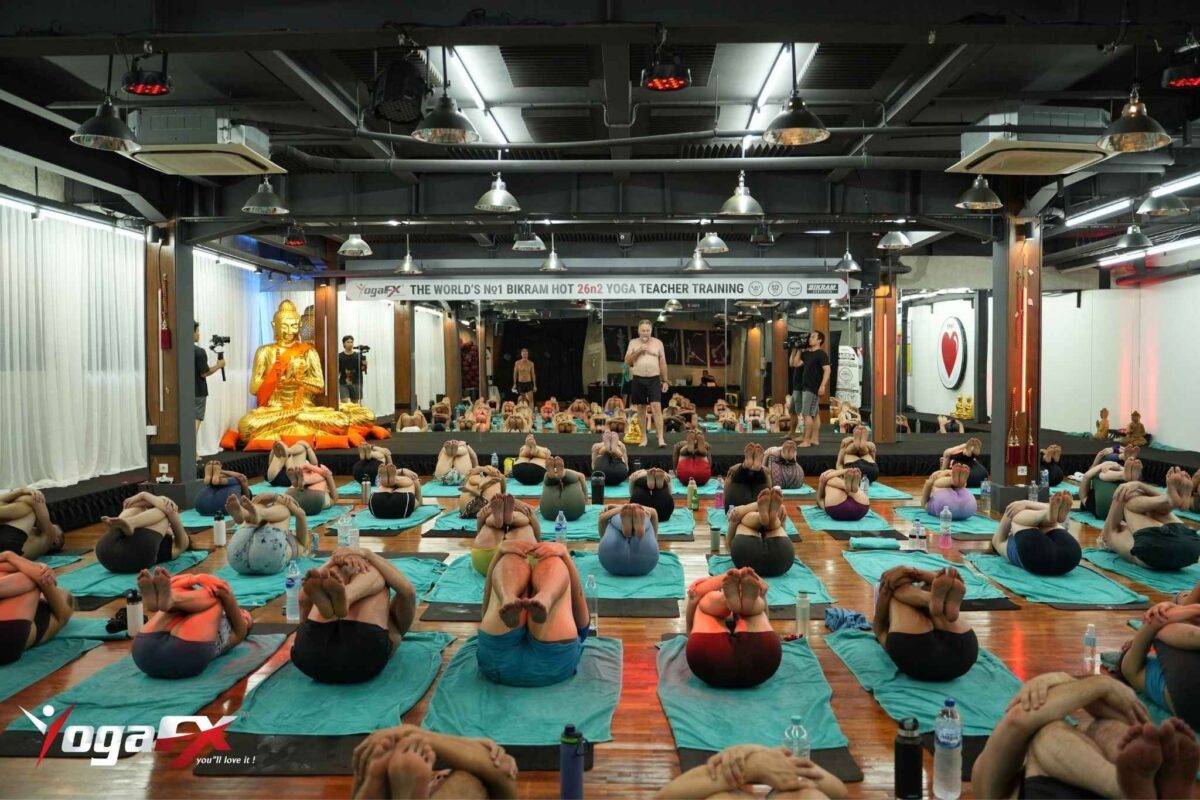
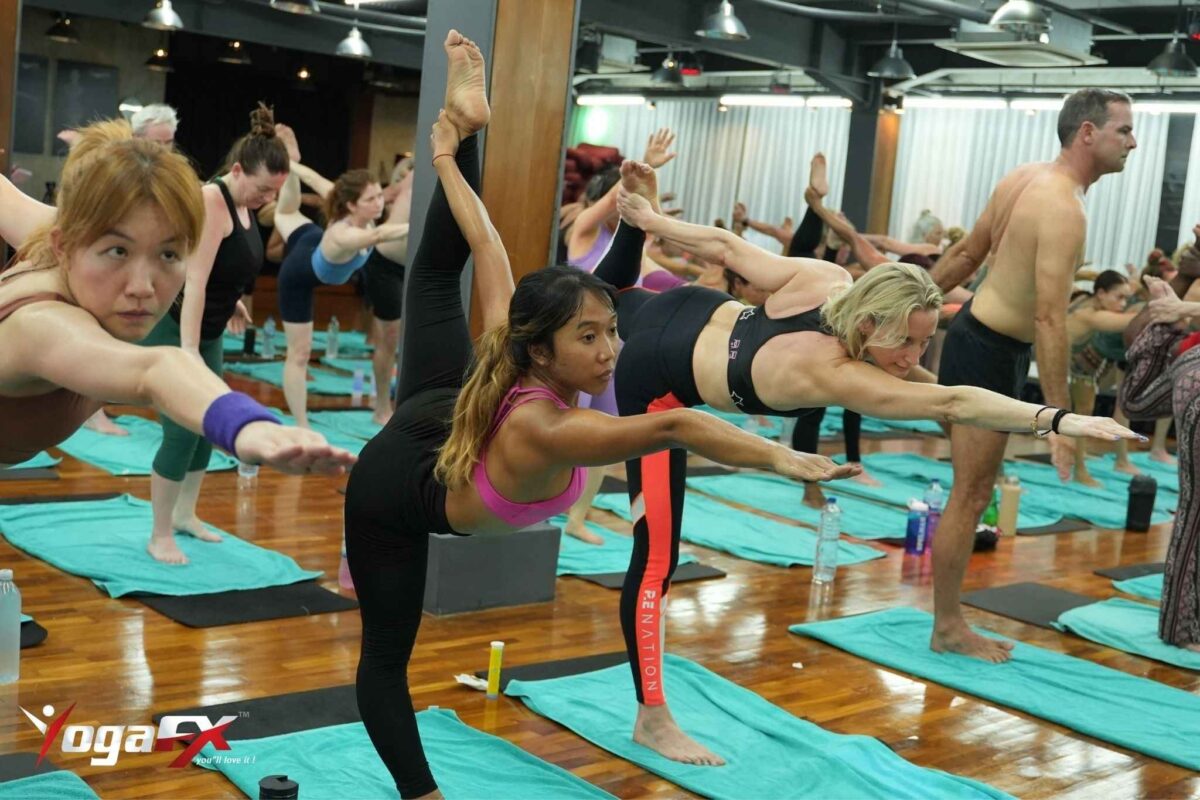
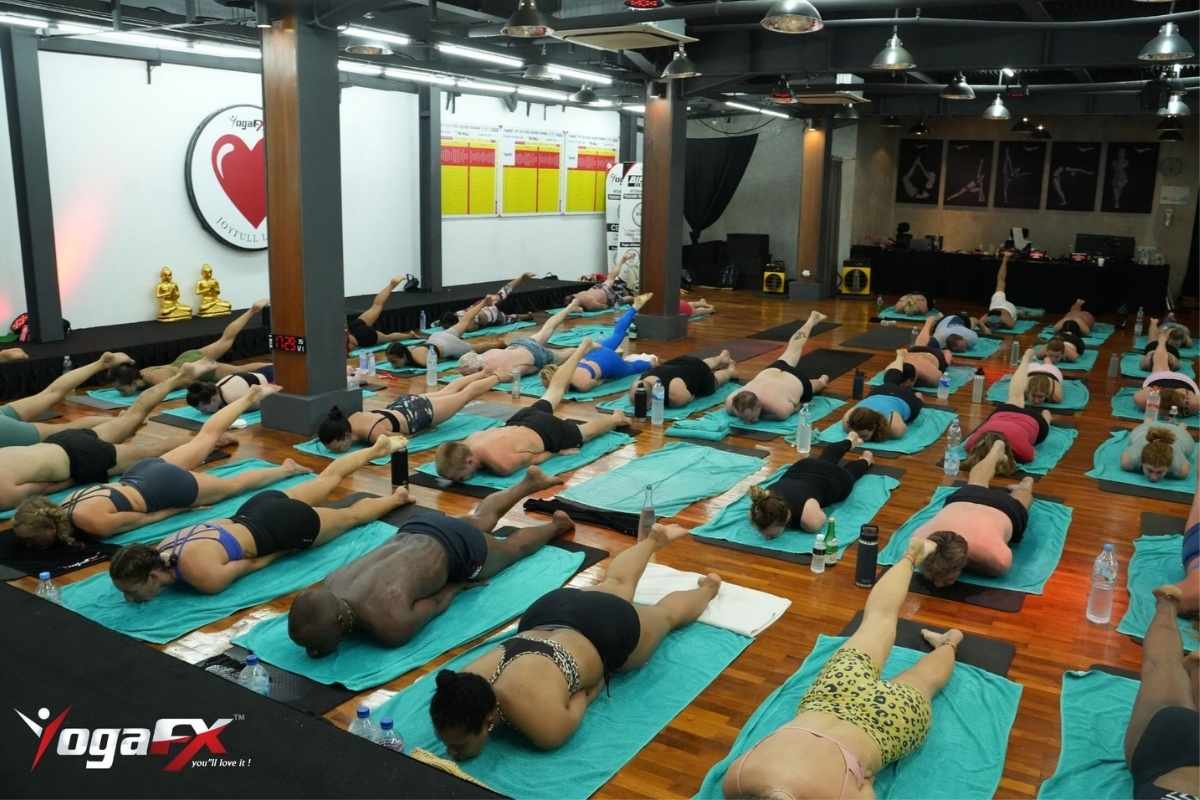
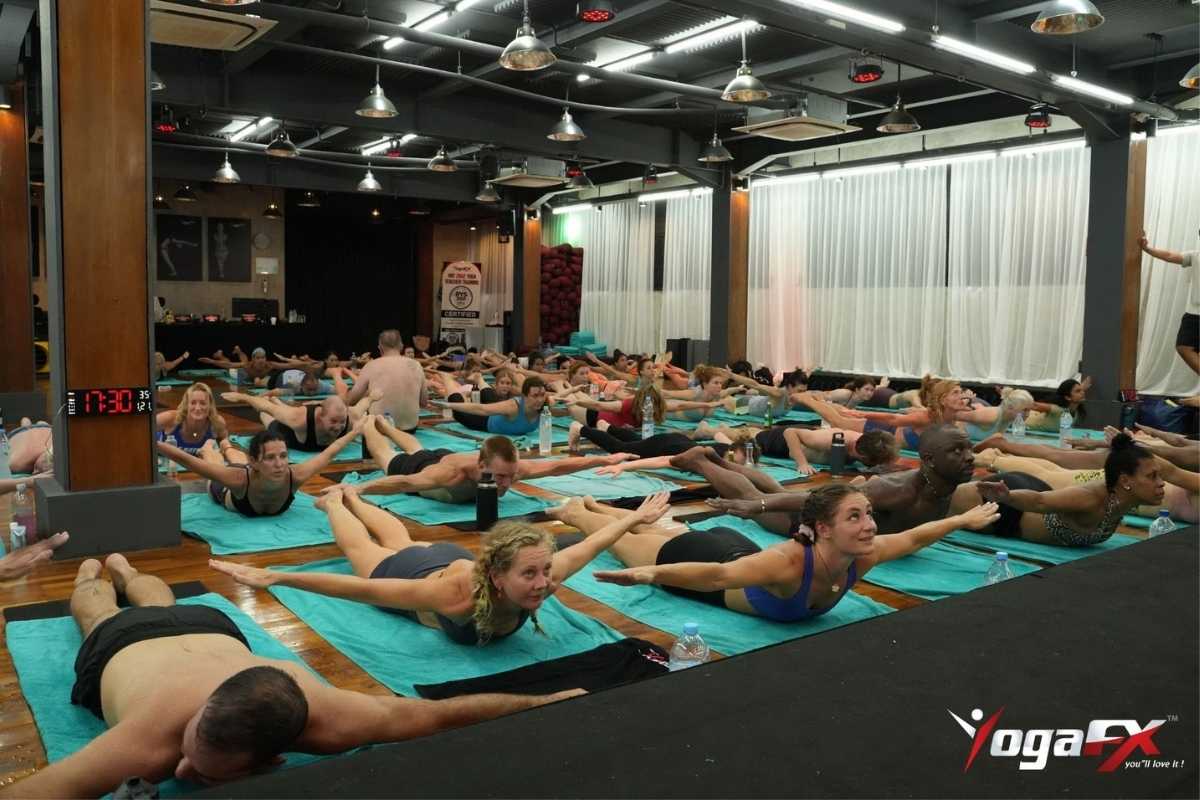
YogaFX is a prominent Hot 26&2 yoga teacher training academy headquartered in Bali, operating in Seminyak and Canggu. Its 200-hour programme runs the online theory portion remotely, which UK candidates complete on their own schedule, followed by a 6-day intensive at the Seminyak studio in Bali, where training happens in natural tropical heat rather than an electric-heated room, at roughly 40 degrees Celsius and 40 percent humidity.
Total cost starts around USD 1,999 (Early Bird 1,899, limited seats), which at current exchange rates is comparable to or lower than many UK residential programmes, once flights are accounted for against the three to four weeks of accommodation a UK residential course requires instead. See our complete UK guide to Bikram yoga teacher training for the full programme breakdown.
Mr. Ian Terry, YogaFX’s founder, holds E-RYT 500 status with over 12,000 teaching hours and trained for five years, from 2014 to 2019, directly with Bikram Choudhury, the founder of the Bikram Hot 26&2 method, and was appointed Master Trainer of the Republic of Indonesia Yogasana Sports Federation in June 2026.
Every candidate gets direct correction on dialogue delivery and posture cueing, and graduates receive dual certification: Yoga Alliance RYT 200 plus the original Bikram Hot 26&2 credential, the specific pairing studios look for when hiring instructors for heated classes.
The programme has produced over 1,500 graduates from more than 80 countries since 2017, and further context on what the research actually shows about heated practice is covered in the benefits of hot yoga guide for anyone still deciding whether heated training is the right fit before comparing programmes further.
FAQ
How much does hot yoga teacher training cost in the UK?
UK-based 200-hour programmes typically range from £1,200 for weekend-modular formats to over £4,000 for full residential courses with accommodation included. Most UK courses cover heat theoretically rather than training in a genuinely heated room throughout, which is worth confirming directly before enrolling.
Can I get genuinely heated hot yoga teacher training in the UK?
It is uncommon. Purpose-built heated studios are expensive to run, so most UK 200-hour courses default to standard-temperature training with a heat module, rather than delivering the full practical component in a heated room. Candidates specifically wanting authentic heated training often look at intensive formats abroad instead.
How long does UK yoga teacher training take compared to an intensive abroad?
UK weekend-modular programmes run three to six months. UK residential intensives run three to four consecutive weeks. Hybrid formats, with online theory completed at home followed by a short in-person intensive abroad, typically require about one week of actual time away from work.
Is a UK-earned RYT 200 the same as one earned abroad?
Yes, the Yoga Alliance RYT 200 credential itself is standardised regardless of country. What differs is the training environment and any additional credential earned alongside it, such as a heat-specific certification, which some studios ask for specifically when hiring for hot yoga classes.