Does hot yoga increase cortisol? The honest answer depends on who you are. A 2016 trial of heated hatha yoga found that women who already had strong cortisol reactions to stress saw those reactions fall after the course. Women with weaker reactions showed no significant change. The study was small, so it’s a starting point rather than the final word.

Cortisol is the hormone your body releases when it reads pressure. That pressure might be a deadline, a crowded train or a hard class. A short surge is normal and useful. The concern for busy UK professionals is what happens when the system stays switched on for weeks.
That’s why so many people ask whether a heated class after work helps or harms. Mr. Ian Terry, E-RYT 500 with more than 12,000 hours of teaching, works from the published research when students ask this. It’s worth reading that research with the same care. This article looks at the study behind the question, what it does and doesn’t show, and how a UK professional can decide whether hot yoga fits their week.
Does hot yoga increase cortisol? What the 2016 trial measured
The study most often cited on this question is a randomised controlled trial by Hopkins and colleagues, published in the Journal of Consulting and Clinical Psychology in 2016. The team recruited 52 women aged 25 to 46 who were at risk for obesity-related illnesses. They then randomly assigned them to a heated hatha yoga course or a waitlist.
The design had three core parts:
- Random assignment. Each woman joined either the yoga course or the waitlist, which kept the two groups comparable at the start.
- A laboratory stress task. Every participant completed the same stress task in the lab, before and after the intervention.
- Cortisol reactivity. The researchers measured how strongly cortisol rose in response to the task, not just how stressed people said they felt.
Reactivity is the key idea. It describes how hard the body reacts when a stressor arrives. The baseline lab visits took place in the late afternoon, between 4:00 and 5:30 pm. That detail is useful for people who think about evening schedules. The study did not compare morning and evening classes, though, so it can’t tell you which time slot works best.
Both groups’ numbers fell on average. That means the simple before-and-after figures don’t prove the yoga did the work on its own. The table below shows the group means as the paper reports them.
| Group | Women measured at start | Women measured at end | Cortisol reactivity, before | Cortisol reactivity, after |
|---|---|---|---|---|
| Heated hatha yoga | 27 | 18 | 3.52 | 0.67 |
| Waitlist | 24 | 20 | 2.35 | 1.31 |
The high-reactor result is the real finding
The paper’s most important result comes from a subgroup. Women with high cortisol reactivity at the start, which the authors call high reactors, showed greater reductions in cortisol reactivity in the yoga group than in the waitlist group. The reported result was p = .042, with an effect size of d = .85.
Women with low reactivity showed no significant difference between the two conditions. That’s an important detail. Hot yoga didn’t change the picture for everyone in the trial.
Attendance is the other practical detail. Participants averaged about 1.56 classes a week. Among the yoga group, 37% reached two classes a week, and 60% completed the intervention. Those figures are a useful reality check. Not every keen beginner keeps up with two heated classes a week while working full time.
What the trial does not tell you
Good research is honest about its limits, and this trial has several. Read the findings with these in mind:
- It was women only. The results can’t be assumed to apply to men in the same way.
- The control group was a waitlist. Waitlist controls get no class at all, so the study can’t say whether heated yoga beats another active form of exercise.
- The sample was small. Fifty-two women is enough for a first look, but not for a firm conclusion about stress hormones.
- The headline effect was a subgroup. The high-reactor finding came from splitting the group by baseline cortisol, and the authors describe it as preliminary.
The study used the term heated hatha yoga, which is not the same label as the hot yoga sold in many UK studios. Heated classes differ in sequence, temperature and teaching style, so you can’t assume every heated class behaves the same way.
women in the 2016 heated hatha yoga trial, compared with a waitlist
average classes per week attended by the yoga group
of the yoga group reached two classes a week
short-term stress effect against passive controls in a 2024 systematic review
What the 2024 review adds on hot yoga stress hormones
A 2024 systematic review by Schleinzer, Moosburner, Anheyer, Burgahn and Cramer, published in Frontiers in Psychiatry, pooled yoga trials focused on stress. It covered 13 randomised controlled trials with 1,026 participants. Nine of those trials fed into the quantitative analysis.
Yoga showed a short-term reduction in stress compared with passive control groups. The standardised mean difference was -0.69 (95% CI -1.12 to -0.25). Over the longer term, against active control groups, the effect was small at 0.23 (95% CI 0.06 to 0.40). The authors rated the quality of evidence for stress as low, so the picture may still shift as larger trials appear.
For a UK reader, the takeaway is simple. Yoga has real support for stress. The evidence on hot yoga stress hormones, and on cortisol specifically, is thinner and more mixed.
What this means for a UK workday
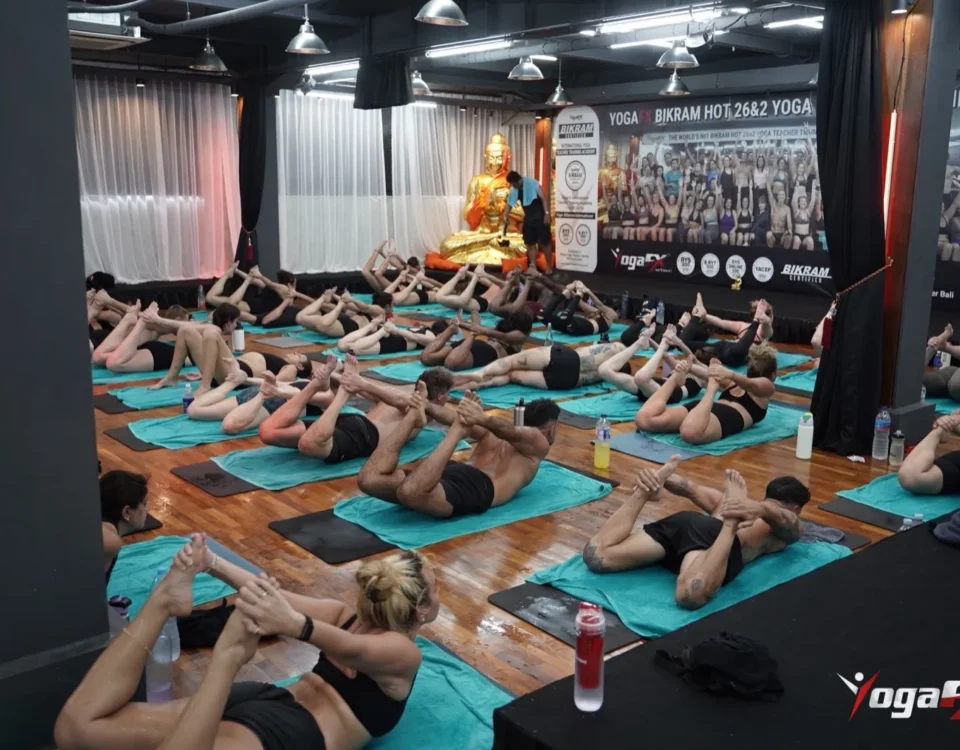
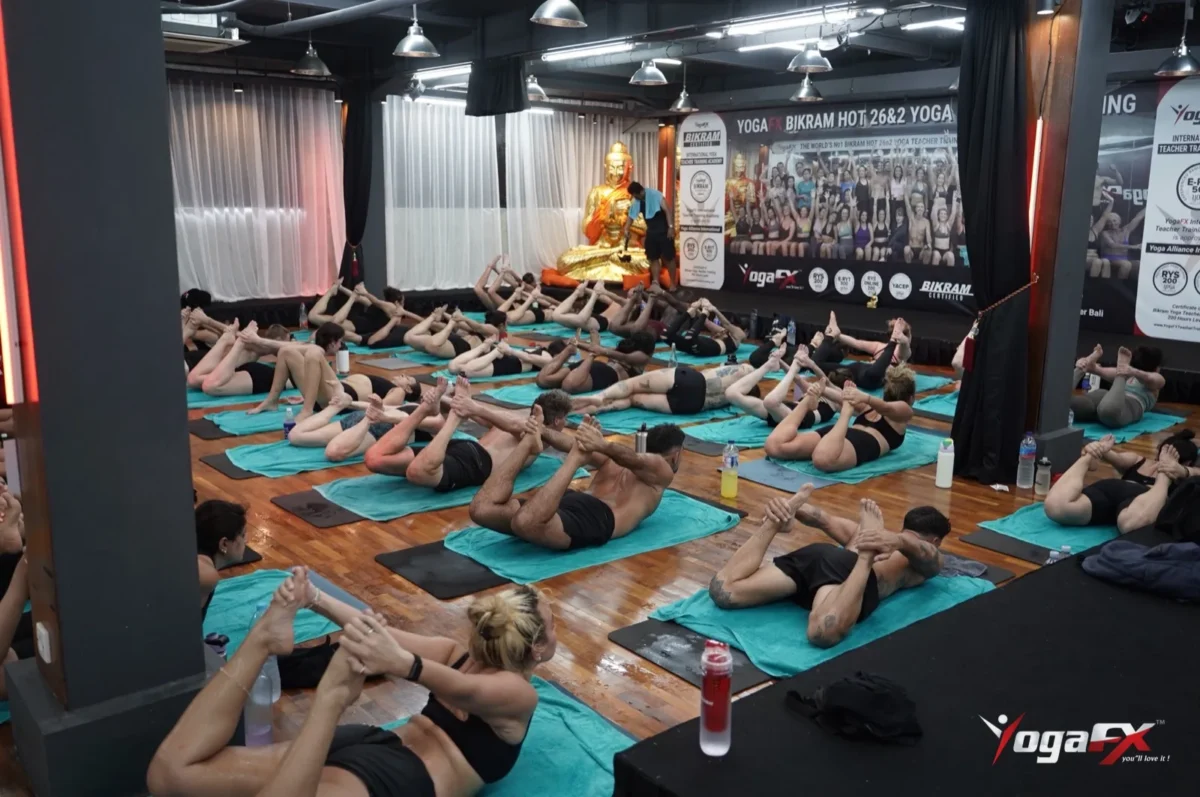
The research supports yoga as one way to reduce stress reactions for some people. It doesn’t show that hot yoga is the best choice for cortisol, or that the heat suits everyone. If you’re already short on sleep, commuting long hours and carrying a heavy inbox, a 90-minute heated class is a real physical load. It isn’t automatically a rest.
Timing is the practical question the trial couldn’t settle. The lab visits were in the late afternoon. The study didn’t compare evening classes with morning ones, so nobody can say which slot is best for your cortisol rhythm.
The most useful test is personal. Notice how you sleep, how your appetite changes and how you feel the next morning across the first few weeks. If you’re curious about the biology behind all this, a good rule is to watch your own body before reading too much into any single study.
If you want a simple way to start, these four steps cover most of the risk:
- Begin with one class a week. The trial’s average was closer to one or two sessions. One class is a sensible way to learn how your body responds to the heat.
- Drink water and eat light before you go. Arrive hydrated and skip a heavy meal in the hour before class.
- Leave early if you feel unwell. Dizziness, nausea, chest discomfort or unusual exhaustion are signs to stop, rest and tell your teacher.
- Check with your doctor first. Heart conditions, blood pressure problems, diabetes, pregnancy and any medication that affects heat tolerance all need medical advice before you start.

Consult a healthcare professional before starting any new exercise programme, especially if you have a medical condition or take regular medication.
Hot yoga compared with other stress tools
Hot yoga is one tool among several. Slower styles and breathing practices often suit people whose stress shows up as constant tension in the shoulders and jaw. Our guide to yoga for nervous system regulation covers those options in more depth. It’s a good next read if a heated class feels like too much for now.
For a broader view of what the research says and where the risks sit, read our overview of whether hot yoga is good for you, including the real dangers. It covers the same heat questions from a wider angle, without focusing on cortisol alone.
If you want a closer breakdown of the cortisol study itself, our sister online teacher training site has a full study breakdown of the same paper, with more background on how the trial was built.
When the stress covers your whole week rather than one class, a structured break may help more than a schedule of classes. Our article on a Bali yoga retreat for burnout explains what a structured reset involves, how the days are arranged and who it suits.
Training to teach with Mr. Ian Terry in Bali
Some UK readers aren’t just looking for a stress fix. They’re considering yoga as a second career. The Bikram Hot 26&2 Yoga Teacher Training MasterClass is a six-day hybrid programme. It starts with online pre-course study and continues with an intensive in Bali led by Mr. Ian Terry, E-RYT 500, who has taught more than 12,000 hours.
YogaFX has trained teachers since 2017, and its graduates come from more than 80 countries. The next batch checks in on Sunday 24 January 2027 and checks out on Friday 29 January 2027, at the Soham Wellness Center in Seminyak.
Certification is the Yoga Alliance RYT 200-Hour, alongside the Bikram Hot 26&2 200-Hour International Yoga Certification. The early bird price is US$1,899, against a normal price of US$1,999. Twin share is US$1,999 and a single room premium is US$2,199. Payment plans start at US$250 a month with no interest.

What students say about the training
Students describe their experience in their own words, and we quote reviews exactly as they were written. Idam left a Google review in 2024 about starting as a complete newcomer:
“At first, i thought the training would overwhelm me as i am a newbie in yoga journey. But, no!”
Idam, Google review, 2024
Villin, reviewing in 2022, put the experience more briefly.
“Truly life changing experience, blessed to have had this opportunity.”
Villin, Google review, 2022
FAQ: does hot yoga increase cortisol?
Can hot yoga increase cortisol?
The trial we checked did not find that heated yoga raised cortisol over a course. Instead, women with high cortisol reactivity showed smaller stress-related cortisol responses after the course. The study was small, included only women and used a waitlist control, so treat it as preliminary evidence rather than proof. Speak to a doctor if you have concerns.
Does hot yoga lower cortisol?
Possibly, for some people. The clearest result was in women who started with high cortisol reactivity, whose cortisol responses fell more than the waitlist group’s. Both groups improved on average, and a 2024 systematic review rated the evidence for stress as low quality. Treat hot yoga as one tool among several, not as a cortisol treatment.
Is hot yoga good for high cortisol?
It may help people who react to stress, based on one small trial. High cortisol can come from many causes, including poor sleep, illness and some medications, so speak to your doctor before assuming yoga is the fix. If you try it, start with a lighter schedule, notice how you sleep, and stop if you feel dizzy or unwell.
Is hot yoga suitable for beginners?
Beginners can start hot yoga, but the heat is a real load on the body. Begin with one class a week, drink water before and after, and tell the teacher you are new. If you have a heart, blood pressure or other medical condition, or you are pregnant, get medical advice first. Stop and rest whenever you feel unwell.
Still have questions? Message Mr. Ian and the team on WhatsApp at +62 811 388 8330 and we’ll answer them personally.