
The World Yogasana Championship 2026 was the first world title event for yoga as a judged sport. It ran from 4 to 8 June 2026 in Ahmedabad, India, with more than 500 athletes from 78 countries. Indonesia won seven medals, all through YogaFX graduates. For UK yogis, it raises a fair question: can you compete from here?

This guide is written for UK practitioners. It covers what happened in Ahmedabad, how the sport is judged, where competitive yoga stands in Britain, and how to start. It draws on the experience of Mr. Ian Terry, E-RYT 500, who coached Indonesia’s team as National Coach.
In This GuideResults, judging, competitive yoga in the UK and how to start
World Yogasana Championship 2026 in Brief
If you only need the headline facts about the World Yogasana Championship 2026, here they are. Each one comes from the organisers, India’s government, or national press reports.
| Detail | World Yogasana Championship 2026 |
|---|---|
| Edition | 1st (inaugural) |
| Dates | 4 to 8 June 2026 |
| Venue | EKA Arena, TransStadia, Ahmedabad, Gujarat, India |
| Governing body | World Yogasana, hosted by Yogasana Bharat |
| Field | 500+ athletes from 78 countries |
| Top nation | India: 114 medals, including 102 gold |
| Indonesia | 7 medals: 1 gold, 2 silver, 4 bronze |
The field grew fast, too. Early plans in May expected about 40 countries. By the opening day, The Bridge reported 78 nations and more than 500 athletes on the floor.
On the medal table, India won the World Yogasana Championship 2026 by a wide margin. The host nation finished with 114 medals, including 102 gold, according to ANI’s closing report in The Tribune. That isn’t a surprise, because India has run national events since it made Yogasana an official sport in 2020.
For a UK reader, the useful point is the spread. Teams came from Asia, Africa, Europe and the Americas. So this was no longer a regional Indian event. It was the first true world stage for competitive yoga.
How Yogasana Is Judged: What You’d Actually Do
Yogasana is yoga postures performed as a judged sport. Athletes perform set poses or routines, and a panel scores each one for form and control. That makes it closer to gymnastics or diving than to a studio class in Brighton or Leeds.
The World Yogasana Championship 2026 had seven official categories under one set of rules. In practice, they fall into four main types:
- Traditional Yogasana. One athlete performs set postures and holds each one. Judges reward stillness, form and control.
- Artistic Yogasana. A choreographed routine, solo or in pairs, linking hard postures with smooth transitions.
- Rhythmic Yogasana. Pairs perform a routine to music, scored partly on timing together.
- Athletic Yogasana. Routines built on strength-heavy postures, such as arm balances and inversions.
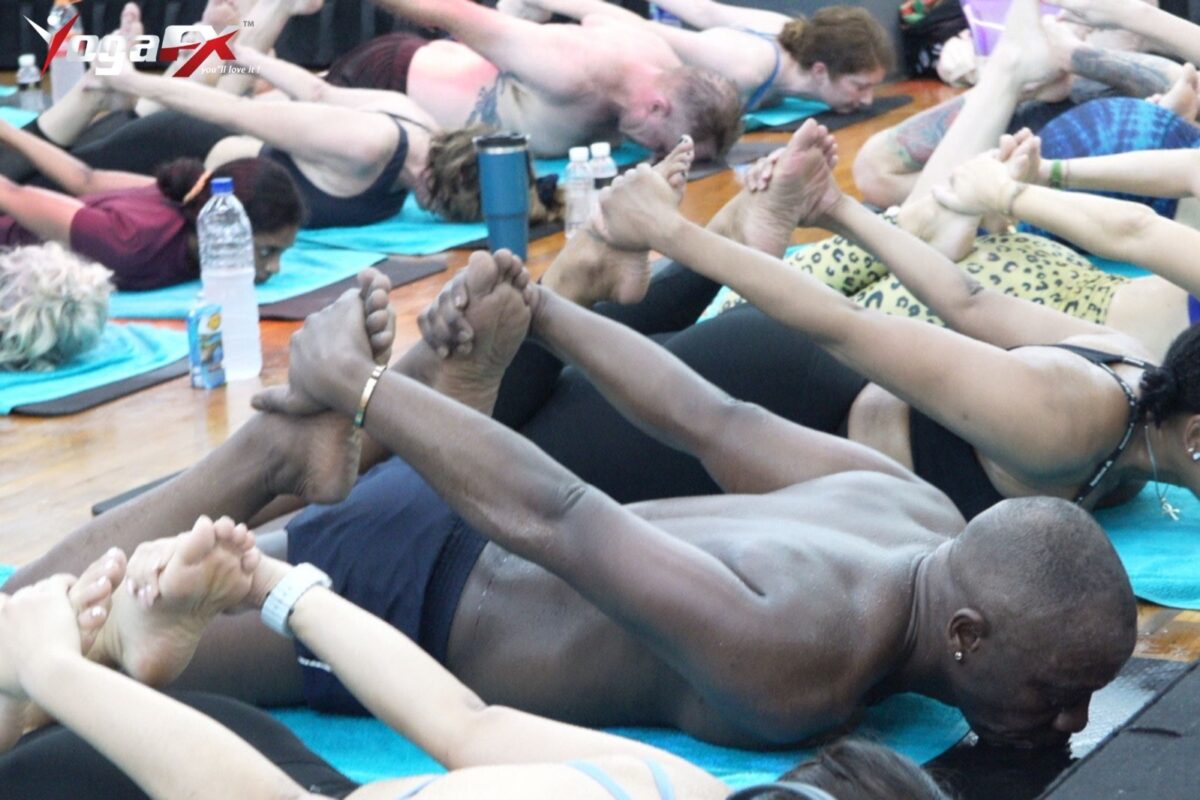
In every category, judges look for the same qualities: strength, flexibility, balance, endurance and precision. So a posture that collapses early costs points. A wobble in a balance costs points too, and so does a missed hold time.
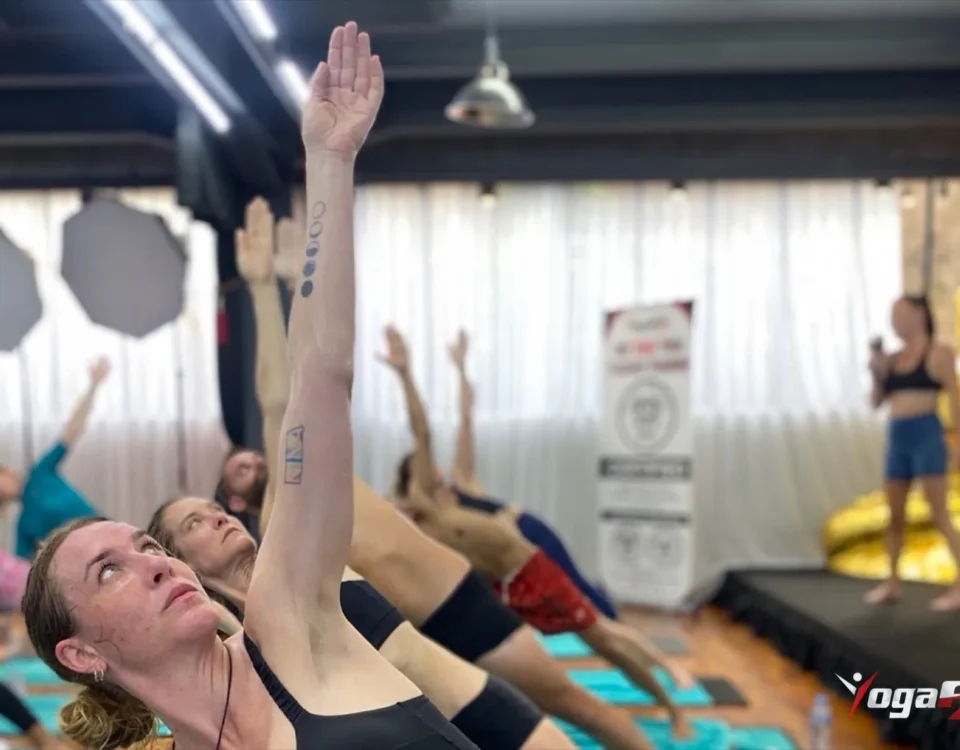
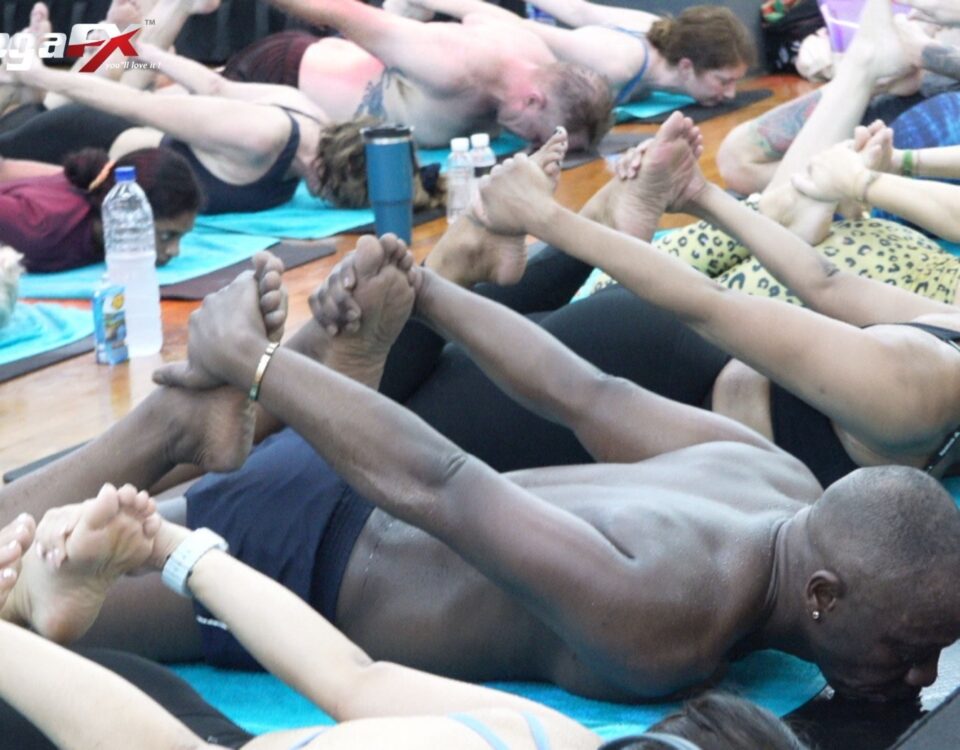
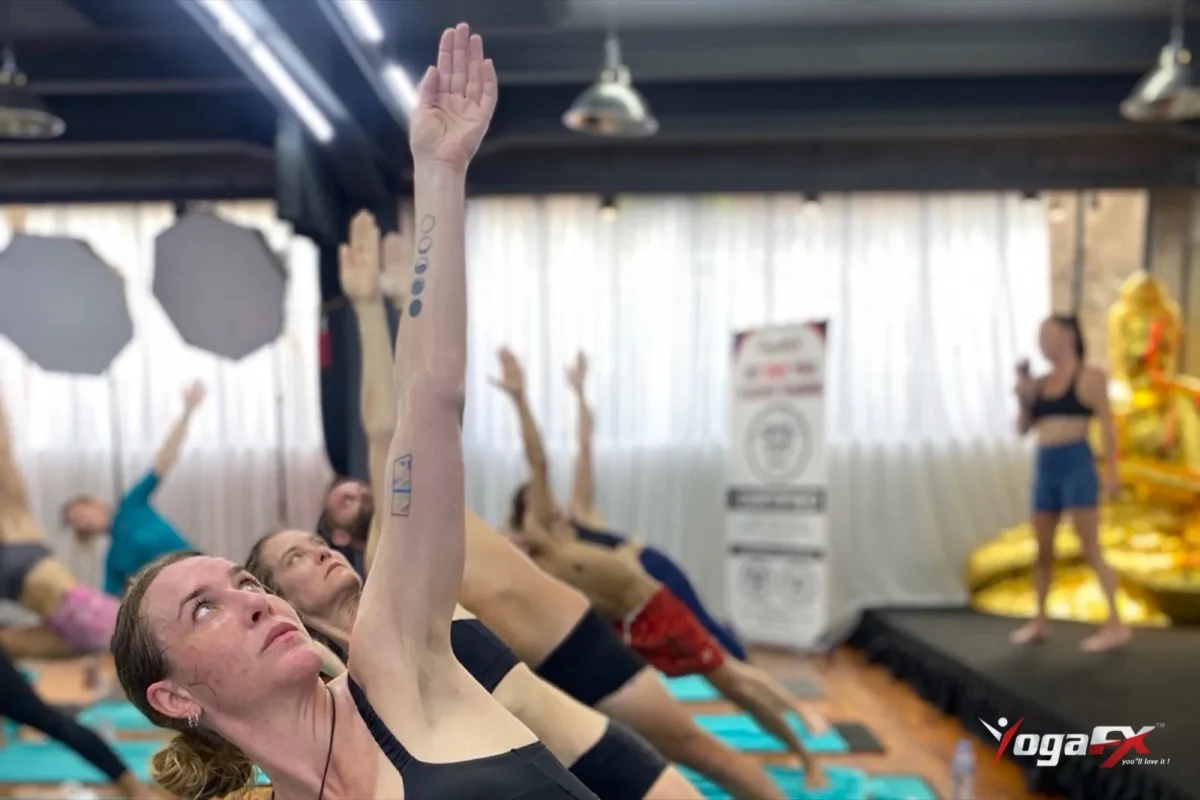
Here’s what that means if you already practise hot yoga in the UK. You know Dandayamana Dhanurasana (Standing Bow Pulling Pose) and Tuladandasana (Balancing Stick). Now imagine holding them perfectly still while five judges watch. That’s the gap between a good class and a medal routine.
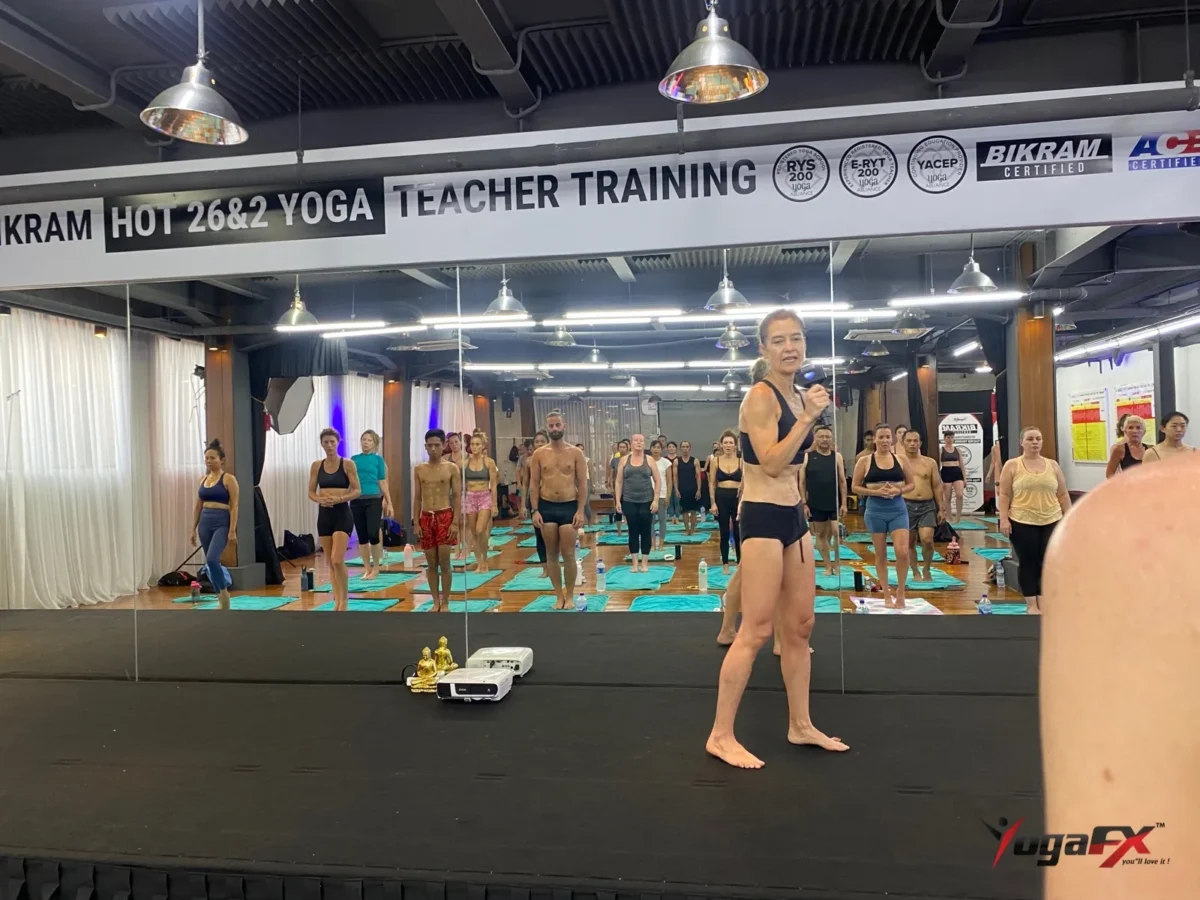
To see the standard for yourself, watch the World Yogasana Championship 2026 Day 5 highlights below. The clip shows competition from the final day, so you can see how athletes hold each posture for the judges.

Is There Competitive Yoga in the UK?
Yes, but it’s still small. Because most UK yoga is taught as health and fitness rather than sport, events like the World Yogasana Championship 2026 get little attention here. In fact, the British Wheel of Yoga is recognised by Sport England as the governing body of yoga in Britain. Its focus is teaching standards, not medals.
That means there is no large national Yogasana league in Britain yet. Instead, UK athletes who want to compete usually look abroad. Two international circuits matter, and they’re easy to confuse:
| Event | Organiser | 2026 edition | Format |
|---|---|---|---|
| World Yogasana Championship | World Yogasana, hosted by Yogasana Bharat | 1st edition, Ahmedabad, India, 4 to 8 June 2026 | Seven categories, national teams, government-backed |
| World Championship of Yogasana Sports | International Yoga Sport Federation (IYSF) | 17th edition, Italy, 5 and 6 December 2026 | Individual athletes approved by national member federations |
The IYSF event is older and runs every year. Because its 2026 edition is in Italy, it’s the closest major event to the UK this year. In contrast, the Ahmedabad championship was brand new, built around national teams and the push for the Olympics.
So if you search “UK yoga championship” or “yoga competition London”, check which body runs the event. Medals from one circuit don’t count in the other’s rankings, and selection rules differ.
How a UK Yogi Can Start Competing
Watching the World Yogasana Championship 2026 on YouTube makes many UK people ask: could I do that? The honest answer is that most top athletes started as ordinary students. So the first steps are simple, even if the top level is hard.
- Build a daily practice. Pick one fixed sequence and practise most days. That way you can see small gains in each posture, week by week.
- Work with a coach. You can’t see your own hips or knees in a posture. A trained eye spots the small errors judges mark down.
- Find the right federation. Each circuit selects athletes through national member bodies and trials. Contact the federation first, before you plan a routine.
- Enter smaller events first. Club and regional events teach you to perform under nerves, with judges watching.
- Learn the rulebook. Each category has its own posture list, hold times and score sheet. Study them early.
Age isn’t a barrier, either. Team USA’s squad for Ahmedabad, for example, ranged from 10 to 55 years old. Because events are split by age group, you compete against people at a similar stage of life.
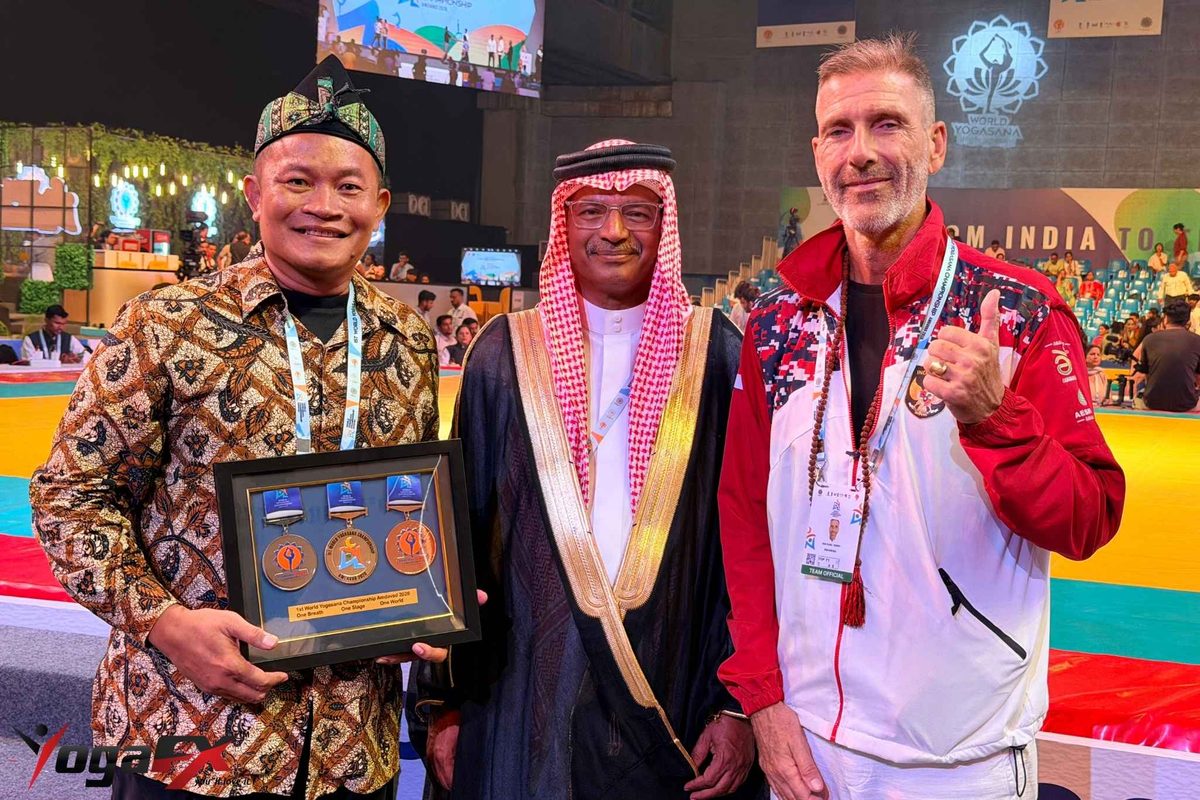
Mr. Ian’s rule for competitors is the same one he gives beginners: consistency beats intensity. Regular practice changes the body more than the odd heroic session. For UK yogis who already train in a hot room, that habit is a real head start. Our guide on yoga teacher training for athletes explains how that carries over to other sports.
What athletes actually train each week
- Daily posture practice, so alignment holds under fatigue and nerves.
- Hold-time drills for balancing postures, because stillness is what judges see first.
- Posture clinics with a coach, where small errors get fixed one at a time.
- Routine rehearsal under time pressure, for the artistic and rhythmic events.
For athletes from the 26&2 tradition, this was familiar ground. The same postures in the same order, every class, builds the body awareness judges reward. You can see the full sequence in our breakdown of the 26 hot yoga postures.
When is the next World Yogasana Championship?
World Yogasana hasn’t yet published a date or host for the second edition. So the best place to check is the official World Yogasana website, along with any national federation you plan to compete through.
In the meantime, regional events keep the calendar busy. For example, the Asian Yogasana Championship runs between world editions. For a UK athlete, that means there’s time to build a base before the next world event is announced.
A realistic first year for a UK practitioner
Here’s how a sensible first year might look if the World Yogasana Championship 2026 has inspired you. It assumes you already take regular classes at a UK studio.
- Months 1 to 3: practise four or five times a week, and note your hold times in each balancing posture.
- Months 4 to 6: book regular sessions with a qualified teacher who can correct alignment, because small errors cost the most points.
- Months 7 to 9: contact a federation, read the rulebook, and choose one category to focus on.
- Months 10 to 12: rehearse a full routine in front of other people, so nerves become familiar.
Of course, this plan won’t suit everyone. Some people find they love the training but not the judging, and that’s fine too. Either way, the year leaves you with a much stronger practice. If you live in London, our guide to hot yoga studios in London can help you find a regular room to train in.
What the Research Says About Posture Training
So far, no study has looked at Yogasana athletes on their own, including those at the World Yogasana Championship 2026. Even so, research on the hot 26&2 sequence shows why it suits people who need both strength and flexibility:
- Strength and flexibility. Tracy and Hart (2013) reported a 20% increase in posterior chain strength after an 8-week Bikram programme, along with better flexibility.
- Training intensity. Porcari and colleagues (2014) measured an average of about 80% of maximum heart rate across a 90-minute class.
- Overall evidence. A 2025 systematic review by Willmott and colleagues pooled 43 studies with 942 participants and found benefits for flexibility and well-being.
These findings describe the practice in general, not medal outcomes. Results vary from person to person. If you have a heart condition, an injury or are pregnant, consult a healthcare professional before you start intensive posture training or practise in heat.
Will Yogasana Reach the Olympics?
Not yet, but that’s the goal, and the World Yogasana Championship 2026 was a big step. The World Yogasana Sports Federation aims for an Olympic test event by 2032 and a full place at the Games by 2036. Both still need a yes from the International Olympic Committee.
Several steps are already in place:
- 2020: India’s sports and Ayush ministries formally recognised Yogasana as a competitive sport.
- 2024: the Olympic Council of Asia approved Yogasana as a demonstration sport for the 2026 Asian Games in Aichi-Nagoya, Japan.
- May 2026: India’s sports minister pledged to push Yogasana onto the Olympic programme, linked to India’s bid for the 2036 Games.
- June 2026: the first World Yogasana Championship gave the sport a global event with national teams.
The event had heavy official backing. India’s Ministry of Youth Affairs and Sports, the Ministry of Ayush and the Sports Authority of India all supported it. As a result, the official PIB release on the opening treated it as a national sporting milestone.
Not everyone welcomes the move, though. Some teachers argue that yoga is a path of self-discovery, and that medals miss the point. It’s a fair concern, and many UK teachers share it.
Mr. Ian’s view is practical: competition is one small door into the practice, not a replacement for it. Most people who start yoga after a championship clip will never compete. Instead, they’ll find a class, and that’s where the real benefit is.
How Indonesia Won 7 Medals With Two Athletes
At the World Yogasana Championship 2026, Indonesia didn’t send a big squad. It sent two well-coached athletes, and both trained at YogaFX in Bali. Between them they won all seven of the country’s medals: one gold, two silver and four bronze.
| Athlete | YogaFX graduate | Ahmedabad 2026 | Earlier results |
|---|---|---|---|
| Ivara Candra Kartika | Class of 2023 | 1 gold, 1 bronze | Gold, FORNAS VIII (July 2025); silver, Asian Championships UAE (August 2025) |
| Arkan Fauzan Riyanto | Class of 2022 | 2 silver, 3 bronze | Three-time FORNAS champion (2022, 2023, 2025) |
Mr. Ian likes to point out where Ivara started. Just three years earlier, she was still struggling with Standing Bow Pulling Pose. Today she teaches at the YogaFX studio in Seminyak and leads the posture demonstrations in the online course.
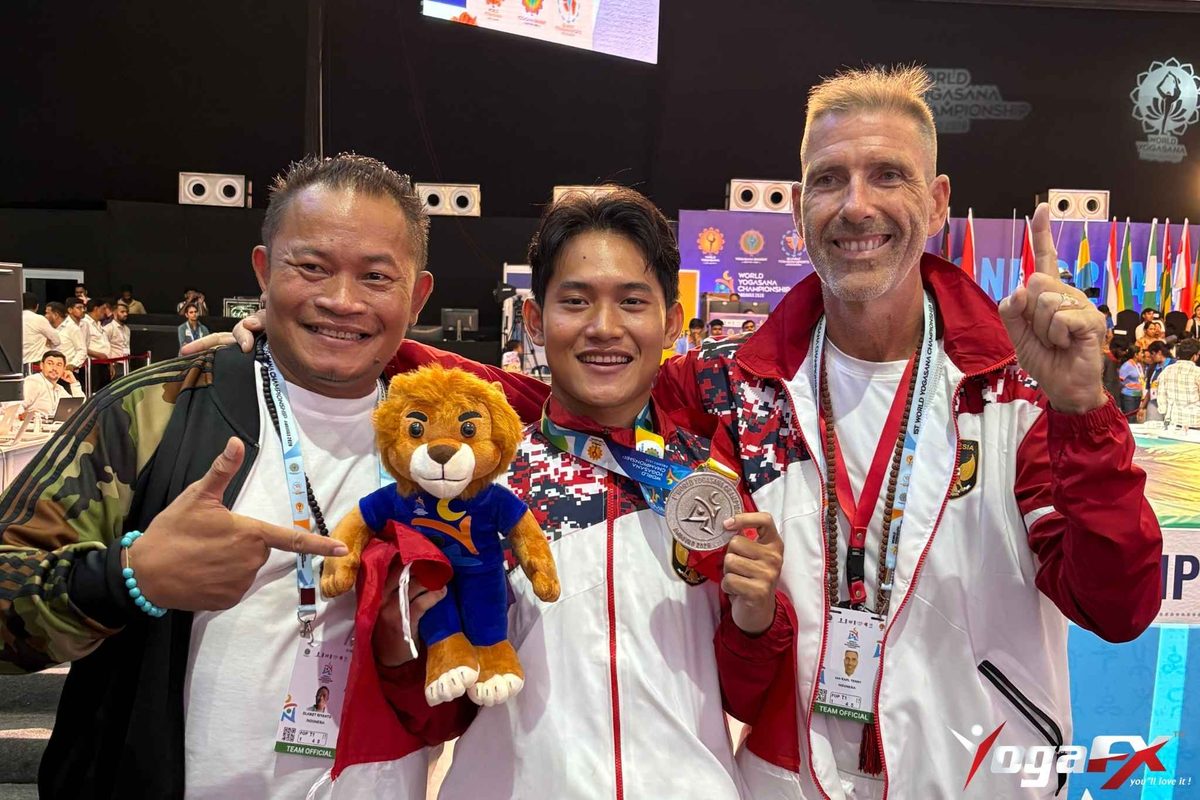
Arkan’s five medals were confirmed by the Tangerang City Government after he returned home. Off the mat, another graduate helped. Mr. Slamet Ariyanto (class of 2024) chairs the Yoga Practitioner Association of Indonesia (PPYNI) and manages the national team.
In June 2026, the Republic of Indonesia Yogasana Sports Federation appointed Mr. Ian as Master Trainer. Across national, Asian and world events, YogaFX graduates have now won 12 medals: 5 gold, 3 silver and 4 bronze.
Why should a UK reader care? Because it shows a small team can win when the basics are drilled well. Neither athlete joined a sports academy. They learned the Original Hot 26&2 sequence, the dialogue and posture alignment in teacher training, then kept practising every day.
Train With the Coach Behind the Medals
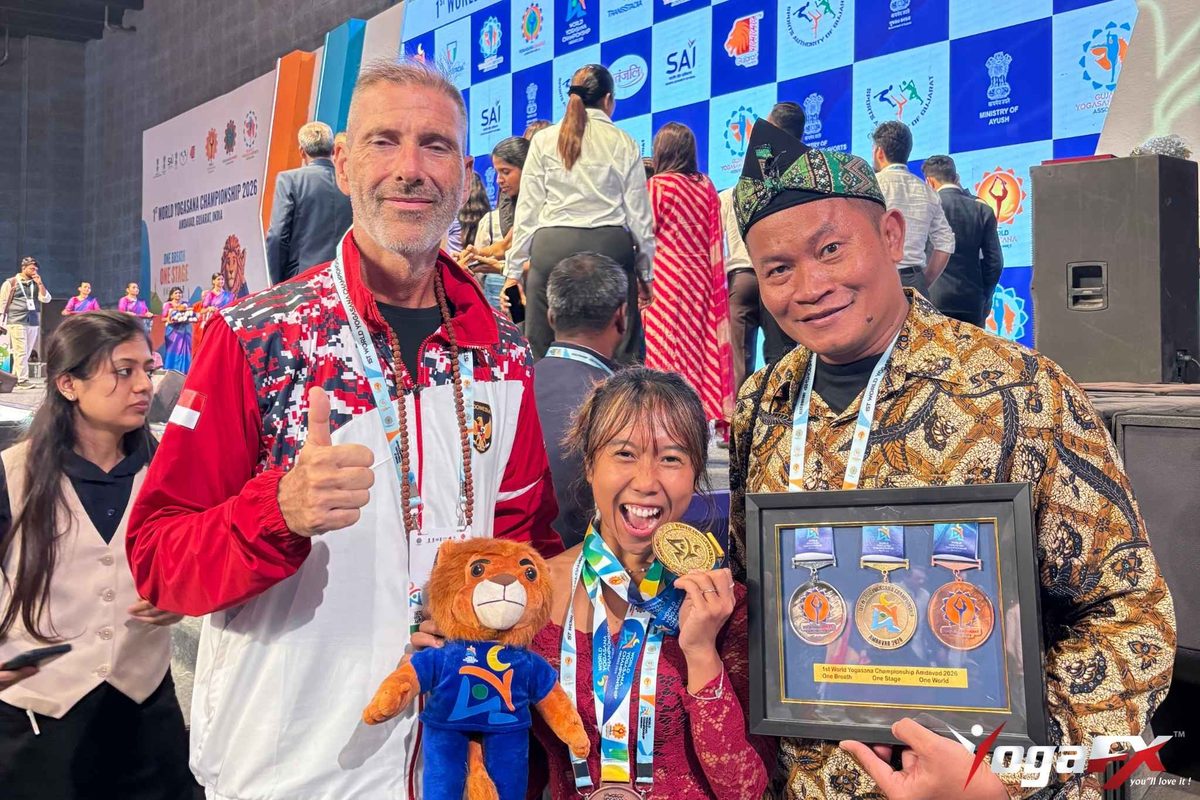
However, you don’t need competition plans to train with Mr. Ian. Most UK trainees simply want to teach, or to deepen their own practice. Still, if you’re curious where steady practice can lead, Ivara’s story is a good example.
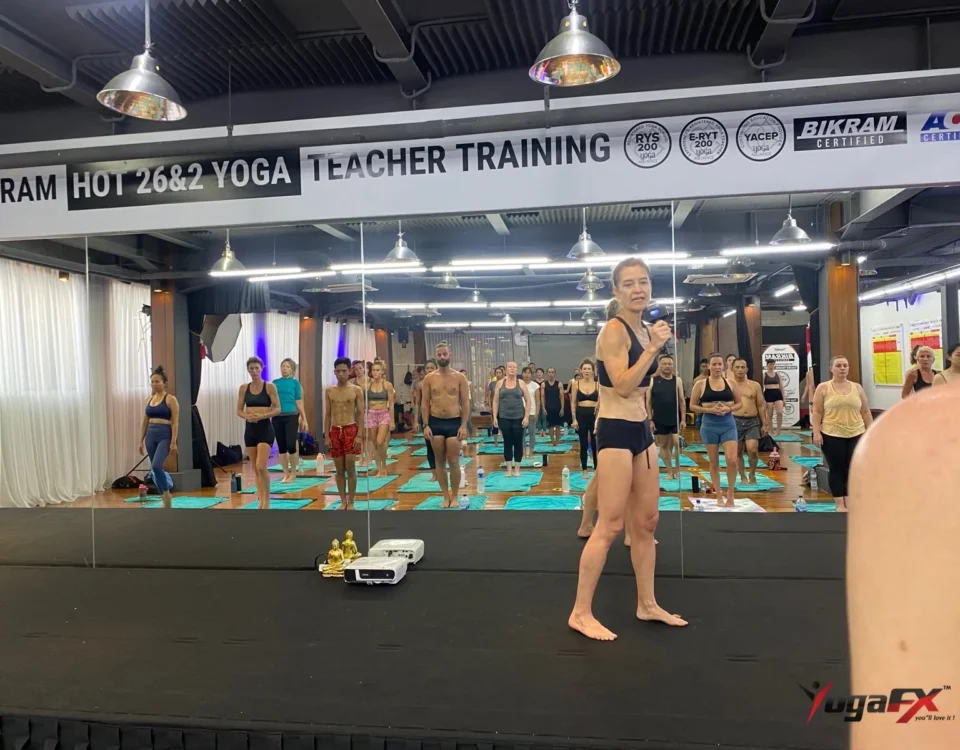
UK students join the same hybrid Bikram Hot 26&2 Yoga Teacher Training MasterClass that both medallists completed. Here are the key facts:
- Format: a self-paced online pre-course you complete from home, then a 6-day intensive in Seminyak, Bali.
- Certification: Yoga Alliance RYT 200 plus a Bikram Hot 26&2 200-hour certificate.
- Next intake: check-in Sunday 24 January 2027, check-out Friday 29 January 2027.
- Price: US$1,899 Early Bird, US$1,999 Twin Share, or US$2,199 Single Room Premium.
- Payment plan: from US$250 per month, interest-free.
Mr. Ian trained for five years, from 2014 to 2019, directly with the founder of the Bikram Hot 26&2 method. He has more than 12,000 teaching hours and 1,500+ graduates from over 80 countries since 2017.

Still deciding between a course at home and one abroad? Our comparison of yoga teacher training in Bali vs the UK sets out the cost and format trade-offs. For the full picture, read the complete UK guide to Bikram yoga teacher training, or check the latest course dates.
FAQ
What is the World Yogasana Championship?
The World Yogasana Championship is the first global championship for Yogasana as a competitive sport, governed by World Yogasana. Athletes compete in seven categories, including traditional, artistic and rhythmic Yogasana. Judges score precision, strength, flexibility and balance. The first edition was held in Ahmedabad, India, in June 2026.
Who won the World Yogasana Championship 2026?
Host nation India topped the medal table with 114 medals, including 102 gold. Indonesia won seven medals: one gold, two silver and four bronze. All seven came from two YogaFX graduates, Ivara Candra Kartika and Arkan Fauzan Riyanto, coached by Mr. Ian Terry as Indonesia’s National Coach.
How many countries participated in the World Yogasana Championship?
Athletes from 78 countries took part in the first World Yogasana Championship, with more than 500 athletes on the competition floor. Early plans in May 2026 expected about 40 countries, so the final field was nearly double the forecast. Teams came from Asia, Africa, Europe and the Americas.
Are there yoga competitions in the UK?
Competitive yoga in the UK is still small. The British Wheel of Yoga, recognised by Sport England as the governing body of yoga in Britain, focuses on teaching standards rather than medals. So UK athletes usually compete abroad, through international circuits such as World Yogasana or the International Yoga Sport Federation.
Is Yogasana in the Olympics?
Not yet. The World Yogasana Sports Federation aims for an Olympic test event by 2032 and full inclusion by 2036, subject to IOC recognition. In 2024, the Olympic Council of Asia approved Yogasana as a demonstration sport for the 2026 Asian Games, which is an important step on that path.
Still have questions? Message Mr. Ian and the YogaFX team on WhatsApp and we’ll answer them personally. It doesn’t matter if you’re asking about competition, training in Bali from the UK, or how to start a daily practice. Mr. Ian reads and answers these messages himself.