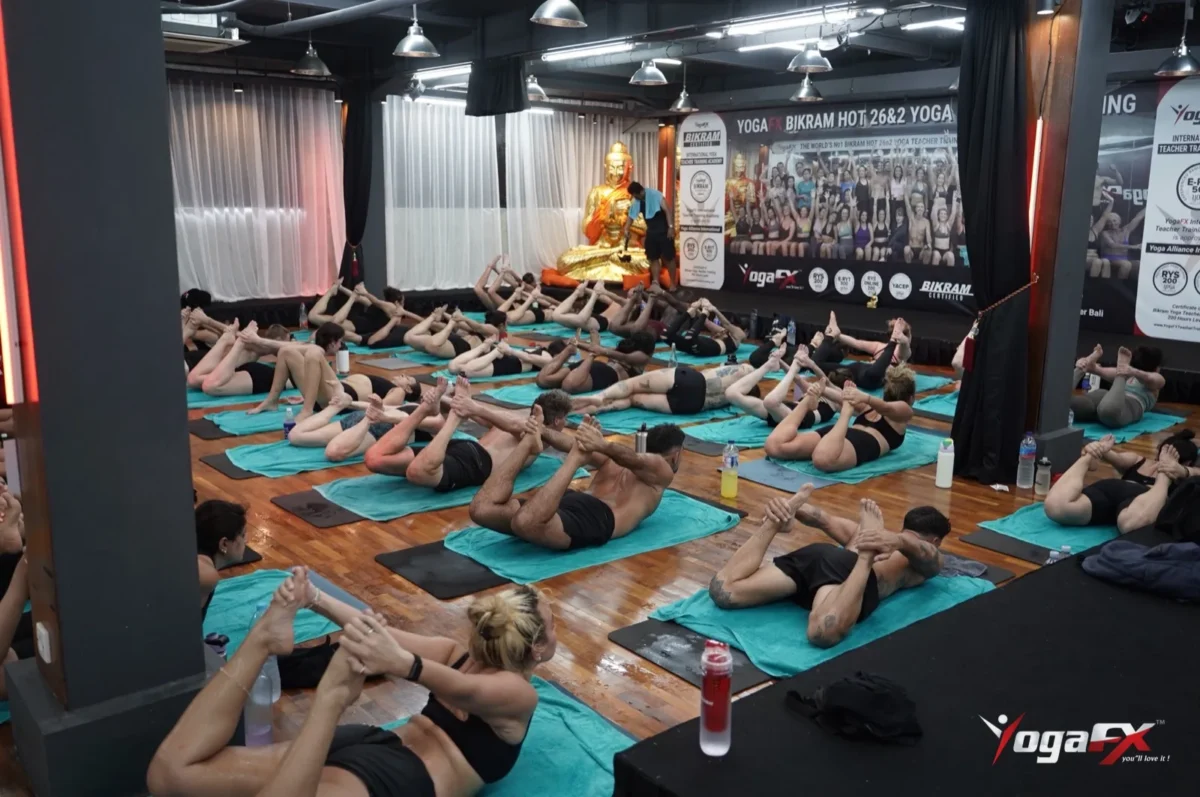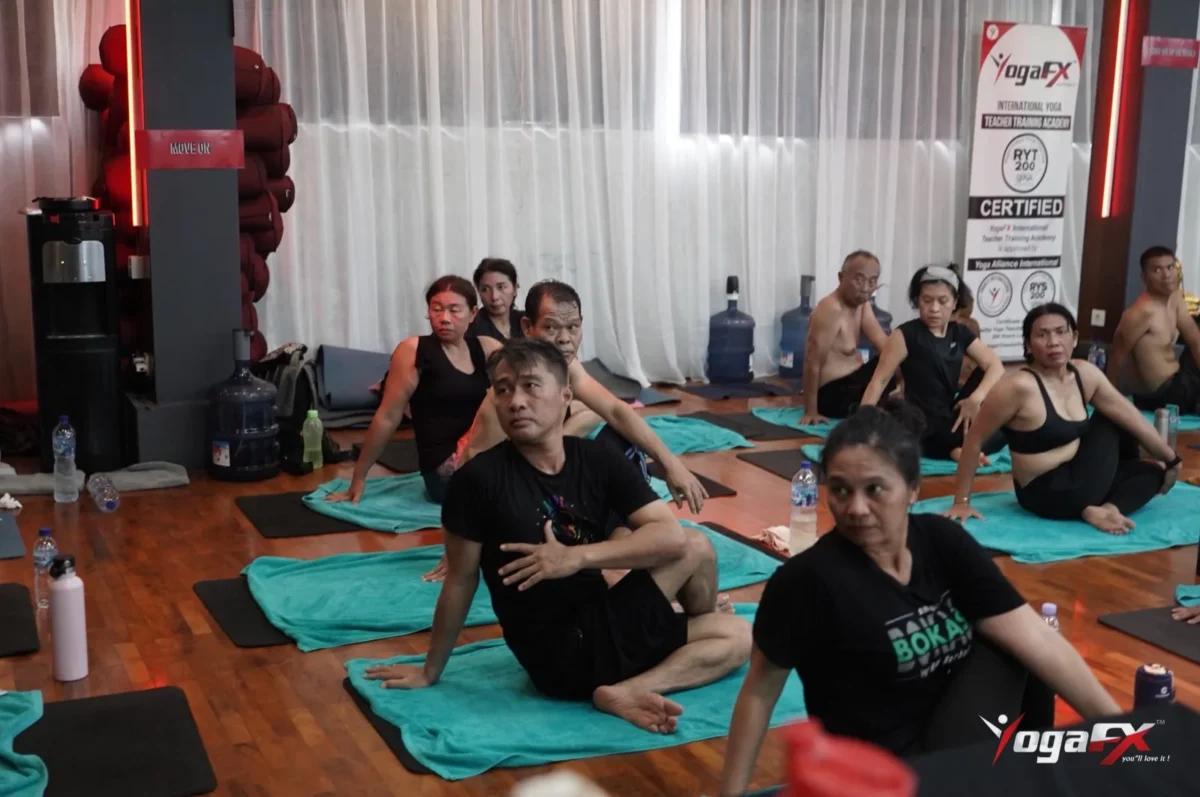
Hot yoga postures are a fixed sequence of 26 postures and 2 breathing exercises, practised in a room heated to around 40°C for 90 minutes. The standing series builds balance and strength, and the floor series stretches the spine and hips. Below, you will see what each posture asks of your body and how to practise it safely.

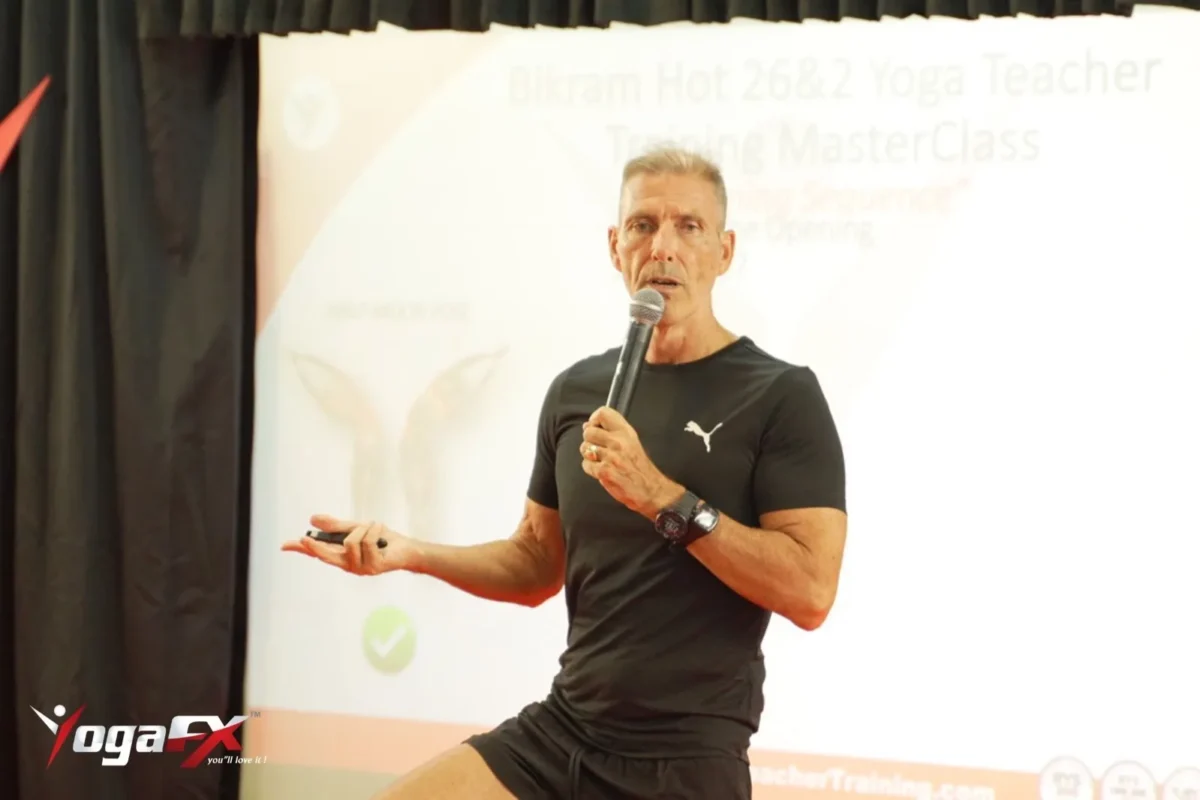
Mr. Ian Terry, E-RYT 500, has taught this sequence for more than 12,000 hours. He trained for five years, from 2014 to 2019, with the founder of the Bikram Hot 26&2 method, and his 1,500+ graduates come from 80+ countries. The questions they ask are the ones answered here.
If you are new to the heat, our guide to what hot yoga is and how heat changes a class is a good place to start. This guide to hot yoga postures is written for UK readers, so it also covers health checks and what changes if you ever train in Bali. People also search for these shapes as hot yoga poses or Bikram yoga postures, and they are the same 26.
In This GuideAll 26 postures, what each one targets and how to practise well
Want every posture in order, filtered by difficulty, focus area or health benefit?
How a Hot Yoga Class Is Built
The sequence is not random. Each of the hot yoga postures prepares the body for the next one, so heat and flexibility build in steps. Because the dialogue is scripted, the teacher talks you through every one of the hot yoga postures, and you never have to memorise the order before your first class. That is why the order stays the same in every certified class. The hot yoga postures stay fixed while your body changes, so the same 90 minutes can feel different on a Monday than on a Saturday.
| Series | Postures | Main demand | Common beginner snag |
|---|---|---|---|
| Opening breath | Standing Deep Breathing | Calm, full breathing | Forcing the breath or tipping the head back too far |
| Standing series | Half Moon to Toe Stand (postures 1 to 12) | Balance, leg strength, hamstring flexibility | Locking the knees, losing balance on one leg |
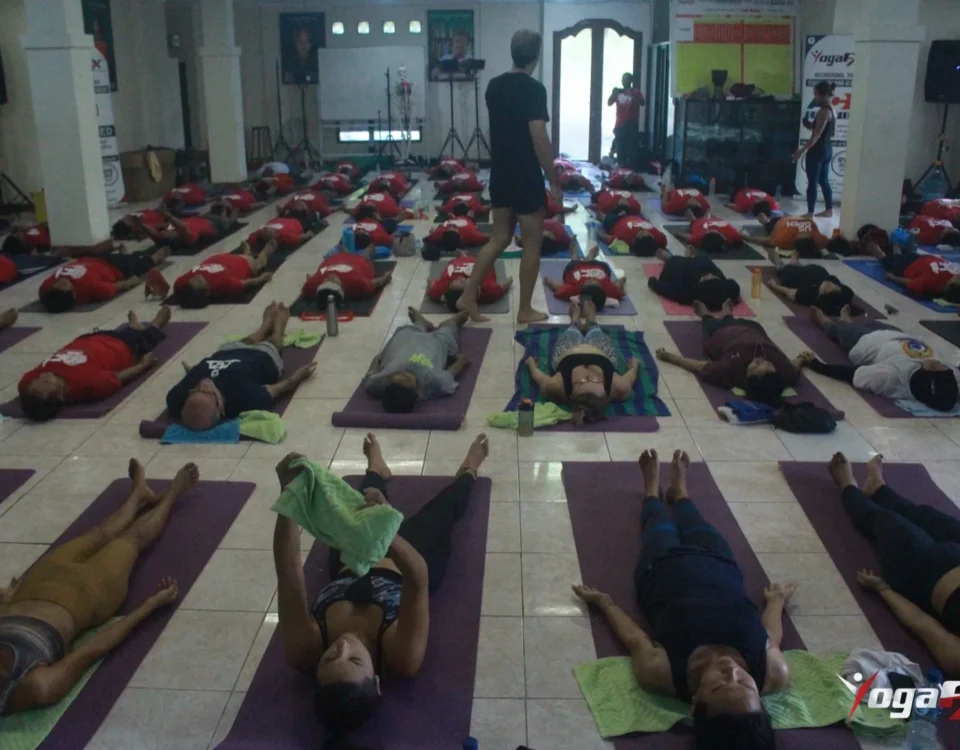
| Rest | Dead Body Pose (posture 13) | Settling the heart rate and breath | Treating rest as wasted time |
| Floor backbends | Cobra, Locust, Full Locust, Bow (postures 16 to 19) | Back strength, chest and shoulder opening | Cranking the lower back instead of lifting |
| Floor stretching | Fixed Firm to Spine Twisting (postures 20 to 26) | Knee, hip, spine and hamstring flexibility | Forcing depth in the knees and neck |
| Closing breath | Blowing in Firm Pose | Abdominal control, clear head | Going too fast and feeling light-headed |
The Standing Series: Hot Yoga Postures for Balance, Strength and Heat
The first half of the class is done on your feet. It builds heat quickly, so hydration and pacing matter. These are the standing hot yoga postures in order, with what each one asks of you.
Breathing Exercise 1: Standing Deep Breathing
Class opens with a slow, full breath. You stand tall, raise your arms with the elbows together, tip your head back only as far as is comfortable, and then breathe out slowly. It looks simple, yet it sets the pace for the next 90 minutes. Because the room is hot, a calm breath at the start helps you settle before the standing work begins. Keep it smooth rather than forced.
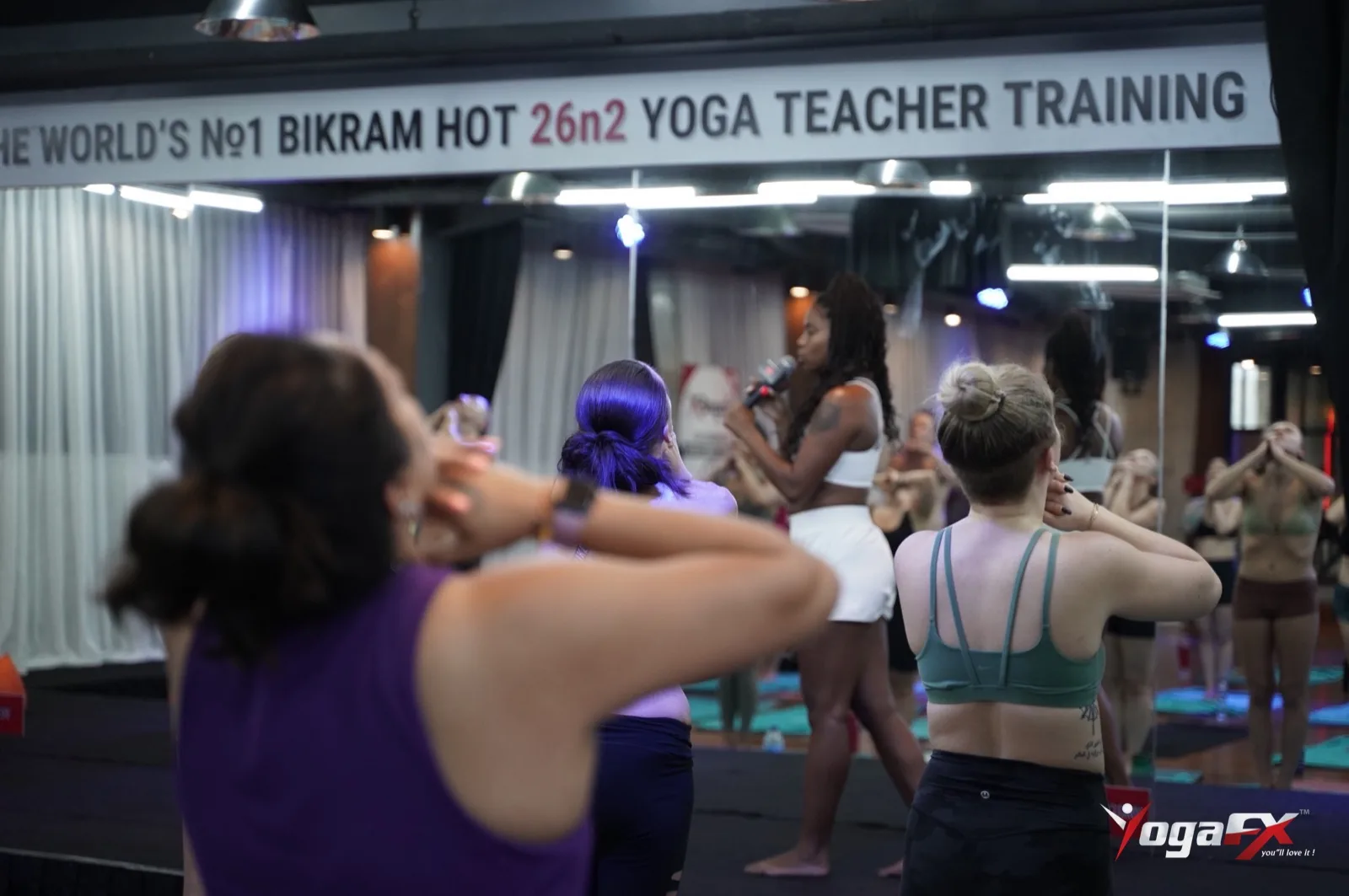
Postures 1 and 2: Half Moon and Hands to Feet
Ardha Chandrasana is a side bend with the hands pressed together overhead, and it lengthens the sides of the body, the waist and the shoulders. Pada Hastasana follows as a forward fold that stretches the hamstrings and the back of the body. Together they warm the spine in every direction. If your hamstrings are tight, bend your knees so your lower back is not doing all the work.
Posture 3: Awkward Pose
Utkatasana looks like sitting back into an invisible chair with the arms reaching forward. The thighs, calves and glutes work hard, and the core keeps you upright. As a result, the legs start to build heat and endurance early in the class. Expect a burn in the thighs, so keep breathing instead of holding your breath, and lift your chest rather than collapsing forward.
Posture 4: Eagle Pose
Garudasana wraps one arm and one leg around the other while you balance and sit low. It asks the shoulders, hips, knees and ankles to move in ways they rarely do in daily life. Concentration matters as much as flexibility here. If the full wrap is out of reach, cross the legs only partly and keep the toes of the top foot on the floor.
Posture 5: Standing Head to Knee
This is a demanding balance posture. You lift one leg, hold the foot, and work towards straightening the leg while the standing knee stays strong. It tests balance, hamstring flexibility and core strength at once, which is why many beginners find it humbling. Hold the foot with a bent knee at first, and let the leg straighten as your flexibility grows.
Posture 6: Standing Bow Pose
Here you kick one leg back into your hand while the other arm reaches forward, so the body forms a bow. It combines balance with a stretch through the front of the hip, the thigh, the chest and the shoulders. Keep the standing leg firm, keep your hips level, and kick back and up rather than simply pulling the foot higher.
Posture 7: Balancing Stick
Balancing Stick is brief but intense. Your arms and one leg extend to form a straight line parallel to the floor while the other leg holds you up. The standing leg, the back and the core all work, and the heart rate climbs quickly. A slight bend in the standing knee is fine, and so is a shorter hold while you build strength.
Posture 8: Standing Separate Leg Stretching
In a wide stance you fold forward and bring the head towards the floor. The hamstrings, calves and the whole back of the body lengthen, and the lower back often feels some relief afterwards. Lengthen the spine before you fold, because folding from a rounded back puts the effort in the wrong place, and keep a soft bend in the knees if the backs of the legs feel tight.
Posture 9: Triangle Pose
Trikonasana is often called the pose that asks something of every part of the body. From a wide stance you bend sideways, turn the chest open and reach one arm up. It stretches the hips, thighs and sides of the waist while the legs stay strong. Keep the front knee tracking over the ankle, and open the chest instead of letting it sag towards the floor.
Posture 10: Standing Separate Leg Head to Knee
From the same wide stance, you fold the head towards one knee and hold. This is a deep hamstring stretch and a test of patience, because the position is uncomfortable before it is rewarding. Stay on your breath, relax the neck, and do not force the forehead down. A small, steady fold beats a hurried one.
Posture 11: Tree Pose
You stand on one leg with the other foot resting high on the thigh and the hands together in front of the chest. Tree builds balance, opens the hip of the lifted leg and trains a quiet focus. For example, many students notice that their balance improves when they pick one spot to look at. Place the foot lower on the leg if the hip is tight.
Posture 12: Toe Stand Pose
Toe Stand is the posture many beginners rank as the hardest. You balance on the toes of one foot, sit down towards the heel, and bring the other foot across the thigh. Ankles, knees, hips and balance are all in play. Come into it step by step, skip it if the knees complain, and talk to your teacher about a modification.
The Floor Series: Hot Yoga Postures for Backbends, Folds and Twists
After the rest, the class moves to the floor. Backbends come first, then forward folds and a twist. The closing breathing exercise finishes the sequence, so the last hot yoga postures are calm ones.
Posture 13: Dead Body Pose (Savasana)
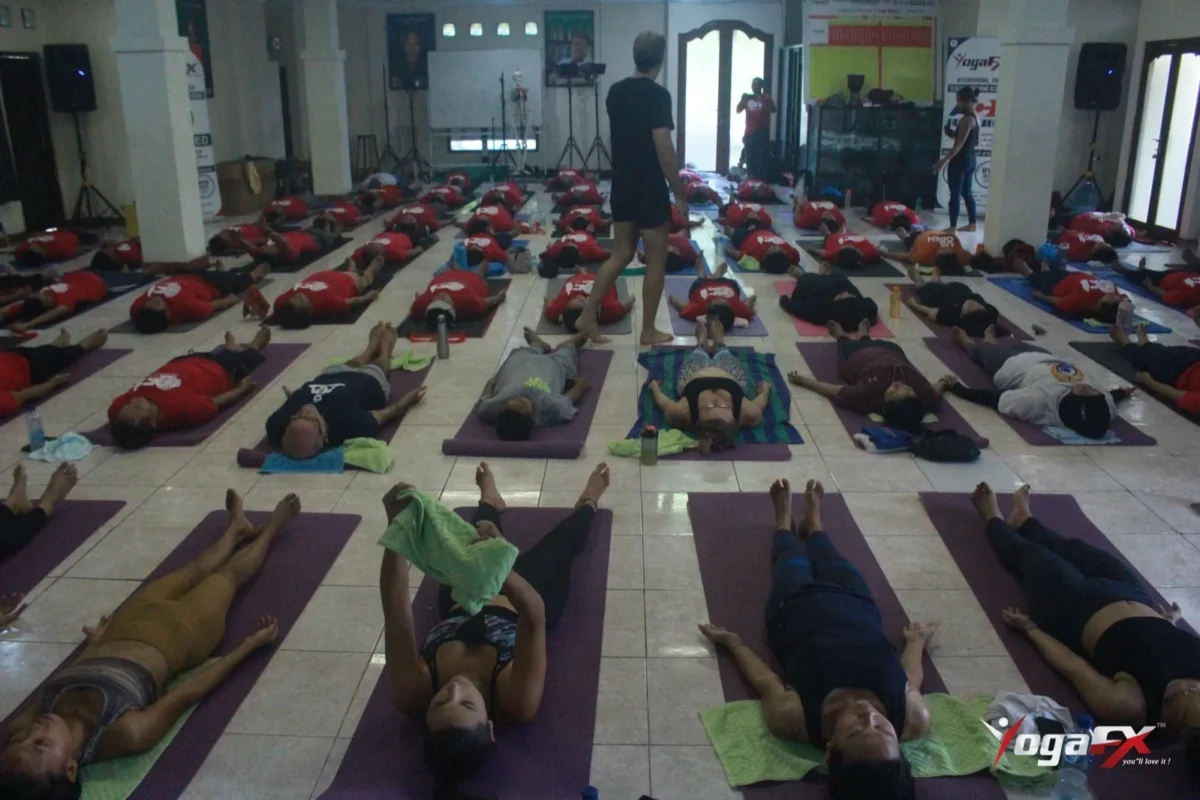
Savasana is a full rest on your back between the standing series and the floor series. It sounds easy. In a hot room it takes practice, because your heart rate settles and your breath slows while the heat is still around you. Let the arms and legs fall open, close the mouth, breathe through the nose and use the rest properly.
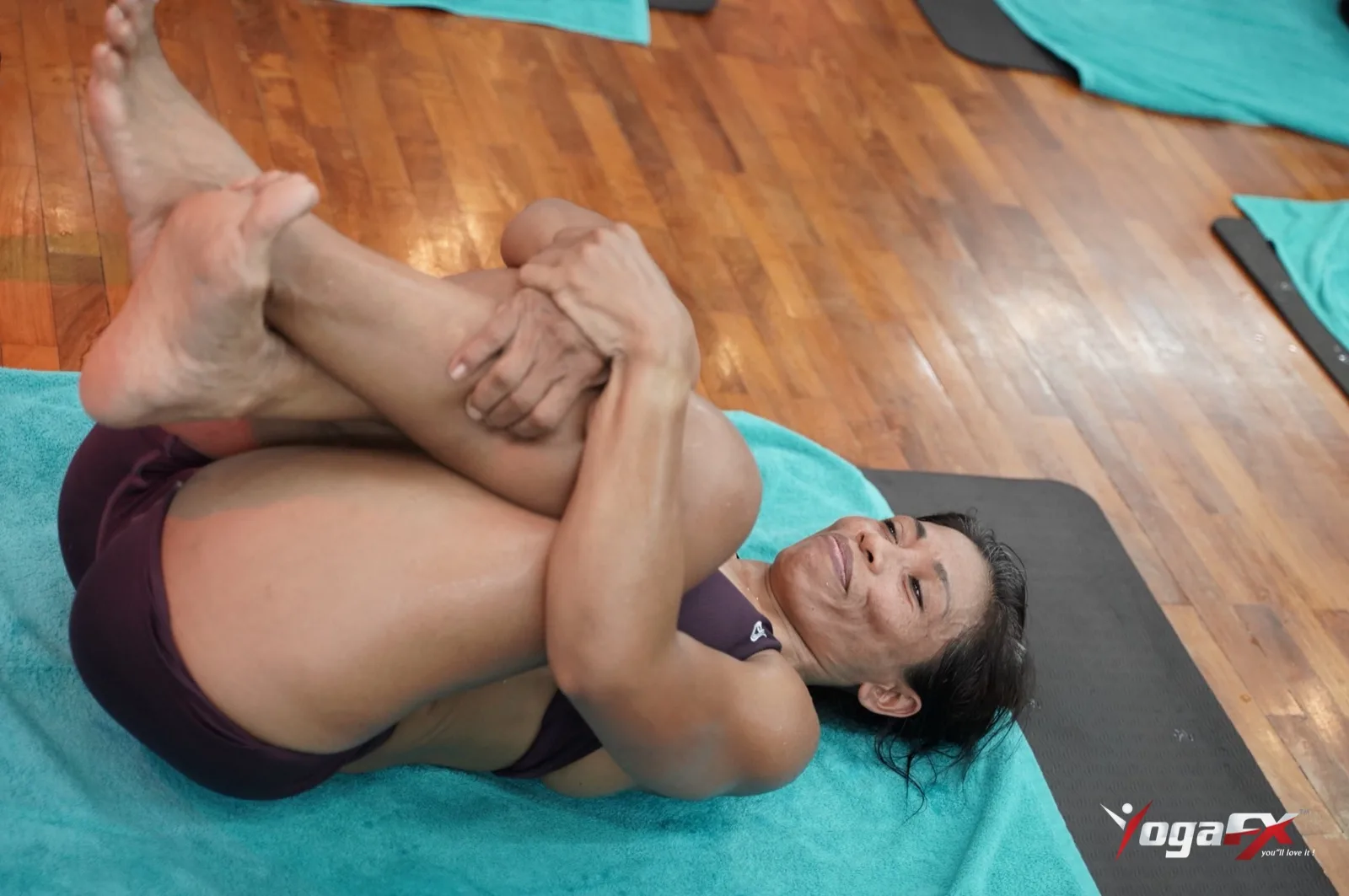
Posture 14: Wind-Removing Pose
Pavanamuktasana hugs one knee, then both knees, towards the chest. It gently stretches the lower back and the hips and applies light compression to the abdomen. It is also a useful reset after the standing series. Keep the head and shoulders relaxed, and do not pull so hard that the neck tightens.
Posture 15: Sit-Up Pose
Moving from lying down to sitting up in one controlled movement, you fold forward and reach towards the feet. The abdominal muscles drive the movement, and the hamstrings are stretched as you fold. It prepares the body for the floor series that follows. If the full movement is not there yet, bend the knees and use the momentum of the arms.
Posture 16: Cobra Pose
Bhujangasana is the first backbend. Lying on your belly, you press the chest forward and up while the elbows stay close to the body. It strengthens the back, opens the chest and stretches the front of the shoulders. Keep the shoulders away from the ears and lift from the upper back, not by cranking the lower back.
Posture 17: Locust Pose
Salabhasana has you lie on your belly and lift one leg, then the other, behind you. The lower back, the glutes and the hamstrings all work, so the back of the body gets stronger. The Sanskrit name comes from a word for locust or grasshopper. Lift from the muscles rather than by throwing the leg, and keep the hips pressing into the floor.
Posture 18: Full Locust Pose
Full Locust lifts both legs and the chest off the floor at once. It asks much more of the upper back, the arms, the legs and the coordination between them. As a result, the posture teaches you how to recruit the whole back body. A smaller lift, held with control, is better than a high one that collapses.
Posture 19: Bow Pose
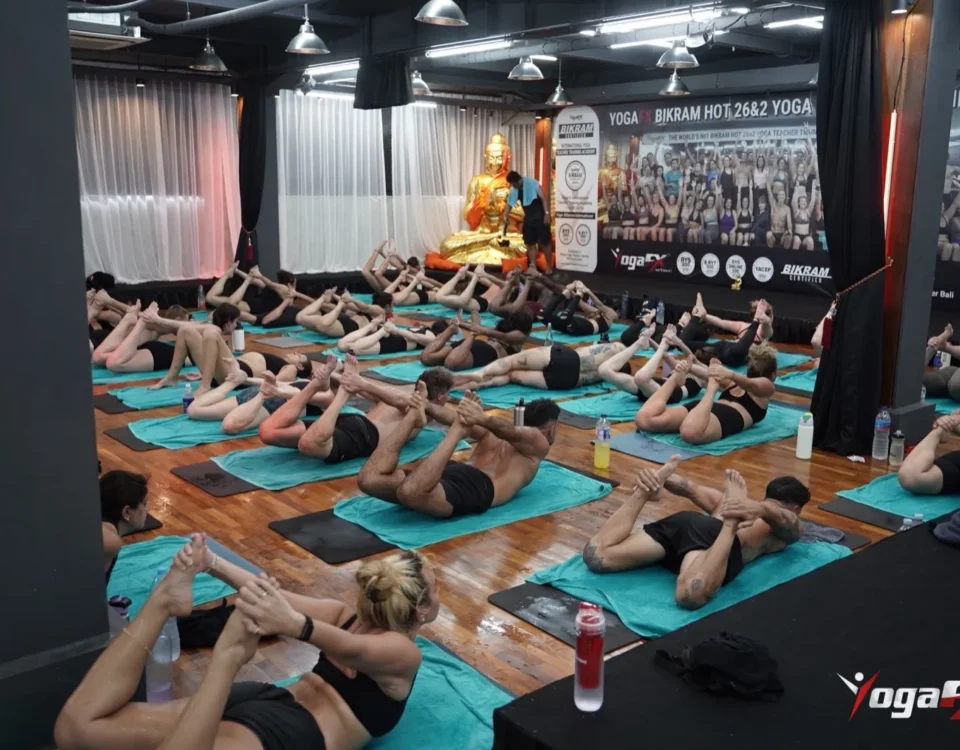
Dhanurasana has you hold the ankles and kick the feet back so the chest and thighs lift together. It stretches the whole front of the body, from the thighs and abdomen to the chest and shoulders. The knees can stay about hip-width apart. Kick rather than pull, and keep breathing, because holding the breath is the quickest way to tire.
Posture 20: Fixed Firm Pose
You sit between the heels and lean back, which stretches the front of the thighs and challenges the knees, ankles and hips. It is a posture to approach with respect. Come down slowly, use the elbows for support, and stop if you feel sharp pain in the knees. Discomfort in the thighs is normal, but pain in a joint is a signal to back off.
Posture 21: Half Tortoise Pose
Ardha Kurmasana is a kneeling forward fold with the arms stretched out in front. It lengthens the spine and the shoulders and gives a calm, rounded moment after the backbends. Let the hips sink back towards the heels and rest the forehead down. If the hips lift, bring your hands a little closer.
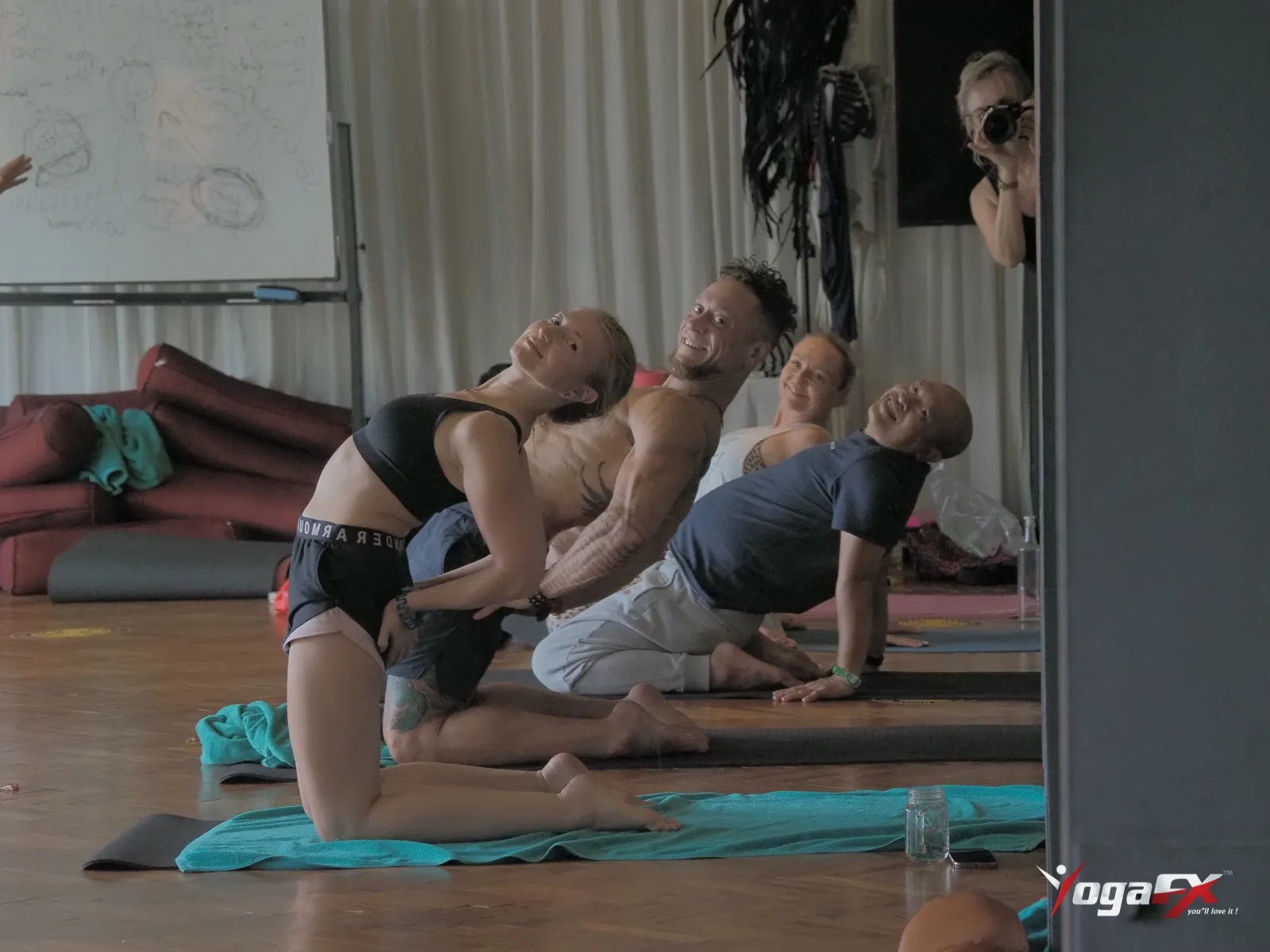
Posture 22: Camel Pose
Ustrasana is a deep kneeling backbend with the hands reaching for the heels. It opens the chest, the abdomen and the front of the thighs. It is also a posture that can make you light-headed, especially in the heat. Beginners can keep the hands on the lower back, and everyone should come up slowly. The FAQ below covers who should avoid it.
Posture 23: Rabbit Pose
Sasangasana curls the body into a ball: you hold the heels, tuck the chin and roll the crown of the head towards the knees. It stretches the spine and the back of the neck and rounds the back after the deep backbends. Move slowly, because the neck is delicate, and ask your teacher for a modification if you have neck problems.
Postures 24 and 25: Head to Knee and Stretching Pose
These are two seated forward folds. Head to Knee folds over one extended leg at a time, and Paschimottanasana folds over both. Together they stretch the hamstrings, the back and the shoulders. Keep a micro-bend in the knees if the hamstrings are tight, and reach forward before you round down.
Posture 26: Spine Twisting Pose
The last posture is a seated twist. It rotates the spine, stretches the hips and shoulders and eases tension in the lower back. Sit tall before you twist, because the twist should come from the whole spine, not just the shoulders. Twist only as far as breathing stays easy.
Breathing Exercise 2: Blowing in Firm Pose
The class ends with Kapalbhati-style breathing: you kneel, then breathe out sharply through the nose with the abdominal muscles. It is quick, rhythmic work. Go at your own pace, and stop and breathe normally if you feel light-headed. After 90 minutes of work, finishing with a clear, quiet breath leaves most students calm and focused.
What the Research Says About Hot Yoga Postures
A lot of content about hot yoga postures leans on vague claims, so it is worth being specific about what trials have actually measured. The studies below are small, and they test heated yoga as a whole rather than any single one of the hot yoga postures. Even so, they show where the evidence is reasonably solid and where it is thin.
Strength and flexibility
In an eight-week randomised trial of 21 healthy young adults, the group that attended 24 Bikram yoga sessions of 90 minutes each gained deadlift strength, lower back and hamstring flexibility and shoulder flexibility, and lost a little body fat compared with a control group. The same trial found no change in handgrip strength, cardiovascular measures or maximal aerobic fitness (Tracy and Hart, 2013).
Heated yoga does not replace cardio training, then. In that trial it built strength and flexibility, which is what the hot yoga postures are designed to train.
Well-being and mood
A six-week trial with 290 healthy adults found that the hot yoga group improved on life satisfaction, general health and mindfulness compared with a wait-list group (Hui et al., 2022).
Separately, an eight-week trial of heated hatha yoga for moderate-to-severe depression reported that 59.3% of the yoga group had a symptom reduction of 50% or more, against 6.3% of the wait-list group (Nyer et al., 2023, Massachusetts General Hospital). The authors describe it as preliminary, and it is not a substitute for medical care.
| Study | Who and how long | What they found | Caution |
|---|---|---|---|
| Tracy and Hart, 2013 | 21 healthy young adults, 8 weeks, 24 sessions | More deadlift strength and flexibility, a little less body fat | Small trial, no change in aerobic fitness |
| Hui et al., 2022 | 290 healthy adults, 6 weeks | Better well-being than the wait-list group | Tests hot yoga as a whole, not single postures |
| Nyer et al., 2023 | 65 adults analysed, 8 weeks, heated hatha yoga | 59.3% vs 6.3% with a 50% or greater drop in depression symptoms | Preliminary, wait-list comparison |
Hot Yoga Safety: UK Health Checks Before Your First Class
This article is for general information and does not replace advice from a qualified healthcare professional. If you have an injury, a heart or blood pressure condition, or are pregnant, talk to your GP and your instructor before attempting these hot yoga postures in a heated room. Our guide to whether hot yoga is safe for UK practitioners goes through the checks in more detail.
Hydration comes first
Fluids are the first thing to plan. The NHS describes dehydration as your body losing more fluid than you take in, and lists thirst, headache, light-headedness, dark yellow pee and tiredness among the signs.
It also advises drinking more when you are sweating from heat or exercise (NHS, Dehydration). In a 40°C room, that applies to every class, so build your water routine before you arrive, not halfway through.
- Eat lightly. A heavy meal in the two hours before class makes forward folds and backbends miserable.
- Know your stop signs. Dizziness, nausea, chest pain or sharp joint pain mean you rest, not push on.
- Tell your teacher. Mention injuries, pregnancy or medical conditions before the class starts, not during it.
Tips for Mastering Hot Yoga Postures
These habits make the hot yoga postures safer and easier to learn.
- Hydrate well. Drink water before and after class, and sip during it, so you stay energised and avoid dehydration.
- Wear light, moisture-wicking clothes. Heavy, sweat-soaked fabric distracts you from the posture.
- Focus on your breath. Controlled breathing keeps you calm and helps endurance across the 90 minutes.
- Take your time. Hot yoga postures are skills, not a race to a final shape, so depth comes with repetition.
- Stay consistent. Regular practice compounds. If you are also curious about calorie burn, read our breakdown of hot yoga for weight loss.
What Students Say About Learning the Postures
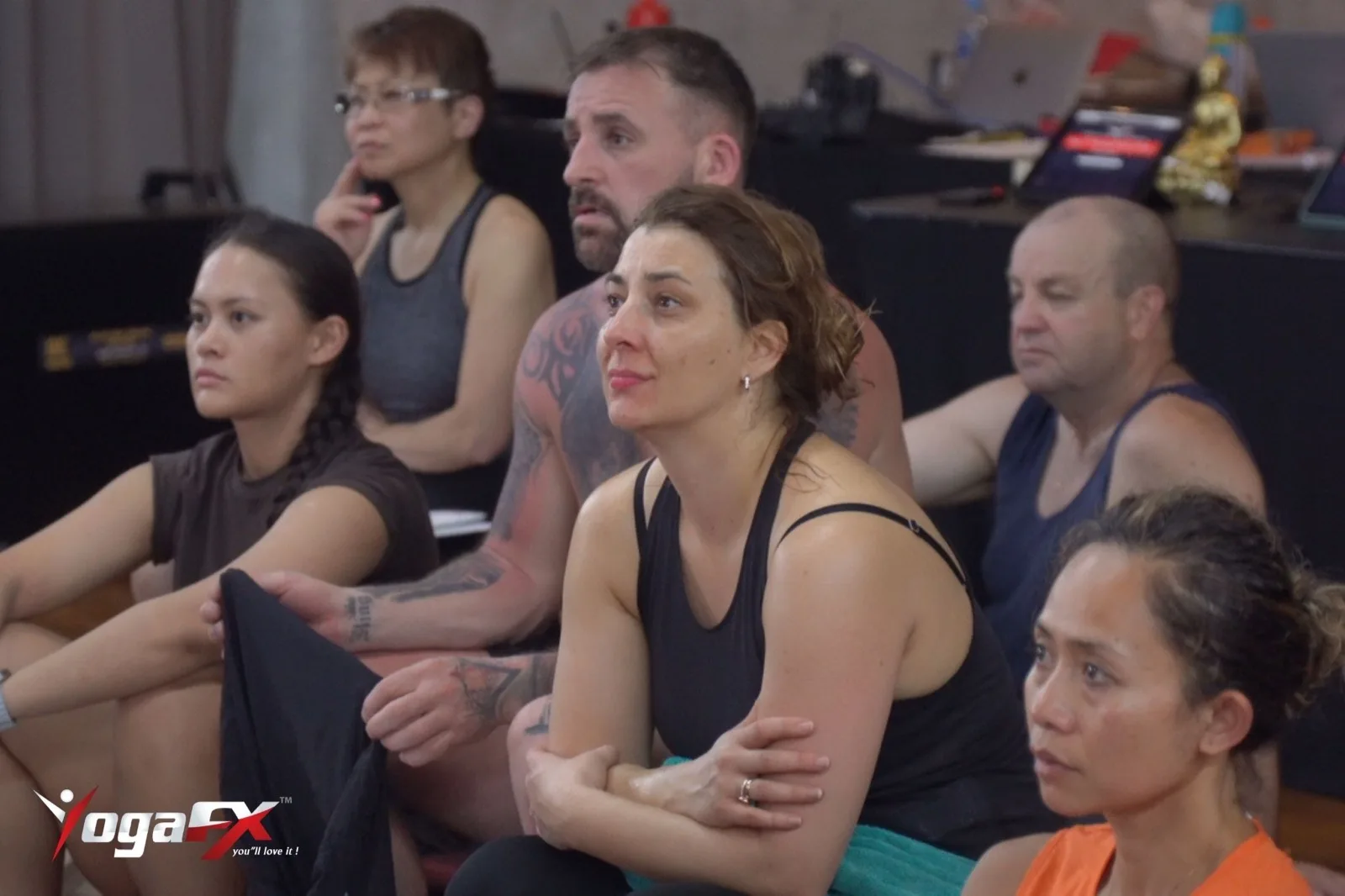
We asked trainees about learning the hot yoga postures at YogaFX. Here is what three of them wrote in their public reviews.
Loved the clarification of the asanas and posture clinics. In general it was a wonderful changing life experience.
Cristina, Google review, 2024
The most professional course I have ever had. From the beginning to the end everything was perfectly scheduled and organized.
Konrad, Google review, 2022
YogaFX is so much more than just a yoga school, it’s a community that helps bring fantastic people together.
Hoda, Google review, 2019
Learning This Sequence Properly with YogaFX
Knowing what each of the hot yoga postures targets is useful. Learning to teach these hot yoga postures, with correct alignment and scripted verbal cueing, is a different skill, and it is what YogaFX‘s teacher training in Bali is built around.
Mr. Ian Terry leads the training, and classes run in natural tropical heat in Bali rather than under electric heaters, so you see how the sequence behaves in real conditions instead of a cycling UK studio heater.
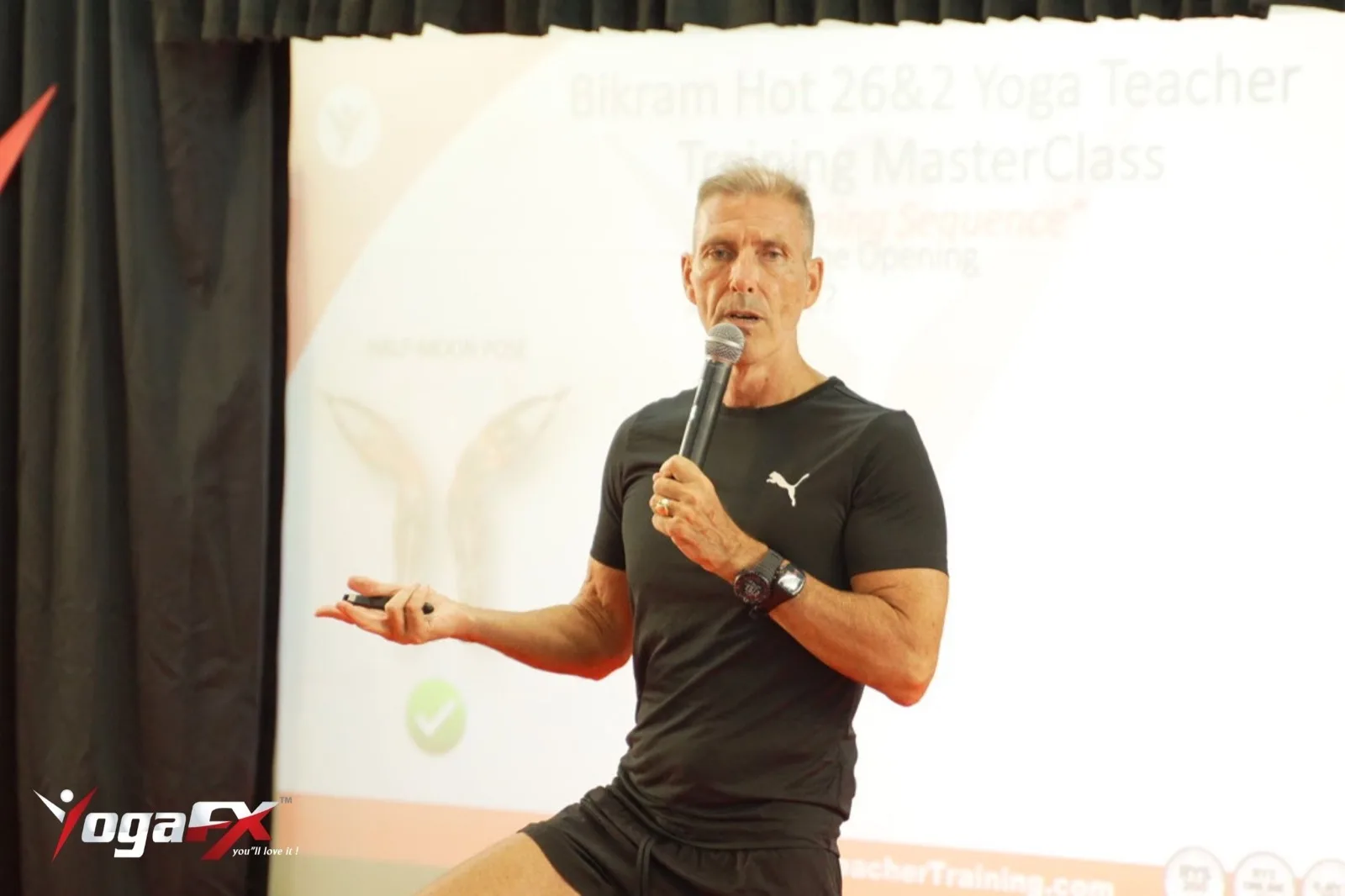
The MasterClass at a glance
The Bikram Hot 26&2 Yoga Teacher Training MasterClass runs for 6 days as a hybrid: pre-course online study, then an intensive in Bali.
The next batch checks in on Sunday 24 January 2027 and checks out on Friday 29 January 2027 at Soham Wellness Center in Seminyak. It leads to a Yoga Alliance RYT 200-Hour certification and the Bikram Hot 26&2 200-Hour International Yoga Certification. The price is currently US$1,899 (Early Bird, normally US$1,999), with instalments from US$250 per month.
UK applicants usually compare this with training at home, so these two guides help: Bali versus the UK for teacher training and hot yoga teacher training cost in the UK. If you would rather try a class first, the Seminyak studio offers a free 1-Day Guest Pass, so your first class is free.
FAQ
How many postures are in a hot yoga class?
The original hot yoga sequence has 26 postures and 2 breathing exercises. They are practised in a fixed order across a 90-minute class in a room heated to around 40°C. The standing series comes first, then a rest, then the floor series, and a final breathing exercise closes the class.
What are the 26 postures in hot yoga?
They run in order from Half Moon, Hands to Feet, Awkward, Eagle and Standing Head to Knee, through Triangle, Tree and Toe Stand, then Dead Body, Wind-Removing, the backbends, Camel and Rabbit, to the seated folds and Spine Twisting. Each posture is explained in detail above, including what it targets and how beginners can adapt it.
Can beginners do all 26 postures on their first try?
Most beginners attempt every one of the hot yoga postures from the first class but with modified depth. The instructor talks you through each pose in real time, so you do not need full flexibility to start. Depth develops with consistent practice. Resting when you need to is part of the practice, not a failure.
Does hot yoga improve posture?
Research on hot yoga has measured strength and flexibility rather than standing posture directly. In one small eight-week trial, lower back, hamstring and shoulder flexibility increased, which may help you move more comfortably. Good alignment still comes from teaching and practice, so ask your instructor for feedback on your shapes.
What is the grasshopper pose in yoga?
The name refers to two postures. Locust Pose (Salabhasana) takes its Sanskrit name from shalabh, meaning grasshopper or locust, and is a back-strengthening posture done lying face down. Grasshopper Pose (Parsva Bhuja Dandasana) is an advanced arm balance that combines a deep twist with hip opening, also known as Dragonfly Pose.
Who should not do Camel Pose?
Avoid Camel Pose (Ustrasana), or ask your teacher for a modification, if you have a neck or lower-back injury, recent abdominal or spinal surgery, very high or low blood pressure, or a migraine. Pregnant students should check with their doctor. Beginners can keep their hands on their lower back and should come up slowly.
Ready to try the hot yoga postures, or to learn to teach them? Message Mr. Ian on WhatsApp at +62 811 3888 330 to ask about the next steps. He and the team can answer questions about dates, the online pre-course, what to bring, and how a UK applicant can plan the trip to Bali.