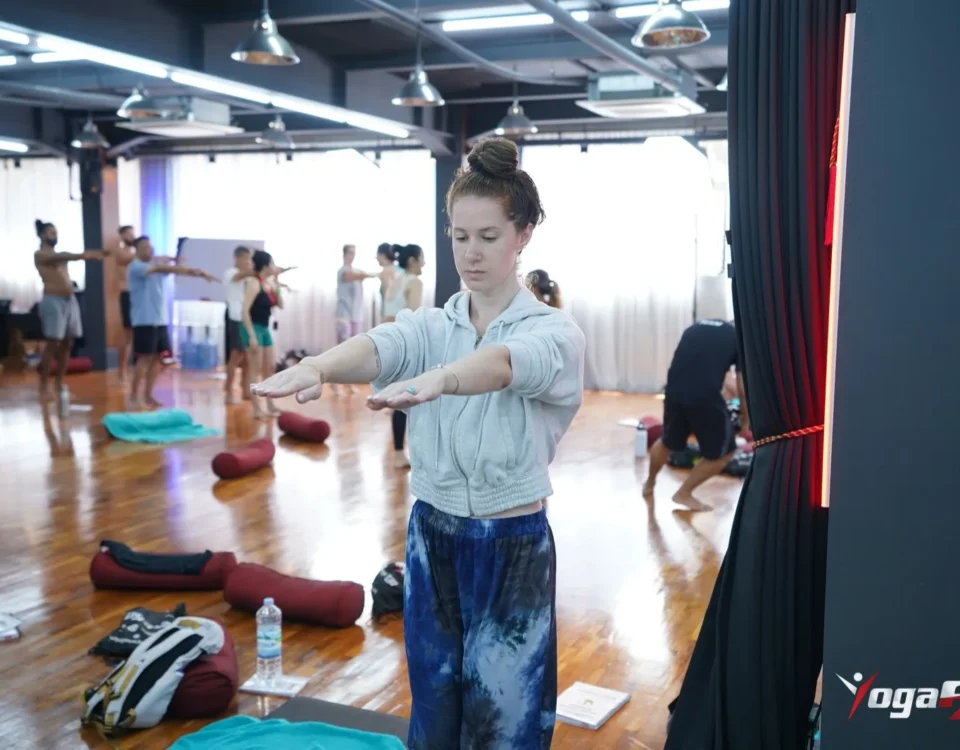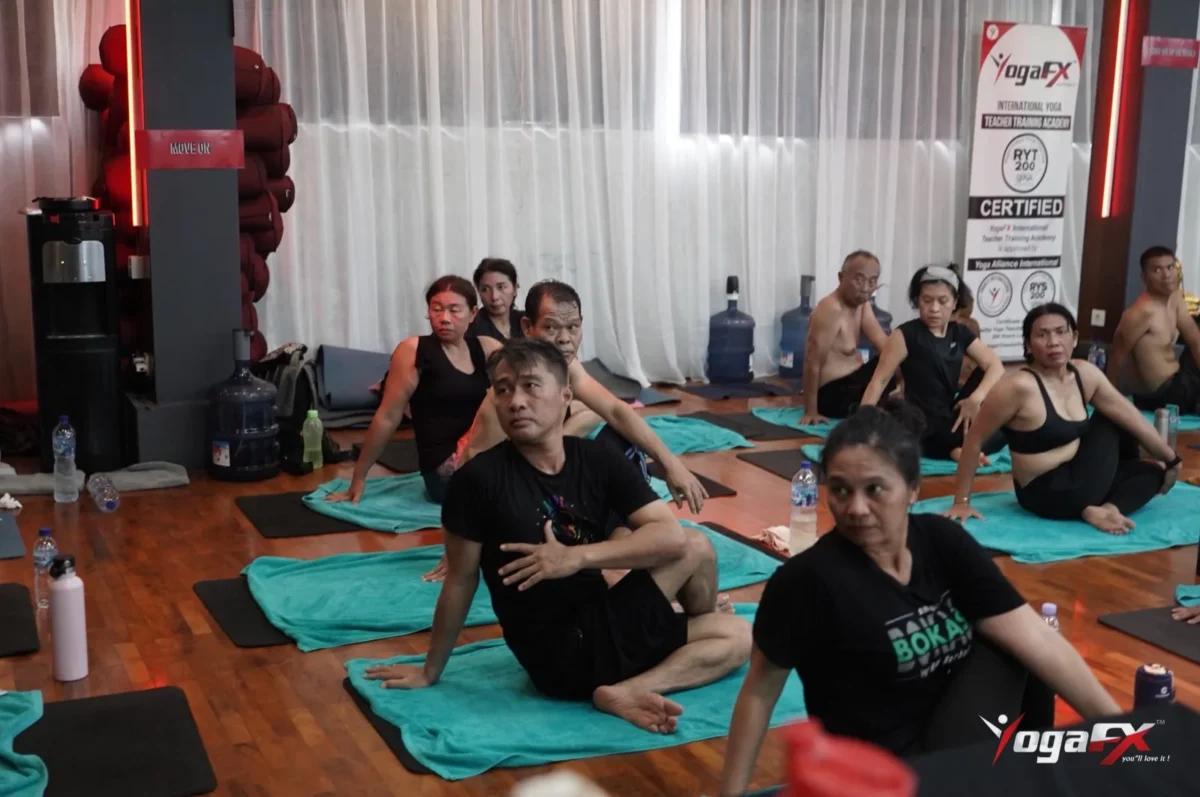

Hot yoga vs infrared sauna comes down to what you want the heat to do. A class makes you move for 90 minutes in a warm, humid room. An infrared sauna lets you sit for about 20 to 30 minutes while panels warm your body. UK infrared yoga studios fall between the two.

At YogaFX, Mr. Ian Terry (E-RYT 500, more than 12,000 teaching hours) trains teachers in Original Hot 26&2 Yoga.
This guide is for UK readers who see “infrared hot yoga” on a timetable, or an infrared cabin at a spa, and wonder how it compares with a class at 40°C. It uses NHS and Cleveland Clinic advice on infrared saunas, one randomised trial of heated yoga and a plain list of questions to ask before you pay.
Hot Yoga vs Infrared Sauna: Three Things UK Readers Mix Up
The hot yoga vs infrared sauna question gets muddy because three different things share the words “infrared” or “hot”. Pull them apart first, and the rest gets easier.
- An infrared sauna. A cabin where panels warm your body directly, and you sit or lie still. Cleveland Clinic puts infrared saunas at 43 to 57°C, against 66 to 91°C for a traditional sauna.
- An infrared hot yoga class. A studio with infrared panels in the walls or ceiling and a yoga class underneath. The room, the sequence and the humidity depend on the studio.
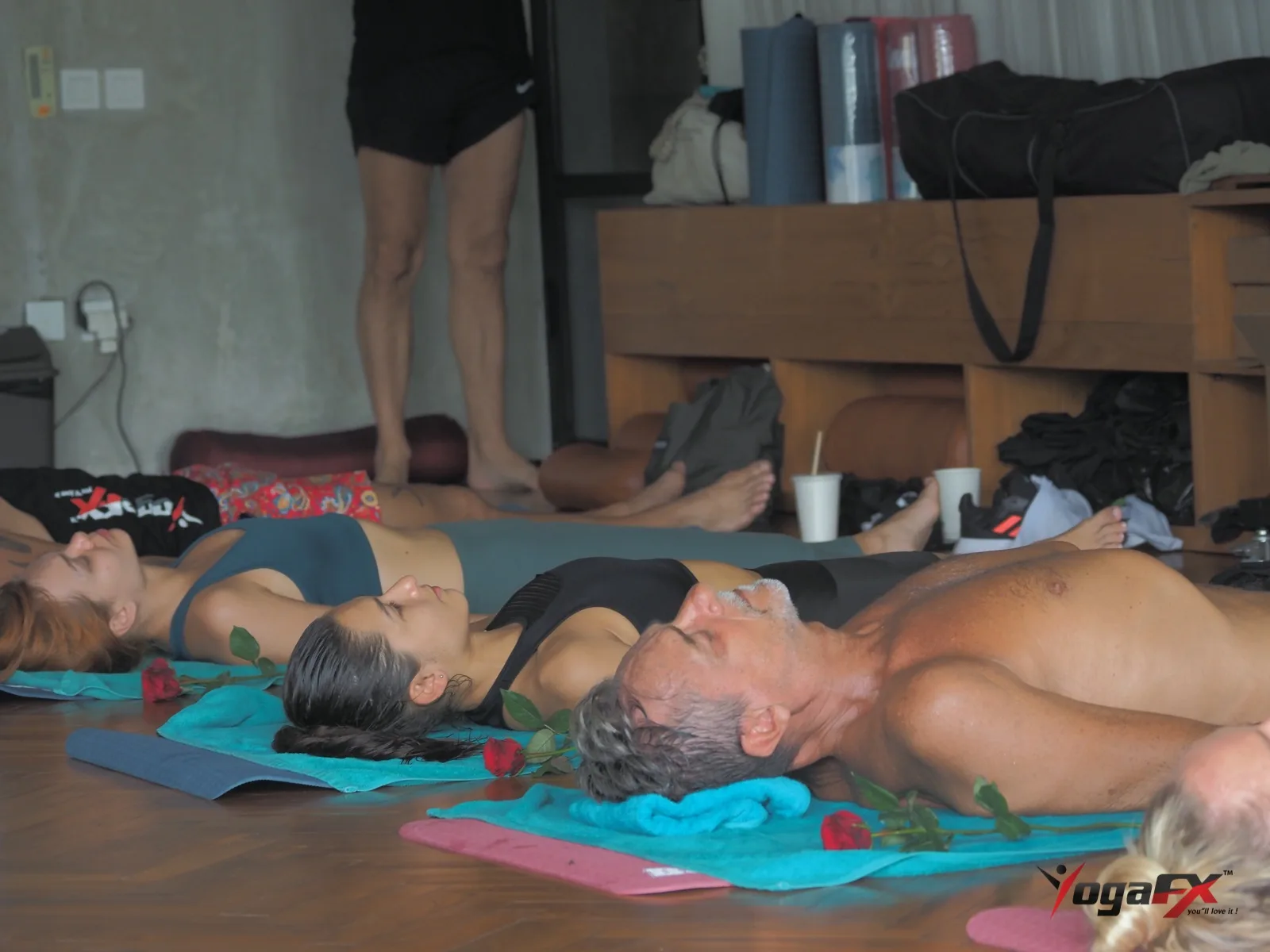
- An Original Hot 26&2 class. A fixed sequence of 26 postures and 2 breathing exercises, taught for 90 minutes. In Bali, YogaFX holds the room near 40°C and 40% humidity with natural tropical heat, not heaters.
So hot yoga vs infrared sauna is really a three-way choice. Sitting in a cabin, moving under panels and moving in a humid room give your body three different jobs. If your gym spa has a steam room instead, read hot yoga vs steam room for the humidity side. For a traditional sauna, see hot yoga vs sauna.
Why the Question Comes Up in a British Winter
From November to March, plenty of people want a warm room after work. In the UK you can meet all three options: a sauna at the gym, an infrared cabin at a spa and an infrared or heated class at a studio. All of them promise warmth.
Only the class gives you a teacher, a sequence and 90 minutes of movement. That is why hot yoga vs infrared sauna deserves a proper answer, not a quick yes or no.

5 Honest Checks Before You Book an Infrared Hot Yoga Class
Studios use the same words for very different rooms, so hot yoga vs infrared sauna is hard to judge from a timetable alone. These five checks take two minutes on the phone or the website, and they tell you what you are really buying.
1. Where Does the Heat Come From?
Ask whether the studio uses infrared panels, a fan heater, underfloor heating or a mix. Infrared warms your body directly, so the air can feel cooler than you expect. A fan heater warms the air, so the room feels hot the moment you walk in.
2. What Is the Room Temperature?
Ask for the number, and ask whether it is held steady for the whole class. We can’t quote a figure for any UK studio, because studios differ. A straight answer tells you what you are buying. A vague one is a sign to ask again.
3. Is the Humidity Controlled?
An Original Hot 26&2 room in Bali sits near 40% humidity, which lets sweat evaporate at a steady pace. Some infrared rooms are drier. The studies we cite below did not compare dry and humid heated rooms, so don’t assume results from one carry over to the other.
4. Is the Sequence Fixed, and Who Teaches It?
A 26&2 class follows the same order every time, so you can track your own progress. Flow and sculpt classes change from week to week. Both can be good, but they train different things. Ask who teaches the class and how they trained.
5. What Does Your Health Say?
Heat adds load to your heart and your fluid balance. The NHS says people with long-term conditions such as diabetes or heart problems are more at risk of heat exhaustion or heatstroke. So speak to your GP before you start, and tell the teacher about anything you have been told to watch.
Infrared Sauna, Infrared Class and a 40°C Room Side by Side
Table 1 puts the three options in one place. Use it to match each one to what you want from your hour. Where a number depends on the studio, the table says so instead of guessing.
| Feature | Infrared sauna session | Infrared hot yoga class | Original Hot 26&2 class in Bali |
|---|---|---|---|
| How you are heated | Panels warm your body directly | Panels in the studio plus your own effort | Your own effort in a humid room warmed by natural tropical heat |
| Air or room temperature | 43 to 57°C (Cleveland Clinic) | Set by the studio, so ask | About 40°C at YogaFX Bali |
| Humidity | Not a stated feature in the sources we checked | Set by the studio, so ask | About 40% at YogaFX Bali |
| What you do | Sit or lie still | Varies with the class style | 26 postures and 2 breathing exercises |
| Typical length | 20 to 30 minutes suggested by Cleveland Clinic | Set by the studio timetable | 90 minutes |
| Counts as exercise? | Cleveland Clinic says it is not a substitute for a workout | Depends on the class | Yes, you move for the whole class |
| Best fit | Rest, if your GP is happy with heat | A heated flow class in a drier room | Learning a repeatable sequence and a teaching skill |
What the Table Tells You
Notice what the table doesn’t say. It doesn’t say one option beats the others, because the three do different jobs. A cabin is passive. A class is active. An infrared class sits in the middle, and which side it leans towards depends on the teacher and the room.
That is also why hot yoga vs infrared sauna is a poor contest of temperatures. The infrared sauna air is hotter than the Bali class room on paper, yet most people find the class harder, because they move for 90 minutes while they sweat.
Hot Yoga vs Infrared Sauna in Six Numbers
What the Research Says About Hot Yoga vs Infrared Sauna
Search for infrared sauna vs hot yoga benefits and you will find plenty of bold claims. Hospital sources are more careful.
Start with the sauna side. Cleveland Clinic’s guide to infrared saunas lists six possible benefits, from relaxation to heart health, but it hedges all the way through. On heart health, it says more research is needed, especially on infrared saunas. On pain, it notes that many of the studies are small.
It also draws a line that matters here. Cleveland Clinic tells readers not to assume that a sauna session is a substitute for a workout. As a fitness question, that is the clearest answer to hot yoga vs infrared sauna we found from a hospital source.
What the Heated Yoga Trial Found
The yoga side has a randomised trial. Nyer and colleagues (2023), published in the Journal of Clinical Psychiatry, tested community-delivered heated hatha yoga against a waitlist in adults with moderate-to-severe depression. The trial ran for eight weeks at two community studios, and 65 people were analysed.
In the yoga group, 59.3% had a drop of 50% or more in depression symptoms, compared with 6.3% of the waitlist group. Participants averaged about 10 classes over the eight weeks, which is a little more than one a week.
Three cautions apply. The trial compared yoga with waiting, not with a sauna. Most of the people in it were women. And it studied heated hatha yoga, so it can’t tell us whether panels, fans or tropical air made any difference. That caution applies to every hot yoga vs infrared sauna claim you read online.
So the result suggests that heated yoga may help some adults, but it isn’t a treatment. If you live with depression, speak to your GP before you change anything.
What Nobody Has Shown Yet
In the sources we checked, no study puts an infrared sauna and a yoga class head to head. That gap matters. Anyone who tells you that one clearly beats the other is going beyond the evidence. Treat hot yoga vs infrared sauna as a question of fit, and let your own health and your goals decide.
Hot Yoga vs Infrared Sauna Safety: Heat Illness, Pregnancy and Long-Term Conditions
Heat is not risky for everyone, but it isn’t harmless for everyone either. In the hot yoga vs infrared sauna choice, safety matters in both rooms. The NHS page on heat exhaustion and heatstroke lists the signs to watch for.
Signs of Heat Exhaustion
- Tiredness, dizziness and a headache
- Feeling sick, or being sick
- Heavy sweating with pale, clammy skin
- Cramps in your arms, legs and stomach
- Strong thirst and feeling irritable
The NHS says heat exhaustion usually doesn’t need emergency help if you can cool down within 30 minutes. Heatstroke is different. It calls heatstroke a medical emergency, with a very high temperature, hot skin without sweating, confusion and fast breathing among the signs. In that case, call 999.
What Cleveland Clinic Adds for Saunas
- Dehydration. Bring water, and avoid alcohol around a session.
- Dizziness or nausea. If you suddenly feel dizzy or nauseated, get out of the sauna straight away.
- Pregnancy. Cleveland Clinic says sauna use, especially early in pregnancy, can harm the fetus.
- Trying for a baby. It says prolonged heat can temporarily lower sperm count and sperm health. Our guide to hot yoga and male fertility covers the same question for classes.
- Existing conditions. Check with your healthcare provider before you start an infrared routine.
The same sense applies in a class. Drink water, rest when you need to and leave the room if you feel unwell. For who should check first, see the five checks above. This is general information, not medical advice, so consult a healthcare professional about your own situation.
Hot Yoga vs Infrared Sauna in a UK Week: Where Each Fits
Time and money often settle hot yoga vs infrared sauna before physiology does. A 90-minute class plus travel takes most of an evening. A sauna or infrared cabin can slot into a lunch break. Prices vary by town and by studio, so check the timetable and ask what a single visit costs before you commit.
Because both options raise your heart rate and your fluid loss, space them out. Here is one example week, not a prescription:
- Monday: a heated class, then water and a proper meal.
- Wednesday: a rest day, or a gym session with no extra heat.
- Thursday: a second class if you feel fresh.
- Saturday: a short sauna or infrared session after a walk, with a drink within reach.
Notice that the plan never stacks the two on one day. If your main goal is to switch off, our guide to yoga for nervous system regulation shows how breathing and pacing can calm you without extra heat.
Three Questions to Settle It
Use these to settle hot yoga vs infrared sauna for your own week.
- Do I want to train or to rest? Train points to the class. Rest points to the cabin.
- Has a GP or midwife told me to avoid heat? If yes, stop there and ask before either.
- How much time do I have? A lunch break suits a sauna. An evening suits a class.
Natural Tropical Heat in Bali vs Panels in a UK Winter
The humid room is one reason hot yoga vs infrared sauna feels so different in practice.
A UK studio has to make heat in a cold building. That is why panels, fans and heaters exist. In Bali, the room starts warm and humid, so the studio works with the climate instead of against it. YogaFX holds its class near 40°C and 40% humidity with natural tropical heat, not electric heaters.
The class itself is also different. It is a scripted dialogue, taught with no music and no teacher demonstration, so you listen and do the work yourself. For a longer look at the sauna evidence from the Bali side, Mr. Ian’s companion piece on how a 26&2 class compares with an infrared sauna goes deeper into the research.

From Infrared Curiosity to a Teaching Career in Bali
Some people start with a sauna habit, move to a heated class and then wonder what it would take to teach. The hot yoga vs infrared sauna question often leads there. Mr. Ian Terry trained for five years, from 2014 to 2019, with the founder of the Bikram Hot 26&2 method. YogaFX has graduated 1,500+ teachers from 80+ countries since 2017.
The Bikram Hot 26&2 Yoga Teacher Training MasterClass is a six-day hybrid: online pre-course study, then an intensive in Bali. The next batch checks in on Sunday 24 January 2027 and checks out on Friday 29 January 2027 at Soham Wellness Center in Seminyak. For a UK trainee, that means about five days off work.
Graduates earn a Yoga Alliance RYT 200-Hour certificate and a Bikram Hot 26&2 200-Hour International Yoga Certification. The Early Bird price is US$1,899, against a normal price of US$1,999, and instalments start from US$250 per month with no interest. Our guide to original hot yoga teacher training from the UK sets out the costs, travel and time off in full.
What YogaFX Trainees Say
Thank you for pushing us, giving this wonderful experience. It has been life changing.
Fabiola, YouTube review, 2024

Amazing Yoga, amazing teacher, I got so much benefits from yogafx.
Volla, Google review, 2020
It’s a really nice feeling to do it together.
Ferra, YouTube review, 2026
FAQ
Is infrared hot yoga safe?
For many healthy adults it can be, if you respect the heat. The NHS lists dizziness, headache, nausea, cramps and heavy sweating as signs of heat exhaustion, and calls heatstroke an emergency. Drink water, rest when you need to and leave if you feel unwell. Speak to your GP first if you have a long-term condition.
Can you do infrared hot yoga while pregnant?
Cleveland Clinic warns that sauna use, especially early in pregnancy, can harm the fetus. The page we checked did not cover heated classes, so don’t assume they are safer. Speak to your midwife or GP before any heated session, and tell the studio you are pregnant before you book.
How long should you stay in an infrared sauna?
Cleveland Clinic suggests thinking in terms of 20 to 30 minutes, and starting at a lower temperature for five to 10 minutes on your first try. Leave at once if you feel dizzy or nauseated. Bring water, skip alcohol and ask your healthcare provider first if you have a medical condition.
Does an infrared sauna count as exercise?
Not in the sources we checked. Cleveland Clinic says infrared sauna effects on the heart may resemble some effects of exercise, but it tells readers not to assume a sauna session replaces a workout. A class asks your muscles, balance and breathing to work. A cabin asks you to sit.
Do I need to see a GP before a heated class?
It is sensible if you have a heart condition, diabetes, blood pressure problems or take regular medication. The NHS says people with long-term conditions are more at risk of heat exhaustion and heatstroke. A quick check costs little, and it lets the teacher know what to watch for.
Still have questions? Message Mr. Ian and the YogaFX team on WhatsApp and we will answer them personally.