Online yoga teacher training is worth it if you need flexibility around a job or family and you are comfortable with the theory-heavy parts of the syllabus arriving through a screen. What most online-only programmes cannot give you is supervised, hands-on correction of your physical technique, which is exactly the gap a hybrid format is built to close.
What “Online Yoga Teacher Training” Actually Covers
Search “online yoga teacher training uk” and you will find dozens of programmes claiming to certify you from your living room. Nearly all of them are structured the same way: recorded lectures on anatomy, philosophy, and teaching methodology, a live Zoom call or two, some written assignments, and a self-recorded video of you teaching a sequence to camera.
Yoga Alliance accepted this model out of necessity during the pandemic, and enough schools kept it afterwards that it is now a permanent category rather than a temporary workaround.
The appeal is straightforward. You keep your job, you train at 9pm after the kids are asleep, and you pay less than you would for a residential course abroad. For the theory-heavy 60 to 70 percent of a 200-hour syllabus, that setup genuinely works. Anatomy, philosophy, and the business side of teaching do not require anyone to watch your body move.
UK candidates in particular tend to search for this option first, since taking four to nine weeks away from a job for a full residential course is a much bigger ask in Britain’s working culture than it is for someone travelling from a country with longer standard leave. That is not a small factor. It is often the entire reason someone starts researching online options before they have looked closely at what the format actually trades away.
Where it gets harder to defend is the remaining portion: the practicum hours where you are meant to demonstrate correct alignment, receive a physical adjustment, and learn to spot the same mistake in someone else’s body from across a room. A Yoga Alliance-aligned 200-hour syllabus typically breaks down into roughly 100 hours of asana technique and teaching methodology, 20 hours of anatomy and physiology, 30 hours of philosophy and ethics, and 10 hours of supervised practicum.
Online courses handle the first three categories reasonably well. It is that last, smallest-looking category, practicum, where the format choice actually changes what you walk away able to do.
Where Fully Online Training Falls Short

Every honest review of online-only YTT programmes eventually admits the same limitation: a camera cannot replace a trained eye standing next to you. Physical adjustments require an instructor who understands anatomy well enough to know when a cue is helping and when it is quietly reinforcing a bad habit, and that judgment does not transfer cleanly through a laptop screen.
A systematic review covering 43 studies and 942 participants found measurable improvements in flexibility, bone density, and general well-being from structured Bikram-style practice, but the studies behind those results were built around supervised, in-person sessions where researchers or instructors could observe form directly (Willmott et al., 2025).
That is not a small detail. If the evidence base for hot yoga’s physical benefits assumes correct form under supervision, a training format that removes supervision is asking you to teach a skill nobody has verified you can safely perform yourself.
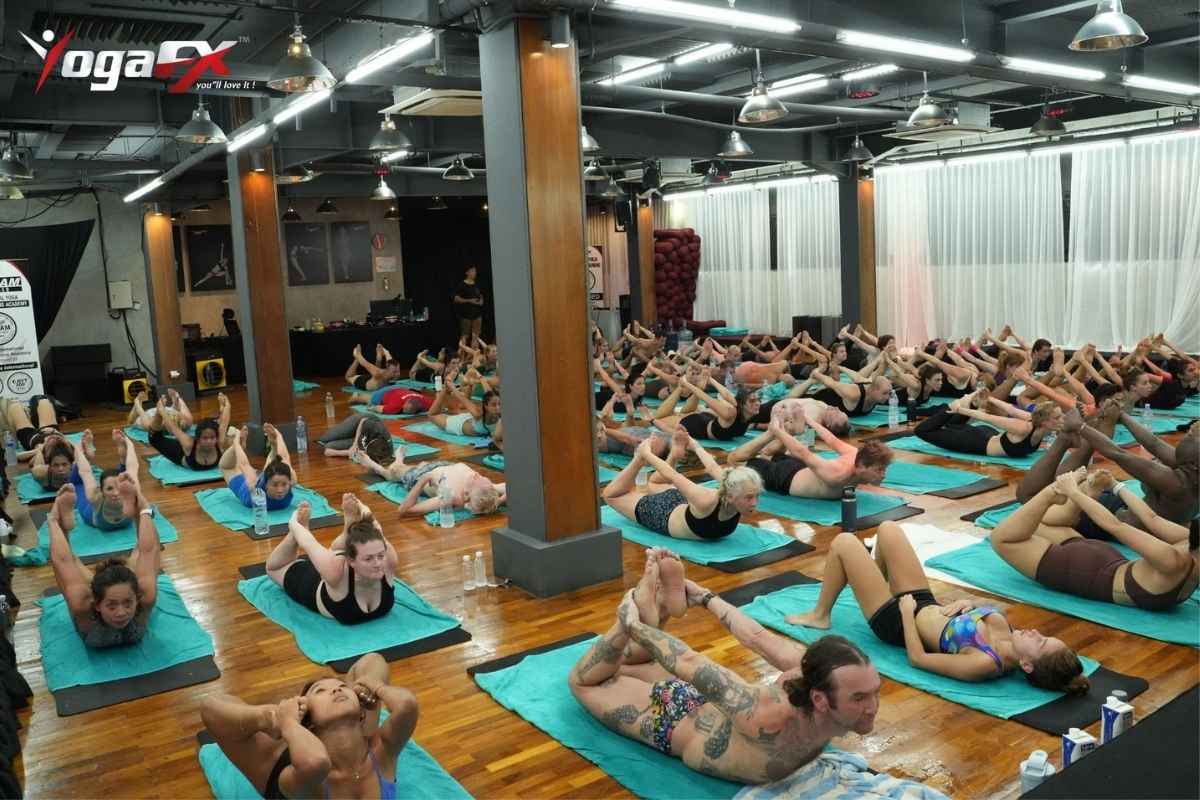
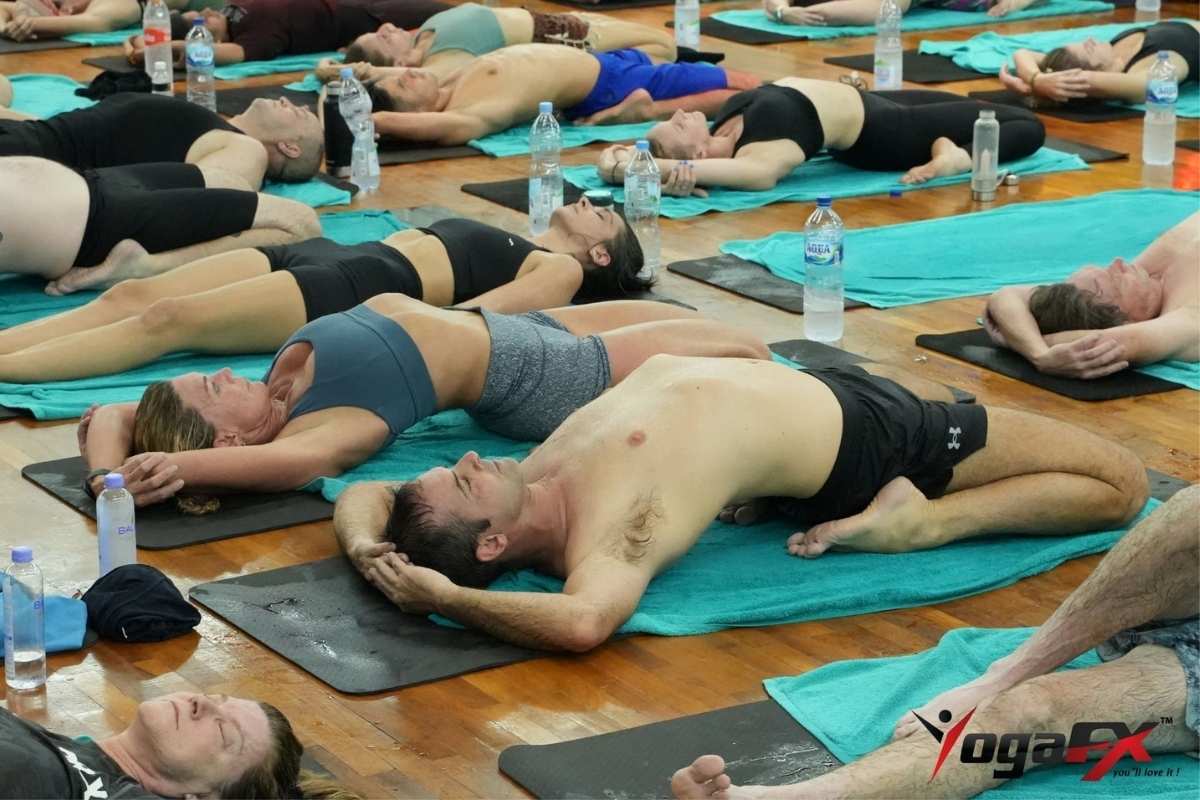
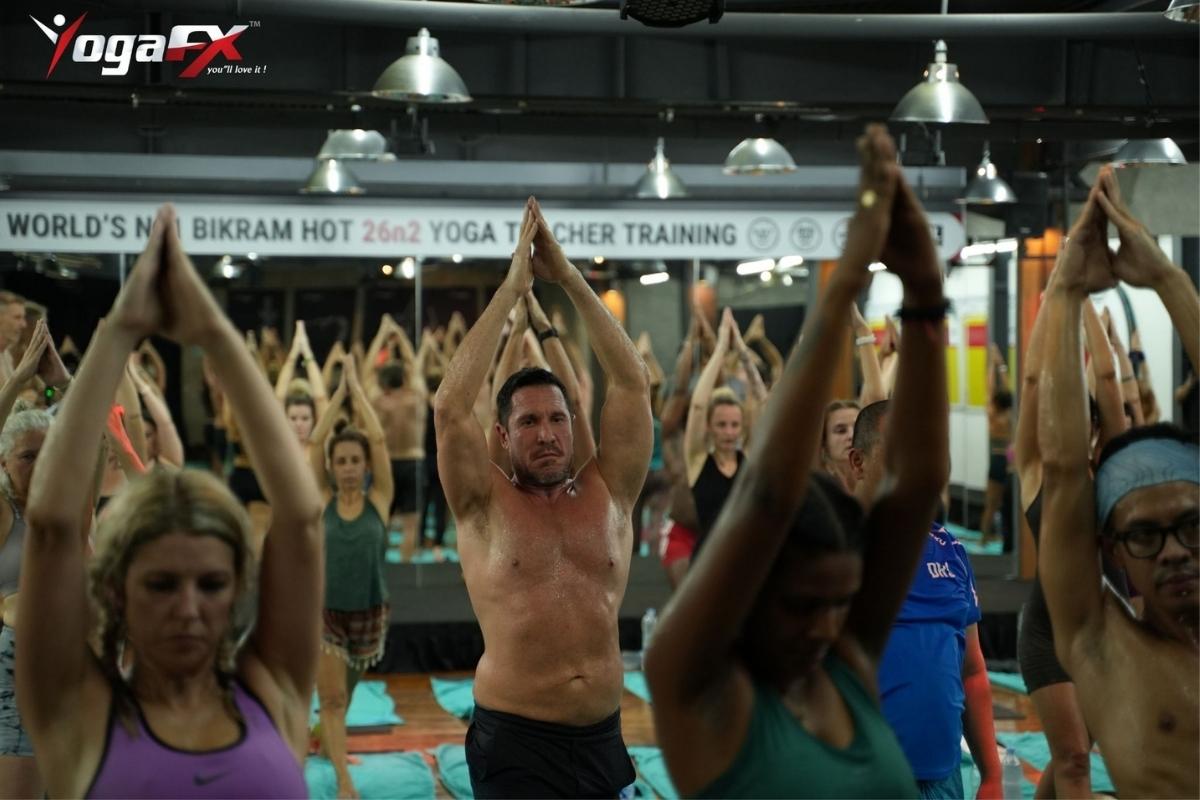
There is also a heat-adaptation problem specific to hot yoga that a purely online Bikram or Hot 26&2 programme cannot address at all. You cannot learn to cue a room through 40 postures at 40 degrees Celsius by watching someone else do it on YouTube. The fixed dialogue, the pacing, the way your own voice needs to project once you are breathless and sweating through your third set of standing postures, none of that translates from a recorded lecture.
This is not medical advice, and if you have an existing injury or health condition, talk to a healthcare professional before starting any intensive physical training programme, online or otherwise.
How Hybrid Training Actually Solves This
A hybrid format is not a compromise between online and in-person, it is a deliberate split of the syllabus by what each delivery method is actually good at. Theory, anatomy, and philosophy move online, where flexibility matters most and physical supervision adds little. Practicum, dialogue delivery, and posture correction happen in person, where supervision is the entire point.
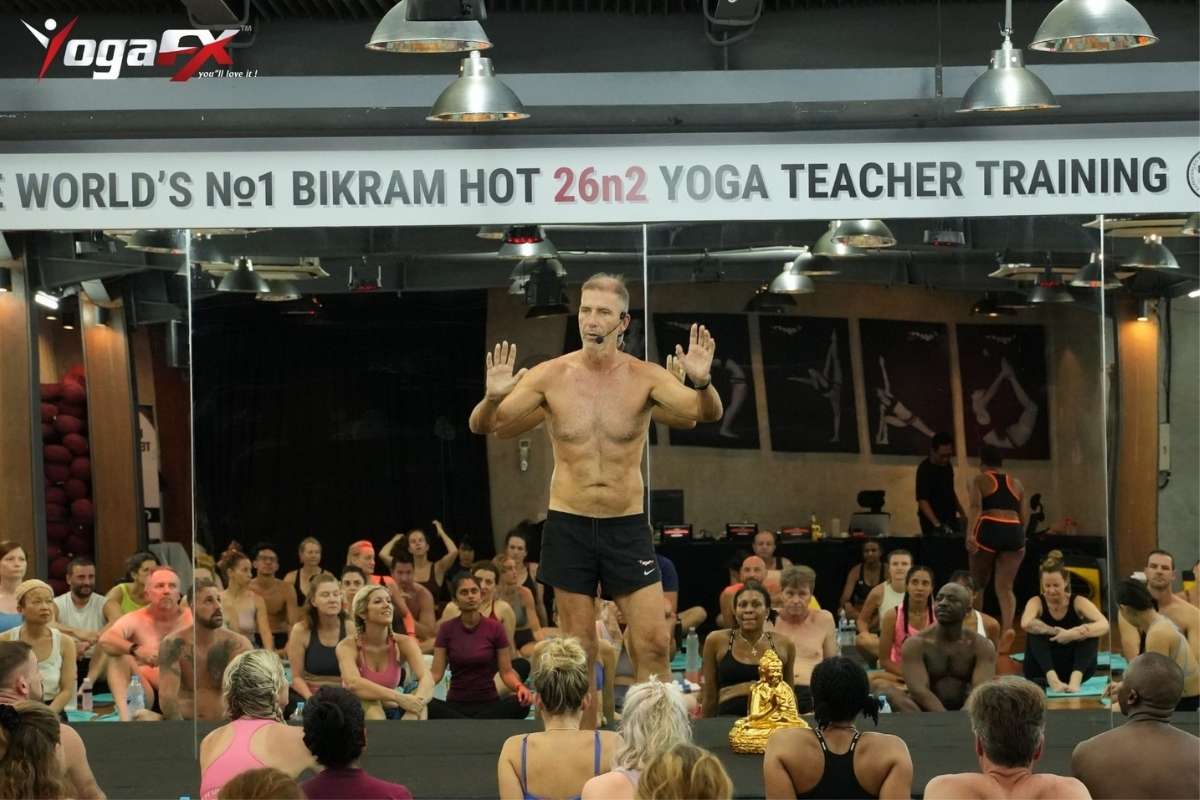
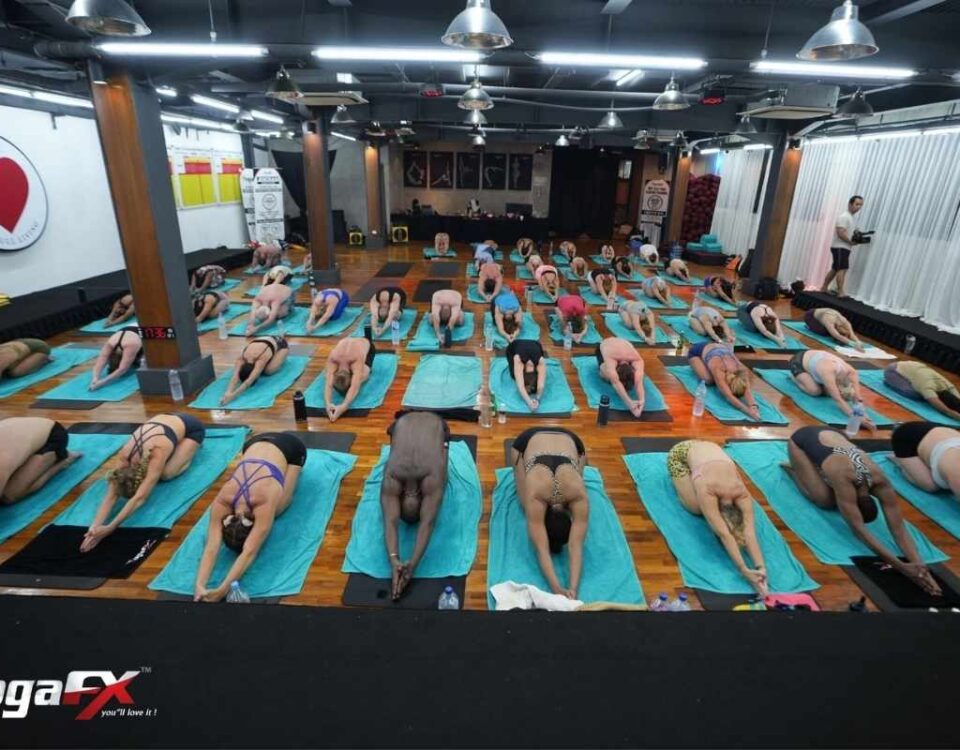
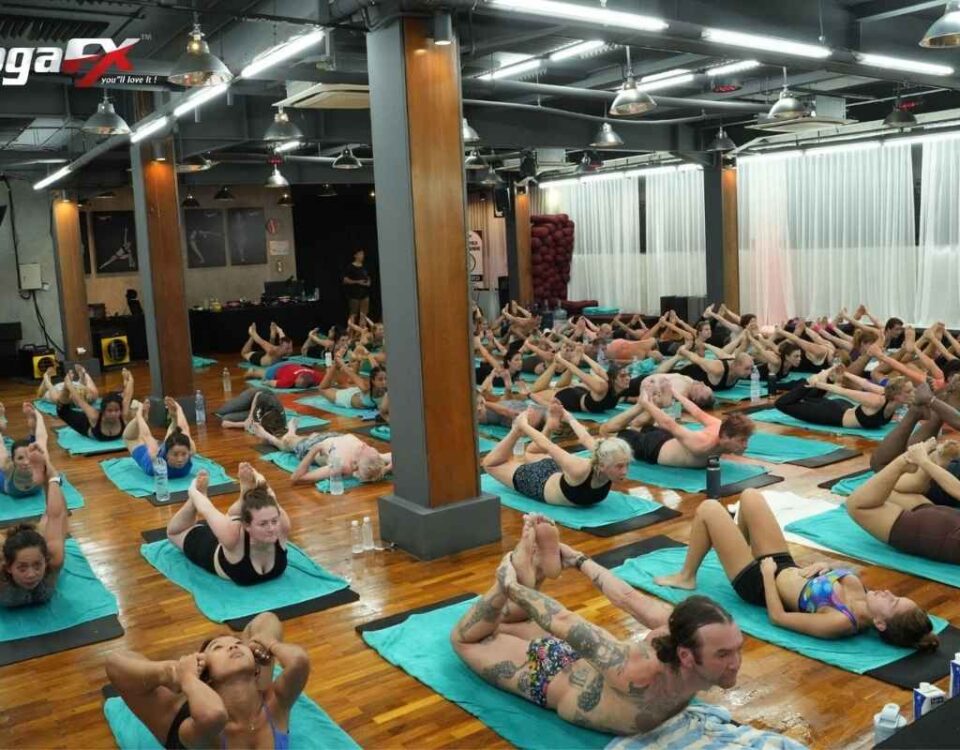
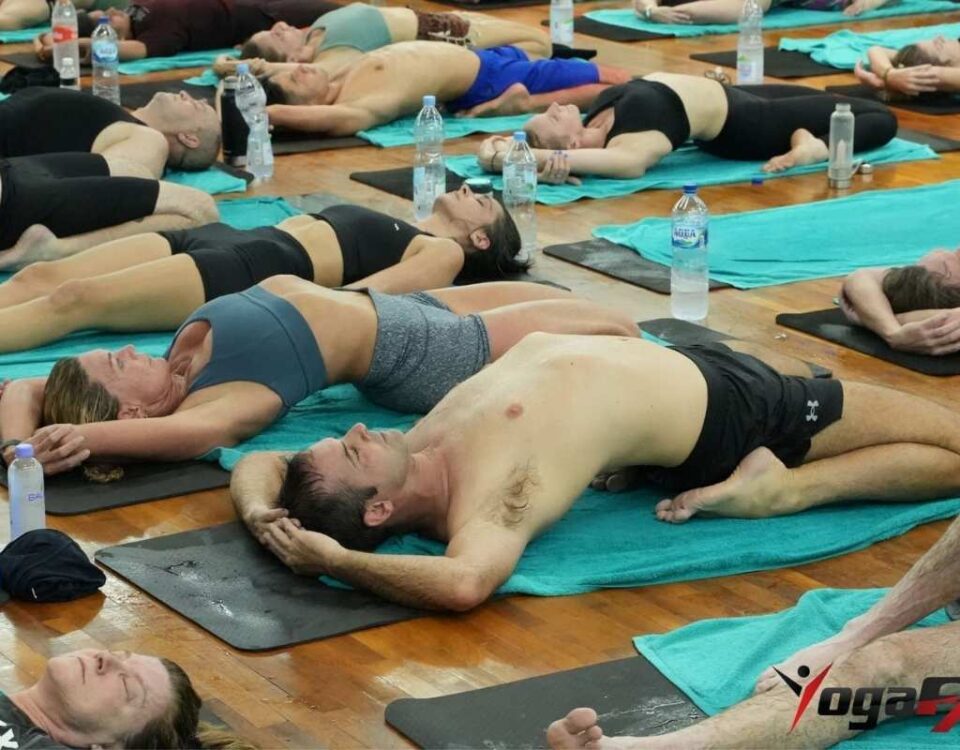
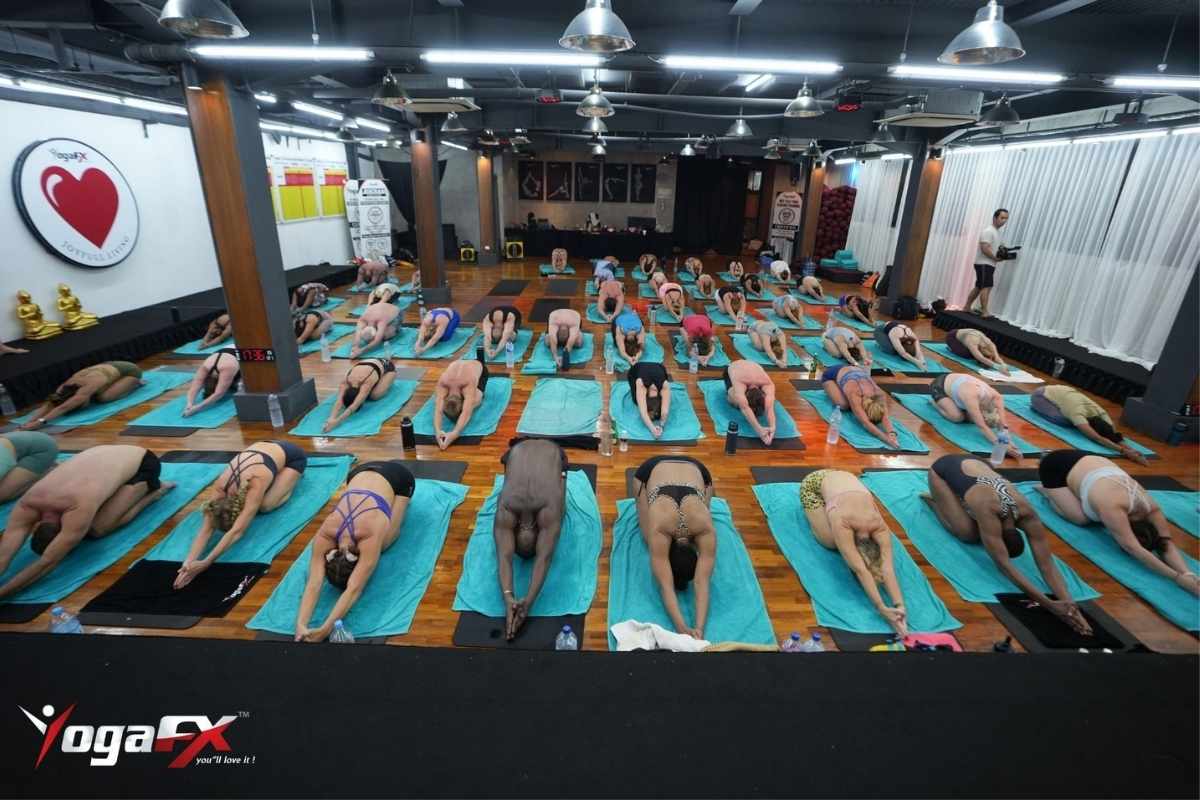
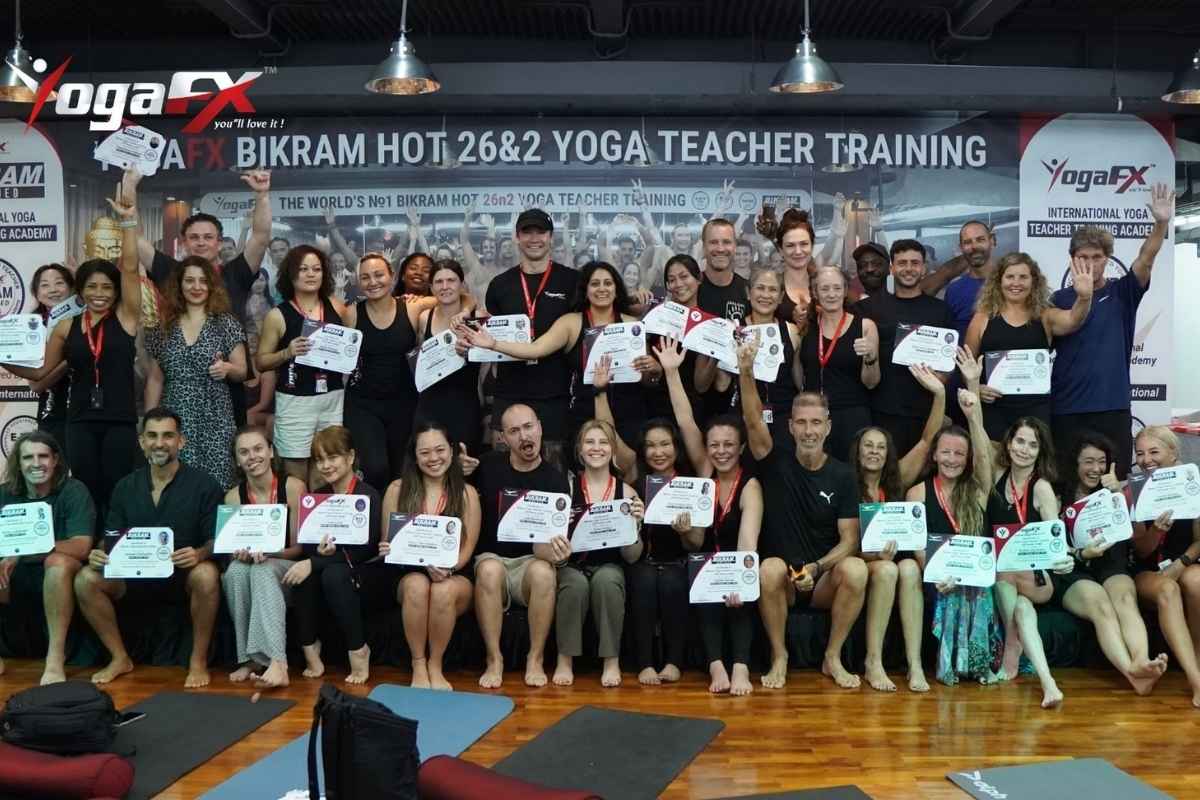
YogaFX‘s programme, led by Mr. Ian Terry, E-RYT 500, structures the certification this way on purpose. Candidates complete the anatomy, philosophy, and teaching-methodology modules online at their own pace before travelling to Bali, then spend six intensive days in Seminyak completing the physical practicum, dialogue delivery, and supervised teaching hours under Mr. Ian’s direct correction.
One UK graduate who went through the programme around a full-time job described the online portion as the piece that made the whole certification fit into a working life she could not otherwise have paused for six weeks.
A study measuring supervised Bikram-style practice found a 20 percent increase in posterior chain strength alongside measurable flexibility and body composition changes over the course of structured, in-person sessions (Tracy & Hart, 2013).
That kind of result depends on correct form being checked and corrected in real time, which is precisely the six-day intensive’s job. The online half does the reading. The in-person half does the part that has to be watched.
The programme caps each intake at 19 students specifically so that six days is enough time for Mr. Ian to correct every candidate’s alignment individually rather than teaching to the group and hoping it lands. That ratio is difficult to reproduce in a fully online format at any price point, because the bottleneck is not content delivery, it is the number of eyes available to watch each student’s body.
What the Online-to-Bali Timeline Actually Looks Like
A common question once someone decides hybrid makes sense is how the two halves actually connect, and whether the online portion is self-paced or scheduled around a fixed start date. Most candidates spend four to eight weeks working through the online modules before travelling, moving at whatever pace fits around a full-time job, though the material is designed to be completed comfortably inside a month for someone studying a few evenings a week.
The six days in Seminyak are not a loose retreat schedule. Each day runs a fixed block of dialogue practice, posture-by-posture correction, and supervised teaching time, with the intake capped at 19 students so Mr. Ian can work through individual corrections rather than general group notes. By the final day, every candidate has delivered the full 26-posture, 2-breathing-exercise sequence under direct observation, which is the piece a screen cannot verify.
Online-Only vs Hybrid vs Full In-Person
Here is how the three formats actually compare once you look past the marketing on each programme’s homepage.
| Format | Typical Cost (UK students) | Time Away From Work | Supervised Physical Practicum | Best Suited To |
|---|---|---|---|---|
| Fully online | Lowest, often under £1,200 | None | Minimal to none, usually self-recorded video only | Candidates who already teach another movement discipline and mainly need the credential |
| Hybrid (online + short intensive) | USD 1,699-2,799, roughly £1,340-£2,200 at current exchange rates | 6 days | Full, supervised in person | Working professionals who need flexibility on theory but still want verified physical competence |
| Full in-person residential | USD 10,000-15,000+ | 4-9 weeks | Full, supervised in person | Candidates who can take an extended break and want total immersion |
If you already have a teaching background in another physical discipline, such as Pilates or a martial art, a fully online programme may genuinely be enough for you to translate that existing body awareness into a new credential. Most people considering hot yoga teacher training for the first time do not have that background, which is why the physical supervision the hybrid and residential formats provide is not a nice-to-have, it is the part of the training that actually teaches you to teach.
Cost is usually the deciding factor people reach for first, but it is worth weighing against what you are actually buying at each price point. A fully online course at under £1,200 gets you the theory and a certificate, with no independent verification that you can safely lead a room through 90 minutes of heat. A full residential programme at USD 10,000-15,000 gets you the same physical supervision as hybrid, stretched across four to nine weeks away from work, family, and income.
Hybrid sits in between on both dimensions deliberately, not as a discount version of the residential format, but as a redesign that keeps the supervised parts and moves everything else online where flexibility costs nothing in quality.
Is It Legit? What to Check Before You Enrol Online
Not every online or hybrid programme claiming Yoga Alliance recognition delivers what that recognition actually implies. The marketing language across schools is similar enough that it is genuinely hard to tell a rigorous programme from a diploma mill without asking specific questions. Before you pay a deposit, check these four things.
- Yoga Alliance registration, not just accreditation. Search the school directly on Yoga Alliance’s registry rather than trusting a logo on their homepage. Some schools display accreditation badges that apply to continuing education credits, not the full RYT 200 pathway, and the distinction only becomes obvious after you have already paid.
- Who actually supervises the practicum. Ask by name who corrects your physical practice and what their teaching hours are. A programme that cannot answer this specifically, or that points you to a rotating pool of assistants, is likely relying on peer feedback rather than instructor supervision.
- How practicum hours are actually verified. Self-recorded video reviewed asynchronously is a different level of scrutiny than live, in-person correction. Neither is automatically disqualifying, but you should know which one you are paying for before you commit a deposit.
- Independent reviews from recent graduates. Google reviews and YouTube testimonials from people who trained in the last 12-18 months tell you more than a school’s own marketing copy about how the current version of the programme actually runs, since curricula and instructor availability both shift over time.
Being upfront here matters for a UK student weighing this decision from several thousand miles away: this is independent hot yoga teacher training, not an official Bikram Choudhury Teacher Training programme, and any school claiming otherwise should raise a flag regardless of format.

If you are still deciding between formats, it is worth reading how the hybrid model compares to a full residential course in Bali versus Thailand, and how the total cost breaks down in our UK cost guide. For a full walkthrough of what the six-day intensive itself covers, the complete UK guide breaks down every stage of the programme, and if physical safety during practicum is a concern, our piece on injury-prevention skills covers exactly how supervised correction protects candidates during the intensive.
FAQ
Is online yoga teacher training worth it?
It is worth it for the flexibility and lower cost, particularly for the theory-heavy portions of a 200-hour syllabus. Where it falls short is supervised physical practicum, which is why hybrid formats, combining online theory with a short in-person intensive, tend to deliver a more complete and verifiable certification.
Is online yoga teacher training legit?
Some are, some are not. Check the school directly on Yoga Alliance’s registry, ask specifically who supervises the physical practicum, and read reviews from graduates in the last 12-18 months rather than relying on the school’s own marketing claims.
What’s the real difference between online and in-person yoga teacher training?
Online delivers theory, anatomy, and philosophy effectively. In-person delivers supervised correction of your physical technique and dialogue delivery, which cannot be verified through a recorded video. The difference matters most in the practicum hours, not the lecture content.
How does hybrid yoga teacher training actually work?
You complete anatomy, philosophy, and teaching-methodology modules online at your own pace, then travel for a short in-person intensive, typically 6 days, where an instructor supervises your physical practicum, corrects your form directly, and verifies your dialogue delivery before certification.