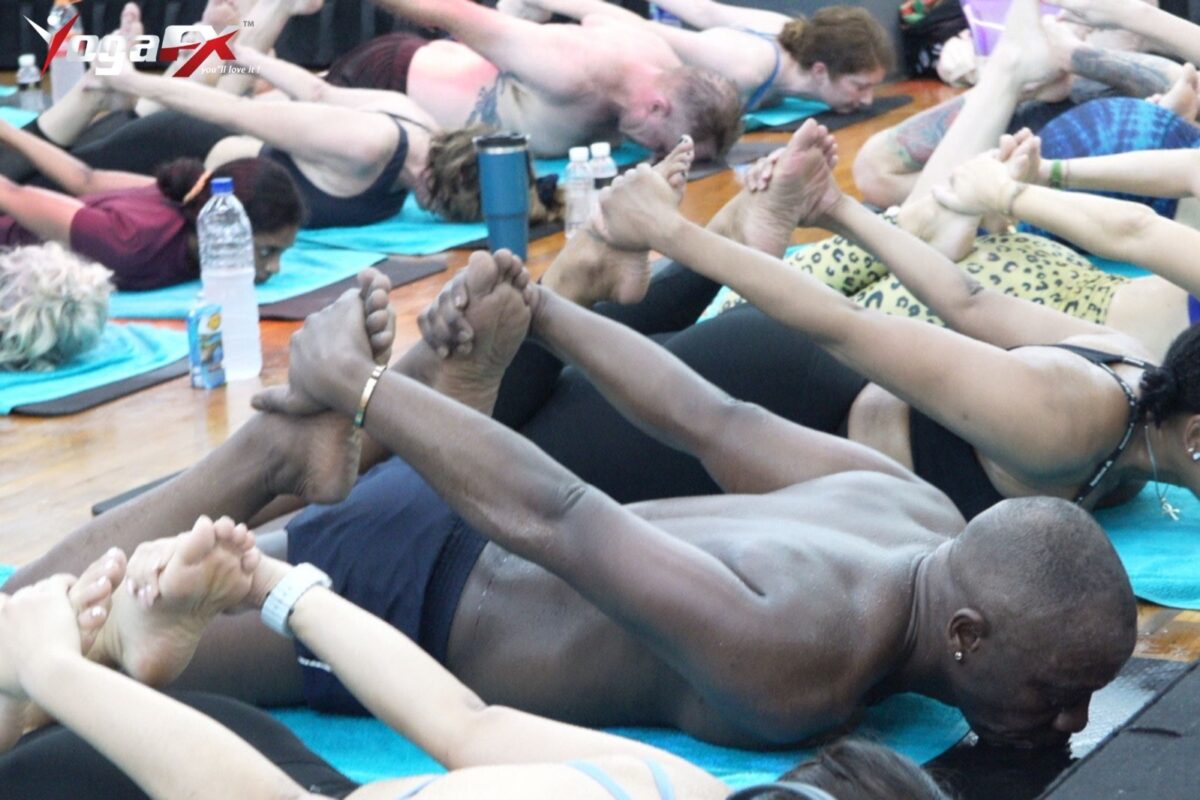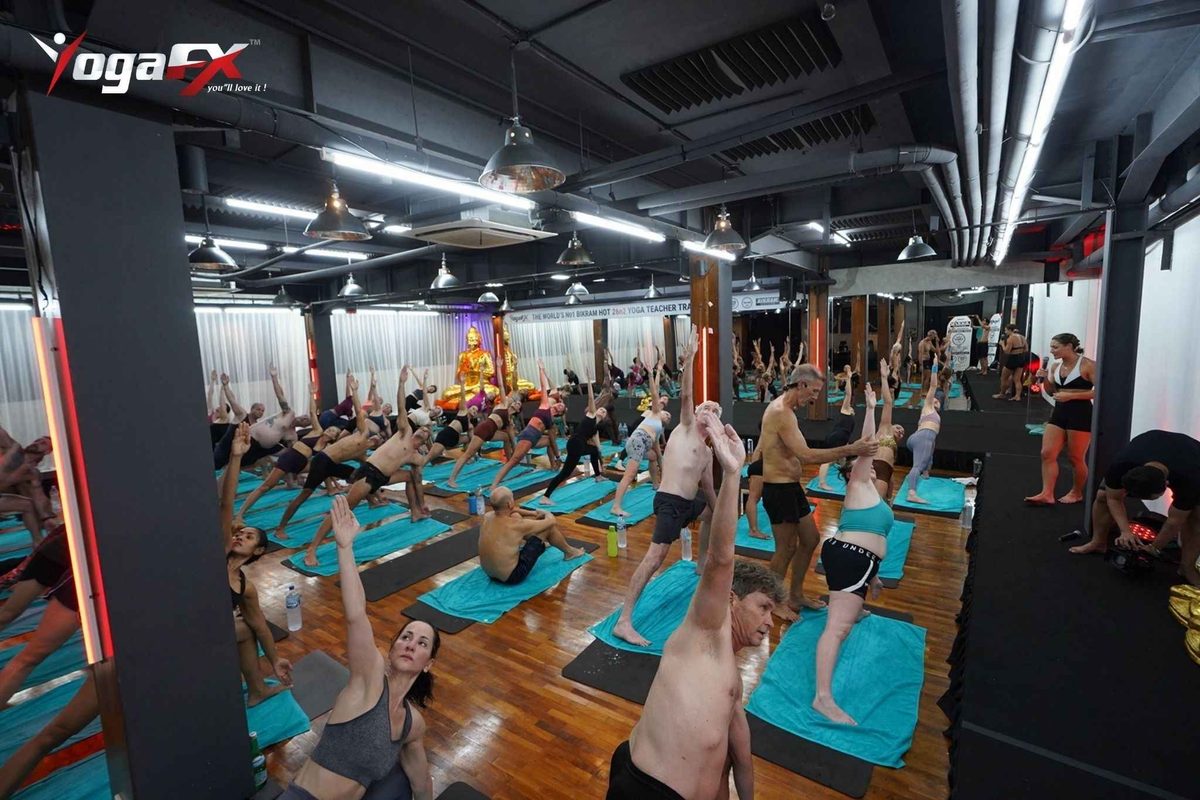
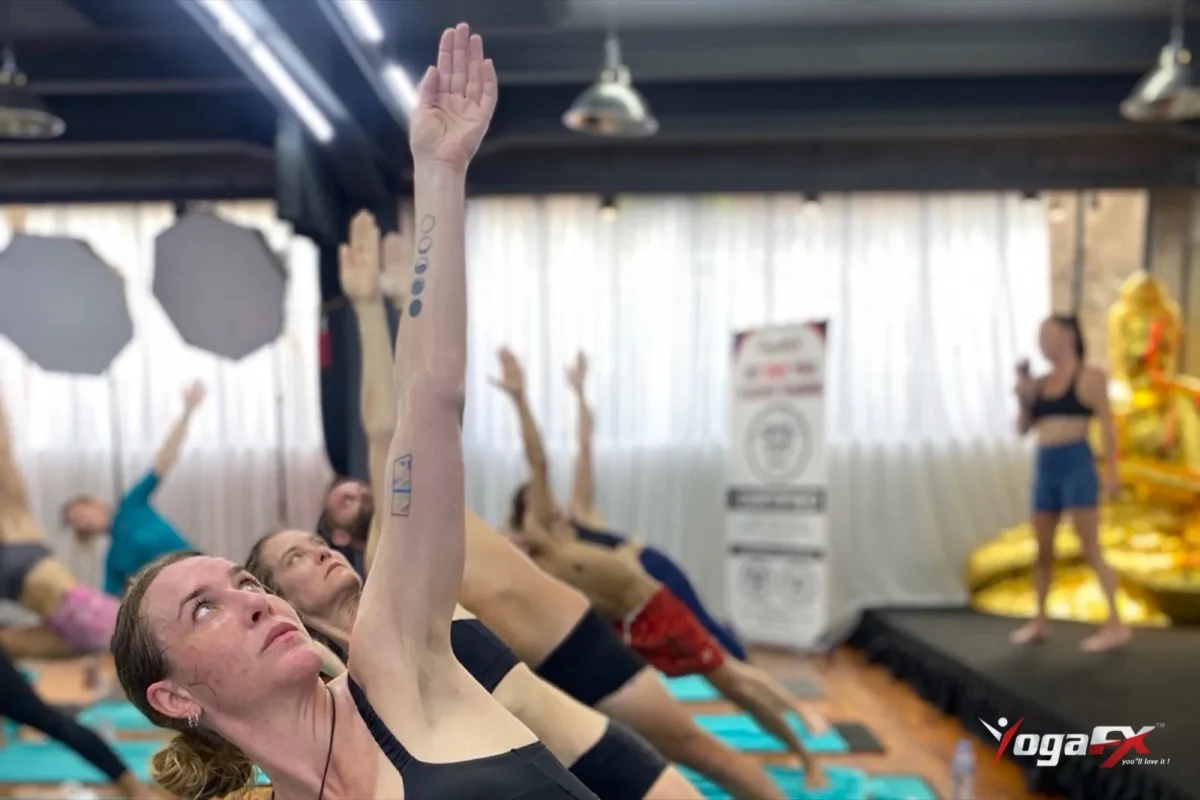
The main yoga benefits for men are stronger muscles through a full range of motion, looser hips and hamstrings, better balance and calmer stress. In UK terms, yoga counts towards the strengthening target of two days a week. It does not replace your 150 minutes of aerobic activity.

That answer comes with a catch. The UK Chief Medical Officers set the guidelines, and they ask for more than one type of movement each week. So the useful question about yoga benefits for men is how yoga fits around your walking, cycling, gym or football, not whether it beats them.
This guide checks each of the yoga benefits for men against the official numbers.
It also flags what the research can’t yet show, and it ends with what a UK man should check before starting. The view comes from YogaFX, where Mr. Ian Terry, an E-RYT 500 teacher with more than 12,000 teaching hours, runs the training. This is general information, not medical advice, so please consult a healthcare professional before you change your routine.
Yoga Benefits for Men, Measured Against the UK Guidelines
The UK guidelines work like a weekly checklist, so it helps to use them as one. Adults aged 19 to 64 should do at least 150 minutes of moderate activity or 75 minutes of vigorous activity each week. They should also do strengthening work for all the major muscle groups on at least 2 days a week.
Both figures appear in the NHS guidance for adults and in the UK Chief Medical Officers’ guidelines, which GOV.UK updated in July 2026.
Where yoga counts, and where it doesn’t
The first of the yoga benefits for men that matters here sits on the second line. Yoga earns its place there. The NHS lists yoga as an example of a muscle-strengthening activity, next to Pilates. So a weekly class can count towards that target.
Aerobic minutes are a different matter, because the NHS does not list yoga as an aerobic example. Keep your brisk walks, rides and runs.
UK recommendations beside what yoga adds
Table 1 sets each UK recommendation beside what yoga can and cannot add. Read the last column before you drop anything from your week.
| UK recommendation | What the guidelines say | What yoga adds | What to keep alongside |
|---|---|---|---|
| Aerobic activity | At least 150 minutes of moderate or 75 minutes of vigorous activity a week | Usually little. Flowing or heated classes raise your heart rate more than slow ones | Brisk walking, cycling, running or swimming |
| Muscle strengthening | All major muscle groups on at least 2 days a week. The NHS names yoga as an example | Long holds load the legs, hips, back and shoulders, so a class can count | Weights or bodyweight sessions if size is your goal |
| Sitting time | Minimise time spent sedentary and break up long spells with at least light activity | Short sequences between meetings or after a long drive | A short walk every hour |
| Balance and flexibility | Adults aged 65 and over: activities for muscle strength, balance and flexibility on at least 2 days a week | Standing balance postures and mobility work are the core of most classes | Strength work and a GP check if you are 65 or over |
| Any activity at all | “Any strengthening activity is better than none” | One class a week is a real start for a man who does nothing now | Build towards two sessions |
The UK Activity Guidelines at a Glance: Five Cards
These five cards show the numbers worth remembering. Each one comes from the Chief Medical Officers’ guidance, so you can check it yourself.
150
Minutes a week
Moderate activity such as brisk walking or cycling.
75
Minutes a week
Vigorous activity such as running, as the shorter option.
2
Strengthening days
All major muscle groups. The NHS lists yoga as an example.
65+
Balance and flexibility
Older adults need these on at least 2 days a week.
Break it up
Long spells of sitting
Add at least light activity whenever you can.
Yoga Benefits for Men Who Already Lift: Strength That Counts
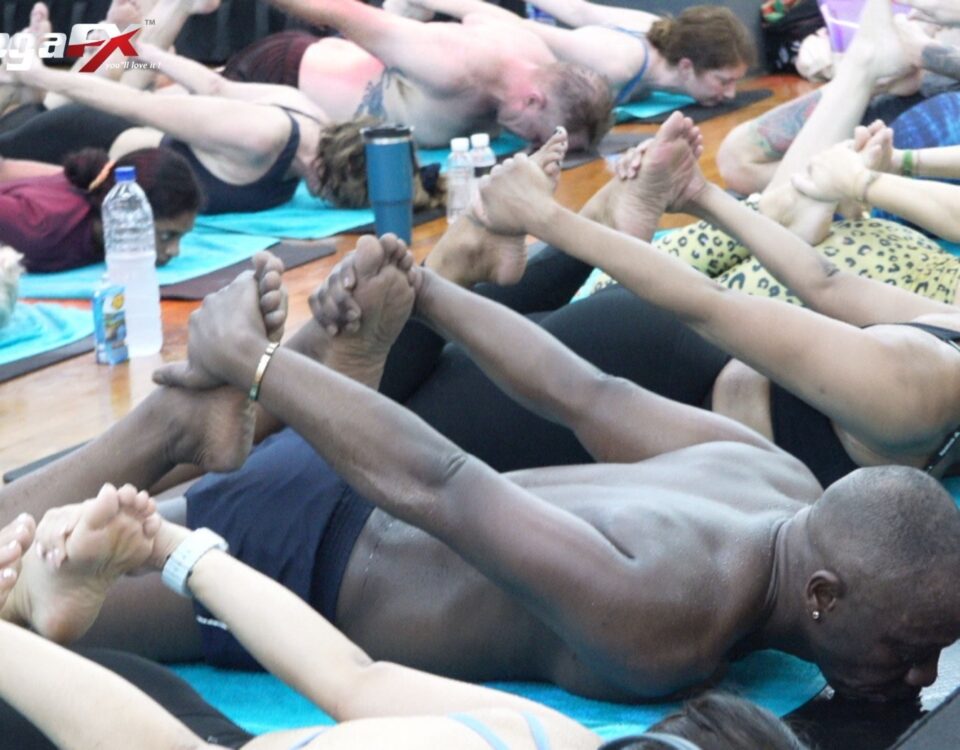
Many men assume yoga’s just gentle stretching. For yoga benefits for men who lift, the data says it can do more. A 2013 study by Tracy and Hart, listed on PubMed, followed healthy adults through a yoga programme. It reported about a 20% rise in posterior chain strength, plus better flexibility and body composition. PubMed blocks automated link checks, so we name the study here without a link.
The posterior chain is the line of muscle down your back, glutes and hamstrings. It is the part that fails first when you sit all day and then lift something heavy. Long holds ask those muscles to work without momentum, which is a different job from a quick gym rep.
So what does that mean for the UK strengthening target? A weekly class can cover one of your two days. Pair it with one resistance session and you have met the guideline. If your goal is bigger muscles, however, progressive loading with weights still does that job better.
Think of yoga as the strength you build at the end of your range, where niggles tend to start.
Yoga Benefits for Men’s Flexibility After a Desk Day or Long Drive
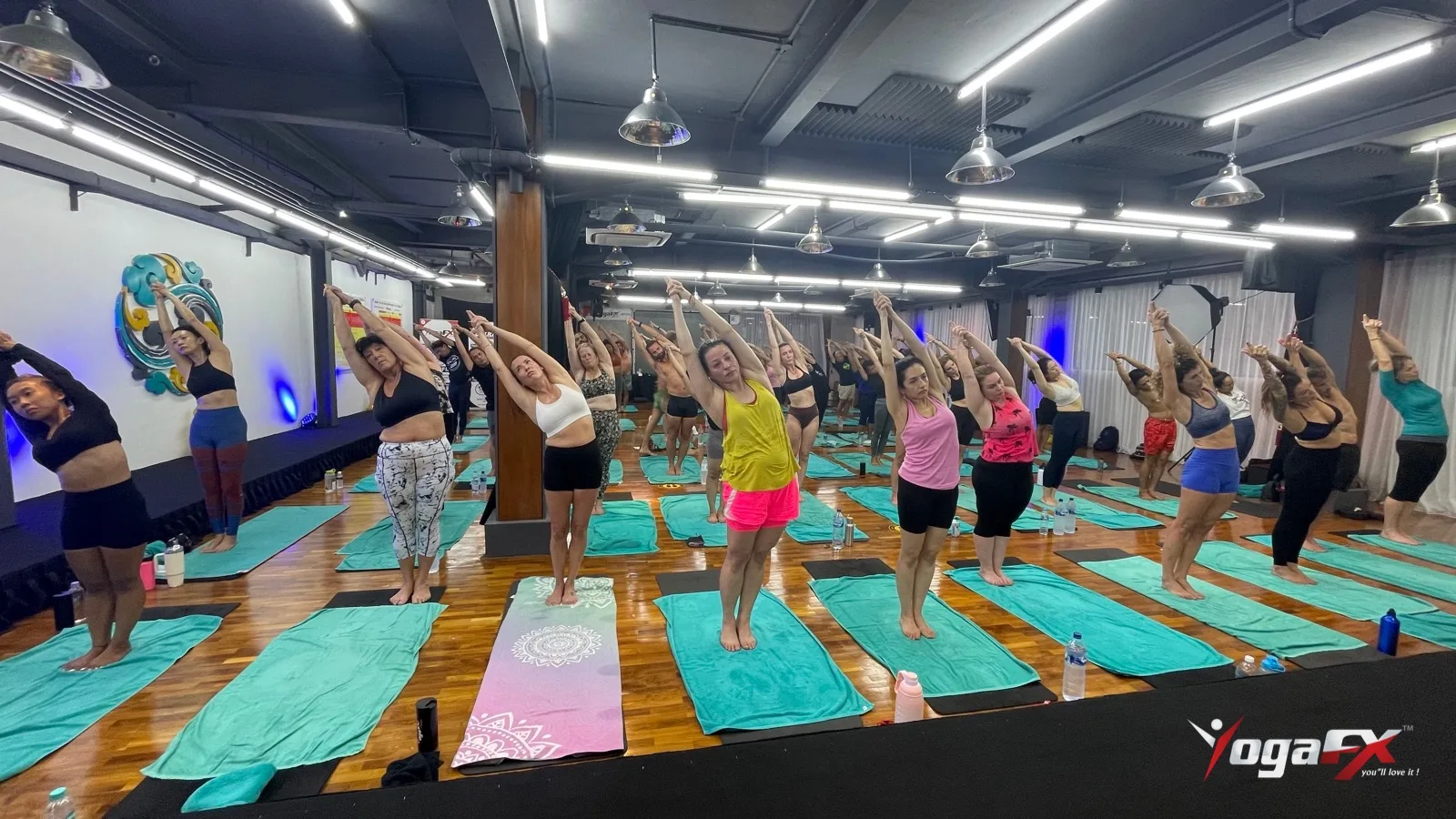
Sitting shortens the hip flexors and hamstrings. A long commute, a van seat or a desk job does it every day, which is why flexibility tops many lists of yoga benefits for men. As a result, many British men reach their forties unable to touch the knee without bending the leg. That’s a habit problem, not a fixed trait.
The same Tracy and Hart study measured flexibility alongside strength, and it found gains there too.
A 2025 systematic review by Willmott and colleagues pooled 43 studies and 942 participants in Bikram yoga research. Flexibility was one of the outcomes it covered, with bone density and well-being. You can find it on PubMed Central as PMC12488547, though the site blocks automated checks, so there is no link here.
You don’t need to touch your toes on day one. In practice, the stiffest men often notice change first, simply because they start from further back. Expect it to take weeks, not days. Here is what most men report in the first month:
- Hamstrings feel less like cables when you bend to pick something up.
- Hips open enough that sitting cross-legged stops being a chore.
- Shoulders reach overhead without the pinch you had at the start.
Balance and Healthy Ageing: Why the UK Guidelines Mention It
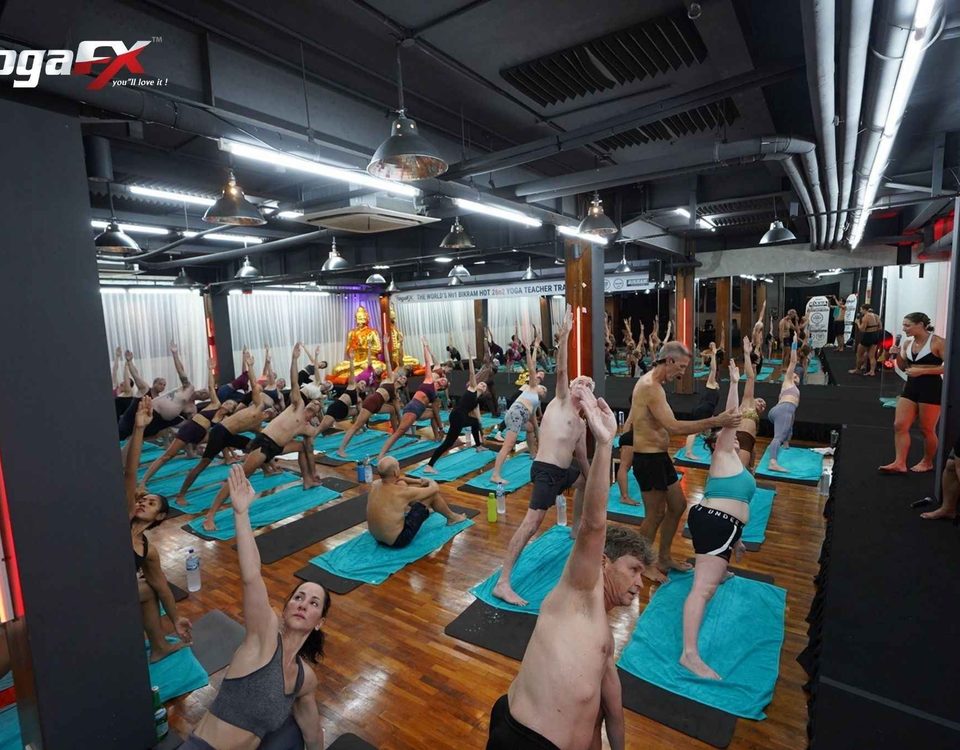
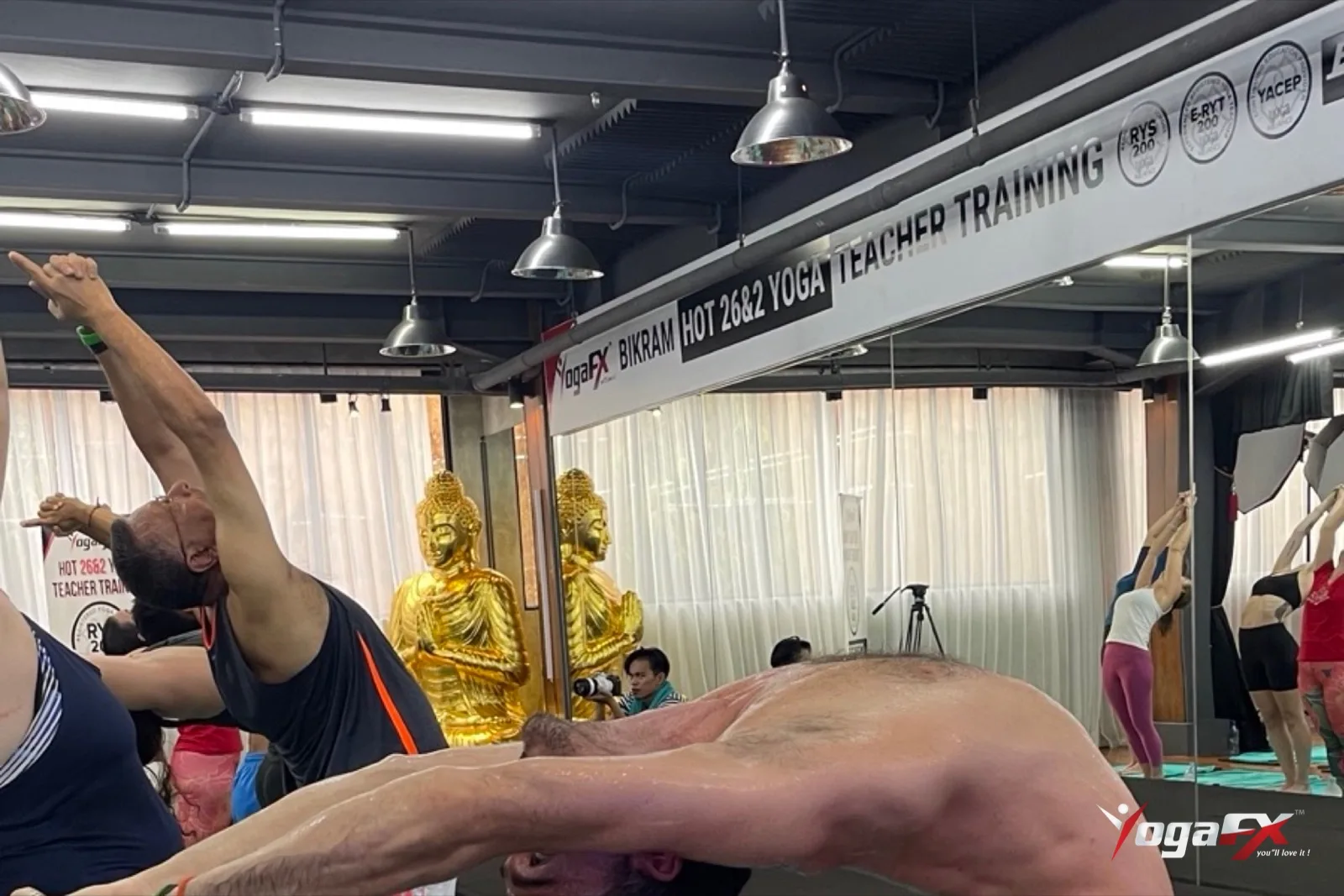
Balance rarely worries a 35-year-old. It matters a great deal at 65, so it belongs on any honest list of yoga benefits for men. The Chief Medical Officers ask older adults to do activities for muscle strength, balance and flexibility on at least 2 days a week. Standing postures, where you hold one leg or lean into a side stretch, train exactly those skills.
Our guide to yoga for men over 50 covers pacing and safety for that age group in detail. For now, the point is simple. If you plan to be active at 70, the habit you build in your forties and fifties is the one that counts. We would rather you start with a slow class than wait for the perfect moment.
One honest limit applies. Few trials report their results for men separately, so averages from mixed groups are a guide, not a promise. Your own progress, checked against where you started, is the best evidence you will get.
Yoga Benefits for Men’s Mood and Stress
Men are less likely than women to talk about low mood, and a physical activity can feel like an easier first step. The best-known study here was run by Massachusetts General Hospital and published in 2023 (Nyer and colleagues, Journal of Clinical Psychiatry).
Adults with moderate-to-severe depression did heated yoga for 8 weeks, about once a week on average. 59% of them cut their symptoms by half or more, against 6.3% of the waitlist group.
Here is the catch for this article. About 81% of the 65 people analysed were women. So the trial tells us a lot about heated yoga and mood, but much less about men in particular. That’s why we call it encouraging, not proven.
A 2022 study by Hui and colleagues also found that hot yoga reduced state anxiety, the short-term jumpy feeling before a deadline or a difficult conversation. The Hui paper sits on PubMed Central, which blocks automated link checks, so we name it without a link.
Please read those numbers with care. They describe groups, not individuals, and yoga isn’t a replacement for treatment. If low mood or anxiety is affecting your work, sleep or relationships, speak to your GP. Yoga can sit beside that care, and many men find the 90 quiet minutes useful as part of their yoga benefits for men.
Breaking Up Long Spells of Sitting
The guidelines also ask adults to minimise sedentary time. When possible, they say, break up long periods of inactivity with at least light activity. Yoga is handy here because it needs no kit, which makes it one of the easier yoga benefits for men to use daily. Five minutes of cat-cow, a lunge and a seated twist beside your desk is a real break.
It also fits the British working day. Many men sit for the commute, then for work, then on the sofa. A short sequence after dinner interrupts that last block. So the yoga benefits for men are not only about the class itself. The habit of moving between sits matters too.
What the Yoga Benefits for Men Do Not Include
It’s fair to be blunt about limits. The yoga benefits for men are real, but they have edges, and no guide should hide them.
- It won’t cover your aerobic minutes. The NHS does not list yoga as an aerobic example, so keep walking, cycling or running.
- It won’t build size like progressive lifting. It adds strength and control, not bulk.
- It won’t spot-reduce fat. Body composition changes come from the whole week, including food and sleep.
- It isn’t medical treatment. Use it beside advice from your GP, never in place of it.
Hot yoga is a special case, and its yoga benefits for men come with extra heat risk.
A University of Wisconsin study by Porcari and colleagues in 2014 measured about 460 kcal for men in a 90-minute Bikram class, with heart rate near 80% of maximum. That is far from gentle stretching. Our guide to the benefits of hot yoga goes through the heat research, and can men do hot yoga covers the health checks for UK newcomers.
A Simple UK Week That Delivers Yoga Benefits for Men
Here is one way to turn the yoga benefits for men into a plan that meets both targets without a gym membership you won’t use. It assumes you are healthy, and you should adjust it with your GP if you are not:
- Three brisk 30-minute walks or rides give you the 90 minutes of aerobic work to build on, and you can add time as you get fitter.
- Two yoga classes cover your two strengthening days and your mobility.
- Five minutes of movement after dinner breaks up the evening sit.
- One longer outing at the weekend, such as a hill walk, takes you towards the full 150 minutes.
Notice that nothing here asks for heroics. The guidelines say any strengthening activity is better than none, and that is a kinder standard than most fitness advice. For a wider view of who else is on the mat, see our summary of how many men do yoga in the UK.
The evidence ranking in our Bali trainer’s guide, yoga benefits for men: an E-RYT 500 view, compares the same benefits by strength of evidence. It is a good second read once you have the UK picture.
Health Checks Before You Start, UK Style
A quick check beats a bad surprise, and it protects the yoga benefits for men you came for. Speak to your GP first if you have a heart condition, high blood pressure, a breathing problem or an injury. Tell them if you take regular medication too. That advice applies even more to heated classes.
Then tell the teacher before class. A good teacher will adapt a posture for a tight shoulder or a dodgy knee. Drink to thirst. Stop if you feel dizzy or sharp pain, because neither is part of the process, and leave the class if something feels wrong.
From Weekly Class to Teaching: Bali Training for UK Applicants
Some men who enjoy the yoga benefits for men move from attending a class to wanting to lead one. If that is you, the first question is cost and time off work. UK part-time courses run over months. Mr. Ian Terry’s course is different, as it fits into one working week.
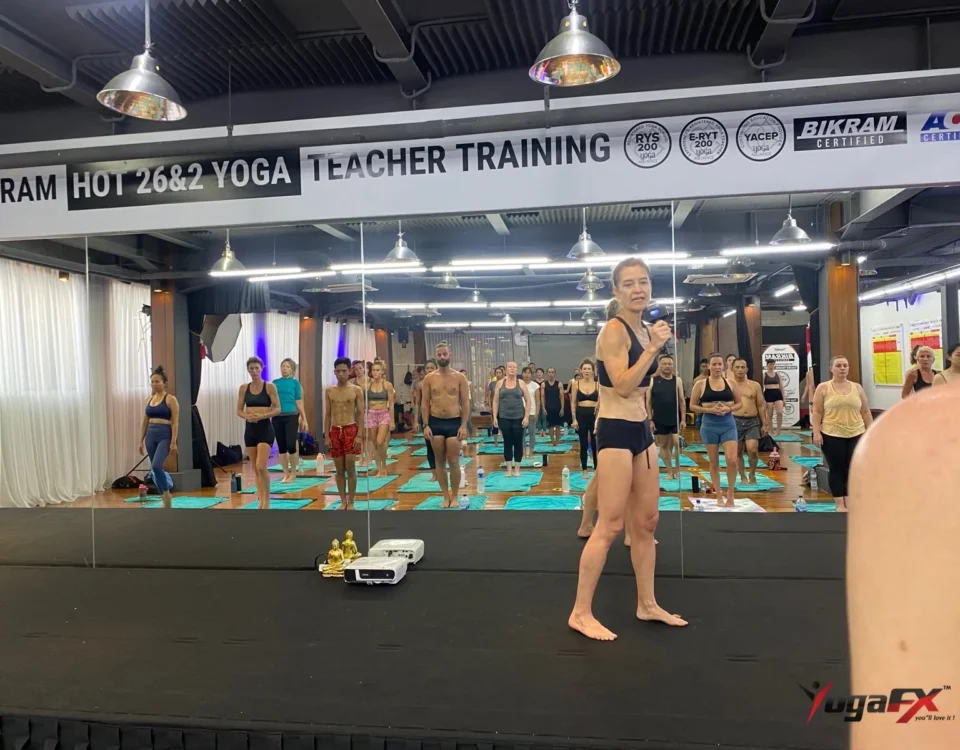
Mr. Ian Terry, E-RYT 500, has taught for more than 12,000 hours and has trained more than 1,500 graduates from over 80 countries since 2017. He spent five years, from 2014 to 2019, training with the founder of the Bikram Hot 26&2 method. He is also a Master Trainer of the Republic of Indonesia Yogasana Sports Federation.
- Format: a six-day hybrid. You study online first, then train in person in Seminyak, Bali.
- Next batch: check-in Sunday 24 January 2027, check-out Friday 29 January 2027, at Soham Wellness Center in Seminyak.
- Certification: Yoga Alliance RYT 200-Hour plus the Bikram Hot 26&2 200-Hour International Yoga Certification.
- Price: US$1,899 Early Bird, against the normal US$1,999, with interest-free plans from US$250 a month.
For a fair side-by-side of cost and time, read yoga teacher training in Bali vs the UK. It explains what to compare before you book anything.
What Students Say About the Training
YogaFX has 150 Google reviews, 50 Yoga Alliance reviews and 357 YouTube video testimonials. Three students speak to the challenge and the payoff of the training, which many describe as the next step after enjoying the yoga benefits for men in class. Here is Olga’s video review first.

Olga called the six days very challenging and deeply rewarding. She said the group became physically stronger and mentally and spiritually too, and that coming was “a good decision” (Olga, YouTube review, 2025).
Arkan, one of the first participants in the training, described what he learned about emotional and mental health. In his words, “I learned so much in here” (Arkan, YouTube review, 2023).
Judith thanked Mr. Ian and the team, then said that “there are so many people that need this for their health” (Judith, YouTube review, 2025).
FAQ
How much yoga should a man do each week in the UK?
The UK guidelines ask for strengthening activity on at least 2 days a week, and the NHS lists yoga as an example. So two classes a week can meet that target. You still need 150 minutes of moderate aerobic activity, such as brisk walking or cycling, alongside it.
Does yoga count as strength training under UK guidelines?
Yes, partly. The NHS names yoga as an example of a muscle-strengthening activity, so it can count towards the target of two days a week. The activity should work all the major muscle groups. If your goal is muscle size, add weights or bodyweight work as well.
Is yoga good for males who already go to the gym?
It can be. The yoga benefits for men include strength; long holds build it at the end of your range, and the stretching eases the stiffness that heavy training and desk work leave behind. A 2013 study by Tracy and Hart reported about a 20% rise in posterior chain strength. Keep your lifting sessions.
Can yoga replace cardio for men?
No. The UK guidelines ask for 150 minutes of moderate or 75 minutes of vigorous activity each week, and the NHS does not list yoga as an aerobic example. A fast or heated class raises your heart rate more, but walking, cycling or running should stay in your week.
Do I need to see my GP before starting yoga?
Speak to your GP first if you have a heart condition, high blood pressure, a breathing problem, an injury or take regular medication. Healthy men can usually begin with a gentle beginner class. Heated classes carry more risk, so ask for advice before you try one.
Still have questions? Message Mr. Ian Terry on WhatsApp and the YogaFX team will answer personally. Tell us your age, your training week and any health concerns, and we will say whether our teacher training suits you right now.