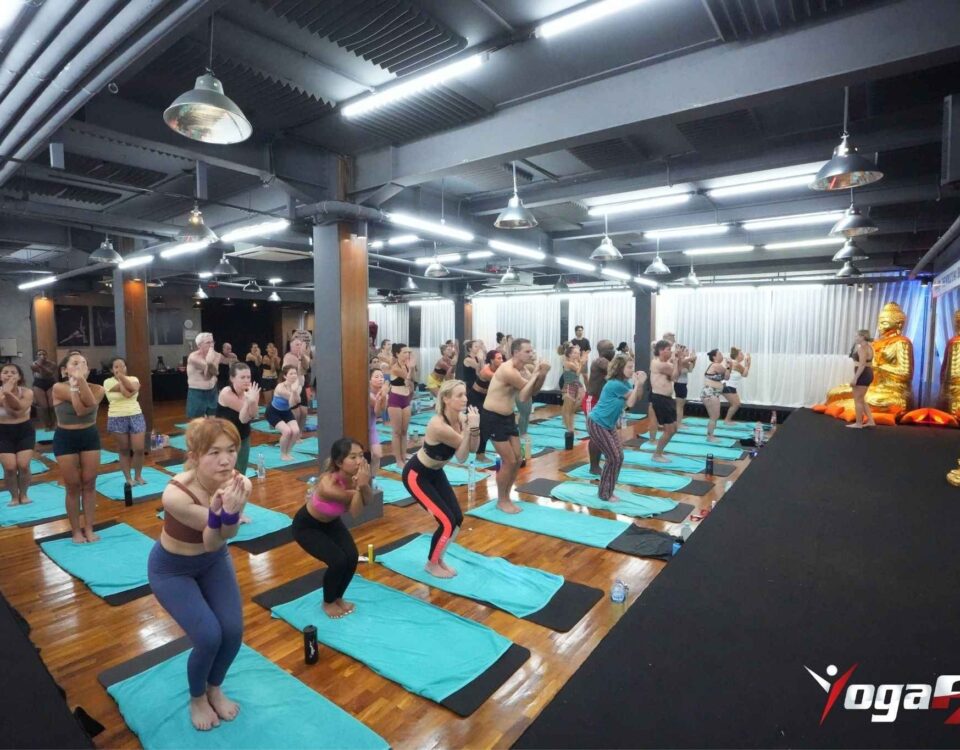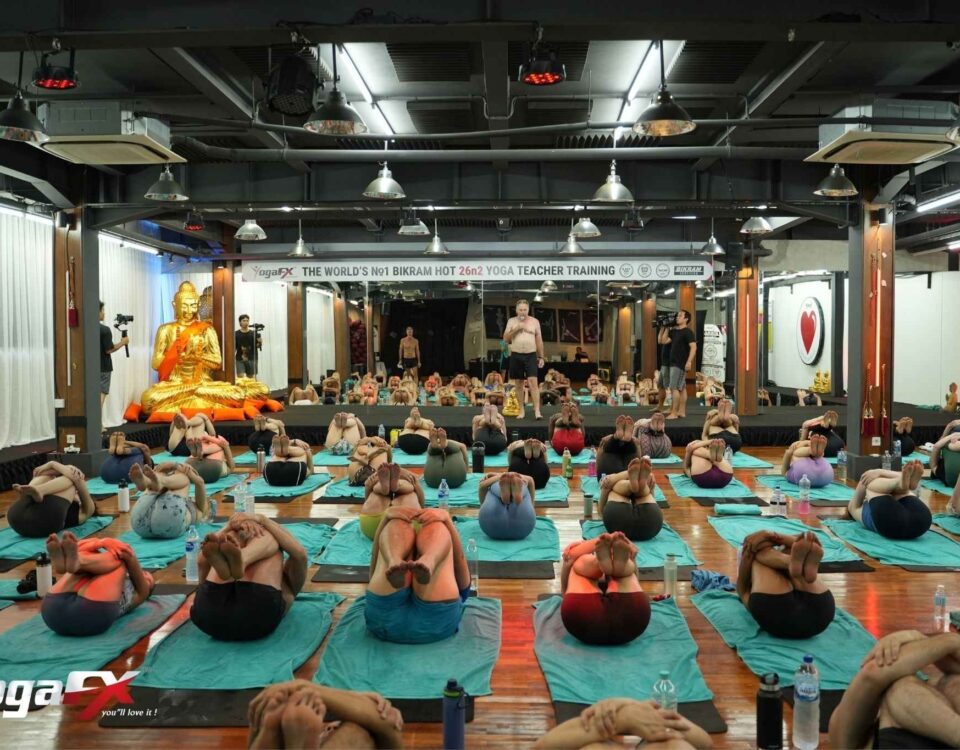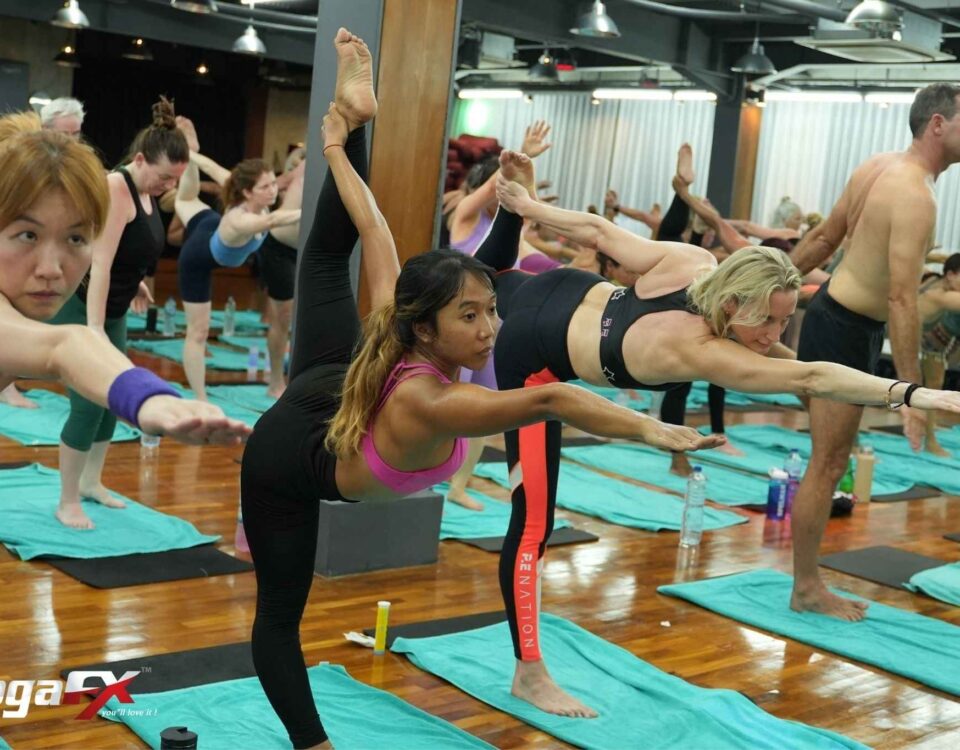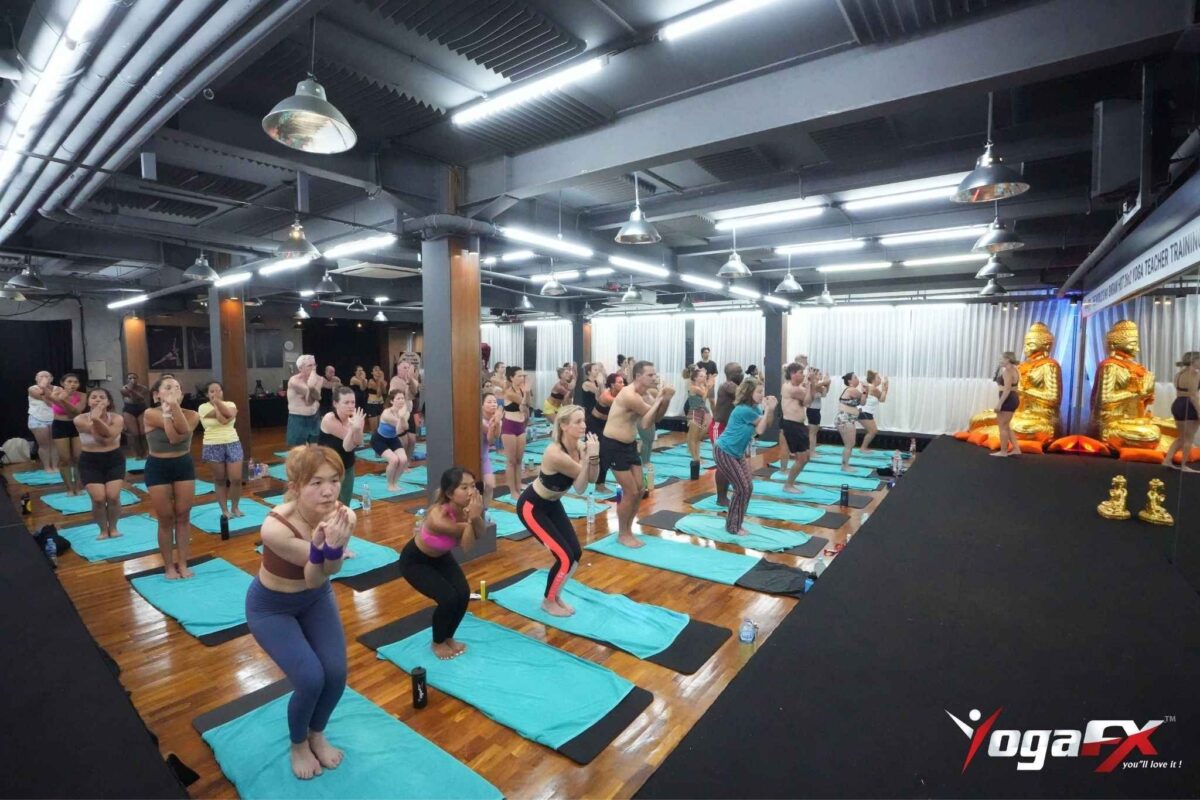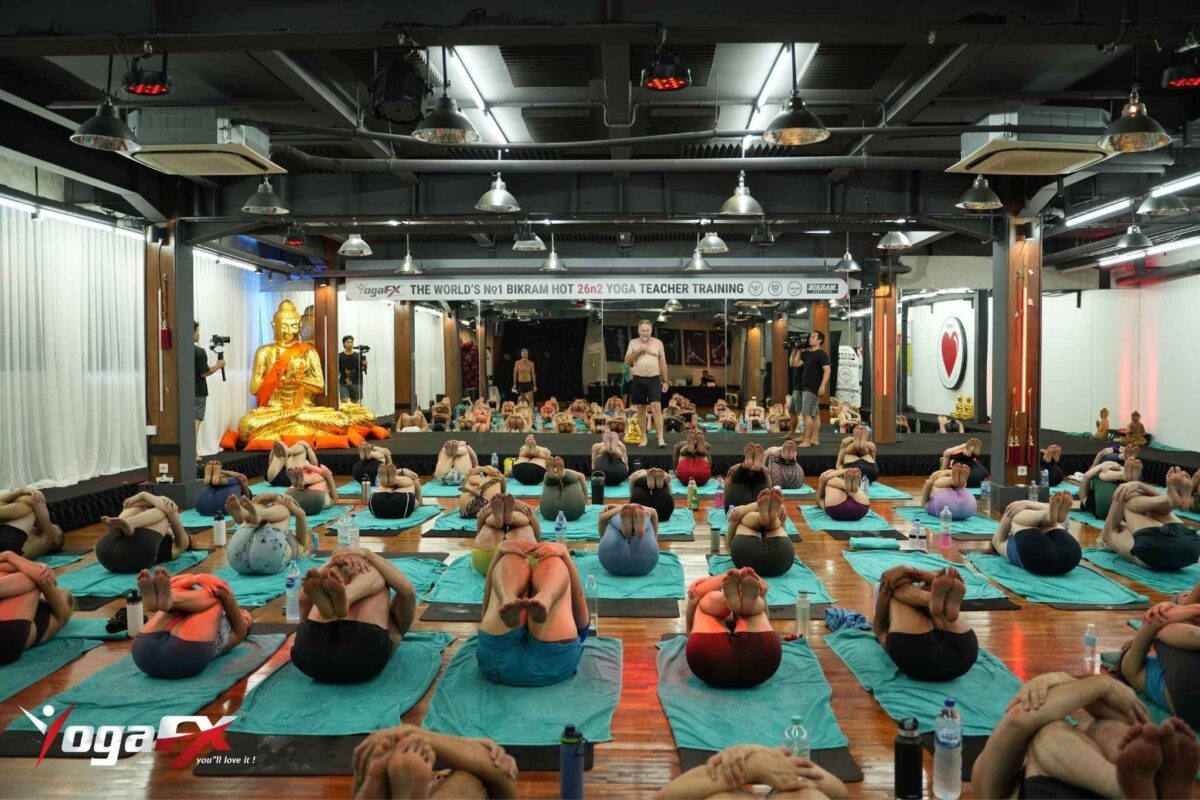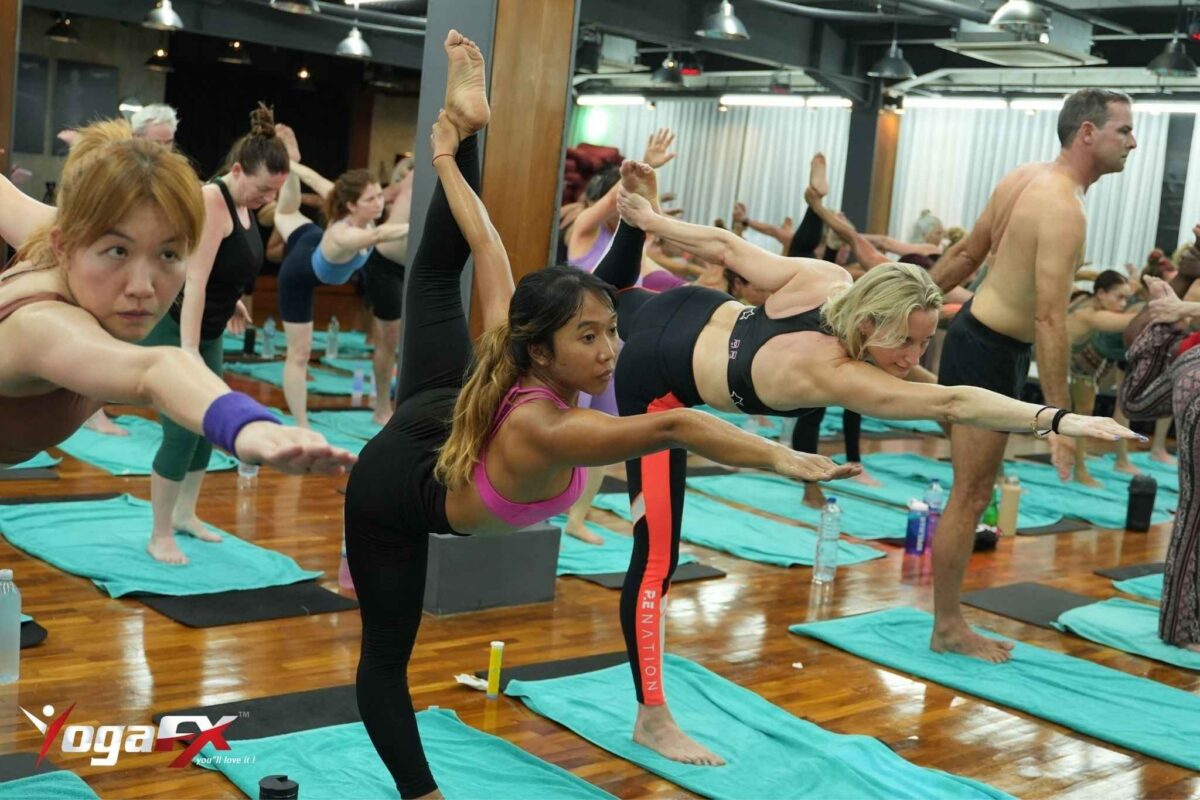
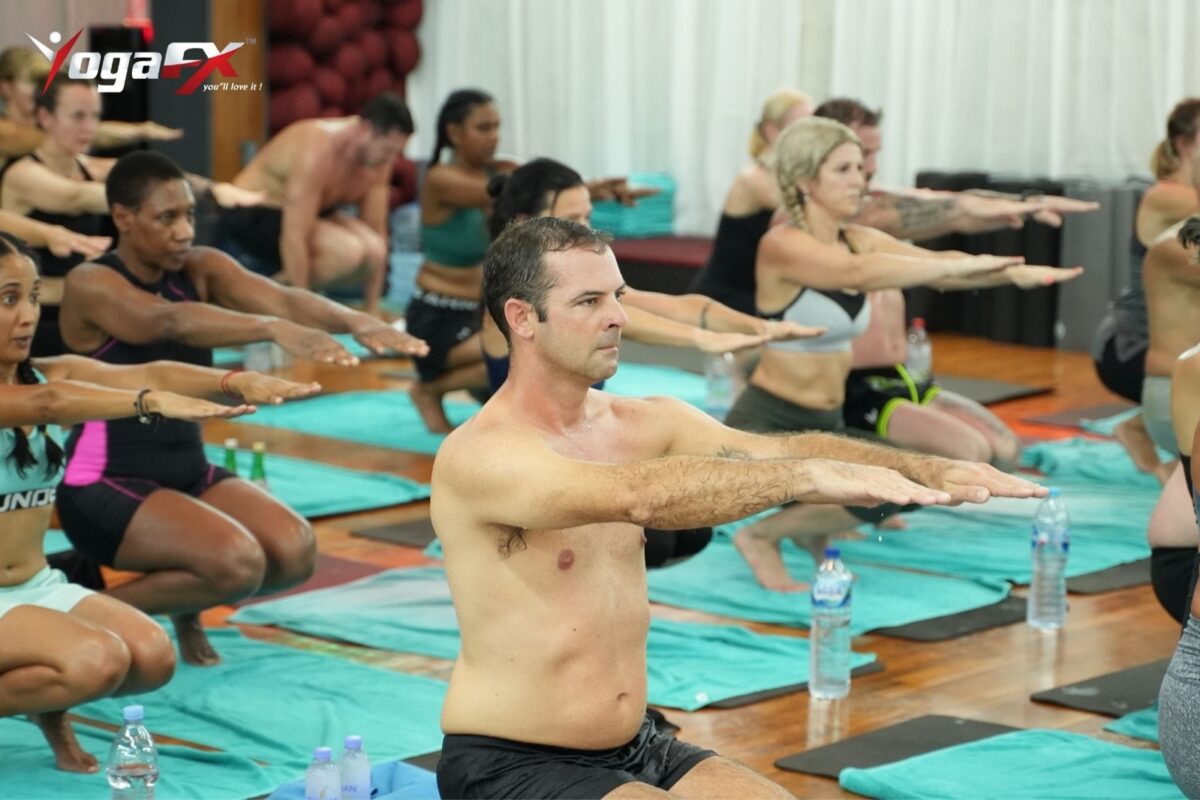
Yoga for men over 50 is not a watered-down version of the practice, and the Original Hot 26&2 sequence has no upper age limit. The more interesting point is that the most relevant research was not done on twenty-somethings at all. The study that found the clearest cardiovascular result in heated yoga recruited adults aged 40 to 60, which means the evidence base for this question is closer to your demographic than to the one in the marketing photographs.

This guide is written for a British man weighing it up in his fifties: what the research actually found in people your age, what the wider heat and longevity conversation does and does not prove, how to pace the first month, and whether a UK studio or a Bali intensive makes more sense.
Is There an Age Limit for Bikram or Hot 26&2 Yoga?
No. There is no upper age limit for practising, and none for training as a teacher either. What exists instead is a health screening question, and it is the same one asked of a 35-year-old: can your cardiovascular system handle 90 minutes of sustained effort in a room at around 40°C.
That is a question for your GP rather than for a studio, and it is worth asking properly rather than skipping. If you have a diagnosed heart condition, blood pressure that is not well controlled, or you take medication that affects hydration, blood pressure or sweating, get clearance before your first class. Beta blockers in particular change how your heart rate responds to effort, which means the usual way of gauging exertion does not transfer. We set out the full list of what to watch for in risks and side effects of hot yoga. This article is general information and not medical advice.
What the Research Found in Adults Aged 40 to 60
Hunter and colleagues studied the 26 postures in adults aged 40 to 60 and reported improved blood-vessel function, with body fat falling in the heated group. Across their 2013 and 2018 work the same research line reported better insulin sensitivity and lower cholesterol, with total cholesterol down 16 mg/dL and LDL down 18 mg/dL in middle-aged and older adults. Those are modest absolute numbers, and they are also precisely the markers a GP tends to be tracking in a man in his fifties.
Two more findings matter at this age. Bourbeau and colleagues in 2021 ran the same yoga at two temperatures and found VO2max rose 7 percent in the heated group while the room-temperature group gained nothing measurable. And Hart and Tracy reported balance time rising 228 percent after 24 classes across eight weeks. Balance is not a vanity metric after 50. It is the single most trainable predictor of whether you stay on your feet in your seventies.
| Finding | Population studied |
|---|---|
| Improved blood-vessel function, body fat fell in the heated group | Adults 40 to 60 (Hunter and colleagues, 2018) |
| Total cholesterol down 16 mg/dL, LDL down 18 mg/dL, better insulin sensitivity | Middle-aged and older adults (Hunter and colleagues, 2013 and 2018) |
| VO2max up 7% in the heated group only | 11 men and 11 women (Bourbeau and colleagues, 2021) |
| Balance time up 228% after 24 classes | Adults over eight weeks (Hart and Tracy, 2008) |
| Deadlift strength up 13% against a 4% fall in controls | Young adults (Tracy and Hart, 2013) |
Note the last row carefully. The strength result came from young adults, so it should not be assumed to transfer at the same magnitude. That is the kind of distinction most benefit articles quietly skip.
The Heat and Longevity Research, and What It Does Not Say
If you follow the longevity conversation you will have met the sauna numbers, and they are genuinely striking. In a Finnish cohort of 2,315 men aged 42 to 60, those using a sauna four to seven times a week had a 40 percent lower risk of death from any cause over two decades than men who went once a week, along with a 63 percent lower risk of sudden cardiac death. The same cohort later showed a 66 percent lower risk of dementia. A separate Japanese study of 30,076 adults found near-daily hot baths associated with a 28 percent lower risk of cardiovascular disease.
Here is the honest part. Those are sauna and bathing studies. They are observational, they measure passive heat, and none of them studied hot yoga. It would be straightforward to imply the transfer and we are not going to, because the claim has not been tested. What is reasonable to say is narrower: heat exposure is an active area of research in men’s health, hot yoga combines heat with sustained muscular effort rather than replacing one with the other, and the heated-yoga studies that do exist are small but consistent.
If you want the broader case on whether the practice is good for you at any age, we cover it in is hot yoga good for you.
What Changes After 50, and Why This Sequence Handles It
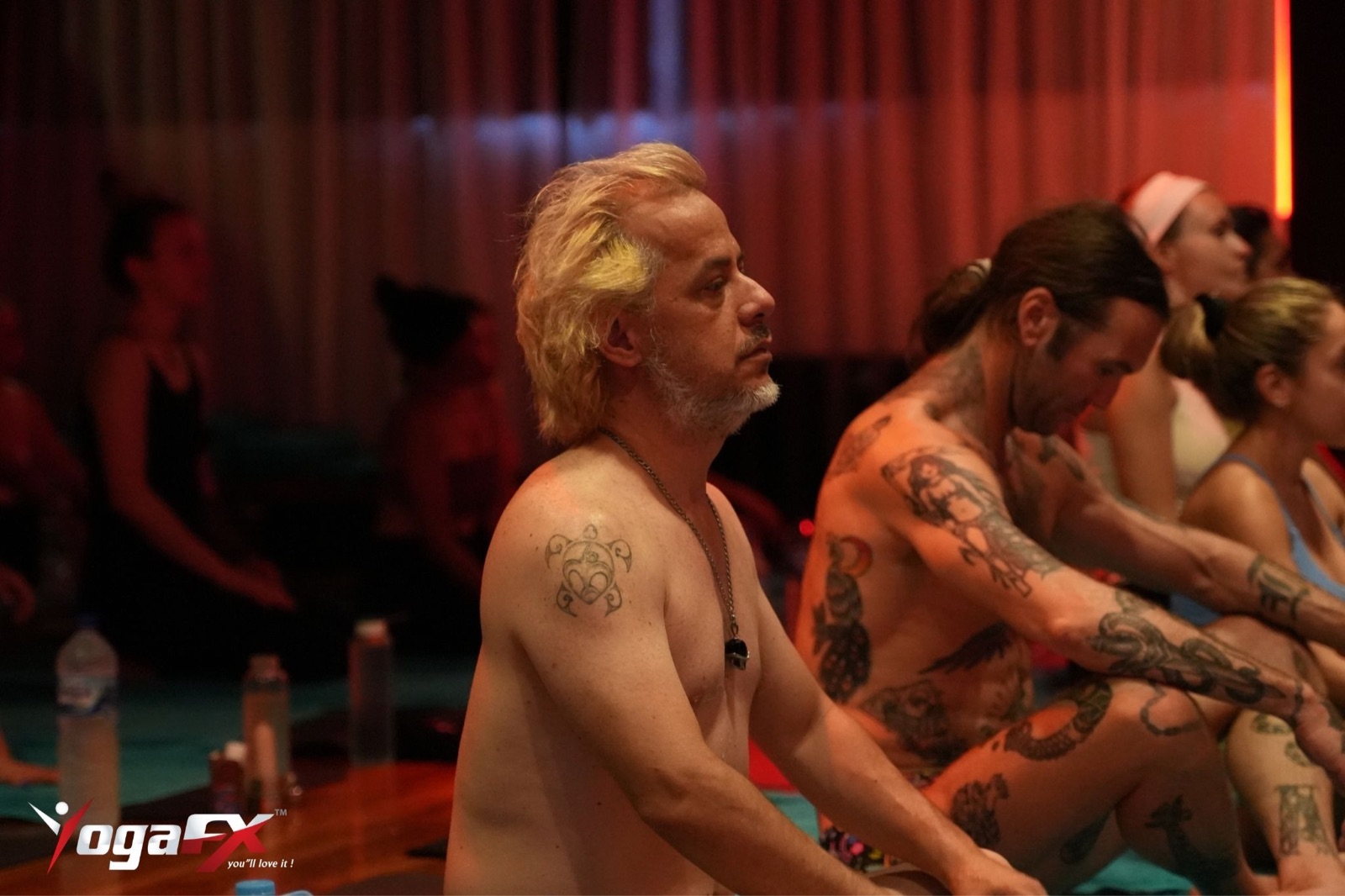
Three things reliably change in a man’s fifties: connective tissue gets less compliant, balance quietly degrades unless trained, and recovery takes longer. The design of the 26 postures happens to line up with all three.
- No arm balances and no inversions. Nothing in the sequence asks you to hold your bodyweight on your hands or put your neck under load. That removes the single most common injury route for older beginners in general yoga classes.
- Balance is trained deliberately. Several standing postures are held for a full minute on one leg. Most men over 50 have never trained this on purpose, which is exactly why the measured improvement is so large.
- Heat does what a longer warm-up would. Less compliant tissue moves more readily when warm, which is why many stiff older men find a heated class more forgiving than an unheated one rather than less.
- The same sequence every time. You are not learning new choreography each week, so you can track one posture across months and see whether it is actually moving.
If a stiff lower back is the thing holding you back, that has its own guide in hot yoga for back pain.
How to Pace the First Month at 50 Plus
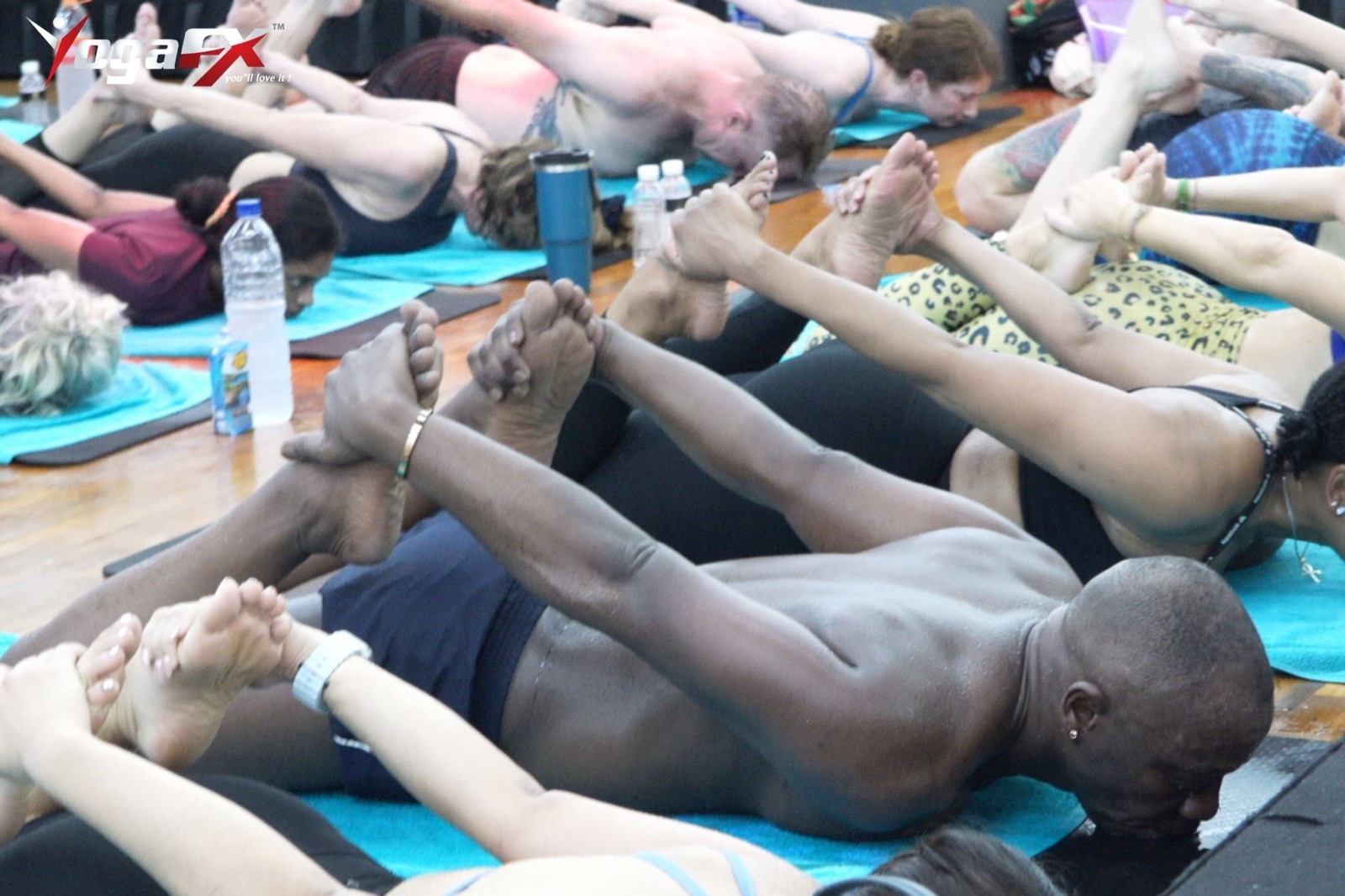
The UK Chief Medical Officers ask adults for 150 minutes of moderate activity a week plus strength work on two days. Two heated classes covers most of that, and two is a sensible starting frequency rather than three while you adapt. Build to three once the room stops being the obstacle.
- Leave a day between your first three classes. Recovery from heat strain takes longer at 55 than at 25, and stacking sessions early is the most common reason older beginners quit in week one.
- Take the first set at roughly 60 percent. Every posture is done twice. The first set is reconnaissance.
- Sit down when you need to. Kneeling or lying on your mat is a normal part of class, not a failure of it, and it is a better decision than pushing through dizziness.
- Hydrate across the day, not in the car park. And add some salt to the meal afterwards, because what you lost was not only water.
- Tell the teacher it is your first class. In a method with no demonstration, the teacher watching you through the standing series is the safety mechanism.
Expect the heat to stop being the main event somewhere between the third and fifth class. Expect flexibility to move on a scale of weeks, and to show up in one or two specific postures before it shows up generally.
Four Postures to Approach Carefully After 50
The sequence is safe by design, but four postures reliably cause older beginners more trouble than the rest, and knowing which ones in advance is more useful than a general instruction to be careful.
| Posture | Why it needs care after 50 | What to do instead |
|---|---|---|
| Fixed Firm | Loads the knees and ankles in deep flexion, and knee cartilage is less forgiving at this age | Stop at the first clear sensation. Sitting upright on the heels is a complete version of the posture for most people. |
| Camel | A deep backbend that also drops the head back, which can affect blood pressure and provoke dizziness | Keep the hands on the lower back and the chin tucked until you know how you respond. |
| Rabbit | Puts load through the neck, where degenerative change is common and often undiagnosed | Grip the heels, roll gradually, and never force the chin toward the chest. |
| Standing Head to Knee | Combines hamstring length with single-leg fatigue, which is where older beginners most often lose balance | Lock the standing knee and hold there. The extension can wait months. |
None of these is a reason to avoid the class. They are the four places where a man of 55 should treat the teacher’s cue as the ceiling rather than the starting point. In a method with no demonstration and no hands-on adjustment built into the format, the responsibility for that sits with you, which is both the advantage and the cost of a scripted class.
One more thing worth saying for anyone restarting after years away from exercise. The most common pattern we see is not injury. It is a man who trains hard for two weeks, feels wrecked, and concludes the practice is not for him. The heat exaggerates that effect, and the fix is frequency rather than intensity: two steady classes a week for a month will take you further than five hard ones in a fortnight.
A UK Studio or a Bali Intensive?
For practising, start locally. London, Manchester, Birmingham and Bristol have real choice; Scotland, Wales and the north east have very little, which is worth checking before you plan around it. Ask any studio three questions: is it the full 26 postures and two breathing exercises, is it 90 minutes, and what is the room actually held at.
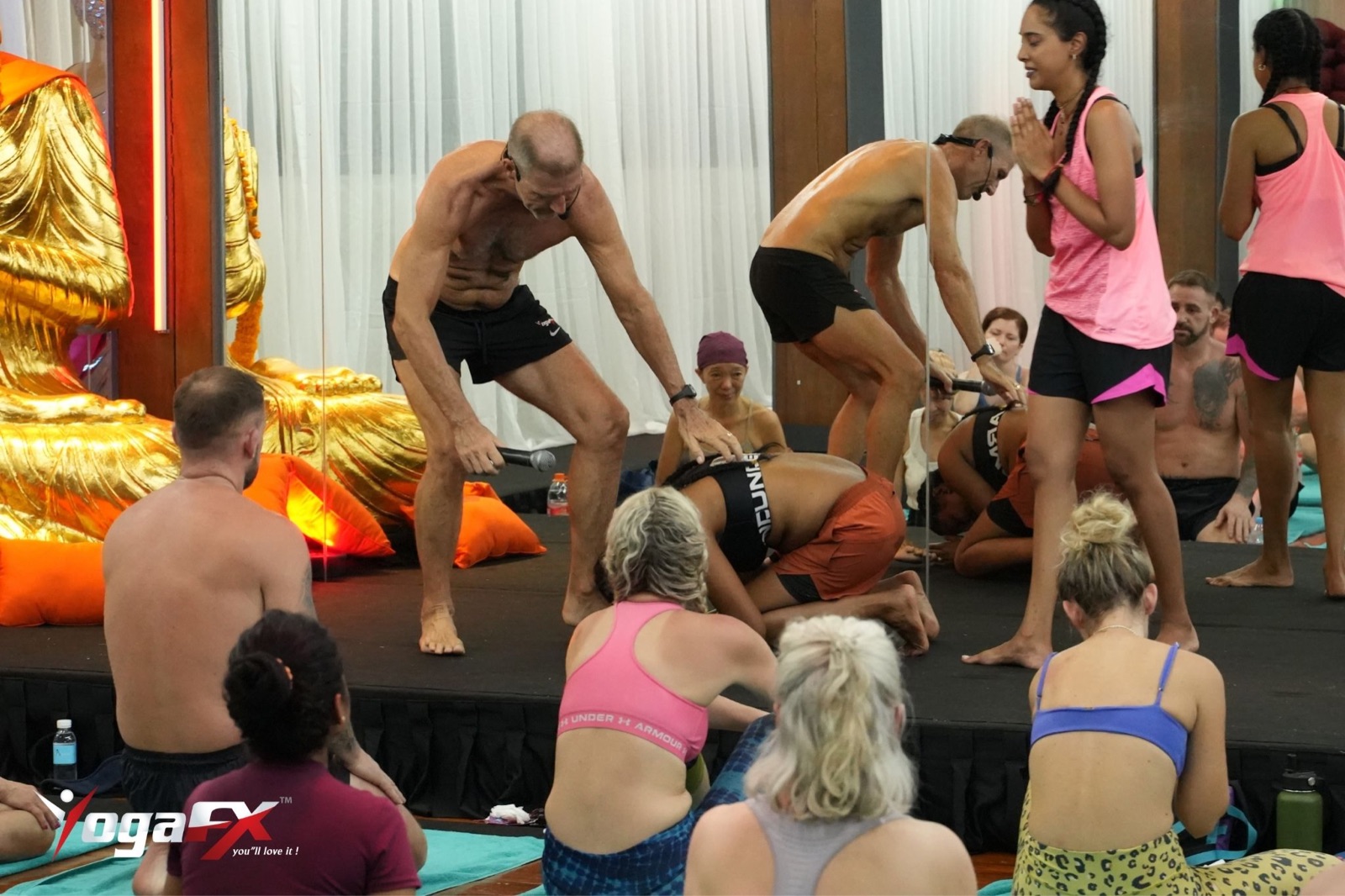
Training to teach is a different calculation, and age is not the barrier most men assume. Our published enrolment data shows the median man applying is 44 and that 68 percent are 40 or over, with the full figures and method in the How Many Men Do Yoga report. Mr. Ian Terry, who leads the YogaFX programme, is an E-RYT 500 instructor with more than 12,000 teaching hours and over 1,500 graduates from 80 countries, and trained directly under Bikram Choudhury across five training events between 2012 and 2019.
Here is a male graduate describing his own experience of the course.

If you are weighing the practice generally rather than the age question specifically, our main guide is hot yoga for men. To ask a direct question about starting later in life, send a WhatsApp message to Mr. Ian Terry on +62 811 3888 330.
FAQ
Is there an age limit for Bikram or hot yoga?
No upper age limit exists for practising or for teacher training. What matters is cardiovascular screening rather than age itself. Anyone with a heart condition, uncontrolled blood pressure or medication affecting hydration or blood pressure should speak to their GP before a first heated class.
Is hot yoga safe for men over 50?
For most healthy men, yes, and the research on adults aged 40 to 60 is the most encouraging part of the evidence. The risk is heat strain rather than the postures, so pace the first set, leave a day between early classes and get medical clearance if you have any cardiac history.
Can you start yoga at 55 or 60 with no experience?
Yes. The sequence contains no arm balances and no inversions, so there is nothing requiring prior skill or upper-body strength. Every posture can be done at a shallower depth, and the fixed order means you know what is coming after a few classes.
Does hot yoga help with balance as you age?
Balance time rose 228 percent after 24 classes across eight weeks in one study. Several standing postures are held for a full minute on one leg, and most men have never trained balance deliberately, which is why the measured improvement is unusually large.
Do the sauna longevity studies apply to hot yoga?
Not directly. Those findings come from observational sauna and bathing research and have not been tested in hot yoga. Heated yoga has its own smaller evidence base covering blood-vessel function, cholesterol and aerobic fitness, which is the research quoted throughout this article.