Pranayama breathing means guided breath control. In a hot 26&2 class it is two exercises: Standing Deep Breathing at the start, where you breathe in slowly through the nose and out through the mouth, and Kapalbhati at the end. Together they take only minutes, yet they set the pace for all 90.

If you are new to pranayama breathing in the UK, the word can sound far more mysterious than the practice. Mr. Ian Terry, YogaFX Founder and Lead Instructor (E-RYT 500, 12,000+ teaching hours), puts it plainly: the breath is not a warm-up to rush through. It is the first posture of the class.
This guide is general information, not medical advice. It explains both exercises, why we call the nose your inner thermostat, what slow-breathing research does and does not show, and how to practise at home before you ever step into a heated room. For the studio view of the same exercises, read how the same two exercises are taught inside a 26 and 2 class.
Pranayama Breathing in a Hot Yoga Class: The Short Answer
Pranayama is a Sanskrit word for breath control. Many British classes teach it seated, with long counts and finger positions. A 26&2 class keeps it simple. You stand, you follow a spoken count, and you do not memorise a ratio.
Here is what the pranayama breathing technique asks of you in this method:
- Breathe in through the nose. Slowly and evenly, for as long as the teacher’s count lasts.
- Let the breath out through the mouth. It is a release, not a push.
- Follow the voice. The count tells you when to breathe in and out, so your mind has one small job.
That is the whole technique. The skill is in doing something so simple while you are standing in a room at about 40°C with around 40% humidity, surrounded by strangers. Our guide to surviving your first hot class covers the rest of the first-class nerves.
The Two Pranayama Breathing Exercises Side by Side
Both exercises in a 26&2 class are short. The table sets them next to the NHS stress exercise you can use at home, so you can see what is the same and what is different.
| Exercise | Where you do it | Position | Breath route | Its job |
|---|---|---|---|---|
| Standing Deep Breathing (pranayama) | First thing in the class | Standing tall | In through the nose, out through the mouth | Settles the mind and sets the pace |
| Kapalbhati (Blowing in Firm) | End of the class | Seated | Exhale-led, active breathing | Closes the 90 minutes with energy |
| NHS breathing exercise for stress | Anywhere, at home or work | Seated or lying, loose clothes | In through the nose, out through the mouth | Calms stress, at least 5 minutes |
Exercise one: Standing Deep Breathing
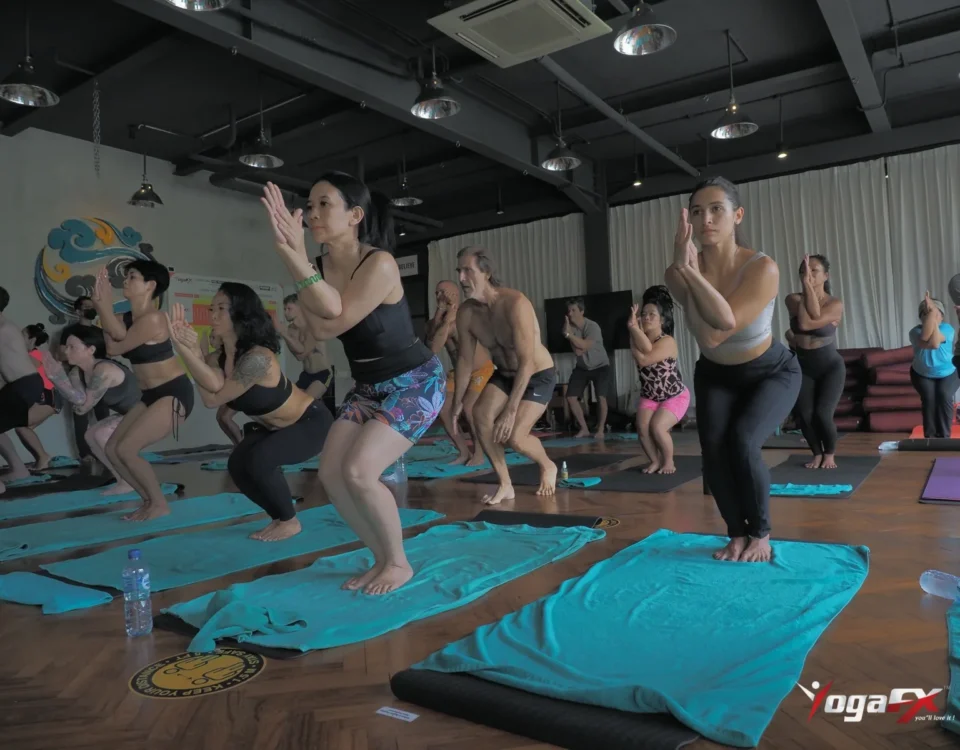
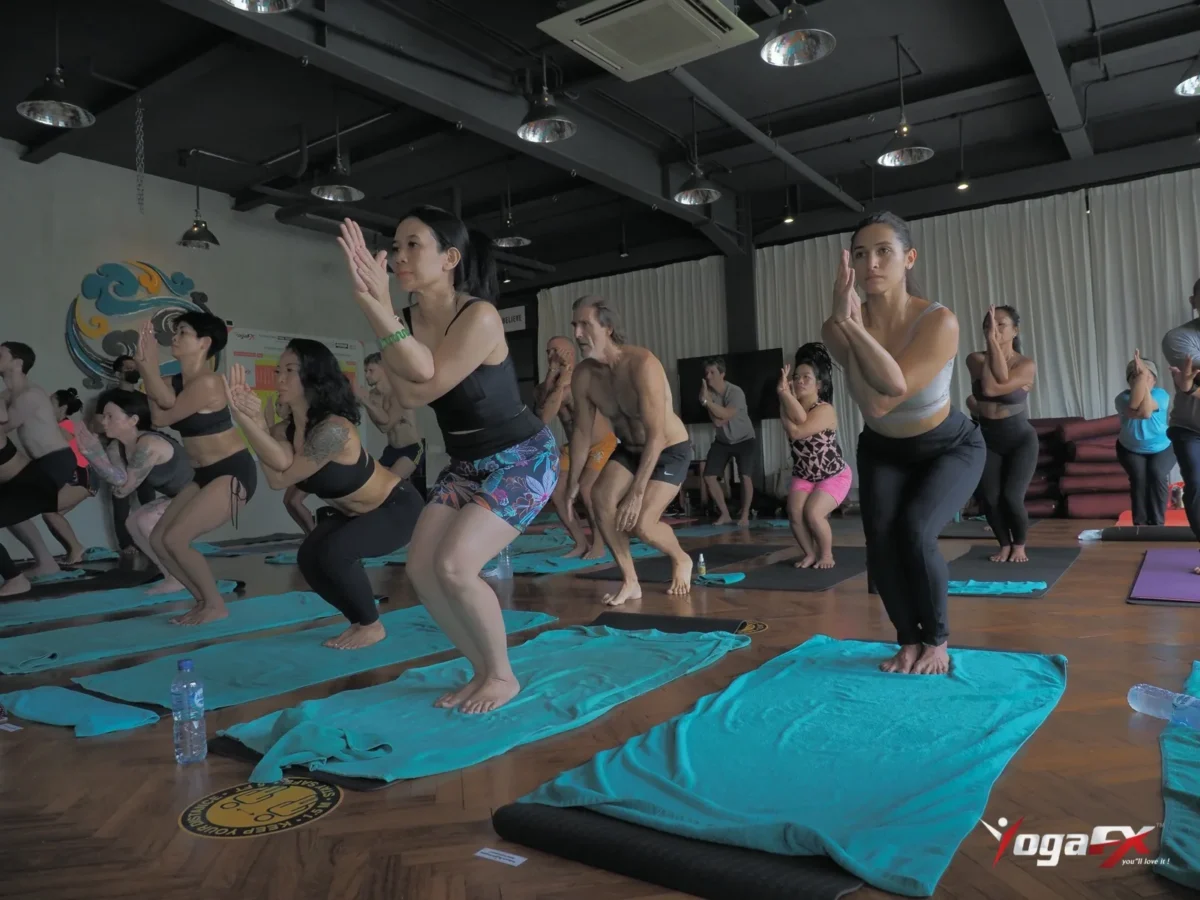
Standing Deep Breathing is the pranayama breathing exercise most people mean when they join a class. You stand tall, set your hands and elbows as the teacher guides you, and breathe in through the nose for the length of the count. The breath leaves through an open mouth.
In a typical class it runs for two sets, and it asks for nothing else. There is no balance to find and no stretch to reach. That is deliberate, because a new student has one clear task at the start of an unfamiliar hot class, and it is small enough to finish.
The common slip is breathing too fast. The room feels warm, so the mind wants to hurry, and the count feels slower than your instinct. So our advice is to trust the count, keep the shoulders down and let the exhale go without clamping the lips.
Exercise two: Kapalbhati
Kapalbhati closes the class, which is why the method is named 26 and 2: twenty-six postures and two breathing exercises. By then you have worked through the whole sequence, and the breathing changes character. The exhale leads, the pace is brisker and you are seated.
Because it is more active, give it respect. If you feel light-headed, slow down or stop instead, and return to ordinary breathing. A good teacher would rather you sit out a round than push through dizziness.
Nasal Breathing as Your Inner Thermostat
At YogaFX we call the breath your inner thermostat. That phrase is our teaching view, not a research finding, so here is what we mean by it. Your body works to stay cool for the whole class. When your heart rate climbs in the heat, many people start gulping air through the mouth, and the breathing turns fast and shallow.
In our teaching experience, students who slow down and keep the inhale through the nose settle sooner. Mr. Ian teaches that a slower nasal breath helps calm the heart and keeps the class manageable. We know of no study that has tested nasal breathing inside a 40°C yoga room, so we cannot promise a measurable result. We can only report what we see on the mat.
The infographic below pulls the numbers behind the idea into one place.
Two habits that put the thermostat to work
Two habits make the thermostat idea practical, because they cost nothing and need no equipment:
- Slow before you speed up. If the room feels intense, lengthen the next inhale rather than opening your mouth wider.
- Use the mouth when you truly need it. Nose-first is a default, not a rule, so if you need air fast, take it.
- Pause and reset between postures. A few calm breaths often settle you better, for example, than a rushed gulp of water you did not need.
If you have felt wiped out after a class, our notes on feeling tired after hot yoga pick up where this section leaves off.
What the Research Says About Slow Breathing
What the slow-breathing review found
A 2018 systematic review of slow breathing by Zaccaro and colleagues in Frontiers in Human Neuroscience screened 2,461 abstracts and included 15 articles. It defined slow breathing as fewer than 10 breaths a minute. Its authors reported links between slow breathing and parasympathetic activity, shown as higher heart rate variability, in healthy people.
The same review noted psychological changes alongside them: more comfort, relaxation and alertness, and less anxiety, anger and confusion. These are associations in healthy volunteers across varied methods. They don’t prove that any one pranayama breathing technique treats a condition.
What the NHS suggests you do at home
In the UK, the NHS breathing exercise for stress gives the everyday version. It says to let your breath flow as deep down into your belly as is comfortable, without forcing it. It suggests breathing in through your nose and out through your mouth, and repeating for at least five minutes.
What heated yoga trials add, and what they leave out
Heated yoga more broadly has some trial evidence for mood. A 2023 randomised trial in the Journal of Clinical Psychiatry (Nyer et al., Massachusetts General Hospital) found that about 59% of adults doing heated hatha yoga had a symptom drop of 50% or more over 8 weeks, against about 6% on a waitlist. That trial tested the whole yoga class, not breathing alone, and the authors call for further research.
None of this makes pranayama breathing a medical treatment for any condition. If you live with anxiety, low mood, asthma or a heart or blood pressure condition, speak to your GP or another healthcare professional before you change your routine. Our guide to yoga for nervous system regulation explains the wider nervous system picture.
Three Common Mistakes With Pranayama Breathing
Most beginners make the same few slips, and none of them is a character flaw. Here is what we see most often in the hot room, and what to do instead:
- Rushing the inhale. Because the room is warm, the breath speeds up. Let the count be slower than your instinct, so the inhale stays smooth.
- Lifting the shoulders. A big breath is not a high breath. Keep the shoulders down and let the ribs and belly move instead.
- Forcing the exhale. The out-breath is a release. If you squeeze it out, you will run short of air and feel dizzy sooner.
Each of these has the same fix: slow down and let the count lead. It’s the reason a pranayama breathing exercise looks easy on paper and feels harder in a hot, mirrored room. For example, a student who rushes the first set often spends the next posture catching up, so the early habit shapes the whole class.
Our view is that nobody is grading the breath. You are not trying to look calm. You are trying to breathe in a way that lets you stay in the room, so a plain, steady pranayama breathing technique beats an impressive one every time.
What Students Say About Being Coached on the Breath
Breathing is easier to understand through other people’s stories. These come from the YogaFX review store, first names only.
“Thank you very much to Mr Ian Terry, you are a good teacher & motivator, you have guided me as a beginner.”
Eni, Google review, 2024
Hermann, a student who flew home to Belgium afterwards, wrote in a January 2025 Google review that Mr. Ian coached him through locust pose with the breath: breathe in with full lungs, then breathe out as you lift. He had never expected to raise his legs so high. He wrote that he cried and felt liberated, and that he was going home renewed and full of gratitude.
“He took me, a beginner and got me to learn the sequence, dialogue, how to teach on stage, and elevate my own practice in just two weeks time.”
Jamie, Google review, 2024
A few lines cannot show how a teacher’s voice changes the breath, but they do show the pattern. Breath comes first, the posture follows, and a calm instruction beats a forced one.
How UK Beginners Can Practise Pranayama Breathing at Home
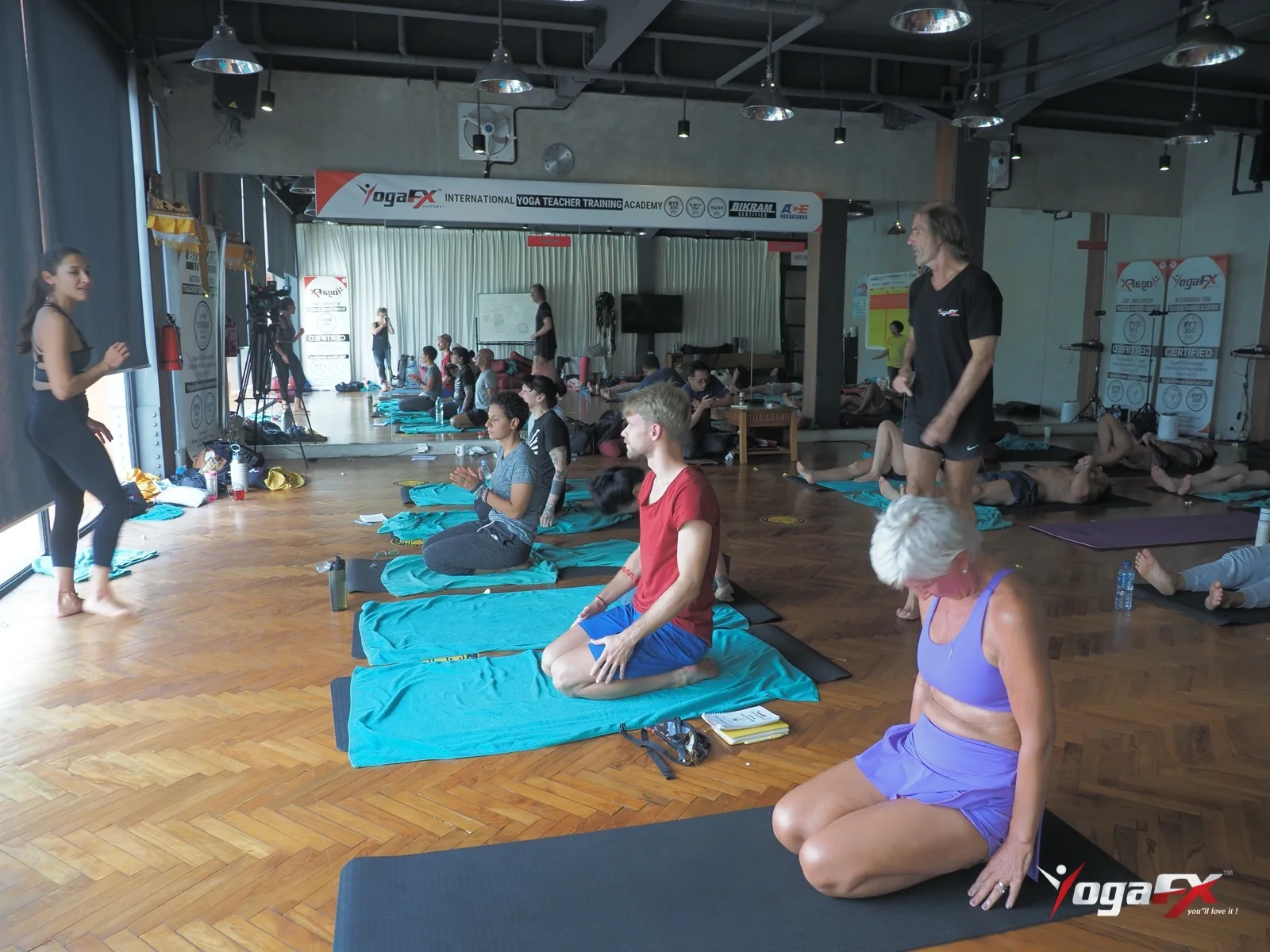
You do not need a heated room to learn the basics. A cold British evening and a spare chair are enough. This sequence borrows from the NHS exercise and the standing pattern we use in class:
- Stand tall by a mirror or a wall, feet together, shoulders down. Loosen any tight clothing.
- Breathe in gently through your nose for a slow count of five. If you cannot reach five yet, that is fine.
- Let the breath flow out through your mouth, counting five again, without forcing it.
- Repeat for a few minutes first, then build towards five minutes, which is the NHS suggestion.
- Finish by standing for a few ordinary breaths and noticing your shoulders, jaw and belly.
Do this at the same time most days, such as before the kettle goes on or after you close the laptop. A routine matters more than a perfect count. The pranayama breathing exercise is easy to skip because it looks too small to count.
If you can, practise it sitting upright as well as standing. Seated practice teaches you how your ribs and belly move, while standing practice is closer to what happens in class.
Safety Checks Before You Breathe in a Hot Room
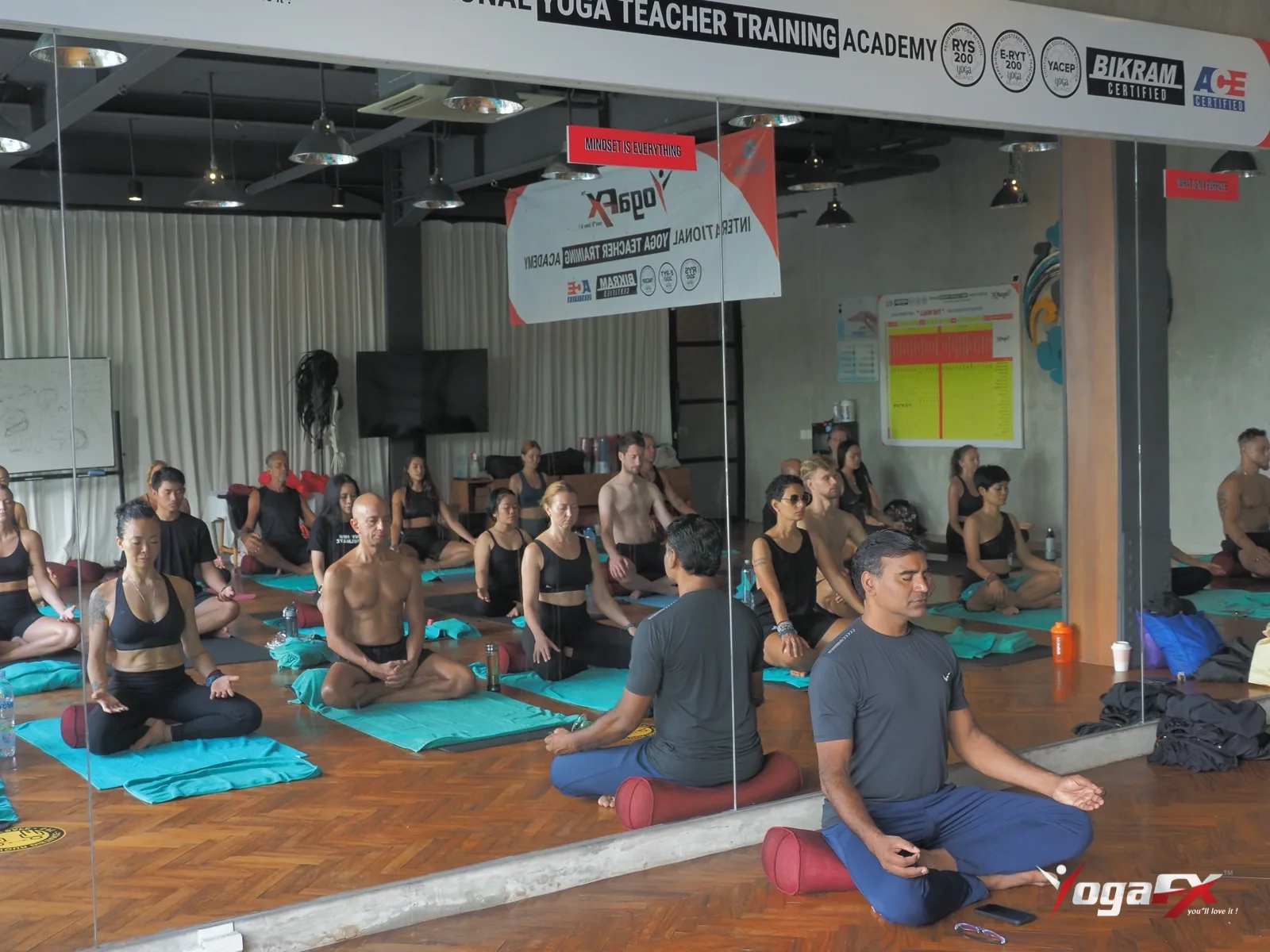
Slow breathing is gentle, but a hot room is not. Before your first class, sort out the basics:
- Speak to your GP if you have a heart, blood pressure, breathing or pregnancy question.
- Eat lightly and arrive hydrated, then keep water within reach.
- Stop if you feel dizzy, faint or unwell. Sit or lie down and tell the teacher.
- Skip active breathing rounds if they make you light-headed. Ordinary breathing is always allowed.
Our guide, Is hot yoga safe?, walks through the heat questions in more detail. Nothing in this article replaces advice from your own doctor.
Learning Pranayama Breathing With Mr. Ian in Bali
Some UK readers come to this topic because they want to teach. YogaFX trains students toward Yoga Alliance RYT 200-Hour registration and the Bikram Hot 26&2 200-Hour International Yoga Certification, and the breathing exercises are part of what you learn to deliver. Mr. Ian Terry has taught for more than 12,000 hours, and the school has trained more than 1,500 graduates from over 80 countries.
If you would rather feel the practice first, the Seminyak studio is open from 06:00 to 22:00 every day, and the Free 1-Day Guest Pass gives you a first class at no cost. Planning a longer trip from Britain? Our complete UK guide to hot yoga teacher training shows how the course works.
FAQ
What is pranayama breathing?
Pranayama breathing is the yogic practice of controlling the breath. In a hot 26&2 class it means two exercises: Standing Deep Breathing at the start, with a slow inhale through the nose and an exhale through the mouth, and Kapalbhati at the end. Both follow the teacher’s spoken count.
How do you do pranayama breathing?
Stand tall with your shoulders down. Breathe in slowly through your nose for a count of about five, then let the breath flow out through your mouth for the same count, without forcing it. The NHS suggests repeating this for at least five minutes. Stop if you feel dizzy.
Is pranayama the same as breathwork?
Not exactly. Breathwork is a broad modern term for many breathing practices. Pranayama is the traditional yogic form of breath control and sits inside that wider group. A 26&2 class teaches two fixed exercises with a spoken count, rather than the long, self-timed rounds common elsewhere.
What does pranayama breathing do?
Research on slow breathing, under 10 breaths a minute, links it with higher parasympathetic activity and feelings of calm and relaxation in healthy people. Those are associations, not treatments. Many students also say it steadies them at the start of a hot class. Ask your GP if you have a health condition.
Can I practise pranayama breathing at home?
Yes. A few minutes of slow nose-in, mouth-out breathing at home is a gentle start, and you do not need heat to learn it. Stand or sit upright, keep the breath comfortable and avoid forcing it. If you have heart, breathing or blood pressure concerns, speak to your GP first.
Still have questions? Message Mr. Ian and the YogaFX team on WhatsApp and we will answer them personally.