Heat shock proteins are protective proteins your cells make under stress, and one small four-week trial found higher HSP70 in the blood cells of 11 people who did hot yoga. That is an early signal, not a health promise. This guide shows UK readers what the studies say, and what they do not.

This article is for education and is not medical advice. Please talk to your GP or another healthcare professional before starting heat-based exercise, especially if you have a heart, blood pressure or kidney condition, or you are pregnant.
Heat Shock Proteins in Plain Words
A protein works like a piece of origami. It only does its job when it folds into the right shape. Heat, injury and other stresses can bend or tangle that shape, and a tangled protein may stop working. Heat shock proteins, shortened to HSPs, help cells keep other proteins folded and working.
Scientists call them molecular chaperones. Your cells make them all the time, not only in a hot room. Levels rise when a cell is stressed by heat, hard exercise or illness. The best-known family is HSP70, and it is the one the yoga research measured.
- Everyday job. Keeping proteins folded and working inside every cell.
- Stress job. Levels can rise when cells face heat, hard exercise or illness.
- Open question. What a short-term rise means for the long-term health of a healthy person.
That last point is where most online claims fall apart. A higher blood marker is a measurement. It is not yet a benefit, and many podcast clips skip that step.
The One Hot Yoga Study UK Readers Can Cite

We found one trial that tests hot yoga against HSP70 directly. It is Bourbeau and colleagues, published in the International Journal of Yoga in 2021, and you can read it on PubMed Central.
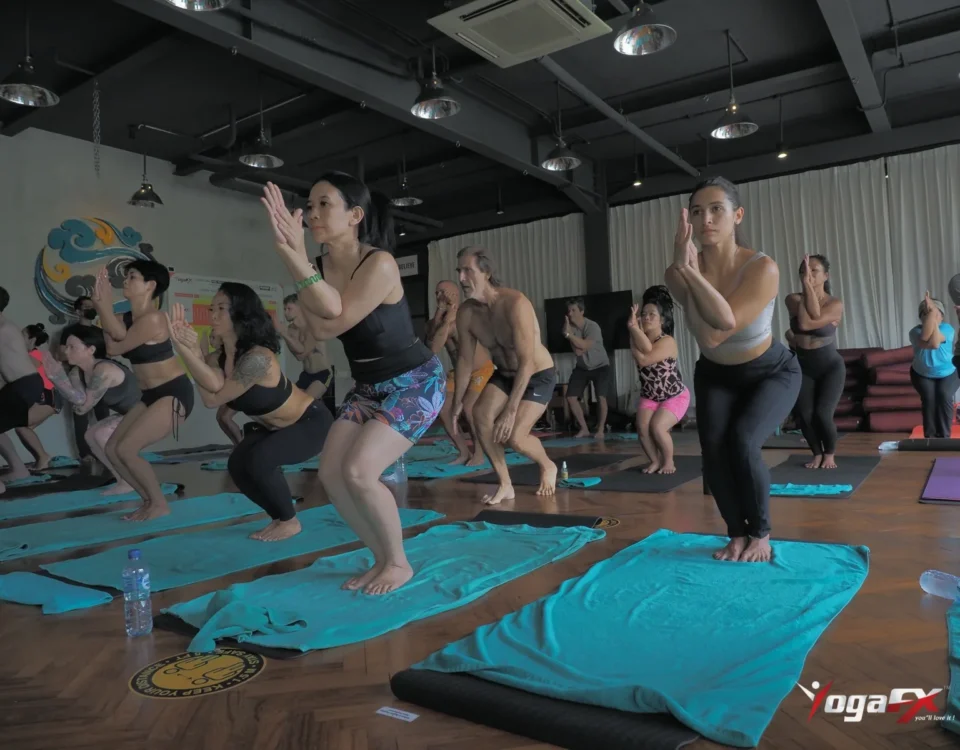
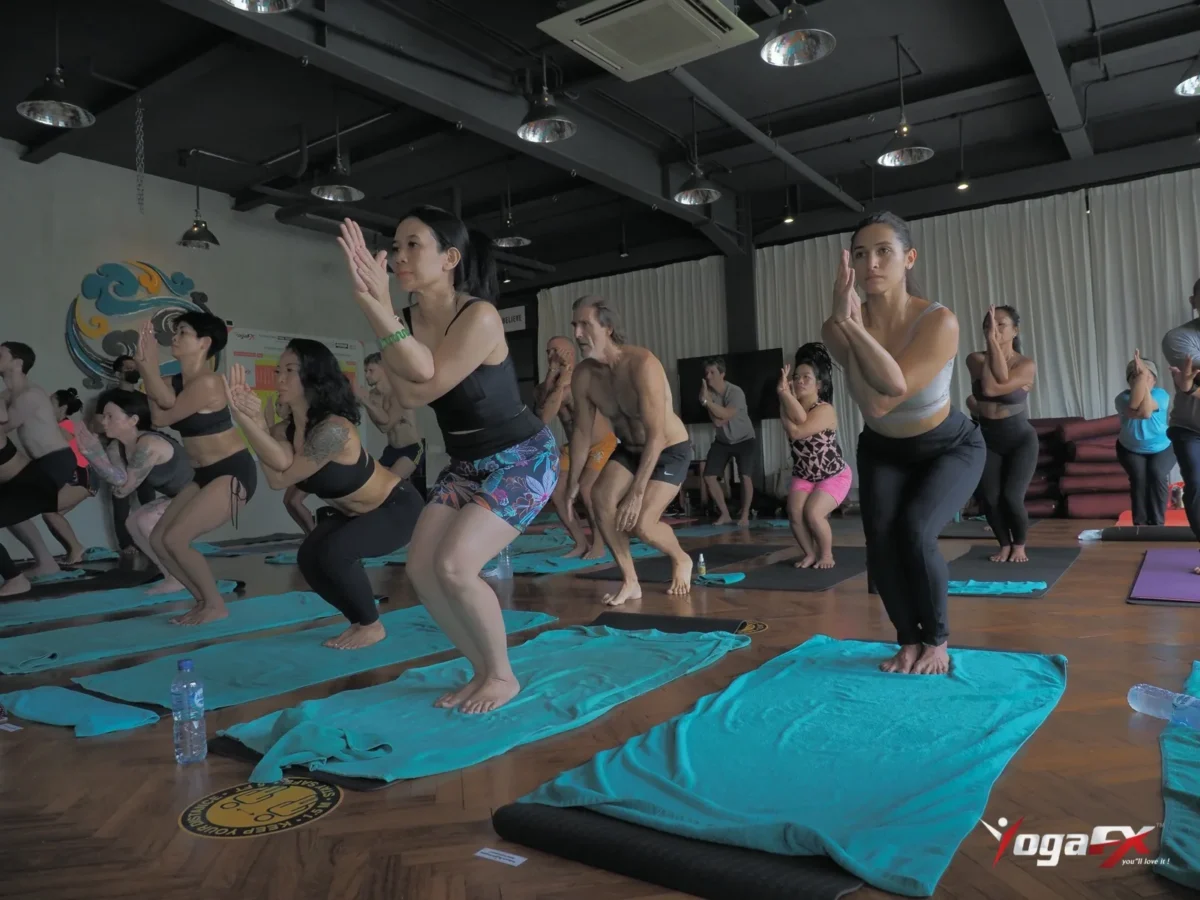
Twenty-two healthy adults took part, 11 men and 11 women, with an average age of 26. None had done yoga before. They practised three times a week for four weeks, which makes 12 sessions, following a modified Bikram protocol with a 75-minute video. One group practised in a heat chamber at around 40°C. The other practised at 18 to 22°C.
The researchers measured HSP70 in white blood cells before and after. In their words, the analysis suggested higher HSP70 in the hot yoga group only. They read this as a sign of cellular thermotolerance, which means cells that cope better with heat.
| Measure | Hot yoga (11 people) | Normal-temperature yoga (11 people) | Plain reading |
|---|---|---|---|
| HSP70 in blood cells | Higher after 4 weeks (P < 0.05) | No significant rise | A signal in the hot group only |
| VO2 max (aerobic fitness) | 3.22 to 3.46 litres per minute (P < 0.05) | No significant change | A small rise in a small trial |
| Stress hormone ACTH and perceived stress | No significant change | No significant change | Nothing moved |
| BDNF (a brain-related protein) | Not significant on its own | Not significant on its own | Rose when both yoga groups were combined, so it was not temperature dependent |
Now for the limits. The trial was small, with 22 people. Sessions ran in a heat chamber with a video, not in a busy studio. Everyone was young and new to yoga, and HSP70 was measured in blood cells, not in muscle or the brain. We did not find a second hot yoga trial testing HSP70, so nobody has repeated it yet.
One more result is worth knowing. The authors saw no evidence of heat acclimation or a change in mental stress. So the picture is mixed: some measures moved, others did not.
What the Wider Heat and Exercise Research Adds
A 2020 meta-analysis in Cell Stress & Chaperones pooled studies of heat acclimation, which means repeated heat exposure over several days. It covered 12 studies and 118 participants with a mean age of 24, and 98% were male. It found a significant effect of heat acclimation on HSP70, with an effect size of 0.97 and a wide confidence interval of 0.08 to 1.89. The full paper is on PubMed Central.
That wide interval means the true effect could be small or large. The protein measurements showed a bigger effect than the mRNA ones, and the number of days of heat exposure moderated the protein result. It is useful, but it describes lab heat protocols in young men, not an evening class in Leeds.
A 2008 review in Sports Medicine, titled Heat Shock Protein 72 Response to Exercise in Humans, adds a second angle. It says an acute bout of exercise stimulates an increase in HSP72, a member of the HSP70 family, both inside and outside cells. It also says long-term training and better fitness increase how quickly HSP72 becomes available in response to stress.
In plain terms, exercise raises these proteins too. So a rise after a hot class cannot be credited to the heat alone. The Bourbeau trial helps because it compared two rooms, and only the hot room showed the HSP70 rise.
Heat Shock Proteins at a Glance
What UK Readers Hear Online, and How to Answer It
Most UK readers meet this topic through a podcast clip, a sauna advert or a friend at the leisure centre. The claim usually jumps from a lab protein to a promise about ageing in one sentence. Slow down at that jump.
If you are weighing different kinds of heat, our guides on hot yoga versus a sauna for UK men and stacking a sauna after class cover the practical side. This page stays with the protein question.
| Claim you may hear | What the studies we opened support | Safer wording |
|---|---|---|
| Hot yoga boosts your heat shock proteins | One 22-person trial found higher HSP70 in the blood cells of the hot group | One small trial found higher HSP70 in the hot yoga group. |
| Heat shock proteins slow ageing | Nothing we opened tests this | Leave it out. |
| Any heat does the same job | A 2020 meta-analysis of heat acclimation, mostly male participants, with a wide confidence interval | Repeated heat may raise HSP70, but results vary between studies. |
| A higher marker means better health | The authors describe a thermotolerance adaptation, and no health outcome was tested | A rise is a measurement, not yet a benefit. |
A Short Script for Students
A student who asks about heat shock proteins deserves a calm, specific answer. Here’s a short script that stays inside the evidence:
- Name the study. Bourbeau and colleagues, 2021, 22 adults, four weeks.
- Give the size and the result. HSP70 was higher in the hot yoga group only.
- Say the limit. It is small, it ran in a heat chamber, and it has not been repeated that we could find.
Five Questions to Ask Before You Share a Heat Shock Protein Claim
Heat shock protein headlines travel fast, and they rarely come with the details attached. Before you repeat one to a friend, a class or a student, run it through five quick checks. They take two minutes, and they catch most of the hype.
- Who took part? The hot yoga trial used 22 healthy young adults. The meta-analysis was 98% male. Neither describes every reader.
- How many? Small studies can point in a direction, but they can’t settle a question.
- What was measured? A blood marker such as HSP70 is not the same as a health result like fewer illnesses or better sleep.
- Compared with what? The Bourbeau trial compared a hot room with a normal-temperature room, which is why it’s more useful than a before-and-after story.
- Has anyone repeated it? We didn’t find a second hot yoga trial on HSP70, so the finding is still early.
Notice that none of these checks says the research is wrong. They simply keep the claim the same size as the evidence. That’s also the safest way to talk about heat shock proteins, because it protects your credibility if the next study points the other way.
It’s worth remembering what the proteins are for, too. Cells use them to protect other proteins under stress, so a rise after heat or exercise is what you’d expect from a healthy stress response. Whether that response is bigger or faster after weeks of hot classes is the real question, and the current studies only begin to answer it.
Heat Safety First, Especially in a British Winter
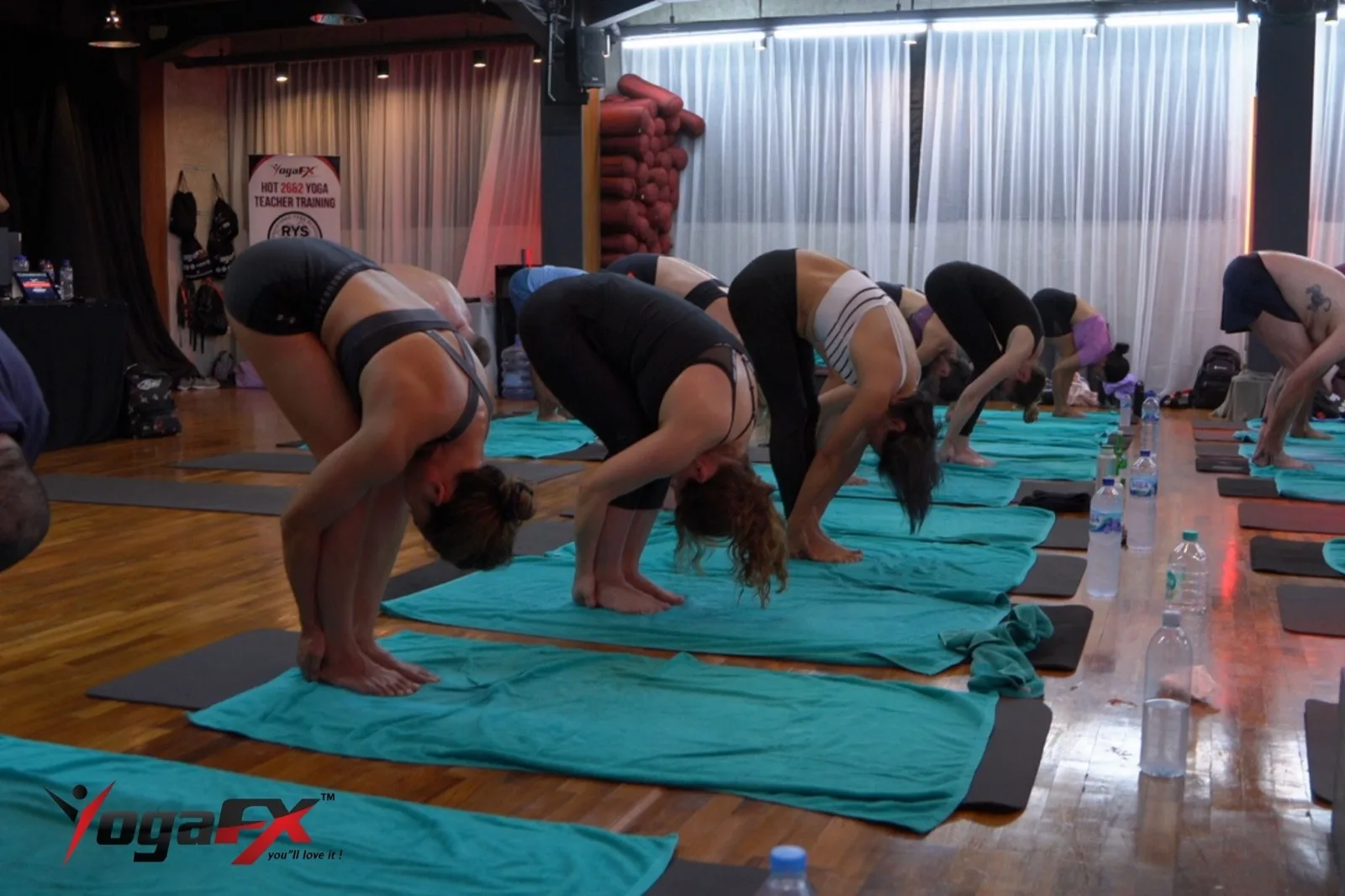
A hot room is not a reason to push harder in pursuit of a lab marker. The NHS page on heat exhaustion and heatstroke lists the warning signs of heat exhaustion: tiredness, dizziness, headache, feeling sick, heavy sweating with pale clammy skin, cramps, a high temperature and strong thirst. It says someone showing these signs needs to be cooled down and given fluids.
It also says heatstroke is a medical emergency. The signs include a very high temperature, hot skin without sweating, fast breathing, confusion and loss of consciousness. For prevention, the NHS advises drinking more cold drinks when you are active and avoiding extreme exercise.
- Leave the room if you feel dizzy, sick or confused. Stepping out is never a failure.
- Drink early, before class as well as during it, and keep water within reach.
- Check with your GP first if you have a heart, blood pressure or kidney condition, or you are pregnant.
Our guides to whether hot yoga is safe and to hot yoga and VO2 max go deeper on both of these questions.
What Our Trainees Say
These reviews are not about heat shock proteins. They show what training in the heat feels like from the inside, which is the practical side of everything above.
A trainee in our graduation video said he had doubted he was strong enough to reach the end. He credited Mr. Ian’s daily support for keeping him going, and said he was proud to finish.
A trainee in our YouTube review (paraphrased), 2023
A trainee in our Manila video said they had never reached their toes before, and thanked the team for the reminder that they could.
A trainee in our YouTube review (paraphrased), 2018
“The course was intense and required discipline, I loved it!”
Stacy, Google review, 2024

Learning to Talk About Research Honestly With YogaFX
Mr. Ian Terry, E-RYT 500, has more than 12,000 teaching hours, and he trains teachers to describe research the way this page does: the study, its size and its limits. YogaFX has graduated 1,500+ trainees from 80+ countries since 2017.
For UK applicants, the training is a six-day hybrid. You study online first, then practise and train in Seminyak, Bali. Our guide to original hot yoga teacher training from the UK covers leave, travel and cost planning in more detail.
If you already teach and want the classroom version of this topic, our teacher training hub has a teacher-focused walkthrough of the heat shock protein research with a plain-language script.
FAQ
What are heat shock proteins?
Heat shock proteins are helper proteins that cells make to keep other proteins folded and working. Levels rise when cells face stress such as heat, hard exercise or illness. The best-known family is HSP70, which is the one the hot yoga trial measured. A rise in the protein is a measurement, not yet a health benefit.
Does hot yoga increase heat shock proteins?
One small 2021 trial of 22 adults found higher HSP70 in the blood cells of the hot yoga group only, after 12 sessions over four weeks. The study was short and has not been repeated that we could find, so treat it as an early signal rather than proof.
Are heat shock proteins good for you?
Heat shock proteins protect cells, but nobody has shown that raising them with hot yoga improves long-term health. The hot yoga trial measured a blood marker, not health outcomes. Ask your GP before starting heat-based exercise, especially if you have a heart, blood pressure or kidney condition, or you are pregnant.
Can you get heat shock proteins from a sauna?
Repeated heat exposure may raise HSP70, according to a 2020 meta-analysis of heat acclimation studies with 118 mostly male participants. The confidence interval was wide, and we did not open a sauna study for this article, so we make no sauna claim. Speak to your GP first if you have a heart condition.
Still have questions? Message Mr. Ian and the YogaFX team on WhatsApp and we will answer them personally.