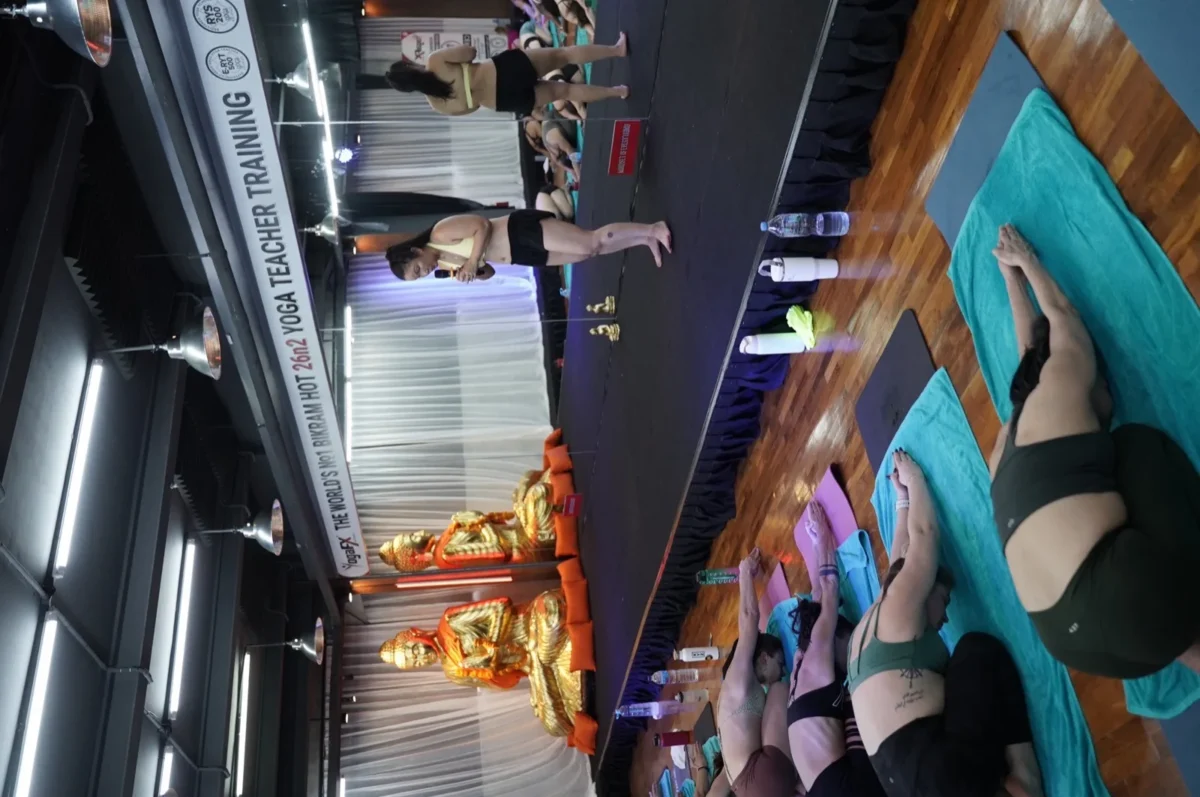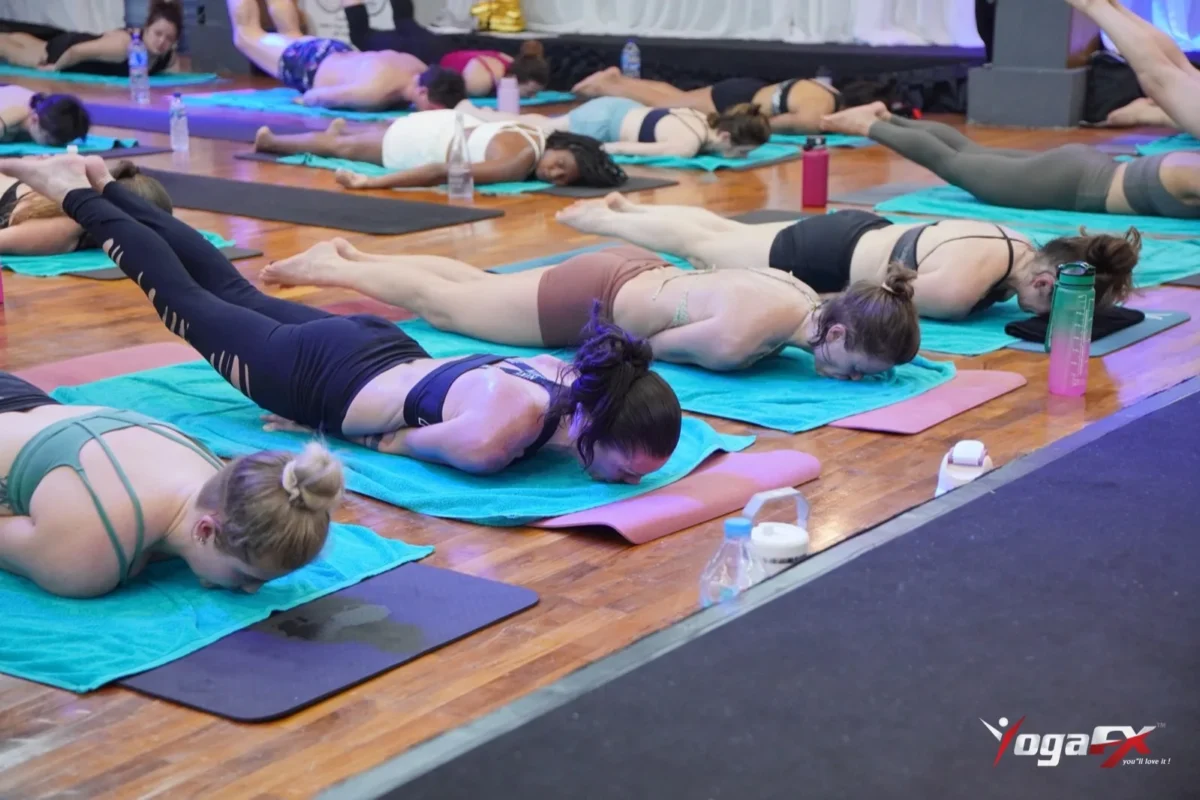
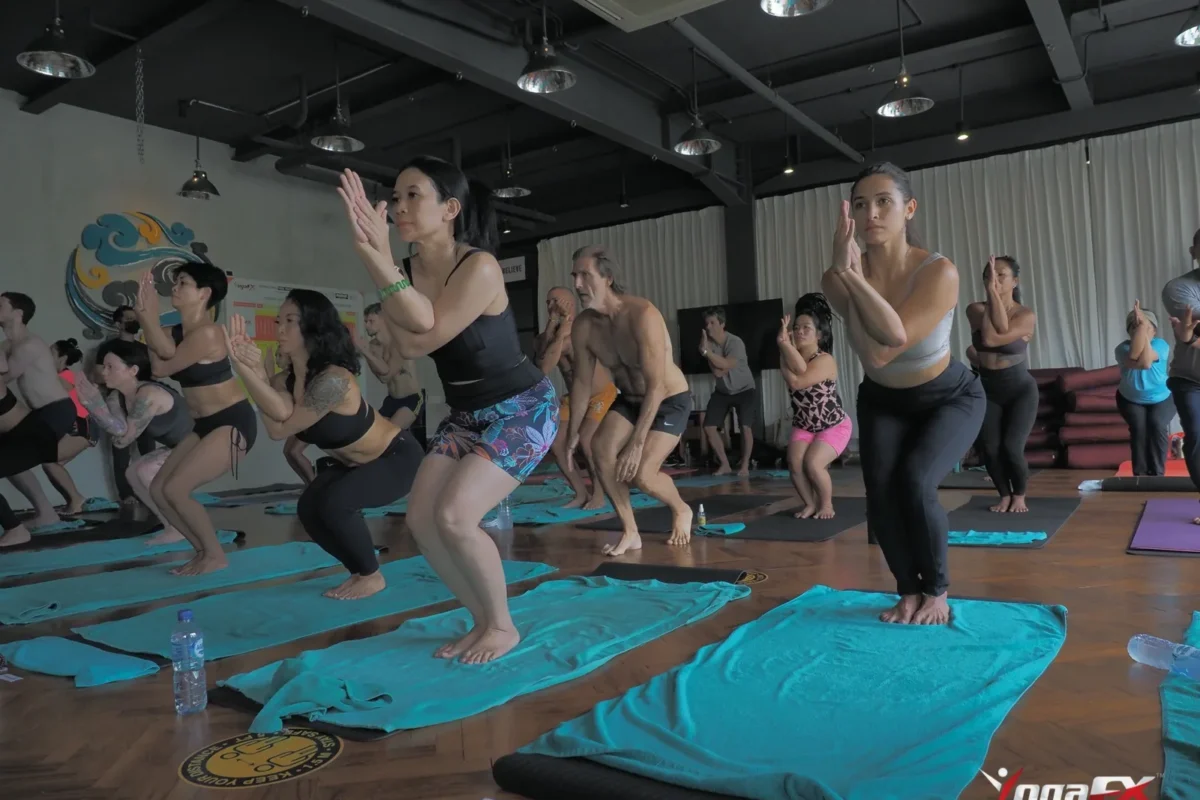
Eagle pose (Garudasana) is a one-leg balance. You sit low on a bent standing leg, wrap the other leg over it and cross your arms at the chest. Then you fix your eyes on one point. Done well, it stretches the outer hip and upper back and trains steady balance. Below are the cues, the common errors and a UK safety check.

This guide is for UK students who struggle with the wrap and the wobble. It is also for trainees who will one day have to cue it out loud. It comes from the Hot 26&2 class we teach at YogaFX in Bali. We checked it against NHS and Mayo Clinic advice on balance and stretching.
Eagle Pose Step by Step: The 8 Cues in Order
In a Hot 26&2 class, eagle pose comes after Awkward Pose and before Standing Head to Knee. The exact dialogue is taught live, so this is a plain-language map of the cues rather than a script. In the room, always follow your teacher.
- Feet together, then sit. Stand tall, bend both knees and sit back as if lowering onto a low chair.
- Choose your standing leg. Shift your weight over it and keep that knee bent for the whole posture.
- Lift the other leg. Bring it up and over the standing thigh, not over the knee, so the joint is never twisted.
- Hook the foot if it reaches. Tuck it behind the standing calf, or rest the toes on the floor if it does not.
- Cross the arms. One elbow goes under the other, then bring the forearms and palms together if they will meet.
- Lift the elbows. Raise them to about chest height and let the shoulders drop away from your ears.
- Fix your eyes. Pick one point at eye level and keep it while you sit a little lower.
- Unwrap and rest. Release the arms, then the leg, stand tall, breathe, and repeat on the other side.
Why the order of the cues matters
Notice how each cue protects the next. The bent standing knee gives the hips a seat. The low seat gives the wrap a base. The fixed gaze keeps the balance quiet. Every posture in the class is done twice, so the first set shows you where you wobble. The second set lets you fix it. Take one cue out and the whole shape gets shakier, which is why the order never changes from class to class.
Which Arm Goes on Top, and What If Your Hands Will Not Touch?
This is the question new students ask most, and the honest answer is that either arm can go on top. What matters is that you repeat the posture on the other side. That way both shoulders and both hips get the same work. Follow your teacher’s cue on the day and swap on the second side.
Depth is not the point here. Control is. If the wrap will not close, use an easier shape. Move up only when the step below feels steady:
- Kickstand legs. Cross the top leg over the thigh and let the toes rest on the floor. This is a perfectly good eagle pose.
- Hug arms. If the palms stay apart, press the backs of the hands together or hold opposite shoulders in a hug.
- Fingertips on a wall. The NHS balance exercises page suggests practising near a wall or a stable chair in case you lose your balance. The same sensible rule works at home.
Common Eagle Pose Errors: Find Yours by What You Feel
Most eagle pose errors come from chasing the wrap. You see a tight twist on the next mat and assume tighter is better. It is not. Start from what your body is telling you. Then use the table to find the likely cause and the first fix.
| What you feel | What is probably happening | First fix to try |
|---|---|---|
| You tip to the same side every time | You are leaning away from the standing leg | Sit the hips lower and press the standing foot into the floor |
| A pinch on the outside of the standing knee | The knee is locked or caved in | Soften the knee and point it over the second toe |
| A tight neck and shoulders up around the ears | The shoulders have crept up towards the ears | Slide the shoulder blades down the back and lengthen the neck |
| A twist in the knee of the top leg | The foot is being forced behind the calf | Rest the toes on the floor instead |
| Light-headed and short of breath | You are holding your breath in the heat | Breathe slowly through the nose and soften the jaw |
| The wobble grows the longer you hold | Your eyes are drifting around the room | Choose one point at eye level and keep it |
If you feel sharp pain, pinching or tingling, come out, rest and tell your teacher. That is not a stretch, it is a signal.
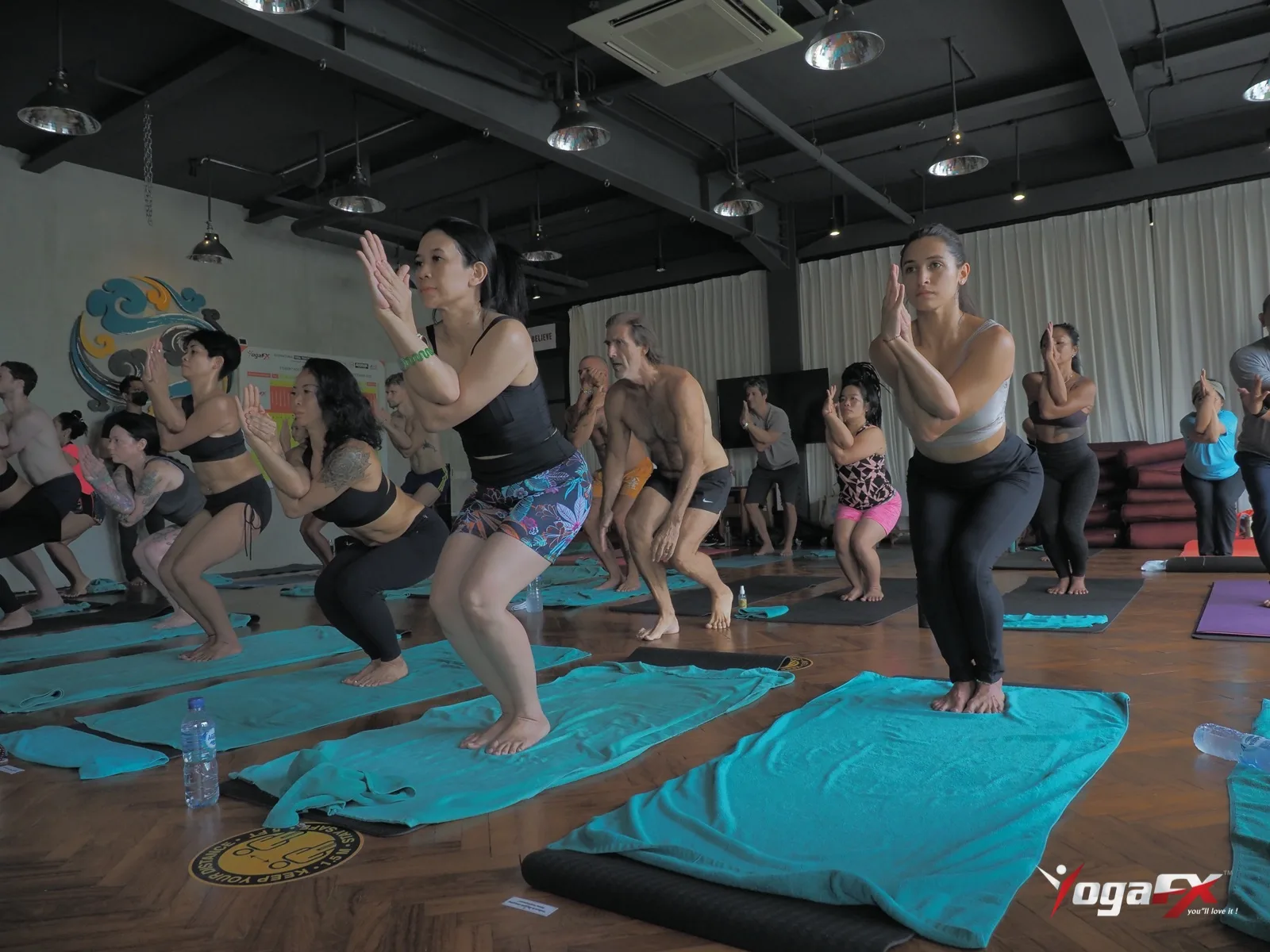
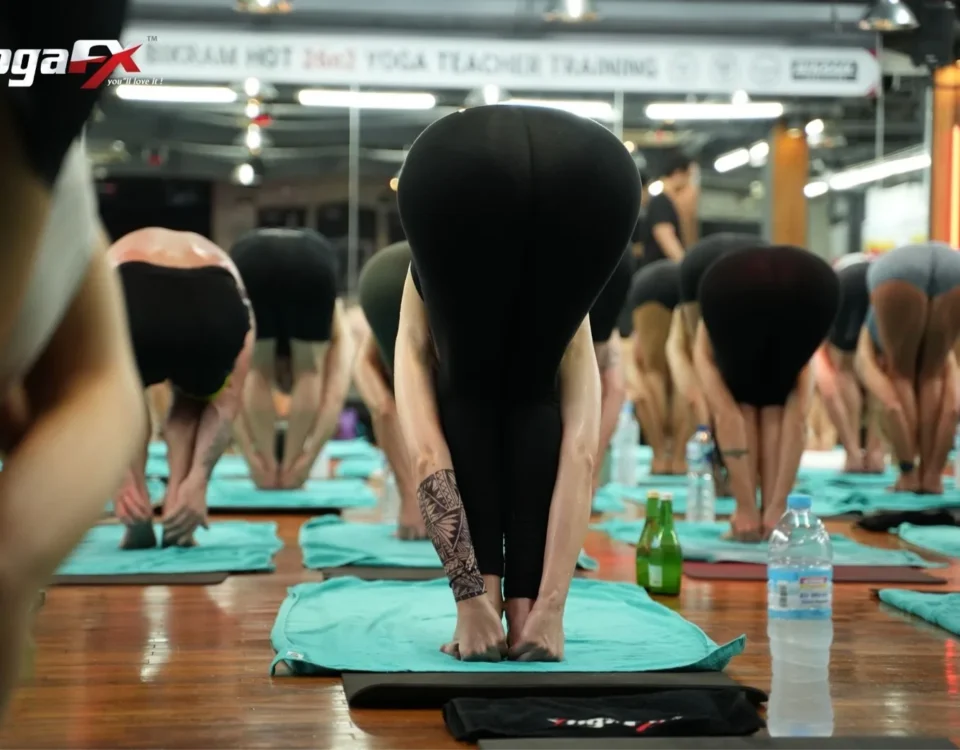
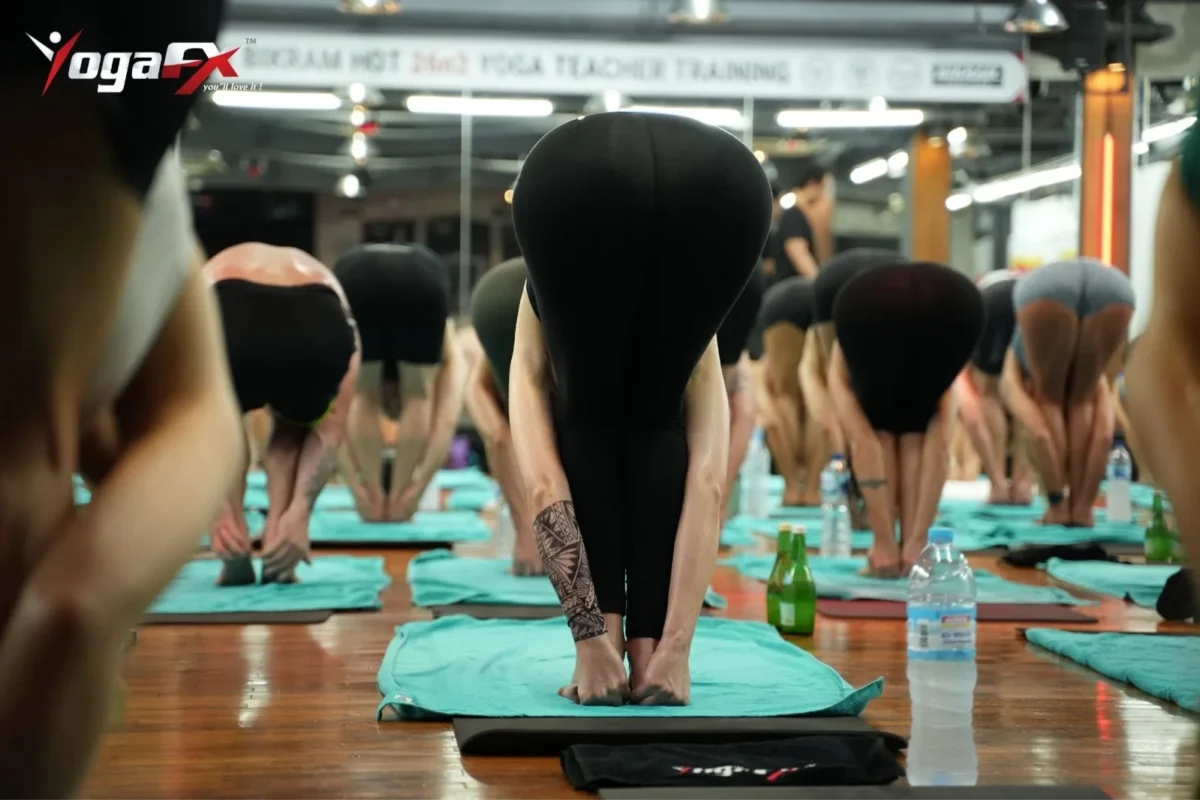
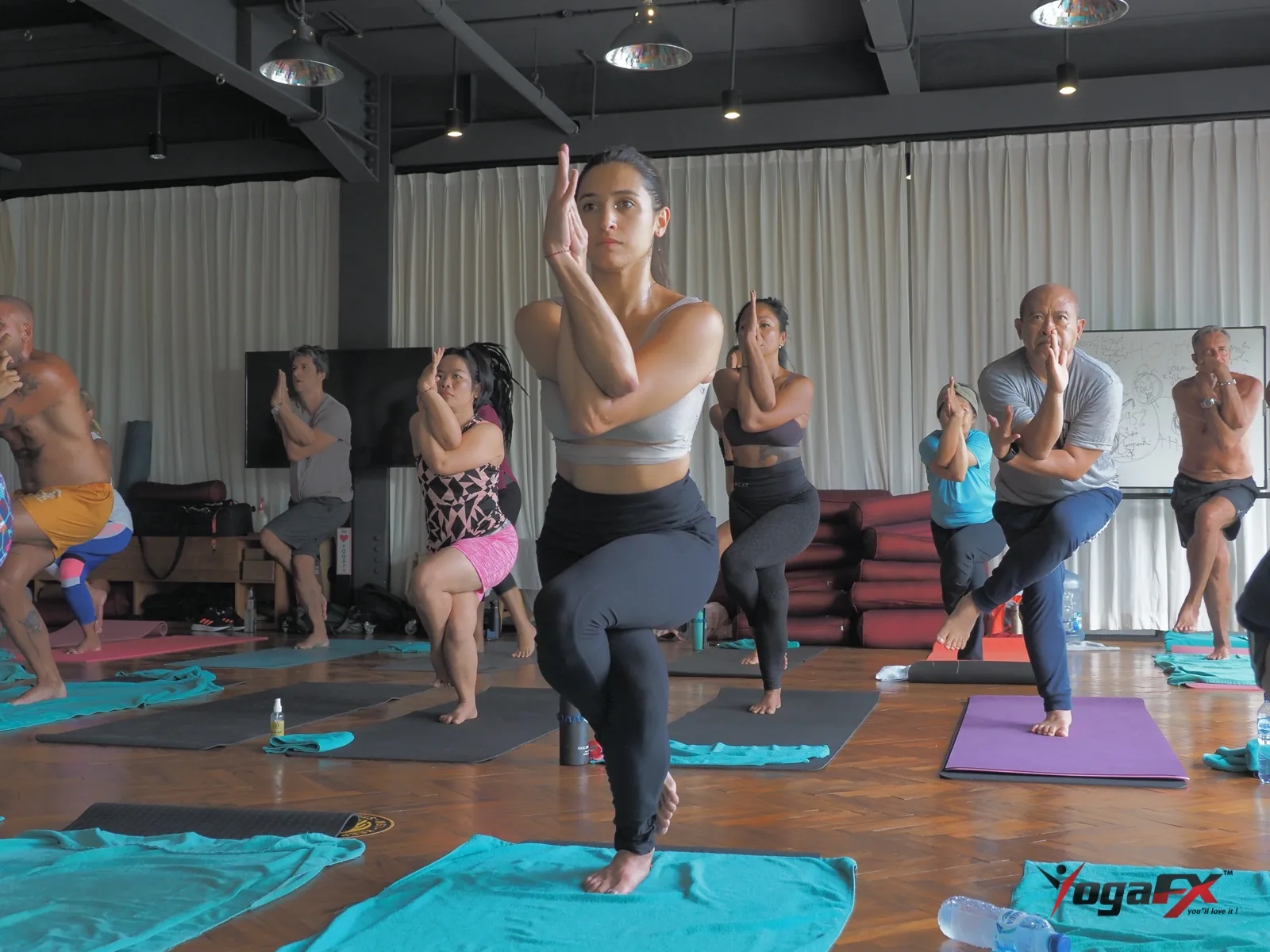
Look closely at the photo and you will see it. Some students hook the foot, some rest the toes, and some hold the arms higher than others. Every one of them has a bent standing knee and a steady stare. Those two things keep eagle pose safe.
Eagle Pose Benefits: What Balance and Stretching Research Says
We do not claim eagle pose treats any condition, and no source below tests eagle pose itself. What we can do is borrow from trusted health sources on balance and stretching. Both shape how we teach the posture.
- Balance practice. The NHS describes a simple one-leg stand. Lift one leg, keep the hips level and keep a slight bend in the other leg. Hold for 5 to 10 seconds and do 3 on each side. It suggests balance exercises at least twice a week. Eagle pose is a deeper version of the same idea.
- Stretching technique. Mayo Clinic advises a smooth stretch without bouncing and a hold of about 30 seconds. It says to expect tension, not pain: “If it hurts, you’ve pushed too far.” In a hot room a stretch can feel easier than it is. Let tension, not depth, be your guide.
- Why the eyes matter. A 2024 PLOS ONE study by Buckley and colleagues, titled Moving from stable standing to single-limb stance or an up-on-the-toes position, tested 18 healthy young adults. They moved into a single-leg stance with and without vision. Without vision, balance while holding the stance was less stable. It was not a yoga study, but it fits the cue to keep your gaze on one point.
The numbers behind the pose
A 4-Week Plan to Make Eagle Pose Yoga Feel Steadier
You do not need a heated studio to practise the shape of eagle pose yoga. Two short sessions a week fits the NHS advice to do balance exercises at least twice a week. Treat the plan below as a suggestion, not a prescription, and go slower if any week feels worse than the last.
- Week 1: build the seat. Practise sitting back into a low squat and the NHS one-leg stand beside a wall.
- Week 2: add the arms. Keep the kickstand legs and add the hug arms. Lift the elbows and drop the shoulders.
- Week 3: find the point. Choose one spot on the wall at eye level. Hold the shape while you keep your eyes on it.
- Week 4: try the hook. Tuck the foot behind the calf only if it slides there without effort. Otherwise stay on the toes.
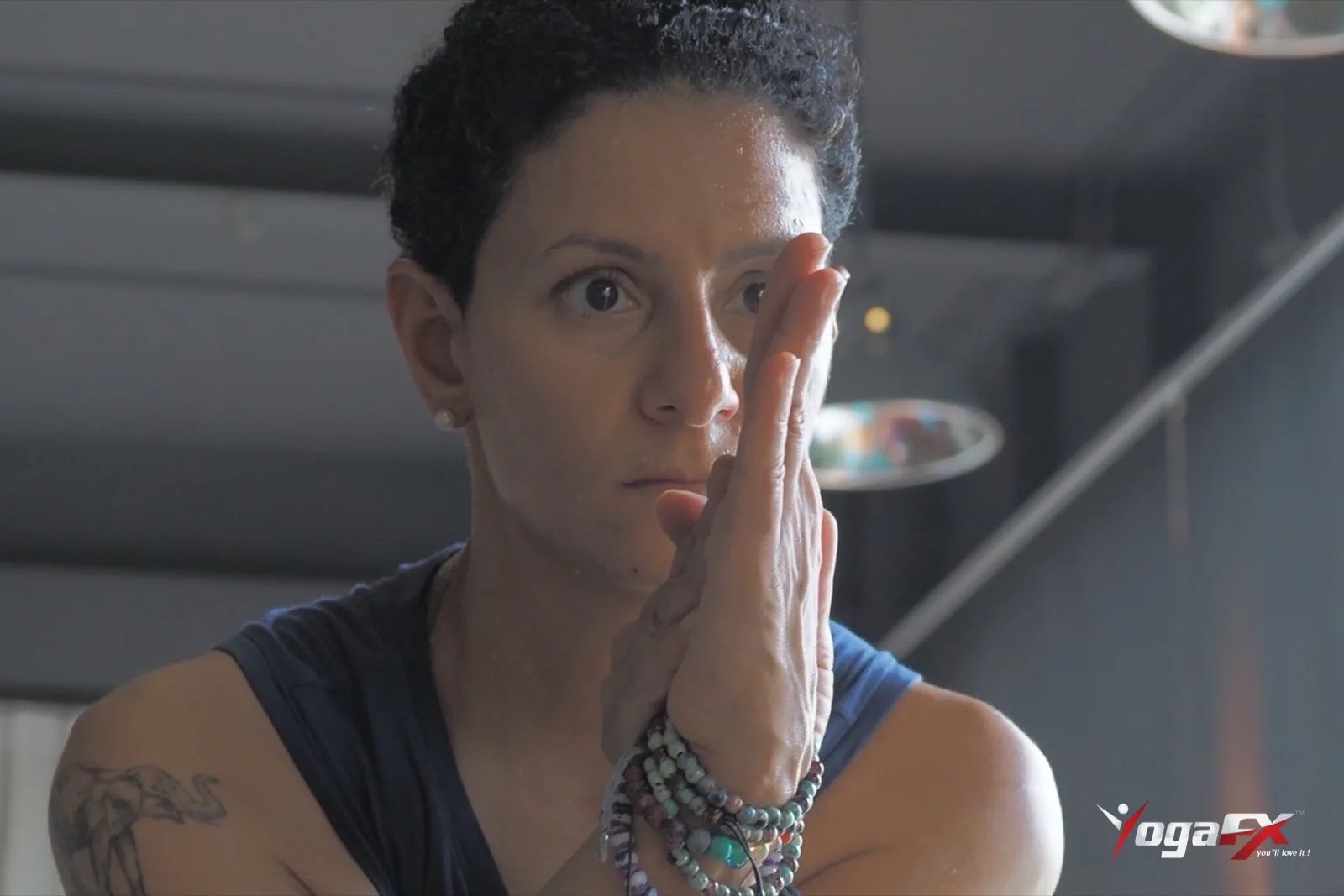
Always do both sides, and rest between them. Stop the moment you feel pain rather than tension. When you do join a hot class, tell the teacher which step you have reached and they can meet you there.
A UK Student’s Checklist Before Your First Eagle Pose in a Hot Room
Many UK students come to hot yoga after a long desk week or a winter of not moving much. Others arrive after a sports injury. Before your first heated class, run three quick checks at home. They take five minutes and tell you a lot about how eagle pose will feel.
| Check | How to do it at home | When to talk to a professional first |
|---|---|---|
| One-leg stand | Stand facing a wall, fingertips touching it, lift one leg and hold for 5 to 10 seconds. Do 3 on each side, as the NHS suggests. | You cannot stand on one leg at all, or you feel dizzy |
| Knee check | Sit back into a low-chair squat and stand up again, slowly, three times | You feel pain, clicking with pain, or swelling in either knee |
| Shoulder cross | Hug yourself and lift the elbows to chest height | You feel pinching or tingling in the shoulder or arm |
Some people should check first. That includes anyone with a knee, hip, shoulder or balance problem, a recent injury or surgery, or a heart or blood pressure condition. It also includes anyone who is pregnant. Consult a healthcare professional such as your GP or a physiotherapist before you practise in the heat. Tell your teacher before class either way.
Once you are cleared, build slowly. Our guide to hot 26 and 2 yoga for UK beginners explains the class format. The full 26-posture sequence shows where eagle pose sits among the other standing balances. If you lift weights, the hot yoga poses for men guide explains why eagle opens gym shoulders so well.
How Trainees Learn to Cue Eagle Pose in Bali
Mr. Ian Terry, E-RYT 500 with more than 12,000 teaching hours, leads the teacher training at YogaFX. He trained for five years, from 2014 to 2019, with the founder of the Bikram Hot 26&2 method. For a balance posture like eagle pose, that background shows up in how trainees learn to speak.
The three-step cueing habit
Trainees practise a simple three-step habit when they cue eagle pose:
- Look first. Check whether the hips are level, the standing knee is soft and the shoulders are down.
- Say one short cue. “Sit lower” or “eyes on one point” works better than a long explanation to a student who is already wobbling.
- Wait and watch. Give the student a few breaths to adjust before adding a second cue.
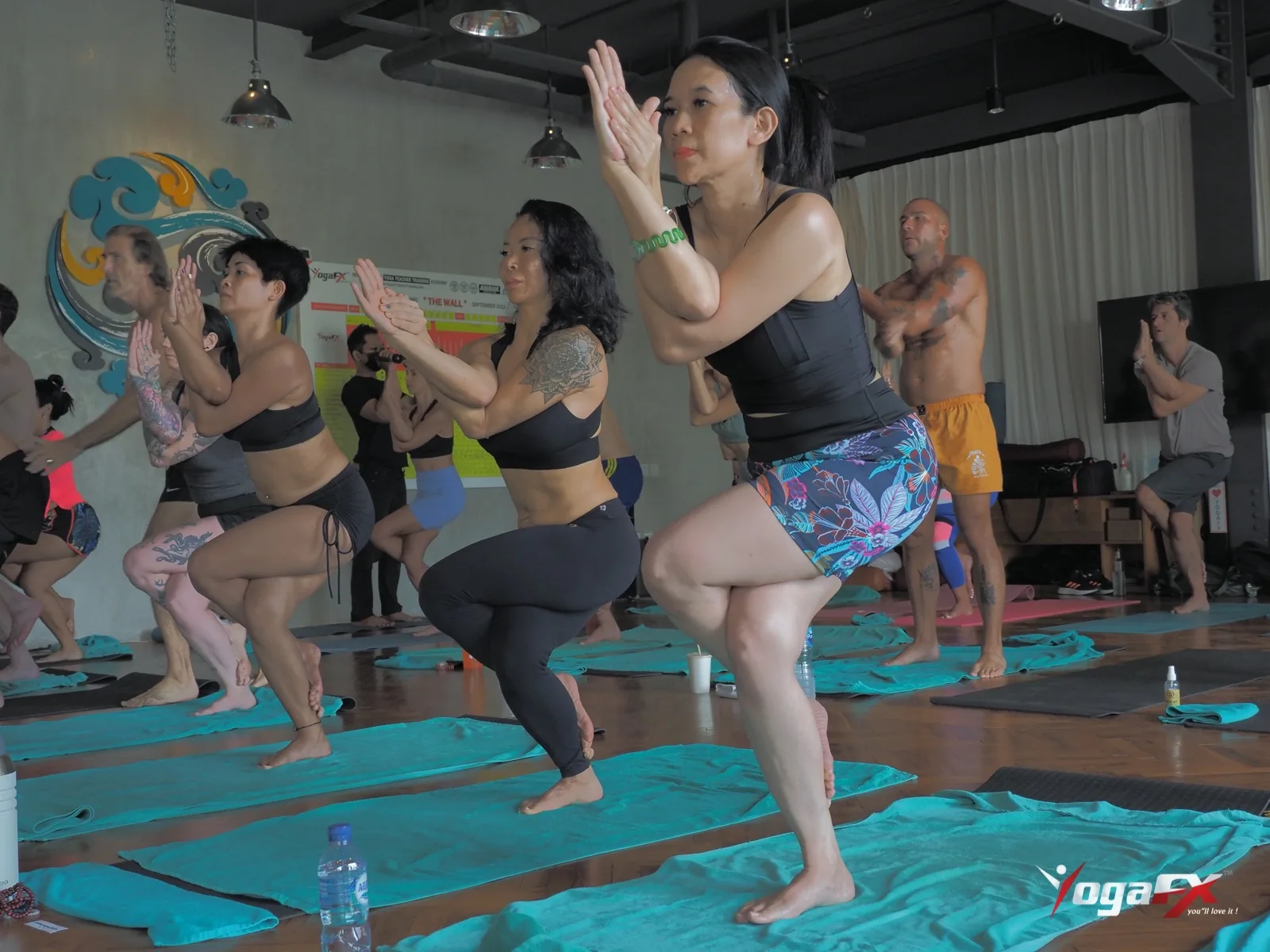
Training in Bali, practising in the UK
That calm, spoken style is the point of the training. The 6-day hybrid MasterClass combines an online pre-course with an intensive in Bali. It leads to Yoga Alliance RYT 200-Hour and Bikram Hot 26&2 200-Hour International Yoga Certification. The next batch checks in on Sunday 24 January 2027. It checks out on Friday 29 January 2027 at Soham Wellness Center in Seminyak. The Early Bird price is US$1,899.
For UK applicants the useful comparison is not the airfare alone. Ask how much time away from work you need. Ask whether you want to practise eagle pose with a teacher who has taught it for thousands of hours.
Our course details page sets out what is included. You can ask Mr. Ian anything on WhatsApp. More than 1,500 graduates from over 80 countries have trained with us since 2017.
If you would rather learn the method first, our sister guide on the 26 and 2 order of eagle goes deeper into the full sequence. Our hot yoga for athletes guide is a good next read if single-leg control matters for your sport.
What YogaFX Students Say
Students rarely describe one posture when they look back. They describe the effort, the room and the people in it. Here are three reviews from YogaFX students, with first names only.
Very good for beginners, after I do it regularly my body always feels fresh.
Sony, Google review, 2024
There is a big difference between being alone and lonely.
Agnieszka, in her YouTube graduation review, 2023
At her January 2024 graduation, Dior said in her YouTube review that she was very grateful for the experience. She also thanked everyone she met in the room. That room full of people holding the same hard posture is exactly what eagle pose feels like in a full class.
FAQ
Which arm goes on top in eagle pose?
Either arm can go on top. What matters is that you repeat the posture on the other side so both shoulders get the same stretch. Follow your teacher’s cue on the day, keep the elbows lifted to about chest height and let the shoulders stay away from your ears.
Why can’t I do the eagle pose arms?
Tight shoulders and upper back stop many people from getting the palms together, and that is common. Press the backs of your hands together instead, or hold opposite shoulders in a hug. The shape is about control and lifted elbows, not touching palms, so do not force it.
Is eagle pose hard for beginners?
It can feel hard because the balance, the wrap and the heat all arrive together. Start with the kickstand version, where the toes of the top leg rest on the floor, and keep the standing knee soft. With regular practice, many beginners find the shape steadier over time.
What does eagle pose stretch?
Most students feel a stretch across the outer hip of the wrapped leg and between the shoulder blades from the crossed arms. The standing leg works hard to keep you upright. Stretch only to tension, never pain, and stop if you feel pinching in the knee.
How do you cue eagle pose when teaching?
Look first, then give one short cue, such as “sit lower” or “eyes on one point”, and wait a few breaths before adding another. Watch the standing knee, the hips and the shoulders. Trainees practise this calm, spoken style throughout our hybrid teacher training in Bali.
Still have questions? Message Mr. Ian and the YogaFX team on WhatsApp and we will answer them personally. Visiting Bali first? Ask about the Free 1-Day Guest Pass at our Seminyak studio, where your first class is free.