Hot yoga temperature in most heated rooms sits between 30°C and 40°C, and a full Original Hot 26&2 class is held at 40°C (104°F) with about 40% humidity for 90 minutes. For a UK student, that is far warmer than a British summer day. Here is what to expect before you book.

Mr. Ian Terry, E-RYT 500, has taught more than 12,000 hours in heated rooms. This guide uses the YogaFX studio standard as its reference point, then explains the hot yoga temperature for UK readers: the numbers, the humidity, what research has measured and the warning signs to know.
Hot Yoga Temperature Explained: The Short Answer for UK Students
Studios set their own rooms, so two classes that are both called hot yoga can feel very different. Whatever the hot yoga temperature on the timetable, it’s worth knowing the usual setups:
- Unheated yoga room: roughly 20°C to 22°C, the same as a normal indoor class.
- Warm or heated flow class: usually about 30°C to 38°C, with humidity that varies from studio to studio.
- Original Hot 26&2 class: 40°C (104°F) and about 40% humidity, held for all 90 minutes.
If you search in Fahrenheit, 30°C is 86°F, 35°C is 95°F, 38°C is about 100°F and 40°C is 104°F. You’ll also see the Bikram figure of 105°F, which is 40.5°C. Mayo Clinic Sports Medicine describes the Bikram form of hot yoga as a room heated to approximately 105°F (40°C) with 40 percent humidity.
Hot yoga temperature chart: three room types
| Room type | Temperature | Humidity | What a UK student should expect |
|---|---|---|---|
| Unheated yoga room | About 20°C to 22°C (68°F to 72°F) | Normal room air | Feels like any indoor class, and muscles warm slowly from the inside |
| Warm or heated flow class | About 30°C to 38°C (86°F to 100°F) | Varies by studio | A clear sweat, but the feel changes from studio to studio, so ask first |
| Original Hot 26&2 class | 40°C (104°F) | About 40% | A fixed 90-minute class with the same room and sequence every time |
A fixed room is what makes the original class comparable from one visit to the next. When temperature and sequence stay put, any change you notice is yours.
40°C / 104°F
Room temperature for a full Original Hot 26&2 class.
About 40%
Humid enough to feel heavy, dry enough for sweat to keep evaporating.
90 min
The same 26 postures and 2 breathing exercises, in a fixed order.
103.2°F
Average highest core temperature for men in a 20-person Bikram study (about 39.6°C).
Why the Room Is Heated, and Why Humidity Matters
A heated room does three jobs. It helps muscles feel looser, it raises the work your heart does, and it gives your mind something to settle against. Each one matters for a different student.
Warm muscles and a steady pace
In a cold British studio in January, you start the class stiff. The first postures take longer to feel comfortable, so people rush. The right hot yoga temperature does part of that work for you, which means you can ease into a stretch rather than force it. Note that the heat does not make a stretch safe on its own. It only makes it easier to approach slowly.
Humidity: the number people forget
Hot yoga temperature gets the headlines, but humidity decides how the heat feels. In our experience, a room near 40% humidity is demanding but workable. Much damper air feels heavier, because sweat dries more slowly.
That is why a studio should be able to quote both numbers. A full room also adds body heat and moisture, so a good teacher watches the room as well as the thermostat. Our comparison of hot yoga vs steam room shows how a sit in a steam room differs from a class where you move.
What 40°C Feels Like Compared With a British Day
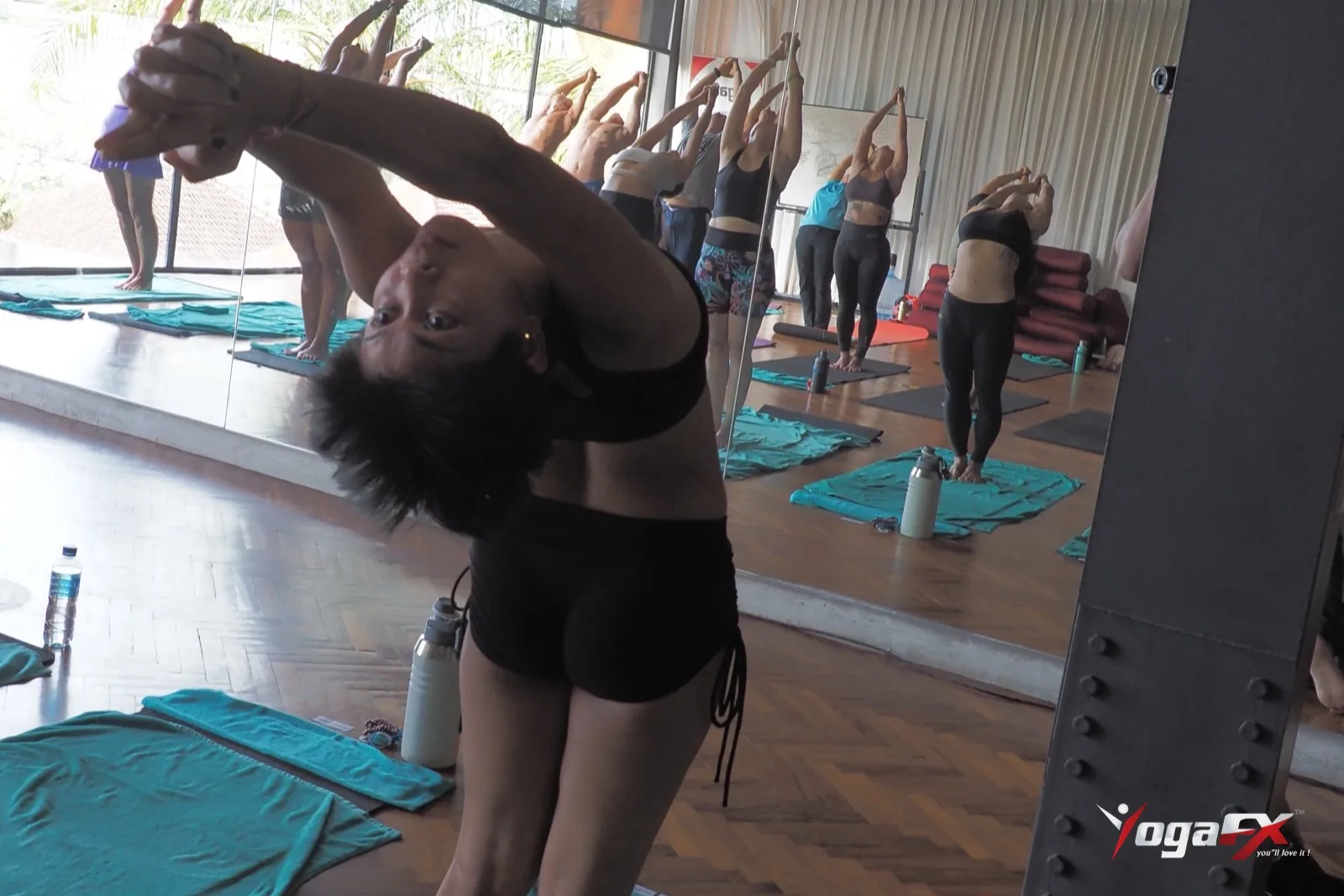
A warm summer afternoon in Britain can feel hot at 25°C. A hot yoga temperature of 40°C is 15 degrees warmer, and the room holds that heat for 90 minutes while you exercise indoors. That’s a different experience from a hot day outside, because you can’t step into the shade.
At the Seminyak studio, which opens daily from 06:00 to 22:00, the tropical climate helps warm the room and the class keeps the same 40°C target. The first ten minutes are usually the hardest part for newcomers.
What to expect in your first 40°C class
- The first ten minutes feel heavy. The air is warm and damp before you have moved at all.
- Sweat starts early. Bring a towel for your mat and a bottle you can sip from.
- Resting is allowed. Sitting or lying down is a normal part of class, not a failure.
- Kit matters. Light, fitted fabrics work best, and our guide to hot yoga clothes for UK students covers prices in pounds.
What Research Says About Hot Yoga Temperature and Your Body
The research on hot yoga temperature is small, so it is worth reading the numbers calmly. One of the most useful studies for this question measured core temperature directly.
An ACE-sponsored study by Emily Quandt, John Porcari and colleagues at the University of Wisconsin-La Crosse followed 20 healthy, regular Bikram practitioners aged 28 to 67. Seven were men and 13 were women.
| What was measured | Men | Women |
|---|---|---|
| Average highest core temperature | 103.2°F (about 39.6°C) | 102.0°F (about 38.9°C) |
| Average heart rate, share of predicted maximum | About 80% | About 72% |
| Highest heart rate recorded, share of predicted maximum | 92% | 85% |
What the numbers mean for you
Your body works to cool itself while you hold postures, so a hot room is not a gentle stretch. Core temperature climbs through the class, which is why pacing, water and rest matter so much. Don’t treat the last half hour as a test of toughness.
Mayo Clinic Sports Medicine says the intensity of the workout and the hot temperatures have the potential to cause heat-related illness. It advises checking with your doctor first if you have any health concerns or are pregnant. It also says it is probably best to skip hot yoga if you have heart disease, problems with dehydration, heat intolerance or a history of heat illness such as heatstroke.
A 2025 systematic review of hot yoga research by Willmott and colleagues, covering 43 studies and 942 participants, is a good place to start if you want the wider picture. This article is general information, not medical advice. Please consult a healthcare professional before you start hot yoga, especially if you have a heart condition, low blood pressure, diabetes or are pregnant.
Heat Warning Signs: What the NHS Says
The NHS guidance on heat exhaustion and heatstroke separates the two clearly, and the difference matters in a studio. Heat exhaustion is uncomfortable and fairly common. Heatstroke is a medical emergency.
| Condition | Signs the NHS lists | What the NHS says to do |
|---|---|---|
| Heat exhaustion | Tiredness, dizziness, headache, feeling or being sick, heavy sweating with pale and clammy skin, cramps, a high temperature, being very thirsty | Move somewhere cool, remove unnecessary clothing, drink plenty of water and cool the skin. Most people feel better within 30 minutes |
| Heatstroke | A very high temperature, hot skin that is not sweating, fast breathing and heartbeat, confusion, a seizure or loss of consciousness | Call 999. Do not drive yourself to A&E |
In class, that means you lie down, tell the teacher and sip water. Don’t push through the next posture to prove a point. For a wider look at risk, see our guide on is hot yoga safe.
Hot Yoga Temperature in a British Winter and Summer
The season changes how a class feels, even when the thermostat does not. In winter you may walk in from a cold street with tight muscles and a chilled core. The hot yoga temperature then feels like a wall for the first few minutes, so arrive early and settle on your mat before the class starts.
The walk out matters too. After a 40°C class your skin is damp and your body is warm. Give yourself ten to fifteen minutes in the changing room, drink water and dress properly before you step into a British winter evening. In summer the problem is the opposite: you arrive already warm, so drink more through the day.
Hot yoga temperature and a hot day are not the same load. A heatwave day is hard to escape, while a class has a start, a finish and a teacher watching you. Even so, if the weather has been hot all week, treat that day as a lighter one and rest more often in the room.
Hot yoga temperature vs sauna: why they feel different
People often ask whether a class is just a sauna with a mat. It is not. A sauna is passive heat while you sit still. A class asks you to move for 90 minutes, so your heart rate rises from the work as well as the heat. Our guide to hot yoga vs sauna compares the two for UK readers in more detail.
How to Handle a 40°C Class: Six Practical Steps
Use these six steps whatever the hot yoga temperature in your local studio. They take a few minutes and make the class far easier to enjoy.
- Check your health first. If you have a heart, blood pressure, diabetes or kidney condition, speak to your GP before booking.
- Ask the studio for its hot yoga temperature and humidity. Both numbers together tell you how the class will feel.
- Drink through the day. Start hours before class, not minutes before.
- Eat light. Leave two to three hours after a heavy meal.
- Tell the teacher. Say it if you are new, pregnant or taking medication.
- Cool down slowly. Give your body ten to fifteen minutes before a cold shower, then replace water and salt.
How Mr. Ian Terry Teaches the Room
Mr. Ian Terry founded YogaFX in 2017. He spent five years, from 2014 to 2019, training with the founder of the Bikram Hot 26&2 method. For him the room is part of the teaching, so every teacher must learn to read the temperature and the faces in front of them.
That is why our dialogue is scripted. A teacher who says the same words in the same order has a free mind to watch the class. In the first ten minutes, a teacher looks for four things:
- Breathing. Open-mouth gasping early on is a sign the pace is too much.
- Skin colour. A very red or very pale face gets a quiet check.
- Form. If alignment slips in the standing series, the pace comes down.
- Bottles. Water sits within reach, and sipping starts before the thirst does.
What Trainees Say After a Week in the Room
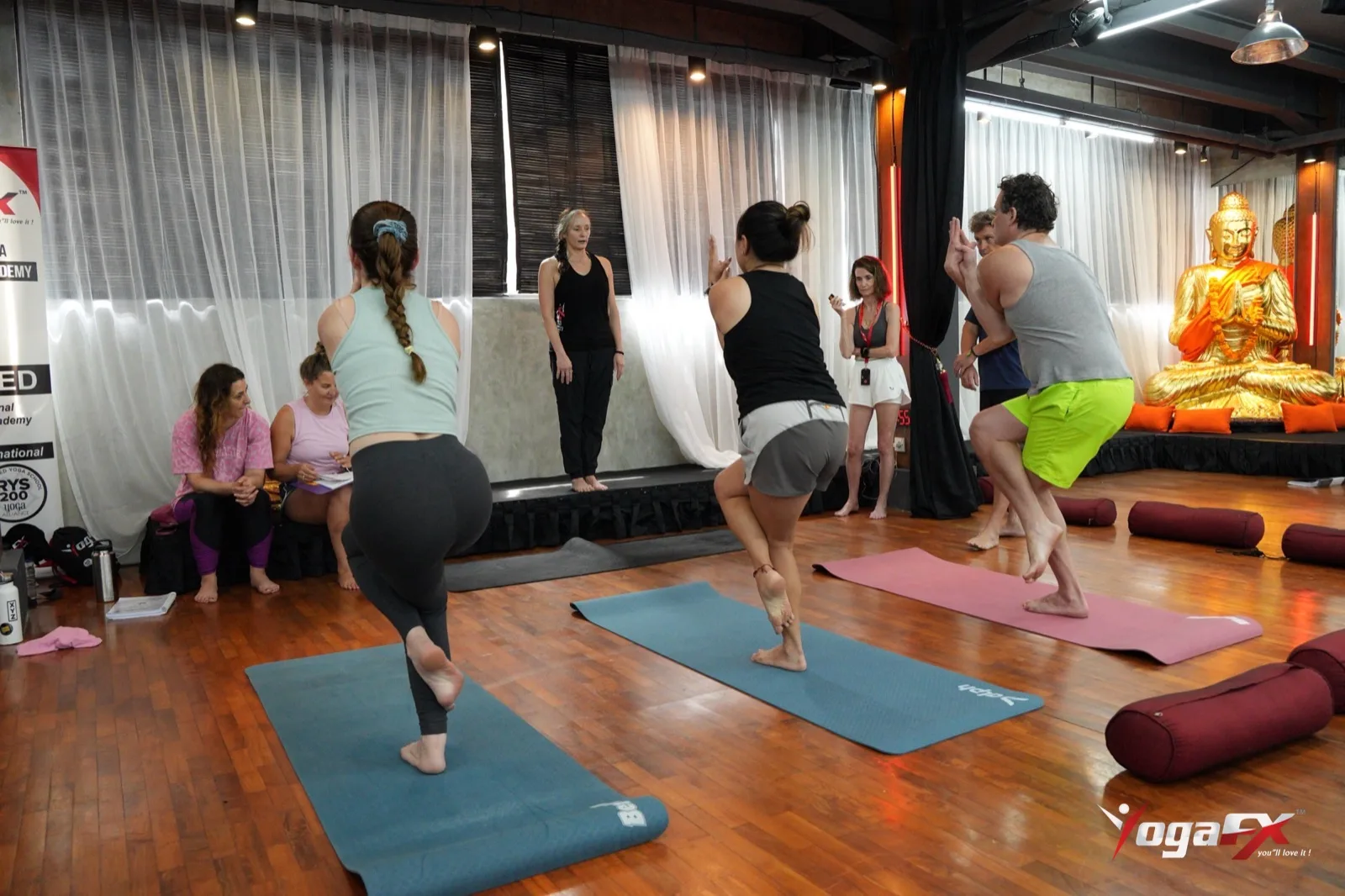
Many people arrive nervous about the heat. These two reviews come from YouTube videos recorded at the end of a training week in Bali.
Atika, YouTube review, 2019: "It was unexpected. I had a purpose when I came here, but I never thought that I would receive more than what I expected." You can watch Atika’s review.
A trainee in our YouTube review, 2023, thanked Mr. Ian and said the week "has definitely exceeded any expectations" for the group.

From a UK Studio to Bali: Training in the Heat
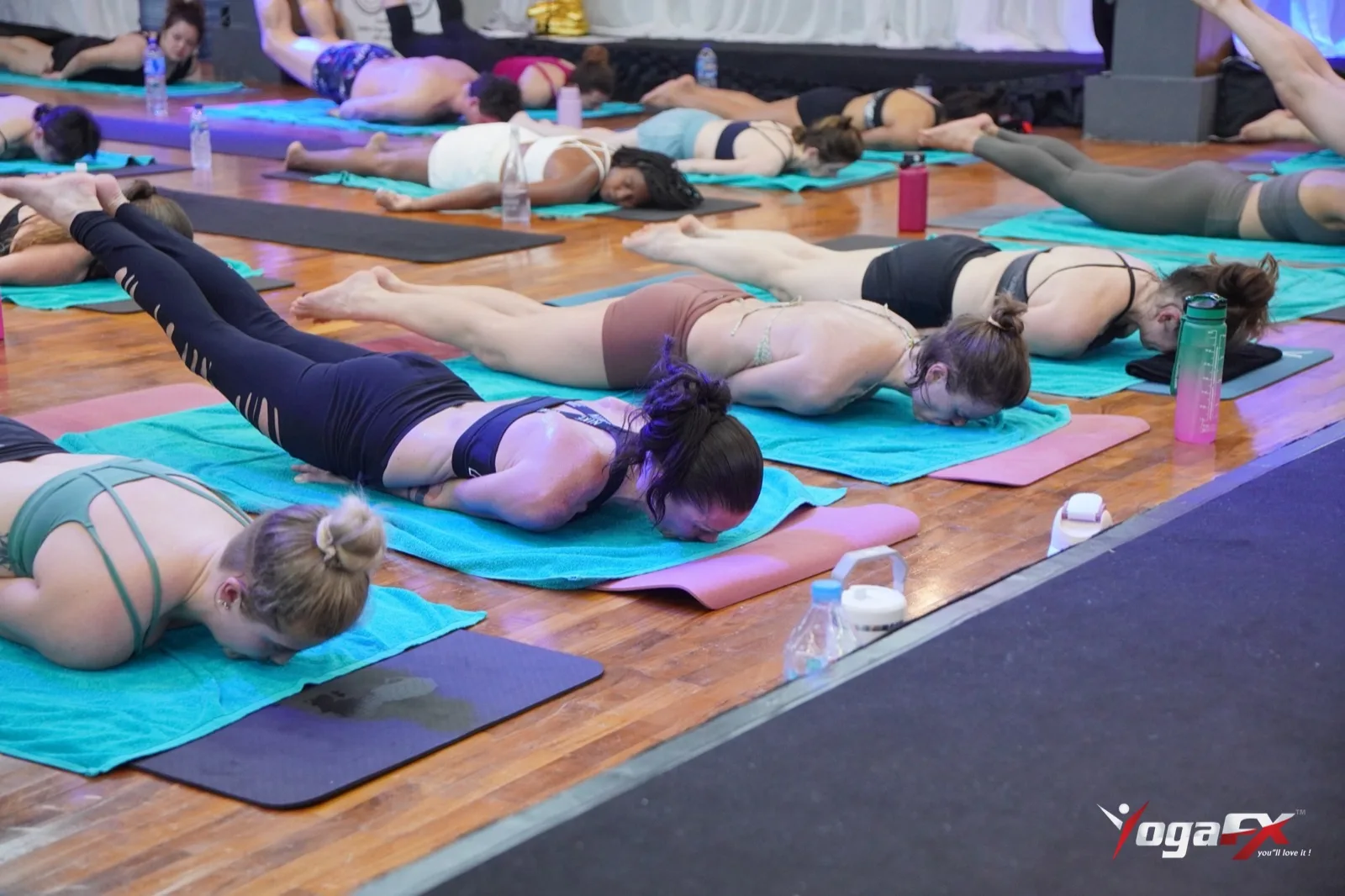
If a 40°C room makes you curious about teaching it, the Bikram Hot 26&2 Yoga Teacher Training MasterClass is a six-day hybrid course. UK applicants do the online pre-course from home, then travel for the Bali intensive. Graduates earn a Yoga Alliance RYT 200-Hour certification and a Bikram Hot 26&2 200-Hour International Yoga Certification.
Check-in for the next batch is Sunday 24 January 2027, with check-out on Friday 29 January 2027, at the Soham Wellness Center in Seminyak. The Early Bird price is US$1,899 (normal price US$1,999). Flights from the UK are extra. Read our guide to original hot yoga teacher training for UK students for costs and travel.
For the full 26 and 2 view of the same question, see the 26 and 2 breakdown of room heat and humidity on our sister site.
FAQ: Hot Yoga Temperature
What temperature is hot yoga done at?
Most hot yoga rooms sit between about 30°C and 40°C, depending on the studio and the style. A full Original Hot 26&2 class is held at 40°C (104°F) with about 40% humidity for 90 minutes. Studios set their own numbers, so ask for the exact temperature before you book your first class.
How hot is hot yoga in the UK?
It depends on the studio. A gentle warm class may sit near 30°C, while a Bikram-style room is set near 40°C. Britain has no single standard that we know of, so check the timetable description or message the studio. Ask for both temperature and humidity, because the two together decide how the class feels.
What is the Bikram yoga temperature in Celsius?
Mayo Clinic Sports Medicine describes the Bikram form of hot yoga as a room heated to approximately 105°F (40°C) with 40 percent humidity, for a 90-minute class. In our studio the standard is 40°C, which is 104°F. Many people round it to 105°F, which is 40.5°C.
Does humidity matter as much as the hot yoga temperature?
Yes. In our experience a room near 40% humidity feels demanding but workable, while much damper air feels heavier because sweat dries more slowly. That is why temperature and humidity should be read as a pair. Ask a studio for both numbers, and ask whether the room changes when the class is full.
Is a hot yoga room the same as a sauna?
No. A sauna is passive heat while you sit still, but a hot yoga class asks you to move through 26 postures for 90 minutes. Your heart rate rises from the work as well as the heat. That is why a class needs more pacing and care than a sit in a sauna.
Still have questions? Message Mr. Ian and the YogaFX team on WhatsApp and we will answer them personally.