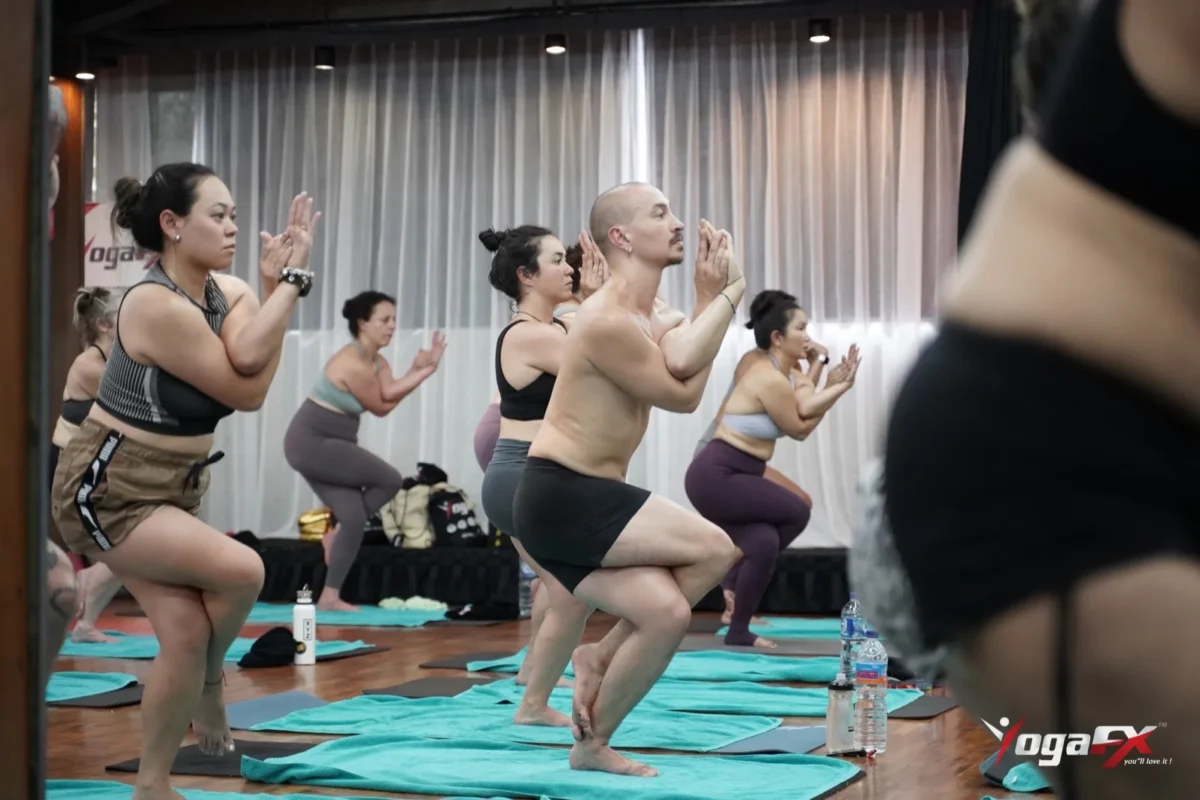
Does hot yoga improve VO2 max? Possibly, but the hot yoga VO2 max evidence is small. A 2021 trial of 22 beginners saw VO2 max rise after 12 heated classes over four weeks, while one hour in a hot room used about the same oxygen as one in a cooler room. For a runner, that means interesting, not settled.

If you run for a club, cycle at weekends or watch your Garmin score, you have probably wondered whether a 40°C class can lift your ceiling. This guide reads the two hot yoga VO2 max trials the way Mr. Ian Terry teaches trainees at YogaFX to read research: slowly, with the sample size attached. It is general information, not medical advice, so please speak to your GP before trying heated exercise if you have a heart or blood pressure condition.
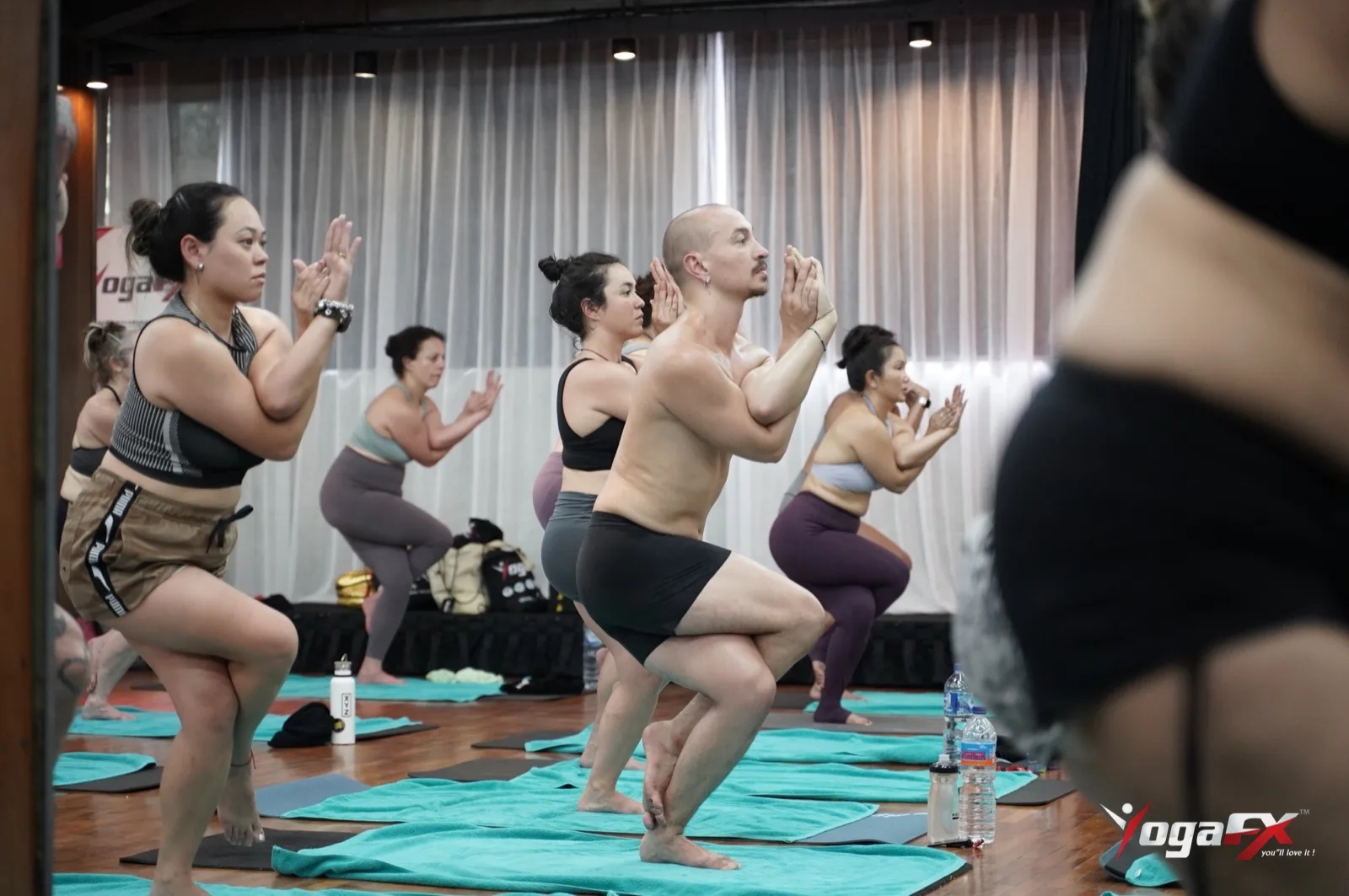
Does Hot Yoga Improve VO2 Max? The Short Answer for UK Runners
The honest answer on hot yoga VO2 max has two halves. Over several weeks, a block of heated classes may raise it. In a single afternoon, one class does not. Both halves come from small studies. Neither is a promise about your next race.
- Four weeks of classes: one trial saw VO2 max rise in the heated group, although the two groups did not differ significantly.
- One hour in the room: oxygen use averaged 8.9 against 8.6 millilitres per kilogram per minute, with no significant difference.
- For you: treat hot yoga as a skill and recovery session, and keep your aerobic work on the road.
That fits with how our UK readers already use the room. Our guide to hot yoga for runners puts one class in an easy week, and the same logic applies to any club athlete.
What VO2 Max Measures, and What Your Watch Does Not
VO2 max is the ceiling on how much oxygen your muscles can use when you work flat out. Harvard Health calls it an objective way to tell how fit you are, and quotes it in millilitres of oxygen per kilogram of body weight each minute.
The accurate version comes from a lab. Harvard says a maximal test is intense but short, between 10 and 20 minutes in total. A wrist score is only an estimate of that number. If your watch shows a different figure after a few classes, treat it as a rough guide, not a result.
Harvard adds that unless you are an athlete, an exact figure is rarely needed. What matters more is that you keep moving. It says any aerobic exercise that gets your heart pumping can improve VO2 max, and the more vigorous it is, the better.
Hot Yoga VO2 Max After Four Weeks: What 22 Beginners Showed
Most hot yoga VO2 max claims trace back to one randomised trial, published in International Journal of Yoga in 2021 by Bourbeau and colleagues. Here is what a student should know before repeating it.
Who took part and what they did
The trial recruited 22 healthy adults aged 19 to 39, split evenly between men and women, none of whom had done yoga before. Half practised in a heated chamber at about 40°C and half at 18 to 22°C. Everyone followed the same 75-minute video, three times a week for four weeks, which makes 12 classes in all.
What changed in the heated group
Absolute VO2 max in the heated group went from 3.22 to 3.46 litres per minute, a change the authors called significant. That is roughly 7%, by our sums. The cool group barely moved, from 3.00 to 3.05. Only the heated group also showed a rise in HSP70, a heat-shock protein, in its white blood cells.
What did not change
Read the small print before you quote it. The authors found no difference between the groups, so the study can’t say heat beat a cooler room. A heat tolerance test after the four weeks also showed no classic heat adaptation. And the team lists its own limits: only 22 people, sessions shorter than the usual 90 minutes, and no record of how hard each class felt.
So the hot yoga VO2 max result is a reason to look closer. It isn’t a training plan. If you want a teacher-training view of the same two trials, our sister site has a fuller trial-by-trial review for teachers.
One Class and Hot Yoga VO2 Max: What 16 Practitioners Showed
A second study tested one session instead of a course. Lambert and colleagues, from Houston Methodist Hospital and Rice University, reported it in International Journal of Exercise Science in 2020.
Sixteen experienced practitioners, 14 of them women, with an average age of 40, did the same one-hour Bikram-sequence class twice: once in a 105°F room and once at 74°F, at least four days apart. Oxygen use averaged 8.9 millilitres per kilogram per minute in the heat and 8.6 in the cooler room. The authors found no significant difference.
Heart rate came out at 113 against 109 beats per minute, and energy cost at 156 against 151 kilocalories, again with no significant gap. Their average VO2 max was 36.9, and effort in the heat averaged about 25% of it, which is the study’s own percentage. At that level a class is a gentle aerobic load, not a hard session.
Two measures did differ. Fat use was higher in the heat (0.09 against 0.05 grams a minute), and hip abduction range grew by 6.6 degrees against 2.3. Both are changes within a single class. Neither shows weight loss or lasting flexibility. The authors say future studies must work out how much practice makes a difference.
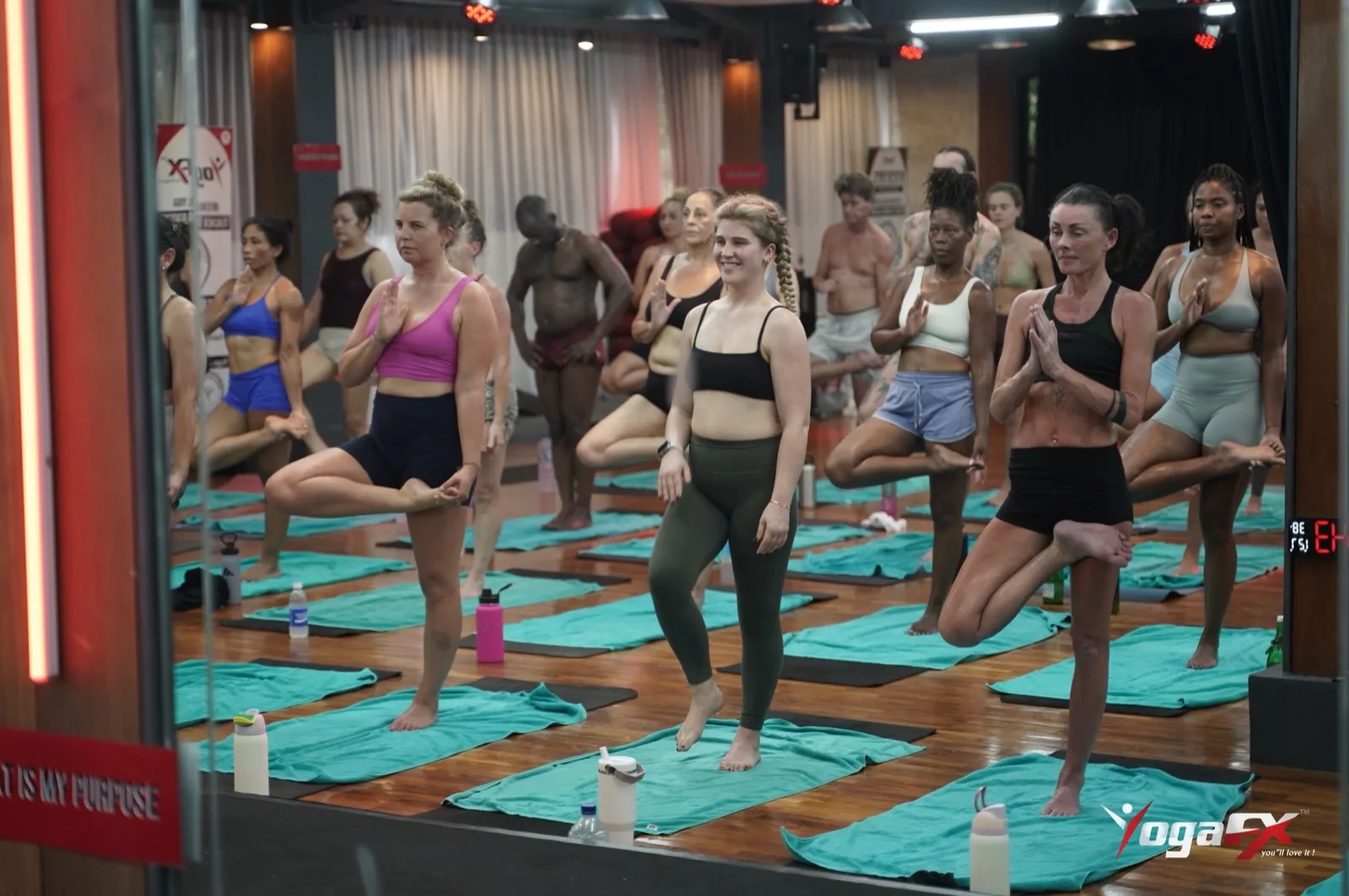
The Two Trials Side by Side
Seeing both hot yoga VO2 max studies in one place makes the limits clear. The table sets out who took part, what they did and what each trial can and cannot say.
| Study | Who took part | What they did | Aerobic result | Main limit |
|---|---|---|---|---|
| Bourbeau et al., 2021 | 22 adults new to yoga, average age 26 | 12 sessions of 75 minutes over 4 weeks, heated or cool | VO2 max 3.22 to 3.46 L/min in the heated group; 3.00 to 3.05 in the cool group (not significant) | No difference between groups; small sample |
| Lambert et al., 2020 | 16 experienced practitioners, average age 40 | One hour at 105°F and one at 74°F, 96+ hours apart | Oxygen use 8.9 vs 8.6 ml/kg/min; heart rate 113 vs 109 bpm (no significant difference) | One session only; mostly women |
Hot Yoga VO2 Max at a Glance: Five Numbers
How to Read a Hot Yoga VO2 Max Claim Online
Search for hot yoga VO2 max and you will find confident headlines. Run each one through three quick checks before you share it with your running group.
- Check the sample size. Twenty-two people can’t speak for a whole country of runners.
- Check what was measured. A lab result isn’t the same as a watch estimate.
- Check the comparison. A rise in one group doesn’t prove the heat caused it.
Apply those checks and most hot yoga VO2 max headlines lose their shine. What is left is still worth knowing: one small trial saw a gain after a short block of heated classes, and larger trials would show whether it holds.
Hot Yoga Cardiovascular Fitness in a Normal UK Week
The trials do not compare hot yoga with running, cycling or intervals, so they cannot rank one above the other. The better question is how a class fits into a week that already builds aerobic fitness. Hot yoga cardiovascular fitness is only one piece of it.
The NHS guidance for adults aged 19 to 64 asks for at least 150 minutes of moderate activity or 75 minutes of vigorous activity a week. It also asks for strengthening work on at least two days, and it lists yoga among the examples. One simple check for moderate effort: you can still talk, but not sing.
That is a useful test in a hot room. If you can speak in full sentences, the class is not your hard aerobic session. If you are gasping, the heat has pushed you too far, so slow down and rest. For more on effort, see our guide to whether hot yoga is a cardio workout, and for calories, hot yoga calories and heart rate for men and women.
Four habits for a hot yoga week
- Run, ride or swim elsewhere. A hard aerobic session carries a different load from a class.
- Treat class days as skill days. Balance, breathing and posture deserve fresh attention.
- Keep hard sessions and hot sessions apart. Tired, dehydrated legs cope badly with heat.
- Hydrate early. Sip before class, during it and afterwards.
What Mr. Ian Terry Tells Athletes About the Hot Room
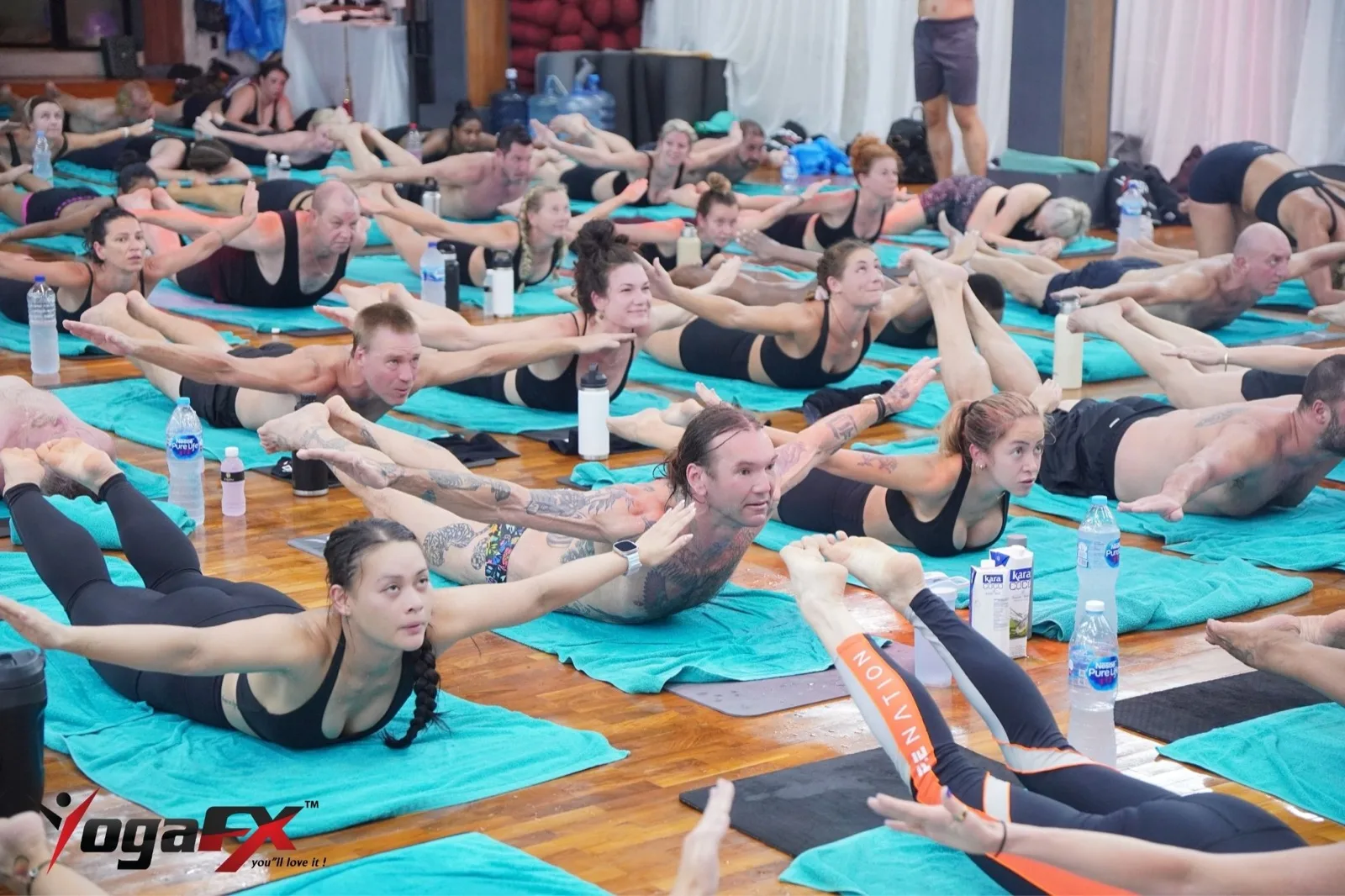
Mr. Ian Terry is an E-RYT 500 teacher with more than 12,000 teaching hours. He trained for five years, from 2014 to 2019, with the founder of the Bikram Hot 26&2 method. His classes run 90 minutes at about 40°C and 40% humidity, using natural tropical heat in Bali rather than electric heaters, with a scripted dialogue and no music.
His advice to athletes is short: turn up rested, hydrate before you start and count resting as part of the practice. Pace the early postures, breathe through the nose, and sit down if you feel flushed, dizzy or shaky. A class is skill practice in warm air. It isn’t a replacement for your training plan.
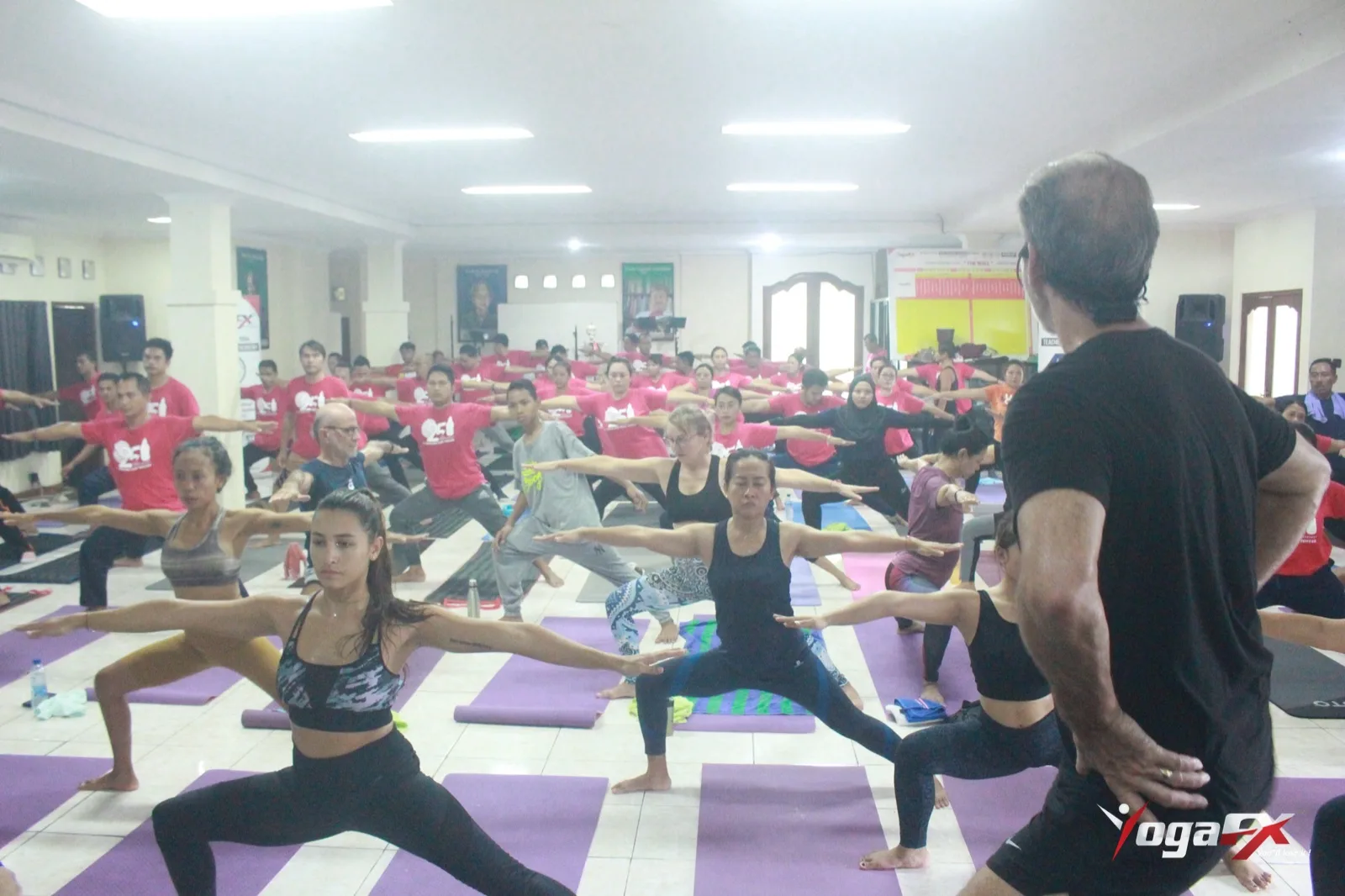
One more UK point: not every British studio holds 40°C, so ask for the actual room temperature before you book. After class, dress in dry layers at once, because a warm body in cold air feels the change.
What Students Say About Training in the Heat
Reviews do not prove a VO2 max gain. They show how the training felt to people who did it, so read them as experience, not evidence.
When I walked in I couldn’t even touch my toes.
Chris, Google review, 2022
Ian helped us internally grow and look at ourselves. He built a beautiful community.
Siobhan, Google review, 2025
Agnieszka wrote that she doubted she could handle the course, but that the teachers and the other participants helped a great deal, and that the lectures linked theory and practice better than anything she had found before (paraphrased, and translated in part from Polish). Agnieszka, Google review, 2022
Who Should Check With a GP First
Heat adds load to the heart. Talk to a doctor before the first class, not during it. Check with your GP first if any of these apply:
- Heart disease, high blood pressure or past heart trouble.
- Diabetes, kidney disease or an earlier bout of heat illness.
- Medication that changes fluid balance, pulse or temperature control.
- Pregnancy, a recent illness or an injury that has not healed.
Stop, sit down and cool off if you feel dizzy, sick, confused or unusually breathless, and get medical advice before you go back. Our overview for men, hot yoga for men in the UK, covers health checks and costs in more detail.
From Reader to Teacher: Training in Bali From the UK
Some athletes fall for the room and want to teach it. The YogaFX MasterClass is a 6-day hybrid course: online study first, then the intensive in Bali. More than 1,500 graduates from 80+ countries have trained with us since 2017, and the course leads to a Yoga Alliance RYT 200-Hour certification plus the Bikram Hot 26&2 200-Hour International Yoga Certification.
The next batch checks in on Sunday 24 January 2027 and checks out on Friday 29 January 2027 at Soham Wellness Center in Seminyak. Early Bird is US$1,799, and instalments start at US$250 a month, interest free. Want a taste first? The Free 1-Day Guest Pass gives you a free first class at our Seminyak studio.
FAQ: Hot Yoga and VO2 Max
Does hot yoga improve VO2 max?
Possibly. One randomised trial of 22 beginners recorded a VO2 max rise after four weeks of heated classes, but the heated and cool groups did not differ significantly. A single hour in a hot room did not raise oxygen use in another study. Larger trials are needed.
Is hot yoga good for cardiovascular fitness?
It is a steady, modest effort, so it supports a week of exercise but should not replace aerobic work. In a 2020 study, effort in the heat averaged about a quarter of the group’s VO2 max. Keep running, cycling or swimming for your main cardio.
Can I trust my watch’s VO2 max after a hot class?
Treat any hot yoga VO2 max reading on your watch as a rough estimate. Harvard Health says the most accurate VO2 max measurement takes place in an exercise medicine lab. A wrist score can move for many reasons, including heat, hydration and sleep, so look at the trend over weeks rather than one reading.
How many classes would it take to see a change?
Nobody can name a number. The 2021 trial used three classes a week for four weeks as a research design, not as advice. If you want to try it, start gently, build slowly and ask your doctor first if you have a health concern or take medication.
Does hot yoga count towards the NHS 150 minutes?
The NHS asks for 150 minutes of moderate or 75 of vigorous activity weekly, and lists yoga among strengthening activities. A class can count towards strengthening. For aerobic minutes, use the talk test: if you can talk but not sing, you are at moderate effort. Ask your GP if unsure.
Still have questions? Message Mr. Ian and the YogaFX team on WhatsApp and we will answer them personally. Always consult a healthcare professional before starting a new heated exercise routine.