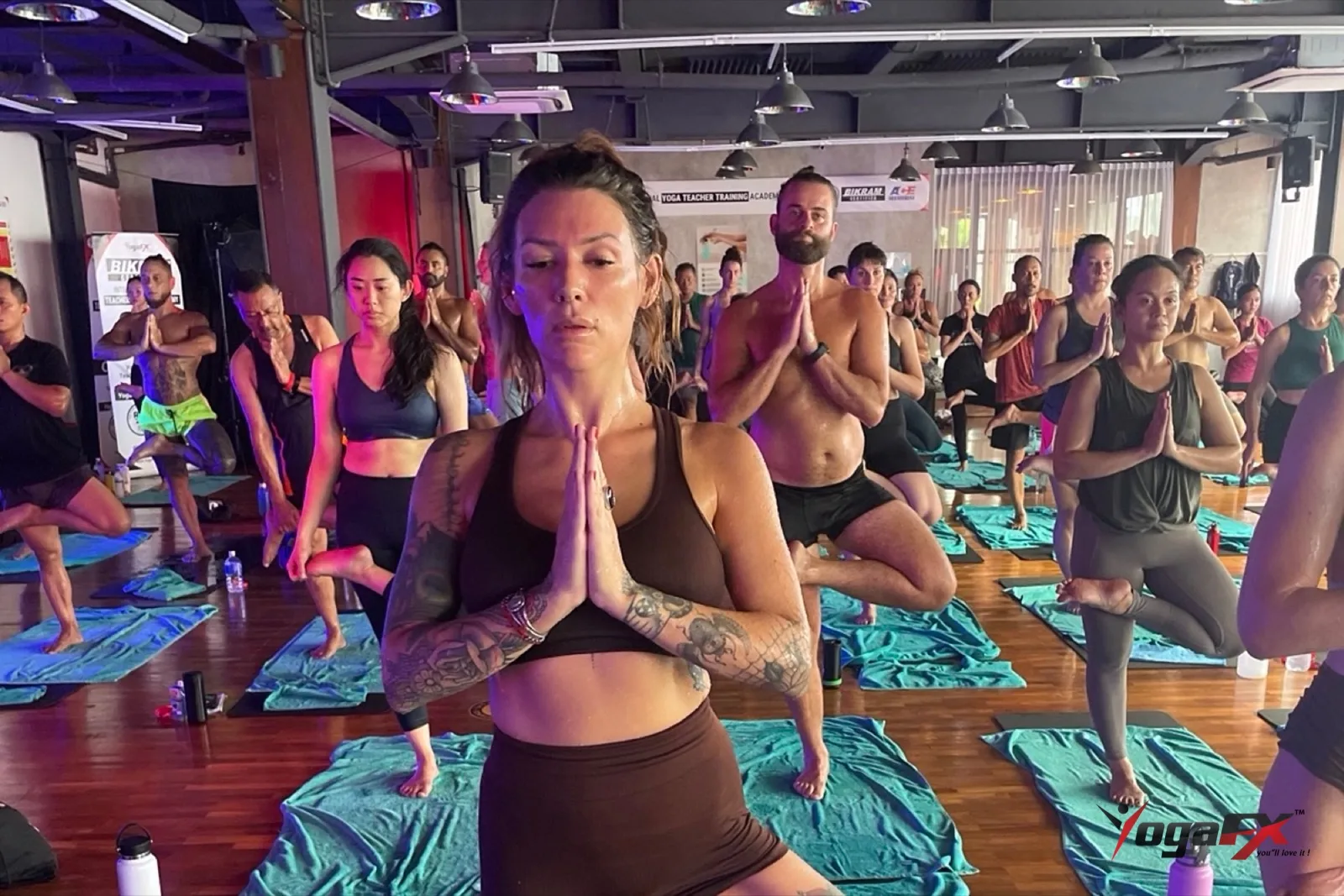
Tree pose is a standing balance where you root through one foot, rest the other foot against your leg and bring your hands together. For UK beginners, the aim is a calm, steady stance rather than a perfect shape. In a heated room, sweat and tired legs make a wobble completely normal.

Tree Pose in a UK Hot Room: The Short Answer
Most British students meet tree pose late in the standing series. It is often a dark evening, after a day at a desk and a cold walk from the station. Your legs are warm by then. Your head, though, is usually still on the commute. So the first job in tree pose is not the leg at all. It is settling your attention.
Here is the order we teach at YogaFX. It is short on purpose. A person balancing on one leg can only act on one instruction at a time:
- Land. Stand tall and spread the whole standing foot on the floor.
- Look. Pick one spot at eye level and keep your eyes there.
- Lift. Bring the other foot up with your hands and rest it low, on the calf or ankle.
- Join. Press your palms together in front of your chest.
- Breathe. Slow the exhale, then lower the foot with control and repeat on the other side.
If you already know the sequence, our sister site has a detailed guide to how tree pose fits into the 26 and 2 sequence. This page is different. It is written for wobbly first classes in British studios, and for the habits that settle them.
Why Your First Tree Pose Wobbles in a British Winter
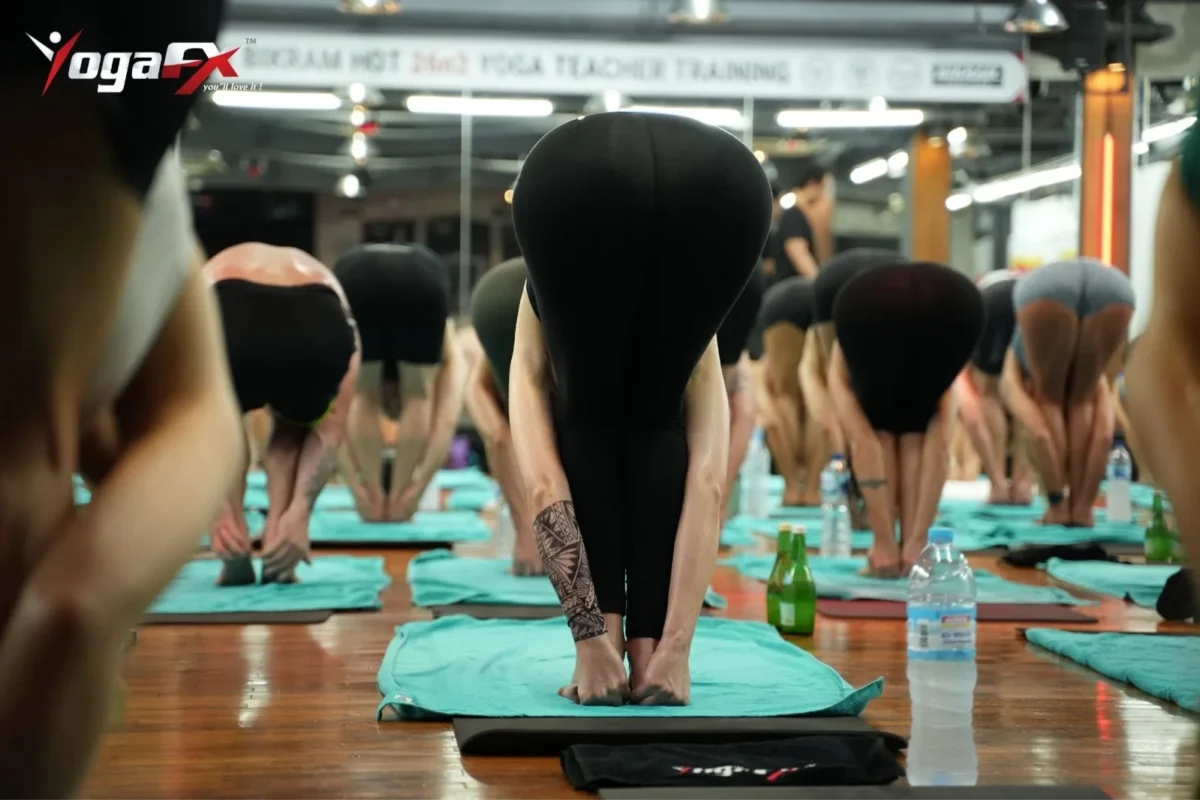
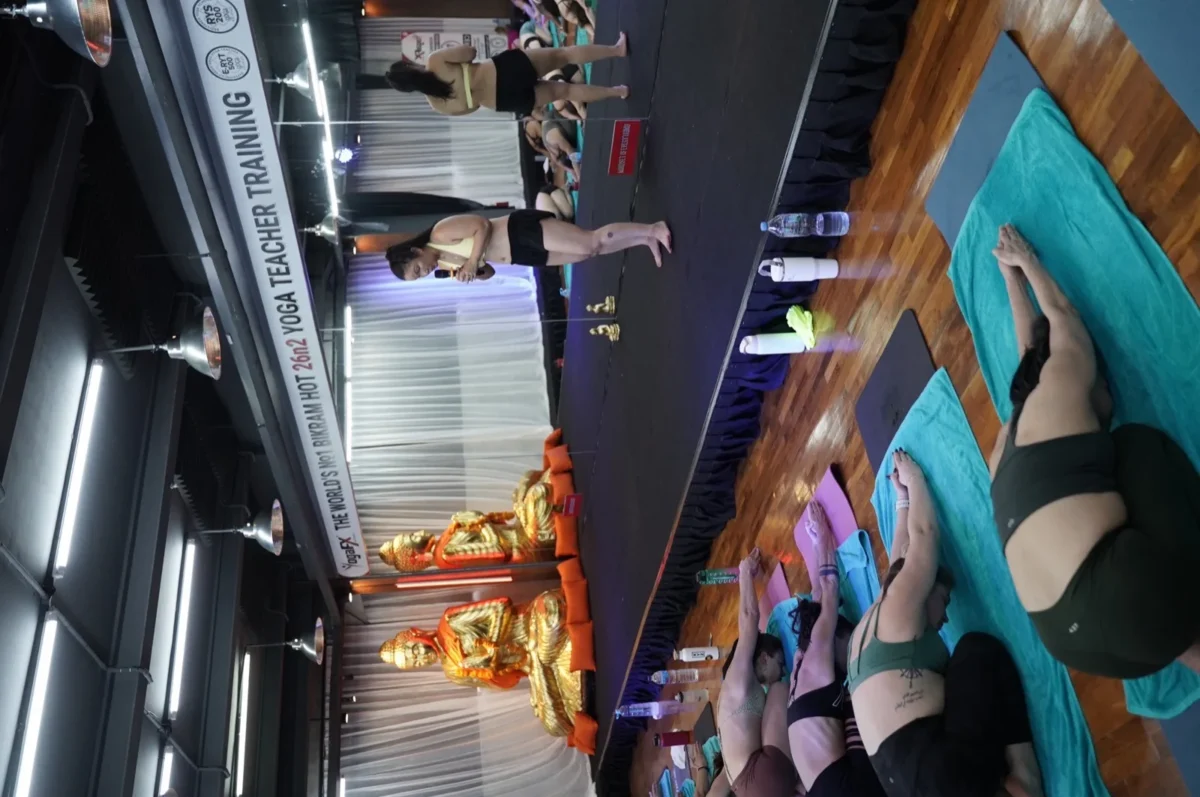
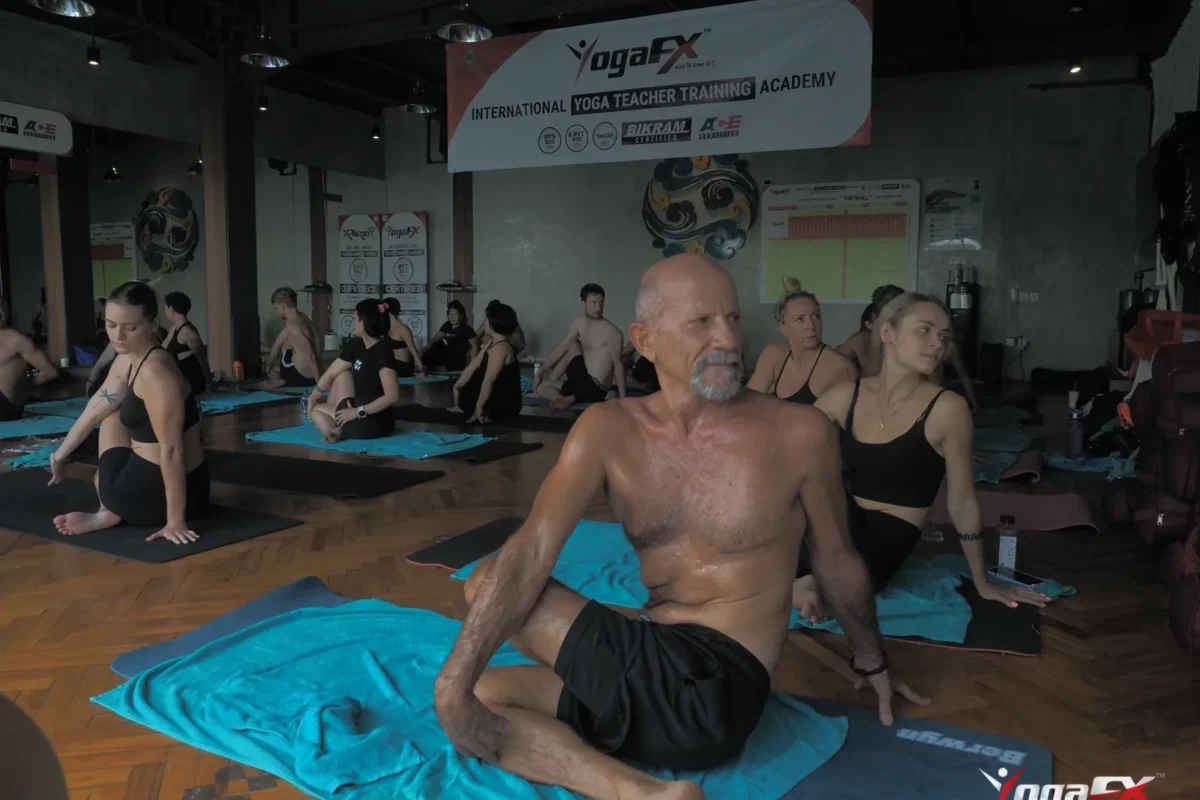
A cold street makes a warm room feel like another country. Your muscles arrive tight, your skin is damp from rain, and your towel may already be wet before you start. In a UK hot yoga studio the temperature varies from room to room. Ask what yours runs at before your first class.
Three things cause most first-class wobbles. First, sweat makes the foot slippery. You grip with your toes and lose the whole-foot contact that keeps you steady. Second, the standing ankle and hip make hundreds of tiny corrections. That work feels shaky when you are new to it. Third, the mind wanders. Mirrors, neighbours and your own thoughts all pull your eyes away from your spot.
A wobble is not failure. It is your foot, ankle and hip doing their job, and it is exactly how balance gets trained. So treat the first few classes as practice runs rather than tests.
Tree Pose Wobbles in UK Studios: A Quick Reference
Every studio has its own quirks. This table pairs what a British class tends to throw at you with the calm response that works. It also shows the point where you should simply come out. We built it from how YogaFX trains teachers to coach balance postures, using words alone.
| What happens | Likely UK trigger | Calm response | Back off when |
|---|---|---|---|
| Foot slides off the thigh | Damp towel and sweat after a cold commute | Lift it again with both hands and place it lower, on the calf | The foot only stays on the side of the knee |
| Whole body sways | Gripping with the toes | Spread the whole foot, like a paddle, and soften the shoulders | You feel dizzy or lightheaded |
| Hip pushes out sideways | Tight hips from long desk hours | Draw both hip bones forward and keep the foot low | You feel a sharp pinch in the hip |
| Eyes dart around the room | Mirrors, neighbours, a busy mind | Pick one point and return to it each time you look away | Your eyes will not settle at all |
| Standing knee aches | Locking the knee hard | Keep the leg straight but let the thigh muscle work | Any joint pain at all |
| You lose the pose and feel annoyed | Rushed day, full to-do list | Count three slow breaths, then reset the base and try again | Frustration is making you tense |
Notice the pattern. Each response is one clear action, never four. That is deliberate. A person shaking on one leg cannot follow a paragraph of advice.
Your first six classes: a calm plan
Nobody has a perfect tree pose in week one. Instead, build the pose in stages and let the shape grow with your hips. The plan below is a guide, not a rule, so move at your own pace.
| Class | Foot position | Support | Main focus |
|---|---|---|---|
| 1 to 2 | Toes resting on the floor beside the standing foot | Fingertips on a wall if needed | Landing the standing foot and finding your spot |
| 3 to 4 | Foot on the ankle | Wall nearby, not touching | Slow breathing and a steady gaze |
| 5 to 6 | Foot on the calf | No support | Level hips and quiet shoulders |
| After week six | Foot higher on the inner thigh only if the hip allows | No support | Comparing your two sides without judging them |
What to say to your teacher before class
Teachers cannot guess what you cannot say. A quick word at the door helps them keep an eye on you. Try something simple, like “this is my first class and my balance is shaky”.
- Say you are new. The teacher may place you near the wall or the front.
- Mention injuries. Knees, ankles, hips and backs all change how you shape the pose.
- Ask where to stand. A spot near a wall or a corner gives you support without fuss.
Most British students worry about being watched while they wobble. In practice, everyone in the room is busy with their own foot. A shaky tree pose in week one is the most normal sight in any studio.
Tree Pose at a Glance: The Calm Reset
What Research Says About One-Leg Balance and Hot Yoga
We do not claim that tree pose treats any condition. We use outside medical sources to explain why the cues make sense. We opened each one to check that it says what we describe.
The NHS balance exercises page includes a one-leg stand done facing a wall. It says to lift one leg, keep your hips level and keep a slight bend in the opposite leg. Hold the lift for 5 to 10 seconds and repeat 3 times on each side.
The page also suggests doing the exercises near a wall or a stable chair in case you lose your balance. It recommends trying them at least twice a week (NHS, Balance exercises). That is almost exactly the wall-and-fingertip step in our six-class plan.
Mayo Clinic on single-leg standing
Mayo Clinic describes the same idea at home. Its single-leg exercise says to hold something for support if it is too hard at first. Then hold the stand for as long as you keep good form, up to 30 seconds. It also advises getting your healthcare professional’s OK first if you have serious balance problems, or a condition that affects your bones, joints or muscles (Mayo Clinic, Balance exercises).
Heated yoga and mood
Heat is a separate question. A 2023 randomized controlled trial in the Journal of Clinical Psychiatry (Nyer et al., from Massachusetts General Hospital) compared 8 weeks of heated hatha yoga with a waitlist. The adults had moderate-to-severe depression. The yoga group had a significantly greater drop in clinician-rated depression scores. The authors called the results preliminary and asked for further research (Nyer et al., 2023, Europe PMC). That trial tested a whole heated class, not tree pose alone. Please read it as general background, not a promise.
This is general information, not medical advice. If you have dizzy spells, a joint problem or any condition that affects your balance, speak to your GP before you practise. Tell your teacher before class too.
Using Tree Pose as a Calm Reset
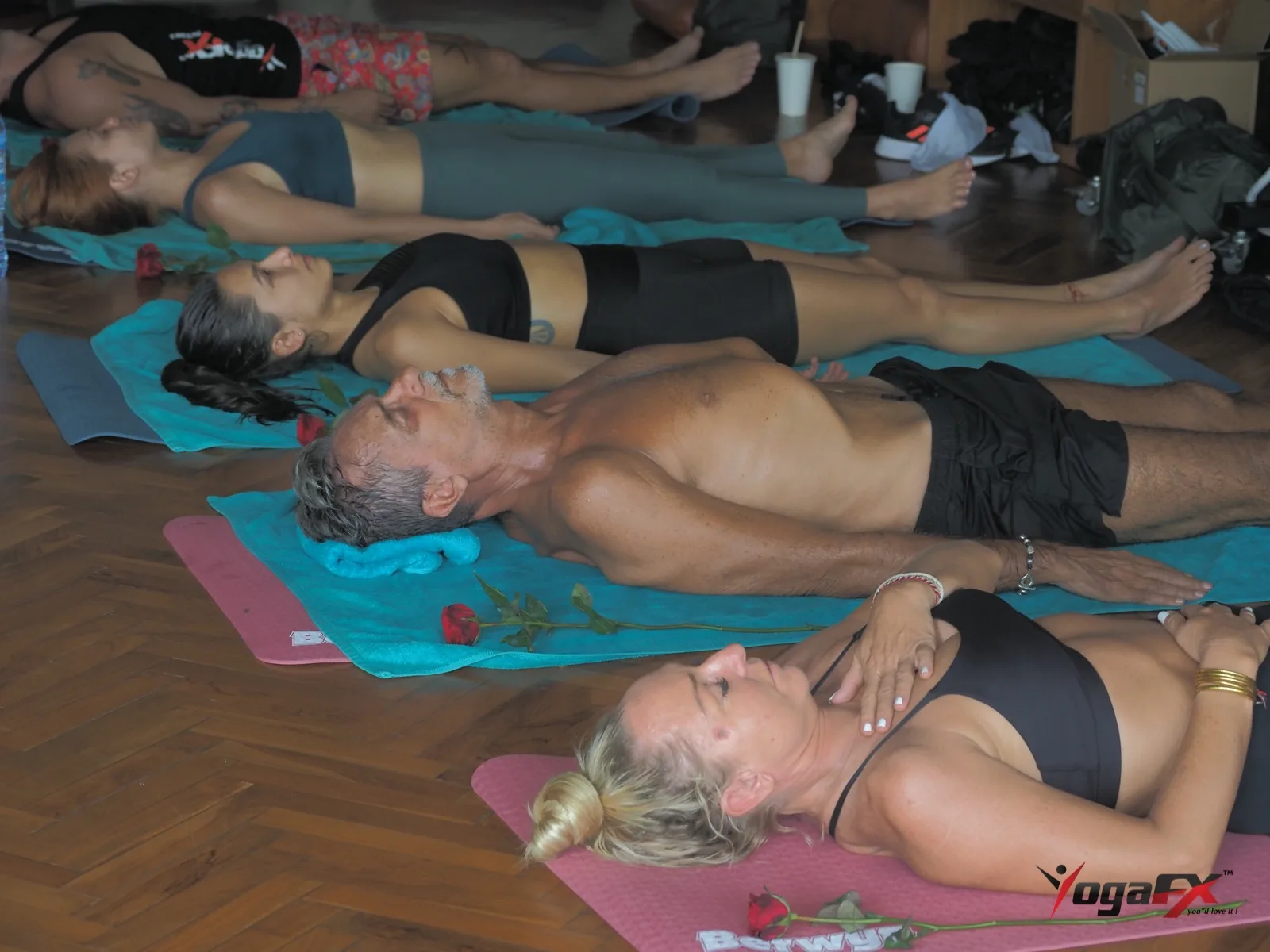
Tree pose asks for very little movement, so the work happens in your attention. That is why many students find it a welcome pause between the heavier balances. There is nothing to chase and nothing to win.
- Name the drift. When your mind wanders, silently say “thinking” and return to your spot.
- Lengthen the exhale. A slow breath out tends to loosen the shoulders and jaw.
- Keep the face soft. A clenched jaw usually means a clenched standing leg.
- Treat the second set as feedback. You do each side twice, so you can compare what changed.
Tree Pose vs Eagle and Balancing Stick: Which Balance Comes First?
Searchers often ask how tree pose compares with other one-leg balances. All of them train the same standing foot. They ask different things of the body, so it helps to learn them in a sensible order.
- Tree pose. The gentlest of the three. The lifted foot rests against the leg, so there is no long lever to control.
- Eagle pose. A deeper bend in the standing knee with the arms and legs wrapped. Our eagle pose step-by-step guide covers the cues and common errors.
- Balancing stick. The most demanding, with a forward lean and a long back leg. Read our balancing stick pose guide for UK students for the wobbles and fixes.
If you are new, start with tree pose, because the stance is simple and the shape is forgiving. Then move on once your standing foot feels firm. Our Hot 26 and 2 yoga guide for UK beginners shows where each posture sits.
Student Voices: Wobbly Starts and Steadier Finishes
Balance is partly a skill and partly confidence. These are real YogaFX students, quoted from their reviews. Names are first names only.
Anouk (Google review, 2020): “The teacher is giving very dynamic flows, many balance poses for deep strength and it will never be boring and is always encouraging.”
Eni (Google review, 2024): “Mr Ian Terry, you are a good teacher & motivator, you have guided me as a beginner, I am happy to be able to join this yoga class with friends from various countries.”
Xuan (Google review, 2026): “I came in nervous and leaving certified and confident.”
Here is a short video of trainees talking about their experience at the academy.

Before You Go: A Simple UK Health Check
A short check before your first hot class makes tree pose safer and calmer. None of this replaces advice from your own doctor.
- Arrive hydrated. Sip water through the day, not just before class.
- Know your conditions. Mention dizziness, blood pressure, pregnancy, injuries or medication to your GP and your teacher.
- Bring a grippy towel and mat. A secure foot makes the first beat easier.
- Dress in dry layers for afterwards. The step from 40°C to a British pavement is sharp.
- Stand near a wall at first. A fingertip touch is enough to calm a wobble.
- Stop if you feel faint. Lower the foot, stand tall and rest.
Learning to Teach Tree Pose: Bali or UK?
If you want to coach this posture one day, remember that students cannot see their own standing foot. Trainees learn to cue with words alone. Mr. Ian Terry is Founder and Lead Instructor at YogaFX (E-RYT 500, with 12,000+ teaching hours). He trains teachers to give one clear cue at a time. He also teaches them to trace every fault back to its first beat. He trained for five years, from 2014 to 2019, with the founder of the Bikram Hot 26&2 method.
Mr. Ian puts his philosophy this way: “there can be no greater investment than the one that you make in your health, because without it, nothing else matters.”
Our 6-day hybrid Bikram Hot 26&2 Yoga Teacher Training MasterClass combines pre-course online study with an intensive in Bali. It leads to Yoga Alliance RYT 200-Hour certification plus the Bikram Hot 26&2 200-Hour International Yoga Certification. Weighing it up from the UK? Our guide on what to compare between Bali and UK training sets out the differences honestly.
You can also start online. The Starter Kit is USD 98, or 2 x USD 49. The online course is USD 329, or 4 x USD 82. All prices are in US dollars. To try a class first, ask about the Free 1-Day Guest Pass at our Seminyak studio in Bali. Your first class is free.
FAQ
How long should you hold tree pose?
In a scripted Hot 26&2 class the teacher sets the hold, so you simply follow along. At home, the NHS one-leg stand suggests 5 to 10 seconds, three times each side. Mayo Clinic suggests holding for as long as your form stays good, up to 30 seconds. Build time slowly.
Why can’t I do tree pose?
Usually the foot is too high, the hip is tight, or the mind is busy. Rest the foot lower, on the calf or ankle, never on the side of the knee. Keep one fingertip on a wall. Choose a single point to look at and return to it often. Progress comes over weeks.
Is tree pose good for balance?
Tree pose is a one-leg stance. It practises the same skill as standard balance exercises, including the one-leg stand on the NHS balance page. It will not treat any condition, and no single pose guarantees better balance. Practise gradually, near support, and stop if you feel dizzy.
What muscles does tree pose work?
Mostly the standing leg: the ankle, calf, thigh and hip muscles that keep the pelvis level. The core and back also work quietly to hold you upright. The lifted leg opens the outer hip and inner thigh. Keep the standing knee straight but not locked, and breathe steadily.
Is tree pose hard for complete beginners?
It looks simple but feels demanding, because your standing foot makes constant tiny corrections. Beginners do well with the foot low, a wall nearby and a fixed gaze. Expect a few clumsy classes. Tell your teacher about any injuries, so they can suggest an easier shape for you.
Still have questions? Message Mr. Ian and the YogaFX team on WhatsApp and we will answer them personally.