Namaste means “I bow to you” and comes from Sanskrit, traditionally spoken with palms pressed together at the heart as a gesture of respect between equals. Fewer studios now close class with it by default, not because the word lost meaning, but because more teachers want to earn the right to use it rather than reach for it out of habit.

If you are wondering what to say instead, how to greet a teacher, or how to introduce yourself once you are the one leading the room, the etiquette is simpler than it looks once you understand where the word actually comes from.
In This GuideGreetings, goodbyes and introductions in the yoga room
What Does Namaste Actually Mean?
Namaste breaks down into “namah” (bow, salutation) and “te” (to you). In everyday Indian life, it is a common greeting used between strangers, family, and colleagues, closer in weight to “hello” or “good day” than to anything mystical.
In a yoga context, teachers borrowed it from that everyday use and layered on a more specific meaning: the spirit in me acknowledges the spirit in you, spoken with palms together at the heart, a slight bow of the head, in a gesture called anjali mudra.
Both meanings are true at once. It is an ordinary Indian greeting, and it is also, in a studio setting, a small ritual of mutual respect between teacher and student at the close of practice. Understanding both layers is what makes the next question, why some teachers have stepped back from it, easier to follow.
Why Don’t Yoga Teachers Say Namaste Anymore?
This shift is less about the word being banned and more about a broader conversation in the yoga world about cultural appropriation and precision. A few things are driving it.
- It got detached from its everyday meaning. In much of Western yoga culture, namaste became shorthand for “the yoga part is over,” said on autopilot rather than as an actual gesture of respect, which stripped it of the intention it originally carried.
- Concern about using a sacred-adjacent word without context. Some teachers, particularly those without formal training in the language or philosophy it comes from, have chosen to retire it rather than risk using it superficially.
- It is genuinely just a greeting in India, not primarily a yoga word. Native Hindi and Sanskrit speakers use namaste the way English speakers use “hello,” which makes its ceremonial use at the end of a Western yoga class feel, to some, like borrowing a plain word and dressing it up as exotic.
- Studios are diversifying closing rituals. Some teachers now close with a simple “thank you,” a moment of silence, or a phrase in their own words that reflects what actually happened in that specific class.
None of this means namaste is wrong to say. Many teachers, including ones with deep training in the Sanskrit dialogue tradition, still use it deliberately and mean every syllable. The shift is toward intention: say it because you understand it and mean it, not because it is the expected sign-off.
Is It Disrespectful to Say Namaste If You’re Not Indian?
This question comes up often enough that it deserves a direct answer, and honestly, opinions differ even among Indian and South Asian voices in the yoga community. There is no single consensus, but a few useful distinctions help separate respectful use from careless use.
The word itself is not sacred or restricted; it is an everyday Indian greeting, used by people of every background across India in ordinary conversation. Saying it is not inherently disrespectful, and plenty of Indian teachers and practitioners are glad to see it used, as long as it is used with basic understanding rather than as an exotic-sounding sound bite.
What tends to draw criticism is different: using the word as a costume, pairing it with mock-Sanskrit accents, mispronouncing it while insisting on its spiritual profundity, or treating the gesture as a marketing aesthetic rather than an actual moment of acknowledgment between people.
The practical guidance most teacher trainers give new instructors is simple: learn where the word comes from, understand what it means beyond “the sign-off word,” and use it because it fits your own practice, not because every yoga class you have attended used it.
If that feels like more weight than you want to carry for a single closing line, choosing a plain “thank you” in your own language is a completely legitimate option, and no student is likely to think less of you for it.
This applies just as much in a UK studio as anywhere else; British yoga culture has followed roughly the same trajectory as the US on this question, with many London and Manchester studios now leaving the choice up to individual teachers rather than treating namaste as a house-style requirement.
How Do You Say Hello in Yoga?
There is no single required greeting in a yoga studio. What you will actually hear varies by studio, teacher, and tradition.
| Greeting | Context | Meaning |
|---|---|---|
| “Namaste” | Traditional, Sanskrit-rooted studios | I bow to you / the light in me sees the light in you |
| “Om Shanti” or “Om” | Meditation-focused or philosophy-heavy classes | Invocation of peace, used as an opening chant |
| A simple “hello” or “hi” | Most Western studios, including hot yoga rooms | Plain, direct greeting, no ceremonial weight |
| A silent nod or hands at heart centre | Classes that start in stillness | Non-verbal acknowledgment before practice begins |
In a scripted-dialogue hot yoga class, where the instructor is delivering a fixed verbal sequence rather than freestyling commentary, the greeting is usually brief and functional: a welcome, a reminder to set up your mat, and straight into the opening breathing exercise. The formality lives less in the greeting itself and more in the discipline of the practice that follows.
How Do You Say Goodbye in Yoga?
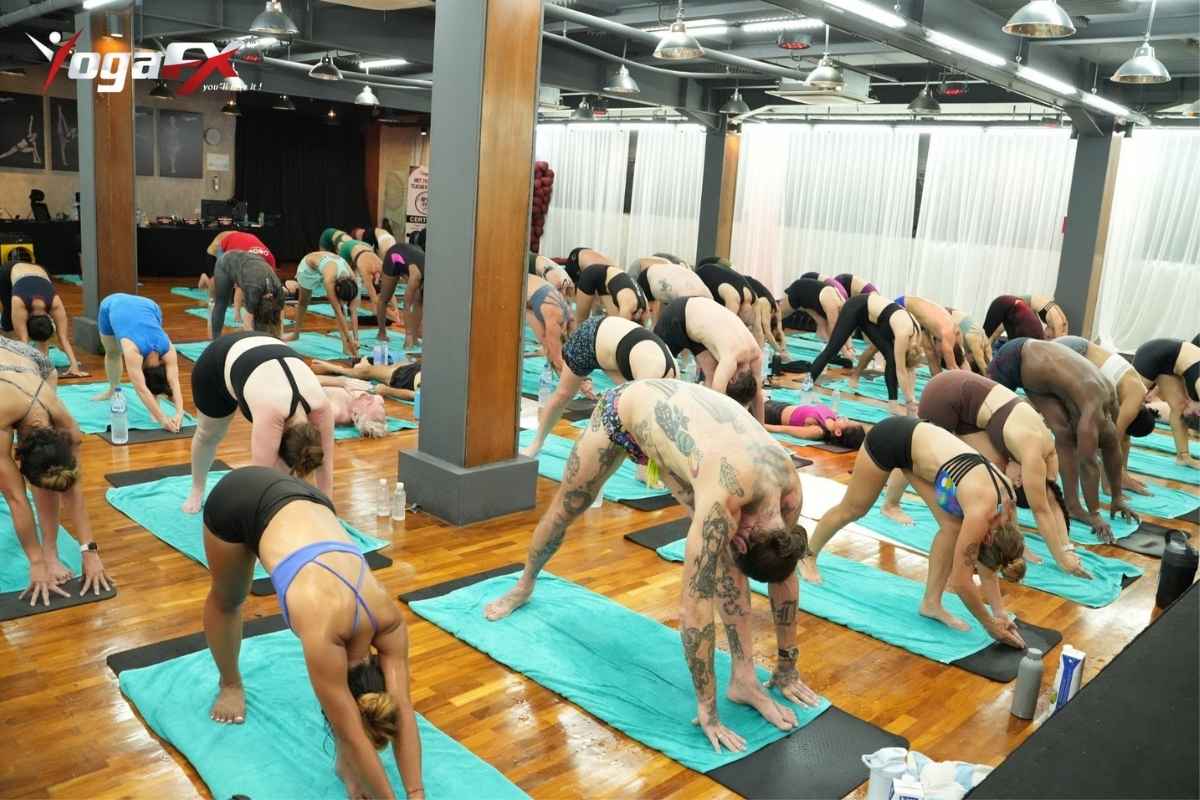
Closing a class follows the same logic as opening one. “Namaste” remains the most recognisable sign-off, usually spoken with palms together as students settle out of final relaxation.
Increasingly common alternatives include a simple “thank you for practising with me today,” a moment of shared silence before students open their eyes, or the teacher naming something specific about that day’s class, “thank you for showing up and doing the work today,” rather than a generic closing line.
What matters more than the specific words is the pause. Ending abruptly the moment the final posture finishes, without any closing moment at all, is what tends to feel jarring to students, regardless of whether the teacher says namaste, thank you, or nothing out loud at all.
What Can I Say Instead of Namaste?
If namaste does not feel like the right fit for your voice as a teacher, or you would rather use something you can say with full understanding, there are several honest alternatives.
- “Thank you for practising with me.” Direct, warm, and does not borrow language you have not studied.
- “Take care of yourself out there.” A closing line that extends the practice’s intention beyond the room.
- A shared moment of silence. Letting the final relaxation breathe for an extra ten seconds before speaking at all.
- “See you on the mat again soon.” Practical and community-focused, common in studios that prioritise a returning membership base.
There is no wrong choice here as long as it is genuine. A closing line said with full attention lands better than a traditional word said on autopilot.
How Do Yogis Say Thank You?
The Sanskrit word for thank you is “dhanyavaad,” though it is far less commonly used in Western studios than namaste. Most practitioners simply say “thank you” in their own language, sometimes paired with palms together at the heart or a small bow of the head, the same anjali mudra gesture used with namaste.
Between students and teachers, a genuine spoken thank you after class, especially one that references something specific the teacher offered that day, tends to mean more than a ritual phrase.
How to Greet a Yoga Teacher
As a student, there is no special protocol required to greet a yoga teacher. A simple hello before class, using their name if you know it, is entirely appropriate. If the teacher greets the room with namaste or palms together, mirroring the gesture is polite but never mandatory.
In a scripted hot yoga class specifically, teachers are often mid-setup as students arrive, adjusting the room, checking the heat, or preparing the dialogue, so a brief greeting rather than a long conversation right before class starts is generally appreciated. Save deeper questions about the practice, an injury, or how to modify a posture for after class, when the teacher has the attention to give a proper answer.
How Do I Introduce Myself as a Yoga Teacher?
Once you are the one leading the room, the etiquette shifts. A strong teacher introduction does three things quickly: states who you are, gives students a reason to trust your guidance, and sets expectations for the class ahead without turning into a CV recitation.
- Keep it under 30 seconds for a drop-in class. “Hi, I’m [name], I’ll be guiding you through today’s practice” is enough for most rooms.
- Mention your certification only if it is relevant to the format. In a scripted hot yoga class, telling students you are certified in the specific method reassures them the dialogue they are about to hear is authentic and not improvised.
- Ask about injuries or first-timers before, not during, the flow. A single line, “let me know before we start if this is your first class or if you’re working around an injury,” gives you the information you need without interrupting the sequence later.
- Save your personal story for when it serves the room. New teachers sometimes over-explain their own yoga journey in the introduction. Students came to practise, not to hear a biography; work your story in naturally later if it is relevant to a cue you are giving.
This is one of the specific skills covered during yoga teacher training: how to introduce yourself and the class confidently in the first thirty seconds, before a single posture has been cued.
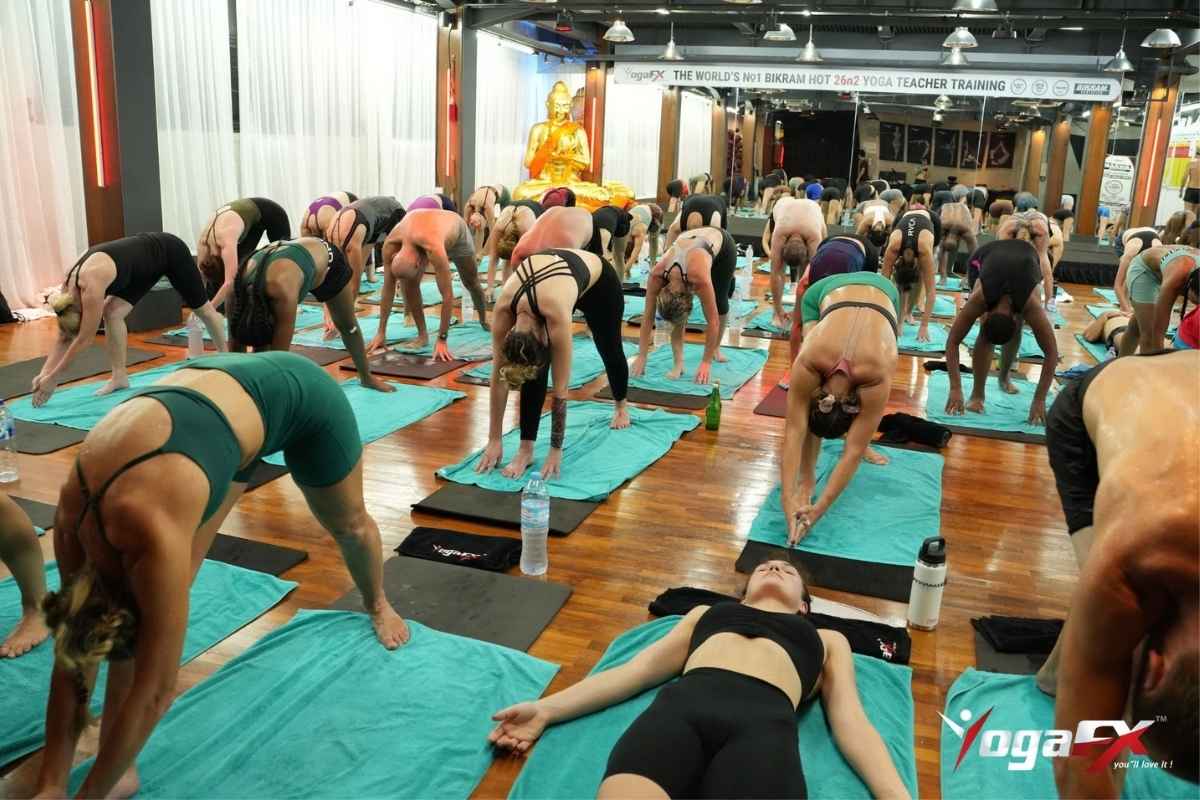
Founder Mr. Ian Terry, E-RYT 500, who has personally trained over 1,500 graduates from more than 80 countries across more than 12,000 teaching hours, builds this specifically into the practice-teaching component of the YogaFX programme, since a shaky introduction is one of the fastest ways a new teacher loses a room’s confidence before the first breath.
In scripted-dialogue formats like the original Hot 26&2 method, delivering the dialogue itself is a separate skill from the introduction, and graduates consistently say that learning to hold a room with just their voice, no music, no demonstration, was one of the most demanding parts of training.
For UK-based students weighing where to train, this is worth factoring in: getting the opening greeting and self-introduction right sets the tone for everything that follows in a class, and it is a skill that is genuinely taught, not something new teachers are simply expected to figure out on their own.
FAQ
Why don’t yoga teachers say namaste anymore?
Many teachers still do. The shift among others is about intention: namaste is an everyday Sanskrit greeting that got detached from its meaning when used on autopilot at class close. Some teachers now choose closing words they fully understand, or diversify their sign-off, rather than defaulting to it out of habit.
What does namaste actually mean?
Namaste breaks down into “namah” (bow, salutation) and “te” (to you), together meaning “I bow to you.” In everyday Indian life it functions as a common greeting, similar to “hello,” rather than a uniquely spiritual or yoga-specific term.
How do you say hello in yoga?
There is no required greeting. Common options include “namaste,” “om shanti,” a simple “hello,” or a silent nod with hands at heart centre. What is used depends on the studio’s tradition and the individual teacher’s style.
What can I say instead of namaste?
“Thank you for practising with me,” a shared moment of silence, or “see you on the mat again soon” all work as genuine alternatives. The specific words matter less than saying them with real attention rather than on autopilot.
How do I introduce myself as a yoga teacher?
Keep it under 30 seconds: state your name, briefly note relevant certification if it matters to the format, and ask about injuries or first-timers before the class begins. Save your personal story for moments it naturally serves a teaching point rather than the opening introduction.