
Hot yoga’s popularity usually gets explained in terms of flexibility and strength, but there’s a less commonly discussed cellular mechanism worth knowing about: heat shock proteins. Understanding what they do explains part of why heated practice affects the body differently than the same postures at room temperature.

In This GuideHow heat triggers a cellular repair response
What Are Heat Shock Proteins?
Heat shock proteins (HSPs) are a group of proteins cells produce in response to stressors, including heat, cold, and other cellular stress. They act as molecular chaperones, helping other proteins maintain their proper shape, preventing harmful clumping, and assisting in repairing or clearing damaged proteins.
The Main Types
- HSP27. Helps protect cells against oxidative stress and supports cytoskeletal stability.
- HSP60. Assists proper folding and assembly of newly made proteins within mitochondria.
- HSP70. One of the most studied HSPs, highly responsive to stress and central to protein folding and recovery.
- HSP90. Stabilises and activates proteins essential for cell survival and growth.
- HSP104. Helps disaggregate and refold proteins that have clumped under stress conditions like heat exposure.
How Hot Yoga Triggers HSP Activation
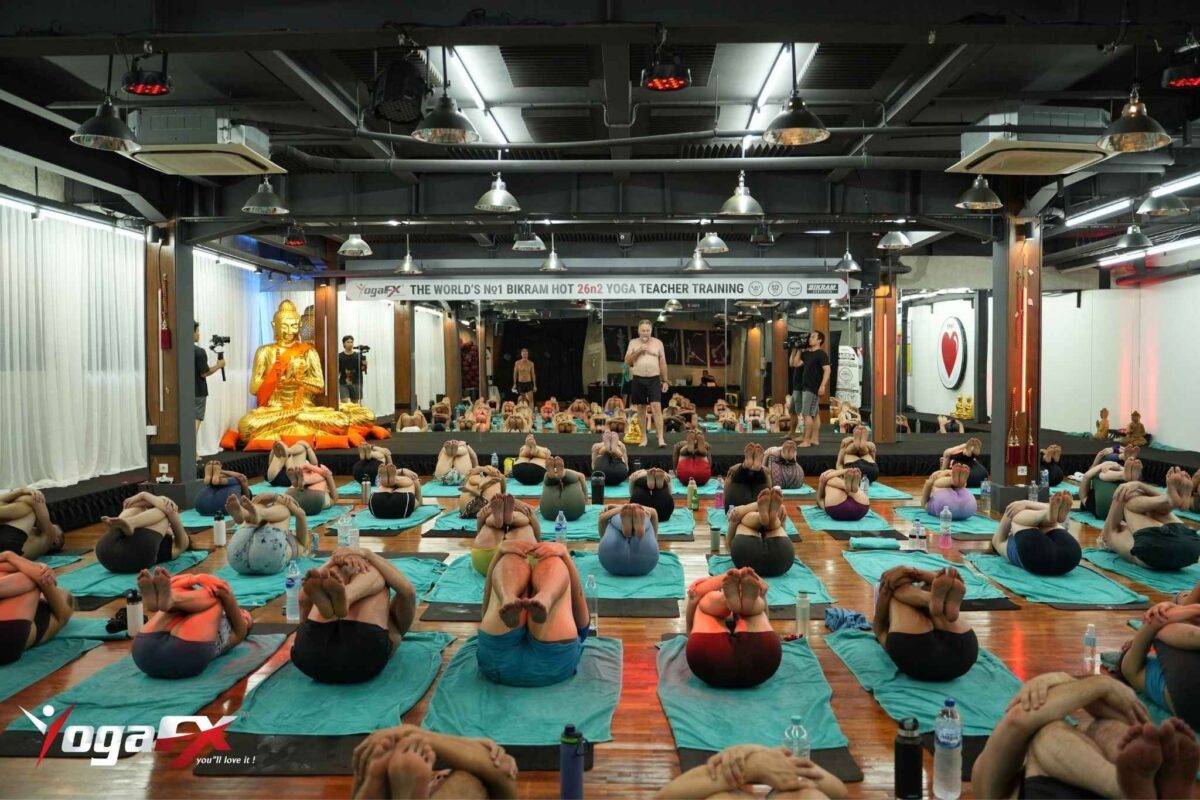
Practising in a room heated to roughly 32-40°C creates real thermal stress on cells, on top of the physical demand of the postures. When exposed to elevated temperature, proteins within cells risk losing their proper structure, and HSPs are mobilised to stabilise them, refold anything misfolded, and clear proteins that are damaged beyond repair. A meta-analysis of human heat acclimation studies found that repeated heat exposure reliably increases intracellular HSP70 levels, supporting this as a genuine, measurable cellular response rather than a theoretical one (Nava & Zuhl, 2020).
Why This Matters Beyond the Mat
- Muscle recovery. HSPs assist in repairing muscle fibres and reducing inflammation, which may support faster recovery between sessions.
- Cellular repair. By clearing damaged proteins and supporting regeneration, HSPs contribute to general tissue health.
- Immune function. Maintaining cellular integrity is part of what supports a well-functioning immune system.
This is an active area of research, and studies exploring HSP activation through heat exposure and its broader implications for chronic disease and ageing are ongoing. It’s a genuinely interesting mechanism, but it’s one piece of a much larger picture, not a standalone health claim, and shouldn’t be read as a substitute for medical advice on any specific condition.
Getting the Most From Heated Practice
- Start slowly. If you’re new to hot yoga, beginner classes let you acclimatise to the heat gradually.
- Stay hydrated. Water before, during, and after class supports the cellular processes described above.
- Listen to your body. Take breaks as needed rather than pushing through discomfort.
- Practise consistently. Regular exposure is what builds the adaptive response over time, not a single class.
This article is for general information and doesn’t replace advice from a qualified healthcare professional, particularly if you have a chronic health condition.
Practising with YogaFX in Bali
YogaFX teaches the Original Hot 26&2 sequence in Bali’s natural tropical heat under Mr. Ian Terry, E-RYT 500. Our guide to hot yoga postures covers the full sequence this heat exposure is built around.