To enter a yoga championship from the UK, you register with the body that runs the event, pick your age category and learn that event’s written rules. The latest UK event we could find was the 2018 UK Championships of Yoga Sport in London, so confirm what is running now before you pay anything.

That one-line answer hides a lot of detail. Below, I set out the events a UK athlete can actually look at. Then I cover what the old UK federation pages say about entry, how judges score a routine, and what to check with your GP first.
I’m writing from the teaching side. Mr. Ian Terry, E-RYT 500, founder of YogaFX, has more than 12,000 teaching hours and is a Master Trainer of the Republic of Indonesia Yogasana Sports Federation. He has watched our graduates step from a hot room onto a judged floor. So he knows how much of a yoga championship is preparation, and how little is posing.
Yoga Championship Events a UK Athlete Can Look At
Start with the map, because three different kinds of event get called a yoga championship. Mixing them up is the most common mistake we see in UK enquiries.
Many people searching for the world yoga championship 2026 mean the Ahmedabad event in the table. The yoga championship 2026 medal figures are in the numbers section below.
| Event | Where and when | Who can enter | What we verified |
|---|---|---|---|
| UK Championships of Yoga Sport (UKYSF) | London, Saturday 23 June 2018. This is the latest event on its site. | An Open event for anyone, and a Closed event for UK passport holders. | UKYSF homepage and 2018 rules page. We found no later event. |
| IYSF world championships | London 2014, Pordenone 2016, Beijing 2018, online 2021, Bengaluru 2022, Cyberjaya 2025. | Through national federations. The IYSF lists the UK among its countries. | IYSF history page. No UK federation is named there. |
| World Yogasana Championships | Ahmedabad, India, 4 to 8 June 2026, at the EKA Arena. | The press report we read does not give entry rules, so ask the organisers. | 522 athletes from 79 countries, per a syndicated ANI report. |
For the wider picture of how these bodies relate, see our guide to the International Yoga Sports Federation and UK yoga competitions. That guide said we found no current UK route, and this article adds the older UKYSF pages we found since.
If you want the long story of how a yoga championship grew from a Calcutta contest into a world event, read the sport’s history from 1973 to Ahmedabad on our sister site. Here, I stay with UK entry.
How to Enter a UK Yoga Championship: What UKYSF Says
The UK Yoga Sports Federation (UKYSF) calls its event the UK Championships of Yoga Sport. Its homepage says it is a not-for-profit body and a member of the IYSF. Everything below comes from its 2018 pages, which are the newest we could open.
So read this section as a template for how entry has worked, not as today’s rulebook. Rules and fees change, and an old page can hide a stopped event. That’s why dates matter.
Open and Closed Yoga Championships
The rules page splits the event into two sections. This split is the heart of qualifying, because only one of them leads anywhere internationally:
- Open Championships. They welcome anyone, whether you hold a UK passport or not. The page lists three medals per category, and results are not split by country.
- Closed Championships. They award UK participants only. The rules page says this event determines who qualifies to represent the UK at international events.
- Passport rule. Only UK passport holders can qualify for international events through UKYSF. Athletes from a country with no federation may be able to qualify, but the page says the IYSF would need to approve it.
Age categories and entry fees
The 2018 registration shop priced entry by age group. The rules page names the groups, and the shop prices them, so the table below combines the two.
| Category | Age group | 2018 entry fee | Rule set used |
|---|---|---|---|
| Youth U11 | Under 11, male and female | £20 | IYSF Youth rules |
| Youth 12-17 | 12 to 17, male and female | £25 | IYSF Youth rules |
| Adult | 18 to 49 on the rules page (the shop says 18+) | £35 | IYSF Adult rules |
| Senior | 50 and over, male and female | £35 | IYSF Adult rules |
Notice the mismatch in the adult row. The shop says “18+”, while the rules say 18 to 49. That small gap is a good reason to email the organiser and get the age rule in writing.
The rules page also covers clothing. For example, men wear shorts or swim briefs, and women wear a one or two-piece leotard or exercise outfit with open arms and legs. It adds that photos and video are taken at the event, and you can opt out on the entry form.
Is the UKYSF still running?
Here’s the honest caveat. The UKYSF homepage still reads as active, yet its latest post is from June 2018. Meanwhile, Companies House shows a company called UK Yoga Sports Federation (number 07707338) as dissolved on 13 May 2014. We couldn’t confirm whether the two are the same body, so don’t treat either page as proof.
- Email first. Use the contact page on ukyogasports.org and ask for the next event date.
- Ask for the rulebook. Request the current IYSF rules for your age category.
- Ask about selection. If you hope to represent the UK, ask how the Closed event picks a team.
- Never pay on an old page. Wait for a dated confirmation of the event and the fee.
How a Yoga Championship Is Judged
Formats differ by federation, so always check the rulebook for your event. As a general guide, Olympics.com explains that yogasana competitions are generally held in three events: artistic, rhythmic and traditional. Judges look at difficulty, balance, control, flexibility and endurance in each asana, the Sanskrit word for posture.
- Artistic. Athletes perform a routine of set postures for three minutes, with music, as individuals or pairs.
- Traditional. Athletes hold postures for 15 or 30 seconds, depending on the posture, with a focus on balance and stability.
- Rhythmic. Pairs and groups of five perform in sync, holding each posture for five to seven seconds.
Because the formats reward different strengths, pick one before you train. A flexible athlete may suit artistic routines, while a steady, strong athlete may suit the traditional hold.
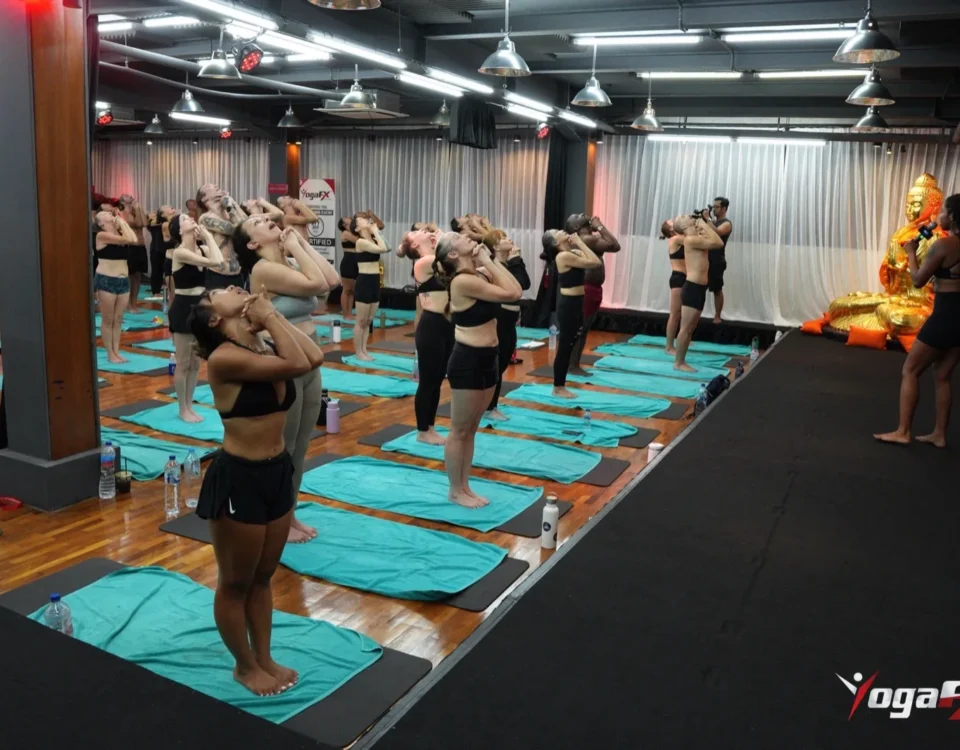
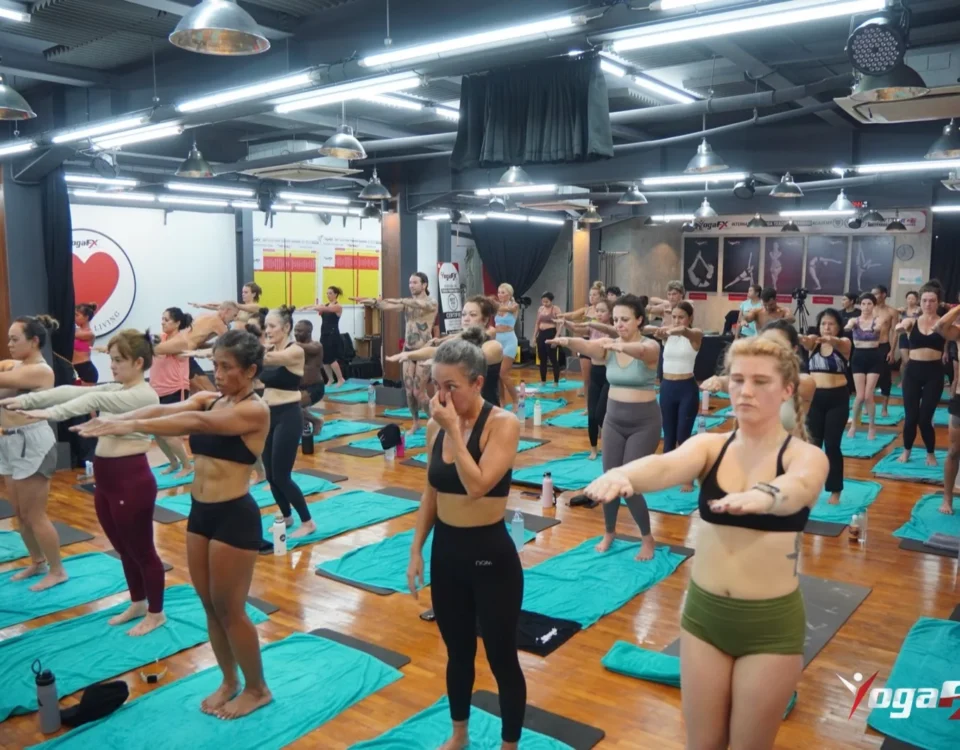
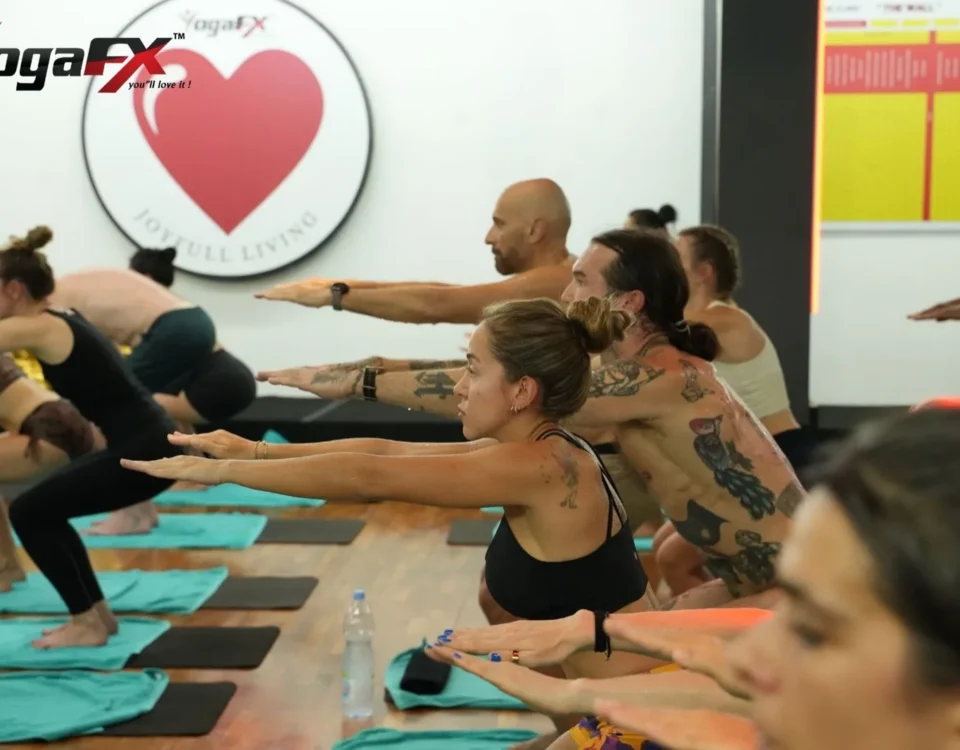
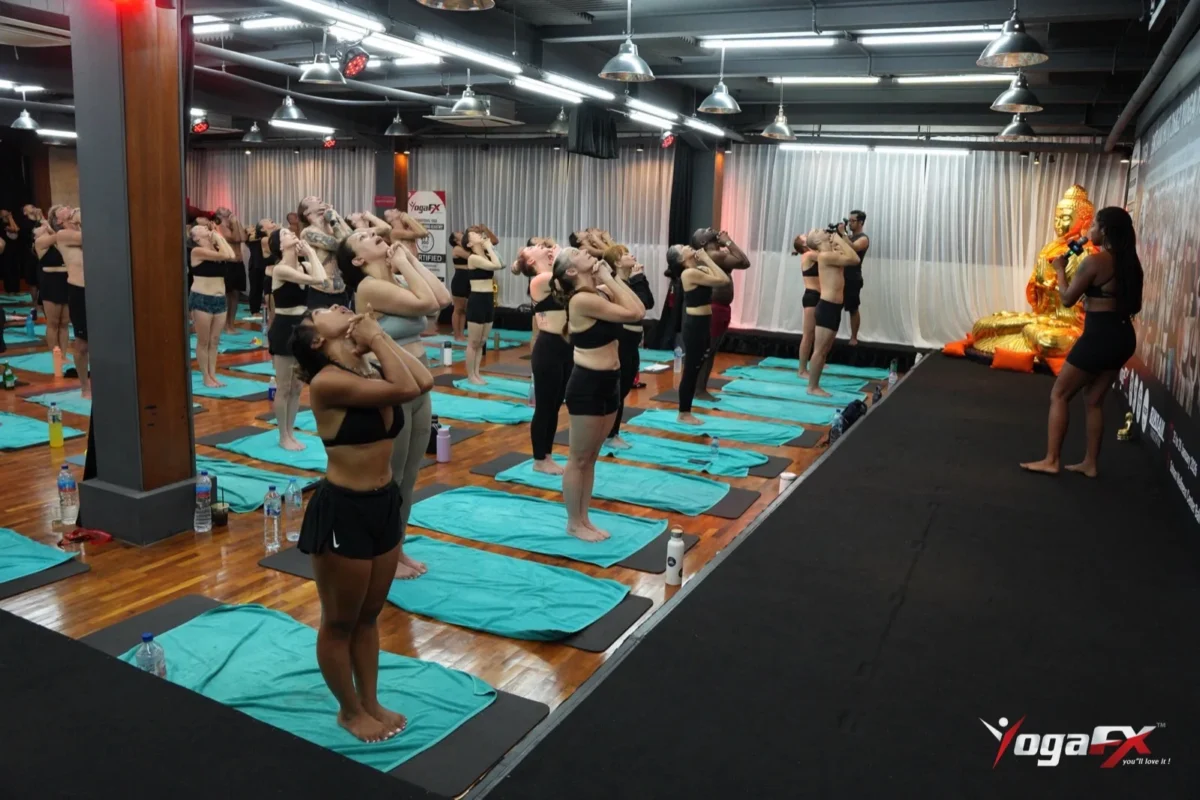
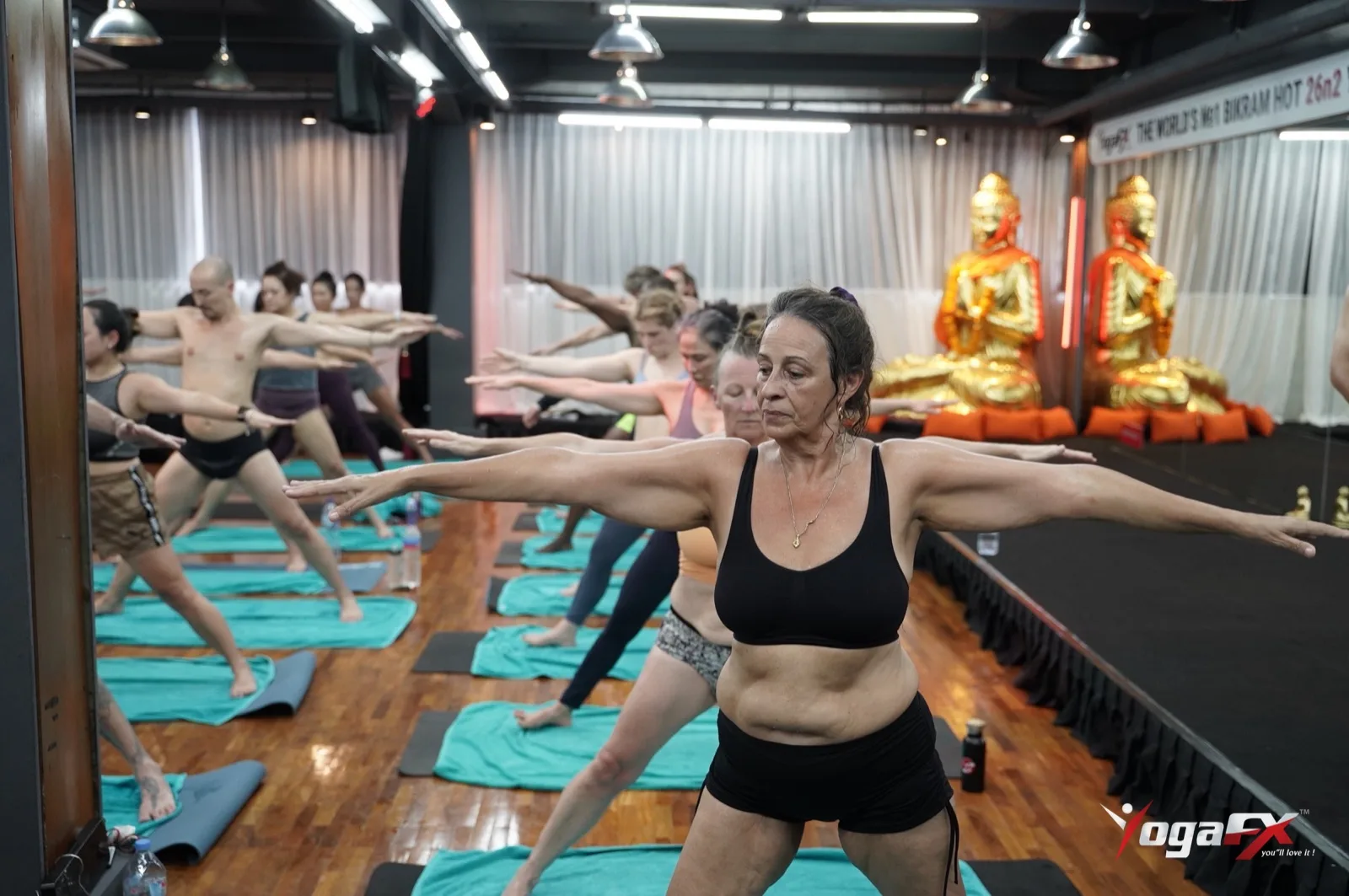
In a hot 26&2 class, we coach the same habits every day: a locked standing knee, square hips and a still hold. That is why many of our teachers feel at home with competition rules. For the other side of the debate, our piece on competitive yoga in Britain asks whether yoga should be a sport at all.
Yoga Championship Numbers at a Glance
The infographic below gathers the figures we could verify. It is built as page text rather than an image, so search engines and screen readers can read every number.
Who Governs What: BWY, IYSF and UKYSF
UK readers meet three organisations that sound alike. They do different jobs, so keep them apart:
- British Wheel of Yoga (BWY). Its About Us page says it is the National Governing Body for Yoga in England and Wales, recognised by Sport England in 1995. Its pages do not say it runs competitions.
- International Yoga Sports Federation (IYSF). It calls itself the global governing body for yoga asana sport. It was founded in Lausanne in 2013 and lists the UK among its countries. Its world yoga championship list runs from London in 2014 to Cyberjaya in 2025.
- UK Yoga Sports Federation (UKYSF). It organised the UK Championships of Yoga Sport and says it is an IYSF member. Its latest event on file is from 2018.
BWY also takes a clear view on the sport. In a November 2026 article, it calls for a distinction between yoga and Yogasana, an emerging competitive discipline. It says competitive practice may have value but should not be confused with yoga. You can agree or disagree, yet you should know where your national body stands before you ask it for help.
Five Honest Steps From Local Class to Yoga Championship
Because the UK route is thin, treat your yoga championship entry as a project. These five steps keep your money and time safe:
- Choose the format. Decide between artistic, traditional and rhythmic, then read that rulebook.
- Find a live event. Look for a dated notice from an organiser, not a page from 2018.
- Confirm your category. Check your age group, entry fee and whether you need a national federation to nominate you.
- Find a coach who scores like a judge. You need someone who marks your holds against the written criteria.
- Plan for travel. Recent world events were held in India, Malaysia and China, so budget for flights and insurance.
Health Checks Before You Train for a Yoga Championship
Judged yoga asks you to hold hard postures still, so a plain look at injury risk is sensible before any yoga championship. The evidence below is general, not specific to competition, so read it as context. If your training room is heated, our guide to hot yoga for athletes covers the heat training lessons for UK club players.
A 2018 systematic review by Cramer, Ostermann and Dobos, published in the Journal of Science and Medicine in Sport, pooled 9 observational studies covering 9,129 yoga practitioners. Sprains and strains were the most common problems.
Its conclusion was that there is no need to discourage yoga practice for healthy people. It also advised people with serious acute or chronic illness to seek medical advice first.
The NHS gives a useful baseline for any new training load. Its guidelines for adults aged 19 to 64 ask for at least 150 minutes of moderate activity a week, or 75 minutes of vigorous activity. They add strengthening work on at least two days a week, and they list yoga among those activities.
They also say to speak to your GP first if you have not exercised for some time or have a medical condition.
So a sensible UK plan looks like this:
- Book a GP check if you are new to exercise, over 45, pregnant or taking medication.
- Build up gradually. Add one training session before you add a harder posture.
- Train with a certified teacher who can spot a strain early.
- Read the risks and side effects of hot yoga if your training room is heated.
This article is general information, not medical advice. Please consult a healthcare professional before you start, especially if you have a heart condition or any ongoing health concern.
Where Teacher Training Fits a Yoga Championship Pathway
A teaching certificate will not enter you in a yoga championship. A sports federation writes the rules and runs the events, while a registry such as Yoga Alliance recognises teachers. Even so, every federation needs coaches who can see a posture clearly and correct it kindly, and that’s what teacher training builds.
Many UK applicants ask whether to train at home or fly out. For future coaches, the question is mostly about time and cost. Our Bali programme for UK students sets out costs, travel and time off in plain numbers.
The YogaFX Bikram Hot 26&2 Yoga Teacher Training MasterClass is a 6-day hybrid: you study online first, then train in Bali. It leads to Yoga Alliance RYT 200 plus a Bikram Hot 26&2 200-Hour International Yoga Certification. The Early Bird price is US$1,899, against a normal price of US$1,999, and instalments start from US$250 a month with no interest.
The next batch checks in on Sunday 24 January 2027 and checks out on Friday 29 January 2027, at Soham Wellness Center in Seminyak. That means just five days off work. Our students have won 12 medals over the years: 5 gold, 3 silver and 4 bronze. Seven of them came for Indonesia at the June 2026 championships in Ahmedabad.
What YogaFX Students Say
Good coaching shows up in how students describe it. Here are two short reviews. We have 150 Google reviews, 50 on Yoga Alliance and 357 video testimonials on YouTube.
Chris, YouTube review, 2024: “What an awesome experience. Ian knows how to take you to your limits and beyond. And just a well-organized, awesome event, awesome team, excellent experience.”

Jade, Google review, 2021: “Ian the main man is an all-round nice human! He is a great communicator and has been extremely supportive of my commitment to becoming an amazing yoga teacher.”
FAQ
Is there a UK yoga championship?
The UK Championships of Yoga Sport, run by UKYSF, were held in London on 23 June 2018. That is the latest UK event we could find on its site. We could not confirm a current event, so email the organiser and ask for a dated notice before you pay any entry fee.
How much does a yoga championship entry cost in the UK?
The newest UK prices we could find are from 2018. UKYSF charged 20 pounds for under 11s, 25 pounds for ages 12 to 17, and 35 pounds for adults and seniors. Fees may have changed since, and travel, insurance and coaching cost extra, so ask the organiser for current prices in writing.
What age groups does a yoga championship have?
It depends on the event. The 2018 UKYSF championships used Youth under 11, Youth 12 to 17, Adult 18 to 49 and Senior 50 and over, each split by sex. Youth categories followed IYSF youth rules, while adults and seniors followed IYSF adult rules. Always check the current rulebook.
Is yoga a sport in the UK?
The British Wheel of Yoga is the National Governing Body for Yoga in England and Wales, recognised by Sport England. It says yoga itself does not fit the traditional definition of sport, and it separates yoga from Yogasana, the competitive discipline. Competitive events exist, but they sit outside everyday yoga practice.
Can I enter a UK yoga championship without a UK passport?
Under the 2018 UKYSF rules, yes for the Open event, which welcomed anyone whether they held a UK passport or not. The Closed event, which picked UK representatives for international events, was for UK participants only. Rules may have changed, so confirm eligibility with the organiser before you register.
Still have questions? Message Mr. Ian and the YogaFX team on WhatsApp and we will answer them personally.