How long does it take to become a yoga teacher in the UK? A 200-hour certificate can take anywhere from five working days to nine months, depending on the route you choose. What decides it for most people is not the syllabus. It is how many annual leave days you can spare, so this guide starts with your calendar.

Most UK applicants have one limit that matters more than anything else: time off work. A bank holiday here, a week in August there, and suddenly the training you wanted looks impossible. It usually isn’t. The trick is to match the shape of the course to the shape of your year.
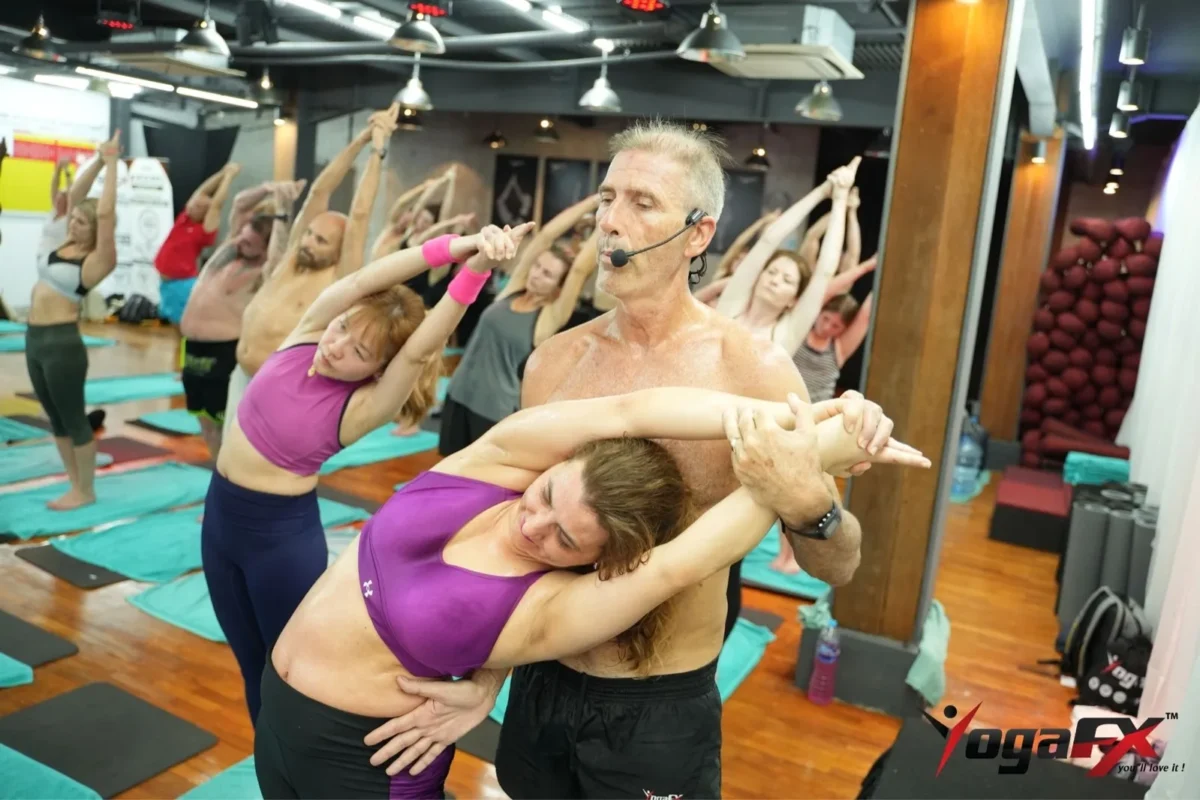
Mr. Ian Terry, E-RYT 500, leads the YogaFX training and has taught more than 12,000 hours. He has spent five years, from 2014 to 2019, training with the founder of the Bikram Hot 26&2 method. The planning advice below comes from how his course is built, plus public facts we checked.
The short answer: it depends on the route and on your leave
Becoming a certified teacher means finishing a 200-hour training, the Yoga Alliance standard for registered schools. What changes from one school to the next is how those hours are packed into your diary. Our October 2026 comparison of 31 hot yoga teacher trainings found classroom time of 4 to 9 weeks full-time, or 7 to 12 weekends. In practice, there are three common shapes:
- Weekend course. The hours are spread over many weekends. It protects your holiday allowance, but it stretches over several months.
- Residential block. Four to five weeks away in one go. It is quick on the calendar and heavy on your leave.
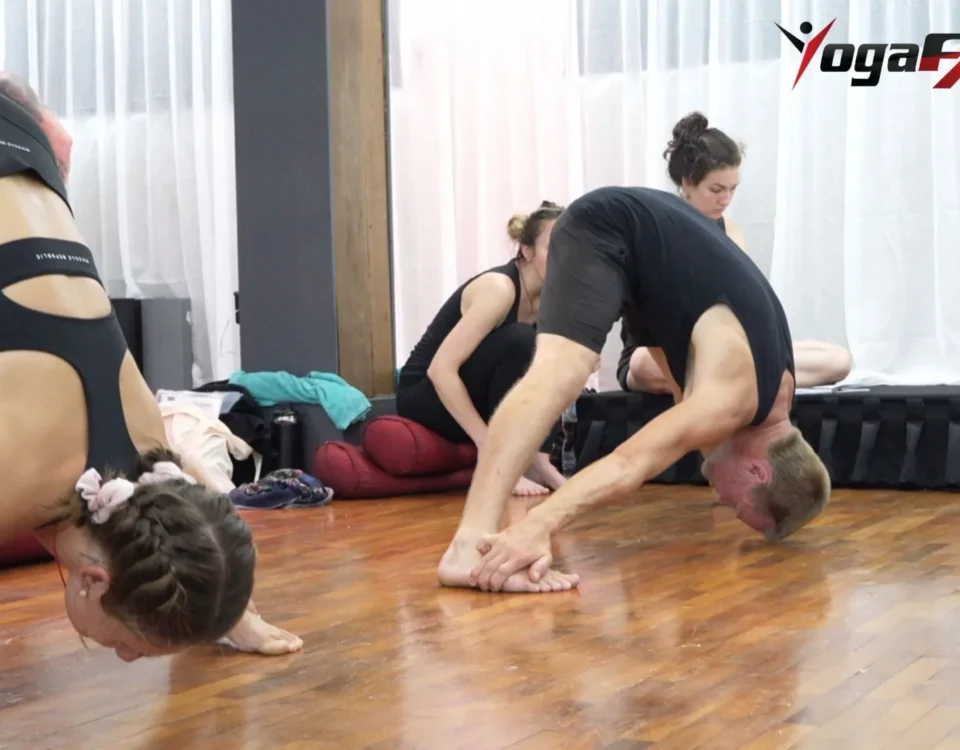
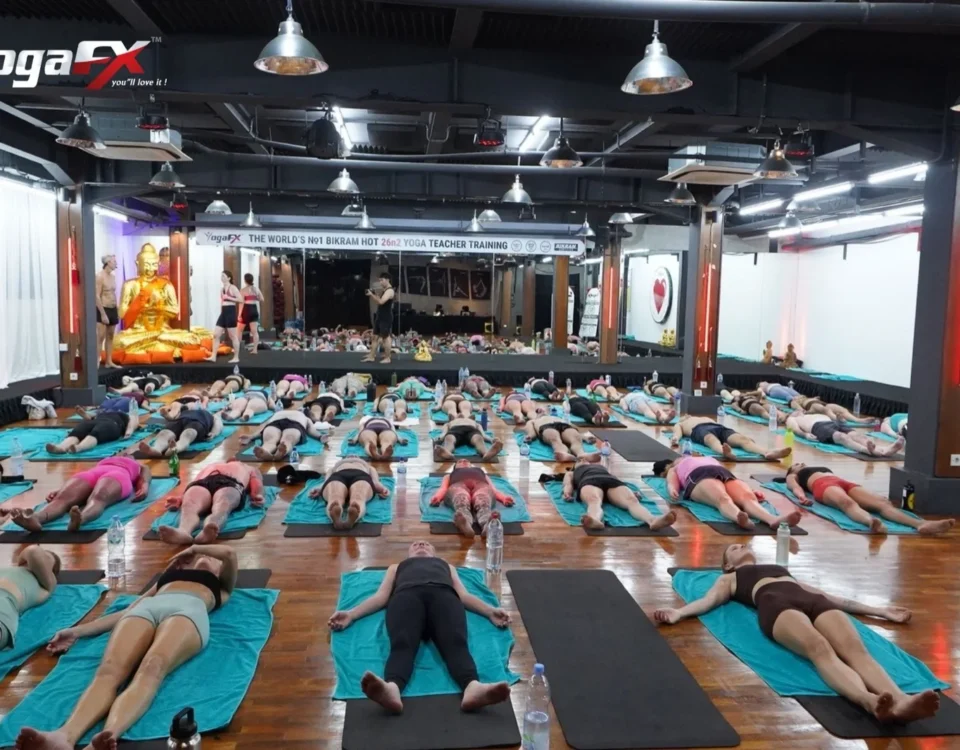
- Hybrid intensive. You study online at home first, then spend one short block on site. At YogaFX that block is six days in Bali, from Sunday to Friday.
No route is right for everyone. A parent with school-run duties may love the weekend format. A freelancer between contracts may prefer a clean month away. Someone with a demanding manager may want the shortest block possible. Next, we look at the numbers behind that last case, because how long it takes to become a yoga teacher on paper and in your diary are two different things.
How long does it take to become a yoga teacher if you work full time?
Start with your budget. UK law gives most full-time workers 5.6 weeks of paid holiday a year, which is 28 days for someone working five days a week. That single pot also has to cover family holidays, weddings and Christmas. Check your contract to see how your employer counts bank holidays inside it.
Once you know the pot, the leave maths is simple. A four-week residential block needs about 20 working days off, which is 71% of 28. A five-week block needs 25, which is 89%. A hybrid intensive from Sunday to Friday needs five working days, which is 18%. The table below sets the routes side by side.
| Route | Calendar span | Working days off | Share of 28 days | Main catch |
|---|---|---|---|---|
| Weekend course | 7 to 12 weekends, roughly 3 to 6 months | 0 | 0% | Months of commitment and travel to the same studio |
| Residential block | 4 to 5 weeks on site | 20 to 25 | 71% to 89% | Nearly all your annual leave in one go |
| Hybrid intensive (Bali) | Online pre-course, then Sunday to Friday | 5 | 18% | Long-haul flight, so plan for jet lag |
| Hybrid intensive with travel buffer | The same week, plus 2 days to travel | 7 | 25% | Two extra days, but a calmer arrival |
| Internship-gated route | 4 to 9 weeks or weekends, then 75 classes over 6 months to 2 years | Varies | Varies | The final credential arrives long after the course ends |
Reading the table
Notice the last row. Some schools award their top level only after a yoga teacher internship. That means the question of how long it takes to become a yoga teacher has two answers: the time to the course certificate, and the time to the final credential. When you compare schools, ask for the second number, not just the dates of the classroom block.
Weekend course, residential block or hybrid: which fits a UK diary?
The weekend course
Weekend courses suit people who cannot leave their job at all. You keep your salary and your routine. The cost is time. Over several months, a family event, an illness or a cancelled train can push your finish date back, and it is easy to lose momentum between modules.
The residential block
A month away is a clean break from daily life, and some people thrive on it. But it needs a sabbatical, unpaid leave or a career gap. Many employers will not approve four weeks in one go, so ask early and ask in writing. If the answer is no, you have lost nothing but a conversation.
The hybrid intensive
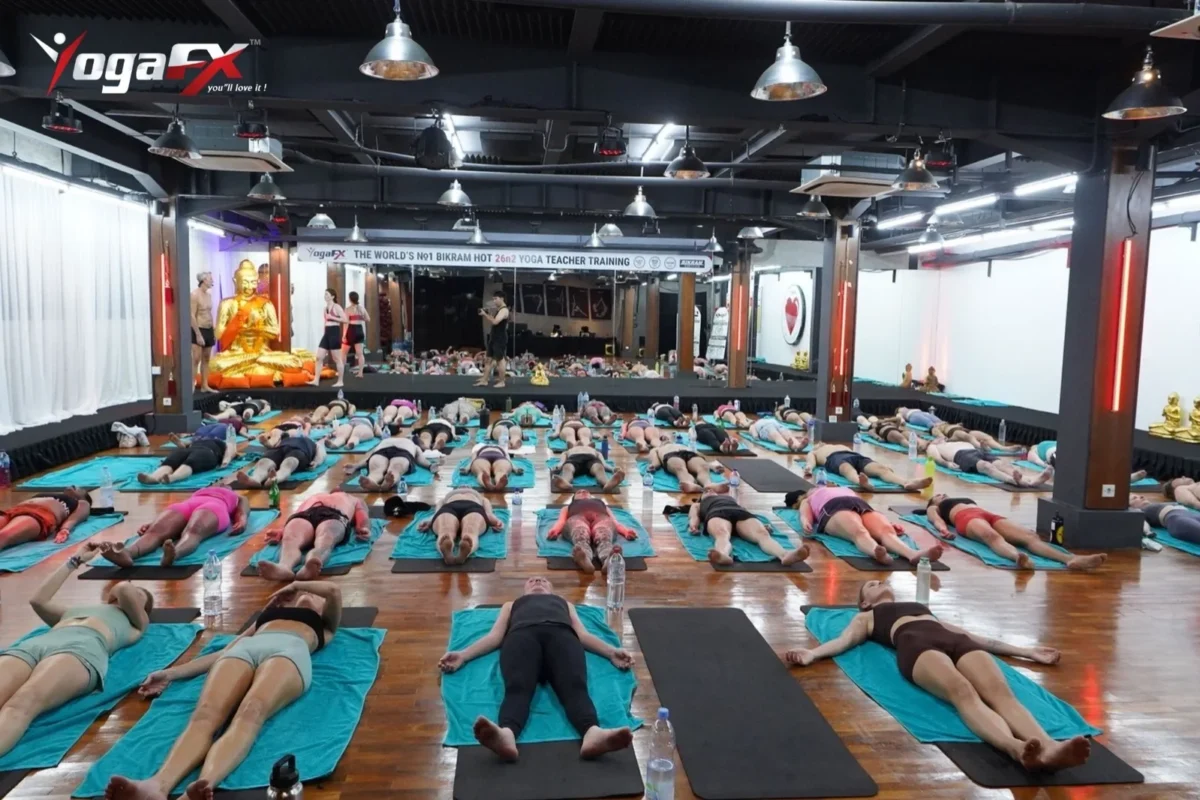
People often ask how long is yoga teacher training once the online part is counted. For the YogaFX hybrid, the answer is a few weeks of home study plus six days on site. The same question applies to a hot yoga programme: how long is hot yoga teacher training in a heated room, and does the heat change the schedule? Not by much, but your stamina matters more.
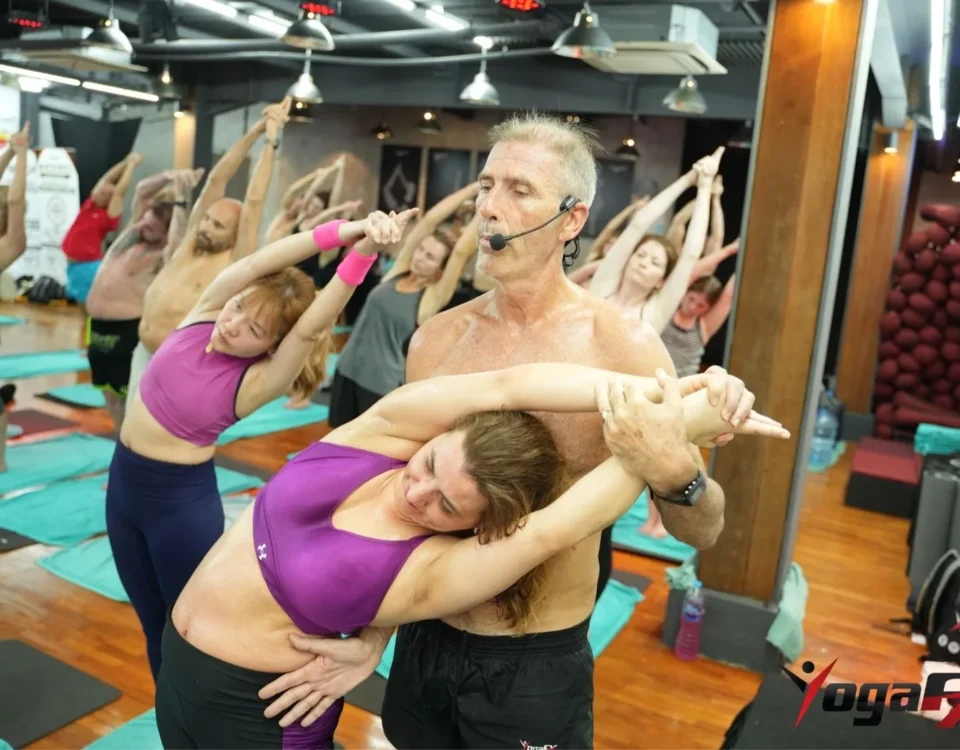
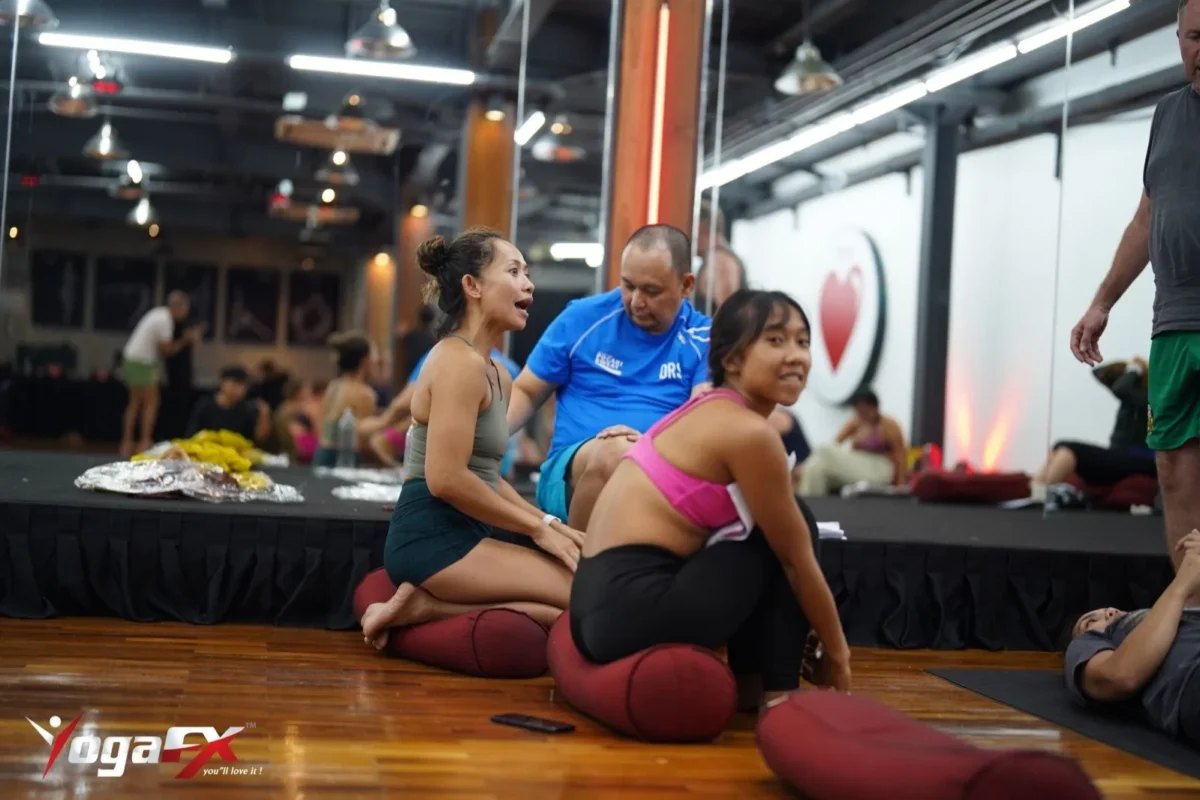
The hybrid model splits the work. You cover theory and the posture sequence online, at your own pace. Then you travel for the part that cannot be learned from a screen: practising, teaching and getting corrected face to face.
The next YogaFX batch checks in on Sunday 24 January 2027 and checks out on Friday 29 January 2027 at Soham Wellness Center in Seminyak. Because the check-in is on a Sunday, you need only five working days off, Monday to Friday. Graduates leave with Yoga Alliance RYT 200 and Bikram Hot 26&2 200-Hour International Yoga Certification. For the full session-by-session picture, read the Bali hybrid path in full.
Your 10-week countdown to a January 2027 intensive
If the hybrid route fits your year, here is a realistic countdown. It works backwards from check-in day, so you can see what to do now and what can wait.
So how long does it take to become a yoga teacher once you have fixed your dates? On this plan, about ten weeks from first conversation to check-in day, with the heavy lifting in the final week.
This plan is deliberately gentle. It asks for a few hours a week, not a lifestyle overhaul. Still, the earlier you start, the less you cram. That brings us to what the research says about spacing your study.
What the research says about spacing your study and getting fit first
Memorising a scripted class is a recall task, and recall responds to timing. A review of distributed practice in verbal recall tasks pooled 839 assessments from 317 experiments. It examined spaced learning episodes against consecutive massed ones, and reported that the best gap between study sessions grows with how long you need to remember the material.
Those studies used verbal recall, not yoga, so treat the result as a guide rather than a promise. Still, it supports what the online pre-course is for: little and often beats a last-minute cram on the flight over. The teaching dialogue is a long script, and short sessions across several weeks are kinder to your memory.
Fitness matters too. The NHS advises adults to do at least 150 minutes of moderate activity or 75 minutes of vigorous activity a week, plus strengthening work on at least two days. A teacher training week stacks several demanding classes on top of teaching practice, so a base of regular exercise makes the week easier. Here is a simple way to prepare:
- Practise regularly. Get used to a full 90-minute class before you fly.
- Study in short blocks. Twenty to thirty minutes a few times a week beats one long evening.
- Rehearse out loud. Speak the script, because reading it silently is not the same skill.
- Hydrate on purpose. Practise drinking enough water before, during and after warm classes.
This is general information, not medical advice. If you have a heart condition, high blood pressure or a pregnancy, or you take regular medication, speak to a healthcare professional before starting hot yoga training.
What happens after the certificate: first classes and the long game
The certificate is a starting line, not a finish line. Most graduates can lead a full class once they have practised teaching in front of a group. Teaching well is a longer road. In Mr. Ian Terry’s view, it comes from teaching often, listening to feedback and staying curious, not from adding weeks to a course.
Before you pay for anything, read our guide on how to choose a yoga teacher training. If you plan to teach in Britain, it also helps to understand what an RYT 200 means for UK insurance and jobs, and which credentials UK studios accept. For the costs of travelling abroad, see time off, travel and costs for UK students.
What graduates say about the pace
Numbers show the format, but graduates show how it feels. YogaFX has 150 Google reviews, 50 Yoga Alliance reviews and 357 YouTube testimonials, and has trained 1,500+ teachers from 80+ countries since 2017. Three Google reviews from graduates:
“The Teacher Training totally exceeded my expectations. The best choice I’ve made in a long time. It was sweat, tears, laughter… it was training, life coaching, therapy.”
Mariana, Google review, 2022
“For me, it was the hardest thing that I have ever done…emotionally, physically and mentally. It tore me down and built me back up.”
Britt, Google review, 2026
“I came in nervous and leaving certified and confident. If you’re thinking about doing your training here, stop thinking and just go for it!”
Xuan, Google review, 2026
When people ask how long it takes to become a yoga teacher, they rarely mention how graduates feel on the other side. Notice what these three describe: effort, change and confidence. Nobody says the week was too short. That is worth remembering when you weigh a one-week intensive against a one-year course, because what happens inside the days matters more than how many calendar months they cover.
Costs and dates for the January 2027 batch
Time is only one cost. For the January 2027 batch, the Early Bird price is US$1,899, against a normal price of US$1,999, so you save US$100. Room options are Twin Share at US$1,999 and Single Room Premium at US$2,199. Instalments start at US$250 per month, interest free, adjusted to your monthly budget. Prices are in US dollars, so check the pound rate on the day you pay.
There is no cap on places, but the Early Bird price does not last. Add the flight, travel insurance and a few days of buffer on each side, and you have the full cost of the trip in both money and leave.
Three planning mistakes UK applicants make
Spending every leave day on the course
A residential block can swallow your whole allowance. Then you return to work with no holiday left until the next year, and that is a fast route to burnout. Leave yourself at least a few days to rest after training, because teaching your first classes asks for energy too.
Ignoring the time after the course
The certificate is only the start of your calendar. You will want to practise teaching on friends, cover a few classes and sort your insurance. Plan a few weekends for that in the first two months, so the skills you built do not fade.
Choosing on price or length alone
A short course is not automatically a shallow one, and a long course is not automatically a deep one. What counts is how much teaching practice you get and how quickly you get feedback. Ask each school how many times every trainee teaches in front of the group, then compare the answers.
So, how long does it take to become a yoga teacher for a UK applicant with a full-time job? If you pick the hybrid route, the honest answer is a few weeks of home study, then five working days off for the intensive. If you pick weekends, it is several months. The best choice is the one you will actually finish.
A simple way to choose your route
Before you book anything, ask yourself how long does it take to become a yoga teacher on the route you can really afford, in leave and in money. Then run each option through this checklist:
- Count your leave first. If you have fewer than 10 spare days, a residential block is out.
- Be honest about momentum. If a gap of weeks makes you drift, avoid a course spread over many months.
- Ask for total time to credential. Include any internship, not just the classroom block.
- Check the lead trainer. A Lead Trainer on a Yoga Alliance programme holds the E-RYT 500 level themselves.
- Read the reviews. Look for what graduates say about the teaching, not just the venue.
If you are still undecided, the hot yoga path most UK guides skip explains how this route compares with studying at home.
FAQ
How long does it take to become a yoga teacher in the UK?
A 200-hour certificate takes from five working days on a hybrid intensive to about nine months of weekends. Residential blocks run four to five weeks. Some schools add an internship of six months to two years before awarding a final credential, so ask for the total time.
How many hours do you need to become a yoga teacher?
The usual entry standard is 200 hours, which is what a Yoga Alliance Registered Yoga School programme requires. Those hours cover posture practice, anatomy, ethics and teaching skills. Some trainings publish fewer or more hours, so check the total before you pay.
What qualifications do you need to become a yoga teacher?
You do not need a degree. Most studios and insurers look for a recognised 200-hour certificate, such as Yoga Alliance RYT 200. A regular practice helps, and a hot yoga training also expects you to cope with a 90-minute class. Ask your own insurer what they require.
Can you become a yoga teacher while working full time?
Yes, if you choose the right format. Weekend courses need no leave but take months. A hybrid intensive needs five working days off for Sunday to Friday, plus travel days. UK full-time workers are entitled to 28 days of paid holiday a year.
How long does the YogaFX teacher training take?
The YogaFX training is a hybrid. You finish an online pre-course at home, then attend a six-day intensive in Bali. The next batch runs from Sunday 24 January 2027 to Friday 29 January 2027 at Soham Wellness Center in Seminyak. Graduates earn Yoga Alliance RYT 200 plus Bikram Hot 26&2 certification.
Still have questions? Message Mr. Ian and the YogaFX team on WhatsApp and we will answer them personally.