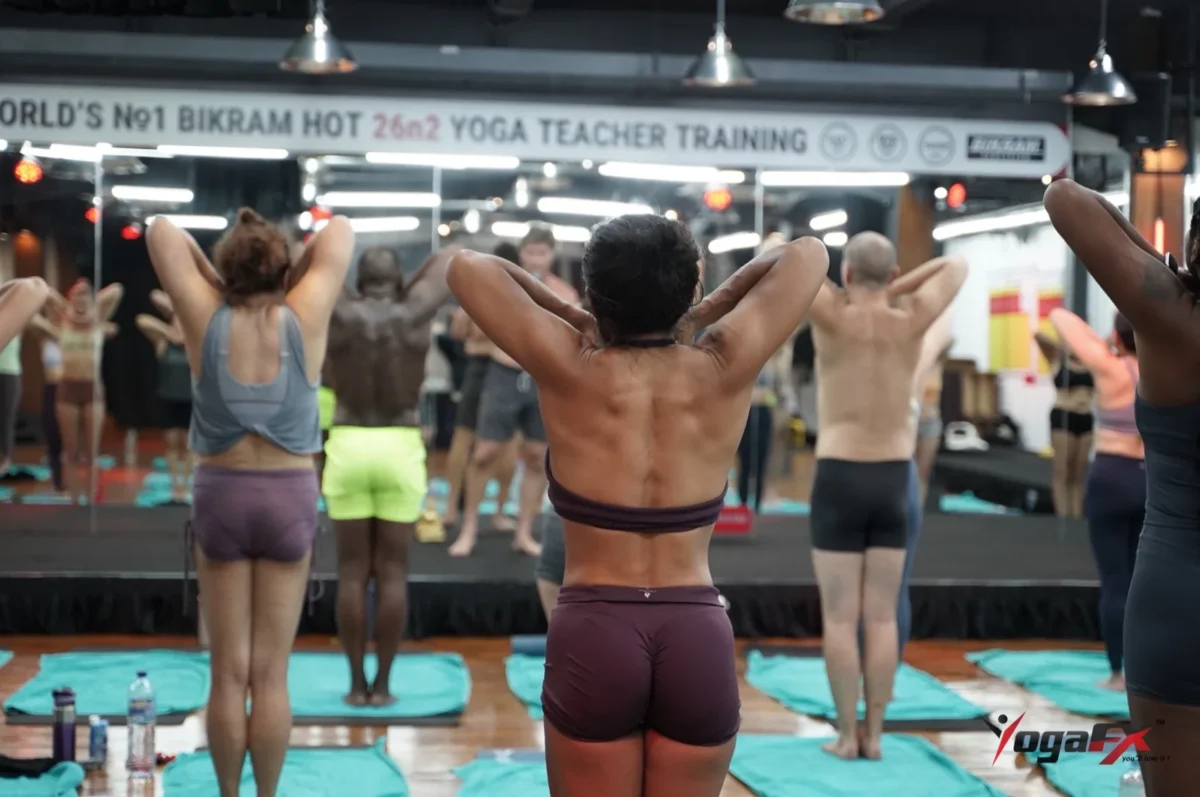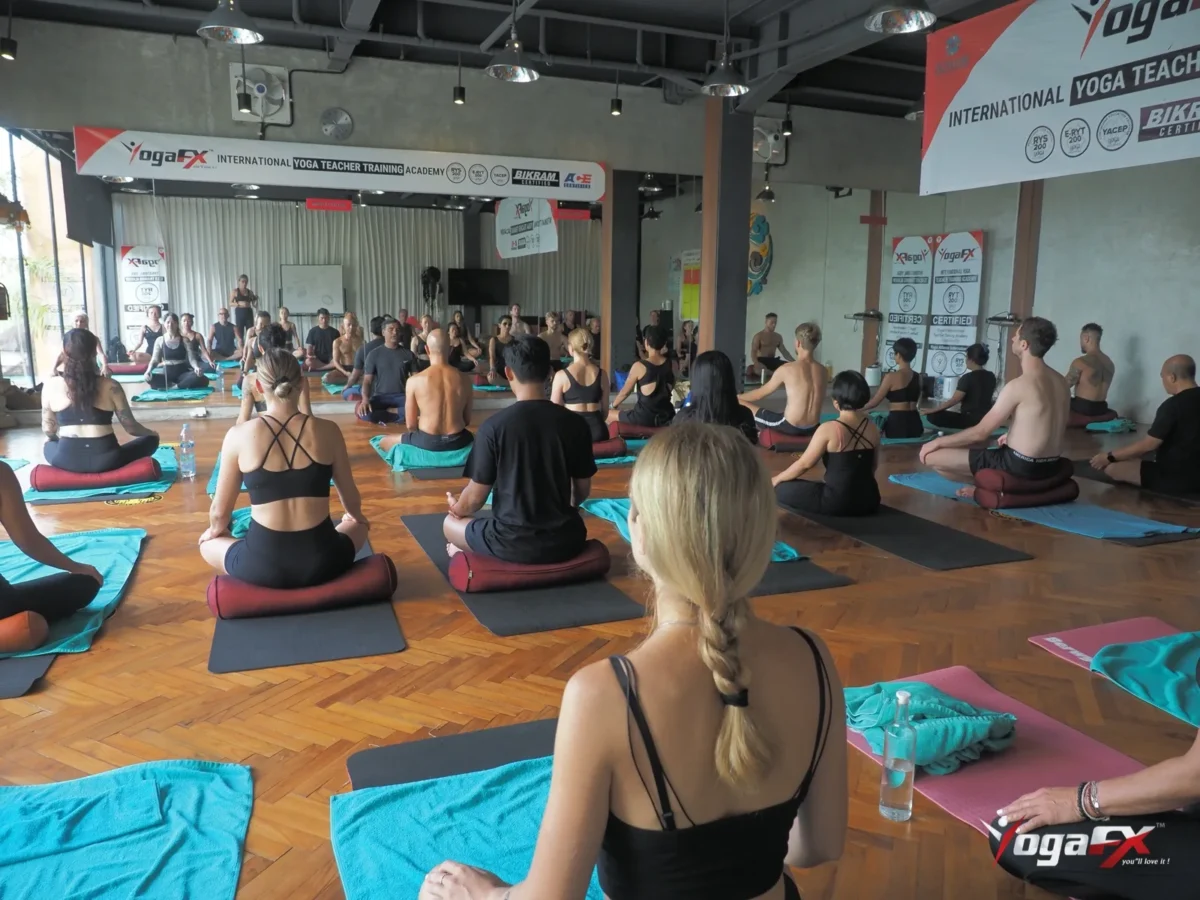
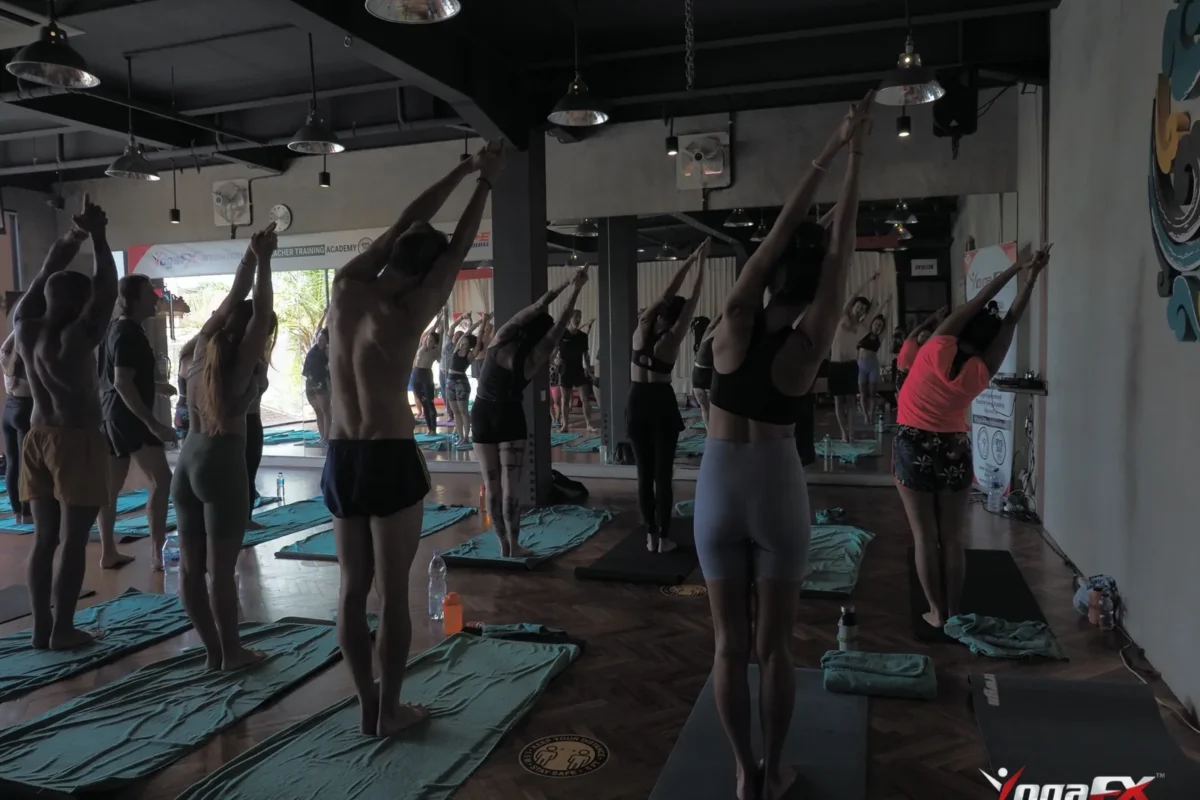
Awkward pose (Utkatasana) is a held squat that asks your quads, glutes and calves to work for six short holds in a 40°C room. For UK runners, footballers and lifters, it shows your thigh endurance fast. Hold it safely by keeping your torso upright, your knees tracking and your depth last.

That is the short answer. The rest of this guide explains what the posture demands from a body trained on road, pitch or barbell, how to hold it without strain, and how to build up over four weeks. Mr. Ian Terry, E-RYT 500, has taught this posture for more than 12,000 hours at YogaFX. Much of what follows comes from the cues he gives in the room.
What Awkward Pose Asks of Runners, Footballers and Lifters
Think of awkward pose as a squat you never come up from. The muscles stay switched on while the joints stay almost still, which is what sports scientists call an isometric hold. A back squat never feels like this.
A set of back squats gives you a breather at the top of each rep. Here there is no top. You sit, you stay, and the thighs start complaining almost at once. Add a 40°C room and your pulse climbs while the legs are still busy, so one posture feels like strength work and cardio together.
Why the thighs speak up first
The big quads on the front of the thigh take the first hit. Glutes and inner thighs pitch in once the feet meet. Meanwhile, the calves and the little stabilisers round the ankle keep correcting your balance, second by second.
Most British athletes arrive with strong but stiff legs. Runners have tight calves and ankles. Footballers have short hip flexors and busy hamstrings. Lifters have strong quads but often limited ankle range. Each of these shows up differently in awkward pose, which is why the same cue does not suit everyone.
Where it sits in a class
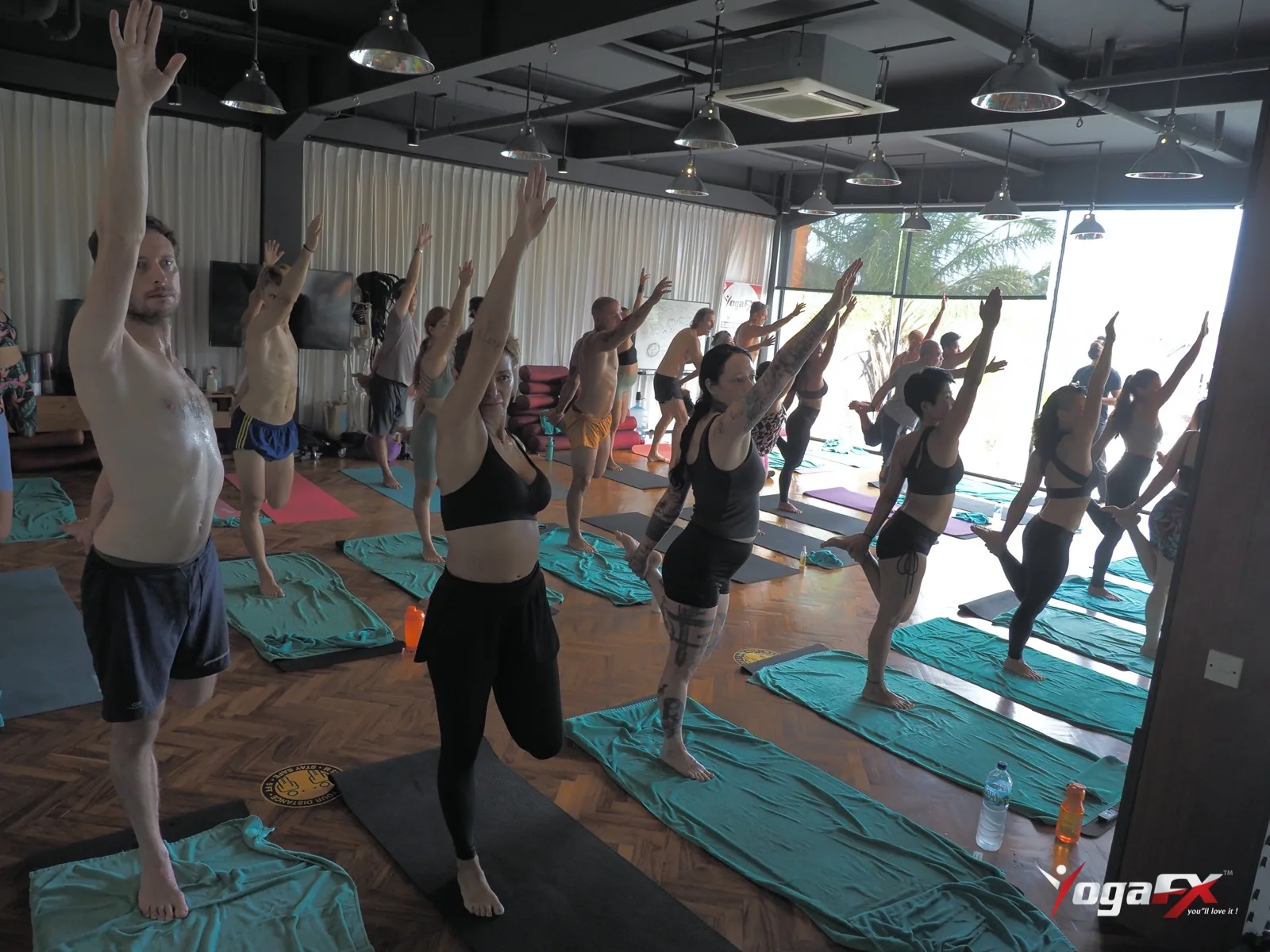
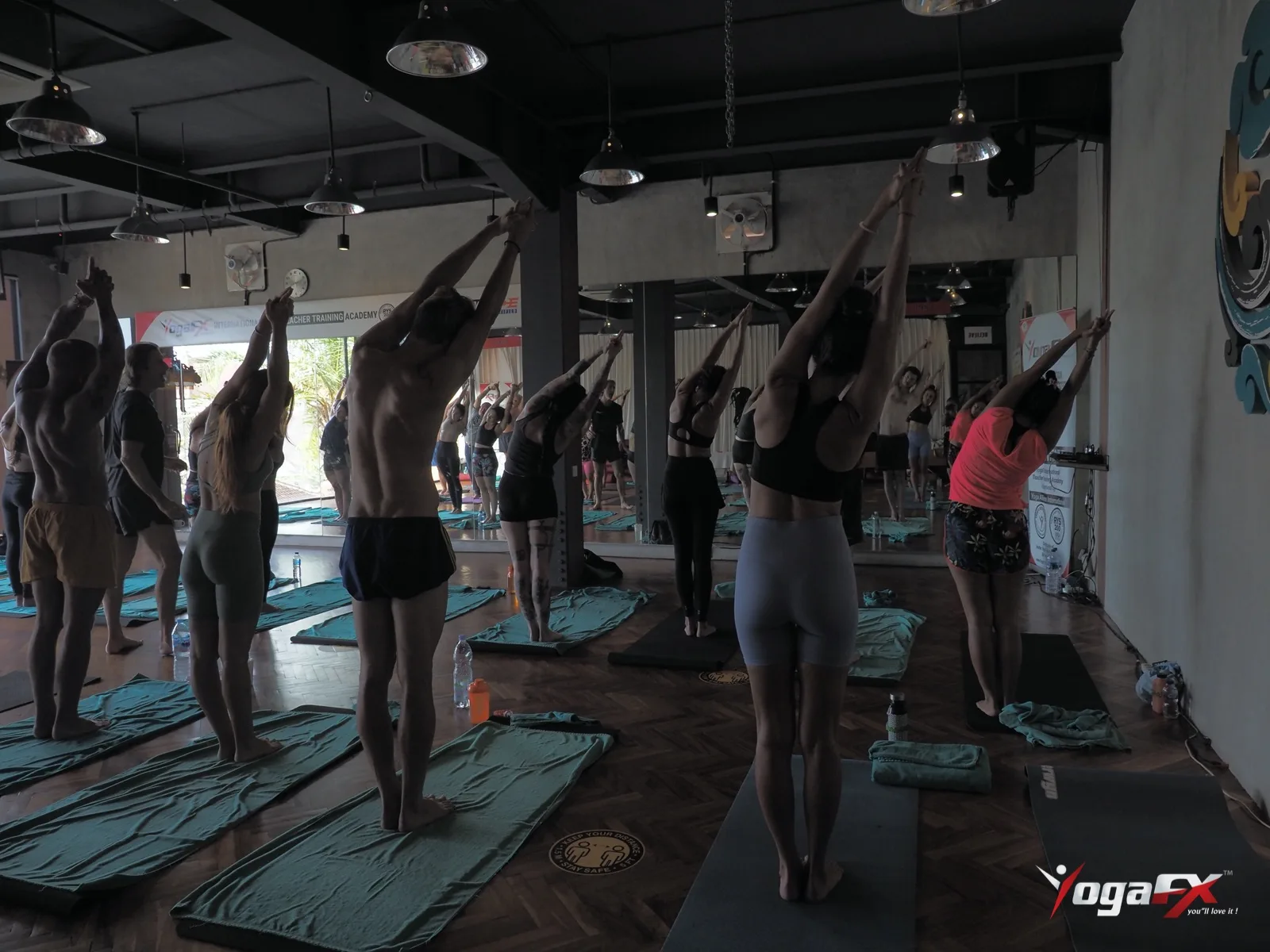
Utkatasana arrives early in an Original Hot 26&2 class, right after the first two standing postures. Your muscles are warm by then, so the pose is the first real test of leg stamina. For the full posture order and the Bikram-style teaching of each foot position, see the part-by-part breakdown on our sister site.
This guide comes at it from another side. It follows the pose through the legs of people who already train hard in Britain, and it shows how to hold the posture safely before you chase depth.
How Long You Hold Awkward Pose, and What Each Part Feels Like
You do the posture in three parts, and each part uses a different foot position. You hold each one for 10 seconds, then you repeat the set. That gives you six holds in total, or about a minute of squat time. Because the timing never changes, you can compare one class with the next.
- Part 1, heels down. Weight goes back into the heels, and the thighs travel towards level with the floor.
- Part 2, high on the toes. Lift the heels, then sink about halfway. Calves, ankles and thighs now share the job.
- Part 3, feet together. Stay on the balls of the feet, bring the knees to touch and lower as far as you can control.
Part 3 asks the most because the base is narrow, the heels are up and the knees must stay glued together. Most students need several weeks before it feels steady.
The arms reach straight ahead at shoulder height. They work as a counterweight. Let them sag and the torso tips forward, which hands the effort to your lower back.
Awkward Pose and the Research: What Studies Can and Cannot Tell Us
No study tests awkward pose on its own. The research looks at whole hot yoga classes, so any claim about this single posture has to stay modest. Still, two studies help to set the scale.
In a randomised trial, Tracy and Hart, 2013, in the Journal of Strength and Conditioning Research, healthy young adults did 24 supervised sessions over 8 weeks in a heated studio. Ten people trained and eleven acted as controls. The yoga group showed increased deadlift strength and substantially better lower back and hamstring flexibility. They also showed a modest drop in body fat.
The abstract calls it an exploratory study. So it supports the idea of leg and back strength gains, and nothing more specific.
Energy cost is the second piece. A 2014 study in Alternative Therapies in Health and Medicine measured 24 people through a standardised 90-minute class. The mean energy expenditure was 286 kcal, with a range from 179 to 478 kcal. The authors classed the postures as light-to-moderate intensity by American College of Sports Medicine standards. That figure covers the whole class, not one posture.
For athletes, the lesson is simple: a hot class is a useful supplement to training, not a replacement for it. It is not a magic leg-day fix either. Light-to-moderate means exactly that, and your own fitness level will change how hard it feels.
This article is general education, not medical advice. Please speak to a GP or physiotherapist before you start hot yoga if you have heart, blood pressure, knee or back problems.
How Awkward Pose Lands for UK Runners, Footballers and Lifters
The table below shows where each type of athlete usually feels the pose, what goes wrong, and what to do about it. Use it as a starting point, not a rule.
| Athlete | Where it bites | Common fault | Fix to try |
|---|---|---|---|
| Runner | Calves, ankles and front of the thigh | Heels drop in Part 2 | Choose height on the toes over depth |
| Footballer | Quads, hip flexors and inner thighs | Knees drift apart in Part 3 | Sit shallower and squeeze the thighs together |
| Lifter | Quads and glutes | Torso leans forward to cope with stiff ankles | Reduce depth until the chest stays tall |
| Desk worker returning to sport | Thighs and lower back | Arms drop below shoulder height | Keep the arms level and use them as an anchor |
If you run, the same ankle and calf work is covered in our guide to hot yoga for runners. Footballers will find the hip and groin side in yoga for footballers. And if you lift, the question of strength versus endurance is covered in whether hot yoga builds muscle.
Awkward Pose at a Glance
How to Hold Awkward Pose Safely: Five Rules
Most strain in awkward pose comes from rushing for depth, so the rules below keep the load on your thighs and off your joints. They apply whether you run, play five-a-side or train in a commercial gym.
- Torso first. Keep your chest tall in all three parts. If you lean, you are too deep.
- Knees follow the toes. Over the second toe in Part 1, in line with the feet in Part 2, and together in Part 3.
- Heels do their job. Stay heavy in Part 1 and high in Part 2. Do not let the heels sink for extra depth.
- Breathe through the hold. A held breath makes the thighs shake sooner, so keep the breath slow and steady.
- Stop at sharp pain. A thigh burn is normal. A sharp pain in a joint is not, so come out and tell your teacher.
Depth comes last
The order matters. In the YogaFX room we ask students to protect three things in sequence: an upright torso, correct knee tracking, and only then depth. If a knee bothers you, stay shallow and check with a healthcare professional if the pain is new. For wider safety questions, see our guide on is hot yoga safe.
What heat changes
The 40°C room makes the muscles feel looser, but looser is not the same as stronger. You can slide into positions that your joints are not ready for. Drink water before class, take your time in the first few weeks, and treat depth as something you earn.
A Four-Week Build for Awkward Pose
Progress is easiest to see when the pose never changes. The plan below gives you a simple order of priorities. Adjust it if your teacher advises something different.
| Week | Part 1 depth | Part 3 depth | Main focus |
|---|---|---|---|
| 1 | Shallow, chest tall | Shallow, knees together | Learn the three foot positions |
| 2 | Thighs towards parallel | Slightly deeper | Keep the heels high in Part 2 |
| 3 | Closer to parallel | Parallel, knees together | Breathe steadily through every hold |
| 4 | Parallel with a tall chest | Parallel or a little below | Stay active for the full 10 seconds |
Many people hit a wall in week two, since the novelty fades while the thighs still burn. That is normal. Keep the same depth for another class or two, and the pose usually settles down.
Common Faults UK Students Bring From the Gym and the Pitch
The gym habit: pushing the knees forward
Lifters often chase depth by letting the knees travel far past the toes. Held for a full count, that loads the front of the knee. Send the hips back towards the heels in Part 1 instead, and the thighs take the strain.
The pitch habit: knees collapsing inwards
Footballers cut and turn all season, so tired knees tend to cave in. Think about pushing the knees out along the line of the toes. In Part 3, draw the inner thighs together and keep the kneecaps level.
The road habit: sitting back on tight calves
Runners with tight calves often let the heels sink in Part 2 to get lower. It feels kinder, but it deletes the very work the part is there to give. Stay high and accept a shallower sit.
Whatever your sport, the common thread is the same. Honest depth beats borrowed depth. If your alignment holds for all six holds, you are doing the pose well, however shallow it looks.
Before Your First Hot Class: UK Health Checks
A 40°C room is not for everyone on every day. Many UK studios ask new students to fill in a short health form. If you have a heart condition, high or low blood pressure, are pregnant, or have a recent injury, speak to your GP first.
- Eat lightly a couple of hours before class, and arrive hydrated.
- Bring a large towel and a water bottle. You will sweat a lot, and a slippery mat makes the pose harder.
- Wear fitted shorts or leggings. Loose kit rides up when you sit low.
- Tell the teacher about any knee, hip or back history before class begins, not during it.
Rest days matter too, because tired legs shake sooner. If you ran a long session or lifted heavy legs yesterday, go gently and keep depth modest. Awkward pose is a good test of how recovered you really are.
What YogaFX Trainees Say About the Training Room
Awkward pose is one of the postures trainees learn to teach in the 6-day hybrid MasterClass in Bali. We cannot offer a review about this pose alone, but these graduate comments show what the room feels like. They come from our YouTube review videos.
“I’m quite proud of the fact that I stuck it for the six days, didn’t give up.”
Karen, YouTube review, 2025
“This is really hard and it’s really wonderful at the same time.”
Liz, YouTube review, 2025
“Thank you my team, all of you, for being very supportive during the dialogue.”
Maha, YouTube review, 2025

The theme repeats across these comments. The work is hard, the room is supportive, and people finish prouder than they started. That is a fair description of awkward pose too.
Learn Awkward Pose With Mr. Ian Terry in Bali
Reading about a posture only gets you so far. A good teacher can spot a forward lean or a dropped heel in a second. At YogaFX, Mr. Ian Terry teaches each posture and the dialogue behind it in the 6-day hybrid MasterClass. It pairs an online pre-course with an intensive in Bali.
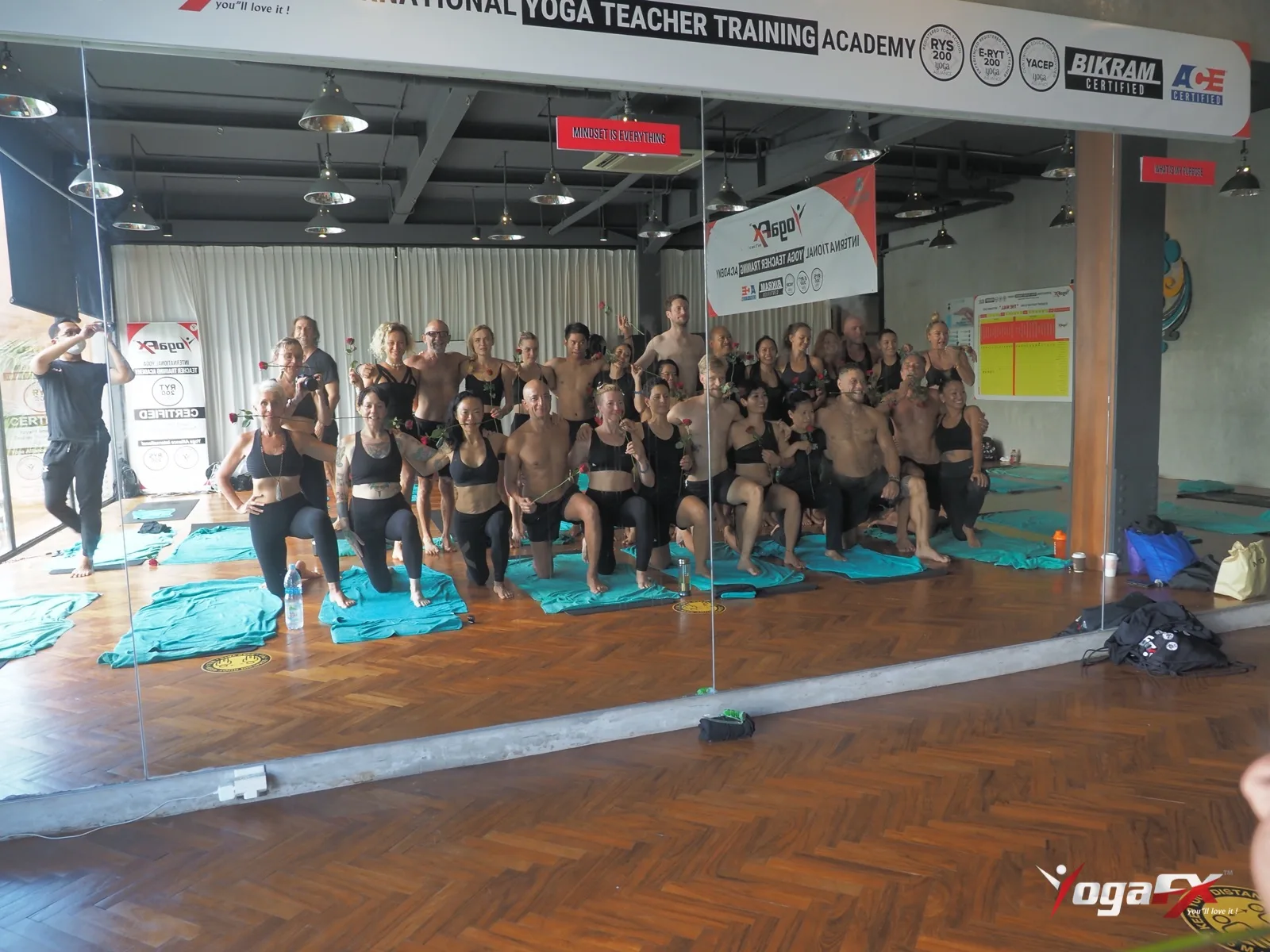
Graduates earn a Yoga Alliance RYT 200 certification plus the Bikram Hot 26&2 200-hour certification. Mr. Ian Terry is Founder and Lead Instructor, E-RYT 500, and YogaFX has trained more than 1,500 graduates from over 80 countries since 2017. The current Early Bird price is US$1,899, and the next batch runs from Sunday 24 January to Friday 29 January 2027.
If you live in the UK and are weighing a local course against Bali, our guide to Original Hot 26&2 teacher training from the UK sets out costs, travel and time off side by side. And if you are in Bali already, the studio in Seminyak offers a Free 1-Day Guest Pass, so your first class is free.
FAQ
What are the benefits of awkward pose in yoga?
Awkward pose trains thigh, glute and calf endurance while the torso stays upright. Research on whole hot yoga classes suggests strength and flexibility gains, but no study tests this posture alone. Treat it as a useful part of a class, and consult a healthcare professional if you have knee or back concerns.
Is awkward pose the same as chair pose?
The shapes are close, but the teaching differs. Chair pose is normally a single hold, often with the arms overhead. Awkward pose in an Original Hot 26&2 class runs through three set foot positions with the arms reaching forward. Because nothing changes between classes, you can see your own progress clearly.
Can lifters do awkward pose after leg day?
You can, but go gently. Tired quads shake sooner, and fatigue can pull your knees out of line. Keep your depth shallow, keep your chest tall and stop if you feel sharp pain in a joint. A lighter class a day or two later is often easier on the legs.
What cues help most in awkward pose?
Three cues cover most problems: keep your chest tall, press your knees out over your toes, and stay high on your toes in Part 2. If you only remember one, choose the upright chest. Once the torso stays tall, the legs work properly and the lower back stays quiet.
How can runners and footballers avoid knee strain in awkward pose?
Put alignment ahead of depth. Keep the knees over the toes, keep them together in Part 3, and lower only as far as you can control. If a knee already niggles, stay shallow and ask a physiotherapist before building depth over the coming weeks.
Still have questions? Message Mr. Ian and the YogaFX team on WhatsApp and we will answer them personally.