Camel pose (Ustrasana) is a kneeling backbend, and feeling nervous about it is normal. Start with your hands on your lower back, press your hips forward, lift your chest and let your head follow only if your neck feels free. Stop at tension, not pain, and come up slowly.

This guide is for British students who like the idea of a deep backbend but dread the moment they kneel up in a 40°C room. It covers a calm way in, a safe depth, the signs to ease off and the health checks worth doing first. It’s general advice from the YogaFX team, not a substitute for your GP.
Why Camel Pose Makes UK Students Nervous (and Why That’s Normal)
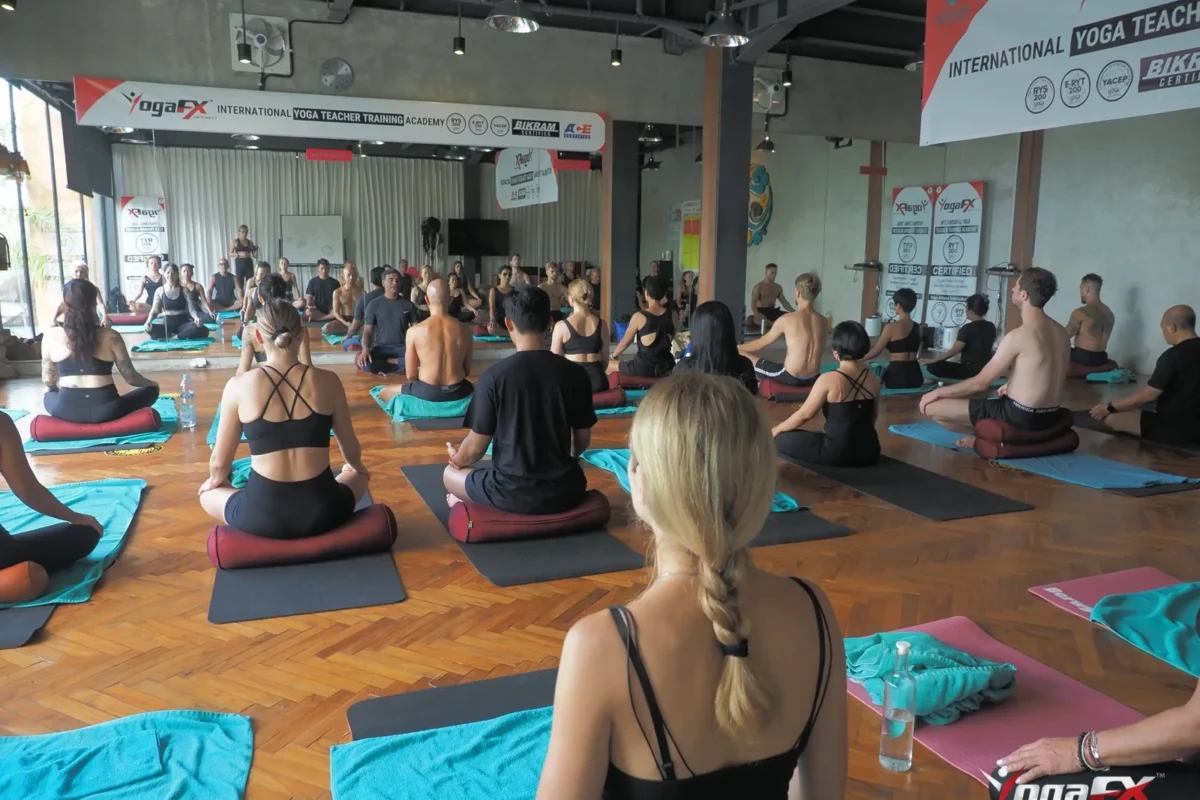
Most people don’t fear the stretch itself, because what worries them is what they can’t see. In camel pose you kneel up, lean back and lose sight of the floor, the wall and your own hips. Your neck, your lower back and your balance are all asked to cope at once.
Add a hot room and a first-time audience, and the nerves make sense. Your heart rate rises, your breath shortens and every small twinge feels bigger. So the first job isn’t depth. It’s feeling safe enough to breathe slowly while you work.
Here’s the good news. Camel pose is built from small, checkable moves, so you can stop at any one of them. For example, nobody in the room is judging how far back you go. Your teacher would always prefer you to stop early and come back tomorrow.
Camel Pose in 5 Calm Steps for a Nervous Beginner
The exact dialogue is taught live in class, so we don’t reproduce it here. What follows is a plain-language map for the first weeks. In a real class, always follow your teacher.
- Kneel with the thighs upright. Set your knees about hip-width apart and rest the tops of your feet on the floor. If your ankles complain, tuck the toes under instead.
- Put both hands on your lower back. Your fingers point down and your elbows draw gently towards each other. The hands are a support, not a lever.
- Lift the chest before anything leans back. Let your breastbone rise first. That spreads the bend along the whole spine instead of folding it in one spot.
- Press the hips forward. They travel over the knees as the chest opens. If your hips stay behind your knees, your lower back takes the whole bend.
- Come up chest first and rest. Lift your head last, sit back on your heels and breathe before the second set.
For most beginners, steps one to four with the hands still on the back is camel pose. Reaching for the heels is optional, so it can wait weeks, or months. The hips and chest matter far more than touching your feet.
If your nerves spike, shrink the pose. Hold the position you reached a moment ago, lengthen your exhale and let your shoulders drop. Because a slower breath settles the heart rate, the pose usually feels more manageable within a few breaths. If it doesn’t, come out and rest. That is a skilled choice, not a failure.
Your Camel Pose Nerves Check: Match the Worry to a Fix
Different fears need different answers. Table 1 pairs the worries we hear most from UK students with a simple fix for each one.
| The worry | What’s usually behind it | A calm fix |
|---|---|---|
| “My neck will snap back” | The head leads the movement and the throat feels tight | Keep the chin slightly lifted and let the head follow only if the neck feels free |
| “My lower back will pinch” | The hips stay behind the knees, so one spot does all the bending | Press the hips forward first and keep your hands on your lower back |
| “I’ll feel dizzy and fall” | Heat, low fluids, a held breath or standing up too fast | Breathe slowly, rise chest first and sit back on your heels to rest |
| “I can’t reach my heels” | Chasing a shape instead of feeling the work | Stay with your hands on your back. It’s a complete version of the pose |
| “Everyone is watching” | Nerves in a mirror room | Look at your own breath. Most people are busy with their own pose |
Camel pose nerves at a glance
How Deep Should You Go? A Traffic-Light Guide to Camel Pose
Nobody awards points for the deepest camel pose. Your safe depth is wherever the breath stays slow, the hips keep travelling forward and the effort sits in your thighs and chest. Use the colours in Table 2 and drop a zone on any day that feels heavy.
| Zone | What you feel | What to do |
|---|---|---|
| Green | Warm work in the thighs and chest, slow breath, long neck | Stay here and keep breathing. Add depth only over several classes |
| Amber | Tight throat, shallow breath, a dull ache in the lower back | Lift the head, return to hands on the back and take one step shallower |
| Red | Sharp pain, tingling, numbness, nausea or a pounding head | Come out slowly, sit, sip water and tell your teacher. Skip the next set if needed |
If you’re still learning how the floor backbends fit together, read our guide to cobra pose in a UK hot studio. It’s the first backbend lying down, and it trains the same habits you need on your knees.
Camel Pose in a Hot Room: Dizziness, Heat and Getting Up Slowly
Heat changes how a backbend feels. Your muscles are warm and willing, so you can lean further than your breath is ready for. Dizziness afterwards often comes down to fluids and rising too fast, not the stretch itself.
The Cleveland Clinic explains that orthostatic hypotension causes dizziness or lightheadedness when you stand, and that dehydration can be one cause. Its advice is to give yourself more time to move into a standing position and to drink plenty of water. Both habits fit camel pose well, because you rise from a deep lean.
According to the Mayo Clinic, signs of heat exhaustion include heavy sweating, faintness, dizziness, nausea and a headache. It says to stop all activity and rest, move somewhere cooler and drink cool water or a sports drink. A hot room isn’t an emergency, but those signs are a good reason to sit down.
Our guide to whether hot yoga is safe goes through the wider heat checks. Before class, sip water through the day, eat lightly and arrive early enough to settle your breathing.
What Health Sources Say About Backbend Injuries
Nervous students often ask whether camel pose is dangerous. The honest answer is that yoga is generally considered safe for healthy people when it’s done properly, and the risk is not zero. The US National Center for Complementary and Integrative Health says the most common yoga injuries are sprains and strains, and that serious injuries are rare.
The same page gives three pieces of advice worth following:
- Learn with a qualified teacher. It says learning yoga alone without supervision has been linked with higher risk.
- Respect the heat. It warns that hot yoga carries special risks from overheating and dehydration.
- Talk to a professional first if you have a health condition. It names examples such as lumbar spine disease, severe high blood pressure, balance problems and glaucoma.
A 2016 study in the Orthopaedic Journal of Sports Medicine counted yoga injuries seen in US emergency departments from 2001 to 2014 (Swain and McGwin). It estimated 29,590 cases. The trunk was the most common area (46.6%), and a strain or sprain was the most common diagnosis (45.0%). Most people, 94.6%, were treated and sent home.
Those numbers come from hospital records only, so they miss minor niggles, for instance a tweaked neck that settled at home. They also cover all yoga, not camel pose alone. They do support the same message: go slowly, follow a good teacher and stop when something feels wrong.
NCCIH also says that for low-back pain the evidence suggests only a slight benefit from yoga. So don’t expect camel pose to fix a sore back. We make no claim that it treats any condition, and a GP is the right first call for ongoing pain.
Before You Book: A UK Health Check for Camel Pose
Because a deep backbend asks a lot of the neck, spine and circulation, a quick check is sensible. If any of the points below apply to you, speak to your GP or a physiotherapist before you practise, and tell your teacher before class.
- A current or past back, neck or shoulder problem, or a recent injury or surgery.
- High or low blood pressure, or a habit of feeling dizzy when you stand.
- Balance problems or glaucoma.
- Pregnancy. NCCIH says to avoid hot yoga while pregnant because it can cause overheating.
- Pain, tingling or numbness that doesn’t settle after class.
This is general information, not medical advice. Please consult a healthcare professional if you’re unsure. If you notice weakness or numbness in both legs, or changes in your bladder or bowels, get urgent medical help straight away.
If you’d like the whole sequence before you commit, our guide to the 26 postures for desk hips and gym shoulders shows where each backbend sits in a class.
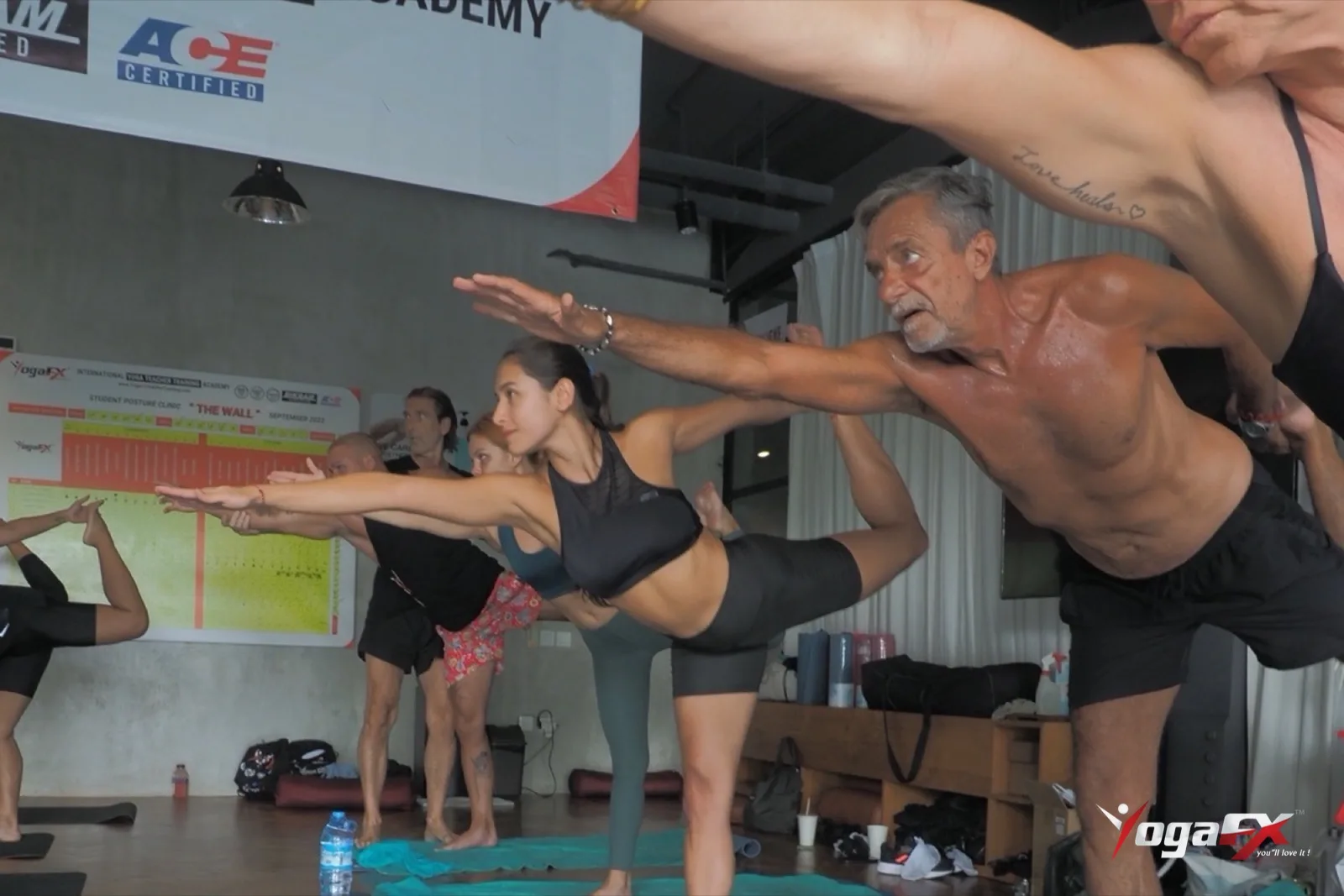
How Mr. Ian Terry Teaches Ustrasana to Trainees
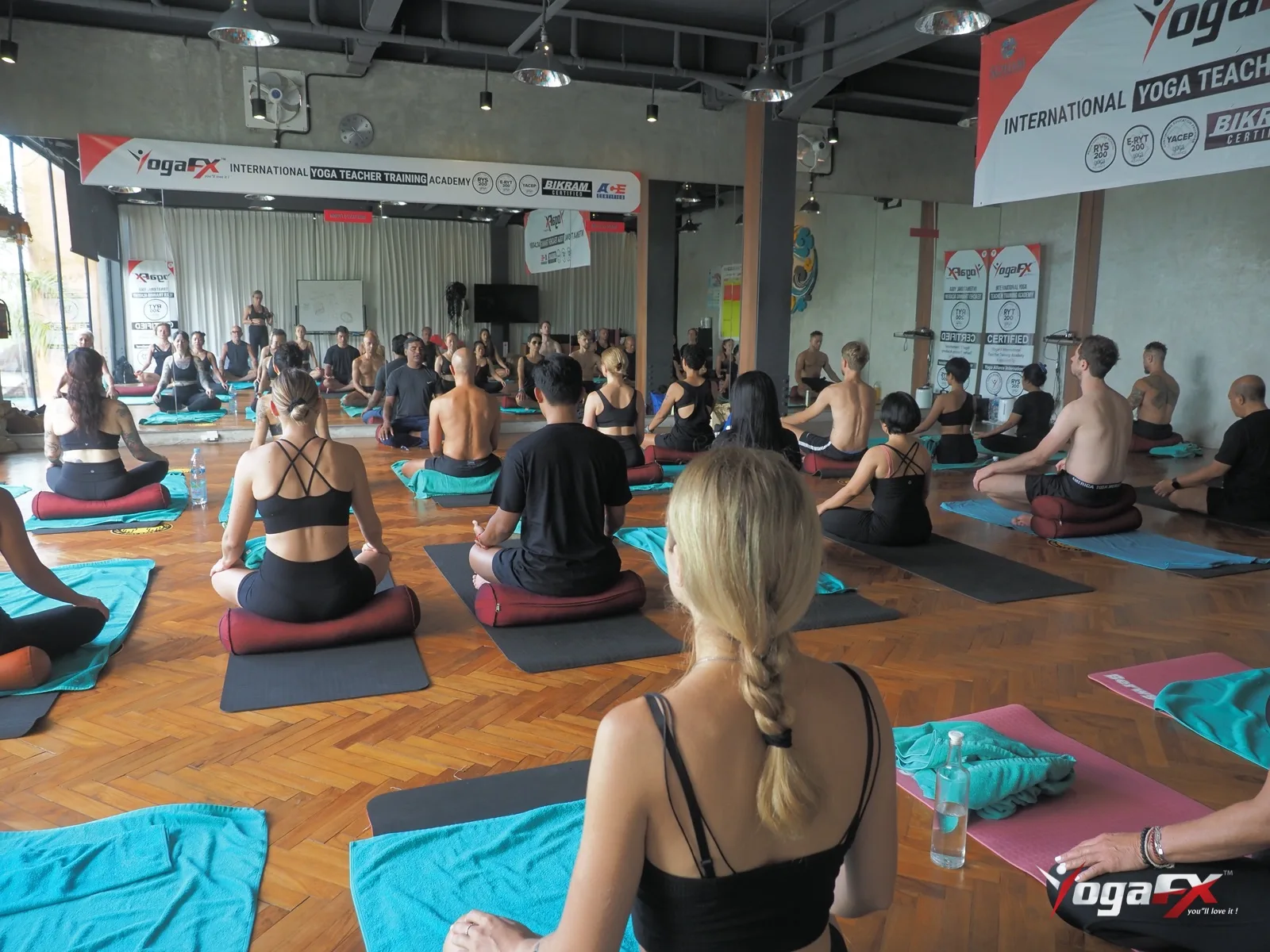
The teacher training at YogaFX in Bali is led by Mr. Ian Terry, an E-RYT 500 with more than 12,000 hours of teaching behind him. Between 2014 and 2019 he spent five years training with the founder of the Bikram Hot 26&2 method. With a posture like camel pose, you can hear that history in how trainees are taught to speak.
Trainees practise cueing a nervous student with words alone. They learn to name where the hips should go, to spot a head thrown back and to say less when a student needs calm. Learning to teach a backbend safely mostly means learning when not to push.
The same posture is cued in the method’s home setting too. If you want a second view, read how camel pose sits inside the 26 and 2 floor series.
The training is a 6-day hybrid: an online pre-course, then an intensive in Bali. The next batch checks in on Sunday 24 January 2027 and checks out on Friday 29 January 2027. Graduates leave with a Yoga Alliance RYT 200-Hour certificate and the Bikram Hot 26&2 200-Hour International Yoga Certification. The Early Bird price is US$1,899, and there’s no limit on group size.
Weighing it against a course at home? Compare training in Bali versus the UK first, and see how injury prevention is taught on the course. Visiting Bali? The Seminyak studio offers a Free 1-Day Guest Pass, so you can feel the room before you commit.
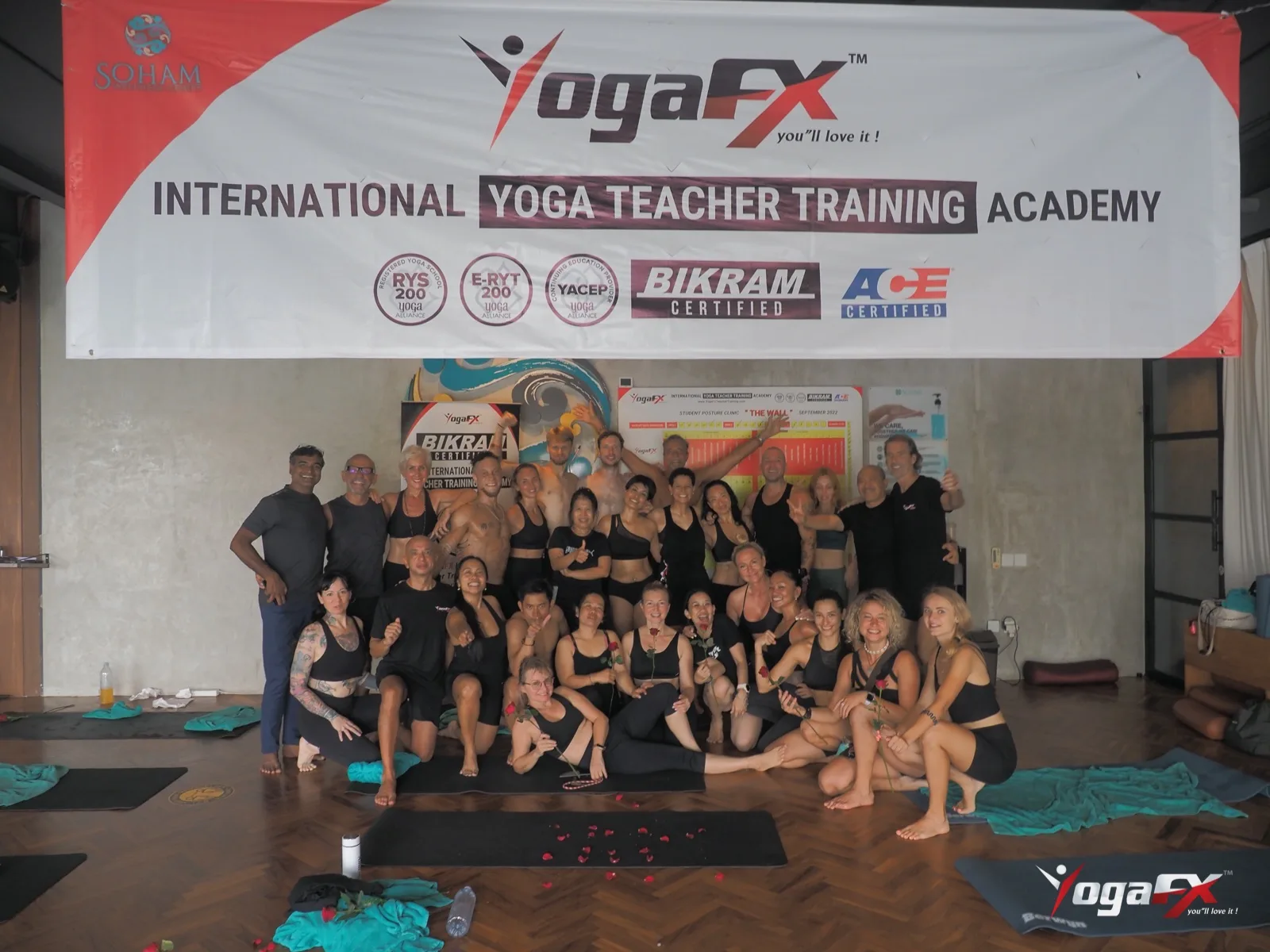
What YogaFX Students Say About Learning in Bali
Students rarely describe one posture when they look back. They talk about the group and the teacher. Here are two reviews from YogaFX students, with first names only.
A room full of strangers quickly become your family of friends, & your biggest cheerleaders.
Lisa, Google review, 2026
Siobhan, in a YouTube review from 2025, said the practice taught her about herself and made her believe she was enough to do this. That’s a lightly edited transcript. Her short video is below.

A good camel pose also depends on the postures that come before it. By the time you kneel up, your hips are warm and your shoulders are loose, so the pose should feel like the next step rather than a sudden demand. If you arrive late or skip the warm-up, tell your teacher and keep the depth shallow.
A Short Routine Before Your Next Camel Pose
You don’t need a special routine. Instead, a few habits make the pose steadier when it arrives.
- Hydrate early. Sip water earlier in the day so you’re not catching up in the room.
- Practise the hip press at home. Kneel, hands on your lower back, and move your hips forward a few inches for a few slow breaths.
- Breathe before you bend. Our guide to pranayama breathing in hot yoga explains how a slow breath calms the nerves.
- Compare your two sets. After the first, ask what you could soften. The second set is your answer.
Expect the first weeks to feel clumsy. That’s normal, because your hips and chest are learning a new habit. Two or three classes a week are plenty for most people, and rest days matter as much as the work.
FAQ
Is camel pose dangerous for beginners?
Camel pose is safe for most healthy beginners at a modest depth, with the hands on the lower back. The risk rises when you chase the heels, throw the head back or practise alone. Learn with a qualified teacher, stop at pain, and check with a doctor first if you have a health condition.
Why does camel pose make me feel dizzy or sick?
Dizziness in camel pose can come from heat, low fluids, a held breath or rising too fast. Come up slowly with your chest leading, sit back on your heels and sip water. Mayo Clinic lists dizziness and nausea among heat exhaustion signs, so rest and skip the next set if it lingers.
Can I do camel pose with a bad back?
Speak to your GP or a physiotherapist before you try it, and tell your teacher. A deep backbend can aggravate some back problems. If you get the green light, keep your hands on your lower back, press your hips forward and stop at any pinch, tingling or sharp pain.
How do I prepare my body for camel pose?
Drink water earlier in the day, arrive early and settle your breathing. At home, kneel with your hands on your lower back and press your hips forward a few inches for a few slow breaths. In class, follow your teacher’s cues and keep the depth modest until the pose feels steady.
Do I have to touch my heels in camel pose?
No. Reaching the heels is optional, and many students stay with their hands on the lower back for weeks or months. That version still stretches the front of the hips and chest. Your hips travelling forward and a slow, steady breath matter far more than where your hands end up.
Still have questions? Message Mr. Ian and the YogaFX team on WhatsApp and we will answer them personally.