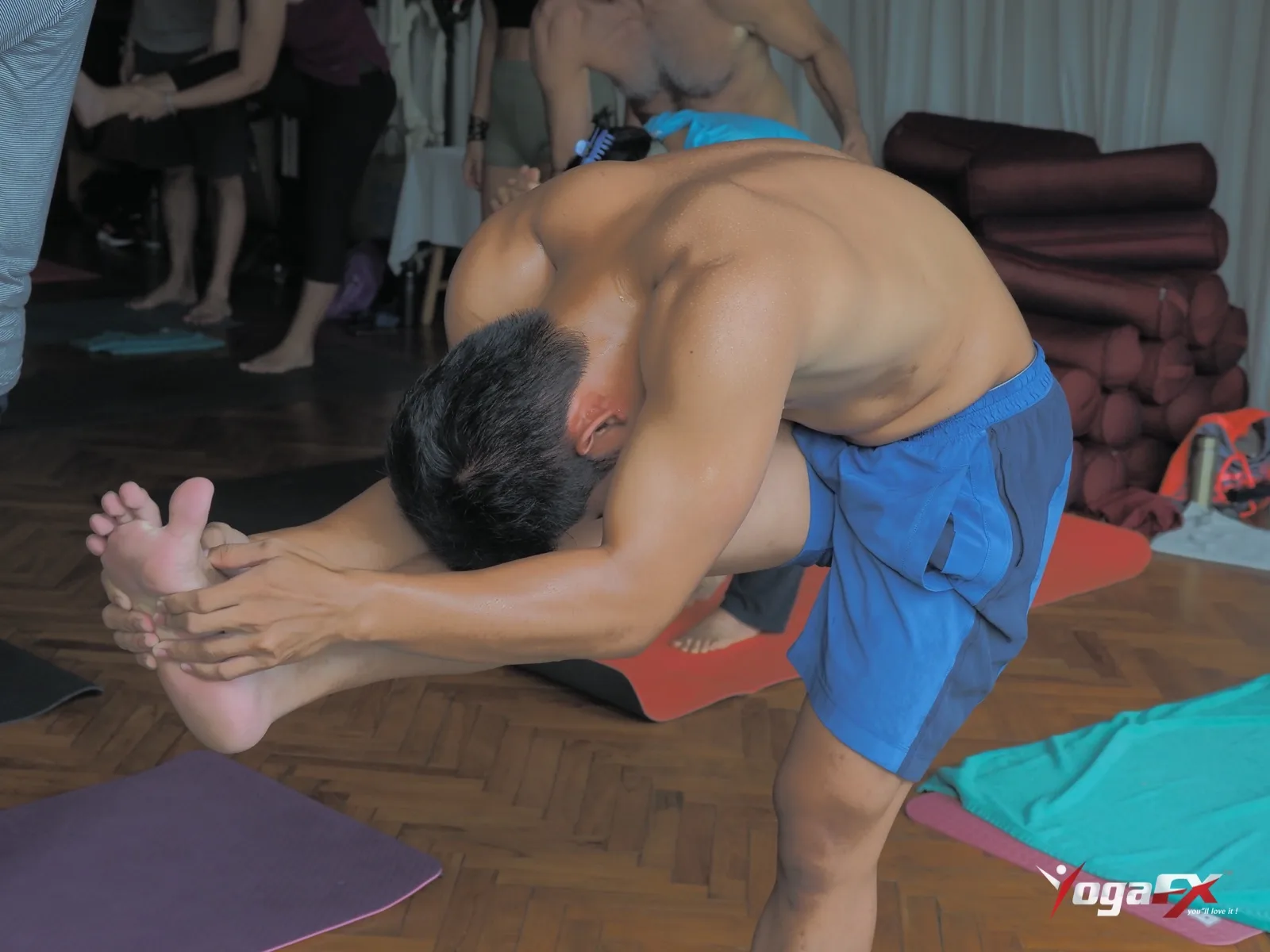
Standing head to knee pose (Dandayamana Janushirasana) is a one-leg balance. You hold the raised foot, kick that leg straight and fold your forehead towards the knee. After a desk day, the locked leg is the hard part. A bent knee and a tall chest are your first fixes.

Standing Head to Knee Pose: Why It Feels Hard After a UK Desk Day
Most people blame their balance. In practice, the stretch is the bigger problem. This posture asks one leg to hold your full weight while the other leg straightens at hip height. That combination exposes tight hamstrings and stiff hips very quickly.
If you commute, sit through meetings and then head to a heated studio, your legs arrive stiff. That is normal. The fixes below are written for exactly that student, and they work in any UK hot room or at home.
This guide covers the steps, three honest versions, a fix for each tight spot and a four-week plan built around a normal working week. It sits inside the Hot 26&2 class, which is 26 postures and 2 breathing exercises over 90 minutes at about 40°C and 40% humidity. If you want the full running order, here is a guide to all 26 postures in order.
How to Do Standing Head to Knee Pose in Six Steps
These steps are a map, not a script. In class, the teacher gives exact timing and wording. Until then, practise near a wall, as the NHS balance exercises page advises for any balance work.
- Pick your standing leg. Stand tall, feet together, then shift your weight over one foot.
- Find a fixed point. Look at your own eyes in the mirror, or at one spot at eye level.
- Grab the foot. Lift the other knee and wrap both hands around the foot, fingers locked.
- Lock the standing knee. Tighten the thigh so the kneecap lifts. Keep the leg firm, not hyperextended.
- Kick forward. Press the heel away and straighten the leg only as far as your back stays long.
- Fold and return. Bring your elbows down and your forehead towards the knee. Then lift your head first and release.
Every posture in the class is done twice. Because of that, your second set shows what the first set taught your body. Notice it, because it is the quickest feedback you will get.
Which Version of Standing Head to Knee Pose Fits Your Hamstrings?
Choose a version by what your back does, not by how the pose looks. If your spine rounds, the leg is too straight for today. Use the table to pick your starting point.
| Version | Kicking knee | Hands and chest | Try it when |
|---|---|---|---|
| Foundation | Bent, foot held close to the body | Both hands on the foot, chest upright | Your back rounds as soon as you reach for the foot |
| Working | Softly bent, foot a little in front | Hands on the heel, chest tall, tiny fold | You can hold steady for several breaths on each side |
| Full | Straight, locked | Hands tight on the foot, forehead towards the knee | Your standing leg is steady and your back stays long |
Most UK desk workers spend their first weeks in the foundation version. That is a sensible place to be. Stay there until the standing leg stops shaking, then move on. Skipping stages is how knees and lower backs get sore.
Why Tight Hamstrings and Desk Hips Make the Locked Leg Hard
Long hours of sitting are linked to tight hamstrings. A 2016 study of 272 office workers in Lahore tested hamstring flexibility after 6 to 8 hours of work. It found reduced flexibility in 233 of 272 people, or 85.7%. The authors linked longer sitting with worse results.
Treat that number with care. It was a single group in Pakistan with no comparison group, so it shows how common tight hamstrings are, not exactly why. Even so, it matches what teachers see in UK studios every week.
Hips matter too. If the front of your hips feels stiff, the standing leg struggles to stay upright and your pelvis tips. That is why squaring the hips is a separate cue in class, not an afterthought.
Fixes for Tight Hamstrings in Standing Head to Knee Pose
Start with the fix that matches your problem. Each one changes a single thing, so you can tell what worked.
| Tight spot | How it shows | Fix to try | Check after |
|---|---|---|---|
| Back of the kicking leg | Knee bends or the back rounds | Keep a soft bend and lift the chest first | Can you breathe slowly through the nose? |
| Front of the standing hip | Hip slides sideways, pelvis tips | Press the hip bones forward and tighten the thigh | Do both hip bones face the mirror? |
| Calf and ankle | Foot sits on its edge and wobbles | Spread the toes and press through the whole foot | Is your weight even across the sole? |
| Shoulders and upper back | Elbows flare and the neck strains | Lift the elbows less and fold from the chest | Is your neck long and relaxed? |
Add a short habit around the pose. The NHS flexibility exercises page suggests flexibility work at least twice a week and moving only as far as is comfortable. That is a sensible rule for a hot room too.
- Stand up every hour. Walk for two minutes and straighten both knees.
- Do a wall version at lunch. Hold the foot with a bent knee for a few breaths on each side.
- Skip bouncing. Hold the shape with control, then come out slowly.
Five Mistakes That Spoil Standing Head to Knee Pose
Most errors in standing head to knee pose come from rushing the fold. Fix the base first, and the shape tends to follow. Watch for these five:
- Locking the knee backwards. A firm standing leg means a tight thigh, not a joint pushed past straight.
- Gripping with the shoulders. If your shoulders reach your ears, you are pulling, not folding.
- Dropping the chest. Reaching the knee with a rounded back only moves the stretch into your spine.
- Letting the foot swing out. Keep the heel pointing forward so both hip bones stay level.
- Holding your breath. A tight breath makes the standing leg shake more, not less.
Pick one mistake per class and work on it alone. Changing five things at once is how people give up on the posture.
Health Checks Before You Try Standing Head to Knee Pose
One-leg balance in a hot room deserves a quick check first. Standing head to knee pose loads the standing knee, hip, ankle and lower back. It also asks you to stay upright while you fold, which can bring on light-headedness.
- Old injuries. If a knee, hip, ankle or back injury still bothers you, speak to a GP or physiotherapist first.
- Dizziness. If you feel faint on one leg, sit down, breathe and tell the teacher.
- Your teacher. Mention any niggle before class, so they can offer the foundation version.
Those checks take a minute, and they make every later session safer.
Balance First: Practising the Standing Leg Safely
The standing leg decides how the whole pose feels. If it shakes, the kicking leg cannot relax. So work on balance before you chase the fold.
The NHS balance exercises page describes a simple one-leg stand. You face a wall with your fingertips touching it, lift one leg and keep your hips level with a slight bend in the other leg. You hold for 5 to 10 seconds and repeat three times on each side. It also suggests working near a wall or stable chair, just in case.
Borrow that idea. Do your first practice at home next to a wall, then bring it to class. Three habits settle most wobbles:
- Fix your gaze. A moving head means a moving body.
- Spread the foot. Press the big toe, little toe and heel evenly into the floor.
- Slow your exhale. A long breath out calms the shaking in the standing thigh.
Wobbling is not failure. It is your ankle making fast corrections, and it settles with repetition. If you feel dizzy, sit down and tell your teacher. For wider safety questions, read our answer to is hot yoga safe.
What the Research Says About Flexibility and Heat
Evidence for this exact posture is thin. Studies look at whole classes, not single postures, so keep claims modest. Still, two findings are useful.
First, a 2013 randomised controlled trial in the Journal of Strength and Conditioning Research compared 24 hot yoga sessions over 8 weeks with a control group. Ten people practised yoga and eleven did not. The yoga group showed increased deadlift strength, substantially increased lower back and hamstring flexibility, increased shoulder flexibility and modestly lower body fat. It is a small study, so treat it as encouraging, not proof.
Second, heat does not make the pose cardio-hard. In an ACE-sponsored study led by Porcari and colleagues, 20 healthy volunteers did a 60-minute basic class and a 60-minute hot class. Heart rate averaged 57% of maximum in the hot class and 56% in the basic one. So the heat is not a reason to push deeper into the fold.
This is general information, not medical advice. If you have a knee, hip, ankle or back problem, or you feel faint standing on one leg, speak to a doctor or physiotherapist before you practise. No posture treats a medical condition.
A Four-Week Plan Around a UK Working Week
You do not need a new routine. Add short, honest sessions to the week you already have. Two or three short sessions are enough, and rest days count.
- Week one: stand and breathe. Stand on one leg near a wall for 5 to 10 seconds, three times on each side.
- Week two: add the foot hold. Lift the knee, hold the foot with both hands and keep the chest upright.
- Week three: straighten a little. Kick forward only until your back starts to round, then stop.
- Week four: take it to class. Follow the teacher’s wording and compare your first and second set.
If a joint hurts, stop and skip that step. Sharp pain, swelling or dizziness means a conversation with a healthcare professional, not more effort.
Where Standing Head to Knee Pose Sits in the Hot 26&2 Sequence
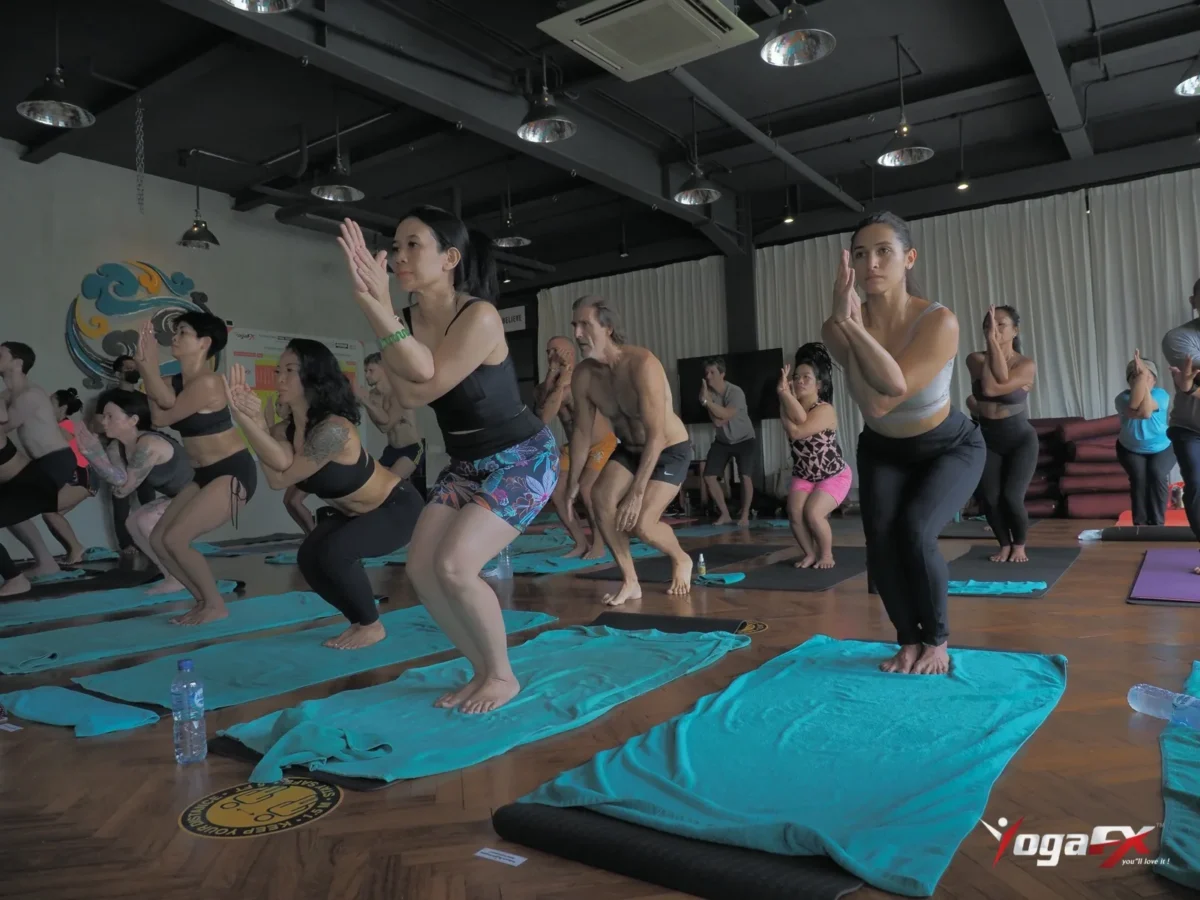
In the standing series, this posture arrives after eagle pose and before standing bow pulling pose. By then your legs are warm and your focus is switched on. That order is deliberate, and it is the same in every class.
If you also want a posture-by-posture walkthrough on our 26&2 sister site, it shows how the same posture reads in a different setting. Use it as a second opinion on the cues, not a replacement for a teacher.
How Mr. Ian Terry Teaches It in Bali
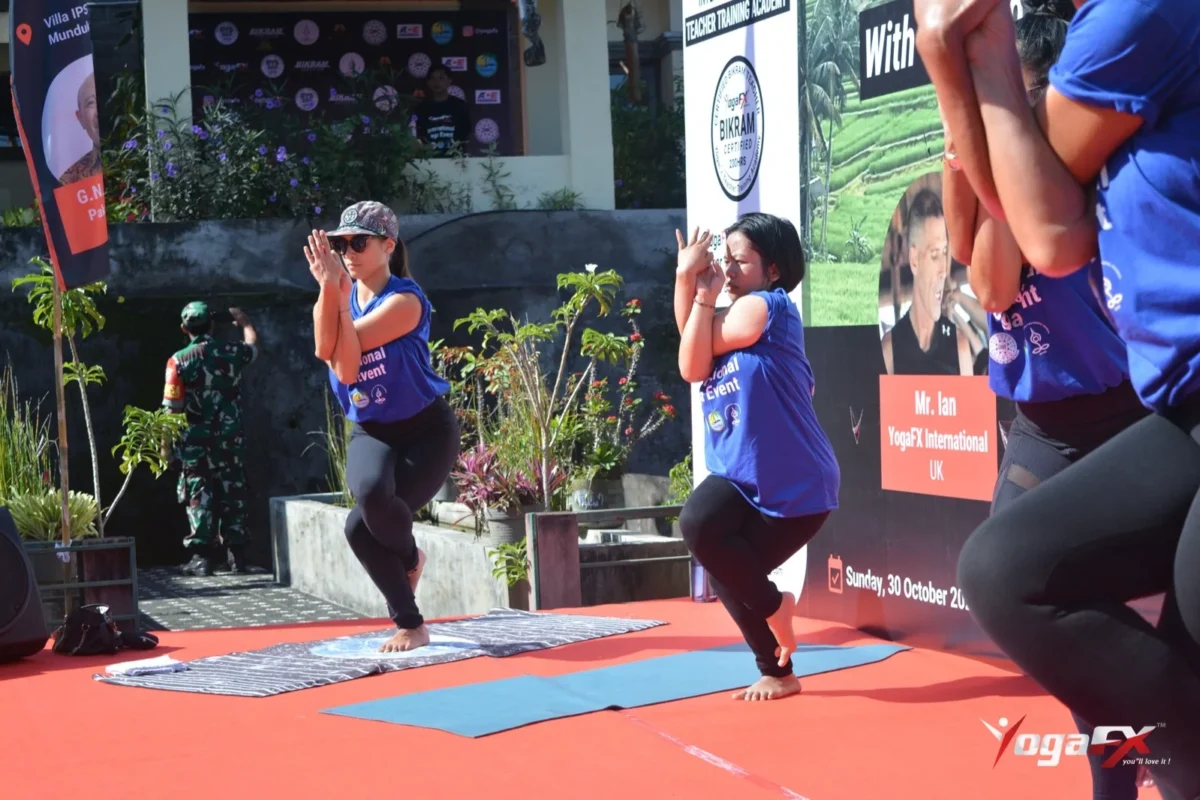
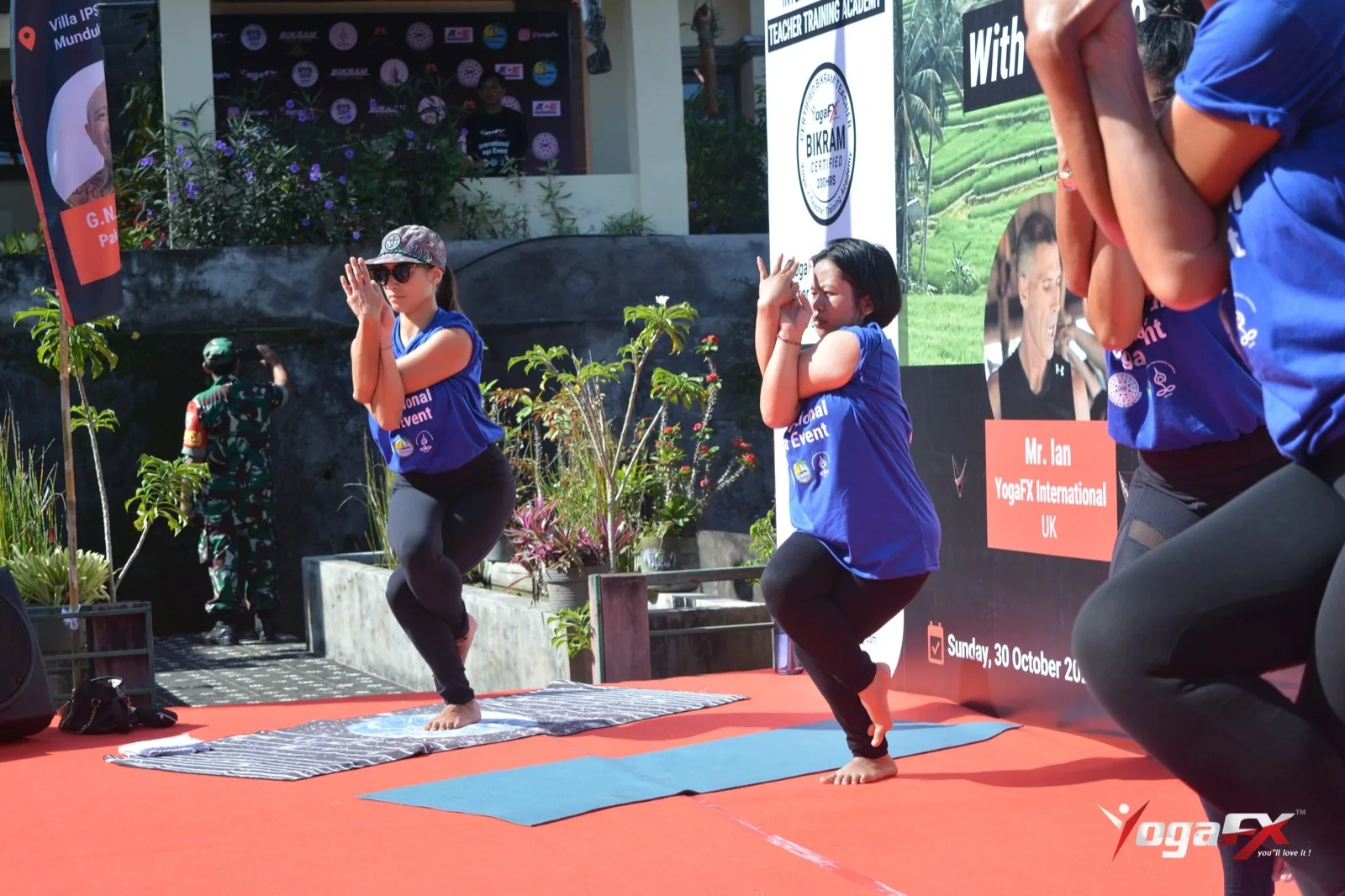
Mr. Ian Terry is the Founder and Lead Instructor of YogaFX, an E-RYT 500 teacher with more than 12,000 teaching hours. He trained for five years, from 2014 to 2019, with the founder of the Bikram Hot 26&2 method. Since 2017, YogaFX has graduated more than 1,500 teachers from over 80 countries.
In teacher training, trainees learn this posture by ear and by eye. They practise the wording, then learn to spot a sagging hip, a rounded back or a drifting foot. That skill is hard to learn from a screen. A teacher can tell you which cue you needed, and a video cannot.
What trainees say
“He teaching me yoga very well..I feel very proud to be a student of yoga FX.”
Ira, Google review, 2020
Jeanett, in a short video review from 2019, thanks Mr. Ian and the team for the inspiration she took from her training. You can watch it below.

Ari, a trainee from Bali, said in a video review that earning the certificate with a parent there to support them felt amazing. Ari also valued the friends made from many countries.
Training from the UK
If you want to teach, the Hot 26&2 MasterClass runs as six days: online pre-course work, then an intensive in Bali. It leads to Yoga Alliance RYT 200-Hour and a Bikram Hot 26&2 200-Hour International Yoga Certification. Our guide to hot yoga teacher training for UK students covers time off, travel and costs for UK applicants.
Visiting Bali first? The Seminyak studio offers a Free 1-Day Guest Pass, so your first class is free.
FAQ
How do you do standing head to knee pose?
Stand on one locked leg, lift the other knee and hold the foot with both hands. Kick that leg straight in front of you, keep your hips square and your chest tall, then fold your forehead towards the knee. Beginners can keep a bent knee and stay upright until the hamstrings loosen.
What is the Sanskrit name for standing head to knee pose?
The Sanskrit name is Dandayamana Janushirasana. Dandayamana means standing, janu means knee, shirsha means head and asana means pose. The name simply describes the shape: you stand on one leg, hold the other foot out in front and bring your head towards the knee of the straight leg.
Is standing head to knee pose good for tight hamstrings?
It lengthens the back of the kicking leg, but only if you respect your range. A small randomised trial found that eight weeks of hot yoga improved lower back and hamstring flexibility compared with a control group. Keep the knee slightly bent if your back rounds, and never bounce.
Why can’t I straighten my leg in standing head to knee pose?
Tight hamstrings are the usual reason, and long hours sitting at a desk make them tighter. Keep the knee bent, lift the chest and let the leg straighten a little more each week. If your back rounds or your standing knee aches, ease off and tell your teacher.
How is standing head to knee pose different from standing separate leg head to knee pose?
They are two different postures in the Hot 26&2 sequence. Standing head to knee pose is a one-leg balance with a foot held in front. The separate leg version is taught with both feet on the floor, legs wide apart, folding forward from the waist. Each has its own cues in class.
Still have questions? Message Mr. Ian and the YogaFX team on WhatsApp and we will answer them personally.