Is hot yoga good for anxiety? It may help some people, but nobody has proven it. The best heated yoga trials measured depression and distress tolerance, not anxiety scores. So treat a hot class as a possible extra beside care from your GP, never as a replacement for that care.

Is Hot Yoga Good for Anxiety? Five Facts for UK Men
You’re probably reading this because your head feels busy and a friend swears by a 40°C room. That’s a fair reason to look. It’s also a fair reason to slow down, because the claims online run well ahead of the research.
Mr. Ian Terry, E-RYT 500 and founder of YogaFX, has taught more than 12,000 hours of Original Hot 26&2 Yoga. At YogaFX we hold to one rule: a class can sit beside proper care, but it never stands in for it. Here are the five facts that matter most.
- The strongest trial studied depression. It was not an anxiety trial, so its result cannot be copied across.
- A hatha yoga trial measured distress tolerance. That means how well people sit with discomfort, which is different from feeling less anxious.
- A six-week trial reported greater well-being in healthy adults, again without anxiety as its headline result.
- The NHS says yoga can reduce anxiety and stress. That is general yoga advice, not a hot room endorsement.
- A hot room can mimic anxiety. A racing heart and shallow breathing are normal in heat, so you need a plan for telling them apart.
This article is general information, not medical advice. If you think you may have an anxiety disorder, please consult a healthcare professional before you start any new class.
What the Research Actually Measured
Hot yoga for anxiety sounds like an obvious pair, because both involve breath, focus and discomfort. Some older articles even call it Bikram yoga for anxiety. The trials tell a more careful story. Each one measured something slightly different, so it helps to read them one at a time.
The depression trial: a strong result for a different problem
The best-known trial came from Massachusetts General Hospital. Nyer and colleagues placed adults with moderate-to-severe depression into 8 weeks of community heated hatha yoga or onto a waiting list, and reported it in the Journal of Clinical Psychiatry in 2023. Of the 80 people enrolled, 65 made it into the final analysis.
In the yoga group, 59.3% cut their depression scores by half or more, compared with 6.3% on the waiting list. The details sit on the trial record on Europe PMC.
Yoga students averaged 10.3 classes across the 8 weeks, which is a modest dose. The result looks encouraging, but the control group simply waited, and depression was the main outcome. The authors called the findings preliminary and asked for tests against an active comparison.
The distress tolerance trial: closer to anxiety, still not anxiety
In 2015, Medina and colleagues tested a hatha yoga programme and reported it in Cognitive Behaviour Therapy, looking at facets of distress tolerance. Put simply, that is your capacity to stay with an unpleasant feeling without rushing to escape it. People with anxiety often find that the hardest part. For a full breakdown, see this closer look at the distress tolerance research.
Being able to stay with discomfort is a useful skill. However, it is not the same as a lower anxiety score. If someone tells you hot yoga fixes anxiety, ask which measure sat behind the claim.
The well-being trial: good news for healthy adults
A 2022 paper by Hui and colleagues in Psychosocial Intervention carries the title “Hot Yoga Leads to Greater Well-being: A Six-week Experience-sampling RCT in Healthy Adults”. Because the participants were healthy, the result tells you about everyday well-being. It says little about someone living with an anxiety disorder.
So is hot yoga good for anxiety on the evidence we have? Put the three trials side by side and the picture is steady. Heated yoga looks promising for mood and coping. Direct proof for anxiety is still missing, so a sensible reader holds both ideas at once.
Is Hot Yoga Good for Anxiety If the Room Feels Like Panic?
Four sensations worth knowing
People who ask is hot yoga good for anxiety often miss one point that rarely appears in hot yoga adverts. Heat and effort create body sensations that look a lot like anxiety. If you do not expect them, you can mistake a normal reaction for a panic attack, and that fear then feeds itself.
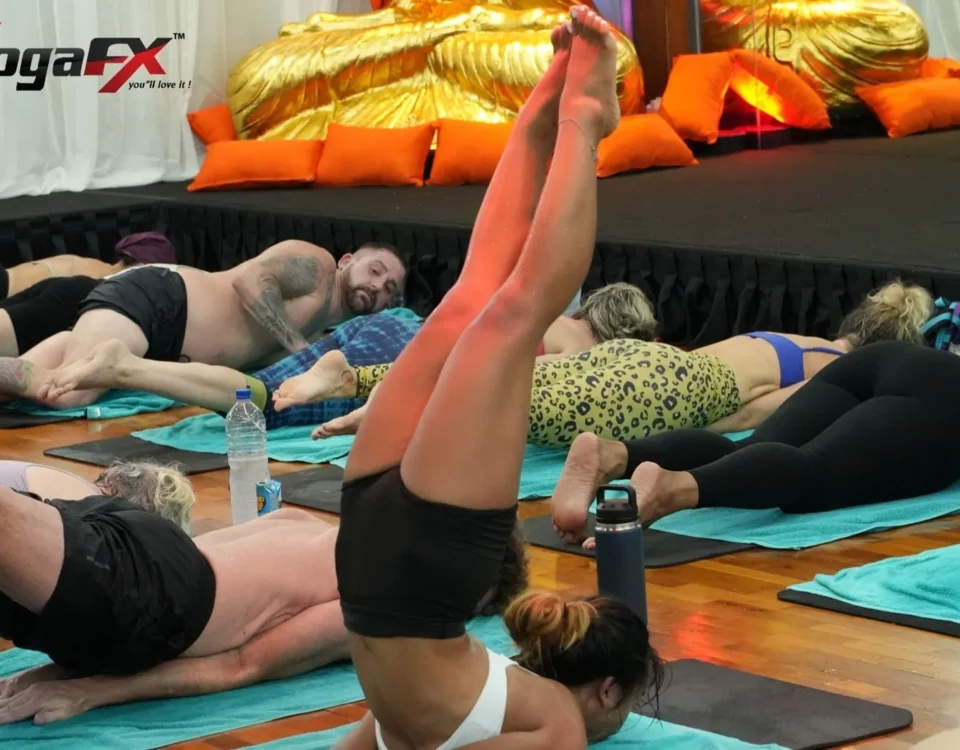
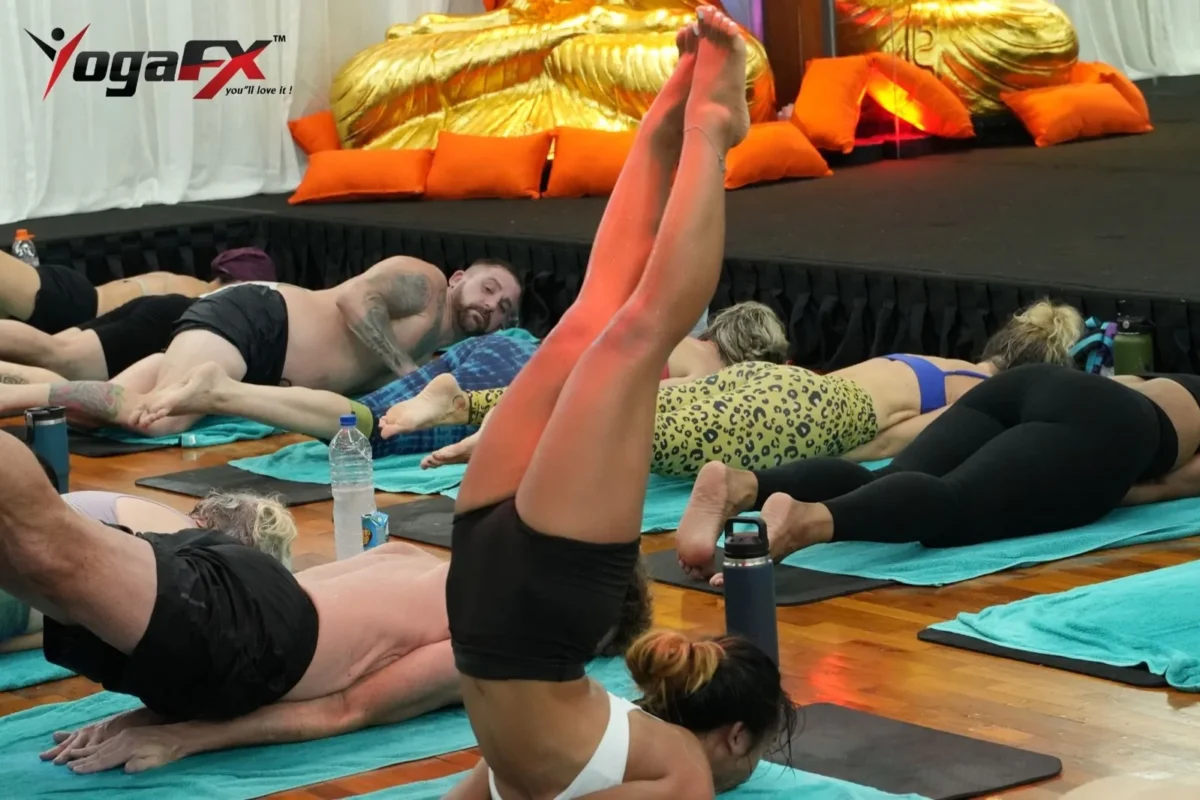
Teachers who have spent thousands of hours in a hot room know this moment well, because it is when many anxious beginners nearly walk out. So it’s worth knowing the pattern before you arrive. The table sets out what you may feel, why the room causes it, and what to do about it.
| What you may feel | Why a 40°C class can cause it | Why it can feel like anxiety | What to do in class |
|---|---|---|---|
| Racing heart | Your body works harder to cool you while you hold postures | A pounding chest is a classic panic cue | Slow your breath, rest in a standing pause, then rejoin |
| Shallow, quick breathing | Warm air and effort make you breathe faster | Breathlessness suggests something is wrong | Lengthen each out-breath and keep your eyes on one spot |
| Light-headedness | Heat, sweat and standing up quickly | Dizziness triggers worry about fainting | Sit or lie down, sip water and tell the teacher |
| Wanting to leave | Long, quiet, warm sessions test your patience | The urge to escape is a core anxiety response | Choose a mat near the door and pause instead of leaving |
Why a plan beats pushing through
None of these rows is a medical diagnosis. However, they show why a first class needs a plan. The point isn’t to push through. Instead, you learn which sensations are the room and which are a signal to stop.
Is Hot Yoga Good for Anxiety? Why the NHS Comes First
The NHS page on generalised anxiety disorder lists yoga among the activities that can reduce anxiety and stress and help you sleep better. That is a real point in yoga’s favour. However, the NHS doesn’t answer is hot yoga good for anxiety directly, because it names yoga in general and never mentions a heated room.
The same page tells readers to see a GP if they think they might have generalised anxiety disorder. It also says to go back if a diagnosed condition is not improving with treatment. Meanwhile, the NHS Every Mind Matters guidance on anxiety says that if anxiety is affecting your daily life you should contact NHS 111 or talk to a GP.
That advice matters more with heat in the picture. The same NHS page says that if you cannot tell whether shortness of breath is from anxiety, or you worry about any other symptom, you should see a GP. So book that conversation before you rely on a hot class to settle your nerves.
If you want a gentler starting point, our guide to yoga for nervous system regulation explains slower practices. For a wider look at mood and heat, read the men’s mental health evidence review.
Please also remember that some health conditions and medicines can affect how you cope with heat. Your GP or pharmacist can tell you what applies to you before you book a class.
A Careful Way to Try Hot Yoga for Anxiety
If your GP is happy for you to try, plan the first month like an experiment. Asking is hot yoga good for anxiety in general matters less than asking whether it is good for you. You’re collecting evidence about yourself, which is more useful than any headline. The four cards below show the order we suggest to new students.
Check that heat suits your health and any medicines you take.
Say you feel anxious. A good teacher will show you where to stand and rest.
Take the first few classes with an easy exit and plenty of water.
Note sleep, mood and worry. Share the notes with your GP.
Those four steps are simple, but each one protects you from a common mistake. People often skip the teacher conversation because it feels awkward. As a result, they spend 90 minutes alone with a panicky chest and decide hot yoga is not for them.
Is hot yoga good for anxiety for you? What to track
- Sleep: how long it took to fall asleep and whether you woke at night.
- Worry level: a quick score from 0 to 10 before and after class.
- Body signals: racing heart, dizziness or breathlessness, and when they appeared.
- Triggers: a crowded room, a long hold or a hard posture that set you off.
Keep the notes plain and honest. After four weeks you will have a fair picture of whether the class helps you, makes no difference or makes things worse. That is your own data, and it carries real weight in a conversation with your doctor.
Can Hot Yoga Make Anxiety Worse?
It can for some people, so the question deserves a straight answer. Is hot yoga good for anxiety for everyone? No. Heat is a stressor. Your body responds to it, and if you are already tense the added load can tip you into discomfort. Some people also say they feel wired rather than calm after a hard class.
That is one reason we link to our piece on whether hot yoga increases cortisol. It looks at the stress hormone side of the story for people with a busy UK workday. Heat, hydration and who should be careful are worth a separate talk with your doctor.
Here are signs to treat as a reason to stop, rest and ask for help:
- Chest pain, fainting or a feeling that you may pass out.
- Panic that does not ease after you sit down and sip water.
- Anxiety that grows worse in the hours after class rather than easing.
If any of those happen, stop going until you have spoken to a healthcare professional. No class is worth ignoring your body. The practice has to work for you, not the other way round.
How Hot Yoga Compares With Calmer Options
So is hot yoga good for anxiety compared with calmer options? Not by default. The NHS lists running, walking, swimming and yoga as activities that can reduce anxiety and stress. That list is useful, because it shows hot yoga is one choice among several. It isn’t the only door, and it won’t suit everybody.
If heat makes you tense, a cooler class may be a better start. If you like structure and a long, quiet session, a hot room may feel steadying. The best test is how you feel at bedtime, not how proud you felt at the studio door.
- Walking or swimming: low cost, easy to stop, and no heat to manage.
- A cooler yoga class: breath and focus without the extra load on your body.
- Hot yoga with a plan: structure, routine and shared effort, but with a heat risk you must respect.
Whichever you pick, consistency beats intensity. A calm class twice a week that you can keep up for three months will tell you far more than one brutal session. That’s true for anxious beginners and for experienced students alike.
What YogaFX Trainees Say About the Challenge
Reviews cannot answer is hot yoga good for anxiety, so we do not use them as proof of a health benefit. They do show what it feels like to practise in the room and to finish a training. Here are three trainees in their own words, using video transcripts from our YouTube reviews.

Cheleigh, YouTube review, 2026 (paraphrased from the transcript). Cheleigh described the training as interesting, challenging and a bit of a roller coaster, and thanked the group for their positivity and encouragement. The review points to something real: the hard parts are shared, and that matters.

Jan, YouTube review, 2019. Jan said: “thank you for this three weeks it has been very good three weeks.” His training ran longer than today’s format, but the tone of gratitude for a hard stretch of practice is the same.
Xuan, YouTube review, 2026 (paraphrased from a short video transcript). Xuan told classmates the group was great fun and called the whole experience a good time from start to finish. You can watch it in the Xuan video review.
From Anxious Practitioner to Teacher: The Bali Route for UK Applicants
Many people who ask is hot yoga good for anxiety end up curious about teaching too. That is a natural path, because many teachers first came to the mat for their own wellbeing. If that is you, the training route matters as much as the class.
The YogaFX teacher training is a 6-day hybrid programme. You complete a pre-course online, then join an intensive in Bali, so UK applicants can plan around work and leave. The next batch checks in on Sunday 24 January 2027 and checks out on Friday 29 January 2027. Graduates leave with a Yoga Alliance RYT 200-Hour certificate and a Bikram Hot 26&2 200-Hour International Yoga Certification.
Mr. Ian Terry trained for five years, from 2014 to 2019, with the founder of the method. Our 1,500+ graduates come from more than 80 countries. We say this to be clear about who teaches you, not to promise a health outcome. A teacher trainee with anxiety should talk to a doctor first, just like any student.
If you are weighing travel and cost, our comparison of yoga teacher training in Bali versus the UK sets out what to compare. It is a good next read before you contact us.
FAQ
Is hot yoga good for anxiety?
It might help some people, but the research does not prove it. Trials of heated yoga measured depression, distress tolerance and well-being rather than anxiety scores. Treat it as a possible extra beside GP care, not as a treatment, and stop if a class makes you feel worse.
Can hot yoga cause anxiety?
Heat can raise your heart rate and breathing, and those sensations resemble anxiety. Some people feel wired after a hard class. If you notice worsening worry, panic or chest pain, rest, sip water, tell the teacher and speak to a healthcare professional before returning.
Is hot yoga better than normal yoga for anxiety?
No study we found shows that it is. The NHS says yoga in general can reduce anxiety and stress. A slower, cooler class may suit you better if heat makes you tense, so try both and notice which one leaves you calmer.
Who should not do hot yoga?
Anyone with a heart or blood pressure condition, anyone who is pregnant and anyone on regular medicine should ask a doctor first. The same applies if you faint easily. Heat changes how your body works, so a quick check with your GP or pharmacist is sensible.
When should I see a GP about anxiety?
The NHS advises seeing a GP if you think you might have generalised anxiety disorder, or if anxiety affects your daily life. You can also contact NHS 111. Do not wait for a yoga class to fix a problem that needs proper assessment and support.
Still Have Questions About Hot Yoga and Anxiety?
Still have questions? Message Mr. Ian and the YogaFX team on WhatsApp or through our contact page and we will answer them personally.