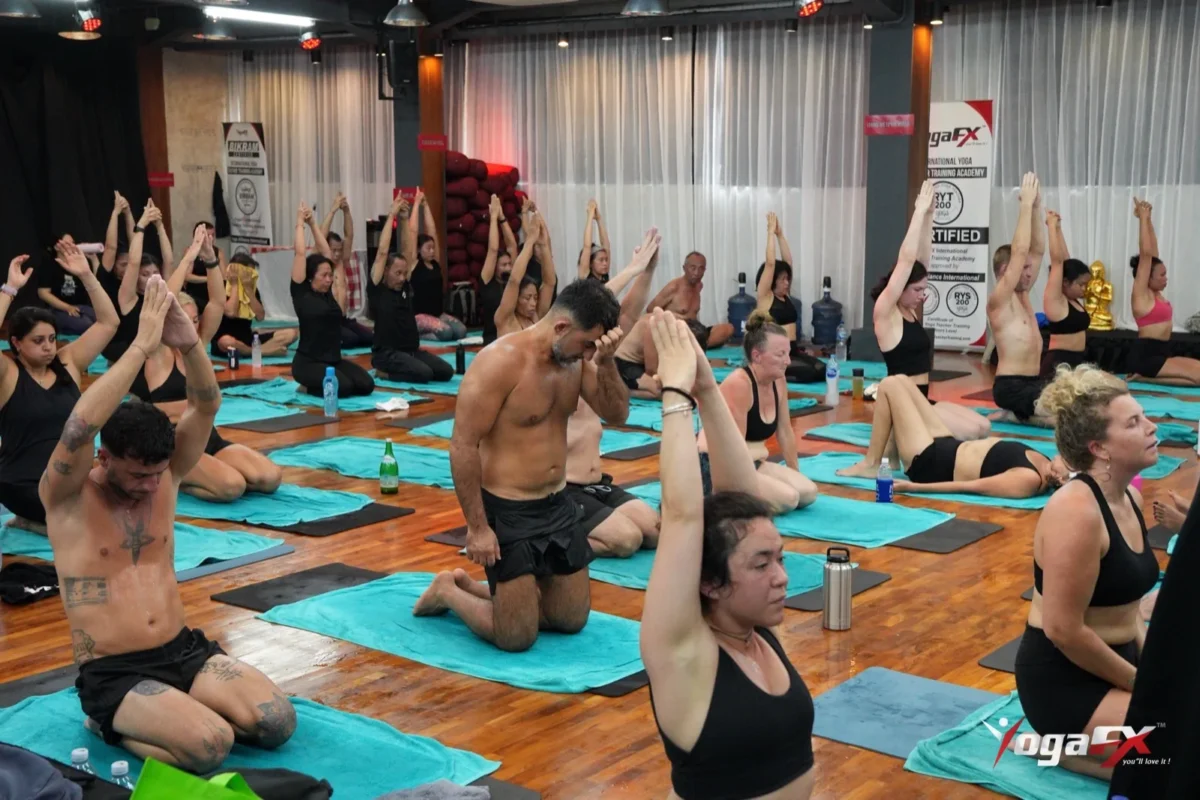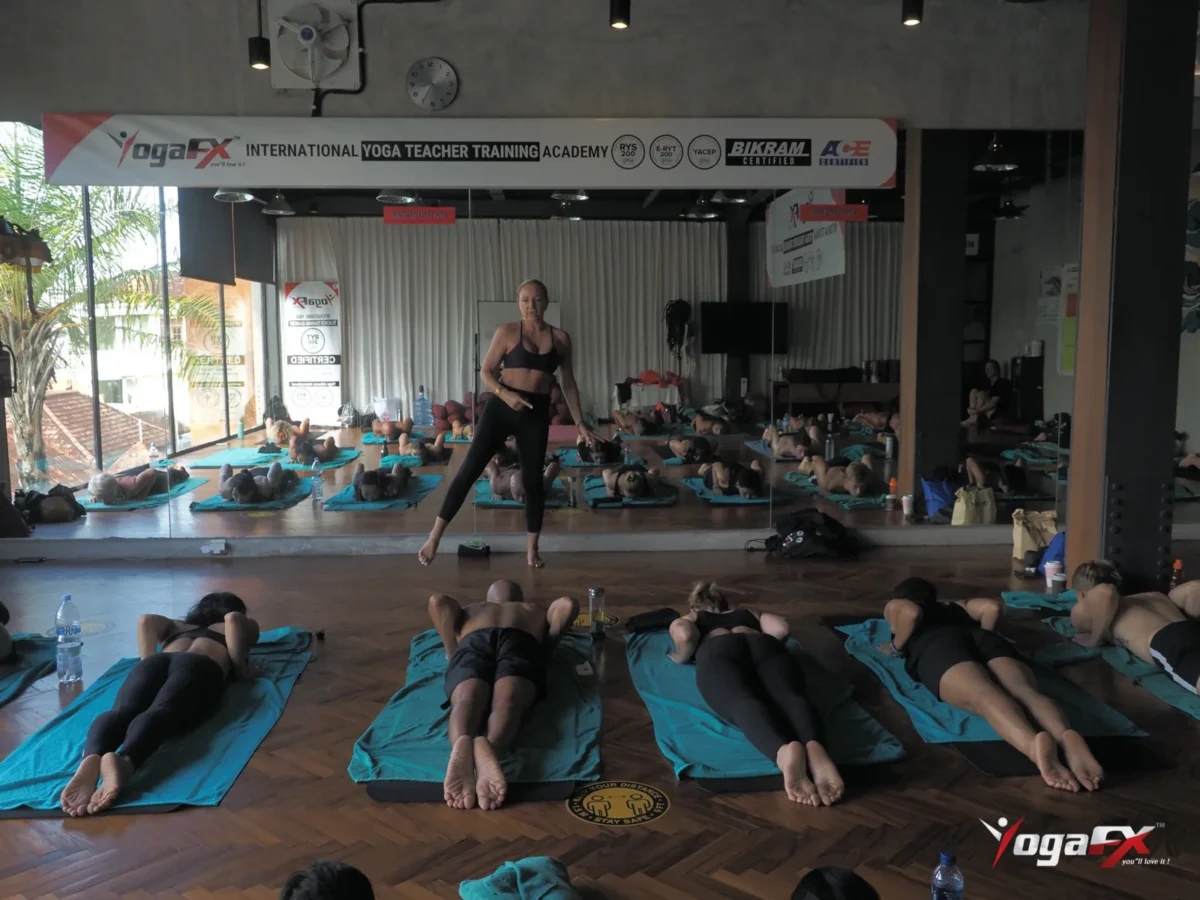
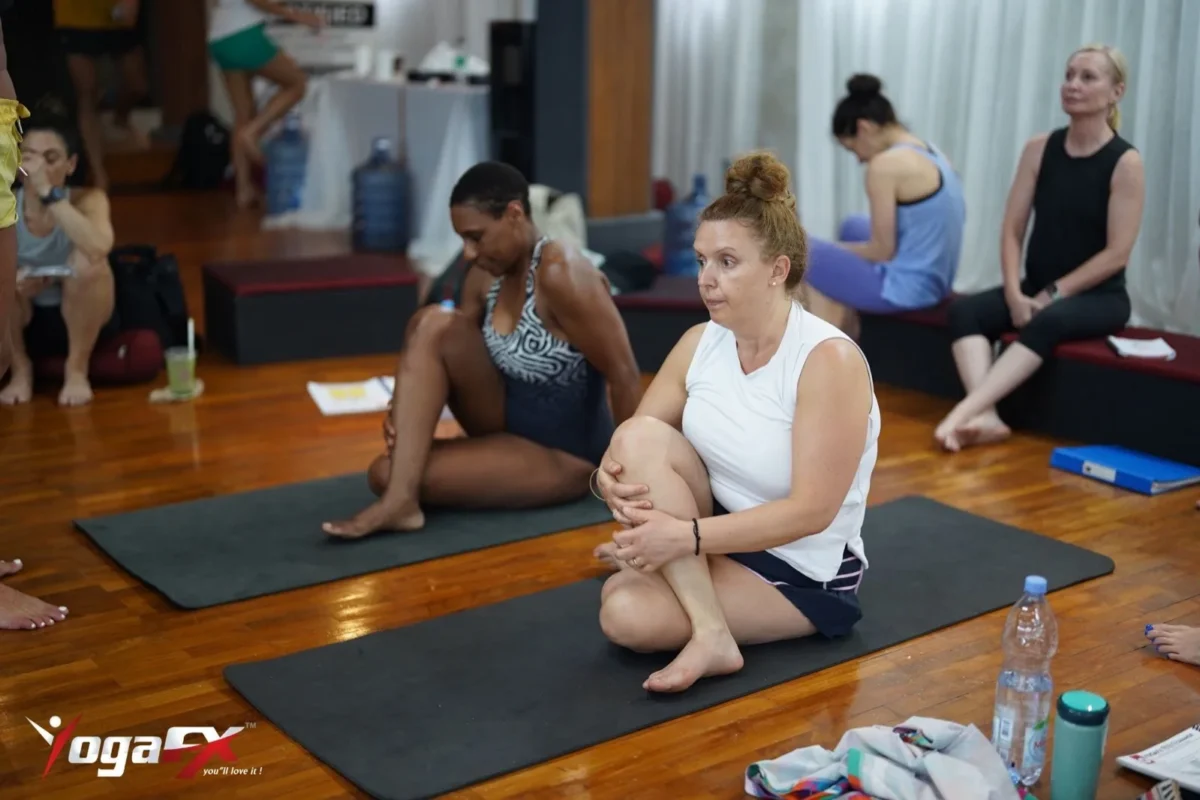
Hot yoga for runners works best as planned cross-training, not an extra workout. In UK marathon and half-marathon season, put one 60 to 90 minute class in an easy or down week, drink before you start, and stay out of the hot room in race week. Judge it by how your next run feels.

Most UK runners search this with one worry: will a 40°C room cost me a key session? This guide answers that for the long British racing calendar, from winter base miles in London to a spring half in Leeds. It follows what Mr. Ian Terry tells runners who walk into a YogaFX class for the first time.
Hot Yoga for Runners Across the UK Racing Calendar
A race plan has phases, and hot yoga for runners should change with each one. The same class that helps in a quiet base block can hurt in a peak week. The table below shows how to use the room in each phase. Treat it as a pattern, then adjust to your own plan and your coach’s advice.
| Training phase | What the running looks like | Hot yoga plan | Watch for |
|---|---|---|---|
| Base weeks (UK winter) | Easy miles, dark evenings, cold and wet roads | One class a week on an easy day | Stepping from a 40°C room into freezing air |
| Build weeks | Rising mileage, one long run | One class, never before the long run | Heavy legs the next morning |
| Peak weeks | Longest runs, race-pace work | Skip it, or use an unheated home session | Heat stacking on top of hard sessions |
| Taper | Fewer miles, fresher legs | One gentle class at most, early in the taper | Any new routine at all |
| Race week | Short, easy runs | No heated class | Dehydration before the start line |
| Recovery weeks | Walking, then easy jogs | Wait several days, then start with a gentle class | Rushing back while the legs are still sore |
Notice the pattern. Hot yoga for runners belongs in the quiet weeks and stays away from the hard ones. That is also why we place a heated class in the same category as a moderate session, and why our guide to heart rate zones in a hot class is worth a read before you pick a day.
If you want a week-by-week pattern built around a 40 km running week, our companion guide on fitting heated classes around your weekly miles lays one out in full.
Cross-training weeks: where the class fits best
Many UK plans include a cut-back week every third or fourth week, when mileage drops so the body can adapt. These weeks are the best home for a first heated class. The running load is light, so you can see how the room affects you without risking a key session.
You can also use a cross-training day when the weather beats you. A frozen pavement in January or a storm on race-prep Sunday is a fair reason to swap an easy run for a class, as long as the day was meant to be easy.
7 Safe Rules for Hot Yoga for Runners in Marathon Season
These seven rules for hot yoga for runners come from what we see in the room and from medical guidance on exercising in heat. They keep the benefit and cut the risk. Read them before your first class, then again before each new training block.
Rule 1: Start with one class and keep notes
Book a single class of hot yoga for runners and write down how your next two runs feel. Do not stack three classes into week one because a friend swears by it. Your legs need time to show you the effect, and that effect can be good or bad.
Rule 2: Put the class on an easy or down day
A 90-minute class at 40°C and 40% humidity keeps your heart rate busy for a long time. So place it where a gentle run would sit, not before a tempo run or a long run. If you only remember one rule, remember this one.
Rule 3: Drink before, during and after
Mayo Clinic’s advice for exercisers in the heat is simple: drink water before, during and after you exercise. Runners often drink well on a run and then arrive at class already behind. Sip steadily through the day, and keep a bottle by your mat.
Rule 4: Ease into the heat
The same Mayo Clinic piece says your body needs to acclimate, so start with shorter periods of exercise. For a first class, that means staying near the back or the door, resting when you need to, and accepting that you will not do every posture. Resting on the mat is part of the practice.
Rule 5: Know your stop signs
Runners are used to pushing through discomfort. A hot room is the wrong place to do that. The NHS lists thirst, headache, dizziness, tiredness and dark yellow strong-smelling pee among the symptoms of dehydration, and Mayo Clinic adds heavy sweating, muscle cramps, fatigue and weakness to its heat-exhaustion warning signs. Leave the room and tell the teacher if you feel any of them.
Rule 6: Keep heat out of race week and the days after
This one is our own advice, not a study result. In the final week before a race, you want no new stresses. After the race, your legs are repairing, so wait several days and begin with a gentle class or an unheated home session. If in doubt, rest.
Rule 7: Use the room for breathing and hips, not for a workout
The best reason to practise hot yoga for runners is not to burn more calories. It is to train slow breathing and hip range while the body works in warm air. Treat the class as skill practice. Your running plan already supplies the hard work.
Medical note: speak with your doctor or a sports medicine professional before starting heated exercise if you have a heart condition, low blood pressure, or any history of heat illness. This article is general information, not medical advice.
Hot Yoga for Runners at a Glance: Five Numbers to Remember
What Research Says About Yoga Breathing and Running
Evidence on hot yoga for runners is thin, so it pays to be honest about what we know. One small trial looked at yogic breathing in runners, and its result is mixed in a useful way.
In that 2020 study, 11 runners practised three styles of pranayama for 30 minutes a day, six days a week, for three weeks. A control group of 10 runners did the same tests without the practice. The yoga group improved two lung measures, forced vital capacity and forced expiratory volume in one second.
Running economy, though, did not change significantly. The authors did report that perceived exertion at a high workload fell in the yoga group and rose in the control group. They concluded that more work is needed.
- What it suggests: slow breathing practice may change how hard running feels, even when economy stays the same.
- What it does not show: the study did not test a heated class, and the sample was small.
- What to do with it: treat breathing practice as a possible mental and breathing aid, not a speed upgrade.
As ever, research suggests rather than proves. That is why we keep the advice cautious and ask you to watch your own data.
Postures Runners Notice First in a Hot 26&2 Class
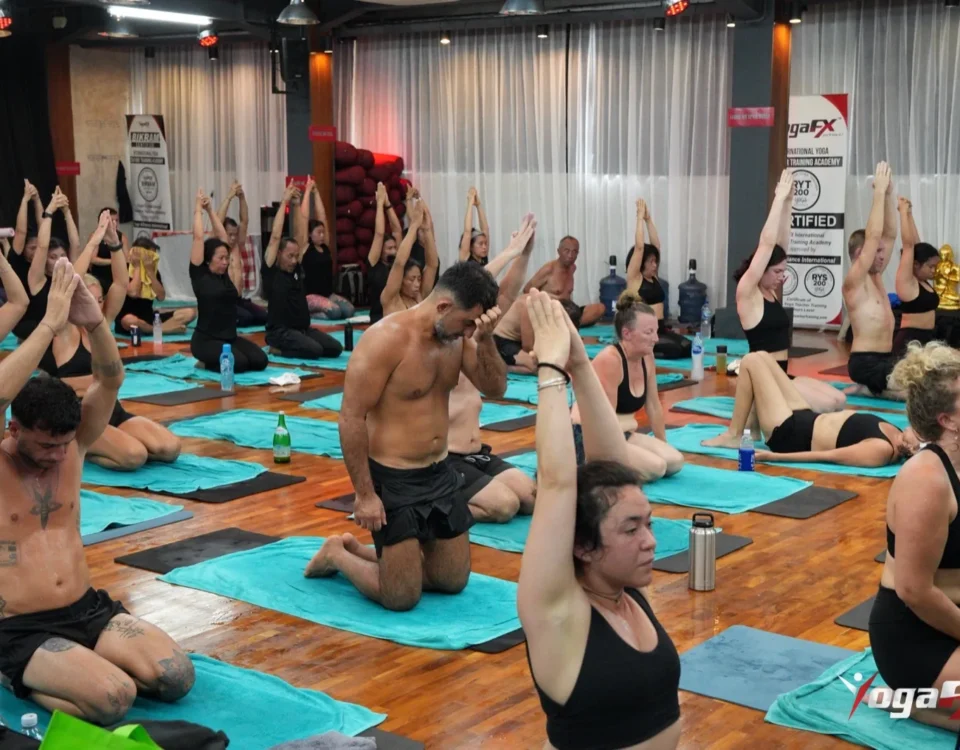
The Original Hot 26&2 sequence repeats the same postures in the same order every class. That repetition lets you compare how one posture feels from week to week, and that is handy when your mileage changes. Our full guide to the 26 hot yoga postures explains the whole sequence. These are the ones runners mention most.
- Standing Deep Breathing. It opens the class and trains slow, full breaths while the heart rate climbs. Runners can borrow the skill in the last miles of a race.
- Awkward Pose. A held chair-style squat that asks a lot of the thighs and ankles. Keep the knees comfortable and come up early if they complain.
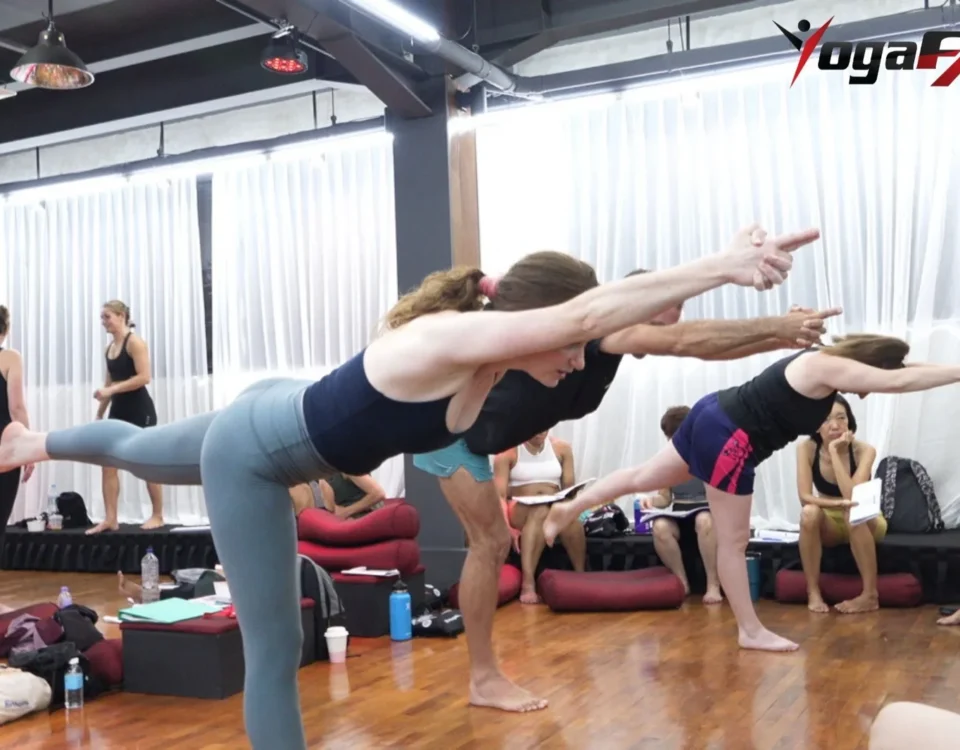
- Eagle Pose. A balance posture that wraps the legs and challenges the hips on one side at a time. It shows left-right differences quickly.
- Fixed Firm Pose. A kneeling posture that works the front of the thighs and the ankles. Skip it or modify it if you have knee or ankle pain.
- Spine Twisting. A seated twist that moves the hips and back together, which is a change from the straight-ahead motion of running.
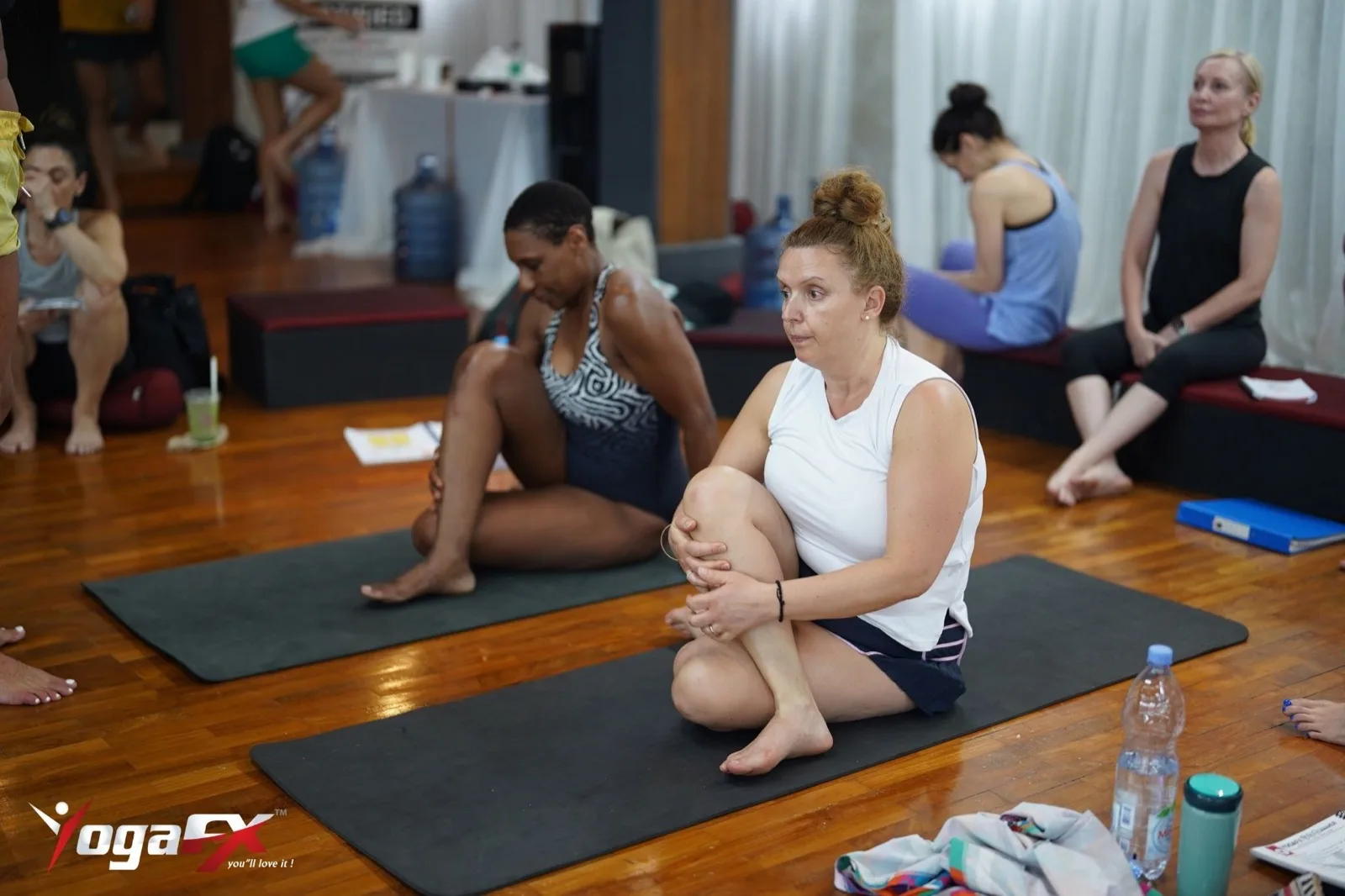
None of these postures is a fix for a niggle. If a posture aggravates an old injury, skip it or ask the teacher for a modification. Our guide to the risks and side effects of hot yoga covers who should take extra care.
Hot Yoga for Runners From London to Leeds: UK Weather and Studios
Hot yoga for runners in Britain comes with a problem that a runner in a warm country does not face. You train in cold, wet air for months, then walk into a hot room. Both ends of that swing matter, and neither is a reason to avoid the class.
Before you go in
- Check the studio’s actual room temperature. Not every UK hot class runs at 40°C, so ask before you book.
- Eat a light meal two to three hours earlier. Our guide on what to eat before hot yoga has simple ideas.
- Pack a towel, a large bottle of water and a dry change of clothes.
When you step back outside
After class your skin is warm and wet, and the street may be near freezing. Dress in dry layers straight away and keep walking until you cool gradually. Then eat and drink, and avoid a long, cold stand at the bus stop in damp kit.
Fitting it around a UK work week
Most runners train after work, in the dark, from October to March. A lunchtime or weekend class is often easier than an evening one. If you commute into London, Manchester or Leeds, pick the studio nearest to the office so the class replaces a gentle run rather than adding a trip.
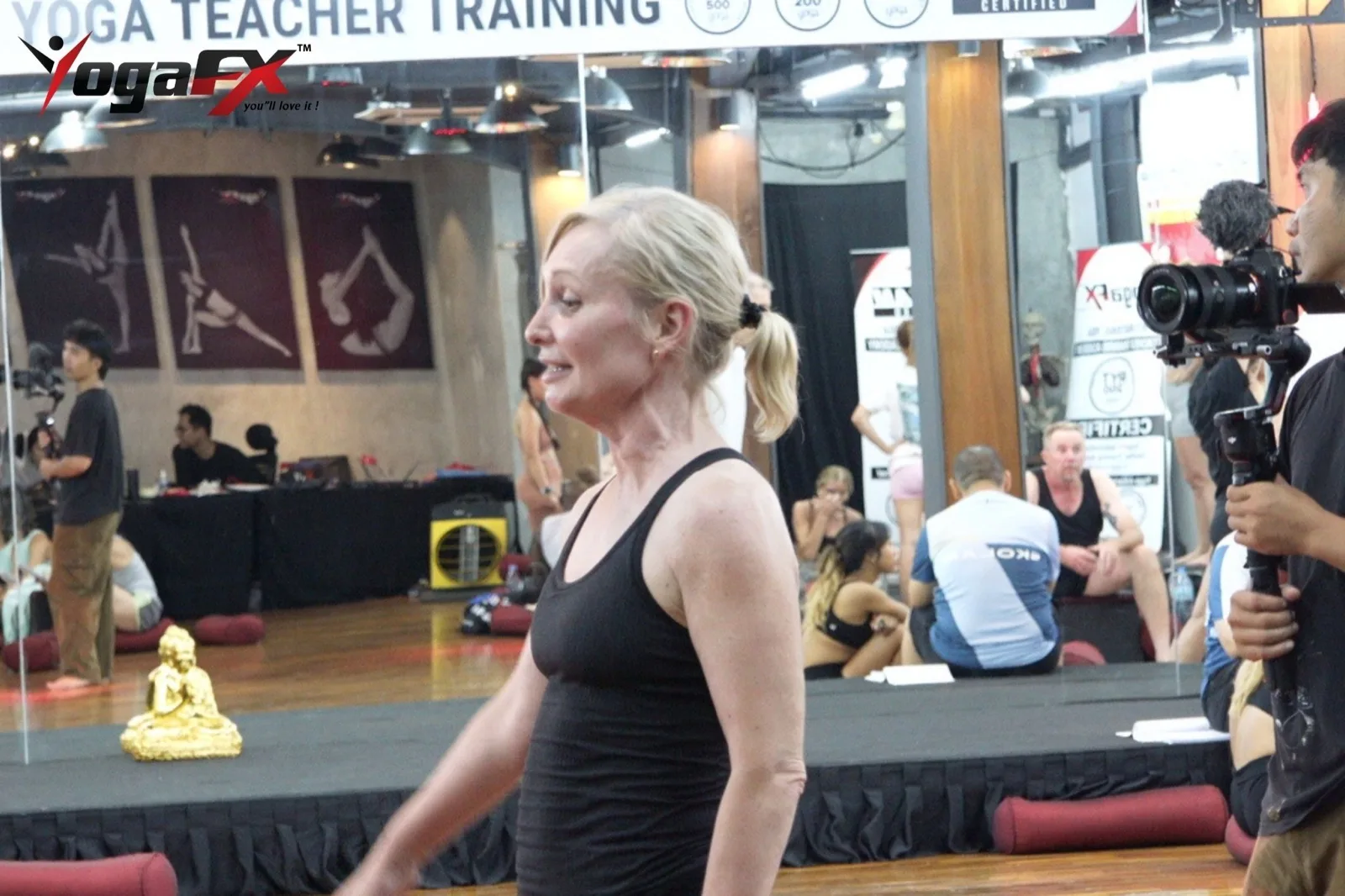
New to heat altogether? Take your first class on an easy day, tell the teacher you are a runner, and ask where the cooler spots in the room are. Most teachers are glad to help a newcomer settle.
What Students Say After a Hard Week on the Mat
Marathon training teaches you to stay with a hard minute. Our students describe something similar in their reviews. None of them were talking about running, so read these as lessons in staying with a hard thing, not as proof for runners.
It’s just been transforming.
Donna, YouTube review, 2026
I can highly recommend it. Ian is a fantastic teacher, and I just feel so privileged to have this experience with him.
Shannon, YouTube review, 2024
Cherry said in her video that the training taught her to control her mind and her emotions, and that the support of the team made the difference (paraphrased). Cherry, YouTube review, 2019

How Mr. Ian Terry Teaches the Hot 26&2 Class
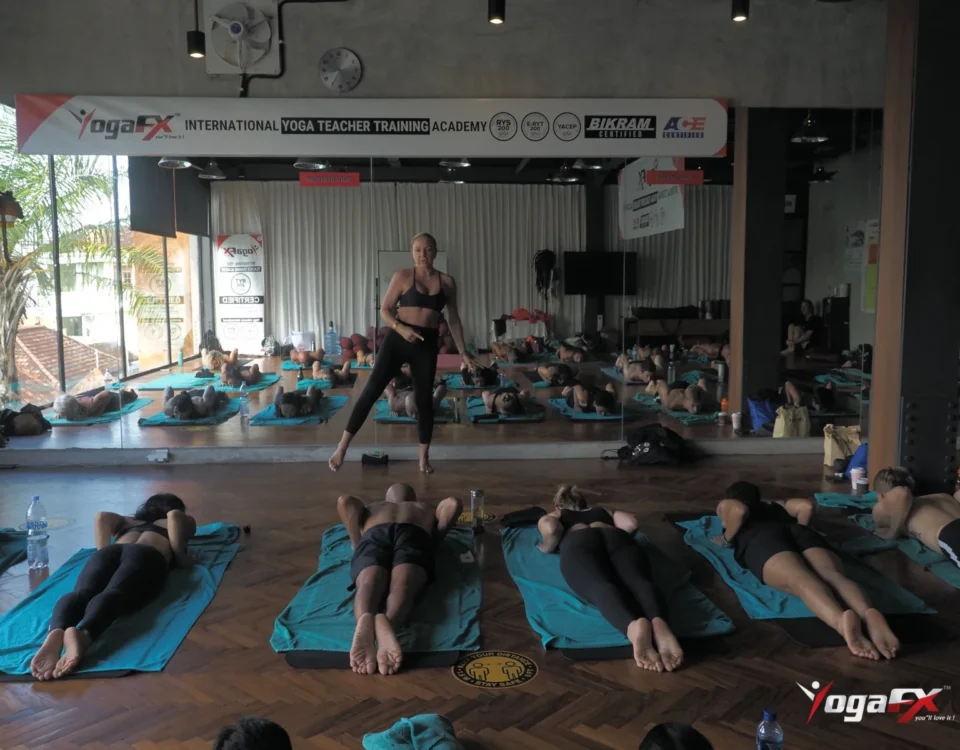
Mr. Ian Terry is an E-RYT 500 teacher with more than 12,000 teaching hours and over 1,500 graduates from 80+ countries. He trained for five years, from 2014 to 2019, with the founder of the Bikram Hot 26&2 method. His classes run 90 minutes, follow a scripted dialogue, and use no music and no demonstration.
That style suits runners who like data, and it is why hot yoga for runners works well in this room. The voice repeats the same cues every class, so you set your own effort and nobody shows you a deeper version to chase. You learn to listen to your breathing and your legs, which is the same habit a good coach asks of you.
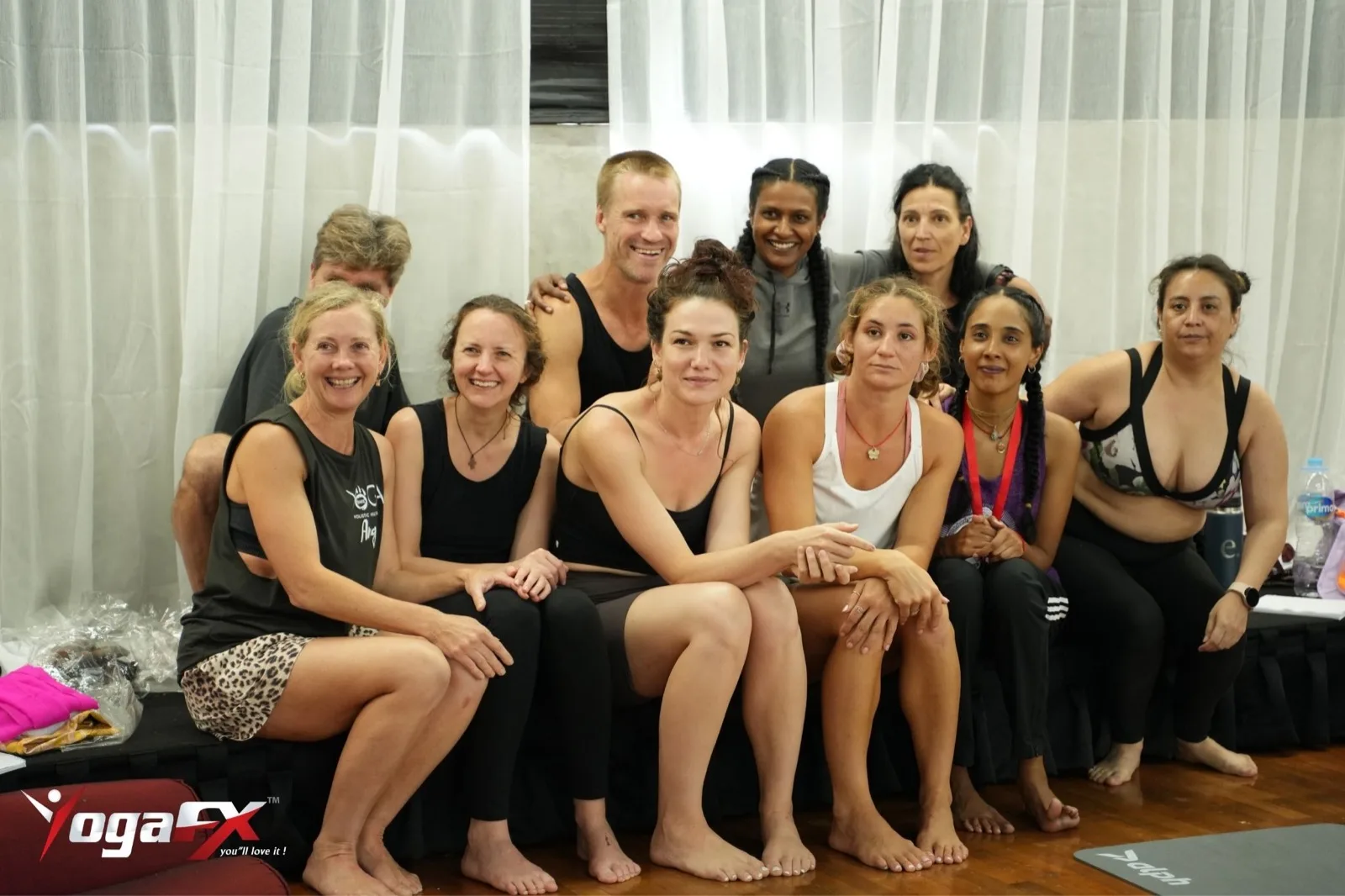
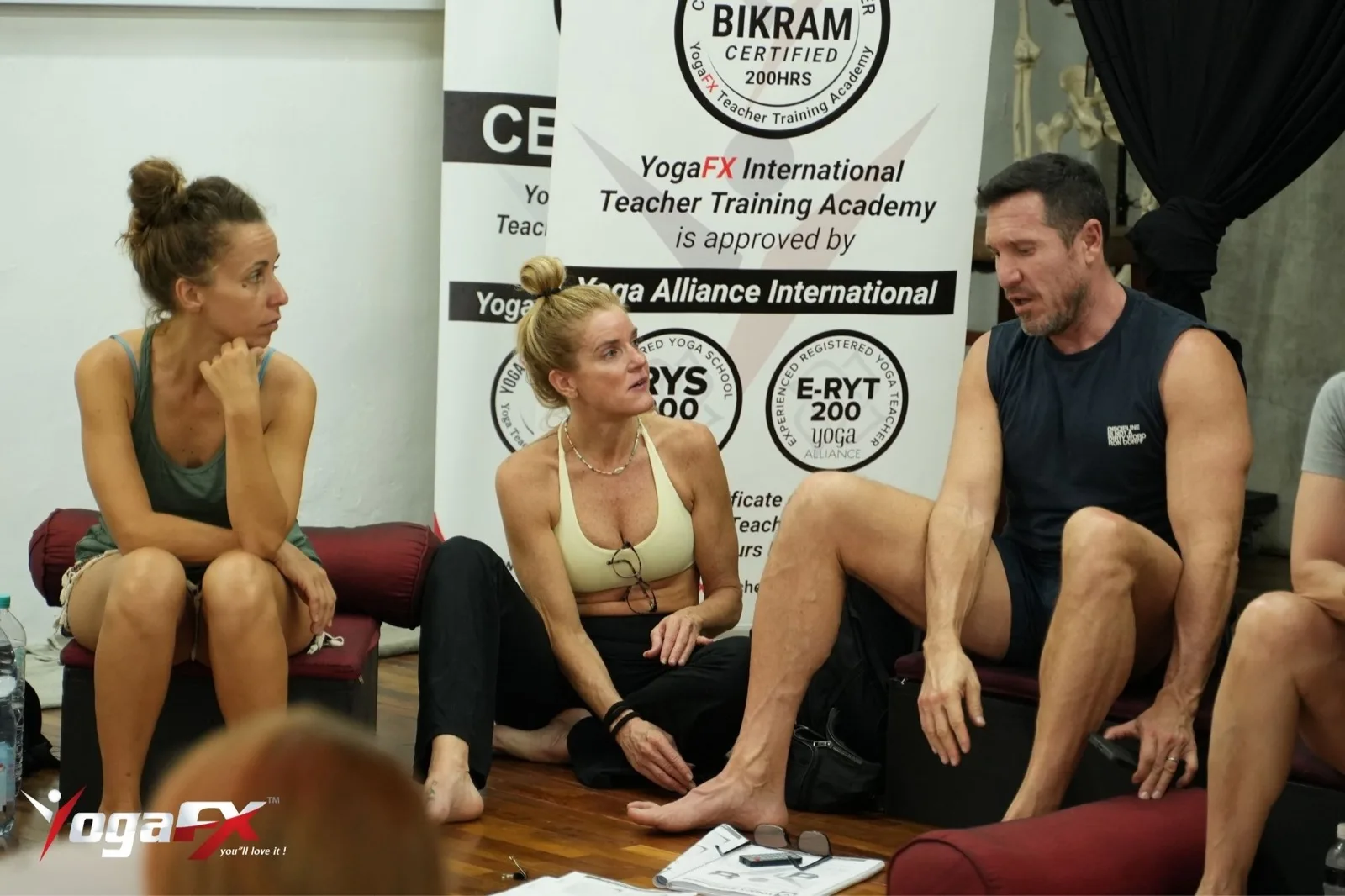
Some runners fall for the room and want to teach it. If that is you, read our guide to hot yoga teacher training in the UK: cost, duration and how to choose. YogaFX also runs a 6-day hybrid MasterClass in Bali for UK applicants, with the next batch checking in on Sunday 24 January 2027 and checking out on Friday 29 January 2027 at Soham Wellness Center in Seminyak.
The MasterClass leads to a Yoga Alliance RYT 200-Hour certification and a Bikram Hot 26&2 200-Hour International Yoga Certification. It suits a runner who wants five days off work for something different, followed by a lifetime of teaching what they learned.
FAQ: Hot Yoga for Runners in UK Race Season
Can I do hot yoga instead of running?
You can swap one easy run for a heated class, but not every run. Hot yoga does not train your legs for impact or pace. Use it for cross-training in a down week, then return to your plan. Ask your coach if you are racing soon.
Should I skip hot yoga the week before a half marathon?
Most runners are wise to skip it. Race week is for short easy runs, good sleep and steady drinking. A hot room adds fluid loss and a new stress you do not need. Keep your last heated class for early in the taper.
Is yoga or Pilates better for runners?
Neither is proven better for every runner. Pick the one you will actually keep doing, at a time that does not clash with hard sessions. Hot yoga adds heat and breathing work, while Pilates usually focuses on core control. Try one and track your next runs.
What should I bring to a hot class as a runner?
Bring a large bottle of water, a towel, light clothes you can sweat in and a dry change for the walk home. Eat lightly two to three hours earlier. Arrive early, so you can lie down and settle before the heat starts.
How soon after a marathon can I try hot yoga?
Wait several days at least, and longer if your legs are still very sore. Start with an unheated home session, then a gentle class when walking feels normal. Drink plenty, and leave the room at once if you feel faint or dizzy.
Still have questions? Message Mr. Ian and the YogaFX team on WhatsApp and we will answer them personally. Start with one class, notice how your next run feels, and build from there. Always consult a healthcare professional before starting a new heated exercise routine.