
Hot yoga vs sauna comes down to active heat versus passive heat. A hot yoga class asks your body to work for 90 minutes in a warm room, while a sauna lets the heat do the work as you sit still. For most UK men, the class builds fitness and the sauna supports rest, so the better choice depends on your goal.

This guide compares the two fairly. It draws on a Finnish sauna cohort, a randomised trial of heated yoga and NHS heat safety advice. It also covers UK health checks, costs and a weekly plan, and it ends with a route that turns a hot yoga habit into a teaching career in Bali.
Hot Yoga vs Sauna: Five Differences That Matter to UK Men
The hot yoga vs sauna debate sounds like a contest of temperatures, but temperature is the smallest difference. Five others change what you get from your hour.
- Effort. A class makes you balance, hold, bend and breathe. A sauna asks you to sit.
- Time in the heat. A full Hot 26&2 class runs 90 minutes. Sauna sessions are usually shorter, because most people leave when they feel overheated.
- Training effect. Postures load your muscles and joints. Sitting does not.
- Evidence base. Saunas have long Finnish cohort data, while heated yoga now has randomised trials. Neither is proof for every body.
- Access in the UK. Many gyms have a sauna, but a hot room needs a dedicated studio and a timetable.
So the real question is what you want from the heat. If you want to train, choose the class. If you want to rest after a rugby match or a long week at a desk, the sauna fits better. If you want both, space them out, as the weekly plan below shows.
Why UK Men Ask This Question
In a British winter, the warm room is the appeal, and that’s why hot yoga vs sauna comes up in January. A man who plays five-a-side on Tuesday and sits at a desk the rest of the week often wants heat for stiff hips and tight hamstrings. Both options give warmth, but only one gives movement through those hips.
That is also why the hot yoga vs sauna question comes up so often at gyms. A membership that includes a sauna sits next to a timetable that includes a hot class. Many men ask which one deserves the hour after work, and the honest answer is that it depends on the day you have had.
Active Heat vs Passive Heat: Table 9
Coaches and researchers often split heat exposure into two types. Active heat happens while you exercise, and passive heat happens while you rest. Table 9 sets hot yoga vs sauna side by side so you can see where each one fits.
| Feature | Hot yoga class (active heat) | Sauna session (passive heat) | What it means for a UK man |
|---|---|---|---|
| Movement | 26 postures and 2 breathing exercises, so muscles work throughout | Sitting or lying still | Only the class trains strength and flexibility |
| Typical length | 90 minutes at about 40°C and 40% humidity in the YogaFX Bali studio | A short session, then a rest | A class gives a longer, gentler dose of heat |
| Where the heat comes from | Natural tropical heat in Bali; heaters in most UK studios | A heater or steam generator | Ask your UK studio what temperature it runs |
| Main evidence in this guide | An 8-week randomised trial of heated hatha yoga (2023) | A 20-year Finnish cohort of 2,315 men (2015) | Trial data for yoga, observational data for sauna |
| Best fit | Fitness, flexibility and focus | Rest, recovery and relaxation | Choose by goal, or use both on different days |
What the Table Tells You
Notice what the table doesn’t say. It doesn’t say one habit beats the other, because they do different jobs. Hot yoga vs sauna is a question of fit. Our Bali studio team covers the same comparison for travellers in its side-by-side guide to hot yoga and sauna in Bali, which makes a useful second read if you are planning a trip.

Hot Yoga vs Sauna: What Happens in Your Body
Heat makes your body respond whether you sit or move. Your blood vessels widen, your skin warms and you start to sweat. The Mayo Clinic Proceedings review of sauna research lists several possible mechanisms, including better blood vessel dilation, lower arterial stiffness and changes in the autonomic nervous system.
In a sauna, that response is all you get. You sit, you sweat and you leave. That is exactly why many people find it relaxing, because nothing is asked of your muscles.
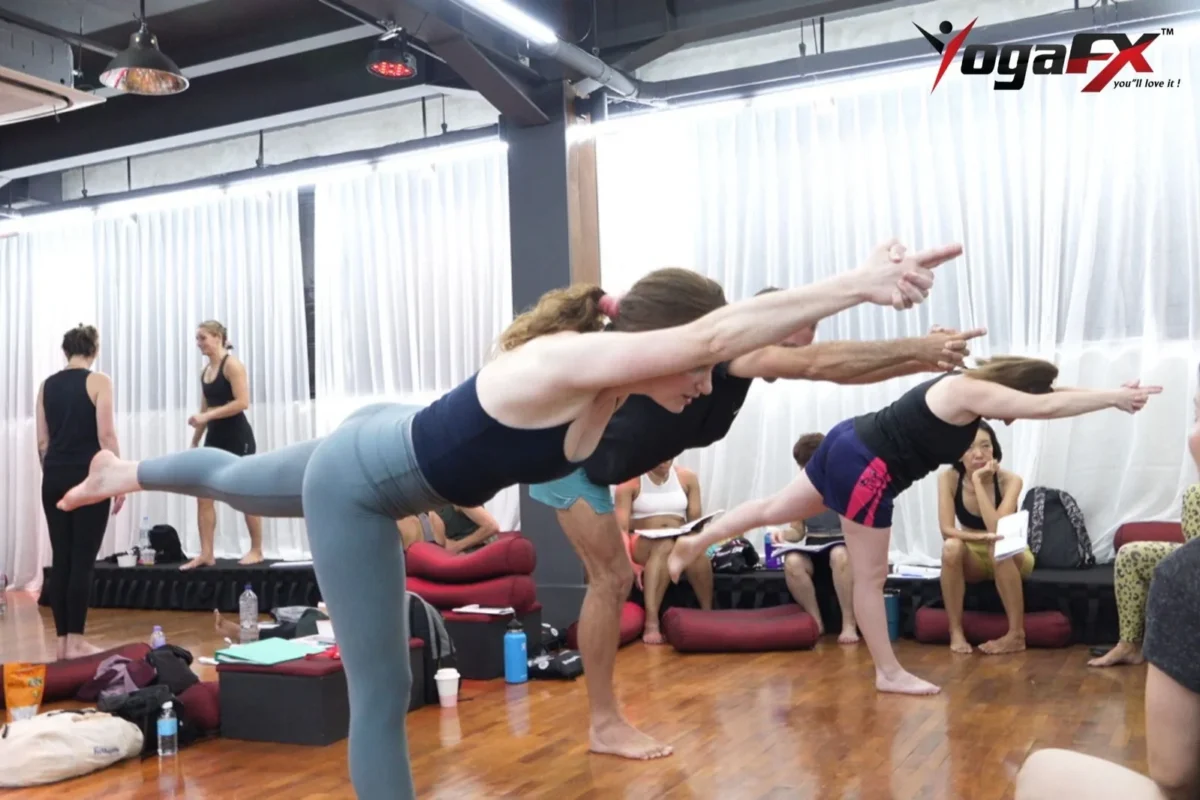
In a hot yoga class, the same heat response sits on top of exercise. You stand on one leg, fold forward and hold each posture for a set count. That means your heart and muscles work for the room and for the movement at once, so the class feels harder even at the same temperature.
Researchers are also interested in what heat does at the cell level. One example is the family of heat shock proteins. Our article on hot yoga and heat shock proteins explains why heat exposure draws that interest and where the evidence is still thin.

What the Sauna Research Shows (and What It Does Not)
On the sauna side of hot yoga vs sauna, the strongest data comes from Finland. In a study titled Association between sauna bathing and fatal cardiovascular and all-cause mortality events, published in JAMA Internal Medicine in 2015, researchers followed 2,315 middle-aged men for a median of 20.7 years.
Men who used a sauna four to seven times a week had a much lower risk of sudden cardiac death than men who used one once a week. The adjusted hazard ratio was 0.37. Sessions longer than 19 minutes also tracked with a lower risk than sessions under 11 minutes, with a hazard ratio of 0.48.
That sounds convincing, but it’s an observational study. It shows an association, not a cause. Men who use saunas often may differ in other ways, such as lifestyle and fitness. The authors themselves say the mechanism needs further study.
A later review, Cardiovascular and Other Health Benefits of Sauna Bathing, appeared in Mayo Clinic Proceedings in 2018. It links regular Finnish sauna bathing with a lower risk of high blood pressure, cardiovascular disease, neurocognitive disease and lung disease. It also lists areas of “outstanding uncertainty”, so it is not a green light for everyone.
Three Cautions for Reading the Sauna Evidence
Read the sauna evidence with three cautions in mind:
- Population. The main cohort was Finnish men aged 42 to 60, so it may not describe every UK man.
- Design. Observational studies show links, not proof that the sauna caused the benefit.
- Setting. Traditional Finnish sauna habits differ from a short session in a UK leisure centre.
So a sauna habit looks promising for heart health, but a promising link isn’t a prescription. Hot yoga vs sauna isn’t settled by one study. If you have a heart or blood pressure condition, speak to your GP first.
What the Hot Yoga Research Shows
On the yoga side of hot yoga vs sauna, the evidence comes from a trial instead of a long cohort. In a randomised controlled trial in the Journal of Clinical Psychiatry, Nyer and colleagues (2023) compared heated hatha yoga with a waitlist in adults with moderate-to-severe depression. The study ran for eight weeks at two community studios.
Sixty-five people were analysed. In the yoga group, 59% had a drop of 50% or more in depression symptoms, compared with 6% of the waitlist group. Participants attended about 10 classes over the eight weeks, which is roughly one class a week.
Two points matter here. First, this is mental-health data, so it doesn’t prove a fitness or heart benefit. Second, the abstract doesn’t give a room temperature, so it can’t tell us that 40°C is the magic number. The results suggest heated yoga may help some adults, but we treat it as promising, not as a treatment. Anyone with depression should speak to a GP.

Notice that a class gives you two things at once: heat and movement. A sauna gives you one. If you want to see how hard your heart works in a class, read our guide on whether hot yoga counts as a cardio workout.
Hot Yoga vs Sauna in Six Numbers
Hot Yoga vs Sauna: Safety Checks Before You Choose
Heat isn’t risky for everyone, but it isn’t harmless for everyone either. In the hot yoga vs sauna choice, safety matters in both rooms. The NHS page on heat exhaustion and heatstroke notes a high risk during hot weather or exercise, and a hot yoga class combines both. Knowing the signs protects you in a class and in a sauna.
Signs of Heat Exhaustion and Heatstroke
According to the NHS, heat exhaustion can bring:
- Tiredness, dizziness and headache
- Nausea or vomiting and muscle cramps
- Heavy sweating with pale, clammy skin
- Being very thirsty and feeling irritable
Heatstroke is a medical emergency. The NHS lists a very high temperature, hot skin without sweating, fast breathing, confusion and loss of consciousness among the signs. Its prevention advice is simple: drink more cold drinks, especially when you exercise, wear loose clothing and avoid extreme exercise.
Health Checks Worth Making
| Check | Why it matters | Who to ask |
|---|---|---|
| Blood pressure and heart history | Heat widens blood vessels and raises your heart rate | Your GP or practice nurse |
| Regular medication | Some medicines may change how you handle fluid loss and heat | Your GP or pharmacist |
| Hydration and alcohol | Starting a session already dehydrated makes heat harder to handle | You, before every session |
| Past heat illness | A history of heat exhaustion is worth mentioning before you start | Your GP |
| Trying for a baby | Heat and male fertility is a topic of its own, so get advice first | Your GP |
This table is general information, not medical advice. Consult a healthcare professional before you start hot yoga or regular sauna use, especially if you have a heart or blood pressure condition. Our guides to the risks and side effects of hot yoga and to whether men can do hot yoga go further.
Hot Yoga vs Sauna: UK Costs and Access
Money and time often decide the hot yoga vs sauna question before physiology does. Here is how the options usually compare in the UK:
- Gym sauna. Many gyms and leisure centres include one in a membership, so it is the easy option after a workout. Temperatures and rules vary, so read the notice on the door.
- Hot yoga studio. You book a class and pay per class or on a pass. You also need a mat, a towel and water. Prices vary by town, so check your local timetable.
- Home or spa. A home sauna costs a lot up front, and a spa day costs per visit.
Budget your time as well as your money. A 90-minute class plus travel takes a full evening, while a gym sauna can fit into a lunch break. For many working men, that alone settles the choice on a given day.
Can You Do Both? A Simple Weekly Plan
Yes, many people do. The trick with hot yoga vs sauna is to treat them as two separate jobs. For example, a man who trains in a heated room twice a week could add a sauna at the weekend, after a walk or a swim. That spaces the heat out and leaves time to rehydrate.
- Monday: hot yoga class, then water and a proper meal.
- Wednesday: rest day, or a gym session with no extra heat.
- Thursday: hot yoga class.
- Saturday: a sauna session of a length you find comfortable, with a drink within reach.
This is an example, not a prescription. It is more cautious not to stack a sauna straight after a class, because both raise your heart rate and make you sweat, so doubling up asks more of your body. If you feel dizzy, sick or faint in either, stop, cool down and drink water.
Three Questions to Pick Your Heat Habit
- Do I want to train or to rest? Train points to the class, rest points to the sauna.
- Do I have a heart, blood pressure or medication question? If yes, ask your GP before either.
- How much time do I really have? A lunch break suits a sauna, while an evening suits a class.
From a UK Mat to a Bali Teacher Training
Some men start with a sauna habit, move to a hot yoga class and then wonder what it would take to teach. The hot yoga vs sauna question often leads there. At YogaFX, Mr. Ian Terry, an E-RYT 500 with more than 12,000 teaching hours, trains teachers in Original Hot 26&2 Yoga, the fixed 90-minute sequence. His graduates come from more than 80 countries.
The Bikram Hot 26&2 Yoga Teacher Training MasterClass is a six-day hybrid: online pre-course study, then an intensive in Bali. The next batch runs from Sunday 24 January 2027 to Friday 29 January 2027 at Soham Wellness Center in Seminyak. For a UK trainee, that means about five days off work. Graduates earn a Yoga Alliance RYT 200-hour certification and a Bikram Hot 26&2 200-hour international certification.
The current Early Bird price is US$1,899, against a normal price of US$1,999. Instalments start from US$250 a month with no interest. If you are weighing Bali against a course at home, our guide to yoga teacher training in Bali vs the UK sets out what to compare.
What Trainees Say
Mr.Ian and His team were amazing! We all had to work and learn hard, it was so rewarding.
Celia, Google review, 2025
I couldn’t have wished for a better group of people to do it with.
Shelley, YouTube review, 2026

thank you for this amazing opportunity and eye opening experience.
Joanne, YouTube review, 2025
FAQ
Can you do hot yoga and sauna in the same day?
You can, but it is a lot of heat in one day. Both raise your heart rate and make you sweat, so doubling up asks more of your body. If you try it, do the class first, rehydrate fully and stop at any dizziness. Check with your GP if you have a heart or blood pressure condition.
Is hot yoga or sauna better?
Neither is better for everyone. Hot yoga adds movement, so it trains flexibility, strength and focus, and one randomised trial linked heated yoga with lower depression symptoms. A sauna is passive, so it suits rest, and Finnish cohort data link regular use with heart benefits. Choose by your goal and your health.
Can a sauna replace exercise?
The research we reviewed does not show that it can. A sauna raises your heart rate for a short time, but you sit still, so you build no strength or flexibility. The Finnish sauna studies are observational, which means they show links, not proof. Use a sauna alongside exercise, not instead of it.
Can hot yoga make you ill?
It can if you push too hard in the heat. The NHS lists heat exhaustion signs such as dizziness, headache, nausea, cramps and heavy sweating, and it calls heatstroke an emergency. Drink water, rest when you need to and leave the room if you feel unwell. Speak to a GP first if you have health concerns.
Is hot yoga suitable for beginners?
Yes, many healthy adults can start, as long as they go slowly. Choose a studio that explains the sequence, take breaks, bring water and a towel, and skip any posture that feels wrong. Because the room is hot, build up gradually. If you have a medical condition, check with your GP first.
Still have questions? Message Mr. Ian and the YogaFX team on WhatsApp and we will answer them personally.