
Does hot yoga sweat out toxins? No. Sweat is mostly water and salt, and its job is to cool you down, while your kidneys and liver do the real clearing of waste. A 90-minute class is a proper workout, but the damp towel is not a cleanse. Here is what the evidence says, written for sceptical British readers.

Does Hot Yoga Sweat Out Toxins? What UK Health Sources Say
If you grew up with British weather, you probably distrust anything sold as a cleanse. That instinct serves you well here, because the evidence backs your scepticism. Heat makes you sweat, and sweating feels purifying, but feeling and fact are two different things.
A 2019 review by Lindsay Baker in the journal Temperature looked at what sweat glands do and what sweat contains. Her conclusion on waste is plain: “The role of sweating to eliminate waste products and toxicants seems to be minor.” You can read the full paper on PubMed Central (Baker, 2019).
What the NHS says about quick fixes
NHS England’s medical director, Professor Stephen Powis, spoke about the wider detox market in a warning published in December 2019. He said that “there’s a slim chance of success with diet pills and detox teas”, as reported on the NHS England website.
That warning was about pills and teas, not yoga. Even so, it shows how health officials treat the idea that a product or habit can purge poison from your body. So, does hot yoga sweat out toxins in any way that matters? The best evidence says no, although the class still has real value, as we explain below.
The short verdict for UK readers
Here is the verdict in three lines. Sweat cools you, and its role in clearing waste is minor. Your kidneys and liver handle waste all day, whether you practise or not. A hot class is a fair workout with real benefits, but a cleanse is not one of them.
We wrote this guide because the question comes up at almost every intake call. When a new student asks “does hot yoga sweat out toxins”, we answer the same way each time, and we show them the sources so they can check for themselves.
What Sweat Is Really Made Of
Your body has millions of sweat glands, so it helps to know the main type, which is called eccrine. Baker’s review describes eccrine sweat as “mostly water and NaCl, but also contains a mixture of many other chemicals”. NaCl is simply table salt, so a salty crust on your skin after class is normal.
Sweat is a cooling system, because as it evaporates from your skin it carries heat away. Think of a brisk walk up a hill in July, or a packed Tube carriage in a heatwave. Those are the same glands and the same fluid, and nobody calls the Tube a detox.
Want the same science told at greater length? Our online training team wrote a longer explainer on sweat and toxins that goes deeper into the sweat research.
Your Kidneys and Liver Do the Clearing
Kidneys: the 24-hour filter
The National Institute of Diabetes and Digestive and Kidney Diseases explains that healthy kidneys filter about half a cup of blood every minute, removing wastes and extra water to make urine. “In a single day, your kidneys filter about 150 quarts of blood,” and only 1 to 2 quarts become urine. You can check the numbers on the NIDDK kidney page.
Liver: the body’s processing plant
Cleveland Clinic says your liver’s biggest job is filtering harmful substances and waste from your blood, as set out on its liver explainer. The US National Library of Medicine adds that the liver helps your body digest food, store energy and remove poisons, on its MedlinePlus liver page.
Neither organ needs a 40°C room, so there’s nothing for the heat to speed up. They work while you sleep, commute and queue for a coffee. So the real question behind “does hot yoga sweat out toxins” is why we expect a sweaty room to beat two organs that never clock off.
- Kidneys filter your blood around the clock and send waste out as urine.
- Liver filters harmful substances and waste from your blood.
- Sweat cools you down, and its role in clearing waste is minor.
Five Detox Claims You Might Hear in a UK Studio
Studios, social media and wellness shops repeat a few claims again and again. This table checks each one against the sources we opened for this guide.
| Claim you may hear | What the sources say | Sensible takeaway |
|---|---|---|
| The sweat carries poison out | Baker (2019) judges sweating’s role in removing waste and toxicants to be minor | Judge a class by how you recover, not by the towel |
| A hotter room means a deeper cleanse | Sweat is mostly water and salt, so more sweat means more fluid and salt lost | Rehydrate and keep a steady pace |
| Detox teas finish the job | NHS England’s medical director warned of a slim chance of success with detox teas | Skip them and eat normally |
| Feeling dizzy means toxins are leaving | No source we found says this, and dizziness in heat is a warning sign | Cool down, sit and sip water |
| Your liver needs help from the mat | The liver’s biggest job is filtering harmful substances and waste (Cleveland Clinic) | Leave the filtering to it and ask a GP about any liver worry |
None of this makes the class pointless. It just moves the credit to where it belongs, such as effort, focus and consistent practice. That’s a better reason to turn up than a cleanse that doesn’t exist.
Why the Detox Feeling Feels So Real
The idea sticks because the feeling after class is real, even when the explanation is wrong. Instead of a poison leaving your body, the simpler explanation is that you worked hard, breathed well and rested. Several things happen at once, and each is easy to misread.
- You sweat heavily. A soaked towel looks like something has left your body.
- You feel lighter. Effort, steady breathing and a quiet mind lift your mood, and you may have lost some water.
- You feel wrung out. Ninety minutes is demanding, so tiredness is easy to blame on a purge.
- The language is everywhere. The word cleanse is repeated so often that it sounds like fact.
In Britain, January often feels like peak reset season, so that mood spills into the yoga room.
For example, a first-timer might finish a Saturday class, feel light and calm, and decide that the answer to “does hot yoga sweat out toxins” must be yes. It’s an understandable leap, but it isn’t what happened. None of these effects needs a toxin to explain it. So heat, effort and fluid loss cover all of them.
What Sweating Actually Does for You
Sweating is still useful, so let’s be fair to it. It keeps you safe in the heat, and that is its whole job. The more fluid evaporates from your skin, the more heat you lose.
That’s why the question “does hot yoga sweat out toxins” misses the point. The useful question is how you replace what you lose. Baker’s review describes sweat as mostly water and salt, so a long class takes both from you.
- Before class: drink water through the day rather than gulping a litre in the car park.
- During class: sip when you need to, and step back if you feel light-headed.
- After class: drink again and eat a proper meal that includes some salt.
Because of this, people who sweat heavily often notice a salty residue on their skin or kit. That is the sodium chloride Baker describes, not a sign of anything leaving that your body wanted to keep out.
How to Spot a Detox Claim Before You Pay for It
You don’t need a science degree to test a wellness claim. Four plain questions usually expose a weak one, and they work on studios, teas, supplements and foot pads alike.
- Which toxin? If nobody can name the substance, the claim is a feeling, not a fact.
- Which study? Ask for a link to the research, then open it, because only then can you see what it actually measured.
- Compared with what? Your kidneys and liver already clear waste, so any claim needs to beat them.
- Who profits? A claim attached to a product, package or retreat deserves extra scrutiny.
Apply those four questions to any listing that promises a cleanse. If you ask a studio “does hot yoga sweat out toxins” and the answer is a confident yes with no source, treat the rest of its health claims with care. An honest teacher will tell you what the evidence supports and what it does not.
Health Checks Before You Step Into a 40°C Room
This section is general information, not medical advice. Please consult a healthcare professional if you have any health condition. A hot room is safe for many healthy adults, but it asks more of your body than a cool one, and that is true whatever you believe about “does hot yoga sweat out toxins”.
- Heart or blood pressure conditions: ask your GP before your first class.
- Kidney conditions: your kidneys handle fluid and salt balance, so talk to your doctor first.
- Pregnancy or new medicines: check with a doctor or pharmacist about heat and fluids.
- On the day: arrive hydrated, sip water and leave the room if you feel dizzy, sick or faint.
Because sweat costs you water and salt, eating and drinking well matters. Our guide on what to eat before hot yoga covers the practical side. If you are nervous about a first class, read hot yoga for beginners, and see the risks and side effects of hot yoga before you go.

What a Hot Class Genuinely Offers
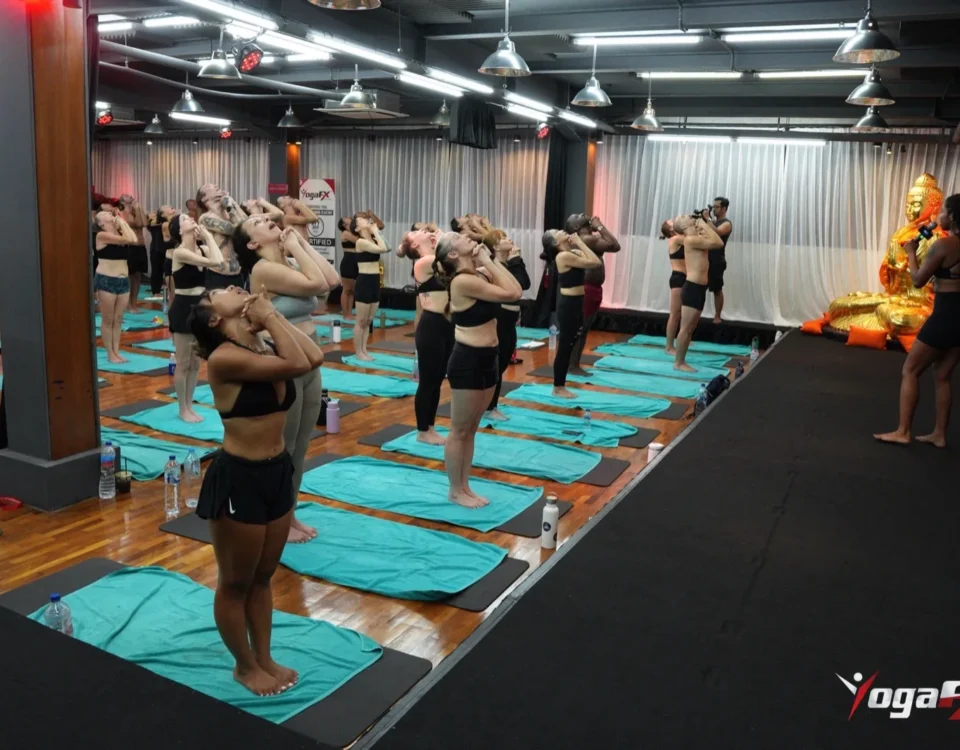
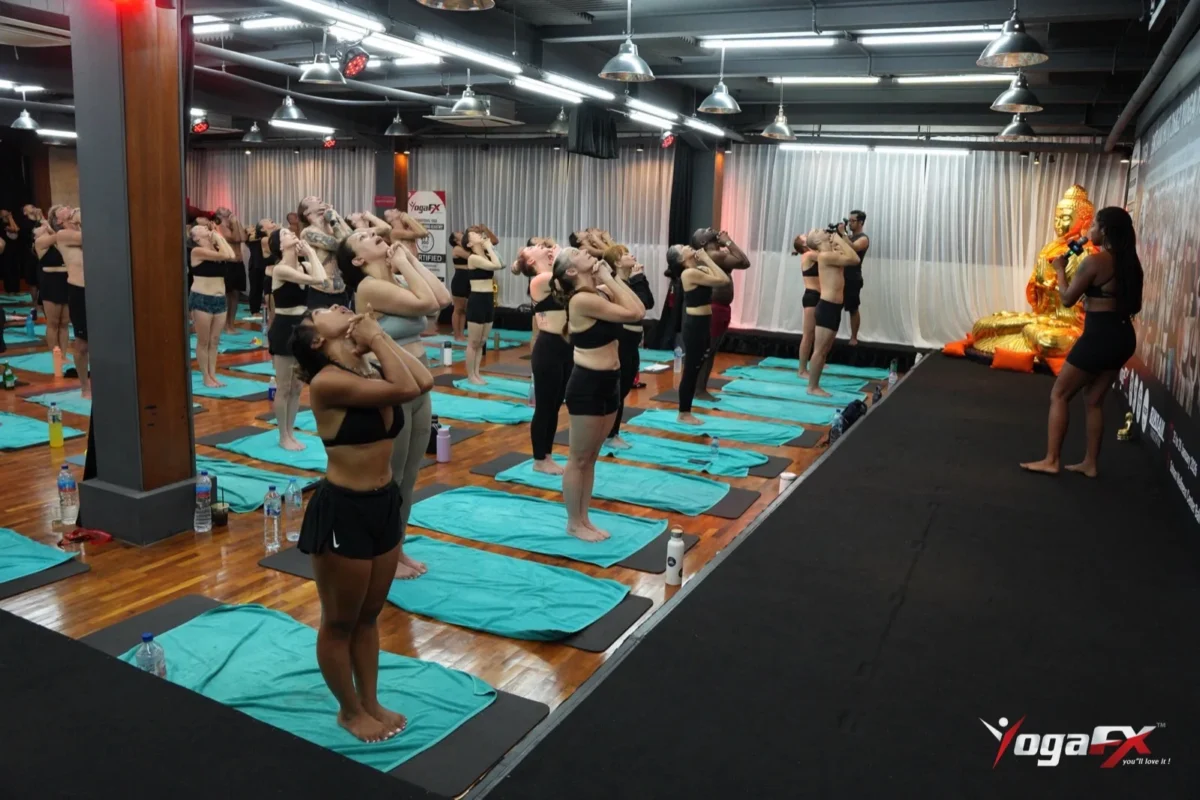
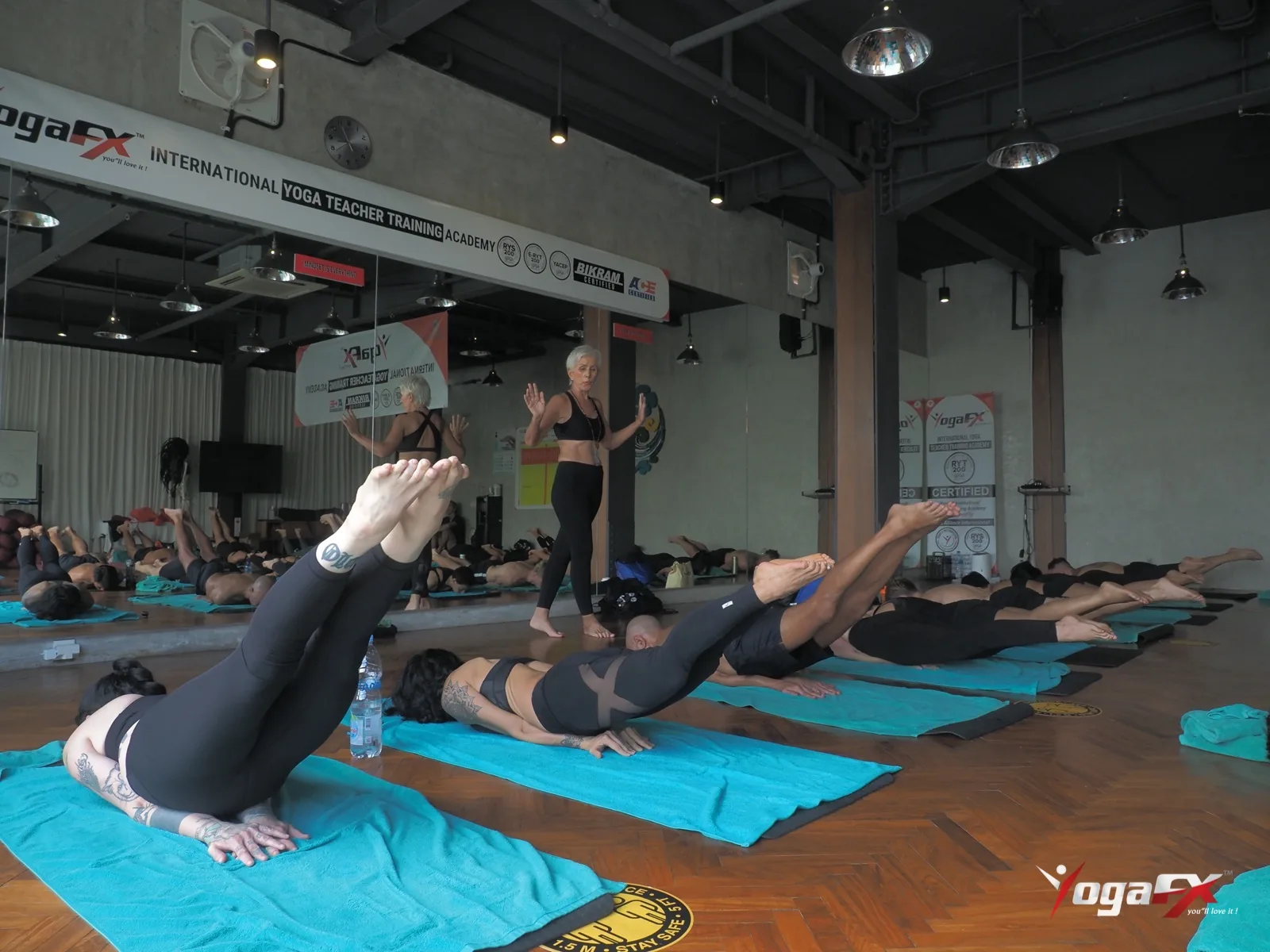
Dropping the cleanse story doesn’t mean dropping the class. At YogaFX, a class runs 90 minutes in a room held at 40°C with 40% humidity. The teacher follows a scripted dialogue, so there is no demonstration and no music, and you work from the words alone.
That format asks for sustained effort, steady breathing and focus in the heat. As a result, students often describe the mental side most strongly, which fits the reviews below. We make no medical promises, and anything you hope to gain for a health condition is a conversation for you and your doctor.
- Effort: ninety minutes of standing and floor postures is a real workout.
- Focus: following a scripted dialogue keeps your attention on the room, not your phone.
- Routine: a regular class gives your week a fixed point, which many people value.
So the honest pitch is simple. Come for the practice, bring water and respect the heat. Please don’t come because someone told you the answer to “does hot yoga sweat out toxins” is yes, because the evidence does not back that claim.
What YogaFX Students Say About the Heat
When students describe a hot class, they talk about effort, mindset and support. Nobody mentions toxins. Here are three real reviews from the YogaFX review store.
Kevin, Google review, 2025: “Muscles were sore, body and mind break down until I reached a ‘mind palace’ an impenetrable mentality. I felt invincible.”
Zainab, YouTube review, 2026: “Grateful for all of you. I don’t think I could have made it without you. We all shared. We all held it together.”

Jamasb, YouTube review, 2026 (paraphrased): He said the training took him to real depth, mentally and physically. Day two felt like a low point, by day three he felt he was shining, and day four was much easier.

Teaching This Honestly: Bali Training for UK Applicants
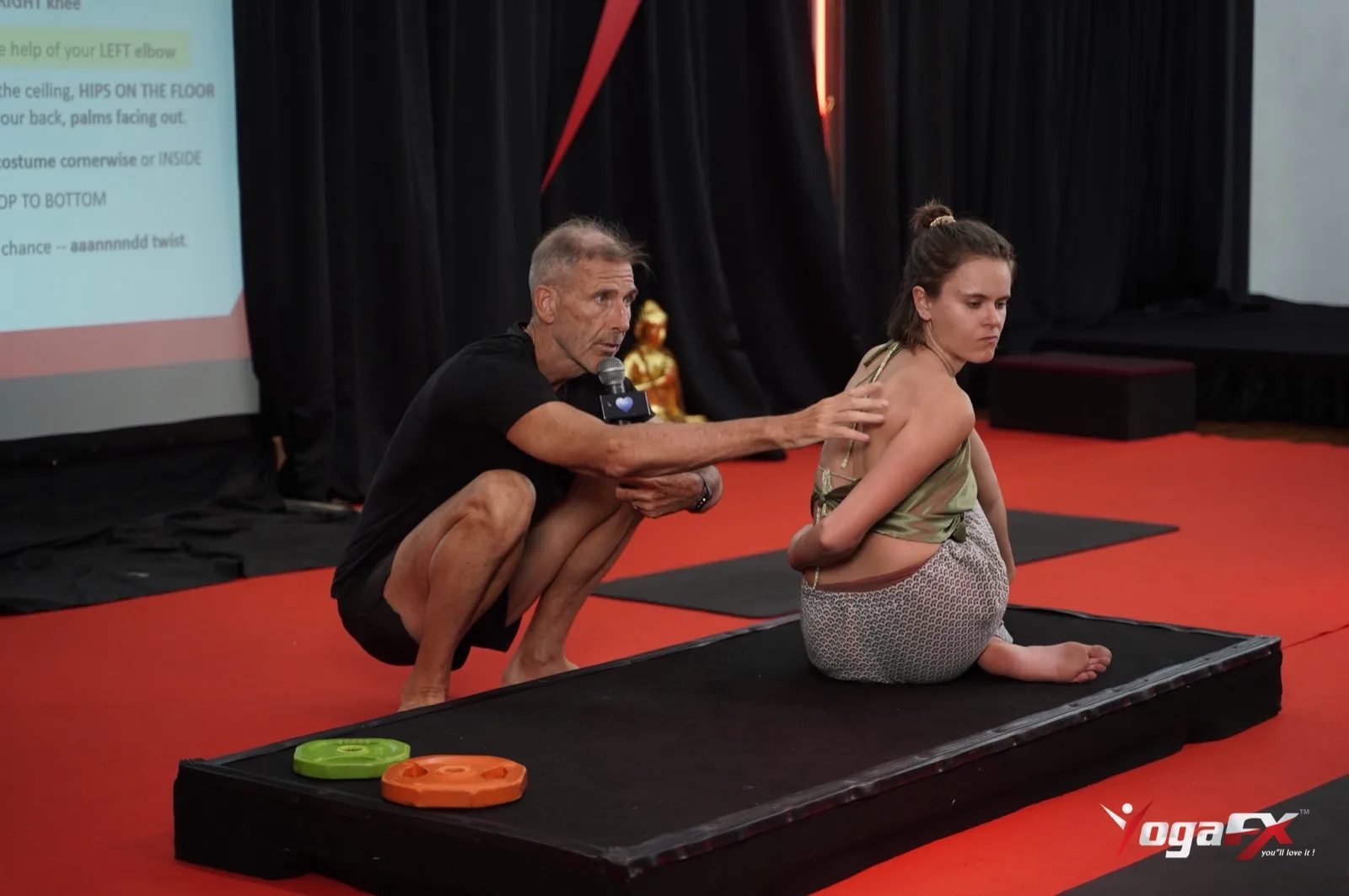
Mr. Ian Terry, E-RYT 500, has taught more than 12,000 hours of hot yoga, and he hears this question from almost every new student. His answer is the one in this article. YogaFX was founded in 2017, and Mr. Ian and his team have trained 1,500+ graduates from 80+ countries to answer questions like this one plainly, without hype.
If you are a UK reader thinking about teaching, the YogaFX MasterClass is a 6-day hybrid course: an online pre-course, then an intensive in Bali. It leads to Yoga Alliance RYT 200-Hour and Original Hot 26&2 200-Hour International Yoga Certification.
The next batch checks in on Sunday 24 January 2027 and checks out on Friday 29 January 2027 at Soham Wellness Center in Seminyak. The Early Bird price is US$1,899, against US$1,999 normally.
Whichever route you choose, we hope you will teach the honest answer to “does hot yoga sweat out toxins” rather than the myth. To compare options, read our UK hot yoga teacher training cost guide and the breakdown of yoga teacher training in Bali versus the UK.
FAQ
Does hot yoga remove toxins?
No good evidence says it does. Sweat is mostly water and salt, and a 2019 review judged the role of sweating in removing waste products and toxicants to be minor. Your kidneys and liver do that job all day. A hot class is still hard exercise, but it is not a cleanse.
Why do I sweat so much in hot yoga?
Your body sweats to cool itself. In a 40°C room with 40% humidity, and 90 minutes of effort, your sweat glands work hard and evaporation carries heat away. Heavy sweat is a cooling response, not a sign of a cleanse. Sip water through class and replace salt afterwards.
Can hot yoga make you ill?
It can if you ignore warning signs. Dizziness, nausea or faintness in a hot room mean you should stop, cool down and sip water. People with heart, kidney or blood pressure conditions, or who are pregnant, should speak to a healthcare professional first. This is general information, not medical advice.
Are detox teas any good?
The evidence is weak. NHS England’s medical director warned in 2019 that there is a slim chance of success with diet pills and detox teas. Your liver and kidneys already clear waste without them. If you are worried about your health, speak to a GP or pharmacist instead of buying a quick fix.
Still have questions? Message Mr. Ian and the YogaFX team on WhatsApp and we will answer them personally.