Cobra pose (Bhujangasana) is a floor backbend. You lie face down, lift your chest with your back muscles and keep your hips pressed into the mat. If you sit at a desk all day, stay low, keep your elbows bent and stop at tension, not pain. Here is how we teach it in a hot studio.

This guide is written for British practitioners with desk-bound backs. It covers the steps, a safe range, the mistakes we correct most and what NHS and Mayo Clinic advice says about stretching. It also explains what changes when the room is 40°C. The pose looks simple. In a hot class, it asks for more control than most people expect.
Cobra Pose Step by Step: 7 Cues for a Desk-Bound Back
The exact dialogue is taught live in class, so we don’t reproduce it here. What follows is a plain-language map of the order in which you meet each cue. In a real class, always follow your teacher.
- Lie face down. Stretch your legs long behind you, keep them together and press the tops of your feet into the floor. That gives you a base to push from.
- Place your hands under your shoulders. Palms go flat beside your ribs, fingers point forward and the elbows stay tucked in.
- Start the lift with your back. Your back muscles raise the chest first. Your hands only support, so don’t shove yourself up with your arms.
- Keep your hips heavy. The front of your pelvis stays on the floor. If your hips lift, you’ve gone higher than your back wants today.
- Slide your shoulders down. Let the shoulder blades move towards your hips, away from your ears, and open the chest forward.
- Look up a little, not a lot. Your head follows your spine. Keep the back of your neck long instead of cranking it back.
- Lower slowly and rest. Come down in one smooth line, turn your head to one side and breathe before the second set.
Each cue protects the next one. Your legs make the base, the base lets your back lift, and the hips on the floor keep the bend in your upper back instead of your lower back. Take one cue out and the whole shape changes.
Desk-day check: what your week does to your cobra pose
Your week shapes your mat. A person who spends nine hours seated meets the pose differently from someone who lifts weights every evening. Table 1 shows the adjustments we make most often for British working habits.
| Desk habit | What it tends to tighten | Cobra pose adjustment |
|---|---|---|
| Long hours seated at a screen | Front of the hips and chest | Lower the chest and keep both hip bones heavy on the mat |
| Hunched commute on a train or in the car | Upper back and shoulders | Slide the shoulder blades down before you lift |
| Laptop on a low table or sofa | Neck and upper back | Look only a little way up and keep the neck long |
| Evening gym session with presses | Chest and front of the shoulders | Keep the hands light and the elbows bent |
If your week includes the gym as well, our guide to the 26 postures for desk hips and gym shoulders shows where cobra pose sits among the other tight spots.
How High Should You Go? A Safe Range for Cobra Pose
There’s no prize for the highest cobra pose. A safe height is where your hips stay down, your breath stays slow and you feel work in your back muscles, not a pinch. For a desk worker, the first goal is control, not height.
Use the sensations in Table 2 as your guide. Move up only when the step you’re on feels steady, and go lower again on any day that feels worse.
| What you feel | What it usually means | What to do |
|---|---|---|
| Warm effort in the mid back | Your back muscles are doing the lift | Stay here and keep breathing slowly |
| A stretch across the front of the hips | Your hips are staying heavy | Hold the shape and don’t go higher |
| A pinch or crunch in the lower back | You’ve lifted higher than your back is ready for | Lower the chest and bend the elbows more |
| Tingling, numbness or sharp pain | Something is irritated | Come down, rest and tell your teacher |
| Dizziness or heavy breathing in the heat | Your body needs a pause | Lie still, breathe and drink water after class |
Cobra pose at a glance
Common Cobra Pose Mistakes and How a Teacher Fixes Them
Most mistakes come from chasing height. People see the head rise and assume higher means better. Here are the five we correct most often.
- Pushing up with straight arms. Bend the elbows and let your back muscles do the first part of the lift.
- Letting the hips float. Press the pelvis into the floor and lower your chest until the hips stay heavy.
- Shrugging towards the ears. Slide the shoulder blades down your back and lengthen the neck.
- Throwing the head back. Keep the chin level with the chest and look only a little way up.
- Holding the breath. Breathe slowly while you hold, because a held breath tightens the whole back.
For example, a student who always feels cobra pose in the lower back is usually pushing with the arms and lifting the hips. A lower lift with bent elbows fixes both at once. Our teachers often say less rather than more, because one clear cue works better than five.
A sensible build for your first six weeks
Your back needs time to learn a new habit. Table 3 is a guide, not a rule. If a week feels worse than the last, go back a step without any guilt.
| Weeks | Goal | Check before you move on |
|---|---|---|
| 1 to 2 | Low cobra pose with bent elbows and light hands | Hips stay heavy and the breath stays slow |
| 3 to 4 | A little more lift, led by the back muscles | No pinch in the lower back and the neck stays long |
| 5 to 6 | A steadier hold in both sets | The second set feels calmer than the first |
Benefits of Cobra Pose: What Is Realistic for a Desk Job
Cobra pose stretches the front of the hips and chest while it works the back muscles, glutes and shoulders. For someone folded over a keyboard, that’s a useful change of shape. We don’t claim it treats any condition, and no single pose will undo a week of sitting.
The NHS says adults should reduce time spent sitting and break up long periods of not moving. It also says to do strengthening activities that work the major muscle groups, including the back, on at least 2 days a week. You can read the full list in the NHS physical activity guidelines for adults. A few well-made backbends can fit inside that advice.
On back pain, the NHS back pain page says to stay active and try exercises and stretches. It adds that activities like walking, swimming, yoga and pilates may also help ease back pain. It also says to stop if your pain gets worse and to see a GP for advice.
When to stop and get medical help
The NHS lists warning signs that need emergency care. They include pain, tingling, weakness or numbness in both legs, a loss of feeling around the genitals or anus, and changes in your bladder or bowels. If you notice any of these, call 999 or go to A&E. Don’t wait for the next class.
This is general information, not medical advice. If you have a back, neck or shoulder problem, a recent injury or surgery, or you’re pregnant, consult a healthcare professional, such as a GP or physiotherapist, before you practise. Tell your teacher before class too.
Cobra Pose in a Hot Studio: What 40°C Changes
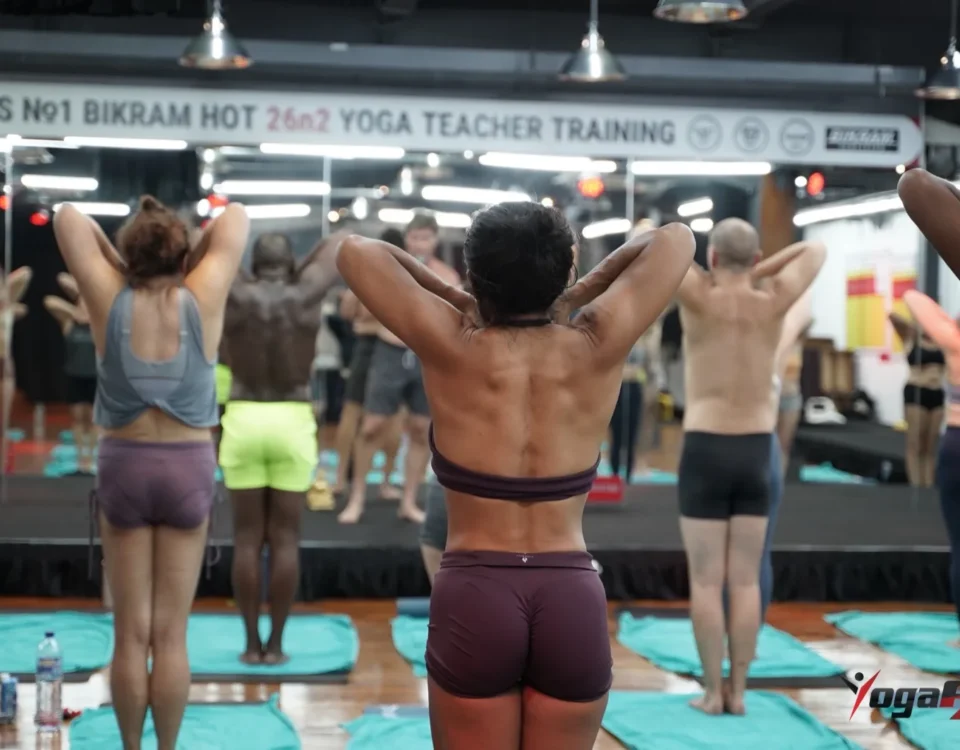
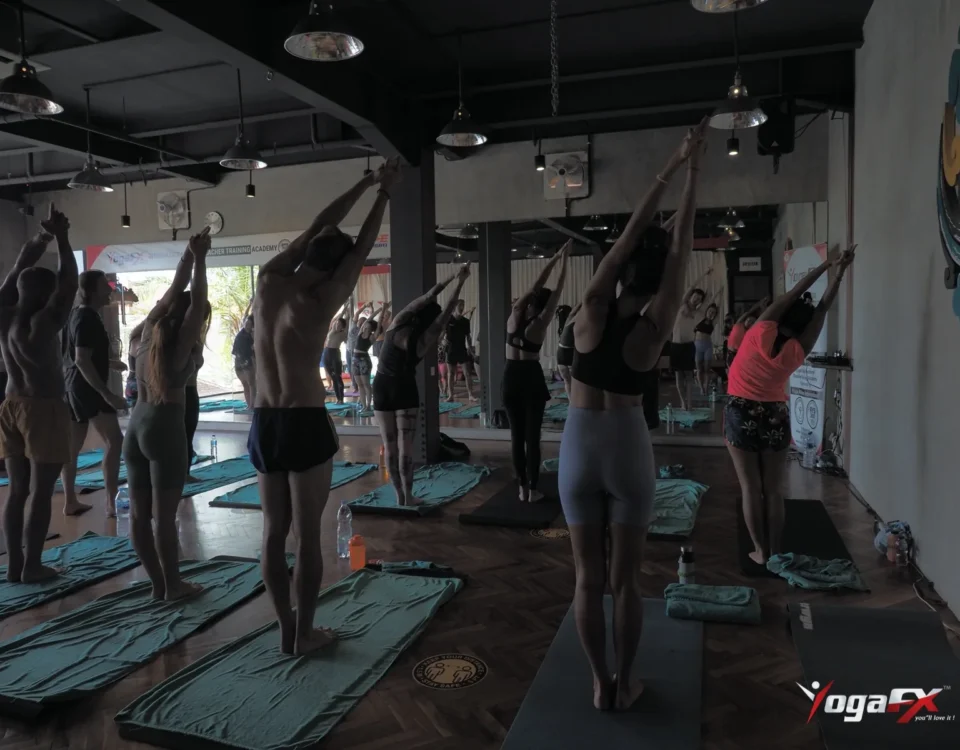
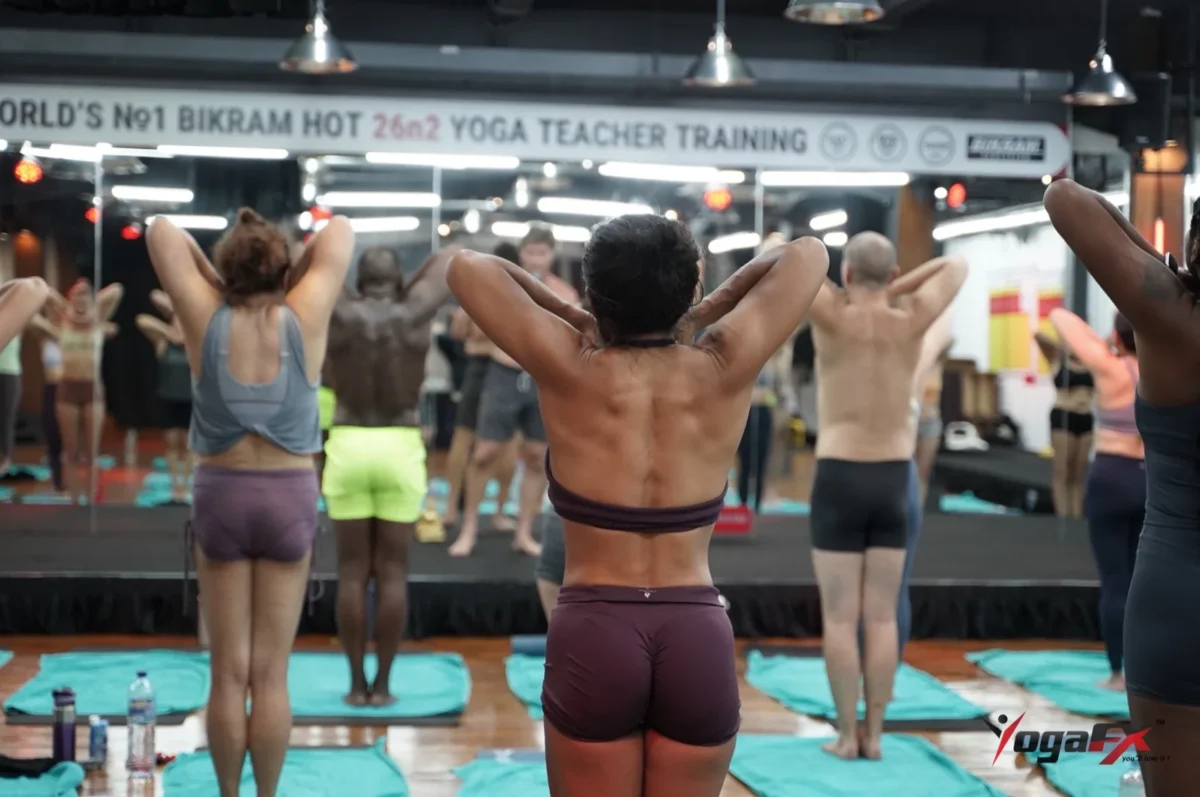
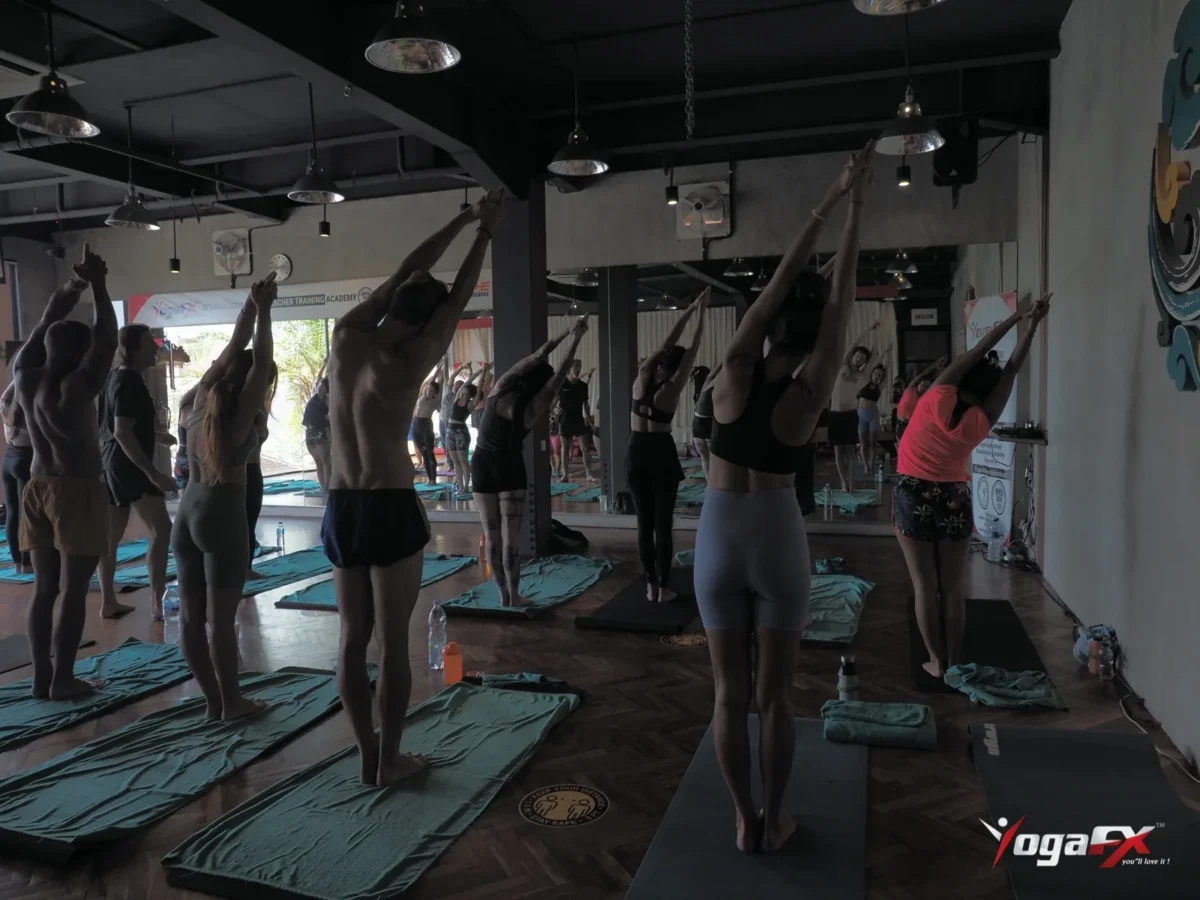
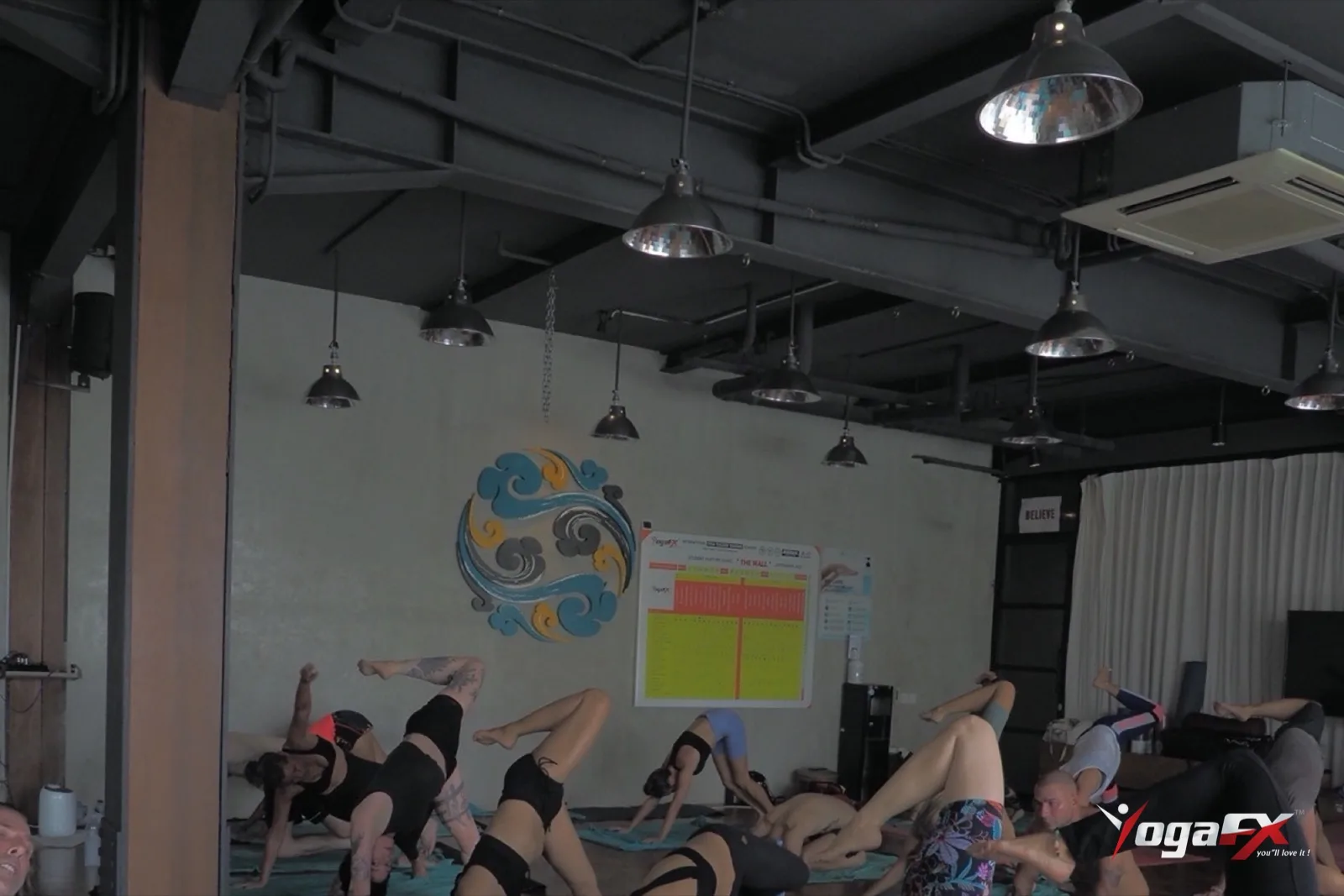
A 26 and 2 class has 26 postures and 2 breathing exercises, in the same order, for 90 minutes at about 40°C. Cobra pose is the first floor backbend. It comes after Sit-Up and before Locust. You can see the whole order in our guide to the full 26-posture sequence.
Every posture is done twice. The first set shows you where you collapse, and the second set lets you fix it. Heat adds a twist for cobra pose. Your muscles feel warm and willing, so the temptation is to go deeper than your back is ready for.
Mayo Clinic gives two rules that fit this well. It says to stretch in a smooth movement without bouncing, and to expect tension while you stretch, not pain. In its words, if it hurts, you’ve pushed too far. It also warns that you may hurt yourself if you stretch cold muscles.
By the time cobra pose arrives in class, your body is already warm, which is one reason the order of the class matters.
Mayo Clinic suggests holding most stretches for about 30 seconds. Cobra pose isn’t a long, static stretch in our class, because your teacher sets the timing. At home, think in breaths rather than seconds and build up slowly.
Heat can also hide how far you’re pushing, so let tension, not depth, be your guide. If you’re new to the room, read our hot yoga safety checks first. On a cold British evening you also arrive with stiff shoulders from the commute. Give yourself time in the room before class starts, so you’re not asking cold muscles to bend on the first posture.
Before Your Next Class: A Short Desk-Break Routine
You don’t need a special routine. A few habits make cobra pose steadier when it arrives. Keep the preparation modest and stop if anything hurts.
- Break up the sitting. Stand and walk for a few minutes in the afternoon, so your hips aren’t folded for the whole day.
- Drink water earlier. Sip through the day, so you’re not catching up in the room.
- Practise the lift lying down. At home, lie on your belly with your hands under your shoulders and lift only your head and upper chest for a few breaths.
- Listen for the order. In class, notice which cue comes first and which comes last. The order is the map.
- Compare your two sets. After the first set, ask what you could soften or lengthen. The second set is your answer.
Expect the first weeks to feel clumsy. That’s normal, because your back and hips are learning something new. Two or three classes a week are plenty for most people, and rest days matter as much as the work.
How Mr. Ian Terry Teaches Bhujangasana to Trainees
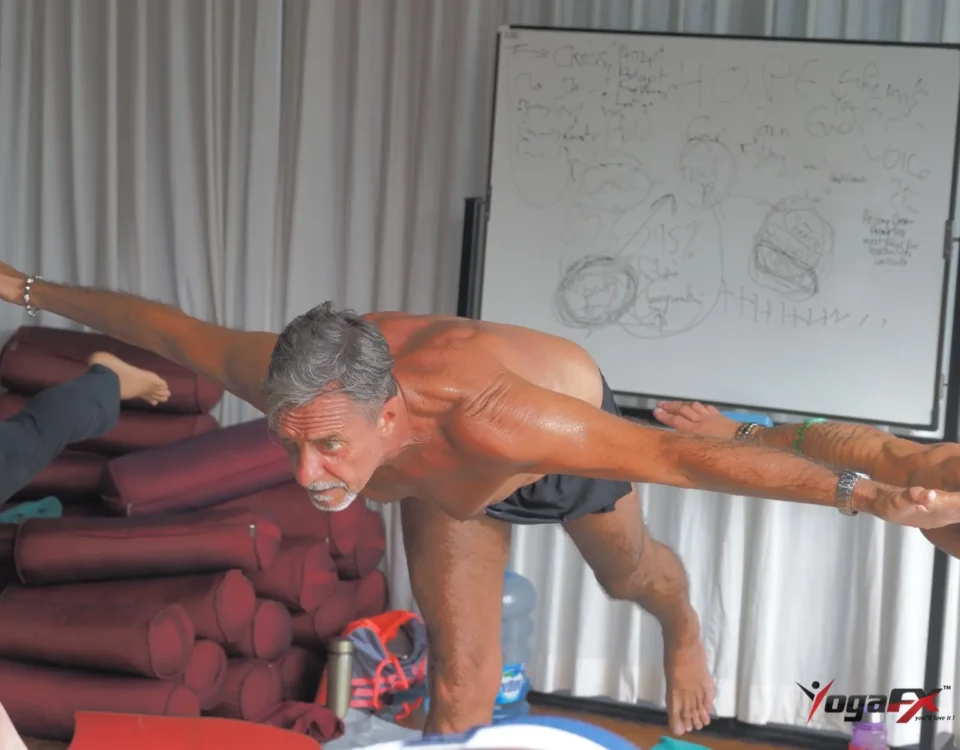
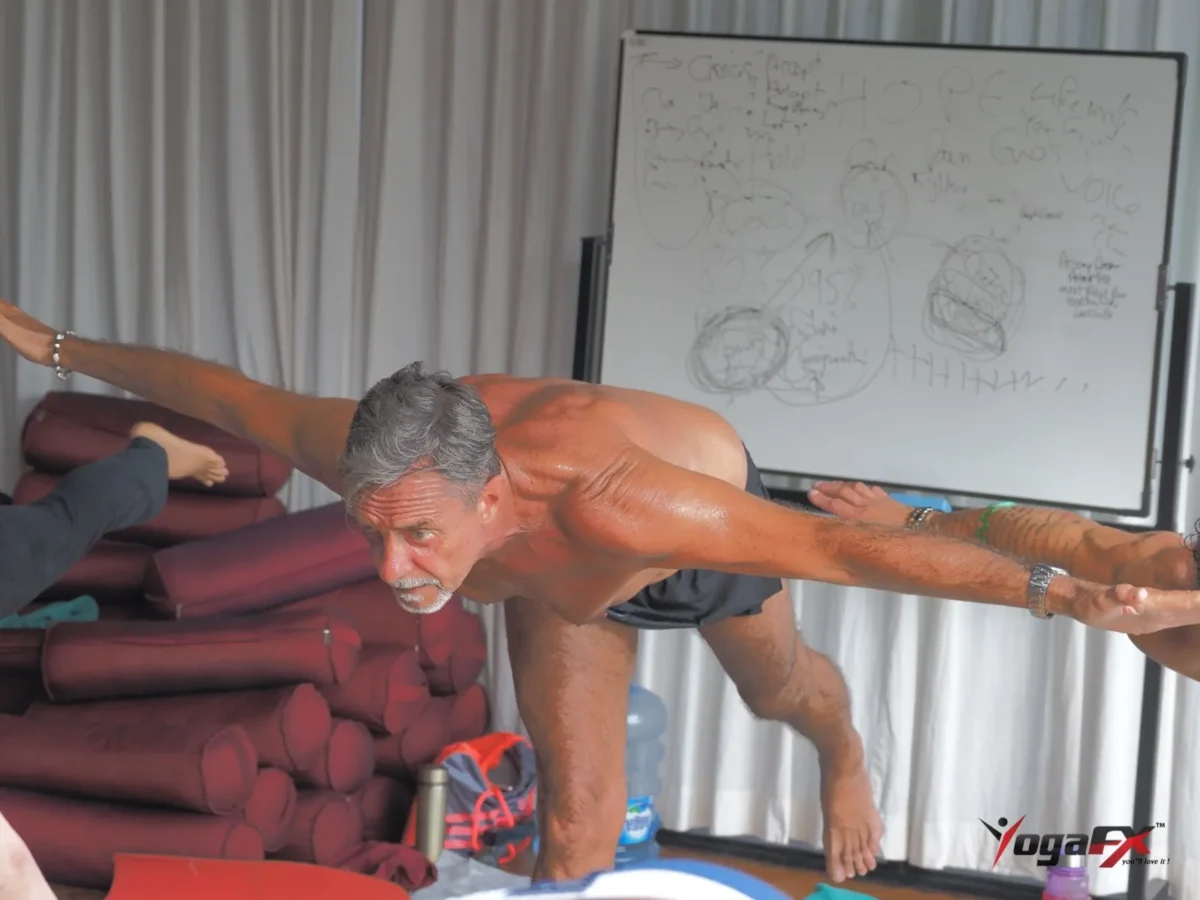
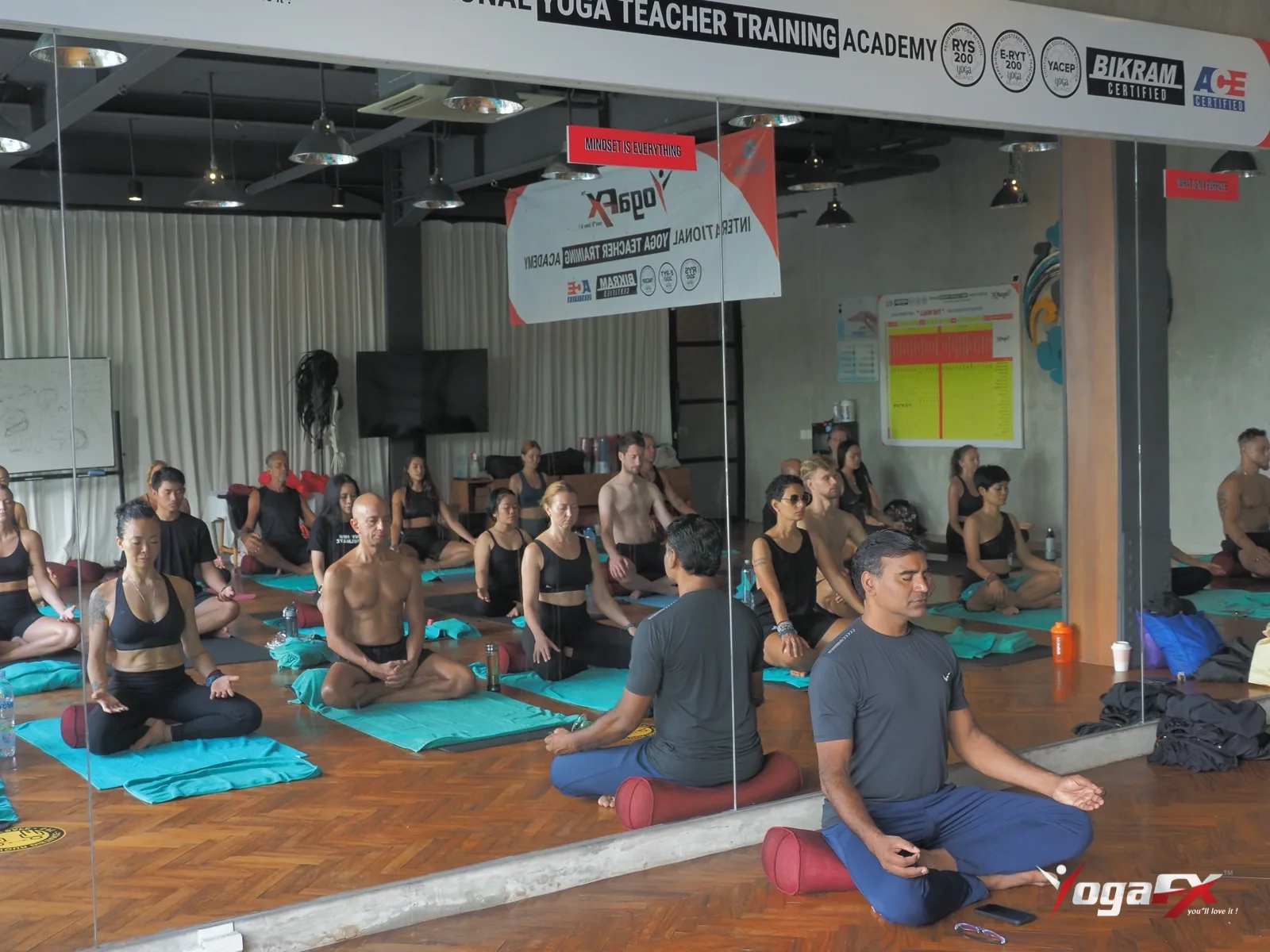
Mr. Ian Terry, E-RYT 500 with more than 12,000 teaching hours, leads the teacher training at YogaFX in Bali. He trained for five years, from 2014 to 2019, with the founder of the Bikram Hot 26&2 method. For a floor posture like cobra pose, that background shows up in how trainees learn to speak.
Trainees practise cueing the shape with words alone. They name where the hands sit, where the hips stay and when a student has lifted too high. In the posture clinic, a trainee spots a student whose hips have left the floor and corrects it with one calm cue. Learning to teach a backbend safely mostly means learning when to say less.
That habit of safe cueing runs through the whole course. Our article on how YogaFX teacher training builds injury-prevention skills explains it in more detail. If you’re a UK reader weighing a local course against an intensive abroad, compare training in Bali versus the UK before you decide.
The format is a 6-day hybrid: an online pre-course, then an intensive in Bali. Graduates leave with a Yoga Alliance RYT 200-Hour certificate and the Bikram Hot 26&2 200-Hour International Yoga Certification.
If you’d like to see how the same posture is cued in the method’s home setting, read how the 26 and 2 method cues the same posture.
What YogaFX Students Say About Learning in Bali
Students rarely describe one posture when they look back. They describe the teacher, the group and the effort. Here are three reviews from YogaFX students, with first names only.
His insight, presence, and ability to combine deep support with discipline is truly inspiring.
Mehtap, Google review, 2026, writing about Mr. Ian
I cannot recommend this program highly enough, and would strongly suggest it to anyone and everyone – even if you have no background in yoga.
Greta, Google review, 2026
Gary, in a YouTube review from 2025, said the whole experience is what brings the group together, from the little touches to the ceremony. This is a lightly edited transcript. His full video is below.

Where to Go Next After Cobra Pose
Cobra pose is one posture in a longer chain. Once it feels familiar, notice how it prepares you for Locust and the rest of the floor backbends. Go slowly, keep your hips heavy and let the second set teach you something the first one couldn’t.
FAQ
Is cobra pose bad for lower back pain?
Cobra pose is not automatically bad for a sore back, but it can irritate one if you go too high. Keep the hips heavy, bend the elbows and stop at a pinch. The NHS says to stop if pain gets worse and to see a GP for advice.
How long should you hold cobra pose?
In class, your teacher sets the timing, so follow the dialogue. Mayo Clinic suggests holding most stretches for about 30 seconds and expecting tension, not pain. At home, count breaths instead of seconds and come down the moment your lower back pinches, even if the breath count is not finished.
Who should not do cobra pose?
Speak to a GP or physiotherapist first if you have a back, neck or shoulder problem, a recent injury or surgery, or you are pregnant. Tell your teacher before class. Stop at once and seek medical help if you notice tingling, numbness or weakness in both legs, or changes in your bladder or bowels.
How many times should you do cobra pose?
In a 26 and 2 class, cobra pose is done twice, with a rest between the two sets. The first set shows you where you collapse, and the second set lets you correct it. At home, two or three gentle rounds are plenty, with a rest after each one.
What does cobra pose stretch?
Cobra pose stretches the front of the hips, the abdomen and the chest, while the back muscles, glutes and shoulders do the work of lifting. That is why it feels useful after a long day of sitting. It is a stretch and a strengthening move, not a treatment for any condition.
Still have questions? Message Mr. Ian and the YogaFX team on WhatsApp and we will answer them personally.