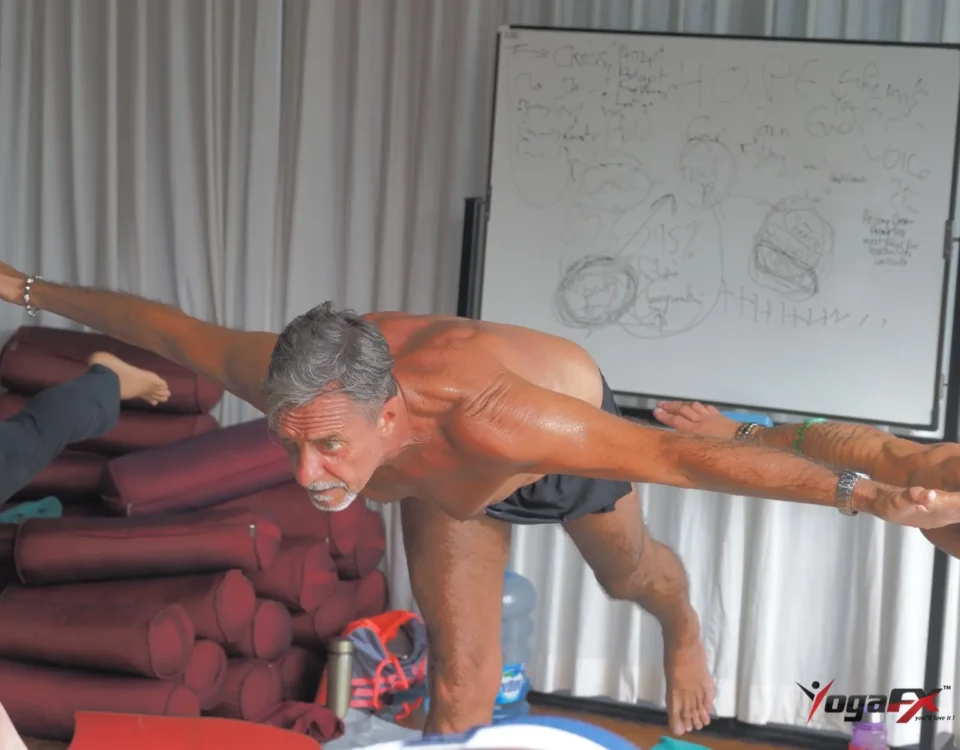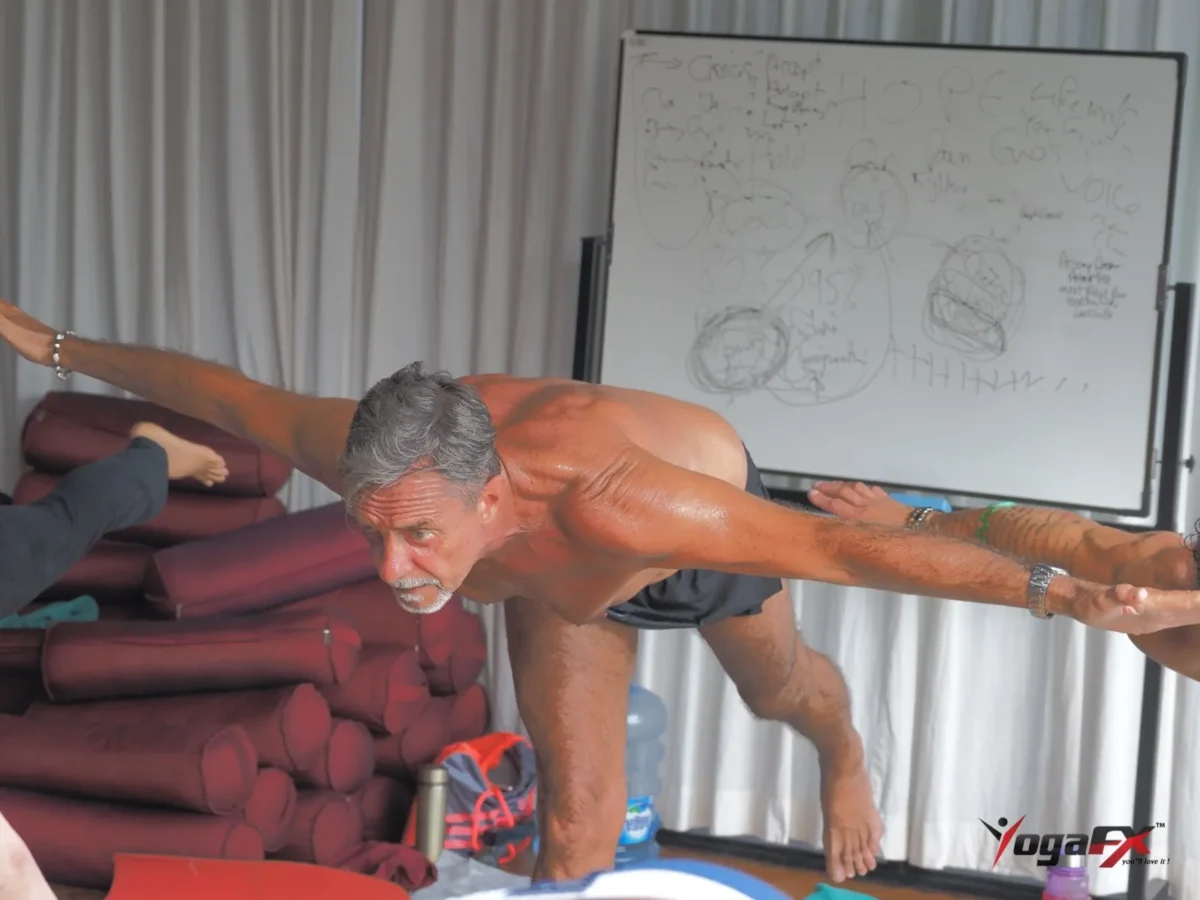
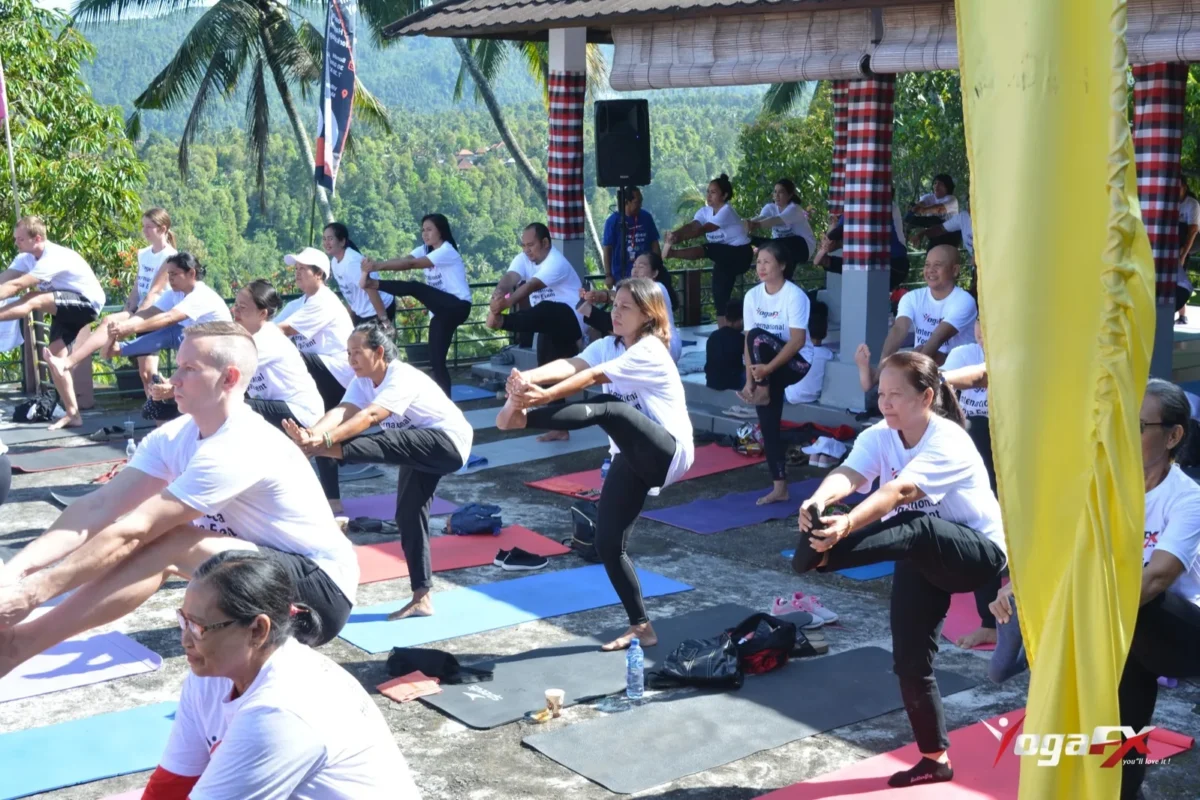
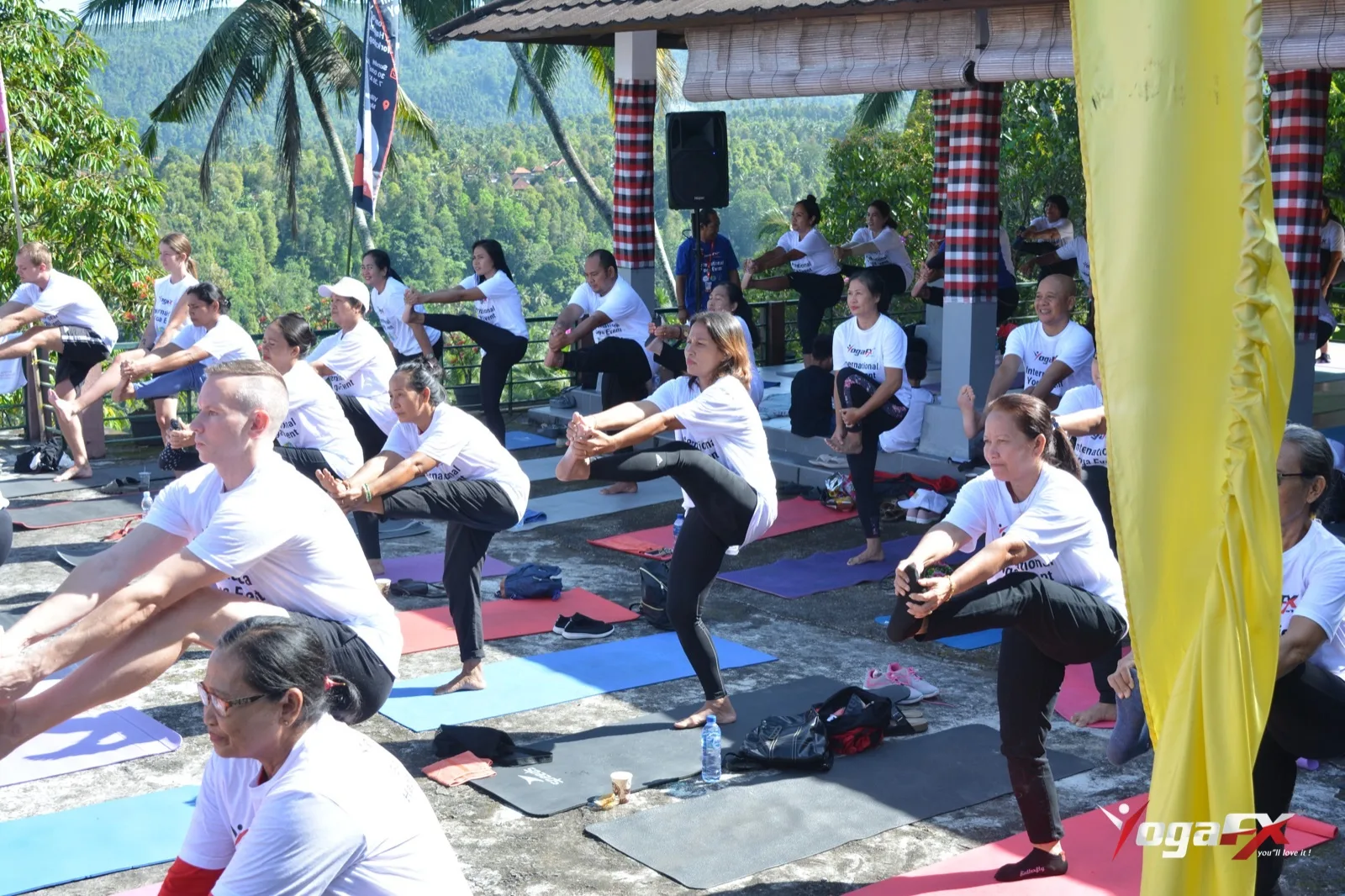
The standing bow pulling pose (Dandayamana-Dhanurasana) is a one-leg balance where you hold the opposite foot behind you, kick it back and up, and reach the free arm forward. For UK students with tight quads and shoulders, the answer is a lower foot, a square hip and a real kick, not a harder pull.

Standing Bow Pulling Pose for UK Students: The Short Answer
Most British students meet the standing bow pulling pose with a desk-stiff body. Hips have been bent for eight hours, shoulders sit forward, and the room is a warm 40°C after a cold walk from the station. So the shape feels far away at first. That’s normal, and it’s fixable.
Here are the four fixes we give new UK students at YogaFX, in the order that works:
- Lower the foot. Hold the foot at calf or thigh height at first. A low foot with a real kick beats a high foot with a limp leg.
- Kick before you pull. Push the foot back into your hand, then let the hand hold what the kick creates.
- Square the hips. Point both hip bones at the front of the room, even if the foot drops.
- Soften the shoulder. Reach the free arm forward from the back, not from a hunched neck.
If you want every step of the shape in the order the dialogue gives it, read the step-by-step walkthrough of Dandayamana-Dhanurasana on our sister site. This page is different. It is written for UK bodies, with the easier options most guides skip.
Why Tight UK Bodies Fight the Standing Bow Pulling Pose
The posture asks three things at once. You balance on one leg, you hold a strong standing thigh, and you lengthen the front of the held leg. Miss any one and the shape falls apart. Because of that, the most useful question is not “how high is my foot?” but “which of the three is my limit today?”
Three UK habits tend to decide the answer. First, long sitting shortens the hip flexors and the quads, so the held leg can’t travel back. Second, cycling and running build strong but short quads, so the knee complains when you bend it.
Third, gym training and swimming often leave the front of the shoulder tight, so the free arm drops or the neck rises.
Cold weather adds a fourth. Many UK students arrive with stiff ankles and cool muscles, and the standing foot grips instead of spreading. So we warm the feet and ankles first, which the early standing postures already do. Next, the table below pairs each type of student with the usual limit and an easier option.
Standing Bow Pulling Pose Fixes by Body Type
We built this table from how YogaFX trains teachers to coach the standing bow pulling pose. Find the row that sounds like you, then try the easier option for a few weeks before you chase the full shape.
| UK student type | Usual limit | Easier option | Cue to keep |
|---|---|---|---|
| Desk worker, nine hours sitting | Tight hip flexors and quads, foot will not rise | Hold the foot low and keep the knee pointing down | “Knee down, kick back.” |
| Cyclist or runner | Short quads, sore knee when bent | Shorten the bend, hold the ankle or toes lightly | “Kick first, bend second.” |
| Gym lifter or swimmer | Tight front shoulder, arm drops | Reach the arm at chest height, not by the ear | “Long arm, quiet neck.” |
| Nervous beginner | Wobble, fear of falling | Fingertips on a wall, foot low | “One point, soft eyes.” |
| Tight ankle after winter | Standing foot grips and shakes | Spread the toes and press all four corners of the foot | “Spread the foot like a paddle.” |
Notice that none of these options ask you to stretch harder. Pushing into a tight muscle rarely helps, but changing the angle often does. A student with tight quads, for example, gains more from a low foot and a strong kick than from yanking the heel toward the hip.
How to practise it, one layer at a time
- Week one and two. Stand on one leg only, near a wall, and fix your eyes on one point.
- Week three and four. Hold the foot low, add the kick and keep both hip bones square.
- After that. Raise the foot a little and reach the free arm forward, but only when the first two layers feel calm.
- Every class. Do each side twice, because the second set shows what you changed in the first.
Common Mistakes in the Standing Bow Pulling Pose
Almost every fault we see in UK classes comes from one habit: treating the posture as a pull. A pull drags the foot toward the body and rounds the back. A kick pushes the foot away and lengthens the spine. That single change fixes more than any stretch.
Mistake 1: Pulling the heel toward the hip
The knee bends sharply, the quad shortens and the hip opens. Instead, aim the knee at the floor and push the foot back into the hand. Your hand then guides the shape, rather than forcing it.
Mistake 2: Locking the standing knee backward
A locked knee should be held by a strong thigh, not by pushing the joint back. Many beginners shove the kneecap back, which feels wobbly and can strain the joint. So lift the kneecap by drawing the thigh up, and keep your attention on the muscle.
Mistake 3: Chasing height with a hunched neck
When the foot won’t rise, students lift the chin and hunch the shoulder to fake the shape. That adds tension and takes the eyes off their point. Drop the foot, lower the chin to neutral and keep the arm long.
Mistake 4: Holding the breath
Effort makes people stop breathing, and that makes the balance worse. Breathe through the nose, slowly. If the breath stops, the posture is too hard today, so use an easier option.
Four Easier Options for the Standing Bow Pulling Pose
Each option removes one demand and keeps the other two. That is how a teacher makes a hard posture safe without turning it into a different posture. Because the class dialogue never changes, you can use the same option in every class and watch your own progress.
What Research Says About Balance, Stretching and Hot Rooms
No study has tested the standing bow pulling pose on its own, so we don’t claim it treats anything. We use outside research to explain why the cues make sense. The sources below come from health and university sites, and we opened each one to check it says what we describe.
Balance: the NHS one-leg stand
The NHS lists a one-leg stand among its balance exercises. It says to lift one leg, keep your hips level and keep a slight bend in the opposite leg. It suggests holding the lift for 5 to 10 seconds, three times on each side, with your fingertips on a wall (see the NHS balance exercises page). The standing bow pulling pose is a harder cousin, so the same rule applies: good form first, then difficulty.
Stretching: will it weaken my legs?
Stretching worries some athletes, because long holds can sap force. A 2021 systematic review with meta-analysis pooled 8 studies and 165 people. It found that holding a hip flexor stretch for 30 to 90 seconds changed performance by about -0.12%, while 270 to 480 seconds changed it by about -3.59%.
The authors described a dose-response pattern and noted the small number of studies (Konrad et al., International Journal of Environmental Research and Public Health, 2021). A posture hold in class is far shorter than that, so a runner or footballer doesn’t need to fear it.
Heat: when dizziness means rest
Heat adds one more point. The NHS lists feeling dizzy or lightheaded among the symptoms of dehydration, and it advises drinking enough during the day that your pee stays a pale colour. It says to drink more when you sweat from heat or exercise (NHS dehydration guide). So a wobble that comes with dizziness is a reason to rest, not to push on.
This is general information, not medical advice. If you have a knee, hip, shoulder or back problem, or you feel dizzy standing on one leg, speak to a healthcare professional before you practise. Tell your teacher before class too.
Standing Bow Pulling Pose Without the Wobble: A UK Home Routine
You don’t need a hot room to build the parts. A few minutes at home, two or three times a week, trains the same three skills. The NHS suggests balance work at least twice a week, so this fits an ordinary UK evening.
- Wall balance. Stand on one leg with your fingertips on a wall and hold for 5 to 10 seconds, as the NHS describes.
- Quad stretch, short and gentle. Hold your ankle and keep your knee pointing down. Stop well before sharp pain.
- Shoulder reach. Lift one arm overhead, then reach it forward and back slowly, keeping your neck long.
- Eyes on one point. Pick a spot at eye level and keep breathing through your nose.
None of this replaces a class with a teacher, but it keeps your body ready between sessions. If you want to see where the posture sits in the sequence, our guide to the complete 26-posture sequence shows the order. Runners and footballers can also read how yoga for footballers uses the same standing balance, and the balancing stick pose guide covers the posture that comes next.
One more tip for sweaty UK winters: bring a grippy towel and wear shorts or tights that don’t ride up. Loose legs get in the way of the hand, so a fitted option helps. A secure standing foot is the first beat of the posture, so grip matters more than style.
Student Voices: Why Steady Effort Wins
Students rarely talk about one posture by name. They talk about the whole effort, and that effort is what builds a steady standing bow. These are real YogaFX trainees. Names are first names only.
Shelley (Google review, 2026) wrote: “So much more than just a yoga course”. She also said, “You will learn so much more than just dialogue and delivery”.
Selly (YouTube review, 2024) thanked Mr. Ian and the team for the effort, love and organisation behind the course, and said it showed (paraphrased from her video).
A trainee in our YouTube review (2018) said she gave herself a try, and that she finished feeling happy and energetic (paraphrased).

Notice the pattern: hard days, steady effort, then a result. The standing bow pulling pose follows the same arc, so be kind to yourself and keep coming back.
Learn the Standing Bow Pulling Pose With Mr. Ian Terry in Bali
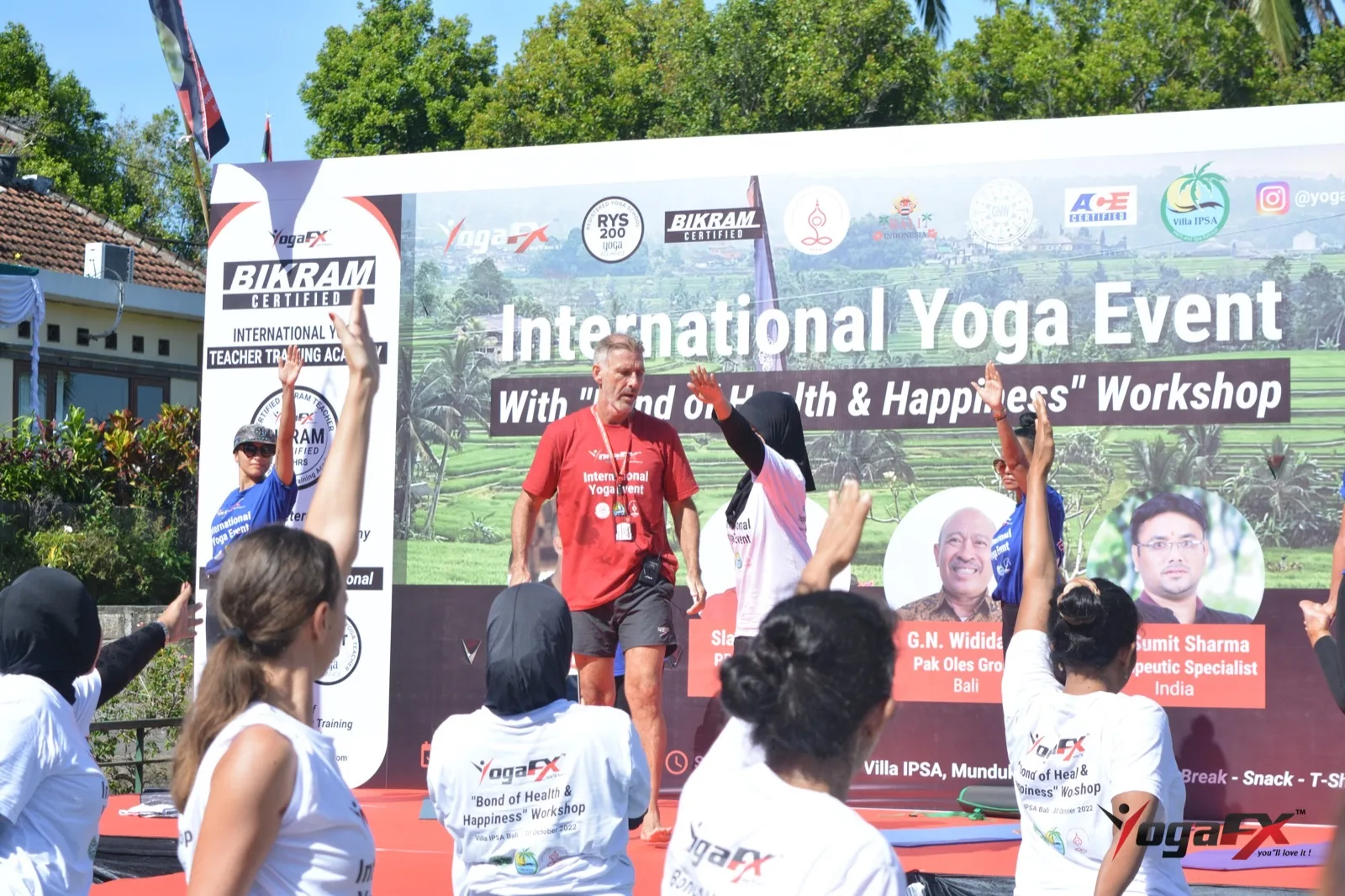
Mr. Ian Terry is the Founder and Lead Instructor at YogaFX, an E-RYT 500 teacher with 12,000+ teaching hours. He trains teachers to give one clear cue at a time and to trace every fault back to its first beat.
That skill matters for UK trainees, because students in a London or Leeds class can’t see their own held leg, so the teacher has to coach with words alone.
Our 6-day hybrid Bikram Hot 26&2 Yoga Teacher Training MasterClass mixes pre-course online study with an intensive in Bali. It leads to Yoga Alliance RYT 200-Hour certification plus the Bikram Hot 26&2 200-Hour International Yoga Certification. For a fair look at the choice, read what to compare between Bali and UK training and the cost, duration and how to choose guide.
You can try a class first. The YogaFX studio is at Jl. Pangkungsari Gg Jepun No.888, Kuta Utara, Seminyak, Badung, Bali 80361, open 06:00 to 22:00 daily, and your first class comes with a Free 1-Day Guest Pass. That’s a useful trial for any UK applicant who wants to feel the standing series before booking flights.
FAQ
What is the Sanskrit name for the standing bow pulling pose?
The standing bow pulling pose is called Dandayamana-Dhanurasana. Dandayamana is usually read as standing, and dhanu as bow. In a Hot 26&2 class you balance on one locked leg, hold the other foot behind you, and kick it back and up while the free arm reaches forward.
Why can’t I reach my foot in the standing bow pulling pose?
Usually the front of the hip and thigh is tight from long sitting or cycling, so the heel stays far from your hand. Hold the foot lower, keep the knee pointing down, and kick back instead of pulling. The reach improves over weeks, so be patient and tell your teacher about any pain.
What are the benefits of the standing bow pulling pose?
It trains one-leg balance, strength in the standing thigh, and length through the front of the held leg and the shoulder. It does not treat any condition, and research on it alone doesn’t exist. A healthcare professional should guide anyone with a knee, hip, shoulder or back problem before they practise.
How long do you hold the standing bow pulling pose?
In a scripted Hot 26&2 class the dialogue sets the hold, so you follow your teacher instead of counting. At home, the NHS suggests holding a one-leg stand for 5 to 10 seconds, three times on each side, near a wall. Build slowly and stop if you feel dizzy.
Is the standing bow pulling pose safe if I have a tight shoulder or knee?
Often yes, with an easier option, but check first. Hold the foot low, reach the free arm at chest height, and keep the movement small. Sharp pain in a knee, shoulder or back is a signal to come out of the pose. See a healthcare professional if the pain returns.
Still have questions? Message Mr. Ian and the YogaFX team on WhatsApp and we will answer them personally.