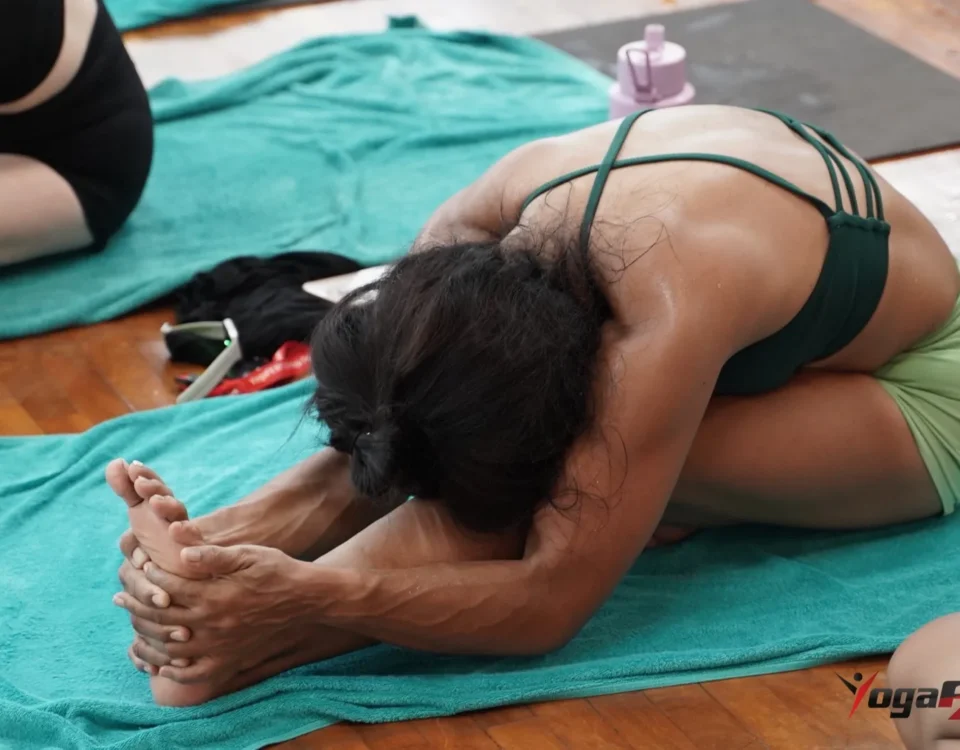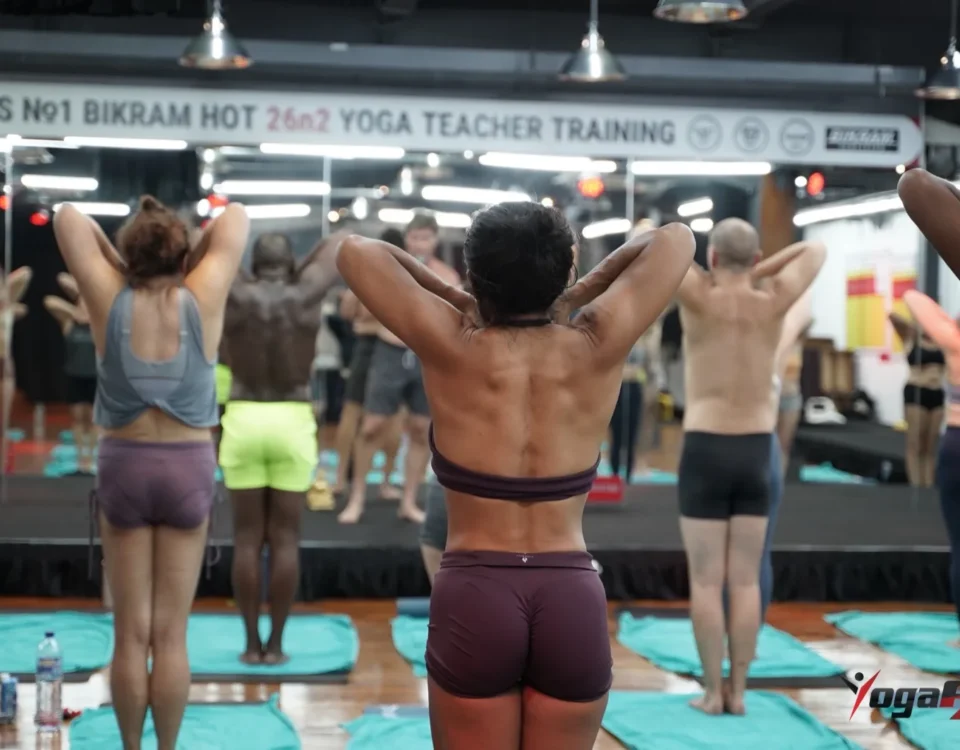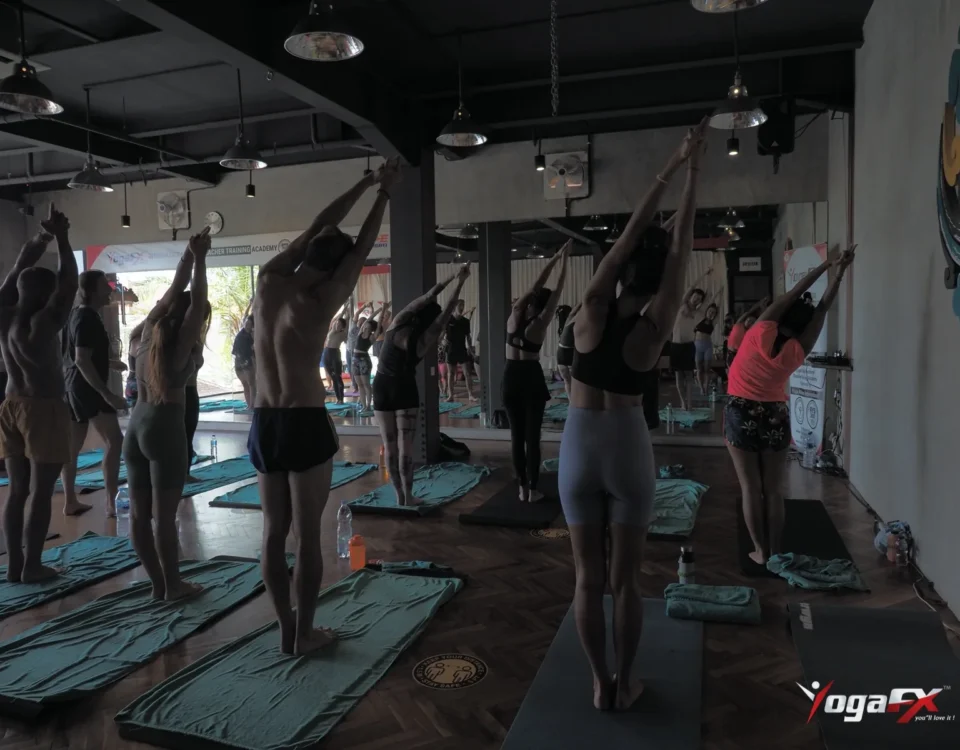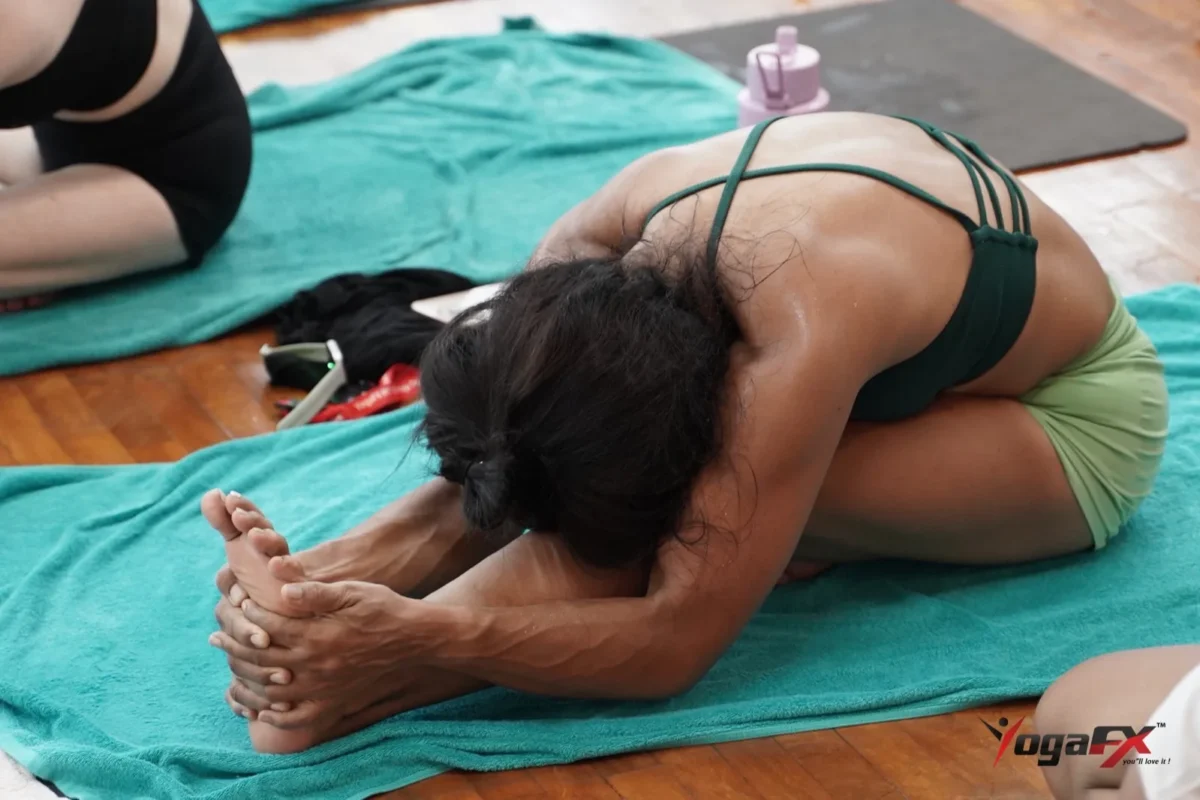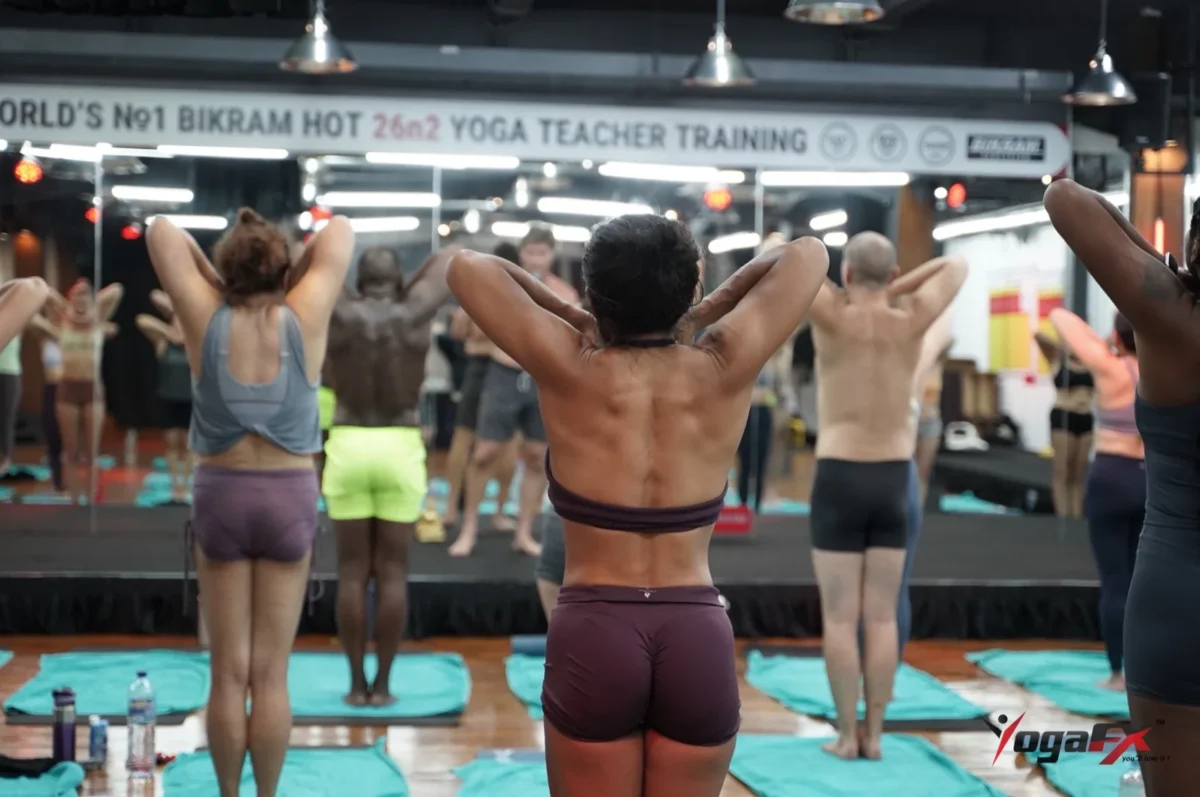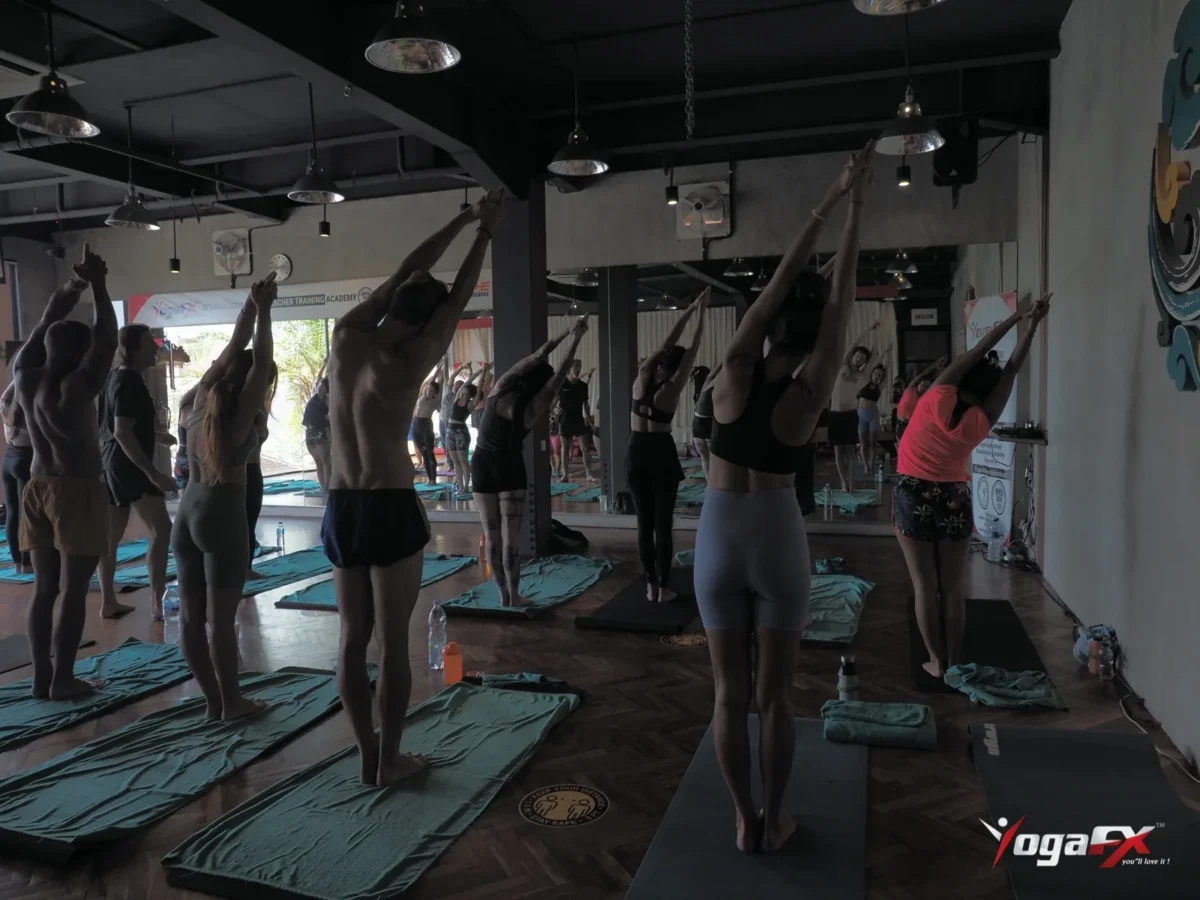
What is Bikram yoga? It is a fixed 90-minute class of 26 postures and 2 breathing exercises, done in the same order every time, in a room heated to around 40°C and led by a scripted dialogue. For a UK reader, the real choice is whether to practise it at a local class or learn to teach it.

What Is Bikram Yoga? The Quick Answer for UK Readers
If you only have a minute, here is the short version of what is Bikram yoga. It is a style of hatha yoga with a set sequence, a hot room and a teacher who talks you through every posture without demonstrating. Nothing in the class is improvised, so a first-timer in Leeds and a trainee in Bali hear the same instructions in the same order.
That repetition is the whole idea. Because the sequence never changes, you stop guessing what comes next. Instead, you spend your attention on breathing, balance and the heat. Many people call the same class Hot 26&2 or 26 and 2 yoga, so the label on a UK timetable can vary even when the class is the same.
Here are the features that define it:
- One fixed order. The 26 postures and 2 breathing exercises always run in the same sequence.
- Ninety minutes. A class runs from the opening breath to the final rest, with short pauses between postures.
- A heated, humid room. At YogaFX the room sits near 40°C with about 40% humidity.
- A scripted dialogue. The teacher speaks the same words each class, with no demonstration and no music.
Mr. Ian Terry, Founder and Lead Instructor of YogaFX (E-RYT 500), has taught this method for more than 12,000 hours. Everything below comes from that classroom, and from the questions UK students ask us before they book a class or a training.
A Class From the Door to the Final Breath
Knowing the shape of the 90 minutes takes most of the fear out of a first visit. The graphic below shows how a class is paced, and the notes after it explain what you will actually feel at each stage.
What Is Bikram Yoga Like in the First Ten Minutes?
Expect the heat to feel intense when the first breathing exercise begins. You will not be the only one who finds it hard. That’s normal, so slow your breath and follow the teacher’s voice. Most people find the room easier by the end of the standing series, because the body starts to adapt.
The middle of the class
Postures come quickly, and rests in Dead Body Pose give you a moment to recover. Sitting out is always allowed. In fact, you’ll learn that knowing when to rest is part of the skill, and a good teacher will say so.
What to bring to a first class
- A large towel to lay over your mat, since sweat makes mats slippery.
- Plenty of water, ideally sipped through the day as well as in the room.
- Light, close-fitting clothes that let you move and let you cool.
- A second towel for afterwards, because you’ll want to dry off before the journey home.
The finish and the walk out
The closing breathing exercise slows everything down. Most people leave tired but clear-headed, and they don’t regret it. After class, rehydrate and eat something light, since a heavy meal and a hot room do not mix well.
The 26 Postures and 2 Breathing Exercises in Order
So what is Bikram yoga, posture by posture? The Bikram yoga sequence is easier to remember than it looks, because it moves from standing work to the floor and back to breath. The table lists every posture in class order, grouped by series, with a note on what beginners usually notice.
| Series | Postures in order | What a UK beginner usually notices |
|---|---|---|
| Opening breath | Standing Deep Breathing (the first breathing exercise) | A simple start that sets the pace and calms the nerves. |
| Standing series, part one | Half Moon with Hands to Feet, Awkward, Eagle, Standing Head to Knee, Standing Bow Pulling, Balancing Stick | Tired thighs, a wobbly balance and a lot of sweat. |
| Standing series, part two | Standing Separate Leg Stretching, Triangle, Standing Separate Leg Head to Knee, Tree, Toe Stand | Hips and hamstrings working hard, plus a strong need to focus. |
| Rest and warm-up for the floor | Dead Body, Wind Removing, Sit-up | A welcome pause and a first chance to cool the breath. |
| Floor series, back bends | Cobra, Locust, Full Locust, Bow, Fixed Firm | A deep stretch through the front of the body and strong back muscles. |
| Floor series, spine and hips | Half Tortoise, Camel, Rabbit, Head to Knee with Stretching, Spine Twisting | Stiff spines loosen, though the hot room asks for slow, careful movement. |
| Closing breath | Blowing in Firm (the second breathing exercise) | A fast, active breath that leaves most people calm. |
The standing series: what is Bikram yoga asking of your legs?
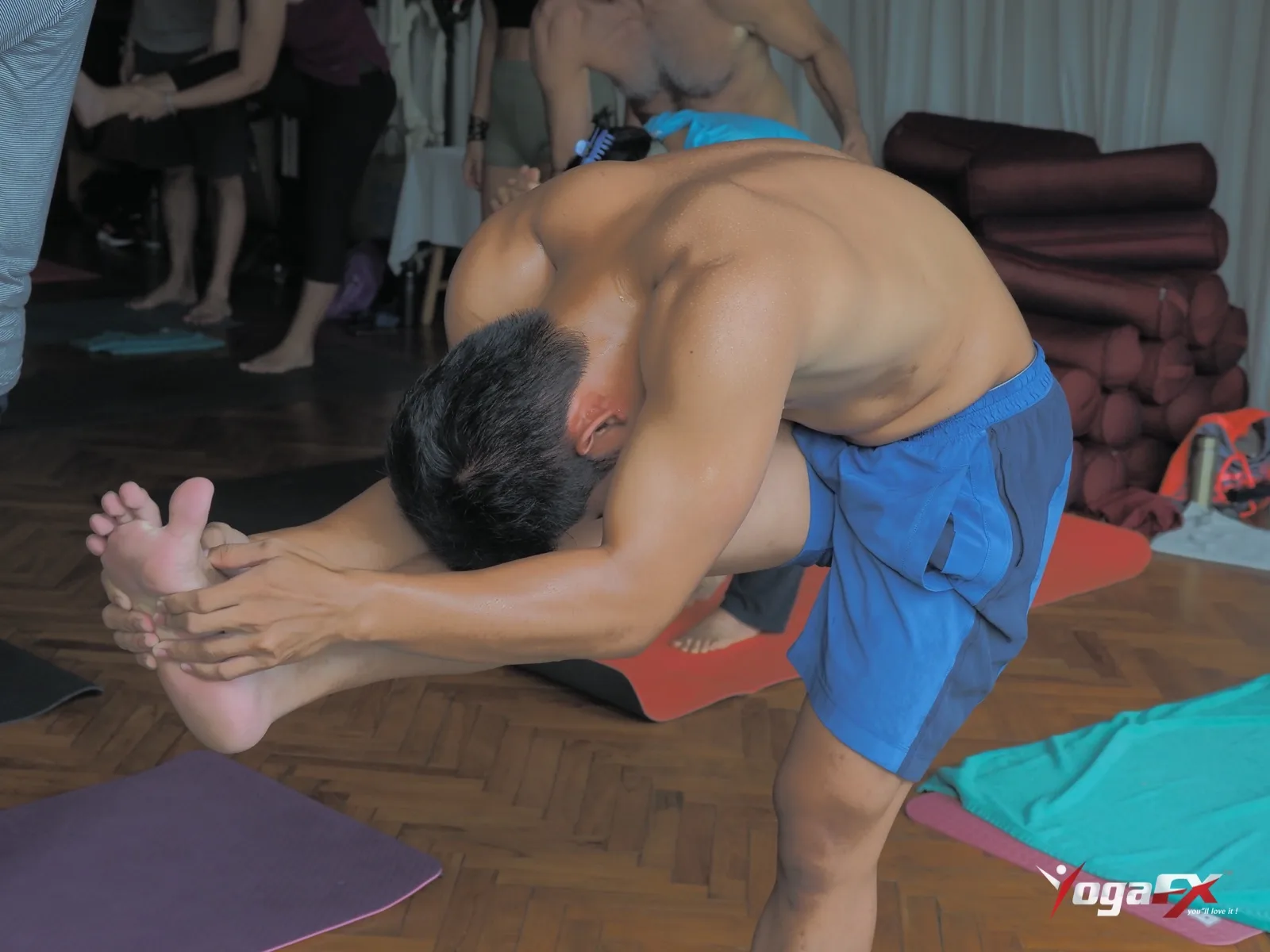
The standing postures build balance, leg strength and focus. For example, Garudasana (Eagle) wraps the arms and legs in opposite directions while you balance on one leg. Dandayamana Janushirasana (Standing Head to Knee) asks for steady breathing while the standing leg works hard.
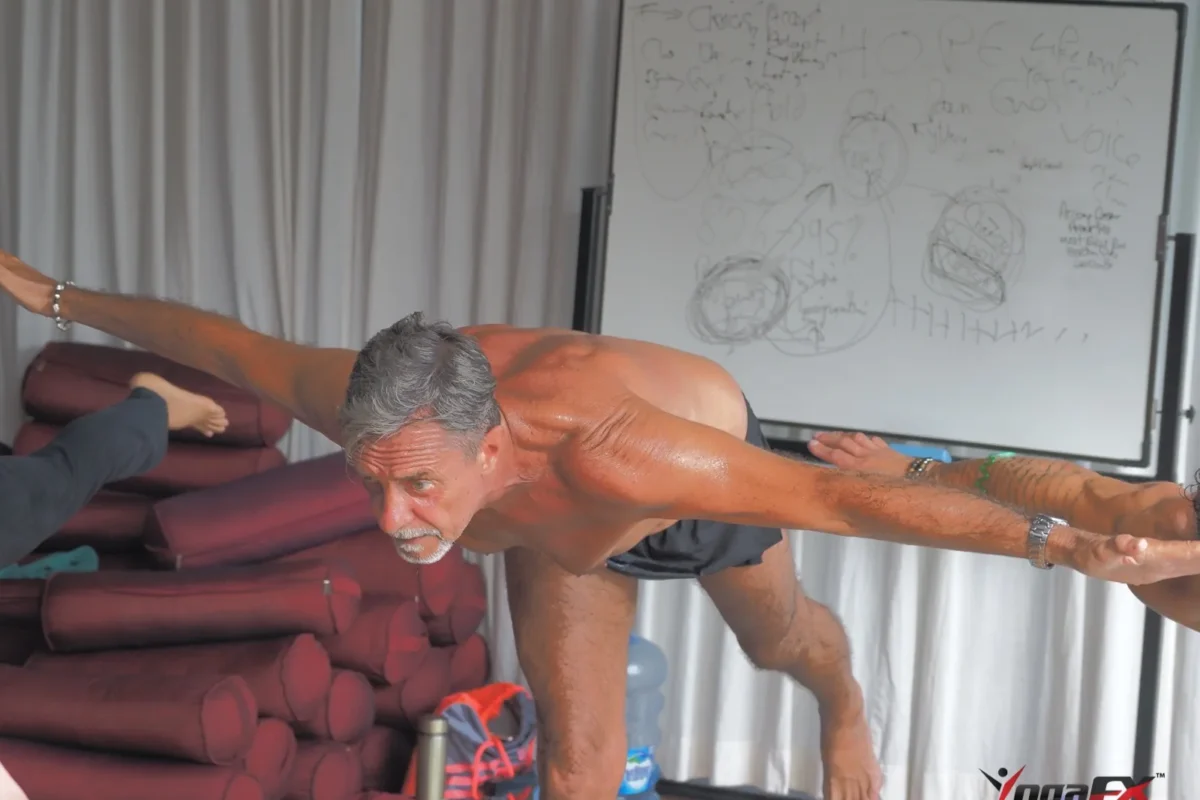
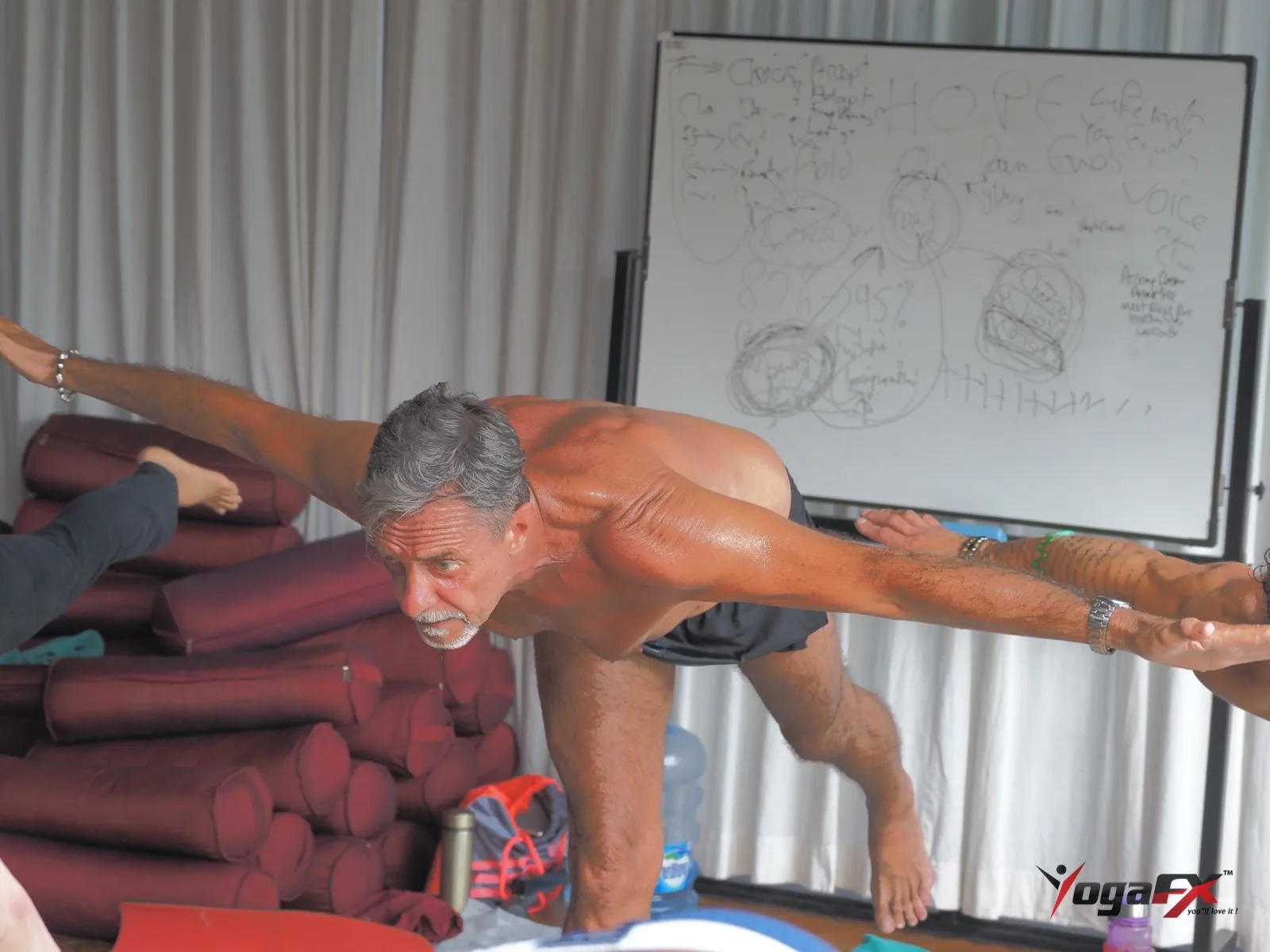
Balancing Stick, or Tuladandasana, is a good example of how the class demands your attention. Your body moves from upright to a T shape in a few seconds, and you can’t see your back leg. We cover the cues in our guide to Balancing Stick pose for UK students.
The floor series
After the standing series and a rest, the class moves to the floor. Bhujangasana (Cobra), Salabhasana (Locust) and Ustrasana (Camel) work the spine and hips. Short rests in Dead Body Pose help your heart rate settle between them.
For a future teacher, this half of the class is where clear, safe instructions matter most. That is why our trainees spend many hours on simple cues rather than on advanced shapes.
The two breathing exercises
The class opens with Standing Deep Breathing and closes with Blowing in Firm. Together they frame the 90 minutes, so every class has the same beginning and the same end. If you want the full posture-by-posture breakdown, our guide to the Bikram yoga dialogue shows how each posture is spoken.
Heat, Humidity and the Dialogue: What Is Bikram Yoga Like Inside?
What is Bikram yoga doing differently from most timetable yoga in Britain? Two things set it apart. The first is the room. The second is the voice.
The heat
A YogaFX class runs near 40°C with about 40% humidity, and in Bali the warmth comes from the tropical climate rather than electric heaters. In a British winter, a studio has to create that heat artificially, so it’s sensible to ask any studio what temperature and humidity it uses before you book.
The heat does a practical job. Warm muscles move more freely, and the room raises your heart rate even when you are holding still. It also makes the class harder, which is why pacing and fluids matter so much.
The dialogue
In a Bikram class the teacher speaks a scripted dialogue and does not demonstrate. As a result, you learn to follow words rather than copy a body at the front of the room. Mr. Ian Terry trained for five years, from 2014 to 2019, with the founder of the method, and he teaches the dialogue exactly as written so students hear the reasons behind each instruction.
If you want to see how Bikram compares with other heated classes you might find locally, read our comparison of Bikram and hot yoga for UK students. The short version is that hot yoga is any yoga in a warm room, while Bikram is one fixed method within it.
What the Research Says, and What It Does Not
When readers ask what is Bikram yoga good for, research gives a careful answer. Studies of heated yoga are growing, so claims should stay modest. The clearest study we know is an 8-week randomized controlled trial of community-delivered heated hatha yoga for moderate-to-severe depression, led by researchers at Massachusetts General Hospital (Nyer et al., 2023, Journal of Clinical Psychiatry).
In that trial, 59.3% of the yoga group had their depression scores fall by half or more, compared with 6.3% of the waitlist group. Sixty-five people were analysed, and the yoga group attended a mean of about ten classes over the eight weeks. You can read the record on PubMed or Europe PMC.
Two caveats matter. First, it was a heated hatha class, not an exact Bikram sequence. Second, the comparison group was a waitlist, so the authors call for more research with active control groups. In short, the result is encouraging, but it does not show that Bikram yoga treats depression.
This article is education, not medical advice. If you live with depression or anxiety, speak to your GP before changing your treatment or starting a hot class.
Staying Safe in a Hot Room
Anyone asking what is Bikram yoga like should also ask what it demands from the body. Heat is a real load, so a first hot class deserves some preparation. MedlinePlus explains that heat exhaustion can follow exposure to high temperatures without enough fluids, with heavy sweating, rapid breathing and a fast, weak pulse. Its prevention advice is to drink fluids, replace lost salt and minerals, and limit your time in the heat (MedlinePlus: heat illness).
The NHS lists the signs of heat exhaustion as dizziness, headache, nausea, excessive sweating with pale, clammy skin, cramps and being very thirsty. It advises that a person who shows them needs to be cooled down and given fluids, and it treats heatstroke as an emergency (NHS: heat exhaustion and heatstroke).
We build the same habits into every class and training week:
- Hydrate early. Drink through the day, not only in the first hot hour.
- Eat light. Avoid a heavy meal for a couple of hours beforehand.
- Rest when you need to. Lying down in Dead Body Pose is part of good practice, not a failure.
- Know your limits. Tell your teacher about any medical condition before you start.
Our longer piece on whether hot yoga is safe for UK practitioners goes through health checks in more detail. Please consult a healthcare professional before starting, especially if you have a heart condition or take regular medication.
Local Timetable Class or Teacher Training?
Most UK readers asking what is Bikram yoga are really weighing two paths. One is a drop-in class near home. The other is a full teacher training. The table compares them on the points people ask us about most.
| Question | Local timetable class | YogaFX teacher training in Bali |
|---|---|---|
| What you do | Practise the sequence and learn it by repetition | Practise daily and learn to speak the full dialogue to a room |
| Time needed | One 90-minute class at a time, fitted around work | A six-day hybrid course: online theory first, then the Bali intensive |
| What you leave with | Fitness, familiarity and a regular habit | Yoga Alliance RYT 200-Hour and a Bikram Hot 26&2 200-Hour International Yoga Certification |
| Who teaches you | Your local studio teacher | Mr. Ian Terry, E-RYT 500, who teaches the course himself |
| Best for | Beginners and regulars who want to practise | Practitioners who want to teach, or to understand the method deeply |
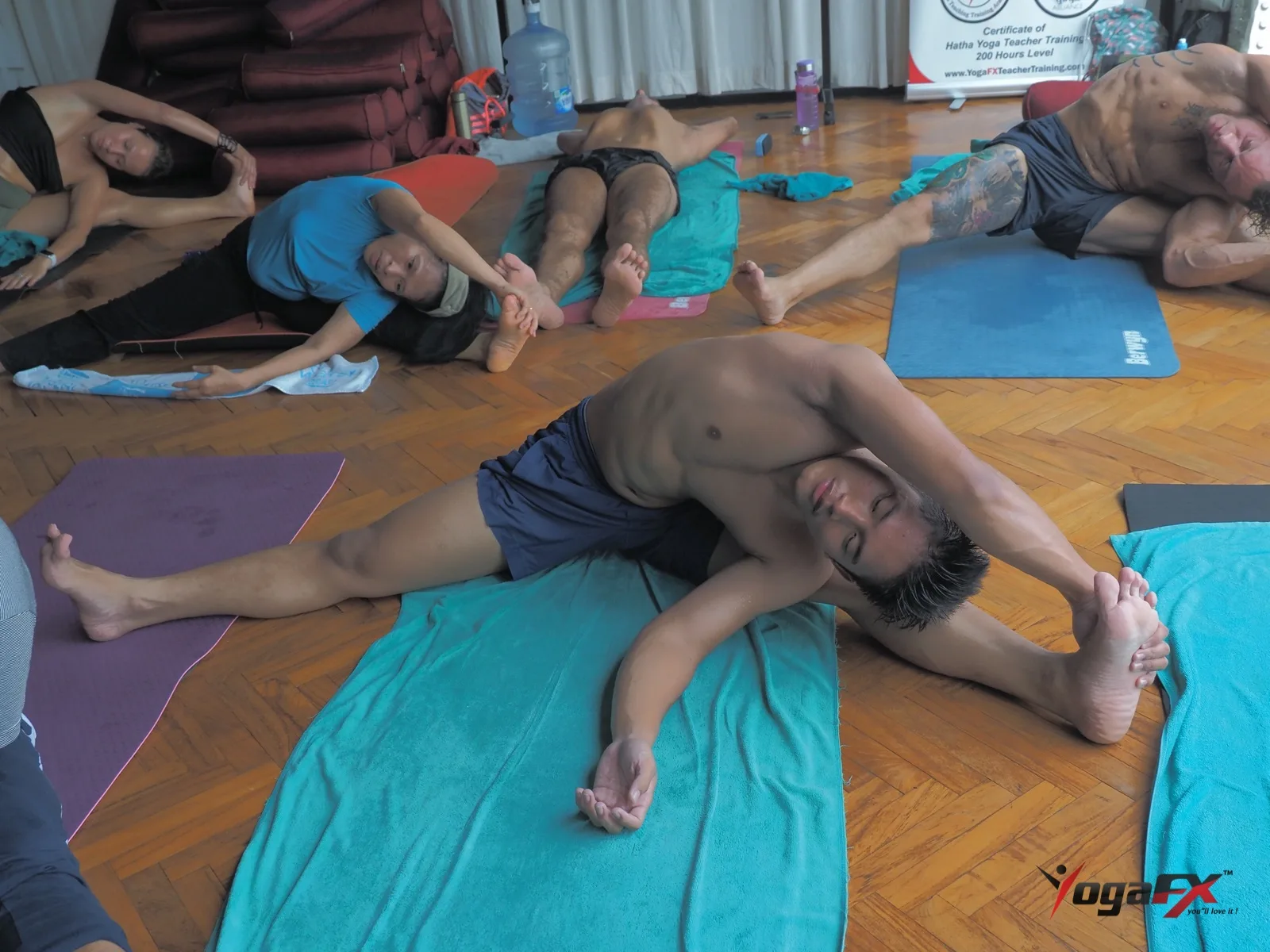
Neither path is better, and you can answer what is Bikram yoga for yourself by trying one class first. If you are new, a local class is the cheapest way to find out whether you like the heat. If you already love the method and wonder about teaching, a training is the natural next step. Our guide to Bikram teacher training for UK students explains how to choose.
What Students Say About the Class
People who first typed what is Bikram yoga into Google often describe it best after a few classes. Students share their own words on Google, Yoga Alliance and YouTube. Here are short voices, first names only.
Enjoy the class with professional coach, enjoy the vibes. Very recommended.
Dayu, Google review, 2020
Bikram yoga makes the body healthier and more flexible, and it makes stiff muscles looser (translated).
Made, Google review, 2024
A trainee in our YouTube review from 2018 called it “the best class” they had taken. You can watch the short clip below.

Across platforms there are 150 Google reviews, 50 Yoga Alliance reviews and 357 YouTube testimonials, so you can hear from many students before you decide.
From What Is Bikram Yoga to Teaching It Yourself
If a class leaves you curious about teaching, the path is clear. The original Bikram yoga method is the base of our course. YogaFX teacher training is built on this exact class, so you do not learn a loose collection of poses. You learn one method deeply, then practise teaching it with the full dialogue, in the heat, with feedback.
The programme is a six-day hybrid course. You complete the theory online first, then join the intensive in Bali. The next batch checks in on Sunday 24 January 2027 and checks out on Friday 29 January 2027, at the Soham Wellness Center in Seminyak. Since 2017, YogaFX has trained more than 1,500 graduates from over 80 countries.
There can be no greater investment than the one that you make in your health, because without it, nothing else matters.
Mr. Ian Terry, YogaFX
So, what is Bikram yoga? It is a fixed, heated, 90-minute sequence taught with a scripted dialogue, and it works as a habit or as a teaching career. If you want the class description and sources in one place, the YogaFX hub has its own walkthrough of the method and the research behind it.
FAQ
Why is Bikram yoga so hot?
A hot room loosens muscles and makes your heart rate, circulation and sweating work harder, so the same postures feel more demanding than in a cool room. A YogaFX class sits near 40°C with about 40% humidity. Heat also raises risk, so drink fluids, rest when you need to, and lie down if you feel dizzy.
Is Bikram yoga safe?
Bikram yoga can suit many healthy adults when practised sensibly, but the heat is a real load on the body. Drink fluids, rest in Dead Body Pose whenever you need to, and stop if you feel faint or confused. Speak to a doctor first if you have a heart condition, are pregnant or take regular medication.
What type of yoga is Bikram?
Bikram yoga is a style of hatha yoga practised in a heated room. It follows one fixed series of 26 postures and 2 breathing exercises over 90 minutes, guided by a scripted dialogue. Many studios now call the same class Hot 26&2 or 26 and 2 yoga, so check the name and the sequence when you book.
Is hatha yoga the same as Bikram?
Not exactly. Hatha is the wider family of physical yoga, built on postures and breathing, and it is often taught at room temperature in a free order. Bikram is one fixed form of hatha yoga, with the same postures in the same order, in a heated room, taught through a scripted dialogue.
Can I learn to teach Bikram yoga after trying a class?
Trying a class is a good first step, but teaching needs structured training. YogaFX runs a six-day hybrid course with online theory and a Bali intensive, leading to Yoga Alliance RYT 200 and a Bikram Hot 26&2 certificate. It is independent training, not official Bikram Choudhury Teacher Training. Message Mr. Ian for the next batch.
Still have questions? Message Mr. Ian and the YogaFX team on WhatsApp and we will answer them personally.