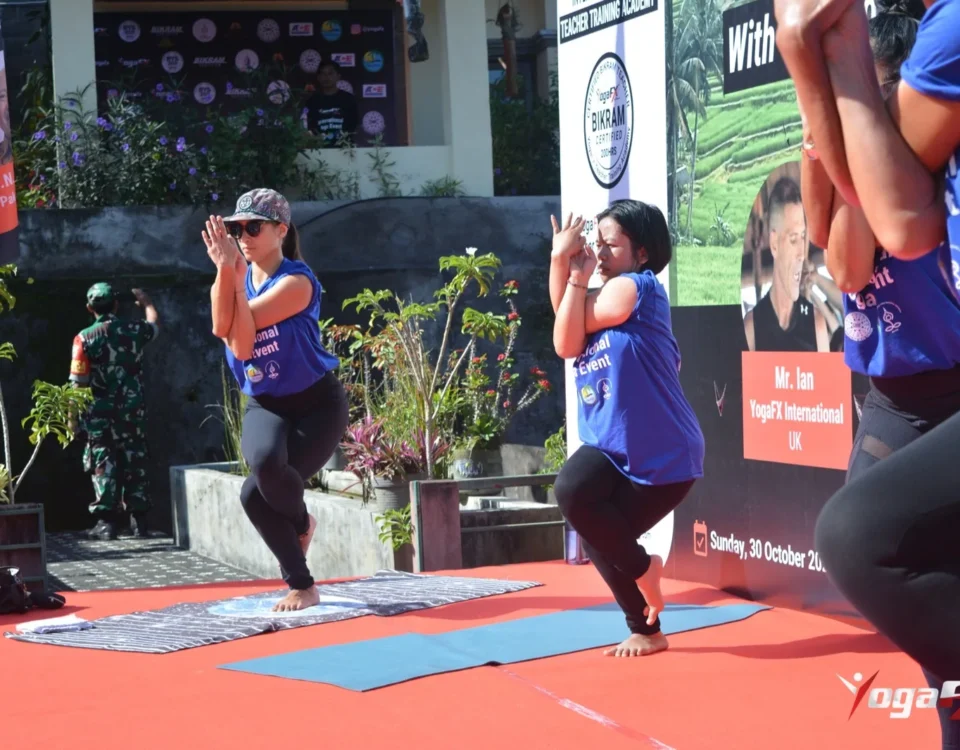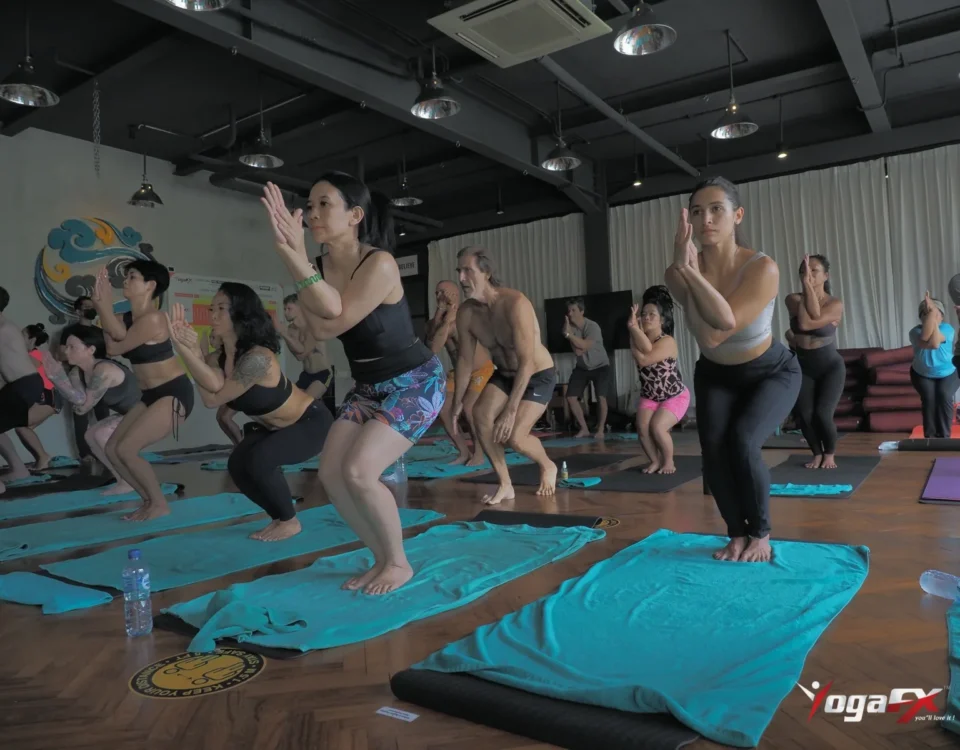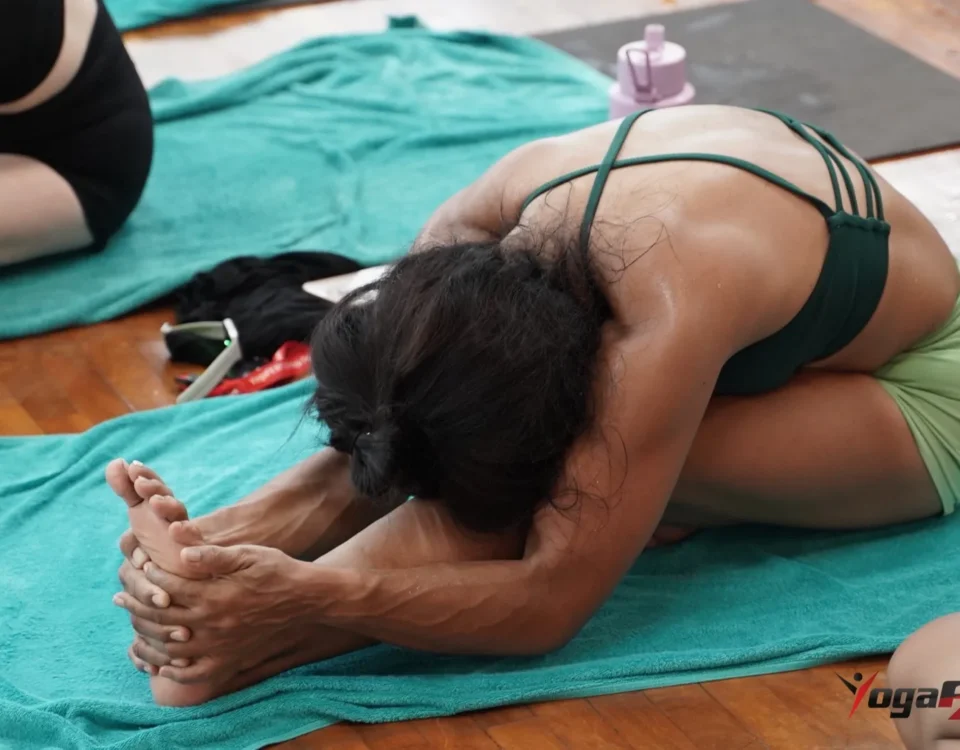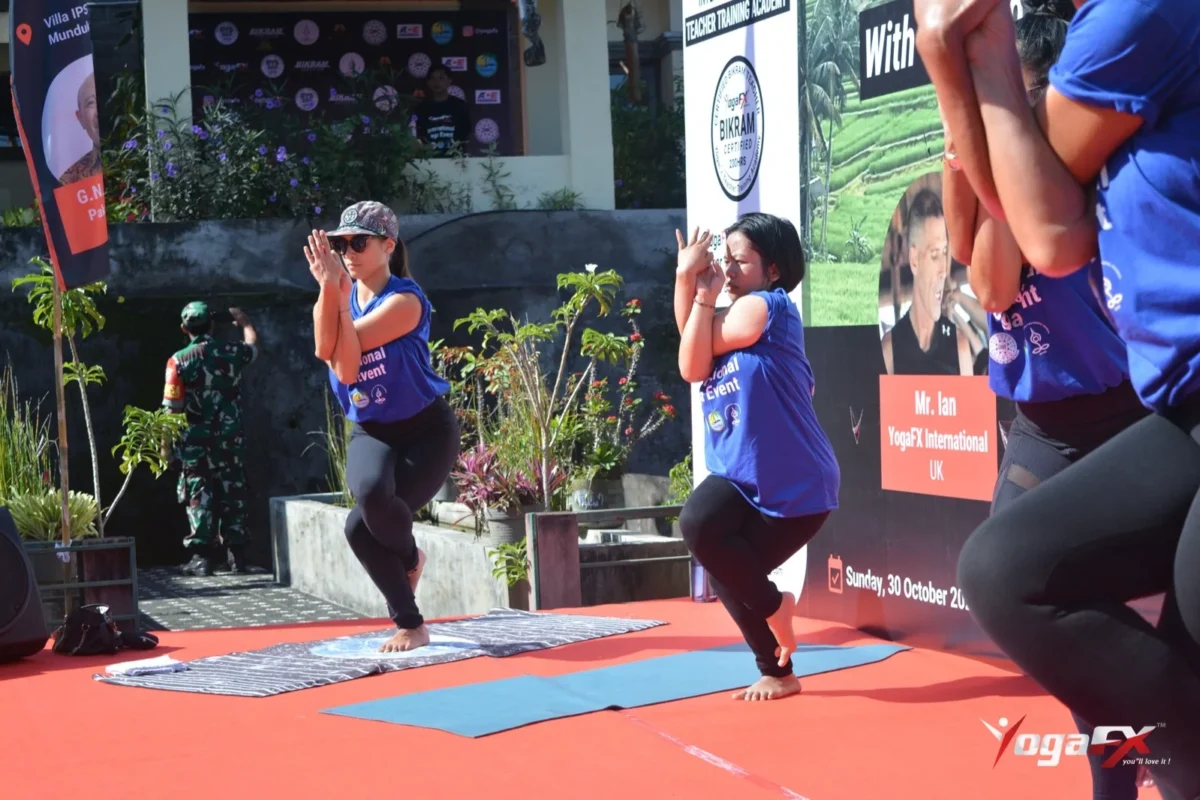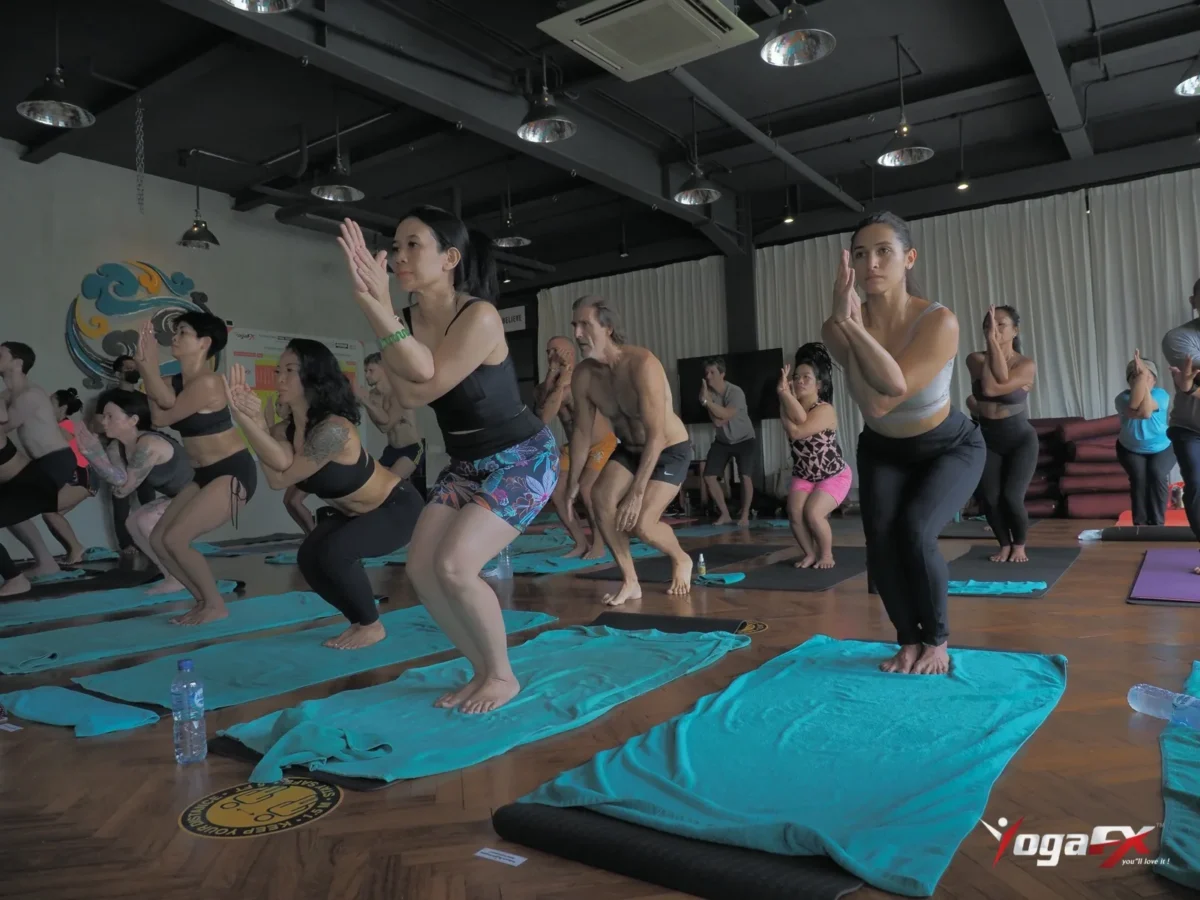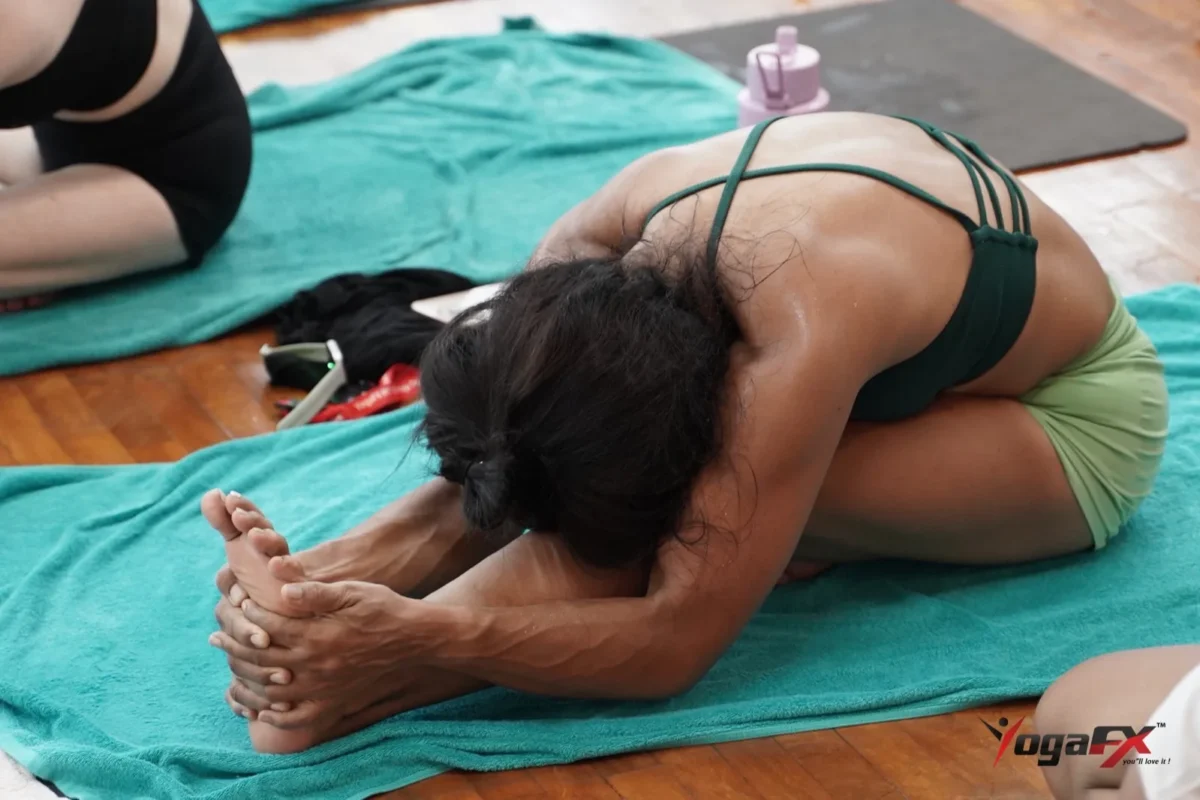
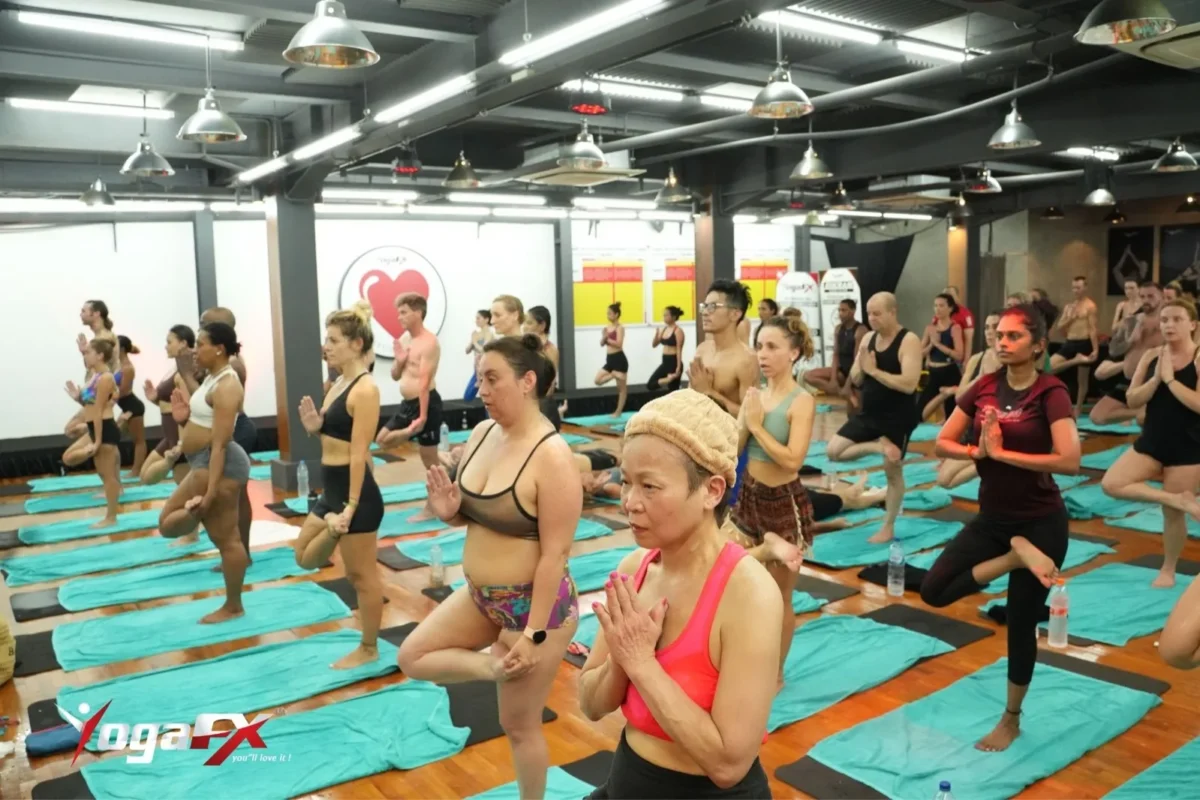
Bikram vs hot yoga comes down to one thing: a fixed class against a free-form one. Bikram, now usually called Hot 26&2, is the same 90-minute sequence of 26 postures and 2 breathing exercises every time, while hot yoga is any class in a heated room. Here’s how that plays out for UK students.

Bikram vs Hot Yoga in the UK: The Short Answer
If you’ve searched for a hot class in London, Manchester or Glasgow, you’ll have noticed that the timetable names tell you very little. One studio lists “hot flow”, the next lists “hot 26&2”, and a third just says “hot yoga”. The bikram vs hot yoga question is really a question about structure, because the heat alone does not define the class.
A Hot 26&2 class never changes. You do the same postures in the same order, the teacher speaks a set dialogue, and there is no music. A free-form hot class is built fresh by the teacher, so the length, the pace and the temperature can all change from one evening to the next.
Mr. Ian Terry, E-RYT 500, has taught more than 12,000 hours of the original Hot 26&2 and leads teacher training at YogaFX in Bali. For a deeper breakdown of the seven main differences, our sister article on how the fixed sequence differs from heated free-form classes is a good companion read. This guide keeps the focus on what matters when you live in Britain.
- Pick the fixed class if you like routine, want to measure progress in the same postures and enjoy a quiet room.
- Pick free-form hot yoga if you get bored by repetition, prefer music and flow, or need a shorter slot in your day.
- Pick both for a few weeks if you cannot settle the bikram vs hot yoga question, and compare how you sleep and feel afterwards.
Why Heat Feels Different When You Practise in Britain
Most guides to bikram vs hot yoga are written for countries where it is warm outside. In Britain you walk in from a wet pavement in January, peel off three layers and step into a room at roughly 40°C. That contrast is part of the appeal for many people. It’s also why the first fortnight feels harder than the postures suggest.
In the bikram vs hot yoga choice, a fixed class helps here. Because the sequence never changes, your body learns what is coming and you can spend your attention on breathing and pacing. A free-form class asks you to read new cues every time, which is fine when you feel fresh but tiring after a long commute.
Kit, towels and the cloakroom shuffle
UK studios are often small, with shared changing rooms and little floor space. Bring a large towel for the mat, a second one for your face, and a water bottle you can reach without standing up. Our guide to what hot yoga is and how UK studios run it covers kit and etiquette in more detail.
Dark evenings and class timing
Winter practice changes the bikram vs hot yoga maths. A 90-minute class that ends at 8.30pm in December means a cold walk to the station with damp hair. A shorter free-form class at lunchtime can fit a working day better. Neither choice is wrong, but decide before you buy a bundle of classes.
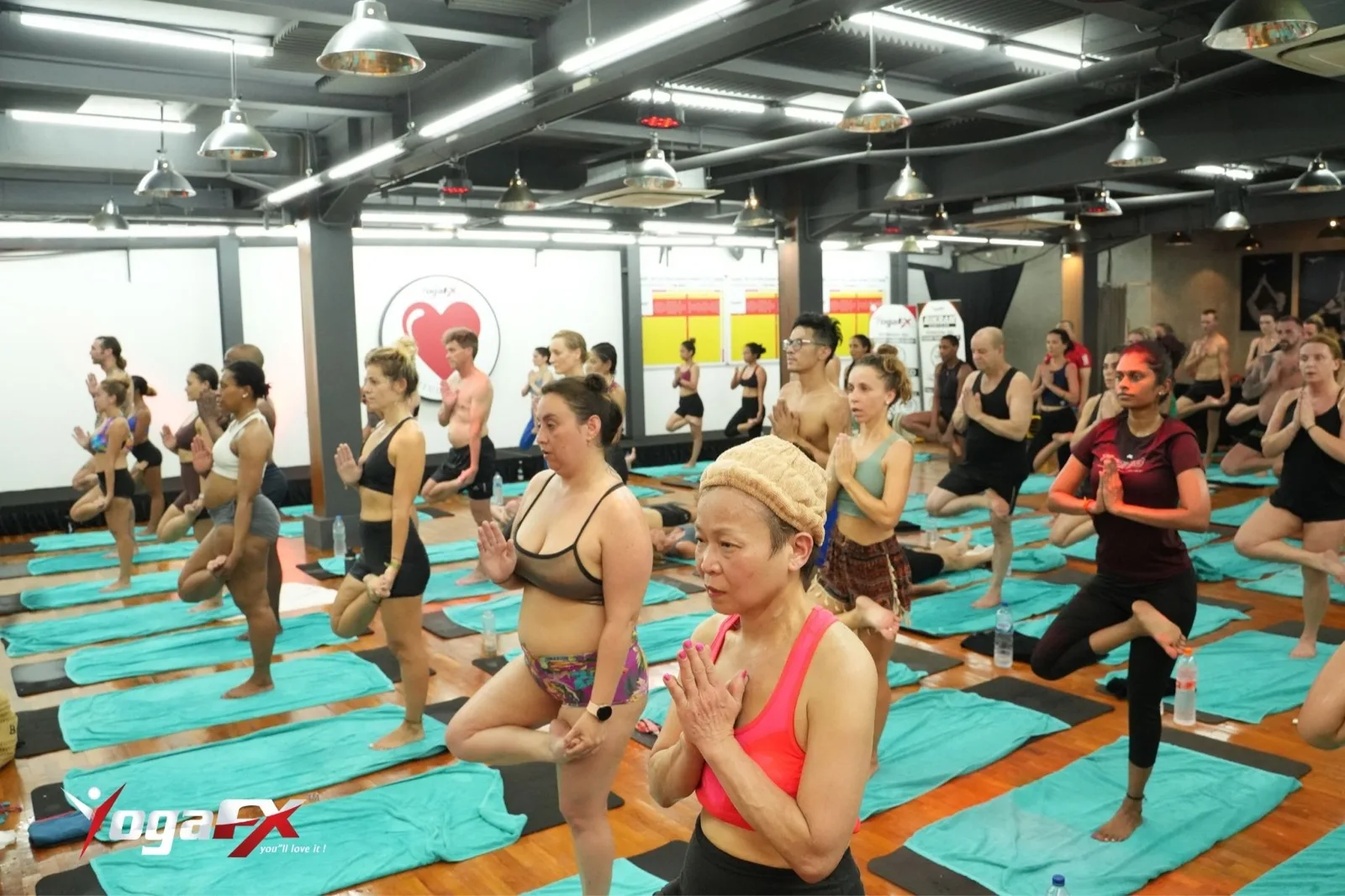
Bikram vs Hot Yoga: Which Class Fits a Typical UK Week?
Instead of another feature list, here’s the bikram vs hot yoga comparison from the point of view of a busy week. Find the situation closest to yours and see how each format copes.
| Your situation | Fixed 26&2 class | Free-form hot yoga | Check before you book |
|---|---|---|---|
| Lunch-break slot | Rarely fits, as the full class runs 90 minutes | Often 45 to 60 minutes | Class length on the timetable |
| Dark winter evening | Quiet room, set routine, easy to settle | Music and flow can lift energy | Showers and changing space |
| Tight hamstrings from desk work | Repeated holds show change week to week | Depends on the teacher’s plan | Whether stretches are repeated |
| Rugby, football or gym legs | Balance and leg holds in every class | May add strength or cardio blocks | Whether the class suits recovery days |
| Easily bored | Same class every time | New sequence most weeks | How often the teacher changes the plan |
| First time in a heated room | Predictable, but 90 minutes is long | Gentler options exist | Actual room temperature and humidity |
The last column is the one most people skip. Ask the studio for the real temperature and humidity, because “hot” can mean anything from comfortably warm to properly punishing. Our guide to whether hot yoga is safe for UK practitioners explains why those two numbers matter.
What the Research Says: A UK Trial and a Heated Hatha Study
Research on bikram vs hot yoga is still young, and it rarely separates the fixed sequence from free-form classes. That makes it easy to over-claim. Two trials are worth knowing, and each one tells you something about bikram vs hot yoga.
The Cambridge trial: 290 healthy adults
A randomised trial by Hui and colleagues, published in 2022 in Psychosocial Intervention, followed 290 healthy volunteers who had never done yoga before. The hot yoga group (137 people) took classes at a studio in Cambridge for six weeks, while the wait-list group (153 people) did not.
The hot yoga group improved on life satisfaction, general health, mindfulness, peace of mind and eudaimonic well-being compared with the wait-list group. Flourishing did not improve, and the authors call for future work with an active control group. In plain terms, the results are encouraging but not final.
The Massachusetts trial: heated Hatha yoga
A second study, Nyer and colleagues at Massachusetts General Hospital in 2023, tested community heated Hatha yoga for moderate-to-severe depression over eight weeks. Of 65 people analysed, 59.3% of the yoga group had their symptoms drop by half or more, against 6.3% of the wait-list group.
Notice the format, because it matters in any bikram vs hot yoga debate. This was heated Hatha yoga, not the fixed 26&2 sequence. When an article quotes either trial as proof that one style beats the other, it is stretching the evidence. Both studies suggest that regular heated classes can help well-being, and that is about as far as they go.
This is general information, not medical advice. Please consult a healthcare professional before using any yoga class to manage depression, anxiety or another condition.
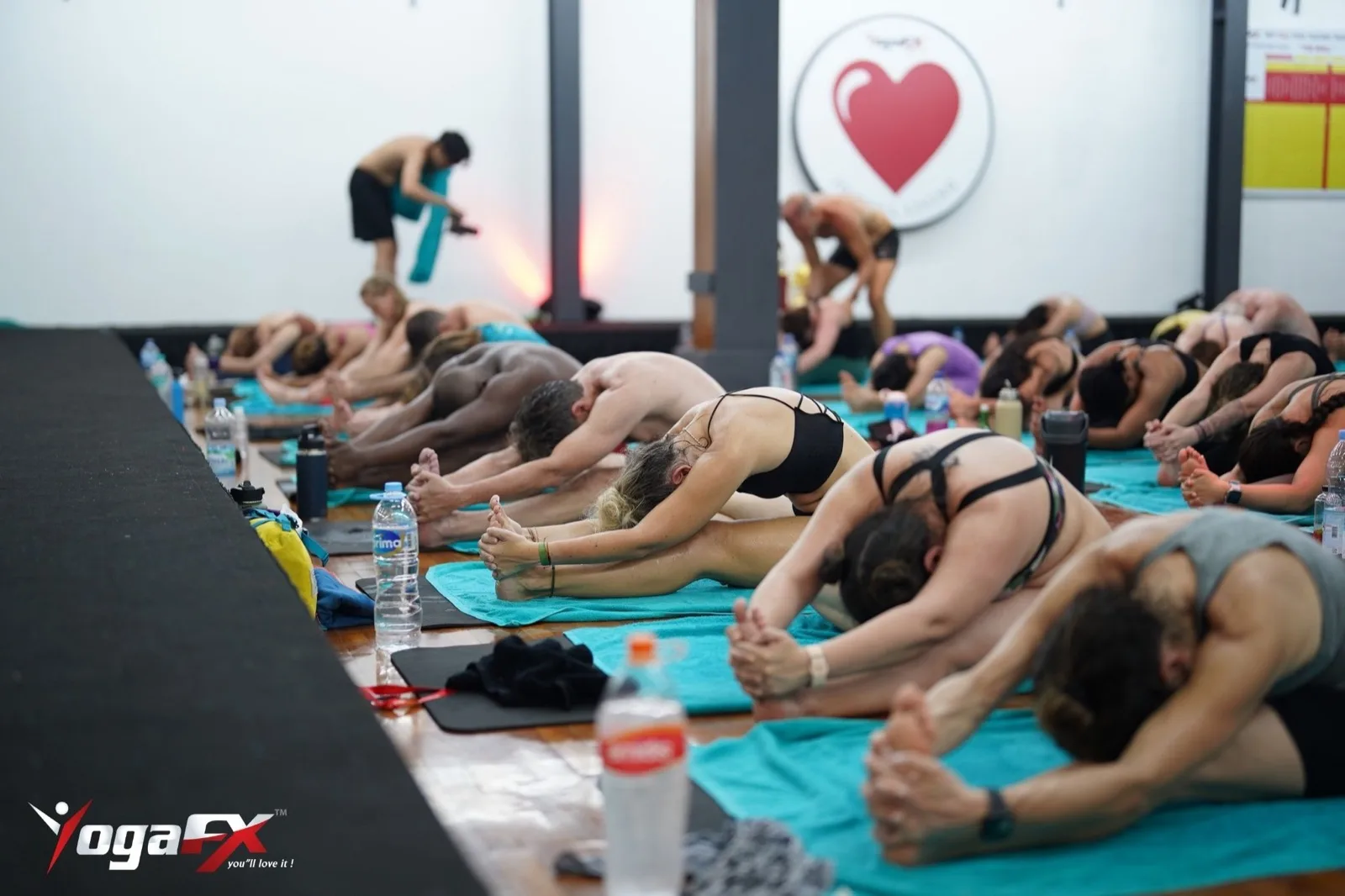
5 Honest Checks Before You Book a UK Class
Whichever side of bikram vs hot yoga you lean towards, a few questions save you money and discomfort. Ask these before you buy a bundle of classes.
- Is the sequence fixed? If the studio says “26&2” or “original hot yoga”, expect the same postures every time. If not, ask what changes.
- What is the real temperature and humidity? A fixed class sits at about 40°C and 40% humidity in our Bali studio. UK studios vary, so ask for the actual numbers.
- How long is the class? A full Hot 26&2 class runs 90 minutes. Some studios offer shorter versions, so check what the timetable means.
- Is there an intro offer? A trial week or single class lets you test the heat before you commit.
- Who teaches, and how were they trained? Ask what training the teacher completed and how many hours they have taught.
If you want to compare training routes rather than classes, our hub on how to choose a yoga teacher training walks through the questions UK applicants ask most often.
Heat Safety: What the NHS Says to Watch For
Heat is the shared risk in both formats. The NHS guidance on heat exhaustion and heatstroke lists tiredness, dizziness, headache, feeling sick, heavy sweating with pale clammy skin, cramps and a high temperature as signs of heat exhaustion.
Whichever side of bikram vs hot yoga you pick, if that happens, the NHS advice is to move somewhere cool, remove unnecessary clothing, drink plenty of water and cool the skin. Most people should start to feel better within 30 minutes. If the person is still unwell after that, or becomes confused, stops sweating or has a fit, it can be heatstroke, which needs a 999 call.
- Drink through the day, not just in the studio.
- Sit out any posture when you feel dizzy or sick, and tell the teacher.
- Speak to your GP first if you are pregnant, have a heart condition, have blood pressure problems or take medication that affects heat tolerance.
What Graduates Say About Training in the Fixed Format
Our reviews run to 150 on Google, 50 on Yoga Alliance and 357 on YouTube. Two Google reviewers describe how the fixed class and its dialogue worked for them as future teachers.
“I was able to study the theory from home, and get comfortable with the dialogue… fully prepared me to now feel confident teaching a 90 minute hot yoga class.” Anne, Google review, 2025
Ajay, also on Google in 2024, called the course “an efficient bootcamp” and said you prepare beforehand by practising the dialogue and studying the body material before you arrive.
A trainee in a short YouTube review from 2018 called the class great and the instructor motivating. You can watch the five-star review below.

If You Want to Teach: Fixed Sequence or Free-Form?
The bikram vs hot yoga split matters for teachers too, because the two formats ask different things of them. To teach free-form hot yoga, you design your own sequences, cues and playlists. To teach the 26&2, you learn a spoken dialogue word for word, then learn to watch bodies while you speak.
At YogaFX, Mr. Ian Terry leads a 6-day hybrid MasterClass with online study before you arrive. Graduates earn Yoga Alliance RYT 200-Hour and Bikram Hot 26&2 200-Hour certification. The next intake runs from Sunday 24 to Friday 29 January 2027, with the early-bird price at US$1,899.
For UK applicants, that means a few days off work instead of months of weekends. Prices are in US dollars, so check the exchange rate on the day you pay. If you also want to test a class first while visiting Bali, the Seminyak studio offers a free 1-Day Guest Pass.

You can read the full cost and time breakdown in our guide to hot yoga teacher training in the UK: cost, duration and how to choose.
FAQ
Which type of yoga is practised in a hot room?
Several. Bikram, also called Hot 26 and 2, is a fixed 90-minute sequence in a heated room. Hot Hatha, hot Vinyasa, hot power and hot Pilates also use heat but change the postures, pace and length. Always ask a studio which style it teaches before you book.
Is hot yoga better than normal yoga?
Not automatically. Heat makes a class feel harder and some people enjoy that, but research cannot say heated classes beat unheated ones for everyone. A UK trial found well-being gains in hot yoga against a wait-list, not against normal yoga. Choose the room you will keep attending.
Can hot yoga make you ill?
It can if you ignore the heat. The NHS lists dizziness, nausea, cramps, heavy sweating and a high temperature as signs of heat exhaustion. Stop, cool down and drink water. Speak to your GP first if you are pregnant or have heart or blood pressure problems.
Is hot yoga suitable for beginners in the UK?
Yes, if you start gently. Look for a beginner class or intro offer, sit out when you feel dizzy and drink water through the day. A fixed class is predictable, which helps beginners, while free-form classes offer gentler options. Ask the studio for its actual temperature.
How hot is a hot yoga class in the UK?
It varies by studio, from comfortably warm to very hot. A fixed Hot 26 and 2 room is set around 40 degrees Celsius with about 40% humidity. Many UK studios publish their temperature, and those that do not should tell you when you ask before booking.
Is YogaFX teacher training an official Bikram Choudhury training?
No. YogaFX offers independent training, not an official Bikram Choudhury Teacher Training. Graduates earn Yoga Alliance RYT 200-Hour and Bikram Hot 26 and 2 200-Hour International Yoga Certification. The postures, order and 90-minute length of the Hot 26 and 2 class stay unchanged.
Still have questions? Message Mr. Ian and the YogaFX team on WhatsApp and we will answer them personally.