RYS 200 Yoga Alliance status belongs to a school, not to you. It means the school has registered its 200-hour teacher training with Yoga Alliance, so its graduates can apply for RYT 200. For UK trainees it proves one thing: where you trained. It doesn’t prove insurance, a job offer or safe teaching in a hot room.

What RYS 200 Yoga Alliance Status Proves to a UK Studio
Picture a studio manager in Leeds reading your CV. She sees “RYT 200” and wants to know one thing: did you train somewhere that meets a published standard? An RYS 200 listing answers that. It is a public record she can check in two minutes, without phoning your teacher.
That’s the whole job of the credential. It is proof of where you trained, held by the school and checked in a public directory. Yoga teaching is not a licensed profession in the UK, so studios lean on registers like this one, plus your insurance and your audition. Our guide to which UK credentials studios accept covers the other labels they see.
Here is what a RYS 200 Yoga Alliance listing does and does not tell an employer:
- It does show that the school has registered a 200-hour programme with Yoga Alliance, and that its graduates can apply for RYT 200.
- It also points to a qualified lead trainer. The registry’s Standards for Registered Yoga Schools say lead trainers on an RYS 200 programme must hold the E-RYT 500 credential and be active members in good standing.
- It doesn’t show that you hold insurance, that you can teach well, or that the school handles heat illness properly.
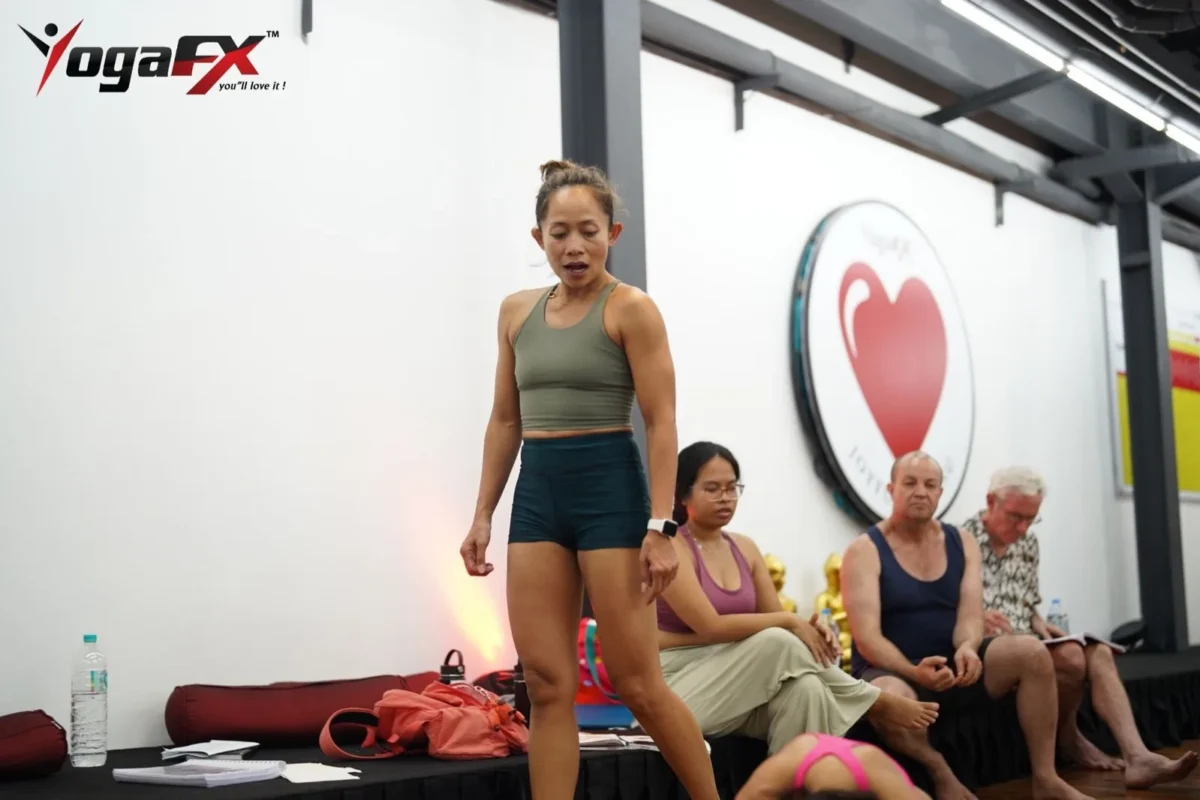
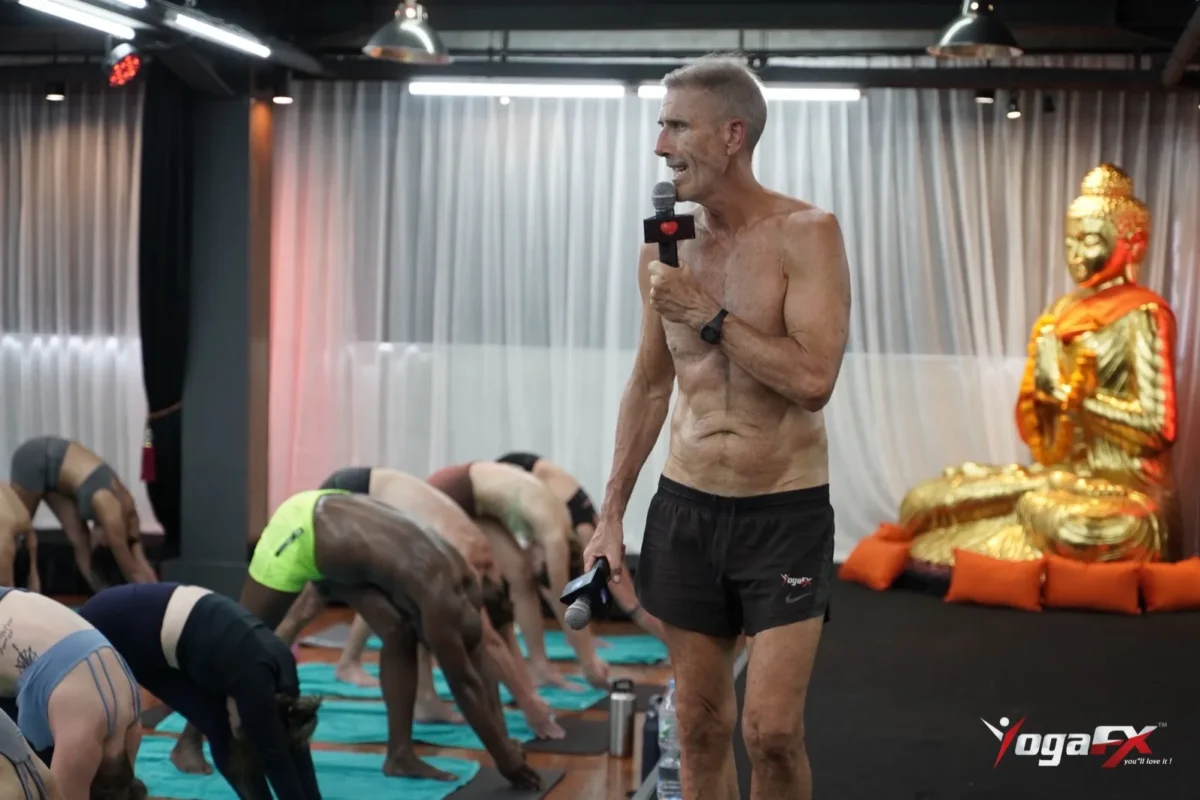
At YogaFX, Mr. Ian Terry, E-RYT 500, leads the training. He has taught more than 12,000 hours, so the lead trainer check in this guide is one we expect applicants to run on us too.
For the cover and jobs side of the same credential, read what RYT 200 means for UK insurance and jobs. It picks up where this page stops.
RYS 200 vs RYT 200: Who Holds What
RYS 200 Yoga Alliance status and RYT 200 sound alike, so brochures swap them. They describe different people. The table shows who holds each credential and what a UK studio can actually verify from it.
| Term | Who holds it | What a UK studio can verify | What it cannot tell them |
|---|---|---|---|
| RYS 200 | The school | The programme is registered with Yoga Alliance | How good the teaching is |
| RYT 200 | You, the graduate | You finished a registered programme and then registered | Whether you hold insurance |
| E-RYT 500 | The lead trainer | The senior credential Yoga Alliance requires of RYS 200 lead trainers | Whether that trainer teaches every module |
| School certificate | You, from the school | You completed the course | Whether the school is listed in the directory |
Notice the last row. A school certificate proves you finished a course. Only the directory shows the school’s status on the day you check. You need both, and they come from different places.
Yoga Alliance has also said in its statement on non-registered schools that the only way to register with it is by attending a current registered school. So a 200-hour course from an unlisted school can be excellent, but it won’t lead to RYT 200 on its own.
Five Checks Before You Pay a RYS 200 Yoga Alliance School
A school’s website is a claim. The registry directory is the proof. Run these five checks before you send a deposit, and do them in this order.
- Search the directory for the school’s name. Do it yourself, not through a link on the school’s own page.
- Match the programme. Ask which exact programme is registered, and check it is the one you are buying.
- Confirm the lead trainer. The standards require E-RYT 500 for RYS 200 lead trainers, so ask for the name and look them up.
- Ask about live hours. The standards ask RYS 200 programmes to deliver at least 30 hours in a synchronous, live format. A hybrid course should be able to show you where those hours fall.
- Get the terms in writing. That means certificate timing, what happens if you miss a session, and the refund rules.
Sometimes the website and the directory disagree. A school may show RYS 200 Yoga Alliance status on its homepage while the directory lists a different name, or no entry at all. Go with the directory. Then ask the school to explain the gap in writing, and keep a screenshot of the entry on the day you decide.
Our guide to the questions UK applicants ask when choosing a training covers the rest of the shortlist, from group size to support after graduation.
What a UK Studio Asks After It Sees Your RYT 200
A listing opens the conversation. It rarely closes it. Studios and councils increasingly ask to see proof of insurance, and most want to watch you teach before they offer a slot. So treat the RYS 200 Yoga Alliance entry as step one of three.
- Registration: the school behind your RYT 200 is a verified Registered Yoga School.
- Cover: your own insurance, which the registry does not provide.
- Audition: a short class or a practical, where your voice, timing and safety awareness show.
That last point matters most in a heated room. A manager who runs a 40°C class wants to see that you cope with the heat, watch the room and give clear instructions at the same time. No directory entry can show that, which is why a good school builds practice teaching into the course from the first day.
If you plan to teach in more than one UK city, keep one folder with your completion certificate, your registry listing and your insurance schedule. You can then send all three in a single email when a studio asks.
Three Mistakes UK Trainees Make With RYS 200 Yoga Alliance Claims
Most confusion around RYS 200 Yoga Alliance comes from marketing shortcuts, not bad intent. Three mistakes show up in the questions UK applicants send us.
- Treating the logo as the listing. A badge on a homepage is a design choice. The directory entry is the record.
- Assuming a hybrid course is an RYS 200 Yoga Alliance course. Online hours and registration are separate questions, so ask about both.
- Counting only the tuition. Add flights, insurance, time off work and the registry’s own fees to the budget before you compare prices.
Each check takes minutes. The RYS 200 Yoga Alliance directory search, the lead trainer question and the written quote are the cheapest part of the whole decision, and they protect the most expensive part.
Paying From the UK: Card Protection and Refunds
Money is where a UK trainee has most to lose, so it deserves its own check. The Which? guide to Section 75 explains that under the Consumer Credit Act 1974 a credit card company is jointly liable with the seller for a breach of contract or misrepresentation. Which? calls this particularly useful if the seller has gone bust or stopped replying.
There are limits. Which? says the item must cost roughly between £100 and £30,000, and that Section 75 applies to credit cards, not to debit cards. For a debit card it points to chargeback instead. Ask your card provider whether a payment to an overseas school qualifies, because the exact limits and rules are theirs to confirm.
So the practical rule is simple. Where you can, pay a deposit by credit card rather than by bank transfer, and keep every receipt and email. Our guide to nine questions about a refund policy shows what to ask the school before the money moves. This is general information, not legal or financial advice.
Registration Does Not Make a Hot Room Safe
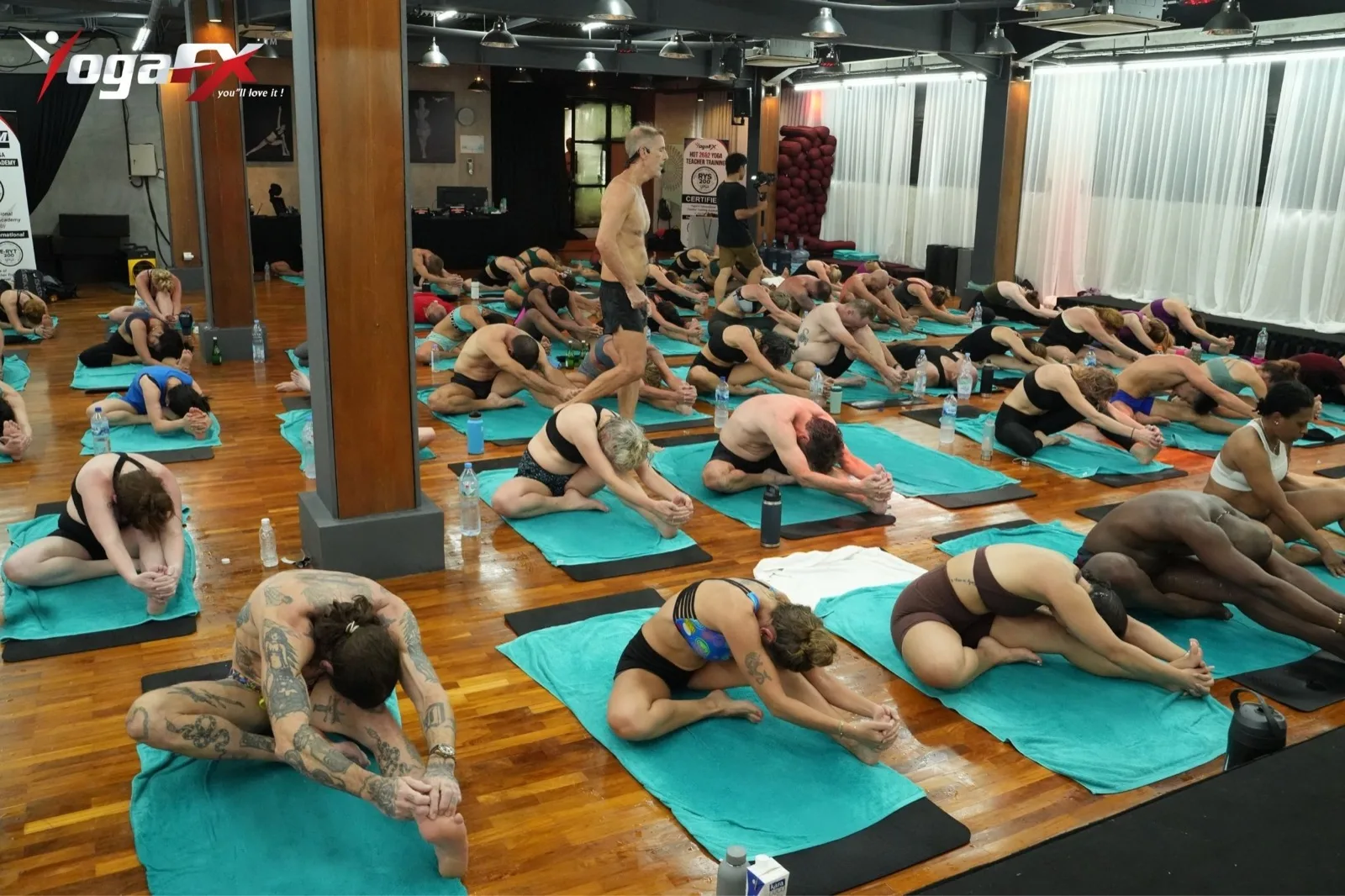
Here’s the gap that a RYS 200 Yoga Alliance listing leaves open. Registration tells you a training meets a standard. It doesn’t tell you that every class is run safely in the heat. In a 40°C room, a teacher who cannot spot heat illness is a risk to the whole class.
What the NHS Says to Look For
The NHS guidance on heat exhaustion lists the signs of heat exhaustion: tiredness, dizziness, headache, nausea, heavy sweating with pale clammy skin, cramps, a high temperature and intense thirst.
Its advice is simple. Move the person to a cool place, take off unnecessary clothing, give plenty of water, and cool the skin with water and a fan. It says heat exhaustion doesn’t usually need emergency help if the person cools down within 30 minutes.
The same page says to call 999 if someone is still unwell after 30 minutes of resting in a cool place, or shows signs of heatstroke such as confusion or a seizure. A teacher should know that line before the first heated class, not after.
What Lowers the Risk
The MedlinePlus heat illness page from the US National Library of Medicine adds that you can lower your risk by drinking fluids to prevent dehydration, replacing lost salt and minerals, and limiting your time in the heat.
It names older adults, young children, and people who are sick or overweight as most at risk, and notes that certain medicines or alcohol can raise the risk.
So ask the school three things. How do trainees learn to spot these signs? When is a student told to rest? How are water and cooling breaks handled? A clear, specific answer is a good sign. A vague one tells you something too.
This is general information, not medical advice. If you have a heart condition, a blood pressure problem or any other health concern, speak with a healthcare professional before you start hot yoga or a training that involves daily heated practice.
RYS 200 Yoga Alliance at a Glance for UK Trainees
What YogaFX Trainees Say
YogaFX holds 150 Google reviews, 50 Yoga Alliance reviews and 357 YouTube testimonial videos. Three of them show what the training feels like from the inside. Names are first names only.
Putu, Google review, 2024: Putu calls joining YogaFX a very valuable experience, from the hot yoga training through to becoming a teacher.
Dian, YouTube review, 2023: her advice to future trainees is short: “just come and join the class, enjoy, enjoy and be yoga teachers.”
Shiro, YouTube review, 2025: Shiro thanks Mr. Ian and the team on camera and says, “I did it.” The clip is 33 seconds long.

Reviews help most when they describe specific parts of a course, such as how feedback was given or how trainers handled a student who struggled. Read them for detail, not stars. A review that mentions a teaching practical tells you more than five stars with no comment.
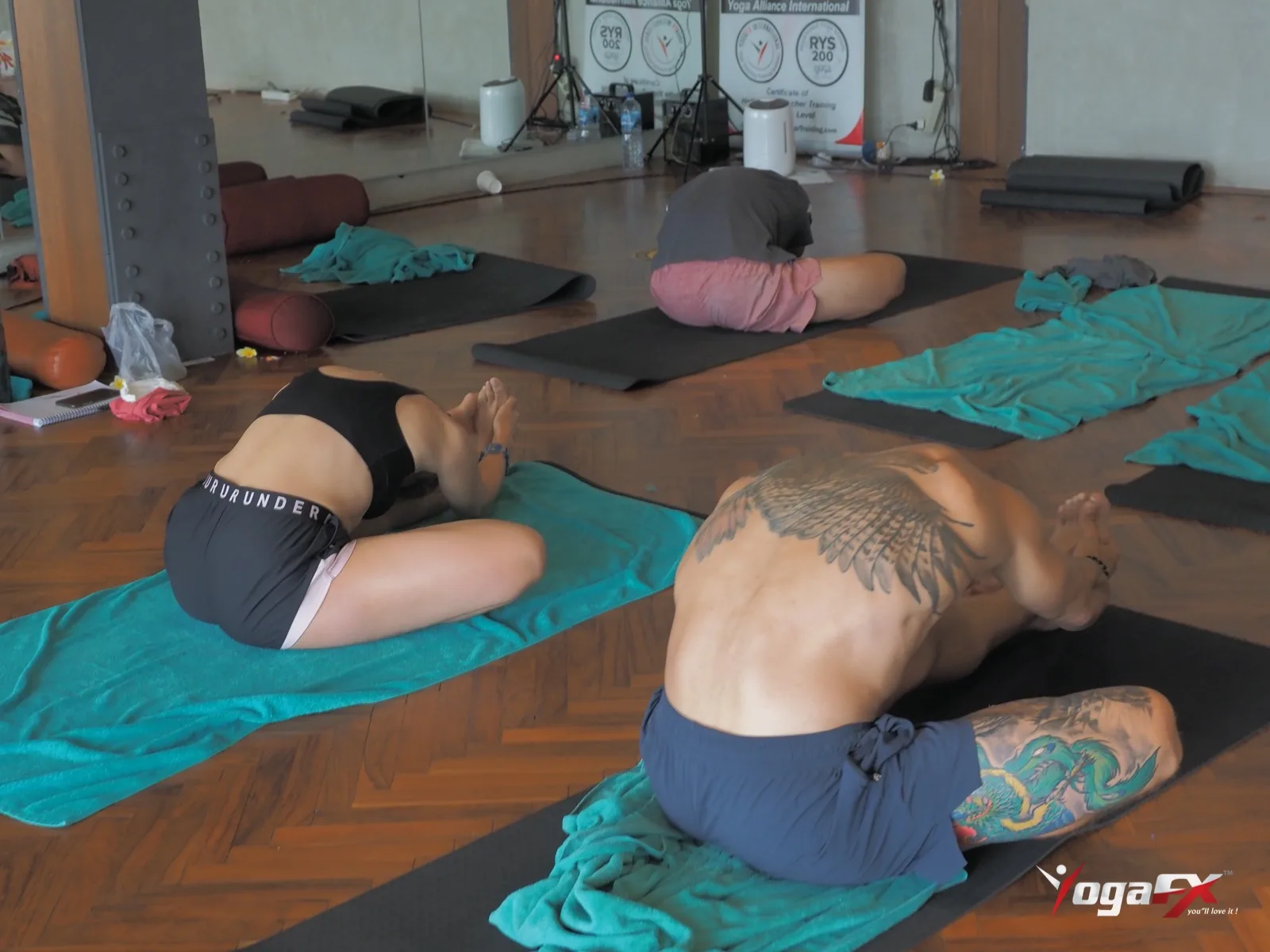
A Registered Route From the UK: The YogaFX Bali Intensive
If you want a hot 26&2 training rather than a general course, the YogaFX Bali programme is built for UK applicants who can spare one week. It is hybrid: you study online first, then complete an intensive in Seminyak. Check-in is on Sunday 24 January 2027 and check-out is on Friday 29 January 2027, at Soham Wellness Center.
You leave with two certificates: the Yoga Alliance RYT 200 route and a separate Bikram Hot 26&2 200-Hour International Yoga Certification. For the worldwide version of the registration check, see our teacher training hub’s guide to RYS 200 Yoga Alliance registration.
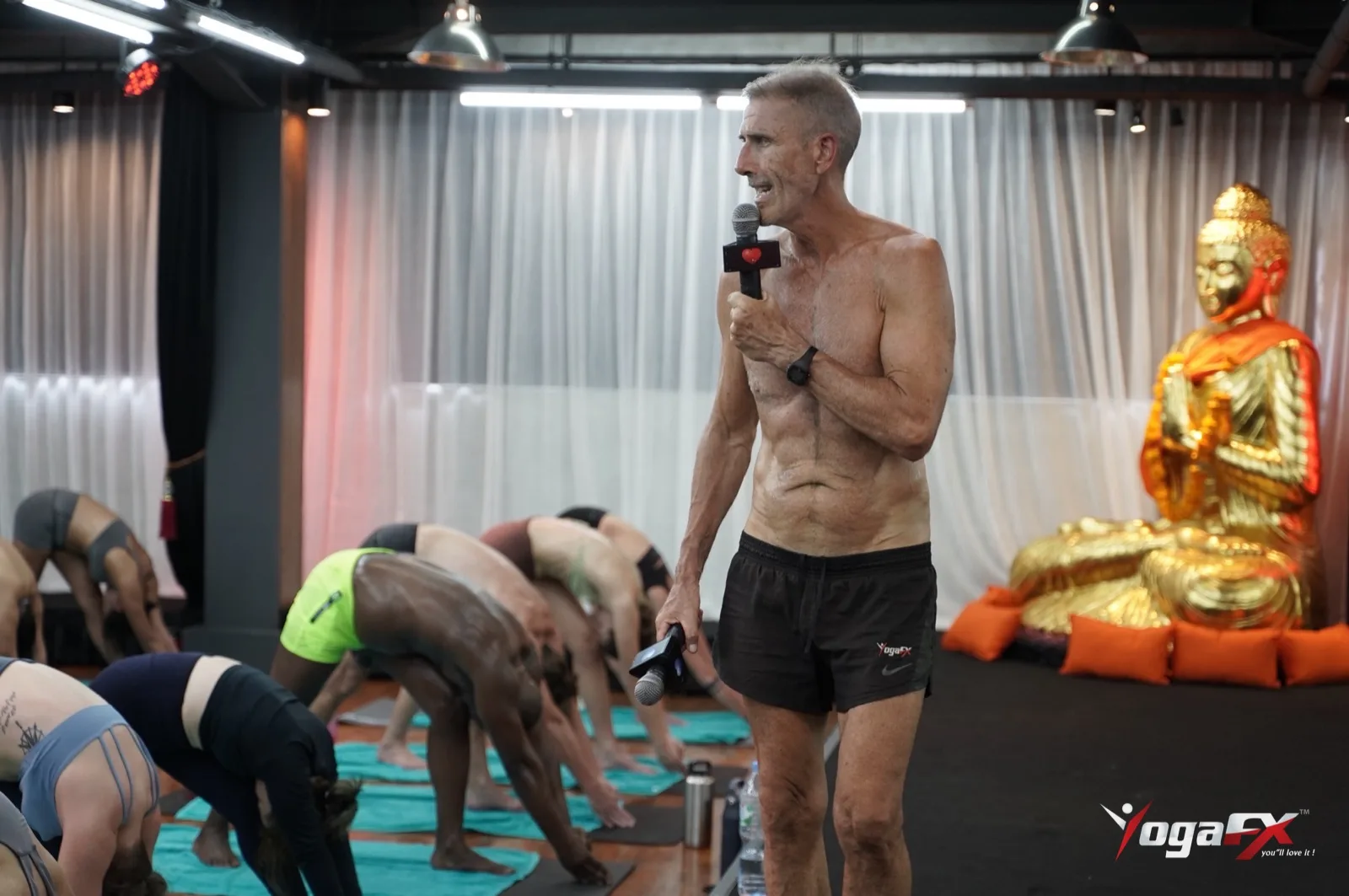
Mr. Ian Terry has taught more than 12,000 hours and trained for five years, from 2014 to 2019, alongside the founder of the Bikram Hot 26&2 method. More than 1,500 graduates from over 80 countries have trained with YogaFX since 2017. Whatever the credential says on paper, a trainer’s teaching is easiest to judge by watching it.
The current Early Bird price is US$1,799, against a normal price of US$1,999. Instalments start at US$250 a month with no interest. Before you pay anything to any school, ask for the written quote and the registration details for the exact programme. If you are weighing travel against a local course, our comparison of teacher training in Bali versus the UK lays out what to compare.
FAQ About RYS 200 Yoga Alliance for UK Trainees
Do UK studios need an RYS 200 Yoga Alliance school behind my RYT 200?
Many do, but there is no UK law that says so. Studios usually ask for an RYT 200, and RYT 200 comes from a registered school. So the school’s RYS 200 status sits behind your title. Some studios also want insurance and an audition, so ask the studio you want to teach at what it requires.
How can I check a school’s RYS 200 status from the UK?
Search the school’s name in the Yoga Alliance directory, not on its own website. Confirm it is listed as an RYS 200, then ask which exact programme is registered and whether it matches the course you are buying. Take a screenshot of the entry on the day you decide.
Can a hybrid or online course count as RYS 200 training?
In part, yes. Yoga Alliance’s standards ask RYS 200 programmes to deliver at least 30 hours in a synchronous, live format, so some distance learning is allowed. Ask the school how many live hours its programme includes and which parts happen in person. Get that breakdown in writing before you pay.
Does RYT 200 cover me for insurance in the UK?
No. RYT 200 is a Yoga Alliance title, not an insurance policy. UK insurers set their own rules about which qualifications they accept, so ask your insurer before you teach your first paid class. Our guide to RYT 200 in the UK explains the cover and jobs side in more detail.
Can I pay for a teacher training abroad by credit card from the UK?
Often you can, but check first. A credit card can give you extra protection under Section 75 for items costing roughly £100 to £30,000, while debit cards do not get Section 75 cover. Ask your card provider whether an overseas school payment qualifies. This is general information, not legal or financial advice.
Still have questions? Message Mr. Ian and the YogaFX team on WhatsApp and we will answer them personally. Ask about dates, the registration check or what to pack. Chat with Mr. Ian on WhatsApp.