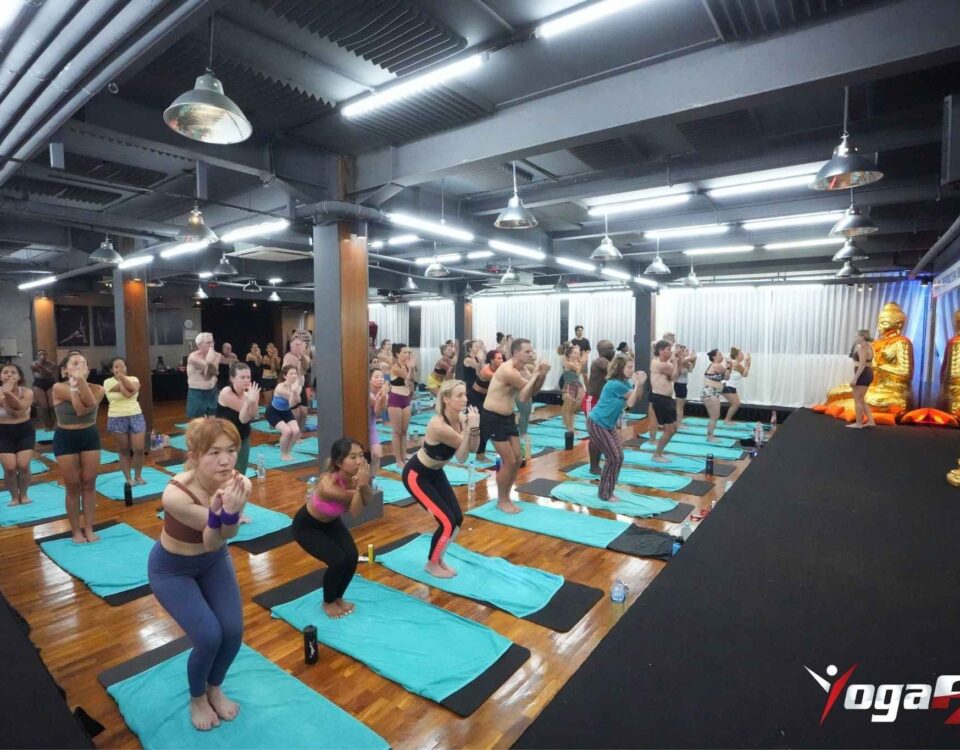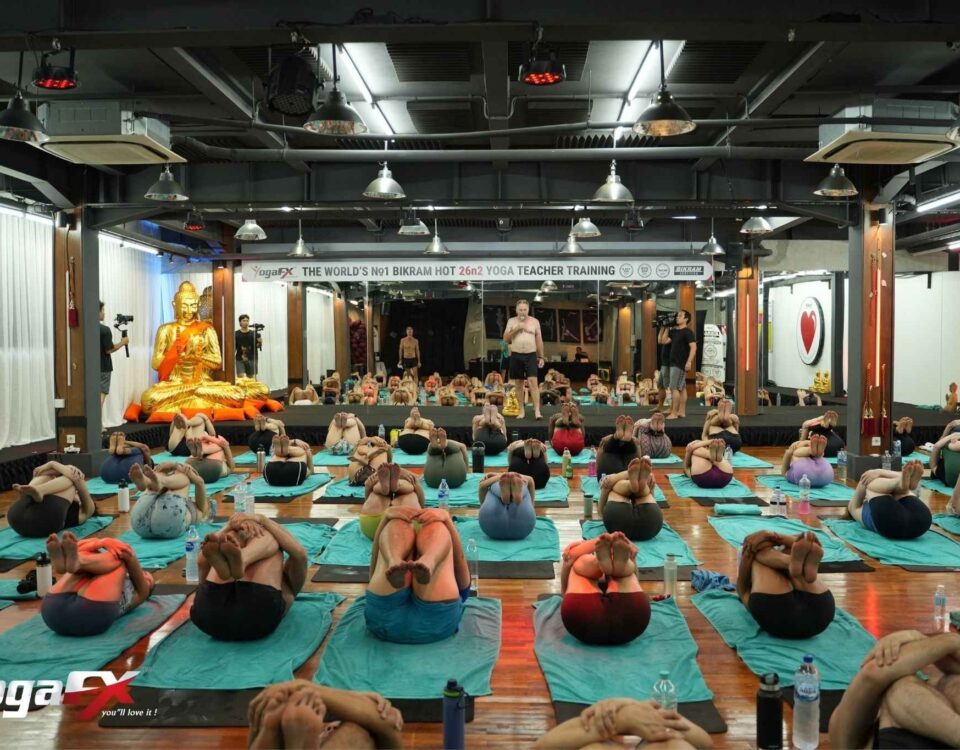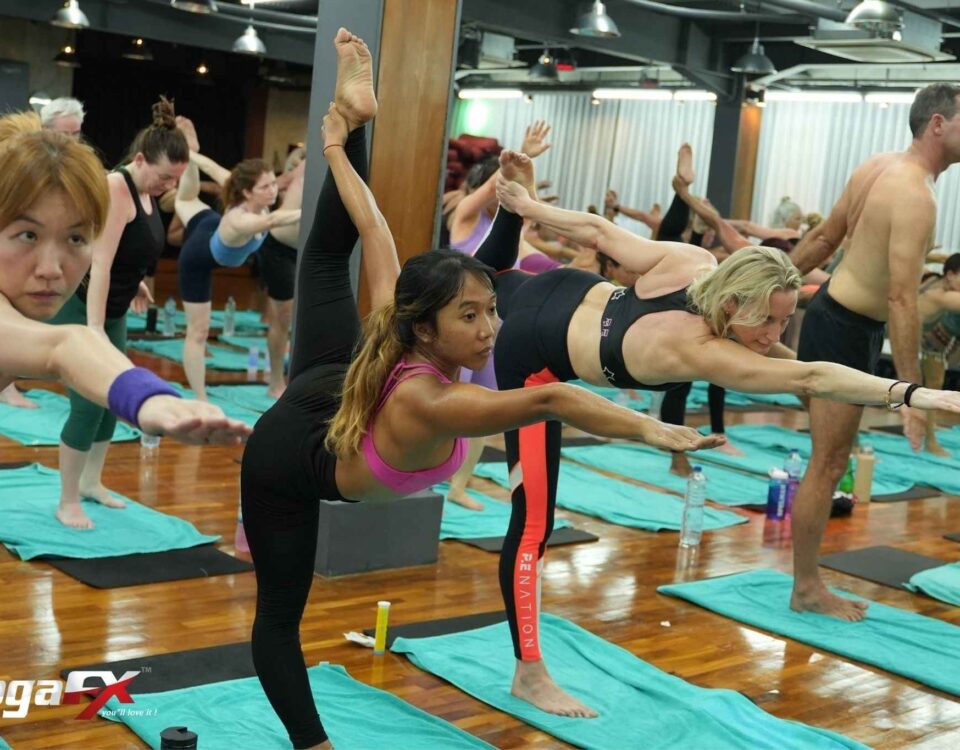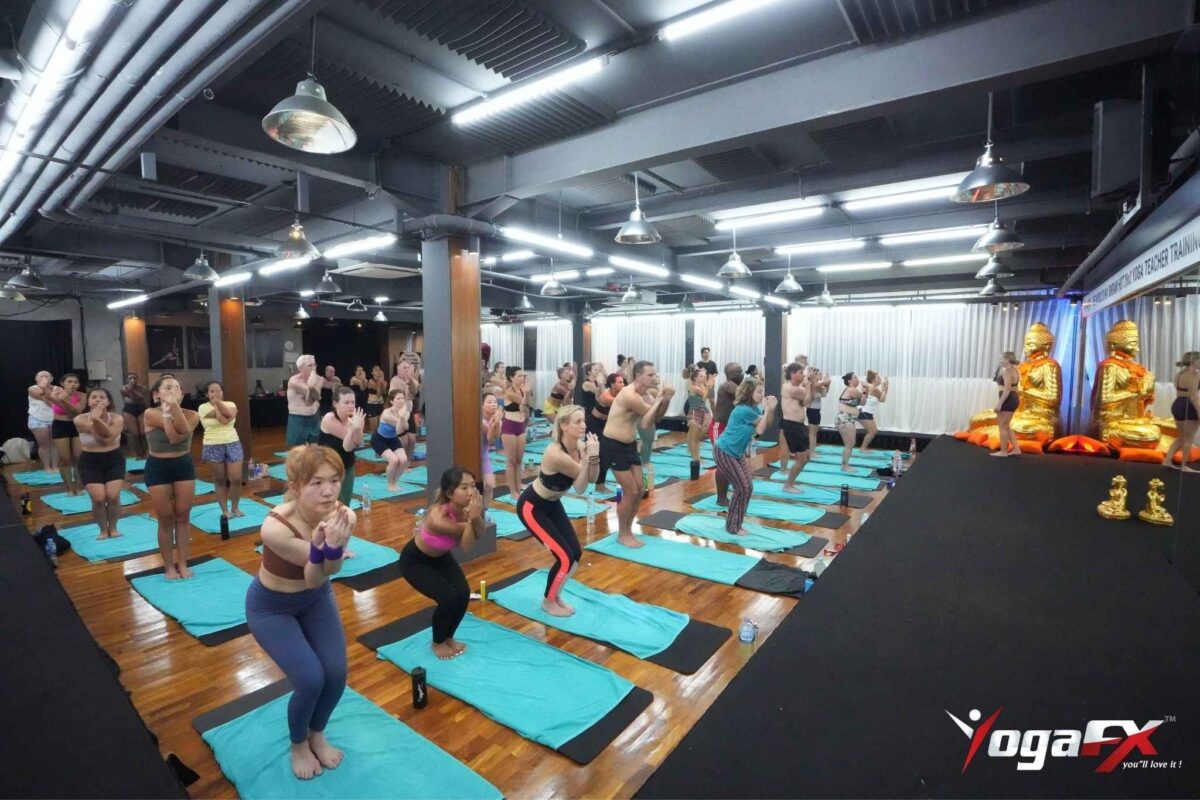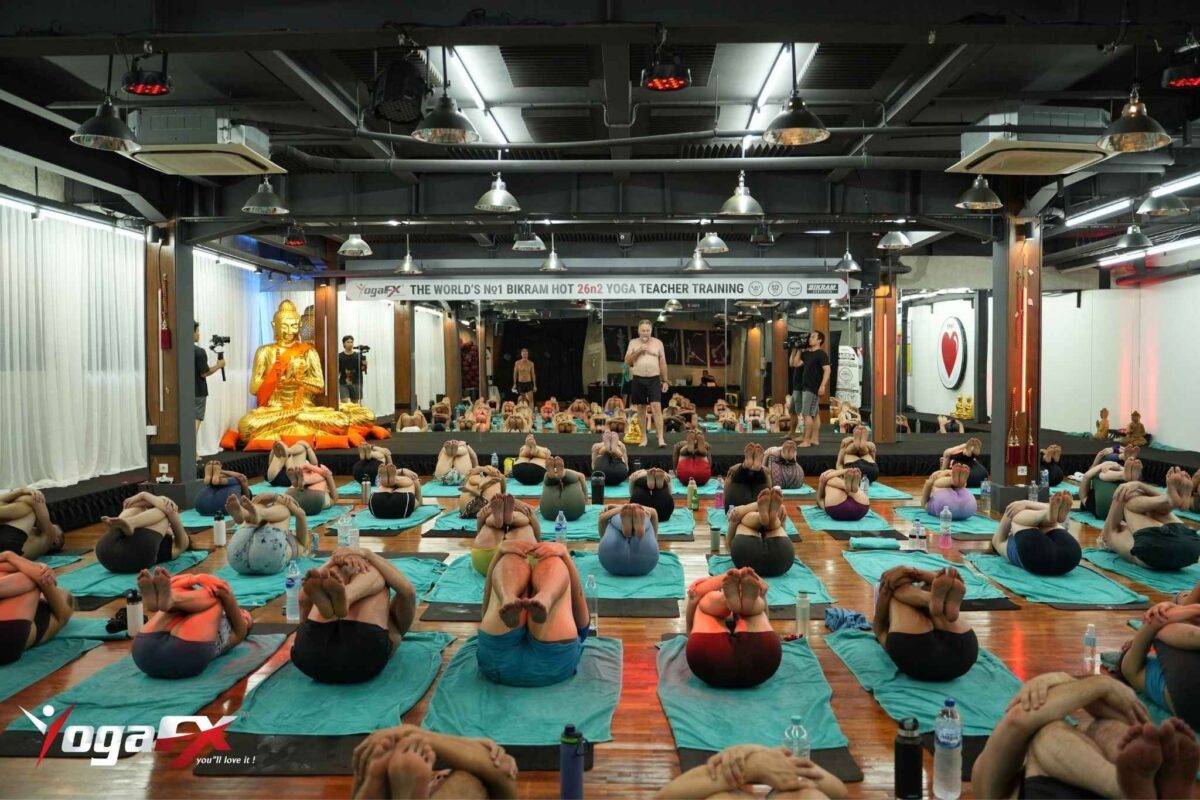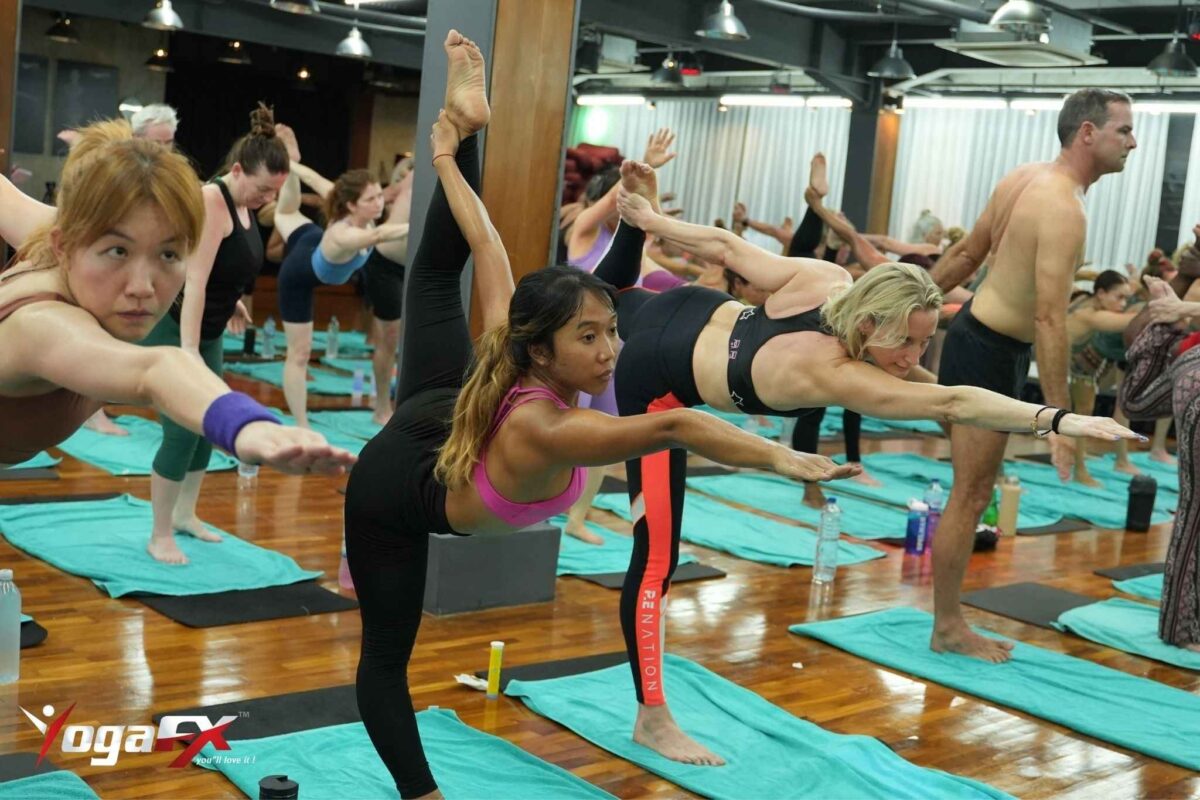
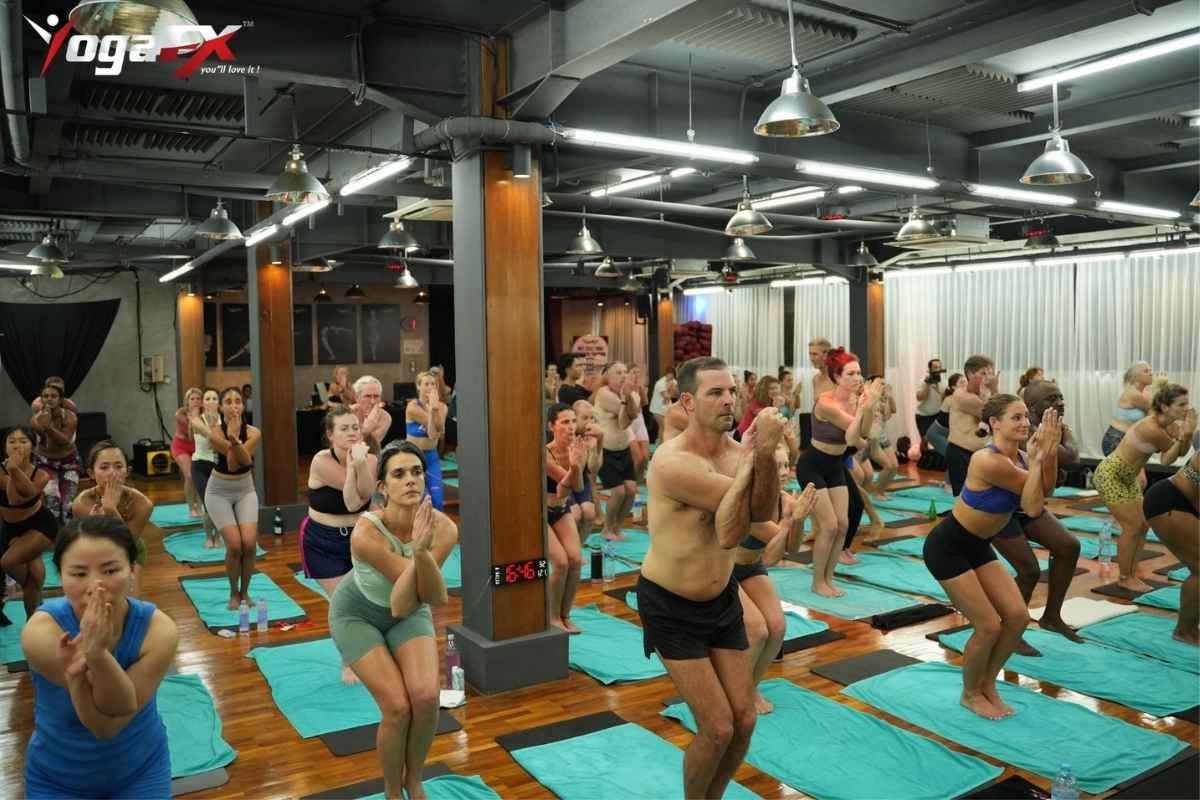
Bikram yoga teacher training is a certification programme that qualifies you to teach the original 26-posture, 2-breathing-exercise sequence developed in the 1970s, typically combining anatomy, teaching methodology, and supervised practicum hours toward a Yoga Alliance RYT 200 credential.

UK students usually choose between three formats: a full-time residential course abroad, a UK-based weekend or modular programme, or a hybrid model that pairs online coursework with a short intensive in a naturally heated location. The right fit depends on how much time off work you can take, your budget, and whether you want to train in the original tropical heat the method was designed for.
In This GuideWhat the training involves, formats, costs and 2026-2027 dates
What Bikram Yoga Teacher Training Actually Involves
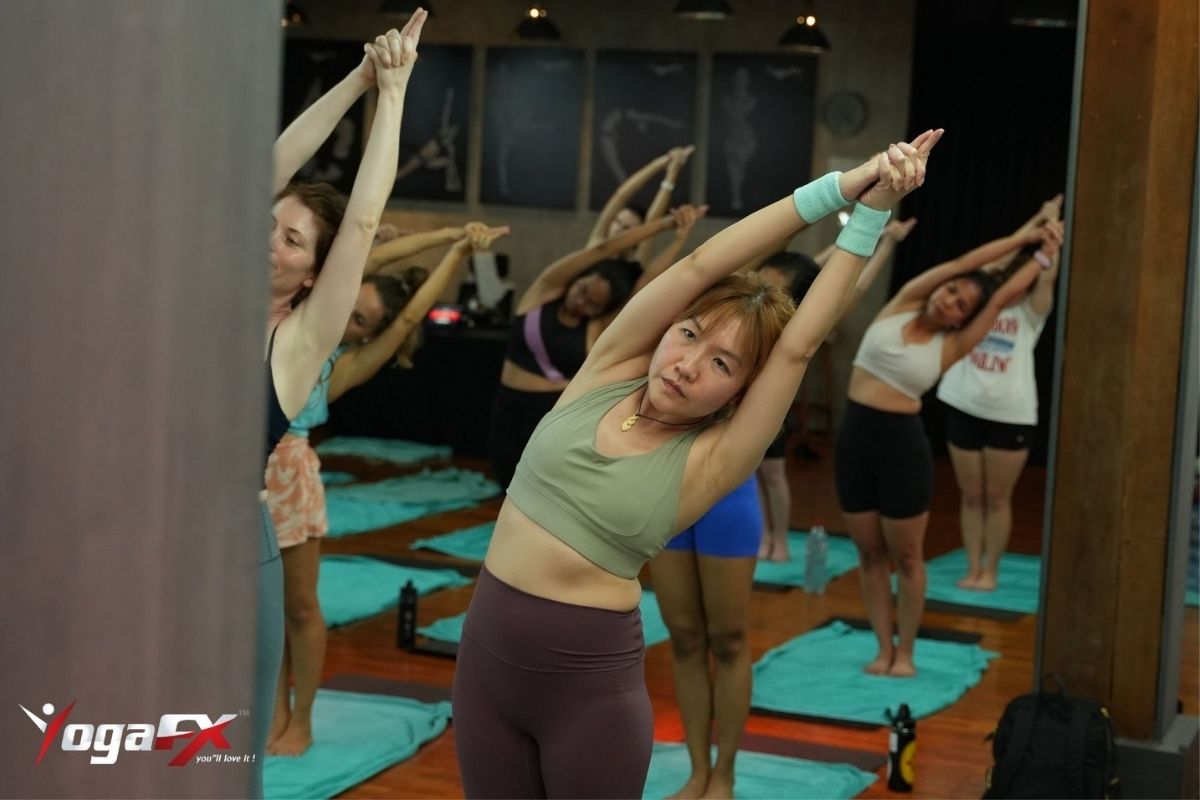
Every legitimate Bikram-style teacher training builds toward the same Yoga Alliance minimum: 200 hours split across five areas. Asana technique makes up the largest share, since you need to be able to demonstrate and correct all 26 postures and two breathing exercises before you can teach them safely.
The rest covers teaching methodology (how to project your voice, pace a class, and adjust for beginners), anatomy and physiology specific to a heated room, yoga philosophy, and practicum, which is supervised teaching practice in front of real students.
What separates a Bikram-style course from a generic 200-hour yoga teacher training is the dialogue. Traditional Bikram classes are taught from a fixed, scripted script rather than freestyle cueing, which means part of your training is learning to deliver that script clearly, at the right pace, while still watching the room. This is the piece most first-time candidates underestimate.
Memorising the sequence is straightforward. Delivering it confidently to a room of sweating strangers on day one is a different skill entirely, and a good programme builds up to that moment deliberately rather than throwing you in cold.
What The Research Says About Practicing and Teaching in Heat
A 2025 systematic review covering 43 studies and 942 participants found consistent evidence that Bikram-style practice improves flexibility, supports bone density, and contributes to general well-being when practised regularly (Willmott et al., 2025). For anyone training to teach, that matters beyond your own practice: you’re going to be standing in that same 40-degree room for 90 minutes at a time, multiple days a week, and your body needs to be conditioned for that before you’re managing a class on top of it.
A separate study measured a 20% increase in posterior chain strength alongside measurable gains in flexibility and body composition after a structured programme of heated practice (Tracy & Hart, 2013). That strength base is part of why most training programmes require a minimum number of months of consistent personal practice before you apply, not as a gatekeeping exercise, but because teaching demands a level of stamina and postural control that only comes from time in the room.
This is general research on heated yoga practice, not medical advice, so if you have an existing cardiovascular or heat-sensitivity condition, talk to a healthcare professional before starting an intensive training format.
Who Bikram Yoga Teacher Training Is Actually For
Candidates tend to fall into two groups, and the honest answer to “is this for me” depends on which one you’re in. The first is the career changer: someone who has been practising for a while, feels stuck in a job that doesn’t fit anymore, and is looking at teaching as a genuine second income or full career shift.
For this group, the questions that matter most are cost, how long you’re out of paid work, and whether the credential actually opens doors once you’re back home. A dual RYT 200 plus Bikram-specific certification carries more weight with UK studios than a generic 200-hour cert alone, because it signals you can run both a scripted, heated class and a standard room-temperature one.
The second group is the serious practitioner who isn’t chasing a career change at all. They’ve been doing the practice for years, want to understand it at a deeper level than a student ever gets to, and see teacher training as a way to deepen their own practice rather than a stepping stone to a new job.
If that’s you, the dialogue work and anatomy study tend to land differently: you’re less focused on employability and more interested in precision, the history behind the sequence, and being able to hold your own practice to a higher standard. Both groups go through the same 200 hours, but a good programme recognises the difference in what each person actually needs from the experience.

How to Become a Certified Bikram Yoga Instructor
The path looks similar across most reputable programmes, even though the format and price vary enormously.
- Build a personal practice first. Most programmes want to see several months of regular attendance before you apply, so your body and nervous system are already used to the heat.
- Choose your format. Full-time residential, UK weekend/modular, or hybrid online-plus-intensive. This decision drives your budget, time off work, and how quickly you finish. For UK students who can’t take months off work, the YogaFX hybrid format is the one we recommend: online theory at home, then a six-day intensive in Bali led by Mr. Ian Terry, E-RYT 500, with dual RYT 200 and Bikram Hot 26&2 certification.
- Complete the coursework. Anatomy, philosophy, and teaching methodology are usually the online or classroom-based portion, done before or alongside the in-person intensive.
- Pass practicum. You teach real segments of class in front of instructors and fellow trainees, and get corrected on delivery, pacing, and dialogue accuracy.
- Register your credential. Certification and registration are two separate steps. Once you graduate, you register yourself with Yoga Alliance as an RYT before you can legally use the credential.
One graduate we trained described the moment this way: she’d been practising for years and assumed teaching would just be an extension of that, but the training made clear how different being a strong practitioner is from being able to hold a room, watch twenty bodies at once, and keep the dialogue flowing without losing your place. That gap is exactly what practicum hours are designed to close, and it’s usually the part candidates feel least prepared for going in and most confident about coming out.
For a fuller breakdown of the certification itself, including how RYT 200 registration works once you’ve graduated, see our complete hot yoga teacher training certification guide.
The Part Nobody Warns You About: Learning the Dialogue
If there’s one thing that catches candidates off guard, it’s how much of the training is really about the dialogue rather than the postures themselves. You already know how to do the poses reasonably well by the time you apply. What you don’t know yet is how to talk continuously for 90 minutes, in a fixed script, while watching a room full of strangers, correcting the ones who need it, and never losing your place.
That’s a public-speaking skill wrapped inside a physical one, and it’s usually the single biggest source of nerves in the run-up to practicum.
Good programmes break this down in stages rather than expecting fluency on day one. You typically start by shadowing an instructor and repeating short sections, move on to teaching individual postures to a small group, and only later take a full class from start to finish under supervision. By the time candidates reach that final stage, most describe it as far less intimidating than they expected, mainly because the structure did the hard work of building confidence incrementally rather than forcing a cold start.
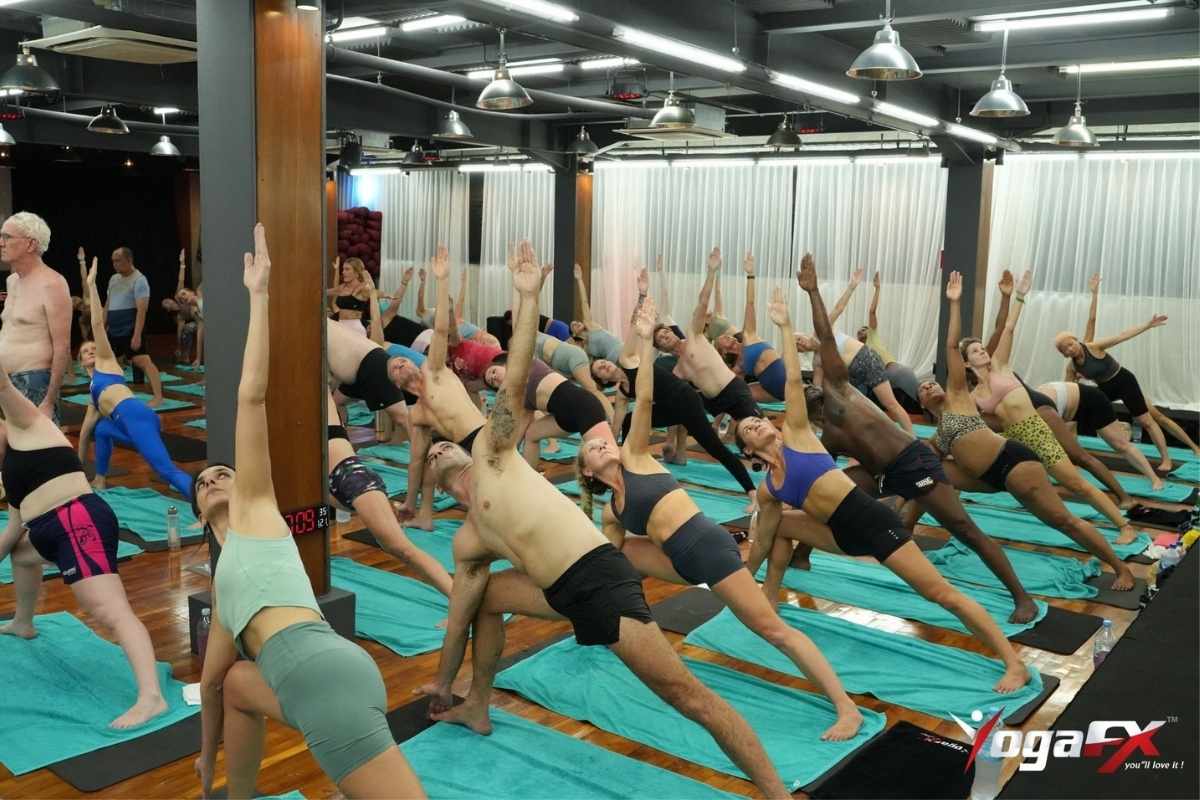
Anatomy study in a Bikram-style programme also has a specific heat-related focus that generic 200-hour trainings often skip. You need to understand how a heated room changes cardiovascular load, why certain postures carry different risk profiles at 40 degrees Celsius than they would at room temperature, and how to spot early signs of heat intolerance in a student before it becomes a real problem.
This is where the research base matters practically, not just academically: knowing that heated practice measurably raises heart rate and demands more cardiovascular capacity means you can recognise when a student is struggling rather than assuming they’re simply out of shape.
Comparing Your Training Options: Traditional, Hybrid, and Online
Cost and time commitment are usually the two factors that decide this for UK students. A traditional, full-time residential programme typically runs USD 12,500-16,600 and requires relocating for around nine weeks straight, which is a hard ask if you have a job, a mortgage, or kids at home. Hybrid programmes exist specifically to solve that problem by moving the theory portion online and compressing the in-person requirement into a shorter, more intensive block. If you have already paid a deposit for a programme booked through Tripaneer, there is help for customers who have paid a deposit through Tripaneer on our sister site.
| Format | Typical Duration | Typical Cost | Best For |
|---|---|---|---|
| Traditional residential | ~9 weeks full-time | USD 12,500-16,600 | Career changers with no employment ties during training |
| UK weekend/modular | 6-12 months, part-time | £1,200-£4,000+ | Working practitioners who cannot take extended leave |
| Hybrid (online + Bali intensive) | Online pre-course + 6-day intensive | USD 1,999-2,199 incl. accommodation (Early Bird 1,899, limited seats). Separate online-only RYT 200 course: USD 399, Early Bird 329 | UK students who want dual certification without a 9-week gap in employment |
Online-only programmes exist too, but treat any course that promises full teaching certification with zero in-person hours with real caution. Supervised practicum is the part of the syllabus that proves you can actually teach, and no amount of video coursework replaces someone standing in the room correcting your dialogue pacing and your ability to watch the class while you talk. We go into this trade-off in more depth in is online hot yoga teacher training actually worth it, and our piece on what fully-online courses can’t teach you covers the specific skills that don’t transfer to a screen. For a deeper look at what UK-specific pricing actually includes across formats, see our UK hot yoga teacher training cost breakdown. Of the three, the hybrid option is the one we recommend for most UK students, and it’s how YogaFX delivers its dual RYT 200 and Bikram Hot 26&2 certification.
Bikram Yoga Teacher Training 2026-2027 Dates for UK Students
If you’re planning from the UK, the practical question is which week to book. The traditional nine-week residential training has announced only two 2026 intakes, the second starting on 27 September 2026, and no 2027 dates yet. YogaFX runs its Bali intensive every month. These are the intakes still open, each a 6-day in-person block from a Sunday check-in to a Friday check-out:
| Check-in | Check-out | UK annual leave needed (approx.) | Worth knowing from the UK | Status |
|---|---|---|---|---|
| 25 October 2026 | 30 October 2026 | 5 working days | UK clocks go back on 25 October, so Bali is 8 hours ahead for the whole week | Enquire Now |
| 22 November 2026 | 27 November 2026 | 5 working days | Back home well before the Christmas rush | Enquire Now |
| 20 December 2026 | 25 December 2026 | 4 working days | Ends on Christmas Day, a UK bank holiday | Enquire Now |
| 24 January 2027 | 29 January 2027 | 5 working days | A week of tropical heat in the middle of a UK winter | Enquire Now |
| 21 February 2027 | 26 February 2027 | 5 working days | Bali’s wet season, but all training is indoors | Enquire Now |
| 21 March 2027 | 26 March 2027 | 4 working days | Ends on Good Friday, so the Easter weekend covers your return | Enquire Now |
Pricing is set in US dollars and includes accommodation for the intensive week. The sterling figures below are approximate, at roughly £0.79 to the dollar, and will move with the exchange rate:
| Room type | Price (USD) | Approx. price (GBP) |
|---|---|---|
| Early Bird (limited seats) | USD 1,899 | check live rate |
| Twin share room | USD 1,999 | about £1,580 |
| Single room | USD 2,199 | check live rate |
There are no non-stop flights from the UK to Bali. From London Heathrow or Gatwick, most routes connect once in Singapore, Doha, Dubai or Kuala Lumpur, with total journey times of roughly 17 to 20 hours to Denpasar (DPS), and Seminyak is 20 to 30 minutes from the airport. Bali runs 7 hours ahead of UK summer time and 8 hours ahead of GMT, so most UK candidates leave on a Friday evening and land in time for the Sunday check-in. UK passport holders can currently use Indonesia’s visa on arrival or apply for an e-VOA before travel; check the latest entry rules and fees before you book.
For every intake date alongside the full cost comparison between formats, see Bikram yoga teacher training 2026-2027: dates, cost and formats. To reserve a place with YogaFX, WhatsApp Mr. Ian Terry.
Why UK Students Train With YogaFX in Bali
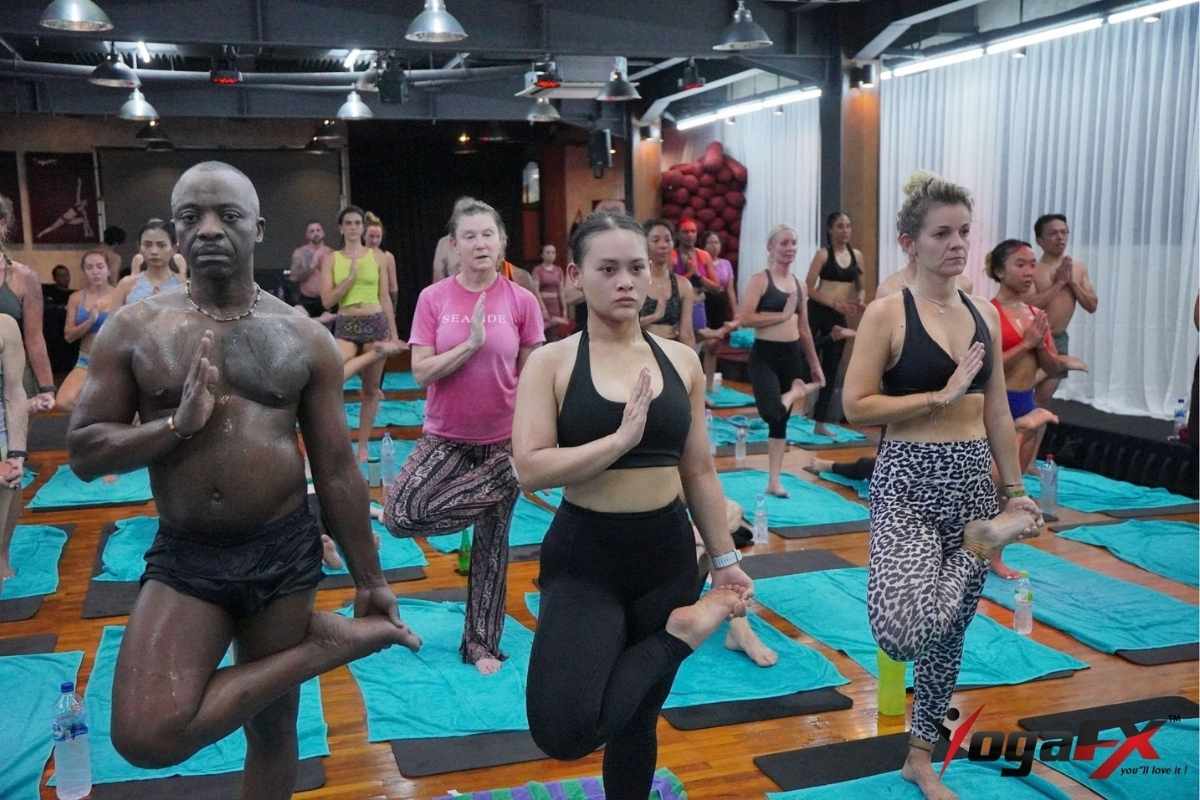
YogaFX runs a 6-day hybrid intensive in Seminyak, Bali, leading to dual certification: Yoga Alliance RYT 200 and the Bikram Hot 26&2 credential. The programme is led by Mr. Ian Terry, an E-RYT 500 instructor with more than 12,000 teaching hours who trained for five years, from 2014 to 2019, directly with Bikram Choudhury, the founder of the Bikram Hot 26&2 method, and who was appointed Master Trainer of the Republic of Indonesia Yogasana Sports Federation in June 2026.
The heat matters here more than most marketing copy admits. Classes run in natural tropical Bali heat rather than an electric room heater, at roughly 40 degrees Celsius and 40% humidity, which is the environment the original method was designed around. For UK students used to training in a converted studio unit heated by wall panels, the difference is immediately obvious the first time you step into a naturally humid room.
Several graduates have described the hybrid format specifically as the reason the course was workable at all. One UK-based practitioner completed the online portion around a full-time job before flying out for the intensive week, avoiding the nine-week career gap that a traditional residential programme demands. If you’re specifically weighing this against a local UK course close to home, our piece on Manchester and North West training options versus a Bali intensive breaks down that exact trade-off, and our London comparison covers the same trade-off for the capital.
That practical flexibility, combined with training under an instructor whose own students have gone on to win medals at the World Yogasana Championship (see our coverage of Indonesia’s 2026 results), is a big part of why the hybrid format has become the default choice for UK candidates who can’t disappear for two months.
If you’re weighing this against training closer to home, our full comparison of Bali versus UK-based teacher training breaks down immersion, cost, and outcomes side by side. And if cost is the main variable you’re still working through, the full cost breakdown for traditional versus hybrid programmes goes deeper into the numbers above.
What Happens After Graduation: Real Outcomes, Not Guesswork
UK candidates researching this training often ask a version of the same question: does it actually lead anywhere, or is it just a certificate? There is no official “graduate success rate” published anywhere in the yoga industry, since no governing body tracks how many RYT 200 holders go on to teach professionally. What exists instead is a track record you can actually check.
YogaFX has certified more than 1,500 graduates across 80-plus countries since the programme launched in 2017, backed by 150 Google reviews, 50 Yoga Alliance reviews and 357 student video testimonials on YouTube from people who completed the course. Mr. Ian Terry, the E-RYT 500 instructor who leads every cohort, built his own teaching career the same layered way most graduates do: studio classes first, then private clients and corporate work, then eventually training other instructors.
A dual credential, Yoga Alliance RYT 200 plus the Bikram Hot 26&2 certificate, tends to open doors a generalist 200-hour certification does not, since fewer teachers can confidently deliver a heated, dialogue-based class. Most graduates combine studio teaching with private clients or corporate sessions within their first six to twelve months rather than relying on one income stream alone. For the full picture, including real alumni accounts and a realistic breakdown of what each career path pays, see YogaFX’s graduate stories from 1,500+ alumni and the full career paths breakdown after certification.
FAQ
How much does Bikram yoga teacher training cost?
Traditional residential programmes typically cost USD 12,500-16,600. UK weekend or modular courses range from roughly £1,200 to £4,000. Hybrid programmes combining online coursework with a short intensive abroad, such as the YogaFX course in Bali, run USD 1,999-2,199 (Early Bird 1,899, limited seats) depending on accommodation package.
Do I need prior experience before starting Bikram yoga teacher training?
Most reputable programmes expect several months of consistent personal practice beforehand. This isn’t a formality: teaching demands a level of heat tolerance, postural familiarity, and stamina that only develops through regular time in the room, and starting practicum without that foundation makes the training much harder than it needs to be.
Is Bikram yoga teacher training the same as official Bikram Choudhury training?
No. Official Bikram Choudhury Teacher Training is a separate programme. YogaFX, a major Hot 26&2 (Bikram) yoga teacher training academy, is based in Bali, and it is not affiliated with Bikram Choudhury or Bikram’s Yoga College of India. Programmes like YogaFX’s teach the same 26-posture, 2-breathing-exercise method and dialogue tradition, certified through Yoga Alliance, but operate under their own leadership and lineage.
Can UK students complete Bikram yoga teacher training fully online?
Not for a credential that leads to Yoga Alliance registration. Theory, anatomy, and philosophy can usually be completed online, but supervised, in-person practicum hours are a Yoga Alliance requirement. Hybrid formats minimise the in-person time without eliminating it entirely.
How long does Bikram yoga teacher training take?
Traditional residential programmes run around nine weeks full-time. UK modular courses typically stretch across six to twelve months part-time. Hybrid programmes compress the in-person component into a short intensive, often around six days, once the online coursework is finished.
Which Bikram yoga training schools have the highest graduate success rates?
No governing body publishes graduate success rates for yoga teacher training, so any school quoting a specific percentage is not citing a verifiable industry statistic. What you can check instead is scale and evidence: YogaFX has certified more than 1,500 graduates across 80-plus countries since 2017, with 150 Google reviews, 50 Yoga Alliance reviews and 357 student video testimonials on YouTube documenting real outcomes, from first-time teaching nerves to building a full income around the credential.